
This Stunning Maine State Park Feels Like A Scene From J.R.R. Tolkien’s Middle Earth
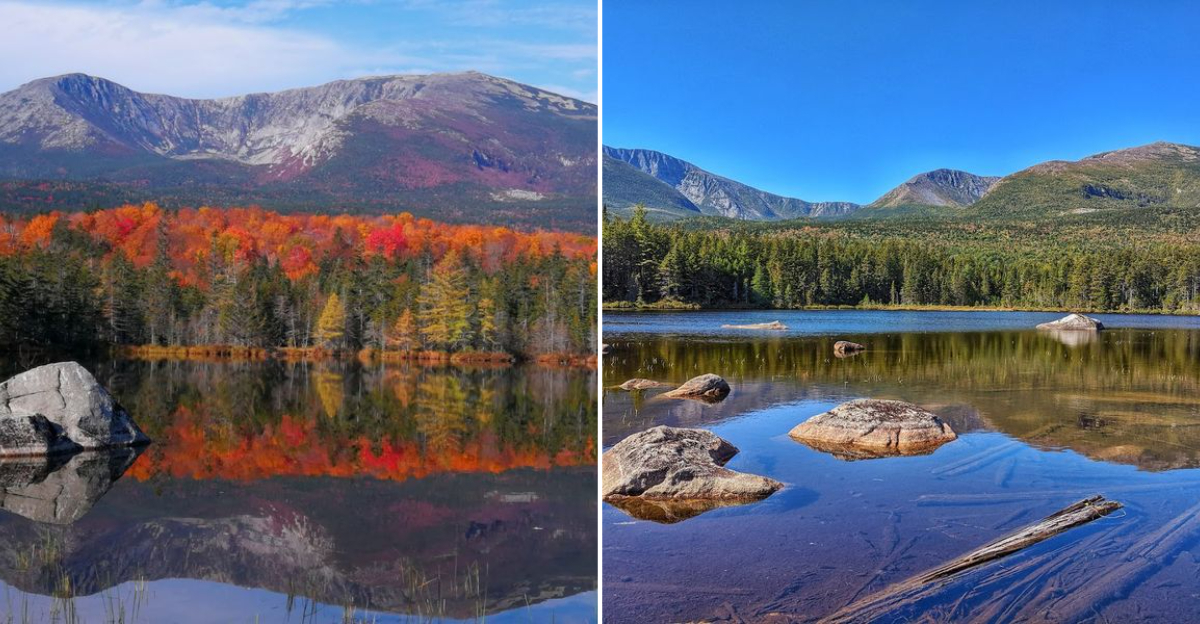
Picture a corner of Maine where ancient forest seems endless, mountain summits vanish into low cloud, and still ponds mirror skies so vivid they look painted. The hook is simple: this wilderness feels less like a state park and more like a lost world.
Spanning 209,644 acres, it offers a rare sense of scale and solitude that is increasingly hard to find in the Northeast. Rugged alpine heights tower above quiet water and mossy boulders, while every trail, shoreline, and overlook carries a wild, storybook beauty.
One moment brings wind, stone, and sweeping views; the next brings silence, reflection, and the call of loons. In Maine, few landscapes feel this untamed, immersive, and unforgettable.
The Lonely Mountain Of The East
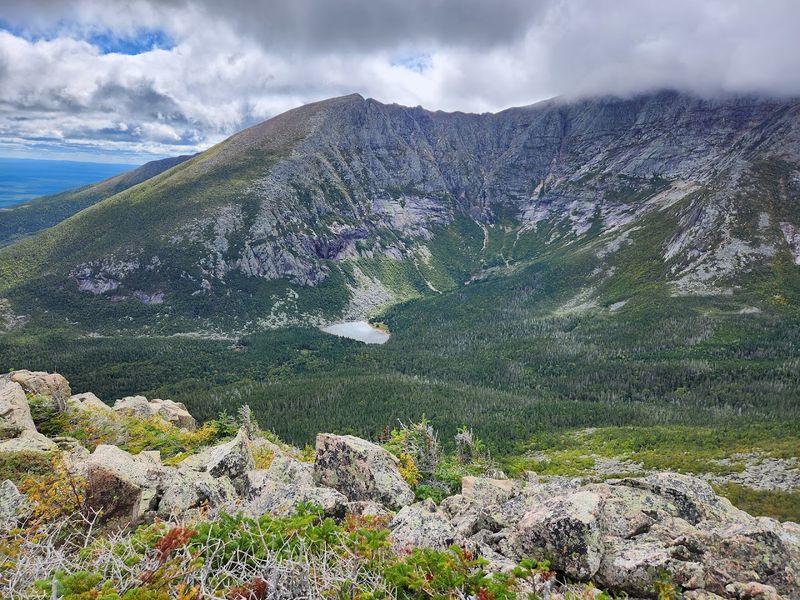
Standing at 5,269 feet, Mount Katahdin is the kind of peak that makes your jaw drop before you even lace up your boots.
It is the highest point in all of Maine and the northern terminus of the famous Appalachian Trail, which stretches over 2,190 miles to Georgia. That alone gives it a legendary status that few mountains in the eastern United States can match.
The ascent is no casual stroll. Trails like the Cathedral Trail and the spine-tingling Knife’s Edge Ridge demand real physical effort, sure footing, and a healthy respect for the mountain.
Knife’s Edge is a narrow rocky ridge with steep drops on both sides that will make your heart race with every careful step.
Rangers recommend arriving at the trailhead by 6 AM for a summit attempt, and planning for a full 12-hour day. The views from Baxter Peak at the top stretch across an ocean of trees and sky that feels completely otherworldly.
The Knife’s Edge
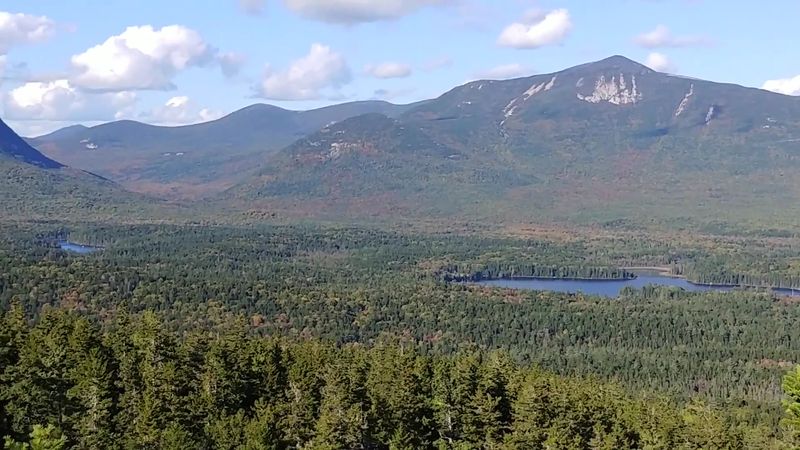
Few trail sections in the entire northeastern United States are as heart-stopping as Knife’s Edge on Mount Katahdin.
This narrow rocky arête connects Pamola Peak to the main summit, and at certain points it is barely wide enough to place both feet side by side. Looking down either side reveals dramatic thousand-foot drops into the valleys below.
The experience feels like walking across the spine of some ancient sleeping giant. On clear days the views are absolutely spectacular, with forests and ponds laid out like a patchwork quilt far below.
On foggy or windy days, the ridge transforms into something even more atmospheric and mysterious.
Completing Knife’s Edge is considered one of the great hiking achievements in New England, and many outdoor enthusiasts travel from across the country specifically for this challenge. Strong weather awareness and solid footwear are non-negotiable here.
The park strongly advises against attempting Knife’s Edge when rain or storms are in the forecast, and that advice is worth taking seriously.
Chimney Pond
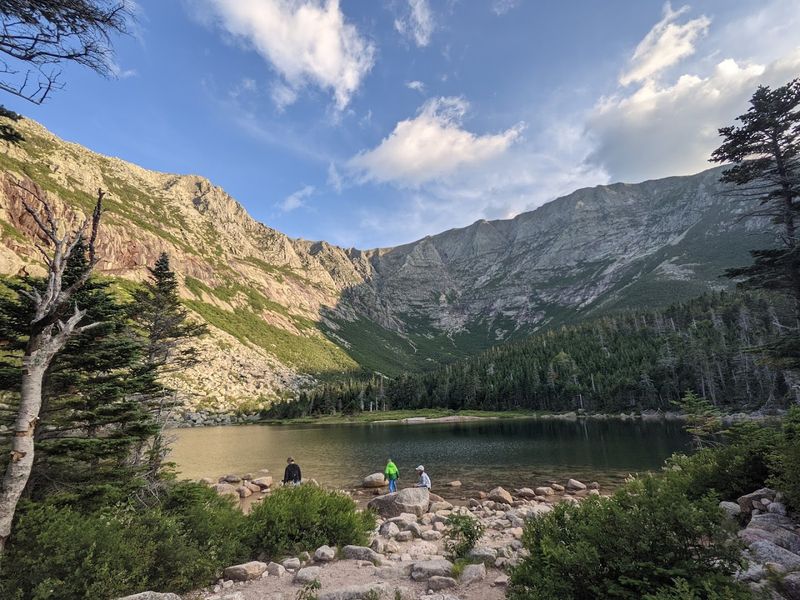
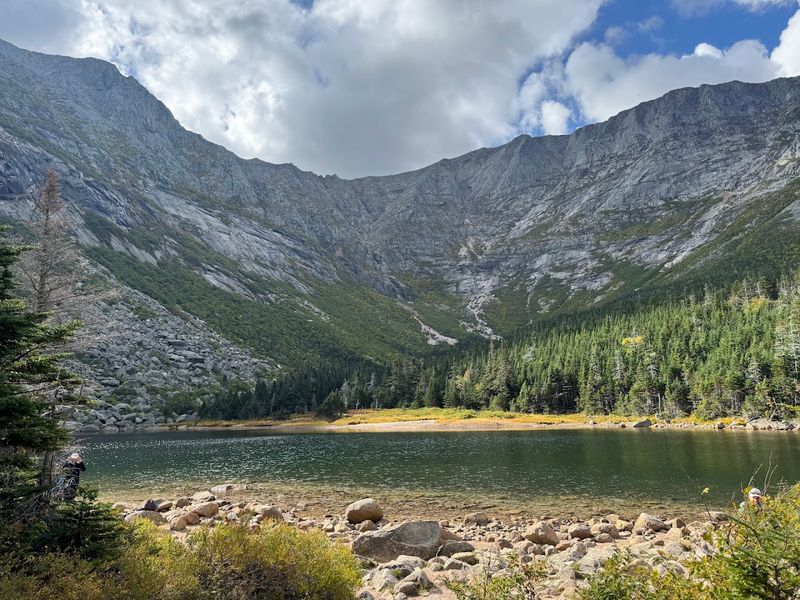
Imagine a perfectly still pond cradled inside a massive rocky bowl carved by ancient glaciers, with towering cliffs rising on three sides and nothing but wilderness in every direction. That is Chimney Pond, one of the most dramatic and visually stunning spots inside Baxter State Park.
Reaching it requires a roughly 3.3-mile hike from Roaring Brook Campground, gaining about 1,425 feet in elevation along the way. The trail winds through dense boreal forest before suddenly opening up to reveal this breathtaking glacial cirque that looks like something from a fantasy novel illustration.
A backcountry campground sits right at the pond, making it a popular base camp for climbers heading up the various Katahdin routes.
Waking up there at dawn, with mist rising off the water and the great walls of the cirque glowing pink in the morning light, is one of those travel experiences that genuinely rewires how you think about wild places. Reservations for the campground fill up extremely fast.
The Vast Wilderness
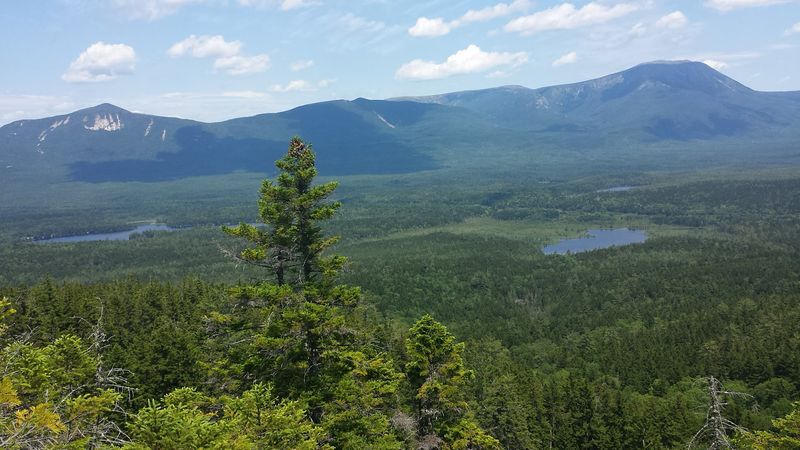
Baxter State Park covers an almost incomprehensible 209,644 acres of protected wilderness in northern Maine. To put that in perspective, it is larger than some entire countries.
The park was gifted to the people of Maine by former Governor Percival Baxter, who spent decades purchasing land parcels and donating them to the state with a strict mandate that they remain forever wild.
That phrase, forever wild, is not just a slogan. It is written directly into the legal deed of the park, meaning no commercial development, no motorized watercraft on most ponds, and strictly limited visitor numbers to protect the natural environment.
The result is a place that genuinely feels untouched and primal in a way that even many national parks do not quite manage.
Cell service does not exist inside the park boundaries, and there are no stores or restaurants inside the park, so outside services can be a long drive away. That total disconnection from modern life is, for many visitors, the entire point of making the long journey to this remote corner of Maine.
Moose, Loons, And More
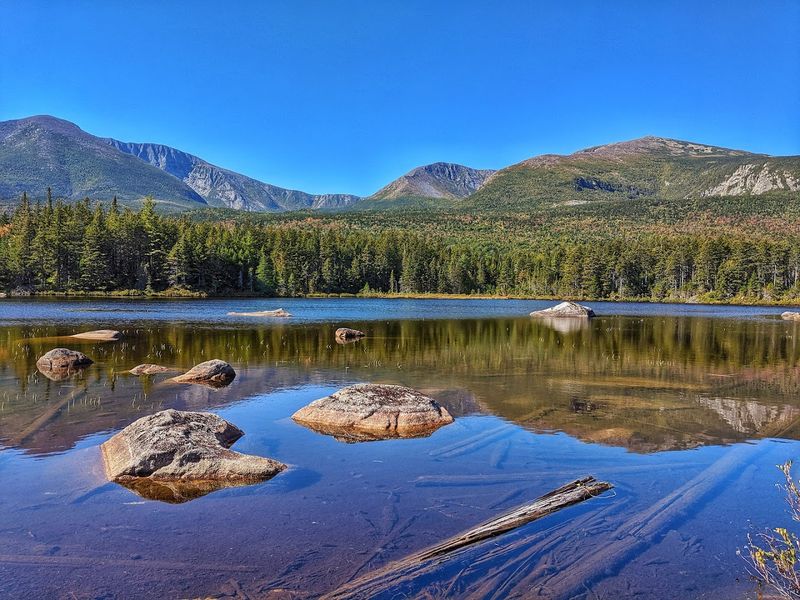
Sandy Stream Pond near Roaring Brook Campground is one of the most reliably excellent moose-watching spots in the entire state of Maine.
Moose regularly wade into the shallow pond to feed on aquatic vegetation, and patient visitors willing to arrive at dawn or dusk are frequently rewarded with close-up views of these enormous animals going about their morning routines.
Beyond moose, the park shelters a remarkable range of wildlife. Black bears roam the forests, white-tailed deer pick their way through meadow edges, and the haunting call of the common loon echoes across many ponds at twilight.
Bald eagles have been spotted soaring above the tree canopy, and lucky hikers occasionally cross paths with Canada lynx on quieter trails.
The park’s strict no-pets policy exists specifically to protect this wildlife and preserve the peaceful experience for all visitors. It is one of those rules that makes complete sense once you are standing at the edge of a pond watching a moose barely 30 feet away, completely unbothered by your presence.
The Appalachian Trail’s Northern Terminus
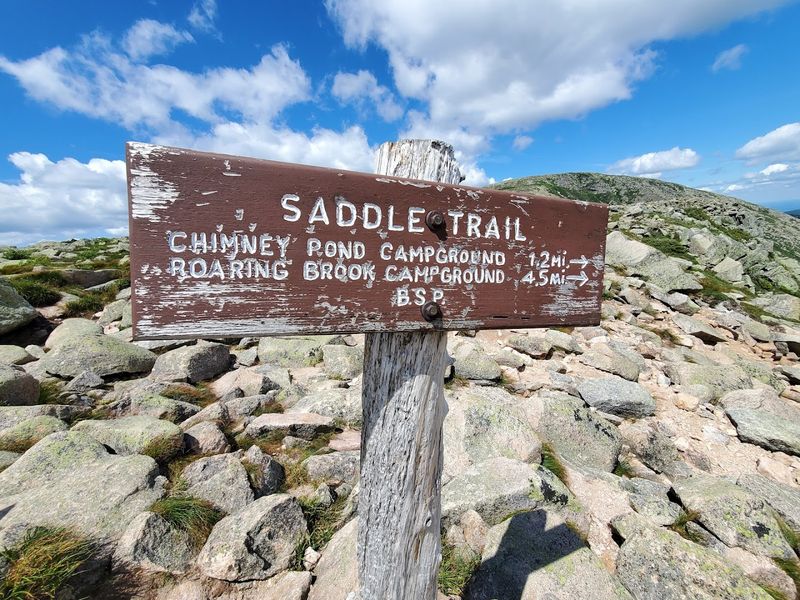
Every year, many northbound long-distance hikers spend around six months walking the 2,197.9-mile Appalachian Trail from Springer Mountain in Georgia through 14 states, with their symbolic finish at the summit of Mount Katahdin inside Baxter State Park.
Touching that weather-beaten summit sign at Baxter Peak is an emotional milestone that many describe as life-changing.
Even for visitors who have not walked a single mile of the AT, standing at that terminus carries a powerful energy.
The sign itself is simple and a little worn, which somehow makes it feel even more meaningful. Around it, the rocky summit drops away into a vast panorama of boreal forest and distant mountains that stretches well beyond what the eye can comfortably take in.
The park manages Katahdin access carefully to prevent overuse, which means day hikers need to plan ahead and arrive early. Thru-hikers completing the full trail receive a special kind of welcome from park rangers that honors the magnitude of what they have just accomplished over many months of walking.
Pristine Ponds And Lakes
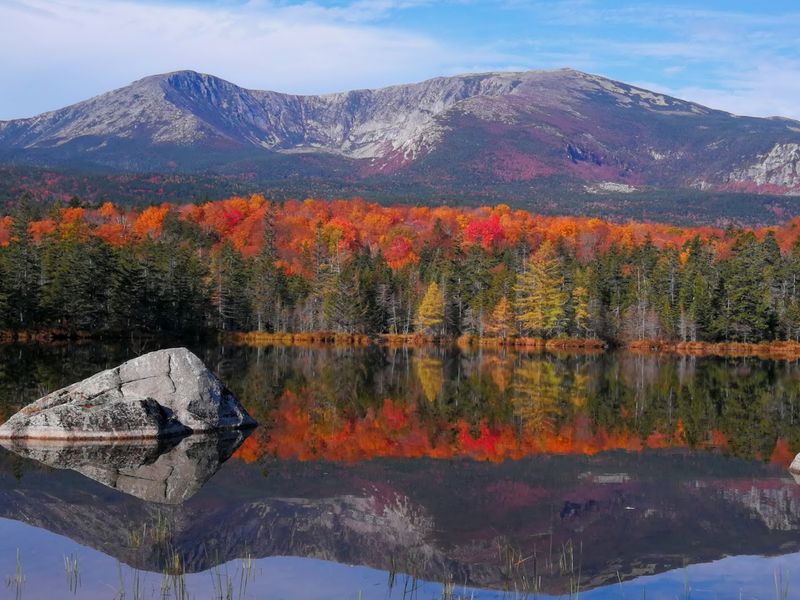
Baxter State Park contains dozens of ponds and lakes scattered throughout its vast territory, and each one feels like a secret world unto itself.
Kidney Pond is among the most beloved, with comfortable lakeside cabins available for rent and a view across the water toward the mountains that practically demands you sit quietly and do absolutely nothing for at least an hour.
Daicey Pond is another standout, offering canoe rentals and a setting so serene that the only sounds are wind in the pines and the occasional splash of a jumping fish.
Most ponds in the park prohibit motorized watercraft, which keeps the water surface glassy and the atmosphere peacefully quiet in a way that feels increasingly rare in the modern world.
Swimming is permitted at certain ponds, and the water is strikingly clear and cold even in summer. Fishing for brook trout is popular throughout the park.
Pack your own food and be prepared to treat all water, since potable water is not available in the park and the nearest resupply point is a long drive away.
The Roaring Brook Campground
Roaring Brook Campground sits at the eastern base of Mount Katahdin and serves as the primary launching point for the most popular summit routes, including the trails to Chimney Pond, Cathedral, and Knife’s Edge.
Its location deep inside the park means that staying here puts you genuinely inside the wilderness rather than on its fringes.
The campground offers tent sites and lean-to shelters, all kept remarkably clean by the park’s dedicated maintenance crews.
Outhouses at Baxter State Park have earned an almost legendary reputation among outdoors enthusiasts for being immaculately maintained, which is a small but genuinely appreciated detail after a long day on the trail.
Reservations are essential and fill up quickly, sometimes within minutes of becoming available. The park’s online reservation system can be a bit tricky to navigate, so reading the instructions on the official website at baxterstatepark.org before booking is strongly recommended.
Arriving prepared with all your supplies packed is equally important since there are no camp stores anywhere inside the park boundaries.
Fall Foliage
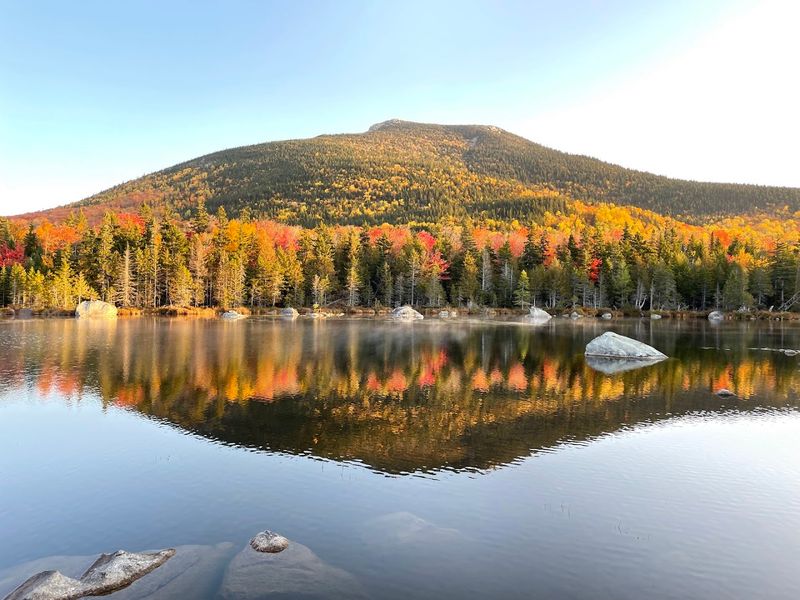
Autumn transforms Baxter State Park into something so visually overwhelming that the word beautiful genuinely feels inadequate. The boreal forest ignites in waves of crimson, amber, and gold, with stands of birch and maple burning bright against the dark green of spruce and fir.
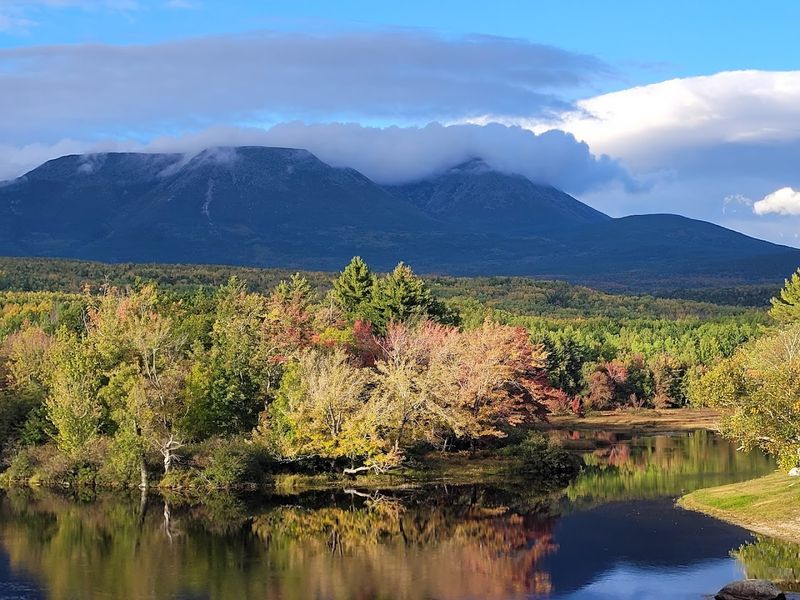
Mount Katahdin rises above it all, often dusted with early snow on its upper ridges while the valleys below still glow with warm fall color.
Peak foliage in northern Maine typically arrives in late September and early October, slightly earlier than in southern parts of the state due to the higher elevation and more northern latitude.
The combination of mountain peaks, reflective ponds, and dense hardwood forests creates a layered visual spectacle that photographers travel enormous distances to capture.
Visiting in fall means cooler temperatures that make hiking significantly more comfortable, though you should always pack warm layers since conditions at higher elevations can shift quickly.
Crowds are lighter than in summer, and the overall mood of the park in October has a quiet, contemplative quality that feels genuinely restorative for the soul.
The Story Behind The Park
The story of how Baxter State Park came to exist is one of the most remarkable acts of personal conservation in American history.
Percival Proctor Baxter, who served as Governor of Maine from 1921 to 1924, fell deeply in love with the wilderness surrounding Mount Katahdin and spent years trying to convince the state legislature to protect it. When those efforts repeatedly failed, he simply decided to do it himself.
Over the following decades, Baxter used his personal wealth to purchase land parcel by parcel, ultimately acquiring what would become the entire park.
He donated each piece to the state of Maine with legally binding conditions requiring that the land remain forever wild and be maintained for the people of Maine and their visitors in perpetuity.
By the time he finished in 1962, Baxter had donated over 200,000 acres. He passed away in 1969, having secured one of the most extraordinary natural legacies in New England history.
The park stands today as a living monument to one man’s extraordinary commitment to protecting wild places for future generations.