
This Tiny Michigan Fishing Village Still Looks Like A Working Waterfront From Another Time
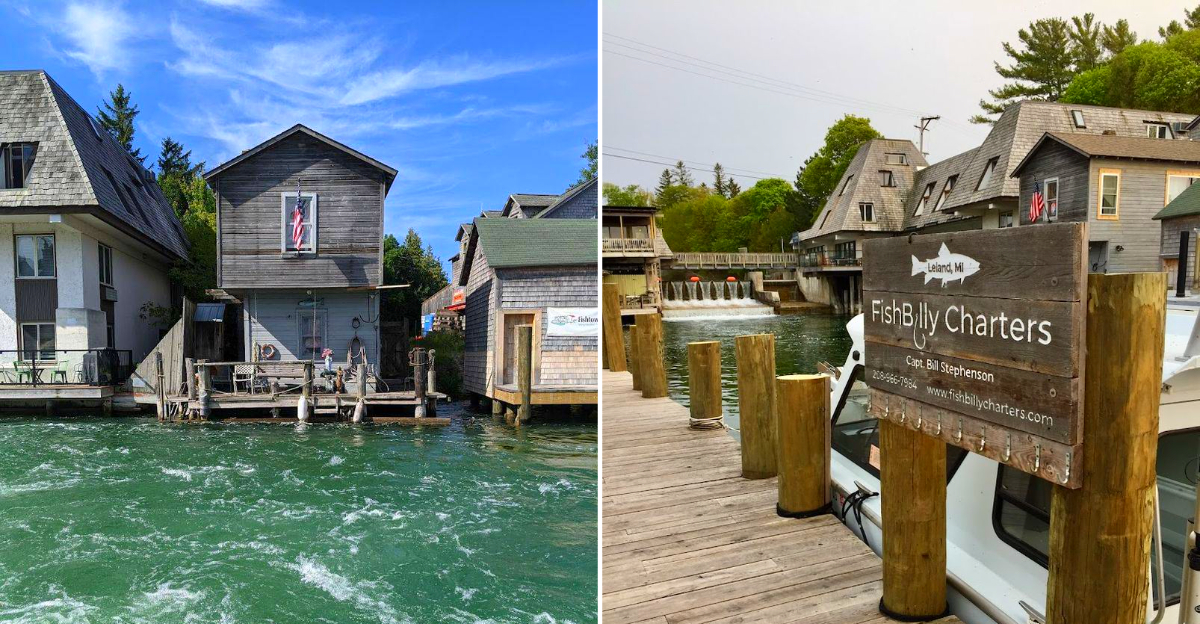
Some waterfront districts get polished until the soul slides off; this one still has splinters, rope, and weather in its voice. Along the river mouth where working boats meet Lake Michigan, the old shanties seem less preserved than paused between tasks.
You can feel the morning labor in the boards: nets hauled, fish cleaned, coffee gone cold, boots scuffing docks before visitors arrived with cameras.
Travelers looking for authentic maritime history will find weathered shanties, tugboats, riverfront docks, Lake Michigan views, and a fishing village texture that feels genuinely lived-in. Walk slowly, because the best details are small and stubborn.
Notice patched wood, faded signs, practical doors, and the way charm keeps losing arguments to usefulness. That is the magic.
It is pretty, yes, but never merely pretty. It feels like history with wet sleeves, still working after all these years.
Start By Looking At The River, Not The Shops
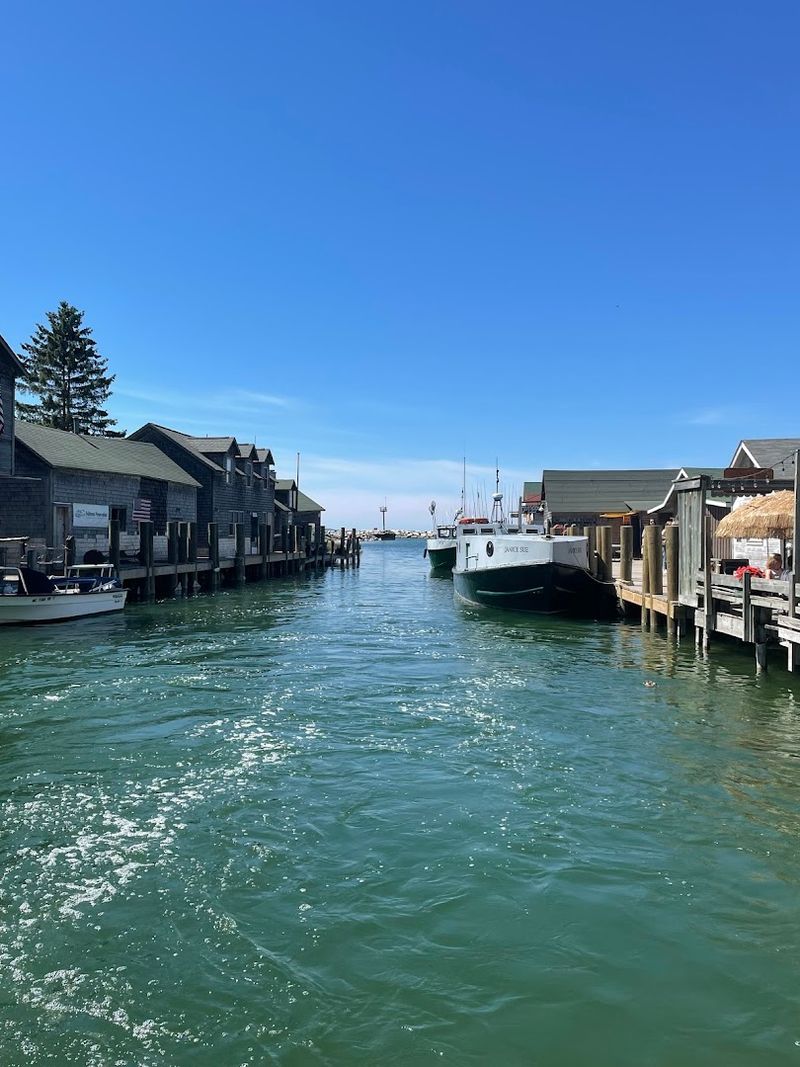
The smartest way to arrive in Fishtown is to ignore the shopping instinct for a few minutes and face the river first.
That narrow channel explains everything: why the shanties sit where they do, why the docks overhang the water, and why this small pocket of Leland still feels organized around labor instead of display. You immediately read the place as a working edge between inland water and the open lake.
Historic Fishtown stands along the Leland River as it flows into Lake Michigan, and that geography gives the district its logic. Once you take that in, the boardwalks, smokehouses, and storage buildings stop looking quaint and start looking practical.
It is the difference between seeing a backdrop and recognizing a surviving system.
Follow Cedar Street Toward The Old Docks
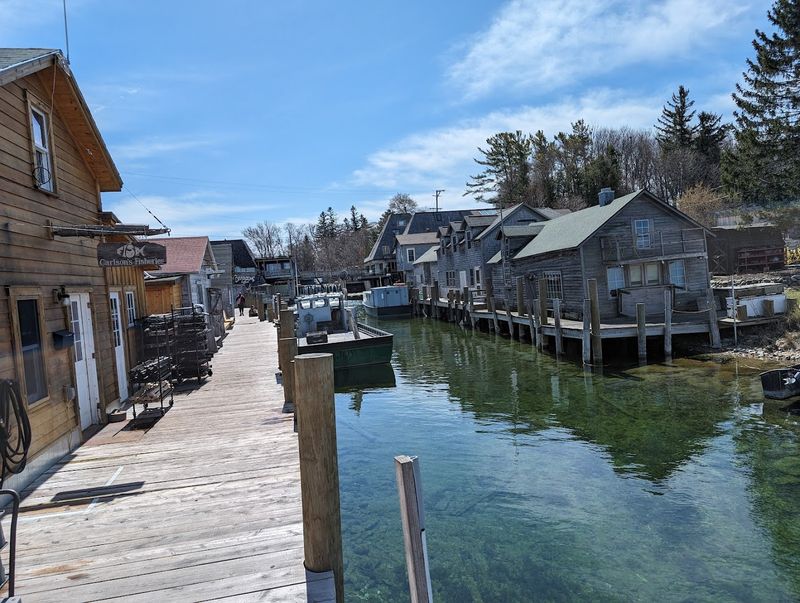
Historic Fishtown, 203 E Cedar St, Leland, Michigan 49654, sits close to the water, so the arrival already feels like you are heading toward something weathered, wooden, and worth slowing down for.
Come into Leland and keep the pace easy. The town is small enough that the best approach is not to rush, but to let the streets guide you toward the harbor.
Once you park, walk toward the old fishing shanties and docks. The drive gets you there, but the last few steps are where the place really starts to feel alive.
Read The Place As Native And Industrial History Layered Together
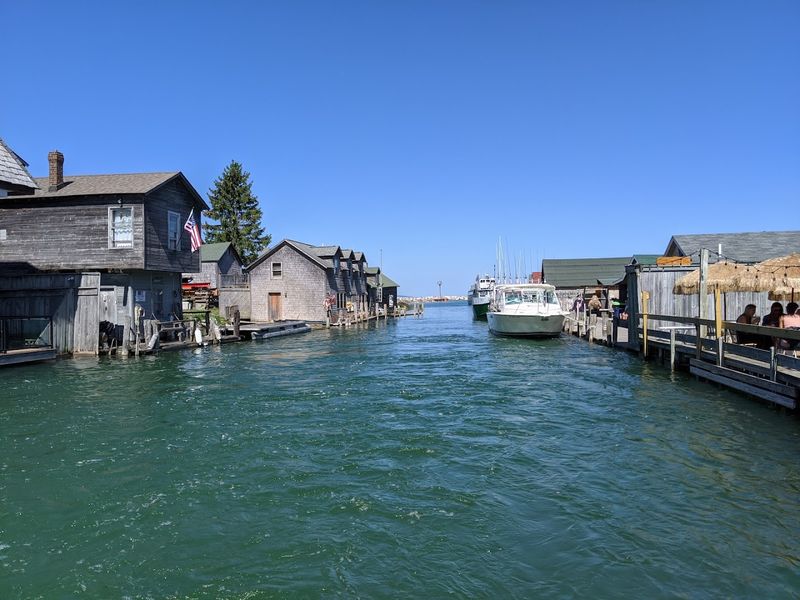
Fishtown makes more sense when you hold two histories at once. Long before the fishing shanties and sawmill economy, Native communities used this place, known as Mishi-me-go-bing, a name describing canoes running up into the river to land because there was no harbor.
That older understanding of the site gives the landscape a deeper continuity than the village facade alone suggests.
European settlement followed in the 1850s, when Antoine Manseau and John Miller built a dam and water-powered sawmill that helped shape the village that developed here. The dam reportedly raised the water level in the Leland River and Lake Leelanau by about twelve feet.
Suddenly, the waterfront stops being picturesque and becomes engineered, contested, and alive with consequence.
Look For The Signs That It Is Still Working
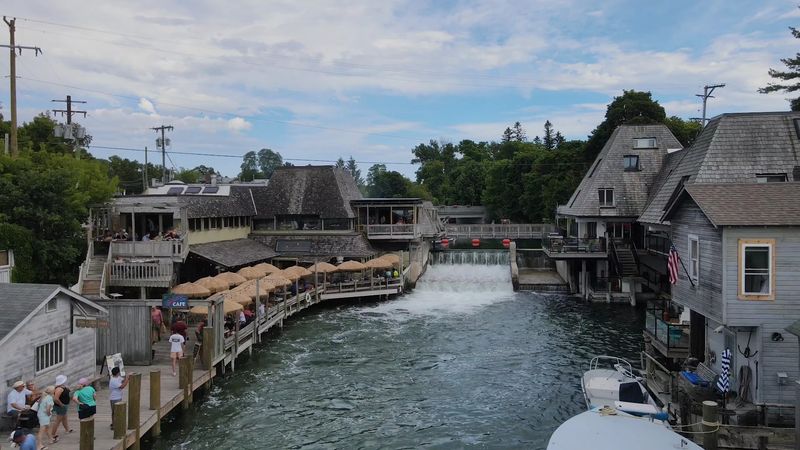
Plenty of historic districts preserve appearances, but Fishtown still preserves function, and that changes the mood completely. You can feel it in the equipment, the dock arrangements, and the fact that this is still recognized as one of the last active commercial fishing districts on the Great Lakes.
The village does not merely remember labor. It still organizes itself around it.
The clearest symbols are the commercial fish tugs Janice Sue and Joy, fully operational vessels owned by the Fishtown Preservation Society and still fishing from spring through fall. Their presence keeps the waterfront from slipping into museum stillness.
When I saw them tied up among the shanties, the whole place clicked into focus as a living harbor rather than a nostalgic reconstruction.
Treat Preservation Here As Active Stewardship
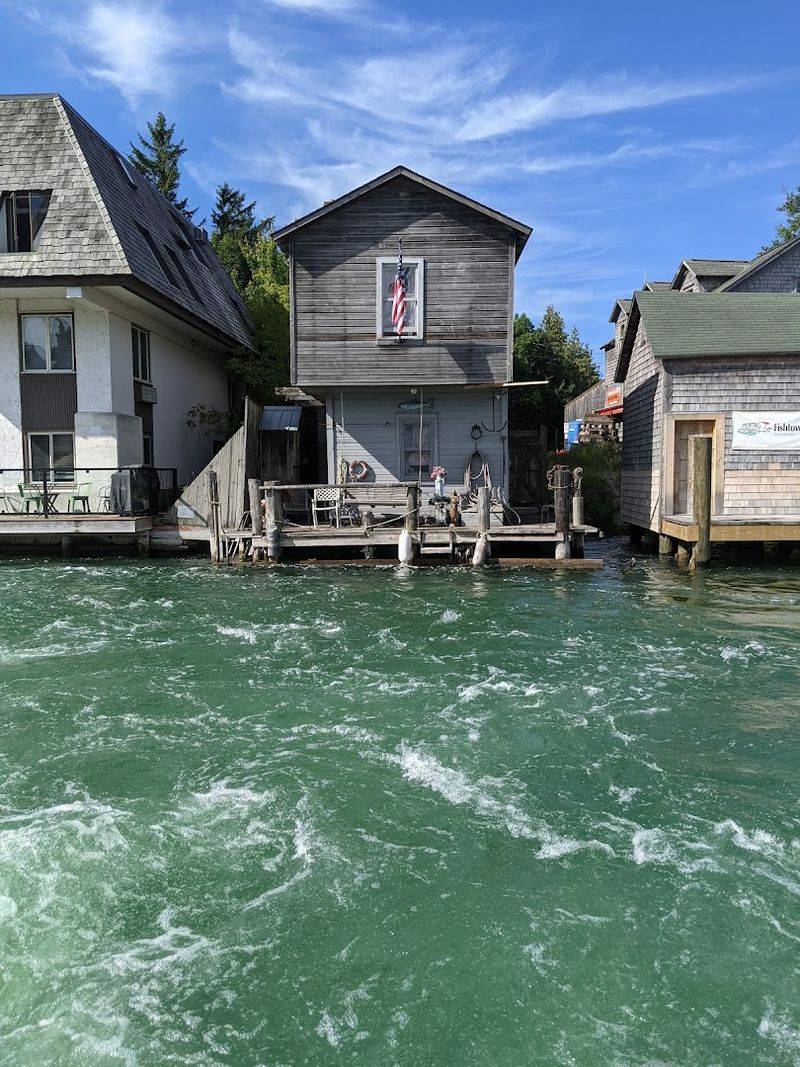
One reason Fishtown does not feel over-restored is that preservation here has a practical backbone. The Fishtown Preservation Society, established in 2001, manages restoration and maintenance with the goal of protecting historical integrity while keeping the waterfront legible and accessible.
That balance matters because too much polish would erase the very texture people come to see.
The district was listed on the National Register of Historic Places in 1975, and the Fishtown area received a separate listing in 2022, underscoring its significance. Those designations explain why so much remains intact, but they do not explain the atmosphere.
That comes from careful restraint: keeping wood weathered, forms simple, and the working identity visible instead of turning history into theater.
Expect A Compact Visit And Reward Close Looking
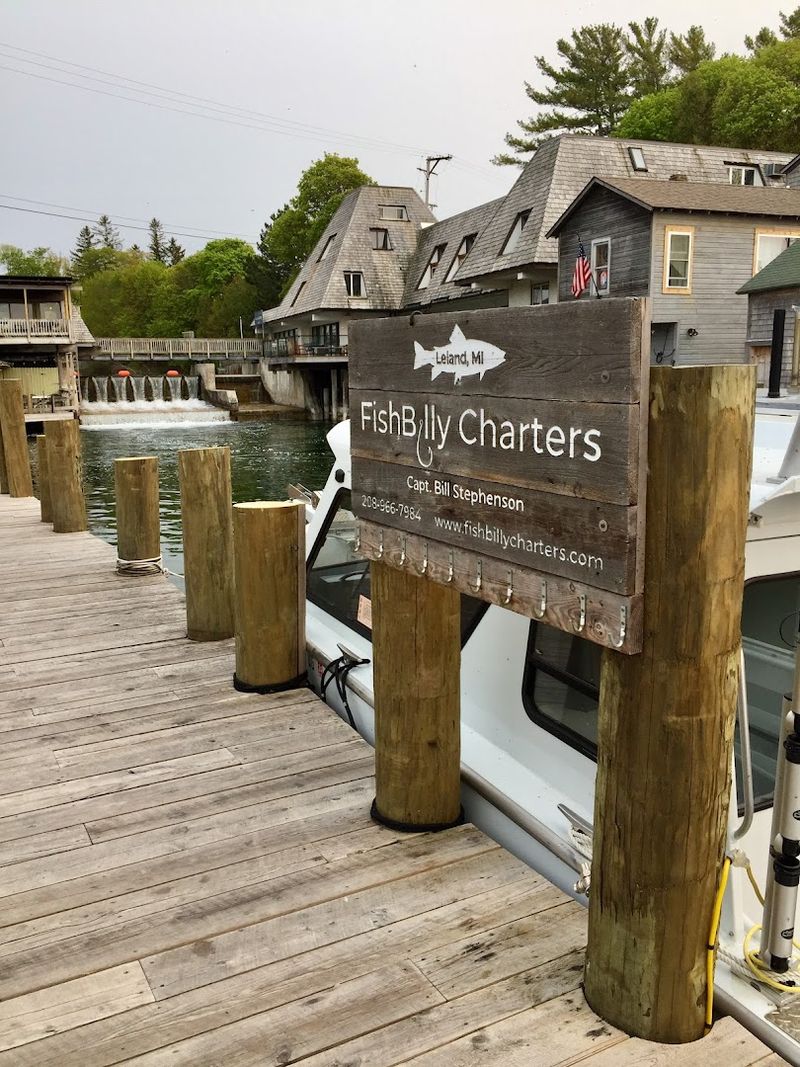
Fishtown is not large, and that is part of its charm, but it also means your visit works best when you trade checklist energy for attention. This is a place to examine hinges, timber, boat names, river movement, and the odd geometry of buildings hanging over water.
If you rush through asking what there is to do, you may miss what there is to notice.
The district can be walked quickly, yet it rewards lingering because so much meaning lives in details rather than grand attractions. Historical markers, preserved structures, and working vessels provide context, but the strongest impressions come from standing still.
Give yourself time to circle back, because the second pass usually reveals more than the first one does.
Go Early If You Want The Wood, Water, And Quiet
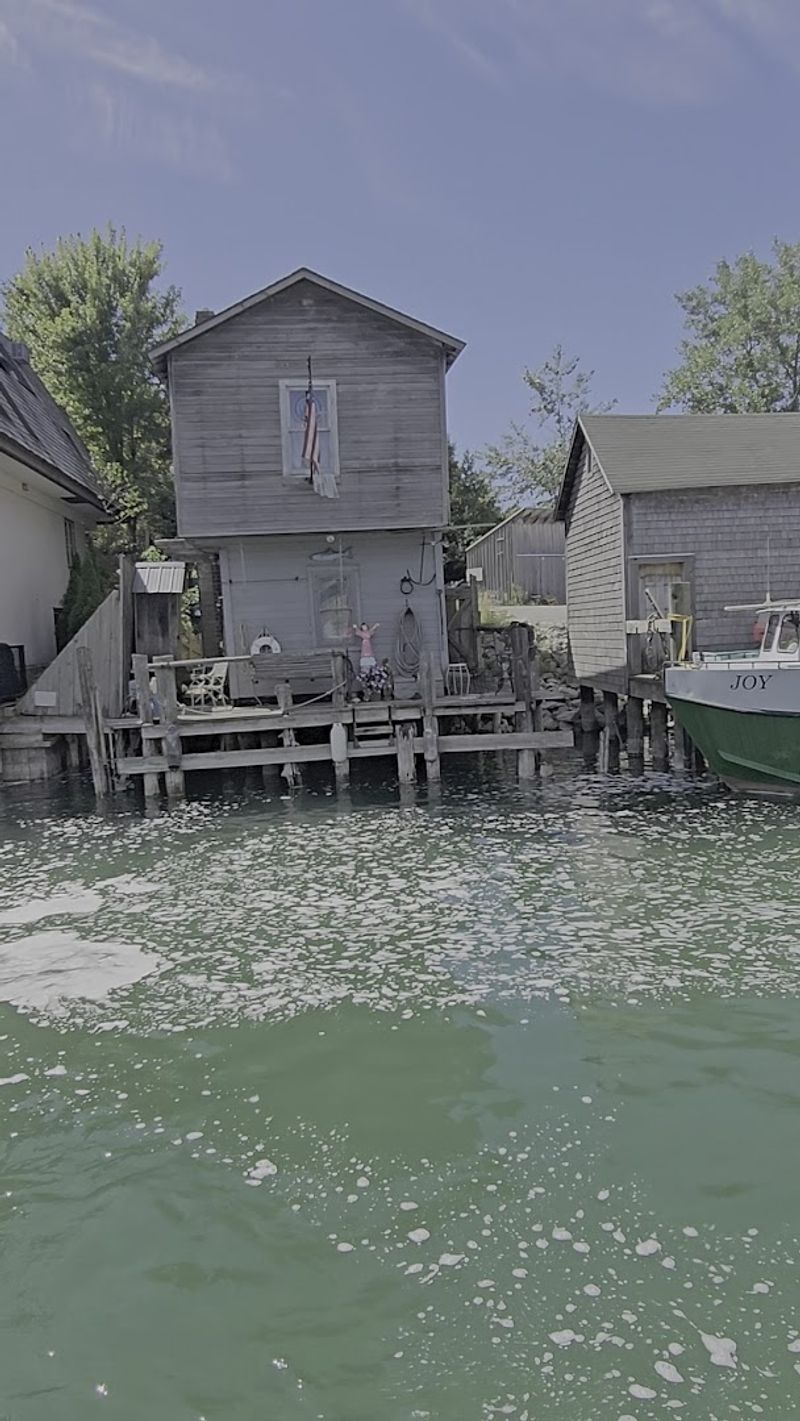
Timing changes Fishtown dramatically. In the quieter hours, the place reads as a riverbound working village with creaking boards, light on old wood, and enough stillness to hear water against pilings.
Later, especially in busy seasons, the narrow walkways feel more crowded, which is understandable but less revealing if you are trying to grasp the site itself.
Because Historic Fishtown is open daily and the area is accessible around the clock, arriving early is the easiest practical advantage you can give yourself. You get better light, clearer sightlines, and a more direct sense of the waterfront structure before foot traffic fills in.
If you value observation over bustle, morning is the hour that makes the village feel most articulate.
Pay Attention To Carlson’s As Living Continuity
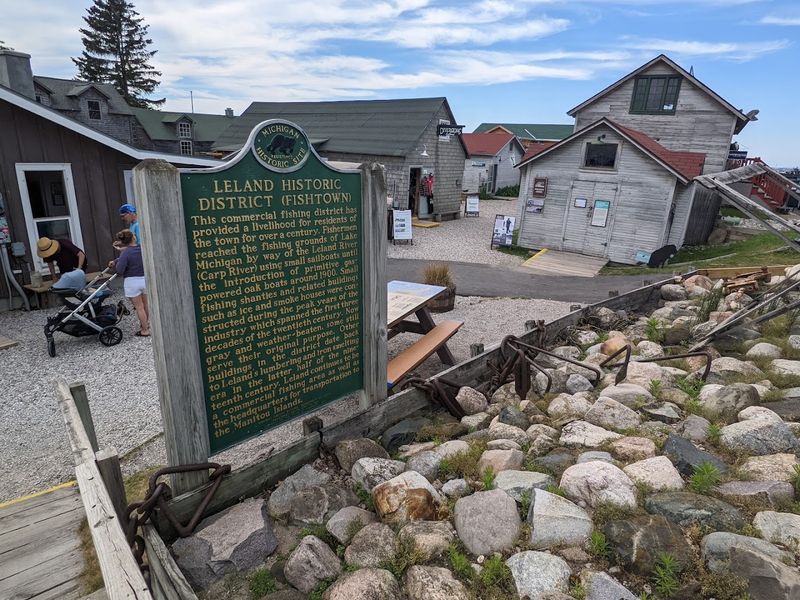
Carlson’s Fishery is more than a reliable stop within Fishtown. Operating since 1904, it anchors the district in continuity, reminding you that the village’s story is not abstract heritage but a chain of actual families, catch, processing, and sale.
In a setting where some shanties now serve newer purposes, that continuity gives the waterfront its credibility.
The fishery is known for fresh and smoked fish, whitefish sausage, fish pate, and fish jerky, all rooted in the local commercial fishing tradition. Even if you are mostly here for history and atmosphere, this is one of the clearest ways to connect the preserved buildings to the work they supported.
It grounds the visit in livelihood rather than sentiment alone.
Use The Dam And River Current To Understand The Village
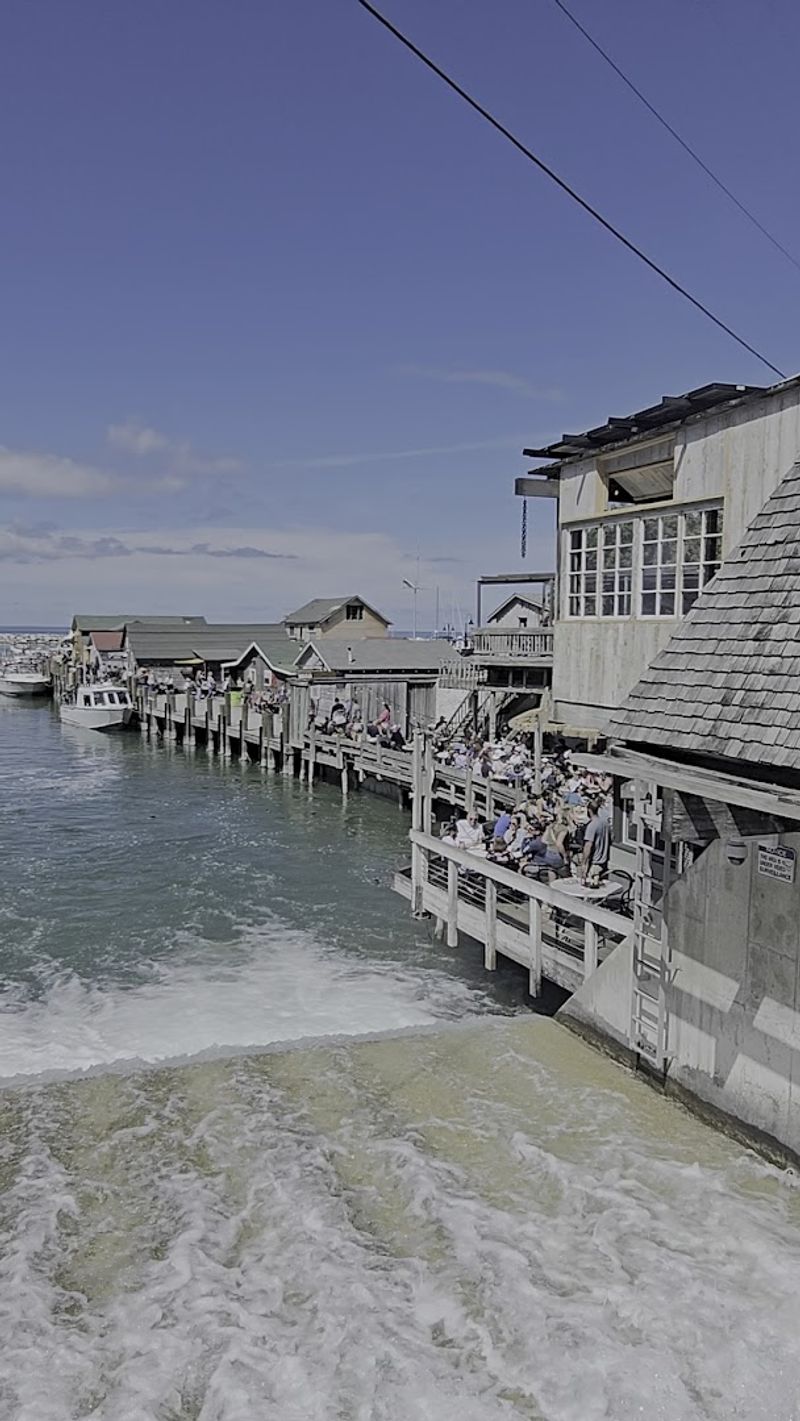
A subtle but important trick in Fishtown is to read upstream as well as out toward Lake Michigan. The river, the dam, and the changed water levels are not background facts.
They are part of why the village developed as it did, shaping access, industry, and the tight arrangement of structures that still define the site today.
The mid nineteenth century dam built by Antoine Manseau and John Miller for the sawmill altered the local water system significantly, raising the level of the Leland River and Lake Leelanau by about twelve feet. That kind of intervention is easy to overlook when the setting feels so natural and old.
Yet it explains the village as engineered waterfront history, not merely scenic inheritance.
Remember That Not Every Shanty Means The Same Thing Now
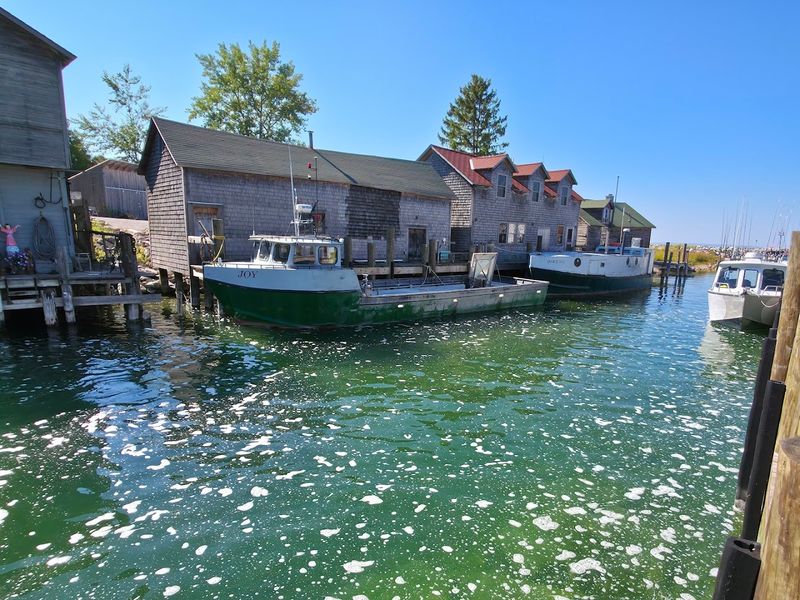
Part of Fishtown’s intrigue is that adaptation is visible without fully overwhelming the past. Some former fishing buildings now hold boutiques, galleries, shops, or food counters, but the district still reads as a cluster of utilitarian waterfront structures first and commercial destinations second.
That hierarchy matters, because once the old fabric becomes mere packaging, authenticity gets very thin.
Here, the original forms still do a lot of interpretive work for you. Low eaves, narrow passages, hanging docks, and rough siding keep reminding you what these structures once did, even as their uses have diversified.
I appreciated that the village never felt frozen or fake. It felt edited, yes, but still honest about the work that built it.
Finish With The Idea That This Is A Living Waterfront, Not A Replica
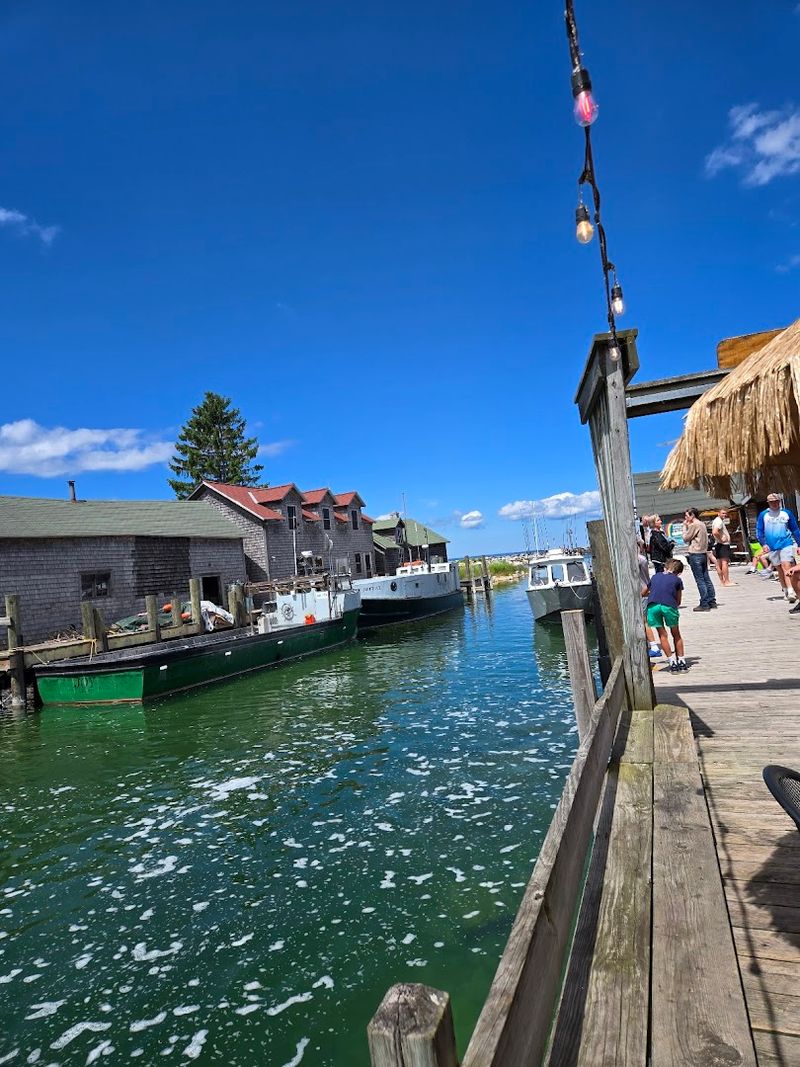
The lasting impression of Fishtown is not nostalgia alone. It is the rare sensation of seeing a Great Lakes place where history, preservation, and present-day function still overlap enough to make each other legible.
The village remains one of Michigan’s only unmodernized commercial fishing complexes, and that distinction is not just a slogan. You can feel it in the scale, materials, and stubborn practicality.
That is why the site stays with you after the visit. Historic designation, careful stewardship, and ongoing fishing activity all matter, but the real power is simpler: this waterfront still looks like it expects work to happen.
In an era of polished imitation, that plainspoken authenticity feels almost startlingly generous.