
A Secluded Ohio Path Leads To One Of The State’s Dreamiest Nature Scenes
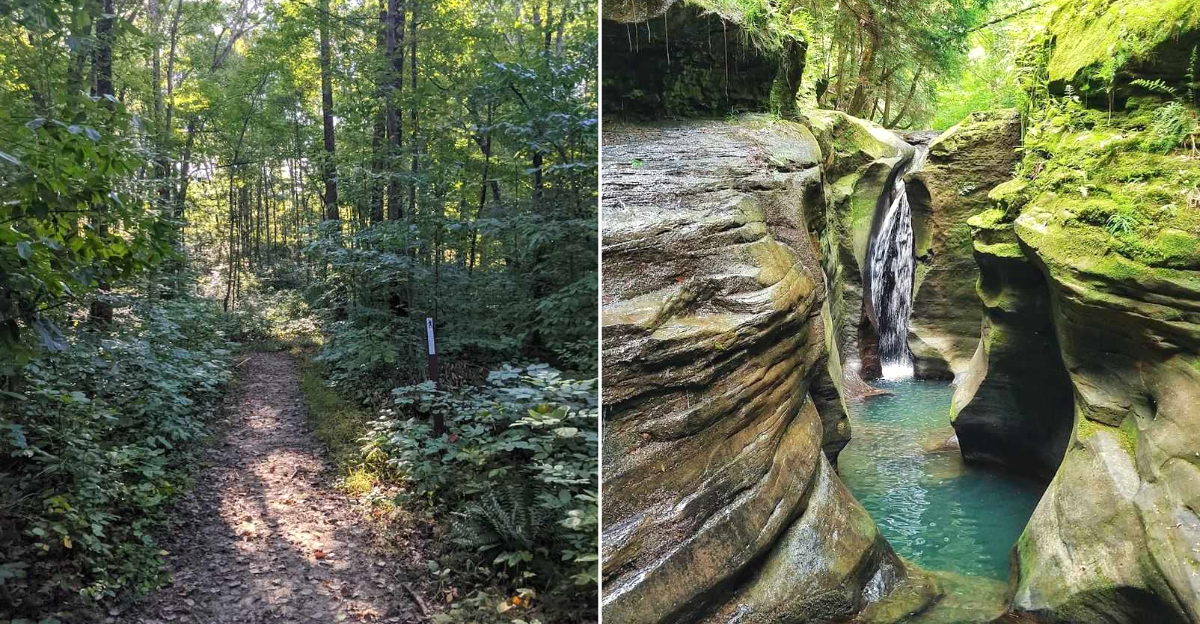
Some Ohio trails feel like they were quietly saving their best tricks for the people willing to take the slower road. This one does exactly that, with rolling hills, bursts of wildflowers, and the kind of peaceful scenery that makes your phone feel suddenly very needy.
I came across this preserve on a lazy spring weekend, expecting a pleasant walk and maybe a few pretty views. Instead, I found a place that felt calm, colorful, and just hidden enough to make the whole hike feel like a small discovery.
The beauty here is not loud or overly polished. It is softer than that, with wooded paths, gentle climbs, and little moments that make you stop for one more photo before moving on.
For anyone craving an Ohio hike that feels scenic, quiet, and a little storybook-like without turning into a full expedition, this trail is worth keeping on your list.
Finding Boch Hollow State Nature Preserve
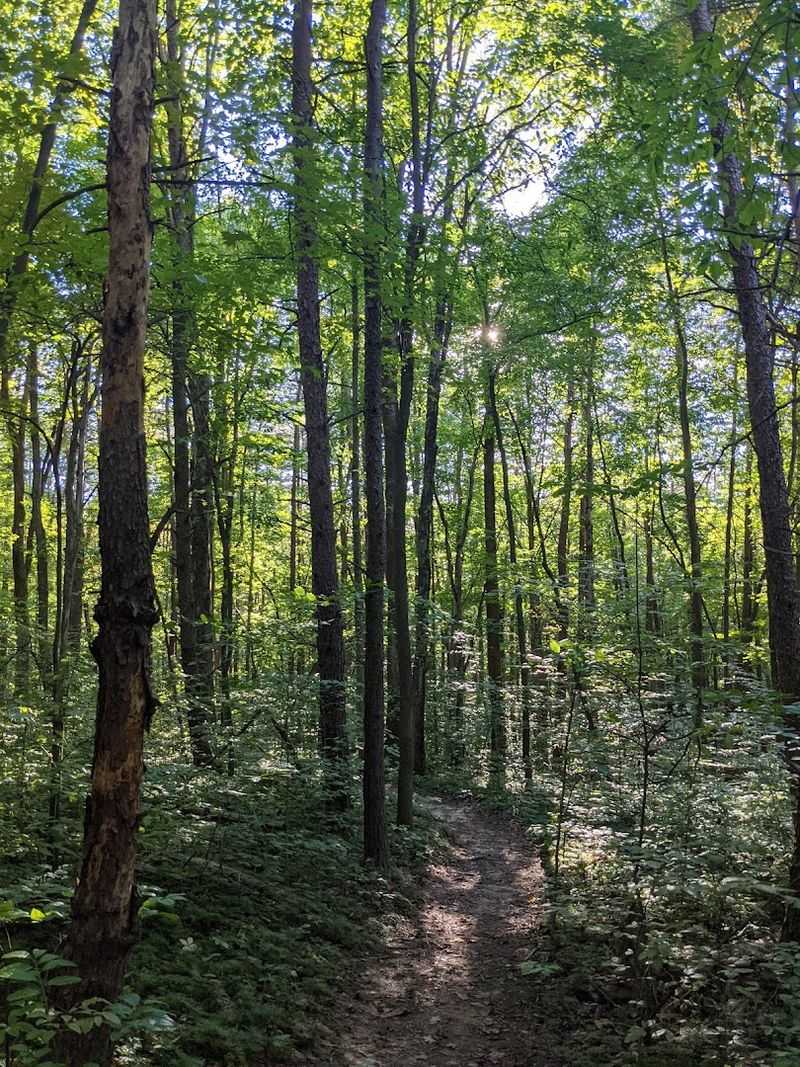
Not every great hike begins with a dramatic entrance, and Boch Hollow State Nature Preserve proves that quiet starts can lead to pretty memorable walks.
The north trailhead sits in a rural stretch near Logan, where the road feels calm, the scenery gets greener, and the whole place seems to ask you to slow down before you even park.
Getting here takes a little commitment, but that is part of what makes the preserve feel special. Cell service can get unreliable as you approach, so downloading offline maps ahead of time is genuinely smart.
GPS should get you to the gravel parking area without too much trouble, but do not expect a fancy visitor center, a big welcome sign, or restrooms waiting at the trailhead.
This place is beautifully bare-bones, which is a polite way of saying nature is doing most of the hosting.
The preserve sits in northern Hocking County at the edge of the Hocking Hills region, but the quieter setting should not fool you. The scenery here can absolutely hold its own against the more famous parks nearby.
The preserve is open from one-half hour before sunrise to one-half hour after sunset, giving you plenty of time to explore without rushing through the best parts.
You will find the Boch Hollow State Nature Preserve North Trailhead at 31893 Beach Camp Rd, Logan, OH 43138.
The Trail System And What To Expect

Three different trailheads make up this preserve, and each one brings something slightly different to the table.
The north trailhead connects to a network of marked paths that let you customize your hike based on how much energy you have brought with you that day.
Shorter routes are available if you just want a quick taste of the scenery, while the full trail network covers about seven miles for those who want a real workout.
Trail markers are genuinely helpful here. I never once felt lost, which is a bigger compliment than it sounds in a preserve this remote.
The terrain involves a fair amount of up and down movement, with rolling hills that keep your legs guessing. It is not extreme, but calling it easy would be misleading.
Most hikers would classify the difficulty as moderate, meaning it is accessible to a wide range of fitness levels while still offering enough challenge to feel satisfying when you finish.
The trails stay well-maintained through most seasons, and even winter visits have drawn enthusiastic hikers out onto the paths.
Wildflower Season At Its Best

Spring at Boch Hollow is something that genuinely stops you in your tracks.
The preserve is well known for spring wildflowers, and checking the current ODNR or local events calendar before your visit is a smart move if you are hoping to pair your hike with a guided program.
Even without a guided tour, the wildflower display here is extraordinary. The forest floor fills with color in a way that feels almost theatrical, like nature decided to show off.
Trilliums, wild ginger, and a wide variety of spring ephemerals push up through the leaf litter and line the trail edges with soft, delicate color.
What makes this spot special is the combination of the flowers and the terrain. Rolling hills frame the blooms from every angle, creating views that genuinely look like they belong on a postcard.
April is widely considered one of the best times to visit for wildflowers, though the preserve stays beautiful well into May as the canopy fills in and the forest takes on that deep, lush green that only comes with full summer growth.
The Rolling Hills And Terrain Features
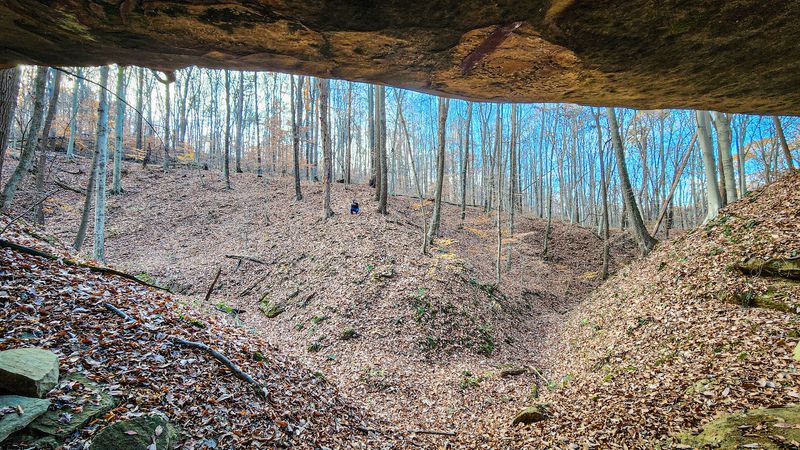
The hills at Boch Hollow are the kind that make your calves ache in the best possible way.
They are not towering mountains, but they have enough elevation change to give you real views and a genuine sense of accomplishment when you crest each one.
Sandstone outcroppings jut out from the hillsides in several spots, adding texture and visual interest to the landscape. These rocky formations catch the light differently depending on the time of day, and they make for excellent rest stops.
The ridgelines offer sweeping views of the surrounding forest, especially in early spring before the leaves fully open. That brief window when the trees are just budding gives you sight lines that disappear once summer arrives.
Caves and rock shelters dot the preserve as well, and stumbling across one mid-hike always feels like a small discovery worth celebrating.
The combination of hills, rocks, caves, and open ridges means that no two sections of trail feel identical. Each turn brings something new into view, which keeps the hike feeling fresh from start to finish rather than like a repetitive loop through identical scenery.
Water Features Along The Route

Water makes any trail feel more alive, and Boch Hollow delivers on that front.
Ponds and small stream corridors add quiet moments throughout the preserve, reflecting the surrounding trees in a way that feels almost meditative. I stopped longer than I probably needed to, but the stillness made it hard to leave.
Smaller stream crossings appear in parts of the preserve, adding a playful element to the hike that kids especially seem to enjoy. Hopping rocks across a shallow creek never gets old, no matter how many times you have done it.
Laurel Falls, formerly known as Robinson Falls, is one of the preserve’s most significant natural features and requires an access permit from the Division of Natural Areas and Preserves. Up close, the falls are far more dramatic than they appear from a distance.
Because access rules protect sensitive areas, this is one feature you should plan for ahead of time rather than treating it like a casual side path.
The ponds scattered throughout the property are particularly pretty in morning light, when mist sometimes hangs low over the water.
Fungi, Flora, And The Forest Floor

Most hikers come here for the hills and wildflowers, but the forest floor at Boch Hollow deserves its own standing ovation.
The variety of fungi growing throughout the preserve is genuinely remarkable. On my visit, I counted more than a dozen different mushroom varieties within the first mile alone, ranging from tiny white caps to enormous shelf fungi spreading across fallen logs.
Mosses cover the rocks and roots in thick green layers, giving the forest an ancient, undisturbed quality that feels rare in a world where most natural spaces see heavy foot traffic.
Ferns fill the understory in dense patches, especially in the shaded hollows where moisture collects. Walking through those sections feels like moving through a miniature jungle.
The tree diversity is impressive as well, with mature hardwoods forming a high canopy that filters sunlight into soft, dappled patterns on the ground below.
Birdlife adds sound to the visual richness, with songbirds calling from the upper branches throughout the morning hours. The whole ecosystem feels balanced and thriving in a way that reminds you why places like this are worth protecting.
Solitude And Crowd Levels

Quiet is not always easy to find near popular outdoor destinations, but Boch Hollow has mastered the art of staying under the radar.
On most visits, hikers report seeing only a handful of other people on the trail, sometimes fewer. My own experience matched that exactly.
I passed one other couple near the trailhead and then had the rest of the hike almost entirely to myself.
That level of solitude feels increasingly rare, especially on weekends when nearby state parks can get crowded enough to feel more like a theme park than a nature preserve.
Part of what keeps the crowds thin is the location. The preserve sits far enough off the main tourist corridor that casual visitors rarely make the trip out here.
That is genuinely good news for anyone willing to make the drive.
The peacefulness here is not just about fewer people. The preserve itself absorbs sound beautifully, with the dense tree cover muffling any distant road noise and creating a sense of genuine isolation.
If the Hocking Hills crowds have ever exhausted you, this place is the answer you have been looking for all along.
Permit Requirements And Practical Details

A free access permit from the Ohio Department of Natural Resources is required to visit certain sections of Boch Hollow, including the Laurel Falls area.
The permit process is straightforward and costs nothing, but you do need to plan ahead and obtain it before your visit. Showing up without one means missing out on some of the preserve’s most dramatic scenery.
The preserve is open every day from one-half hour before sunrise to one-half hour after sunset, which gives you a reasonable amount of time to complete most trail configurations without rushing back to the car.
There are no restrooms at the gravel parking area, so plan accordingly before you leave home. No picnic tables are listed as a major visitor amenity either, though the trail itself offers plenty of natural spots to sit and enjoy a snack.
Cell service can be unreliable in this area, which means offline maps are not just helpful but genuinely necessary. Download your route before you lose signal on the approach road.
For questions or more information, the preserve can be reached at 740-380-8918, and the official ODNR website has current trail conditions and permit details available.
Visiting With Kids And Families
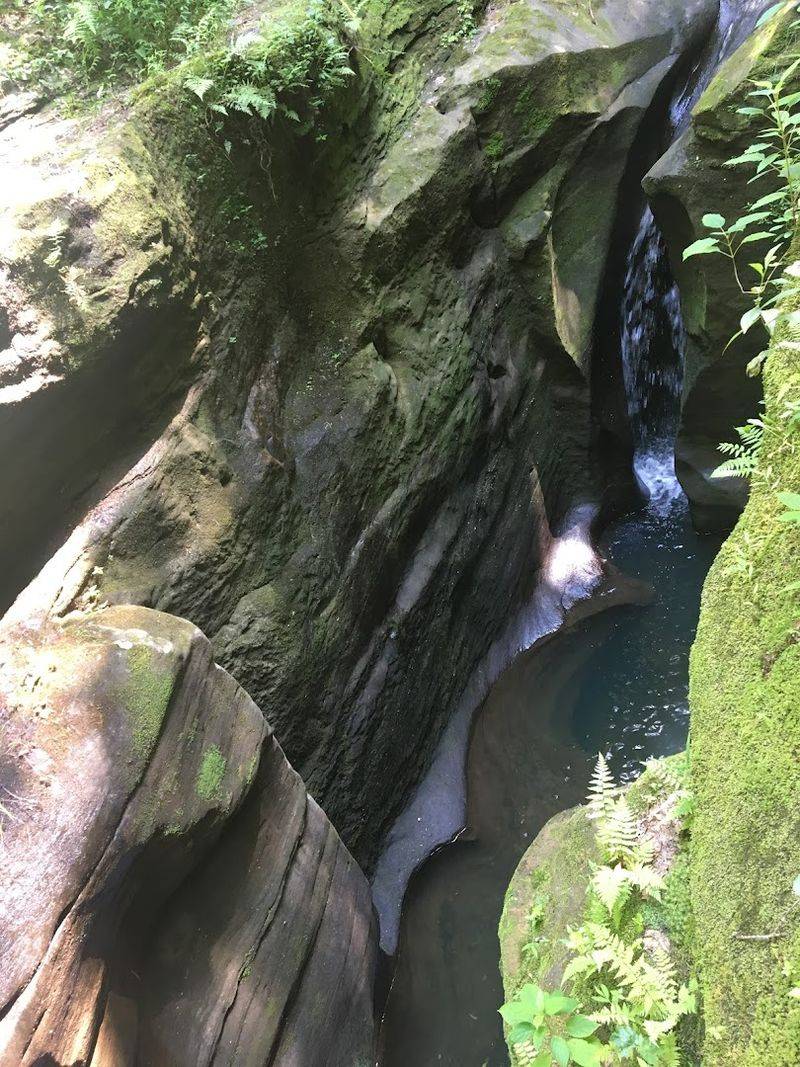
There is something about a trail with hills, rocks, caves, and stream crossings that turns ordinary kids into enthusiastic explorers.
Boch Hollow is well-suited for families who want to introduce younger hikers to real trail experiences without the overwhelming crowds of more famous parks. The moderate difficulty level means most kids with some hiking experience can handle the terrain comfortably.
The shorter loop options are particularly useful for families with younger children who have not yet built up the stamina for a full seven-mile day. Starting small and turning around when energy runs low is always a valid strategy here.
Stream crossings become instant highlights for kids, who tend to treat every rock hop as a personal challenge. Caves and sandstone outcroppings add an element of discovery that keeps younger hikers moving forward rather than asking how much farther there is to go.
Note that dogs are not currently permitted on the trails, which is worth knowing before you pack up the car.
The preserve is not wheelchair accessible due to the hilly terrain, but it welcomes visitors of most ages and fitness levels who can manage uneven ground and moderate elevation changes.
Why This Place Deserves A Spot On Your List

Some places earn their reputation through marketing, and some earn it through sheer beauty. Boch Hollow falls firmly in the second category.
The combination of rolling hills, seasonal wildflowers, water features, sandstone outcrops, and genuine solitude creates an experience that feels complete in a way that is hard to manufacture.
It sits close enough to Columbus for a comfortable day trip, which means you do not need to plan a major expedition just to enjoy a morning on the trail.
Visitor feedback is consistently strong, and the appeal makes sense once you are out on the paths. Whether you are a seasoned hiker or someone lacing up boots for the first time in years, this preserve meets you where you are.
Spring wildflower season is the headline act, but the preserve rewards visits in every season. Summer brings full green canopy, autumn delivers color, and winter strips the trees back to reveal terrain features that disappear under summer foliage.
Every season here tells a different story, and the best part is that the trail is almost always quiet enough for you to hear it clearly.