
This Unassuming Arkansas Trail Leads To The Most Breathtaking View You’ve Ever Seen
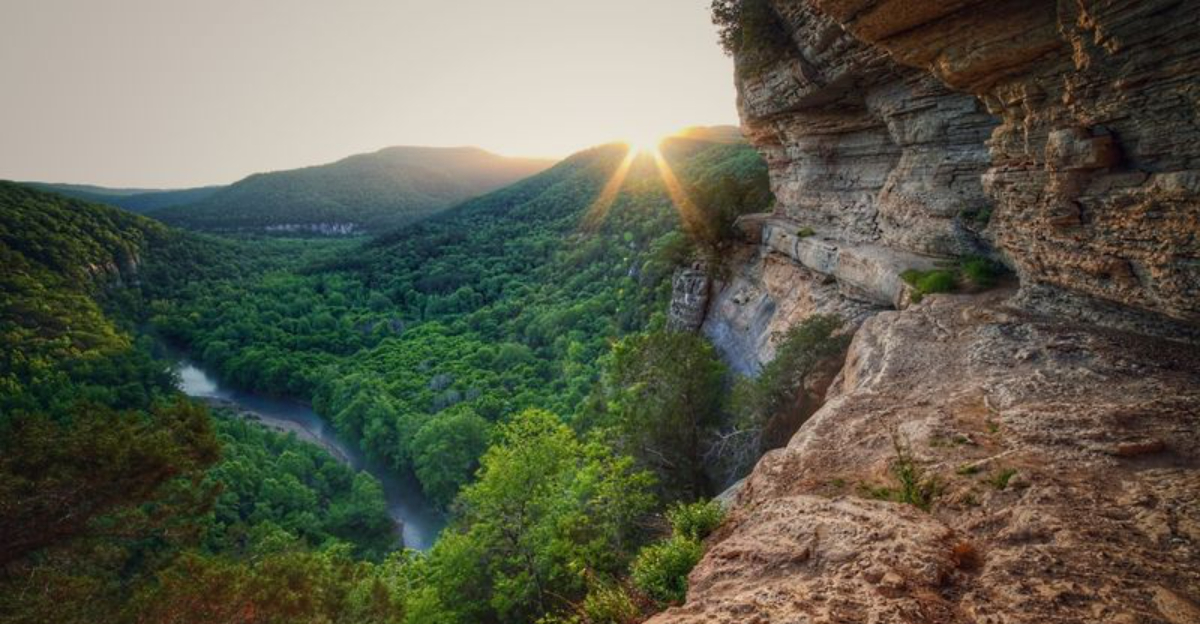
A six-mile hike does not sound like the kind of thing that rearranges your whole day. Then you meet a trail like this.
It begins quietly enough, with dirt underfoot and that steady feeling of moving deeper into the Ozarks. You think you know what kind of hike you signed up for.
Then the ledge shows up.
High above a bending river in Arkansas, the trail slips along a cliff face that makes hikers slow their steps and pay attention. I had heard the stories and thought, okay, people love to hype a view.
But this one earns every raised eyebrow. The final payoff feels huge without making the hike feel punishing.
It is striking, sure, but the real draw is that little rush when the forest opens and the rock takes over. This route keeps getting shared again and again by hikers for a reason.
A Narrow Path Above The River
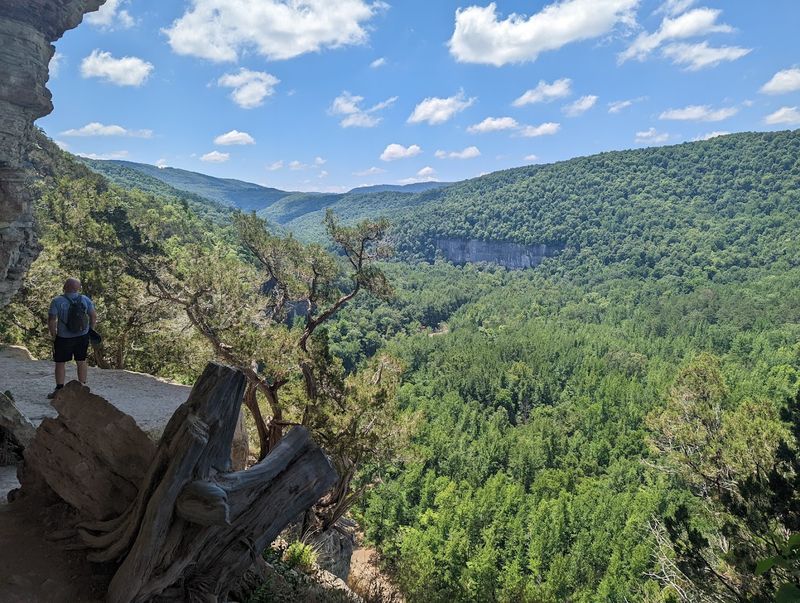
The first steps onto the ledge can feel almost unreal, with open air on one side and the Buffalo River hundreds of feet below.
That narrow, rocky ledge is carved directly into the side of Big Bluff, and in places it measures only about a meter across.
The cliff wall rises close beside you, while the valley drops away so sharply that every step starts to feel deliberate.
Every footstep feels intentional up there, and the path demands your full attention, rewarding that focus with views that stretch across the Buffalo River valley in every direction.
Hikers with a fear of heights should think carefully before attempting this section, and parents should keep small children close.
The hike starts at the Centerpoint Trailhead near Compton, AR 72624, then follows the Centerpoint Trail toward Big Bluff. The final exposed spur is the Big Bluff Goat Trail, a route named for feral descendants of pioneer-era goats rarely seen here today.
Where The Bluff Opens Wide
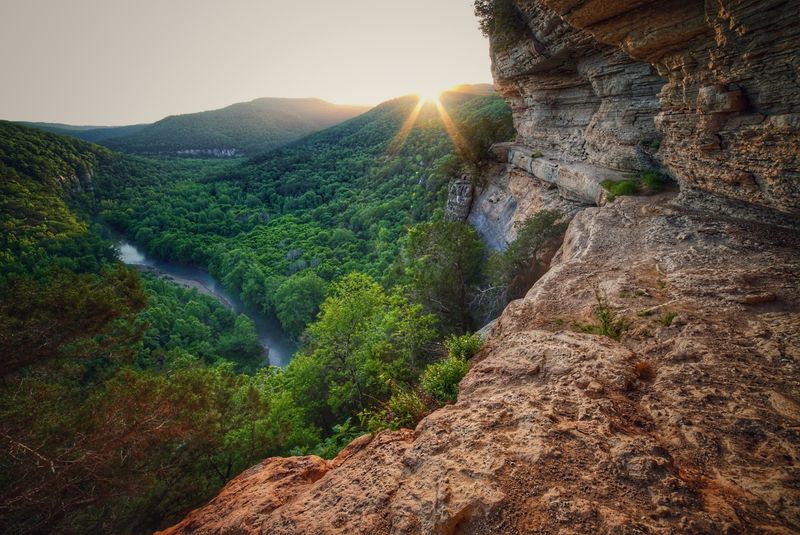
After threading through the tightest section of the ledge, the trail suddenly opens onto a broader overlook. Big Bluff announces its scale in a way that no photograph quite captures.
Big Bluff stands roughly 550 feet tall, making it one of the tallest sheer bluff faces anywhere between the Rocky Mountains and the Appalachian Mountains. The Goat Trail itself follows the edge of a sheer cliff hundreds of feet above the river, which feels even more intense when you are standing near that drop.
The Buffalo River curves through the valley below like a silver ribbon stitched between ridgelines, and the Ozark wilderness stretches out in every direction with almost no sign of development.
I remember pulling out my water bottle at this spot and just standing there, not even drinking, just staring.
The scale of the landscape does something to your sense of time, slowing everything down in a way that feels genuinely restorative.
Hikers who push through the strenuous climb to reach this point often come away calling it one of the finest natural rewards in the entire state of Arkansas.
Forest Shadows Along The Edge
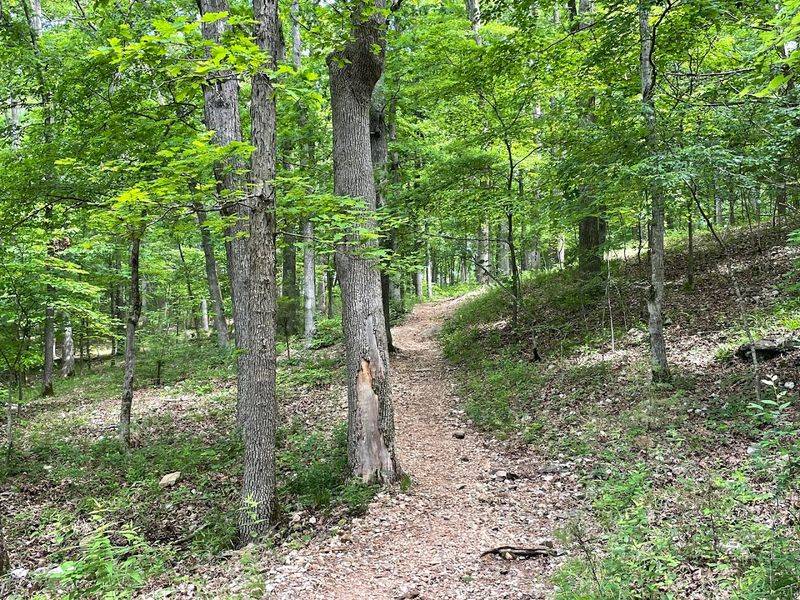
Before the dramatic ledge section arrives, the trail spends a generous stretch winding through dense Ozark forest. That shaded corridor has its own quiet personality worth appreciating.
Tall oaks and hickories close overhead, filtering sunlight into shifting patterns on the rocky ground, and the temperature drops noticeably under that canopy on warm days, which feels like a small gift from the trail itself.
Wildlife is active in these woods, and I spotted deer tracks pressed into a muddy stretch near a seasonal creek crossing without even looking hard for them.
The forest section also gives your legs a chance to find their rhythm before the terrain opens up and demands more careful footing.
Trail markers matter here, because several paths intersect the Centerpoint Trail and side routes can appear convincing.
The quiet stretch through the shadows is honestly part of what makes the eventual view so satisfying, since the contrast between closed forest and open sky feels like the trail planned it that way on purpose.
A Quiet Walk Through The Ozarks
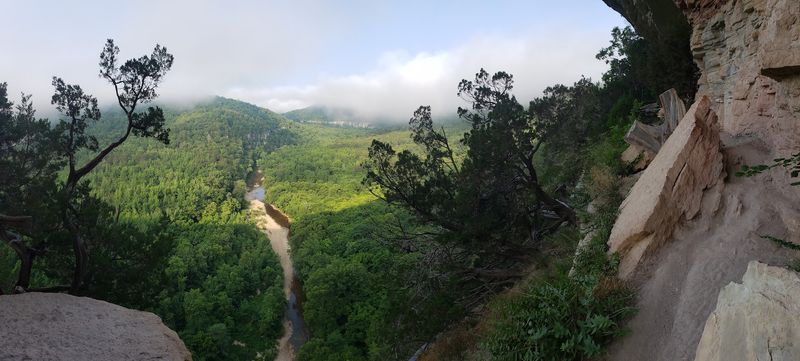
Long before the Goat Trail became a bucket-list hike, this corner of the Ozarks was tied to pioneer stories of goats roaming the bluffs. That layered history gives the walk a texture that goes beyond scenery.
The full out-and-back route covers approximately six miles and typically takes between four and six hours to complete, which is a comfortable pace for anyone who stops to look around and refill a water bottle along the way.
Solitude is one of the trail’s most underrated qualities, especially on weekday mornings when the Centerpoint Trailhead parking area holds only a handful of vehicles.
The Buffalo National River designation means the surrounding land is federally protected, so the wilderness you walk through still feels rugged rather than polished.
Birdsong fills the trail consistently, and the rhythm of boots on limestone becomes almost meditative after the first mile.
You need enough water for the full round trip, because the return journey is largely uphill and the elevation change of roughly 1,000 to 1,100 feet makes itself known on the way back in a way that surprises first-timers.
Sunlight Over The Valley Below
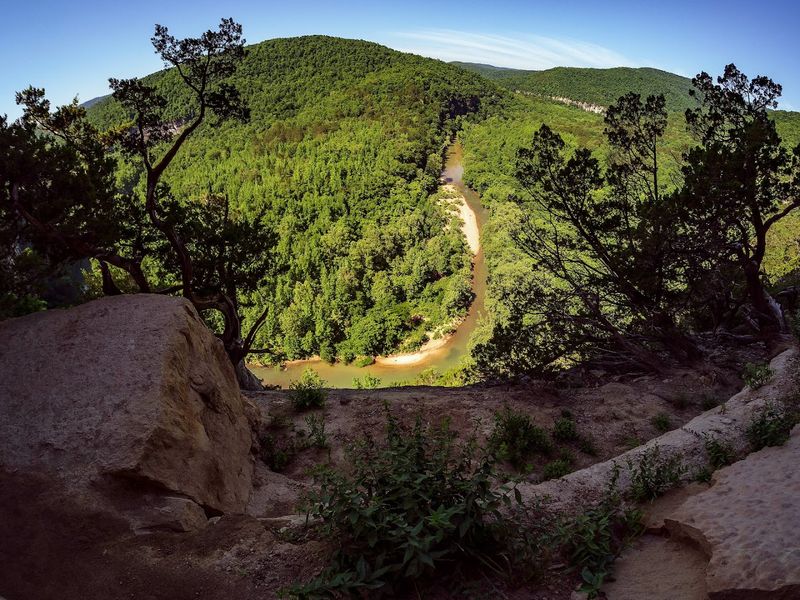
A mid-morning arrival can put you on the ledge as the sun rises above the eastern ridgeline. The valley begins filling with warm light, and that particular moment is worth planning around.
The Buffalo River catches the sun from this height in a way that makes the water look almost luminous, shifting between deep green and pale gold depending on the angle and the cloud cover overhead.
Mist sometimes lingers in the valley during cooler months, drifting between the ridges in slow curls while the bluff itself sits in full sunlight, and that contrast between the hazy valley floor and the clear sky above the ledge is genuinely striking.
Spring and fall are widely considered the best seasons to visit, with spring bringing fresh green foliage and fall painting the Ozark ridgelines in warm amber.
Summer visits are possible but demand an early start before heat builds on the exposed sections of the trail.
Every season delivers a different version of that valley view, which is part of why hikers who have done this trail once tend to come back and do it again without much convincing.
Rocky Ledges With Endless Views
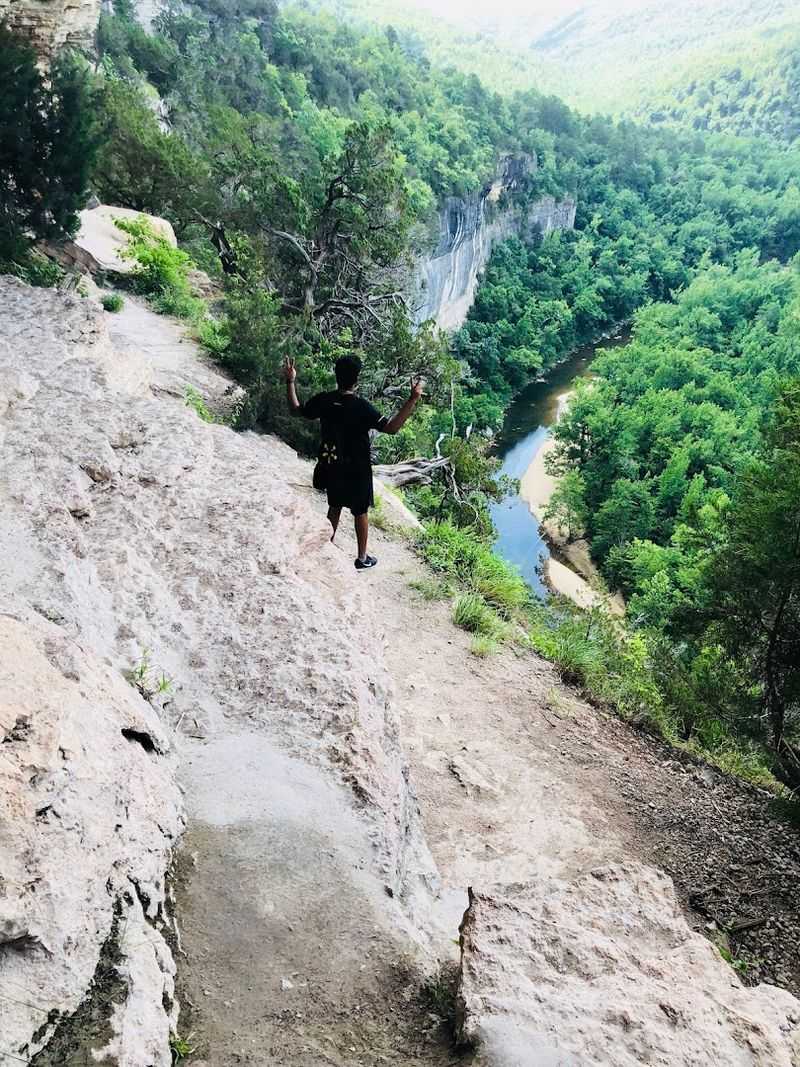
The limestone underfoot along the Goat Trail is honest rock, uneven and textured in a way that keeps you thinking about each placement of your foot. That physical engagement with the terrain is part of what makes the experience feel real rather than curated.
Sturdy hiking boots with solid support are genuinely important here, because the rocky ledges along the bluff face offer little forgiveness for soft-soled footwear.
Trekking poles are worth considering for the descent sections, where loose rock and steep grade combine to test your balance in ways that flat trails never do.
The ledge sections reward slow, deliberate movement, and hikers who rush through them miss the details that make this trail special, including the texture of the cliff wall and the sound of wind moving through the valley far below.
The trail is strenuous, and that difficulty reflects both the elevation change and the technical attention required on the exposed sections near the bluff.
Search and Rescue operations have been conducted in this area, which is a practical reminder that preparation and patience are the two most important things you can carry onto these rocky ledges.
The Wild Beauty Of The Cliffside
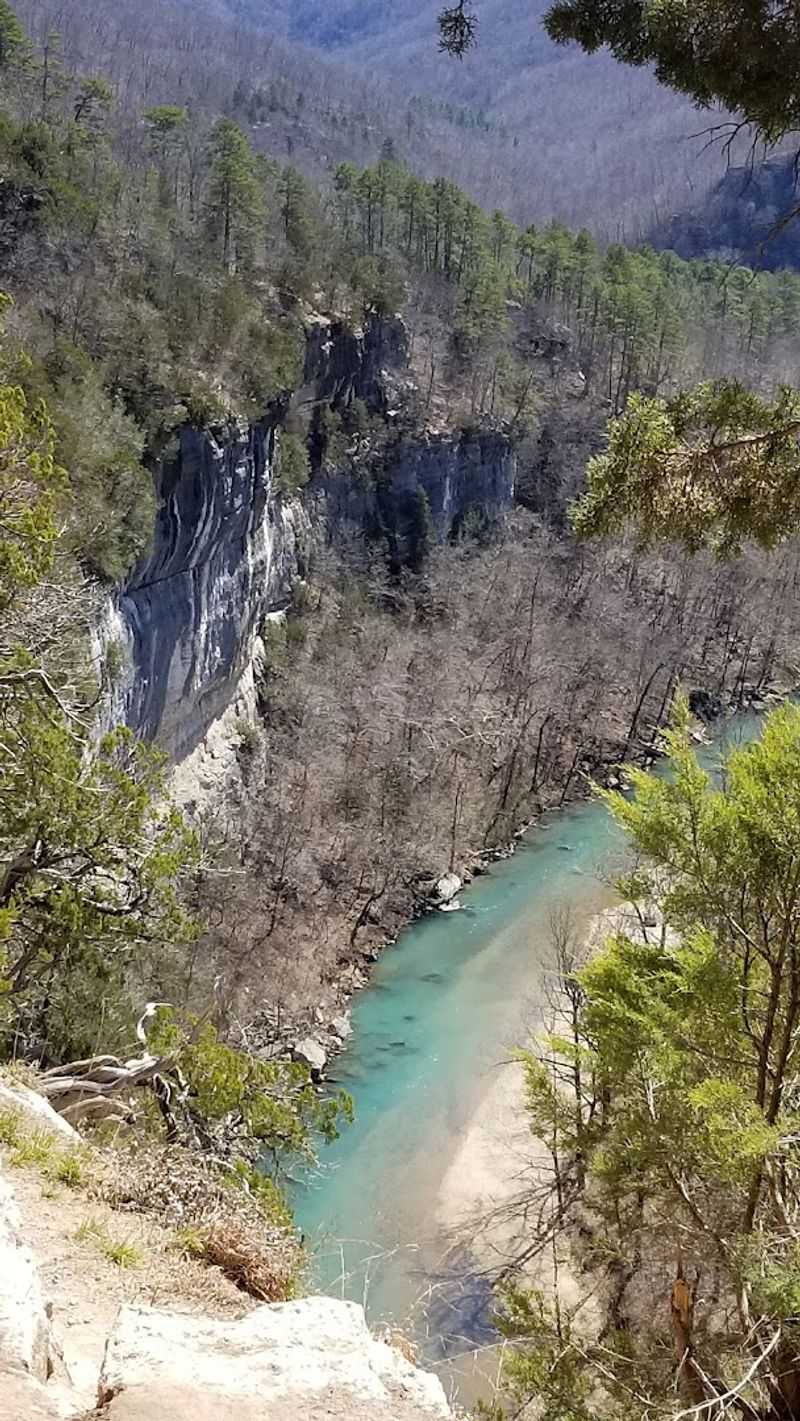
Big Bluff does not ease you into its presence gradually but presents itself all at once. A sheer limestone and dolomite wall drops toward the river below, and the first clear view of it from the trail can quiet a group almost instantly.
The cliff face itself is streaked with mineral stains and patched with hardy vegetation that somehow finds purchase in the rock, and up close the texture of that wall tells a geological story that spans millions of years.
Wildflowers appear in the crevices during spring, small bursts of color against pale limestone that feel almost defiant given the exposure.
The Buffalo National River corridor protects this entire landscape, meaning the cliffside and the forest below it still reflect the wilder character of the Ozarks.
Photographers tend to linger at the bluff longer than anyone else on the trail, working the light and the angles with a focus that other hikers quietly respect.
The cliffside has a rawness that no filter improves, and this close view of the rock feels like a conversation with the oldest version of the Ozarks.
A Hidden Overlook Worth The Hike
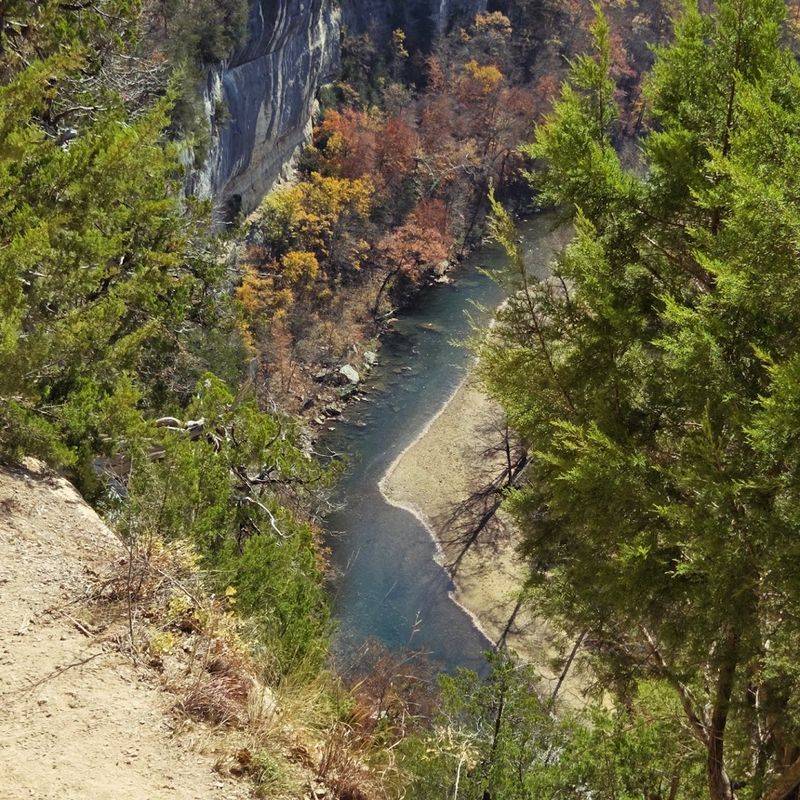
Not every great overlook in America comes with a paved parking lot and a gift shop. This one certainly does not, which is exactly what makes reaching it feel earned rather than handed to you.
The Centerpoint Trailhead near Compton is the starting point for the roughly six-mile round trip, and the drive to get there winds through rural roads that set the tone for the kind of adventure waiting ahead.
Plenty of hikers describe the overlook at Big Bluff as one of the prettiest views in Arkansas, a claim that is easy to dismiss until you are standing there yourself.
The return hike is largely uphill, and the elevation gain on the way back hovers around 1,000 feet, so arriving at the overlook with enough water and energy to enjoy the view before turning around is a practical goal worth planning for.
The overlook puts the Buffalo River far below you, with Ozark ridgelines rolling away in every direction, and the effort of getting there quickly starts to feel worth it.
This remote-feeling corner rewards the curious and anyone prepared to move carefully along a narrow ledge for the sake of a view that stays with you long after the drive home.