
10 Iowa Grottos, Caves, And Stone Wonders That Make A Simple Road Trip Feel Unexpectedly Magical
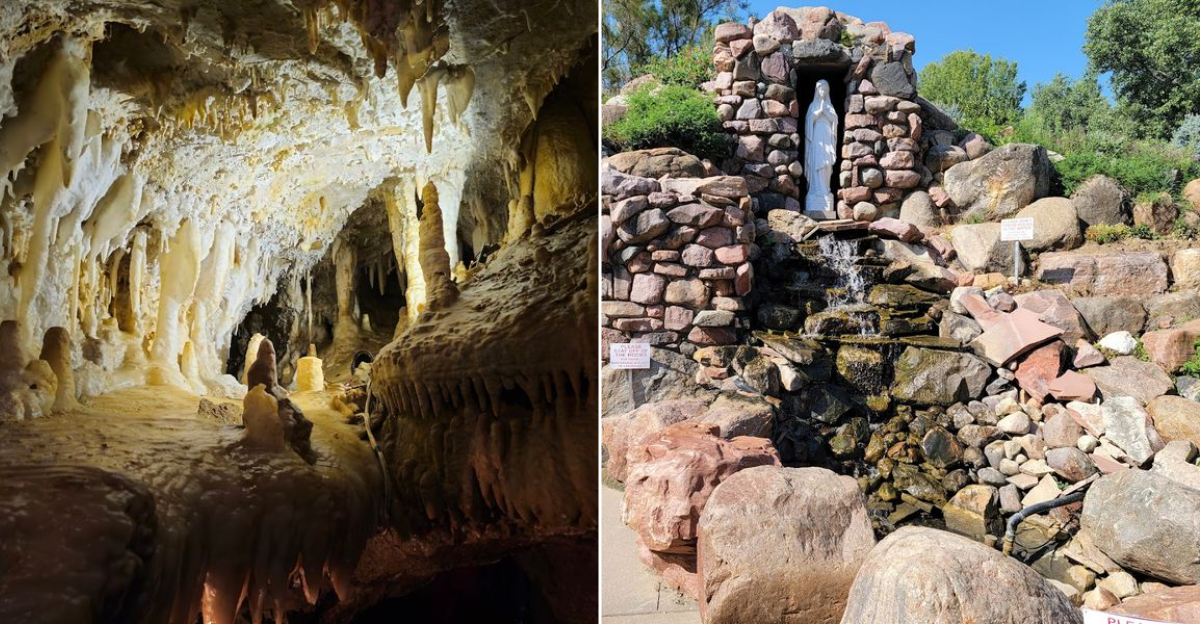
Iowa doesn’t always get credit for being mysterious. People picture endless fields, straight roads, and skies that go on forever. And sure, that’s part of it.
But tucked between all that openness are places that feel like they belong in a different story entirely. Hidden grottos, limestone caves, and stone formations shaped by time instead of trends.
Quiet spaces where the air feels cooler, the light behaves differently, and footsteps suddenly sound like they matter. No need for grand entrances or dramatic signs. The magic here is subtle, almost accidental.
You might be driving past thinking it’s just another stop on a long route. Then you step out, look closer, and realize Iowa has been hiding its own version of wonder in plain sight.
These grottos, caves, and stone wonders turn a simple road trip into something you didn’t expect to remember.
1. The Shrine Of The Grotto Of The Redemption, West Bend
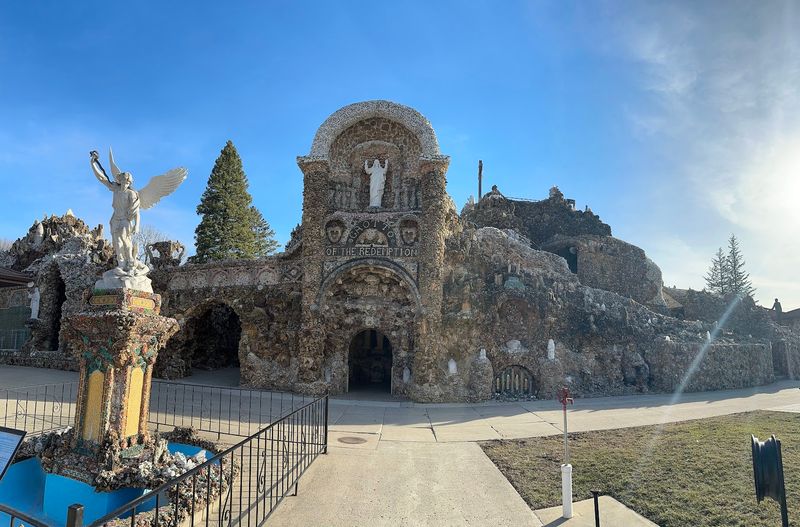
Nothing quite prepares you for the moment you round the corner in West Bend and see it for the first time. Located at 208 1st Avenue NW, West Bend, IA 50597, this extraordinary shrine is often called the Eighth Wonder of the World, and honestly, that title feels earned.
Father Paul Dobberstein began building it in 1912 as a promise of gratitude after recovering from a serious illness. He spent over 40 years crafting this masterpiece by hand.
The grotto contains nine distinct sections, each depicting a scene from the life of Jesus. Over four million dollars worth of gemstones, minerals, fossils, and shells from around the world are embedded into its walls.
That’s not decoration, that’s devotion turned into architecture.
The sheer scale of it covers an entire city block.
Inside the adjacent Christmas Chapel, built in 1929, rocks from every country on Earth line the walls. A 300-pound amethyst sits near the manger, catching light in the most stunning way.
Hand-carved Italian Carrara Marble figures complete the scene with quiet elegance.
The Grotto earned its place on the National Register of Historic Places in 2001. Standing here, you realize some things are simply built to outlast everything around them.
2. Maquoketa Caves State Park, Maquoketa
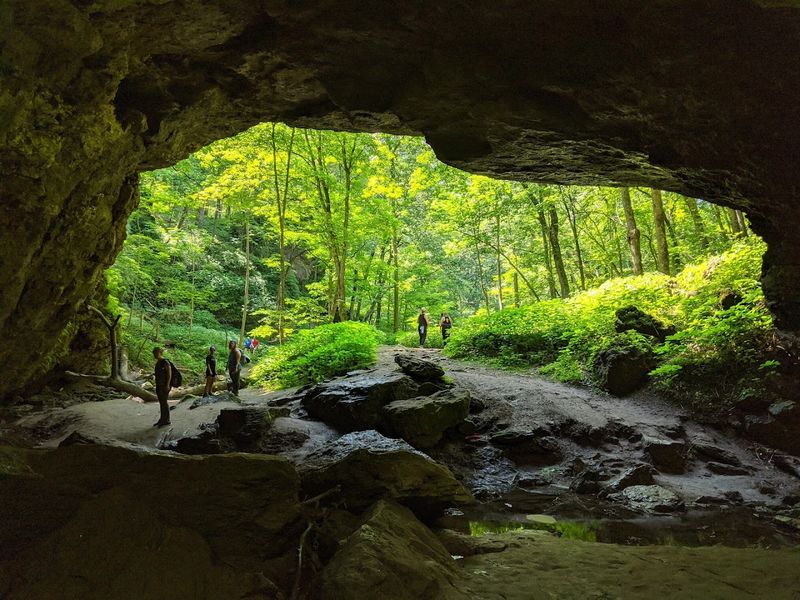
Thirteen caves, one park, and zero reasons not to go. Maquoketa Caves State Park, found at 9688 Caves Road, Maquoketa, IA 52060, holds the title of Iowa’s most cave-dense state park, and it absolutely earns that reputation.
Spread across 192 acres, the park packs in dramatic bluffs, a Natural Bridge rising 50 feet above Raccoon Creek, and a 17-ton Balanced Rock that somehow defies logic every single time you look at it.
The caves here were carved from Silurian age dolomite, rock that formed at the bottom of a shallow tropical sea around 430 million years ago.
That’s not ancient history, that’s ancient ancient history. The star of the show is Dancehall Cave, stretching 1,100 feet with walkways and lighting for easy exploration.
Smaller caves require flashlights and a willingness to crawl through tight passages, which is honestly half the fun.
A six-mile trail system connects all the caves, formations, and scenic overlooks into one satisfying loop. This park sits in Iowa’s Driftless Area, a region known for its rugged, glacier-carved terrain that feels completely unlike the flat landscape people assume covers the whole state.
Pack sturdy shoes and bring a headlamp because some of these caves reward the adventurous ones most.
3. Crystal Lake Cave, Dubuque
Miners drilling for lead in 1868 had absolutely no idea they were about to stumble onto one of Iowa’s most breathtaking underground worlds.
Crystal Lake Cave, located at 6684 Crystal Lake Cave Road, Dubuque, IA 52003, opened to the public in 1932 and has been quietly dazzling visitors ever since. The cave stays at a constant 52 degrees Fahrenheit year-round, so bring a light jacket even in July.
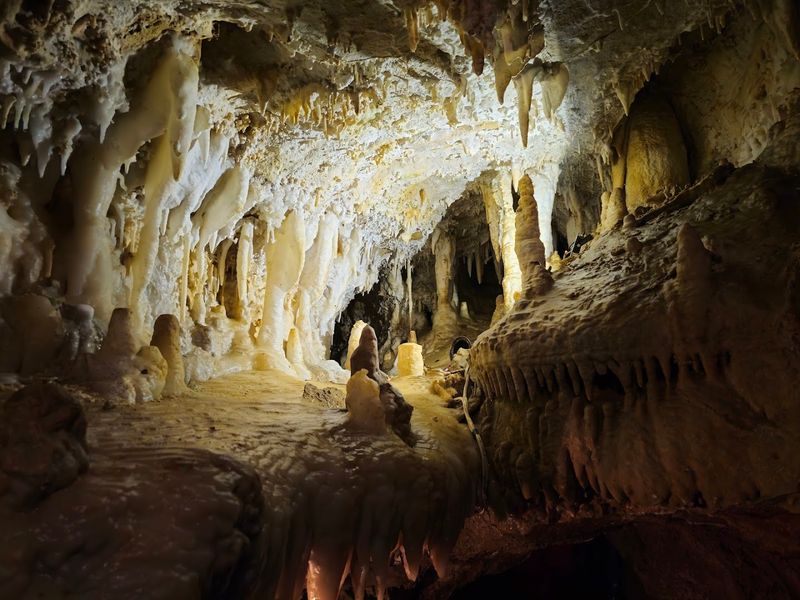
Guided tours run 30 to 45 minutes and wind through chambers filled with stalactites, stalagmites, and glittering crystal deposits that look like someone scattered diamonds across the ceiling.
These formations have been growing for more than two million years through slow limestone erosion and mineral buildup. Every drip of water is still adding to the display, making this cave a living, breathing geological artwork.
The crystal formations here have a delicate, almost otherworldly quality that photographs simply cannot capture fully. Standing inside and watching the tour lights catch each mineral surface creates a moment that feels genuinely surreal.
Dubuque itself is worth exploring before or after your cave visit, with its bluffs and river views adding even more scenery to the day.
Crystal Lake Cave is the kind of place that reminds you the most spectacular things are often hidden just beneath the surface.
4. Spook Cave And Campground, McGregor
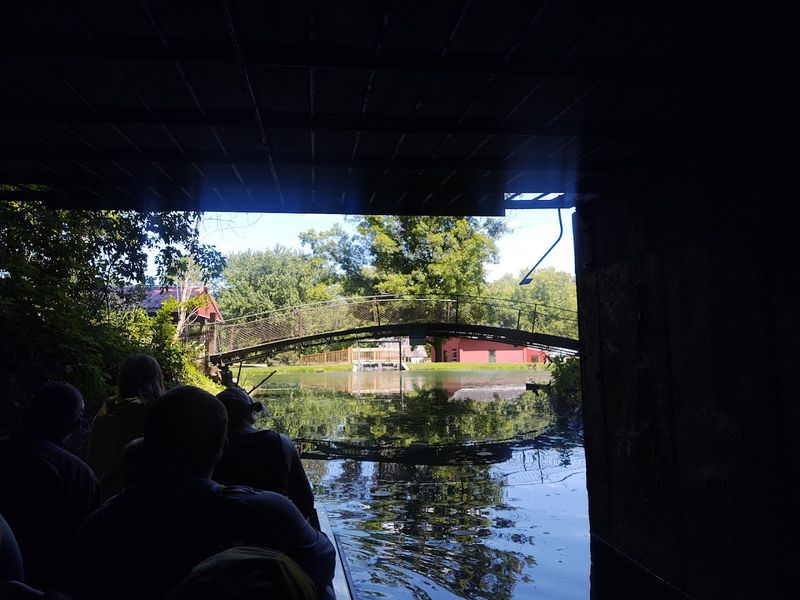
A cave you explore by boat sounds like something from a fantasy novel, but Spook Cave makes it completely real.
Tucked away at 13299 Spook Cave Road, McGregor, IA 52157, this cave offers one of the most genuinely unique experiences in the entire state.
The boat glides through passages where the ceiling drops so low you have to lean back and trust the process, which is equal parts thrilling and unforgettable.
The water inside ranges from two to six feet deep depending on the section, and the cave holds a steady 47 degrees Fahrenheit throughout the year.
Stalactites hang above the waterline like frozen chandeliers, and the sound of water echoing through the rock creates an atmosphere that justifies the name perfectly. Spook Cave earned its reputation long before anyone called anything spooky for fun.
The campground attached to the property makes this an ideal overnight stop for road trippers who want to wake up surrounded by northeast Iowa’s rolling, forested landscape.
McGregor sits near the Mississippi River, so the surrounding scenery already delivers before you even board the boat.
This cave pairs beautifully with nearby Pike’s Peak State Park for a full day of natural wonder. Few experiences in Iowa feel this genuinely adventurous from start to finish.
5. Decorah Ice Cave State Preserve, Decorah
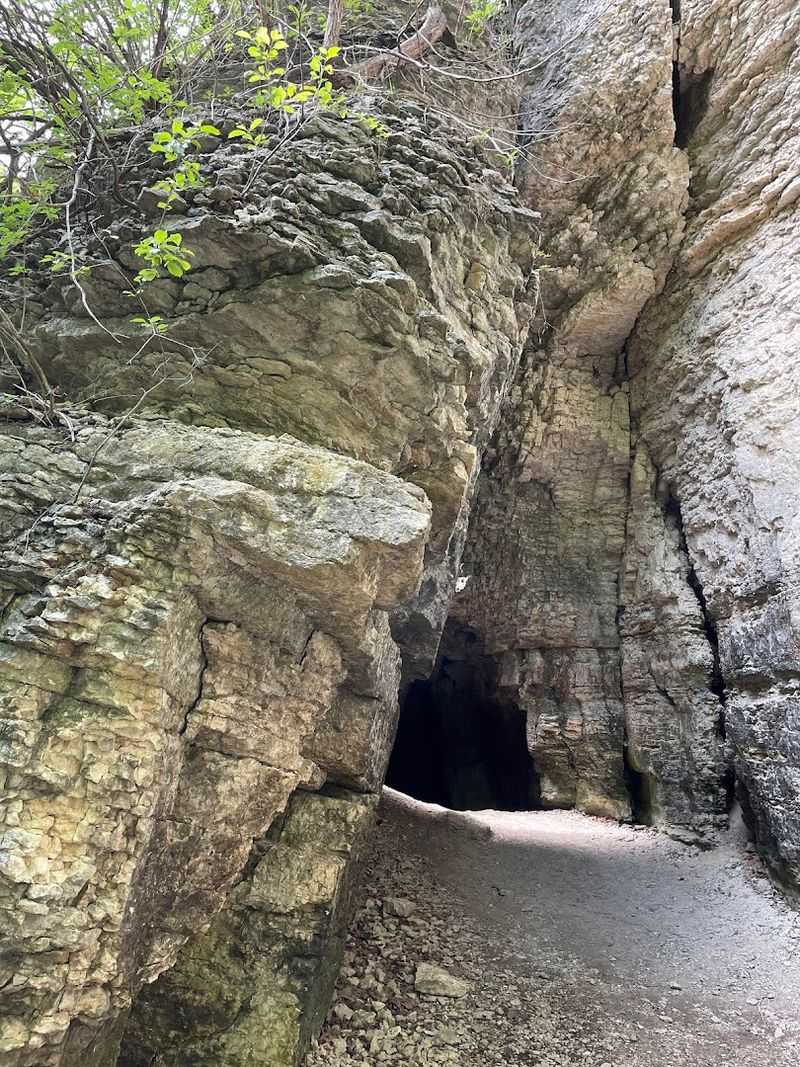
Ice that lingers into late summer inside a cave in Iowa sounds like a riddle, but Decorah Ice Cave State Preserve makes it a reality.
Located along 2559-2539 Ice Cave Road, Decorah, IA 52101, this natural phenomenon works through a clever trick of geology and temperature. Winter cold air sinks into the cave’s rock, chilling it deeply.
When spring water seeps in, it hits those cold walls and freezes on contact.
The ice actually reaches its maximum thickness in June, which is the kind of fact that makes you stop and reconsider everything you thought you knew about seasons.
The entrance is gated to protect the formation, but visitors can feel the cold air flowing out along the trail leading up to it. That chilly exhale from the earth on a warm day is genuinely startling in the best possible way.
Decorah itself is a stunning northeast Iowa town surrounded by bluffs, trails, and the Upper Iowa River, making this preserve just one highlight of a broader outdoor adventure. The hike to the cave is short but rewarding, winding through woodland that feels properly wild and quiet.
The Ice Cave State Preserve is proof that Iowa’s natural world has some genuinely rare and remarkable tricks up its sleeve, and summer is actually the best time to witness them.
6. Our Mother Of Sorrows Grotto At Mount Mercy University, Cedar Rapids
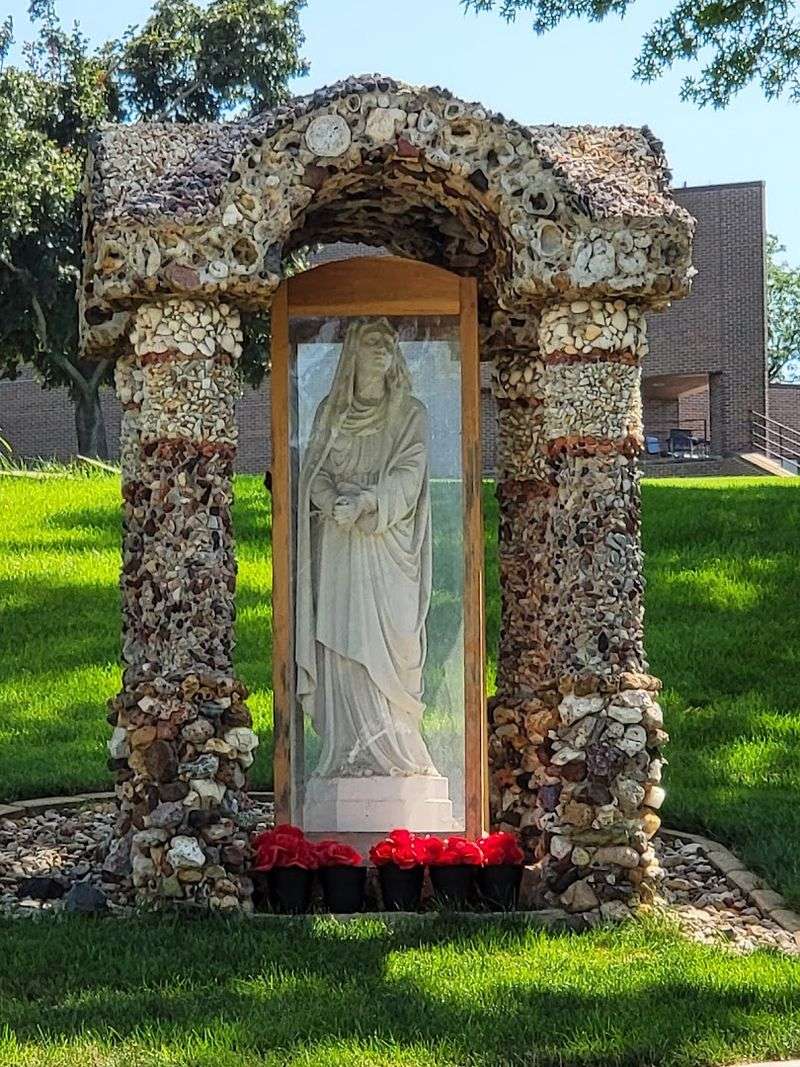
College campuses are usually known for libraries and coffee shops, but Mount Mercy University holds something far more unexpected on its grounds.
The Our Mother of Sorrows Grotto sits at 1330 Elmhurst Drive NE, Cedar Rapids, IA 52402, offering a quiet and contemplative stone sanctuary that feels completely removed from the everyday bustle of campus life. It’s the kind of place you stumble upon and immediately slow down.
The grotto is built from carefully arranged stone and features a serene statue of Mary at its center. The surrounding landscape adds to the sense of calm, with mature trees and campus greenery framing the structure beautifully through every season.
In autumn especially, the colors surrounding the stone create a scene that feels almost painted.
Grottos like this one carry a long tradition in Iowa’s Catholic communities, drawing inspiration from the famous Lourdes Grotto in France.
What makes this one special is its accessibility and the quiet dignity it maintains within an active educational setting. Visitors are welcome to stop by and spend a reflective moment in a genuinely peaceful space.
Cedar Rapids has plenty of other attractions nearby, making this grotto an easy and meaningful addition to any city visit.
Sometimes the most moving stops on a road trip are the ones that ask nothing of you except a moment of stillness.
7. Our Lady Of Lourdes Grotto At Trinity Heights, Sioux City
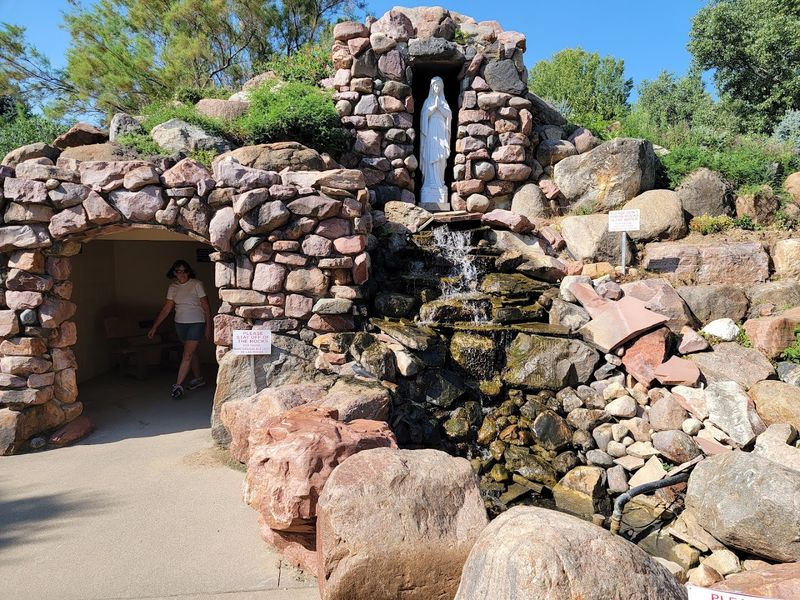
Perched on a hillside in Sioux City with sweeping views of the surrounding landscape, Trinity Heights is one of those places that stops you mid-step and makes you look up.
The Our Lady of Lourdes Grotto is located at 2511 33rd Street, Sioux City, IA 51108, and it anchors a larger spiritual campus that draws visitors from across the region.
The grotto itself is modeled after the famous shrine in Lourdes, France, bringing that reverent energy to the Iowa prairie.
A towering statue of Our Lady of Lourdes stands prominently on the grounds, visible from a distance and instantly recognizable.
The stone grotto below creates a sheltered, intimate space for prayer and reflection, with natural rock textures giving the structure an organic, timeless quality. Walking the grounds feels like a genuine pilgrimage, even for visitors who simply appreciate the architecture and setting.
Trinity Heights spans several acres and includes additional religious statues and garden spaces that make for a peaceful, unhurried visit.
Sioux City itself sits at the intersection of Iowa, Nebraska, and South Dakota, so a stop here fits naturally into a broader Missouri River corridor road trip.
The combination of spiritual atmosphere, stone craftsmanship, and elevated hilltop views makes this grotto one of the most visually striking spots in western Iowa. It earns its place on any stone wonder road trip without question.
8. Wapsipinicon State Park, Anamosa
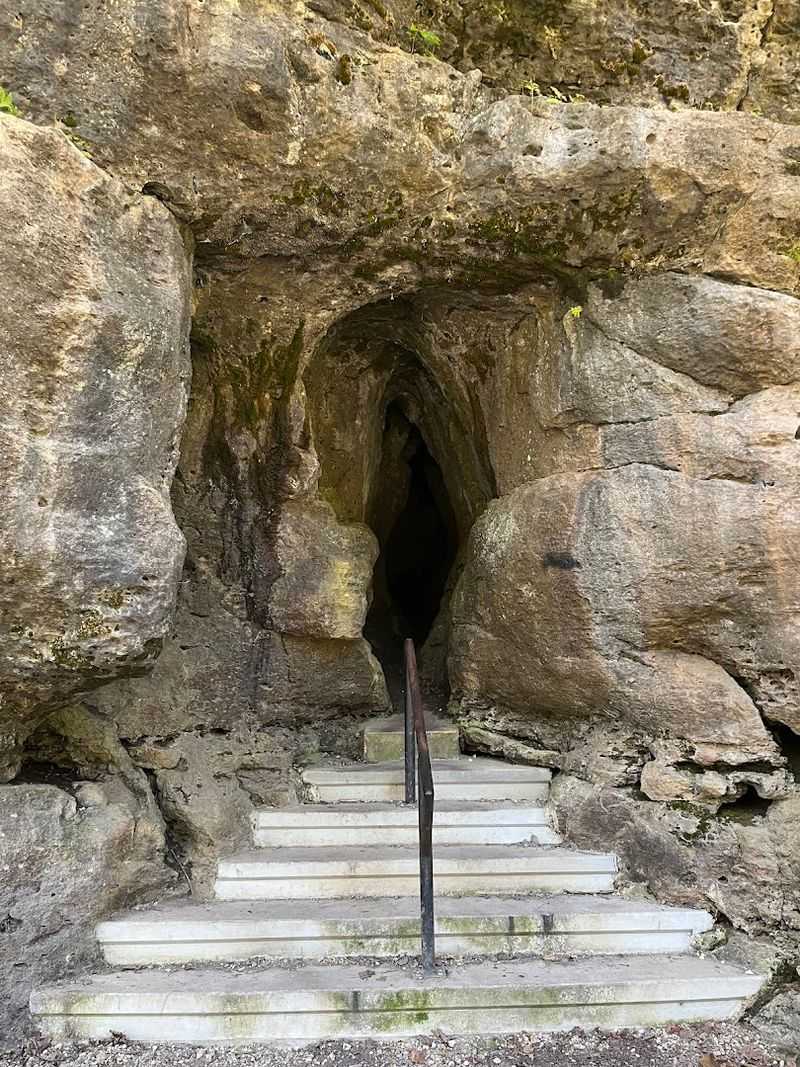
Say Wapsipinicon three times fast and then reward yourself with a visit to one of Iowa’s most underrated stone landscapes.
Found at 21301 County Road E34, Anamosa, IA 52205, this state park hugs the Wapsipinicon River and delivers dramatic limestone and dolomite bluffs that rise sharply above the water. The geological story here goes back hundreds of millions of years, and the rock faces show every chapter clearly.
The park features caves, rock shelters, and rugged terrain that reward explorers willing to wander off the main path.
Trails wind through forested ravines and along river banks where the stone formations create natural walls and overhangs. The combination of water, forest, and ancient rock makes this park feel significantly wilder than its relatively modest size suggests.
Anamosa itself is a charming small town worth a brief stop, and the park sits just minutes from the city center. Photographers love this park in early morning when mist rises off the river and the limestone bluffs catch the first light of day.
The caves and rock shelters here aren’t massive, but they’re genuinely atmospheric and interesting to explore at your own pace.
Wapsipinicon State Park is the kind of place that rewards slow, curious visitors who take time to notice the details carved into every weathered stone surface.
9. Wildcat Den State Park, Muscatine
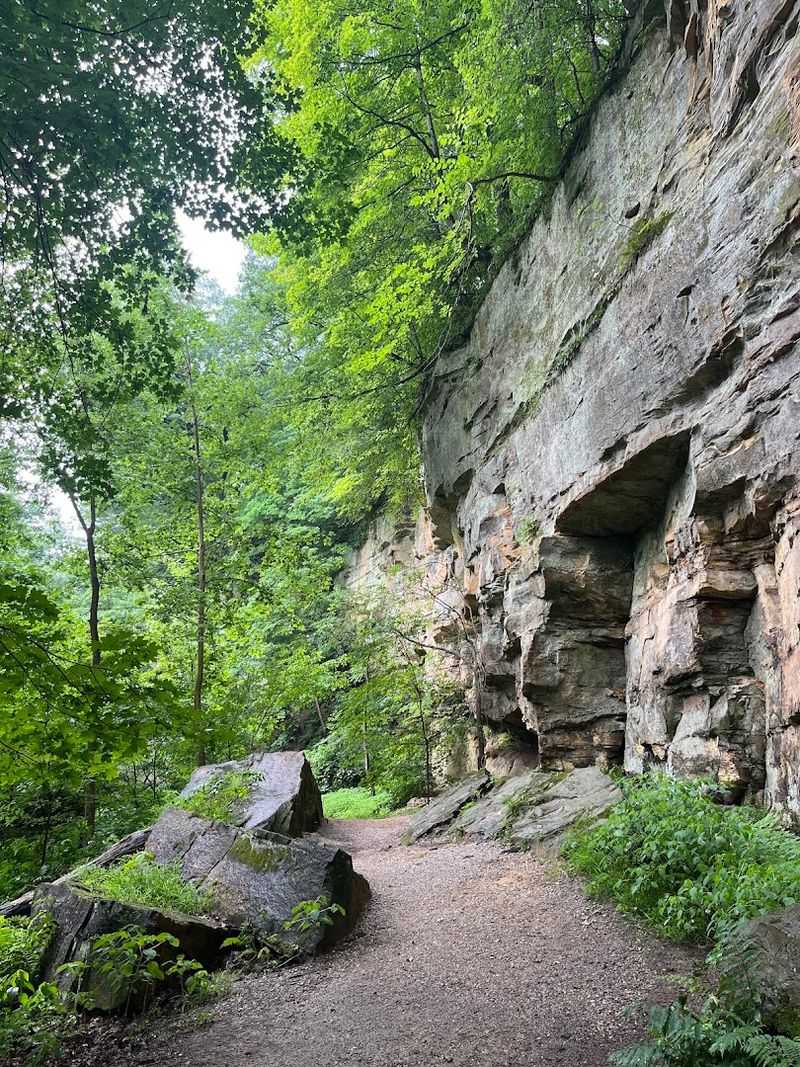
Wildcat Den State Park has a name that promises adventure, and the sandstone landscape inside fully delivers on that promise.
Located at 3489 State Park Road, Muscatine, IA 52761, this park sits in a ravine carved by Pine Creek and features dramatic rock formations, narrow canyon passages, and ledges that look like they belong in a completely different state. Iowa keeps surprising people, and this park is one of its best arguments.
The sandstone cliffs here were shaped by thousands of years of water erosion, creating overhangs and sheltered rock faces that feel genuinely ancient.
Trails wind through the canyon and up along the bluffs, offering constantly changing views of the creek below and the surrounding hardwood forest.
A historic grist mill built in the 1800s adds a layer of human history to the natural drama already on display.
The park covers around 423 acres and includes picnic areas, a campground, and enough trail variety to keep hikers busy for a full day.
Muscatine is just a short drive away along the Mississippi River, making this park an excellent anchor for a southeastern Iowa road trip. The rock formations at Wildcat Den have a raw, textured quality that photographs beautifully in any season.
Visiting in fall turns the canyon into a tunnel of color framing every stone surface with gold and red.
10. Backbone State Park, Dundee
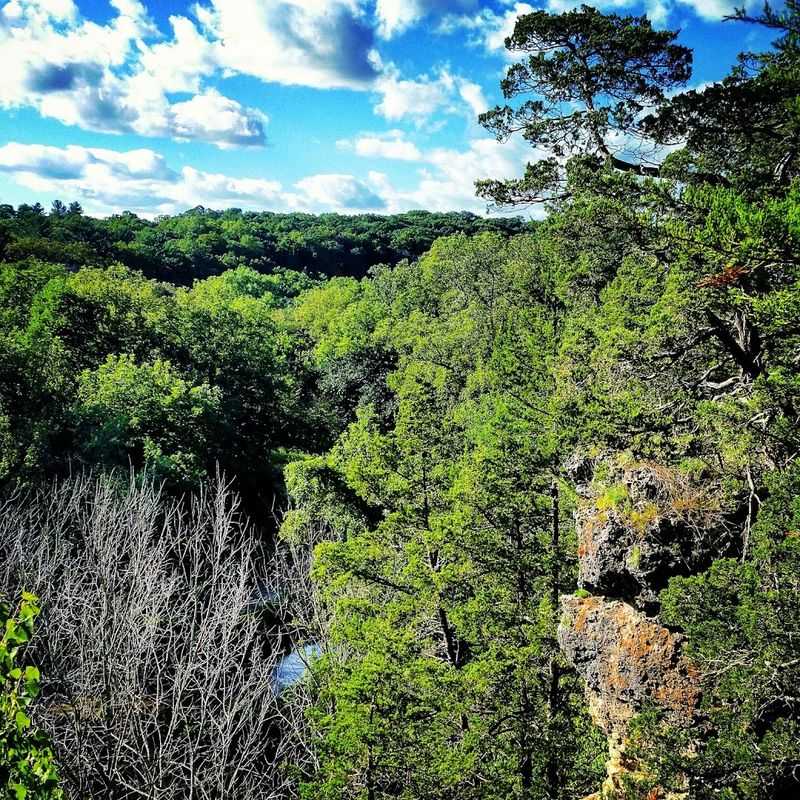
Iowa’s oldest state park earned its name from a narrow ridge of dolomite rock that juts up like an actual backbone from the forest floor, and standing on it makes you feel like you’re on top of the world.
Backbone State Park sits at 1347 129th Street, Dundee, IA 52038, and it has been drawing visitors since 1920 with its combination of rugged geology, clear lakes, and forested trails. The Backbone ridge itself rises dramatically above the Maquoketa River valley below.
The rock formation that gives the park its name is a thin, exposed spine of ancient dolomite that hikers can walk along carefully.
On either side, the land drops away into wooded ravines, creating views that feel genuinely breathtaking for a state often described as flat.
The park also features a lake, trout stream, and miles of trails that range from easy walks to more challenging scrambles over rocky terrain.
Backbone State Park sits in the same Driftless Area that makes northeast Iowa so geologically interesting and visually distinctive.
The combination of water, forest, and exposed ancient rock creates an environment that feels layered and alive in every direction. Camping here overnight lets you wake up to the sound of the river and birds in the trees.
This park is the kind of place that earns a second visit before you’ve even finished the first one. Have you been to Iowa’s oldest state park yet?