
This Whimsical Michigan Park Feels Straight Out Of A Storybook
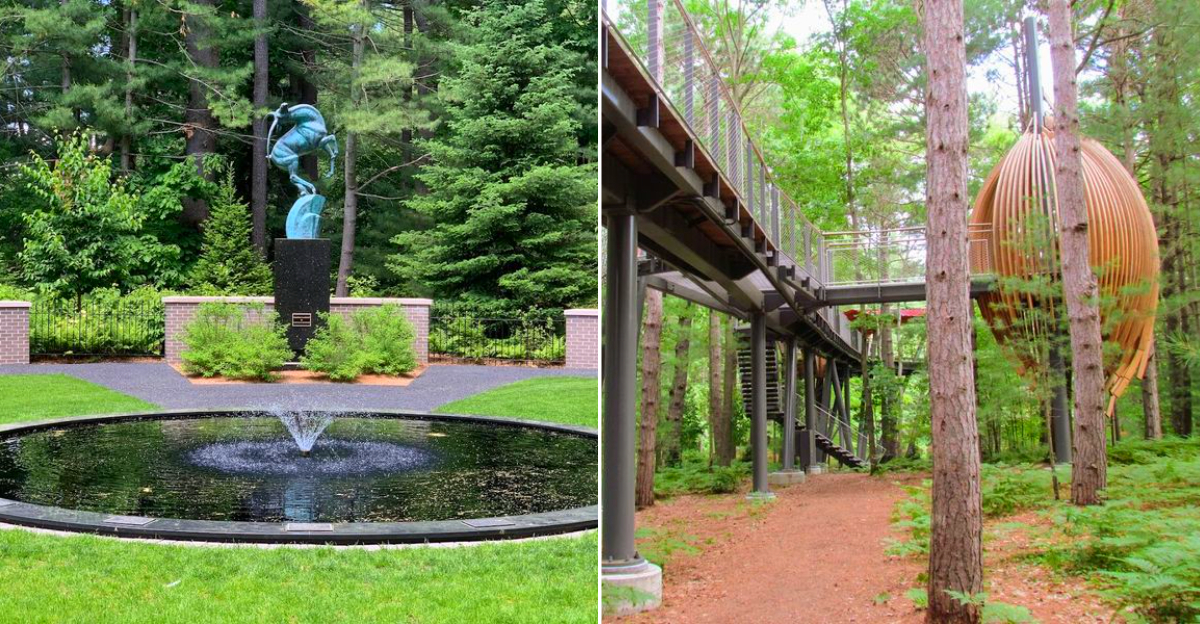
There is a kind of path that makes you forget you are walking, and this park in Midland is full of them.
Bridges stretch over quiet water, trails disappear into gardens that look like someone spent years choosing every single bloom, and then there is the canopy walk that lifts you above the trees until the ground below feels like something from a book you read as a child.
The parks in Michigan tend to fall into one of two categories, wild and rugged or carefully tended, and this one manages to be both at the same time.
Which is rare enough that you notice it the moment you step through the entrance and realize the afternoon has already gotten away from you, and you could spend an entire afternoon here and still not see everything.
Start With The Scale, Not The Flowers

The first useful adjustment at Dow Gardens is mental: treat it as a landscape to move through, not a single display to glance at. The property covers 110 acres, and the paths keep unfolding into ponds, bridges, conifers, annual beds, and quieter lawn spaces that slow your pace without announcing themselves.
That sense of gradual reveal is part of the design.
You will enjoy it more if you budget real walking time and wear comfortable shoes from the start. More than three miles of hard-surfaced, barrier-free pathways make the visit accessible, but they also encourage wandering farther than expected.
A rushed lap would miss the place entirely, because Dow Gardens works by accumulation, one carefully framed scene after another around each bend.
Gardens Just Off Eastman Avenue
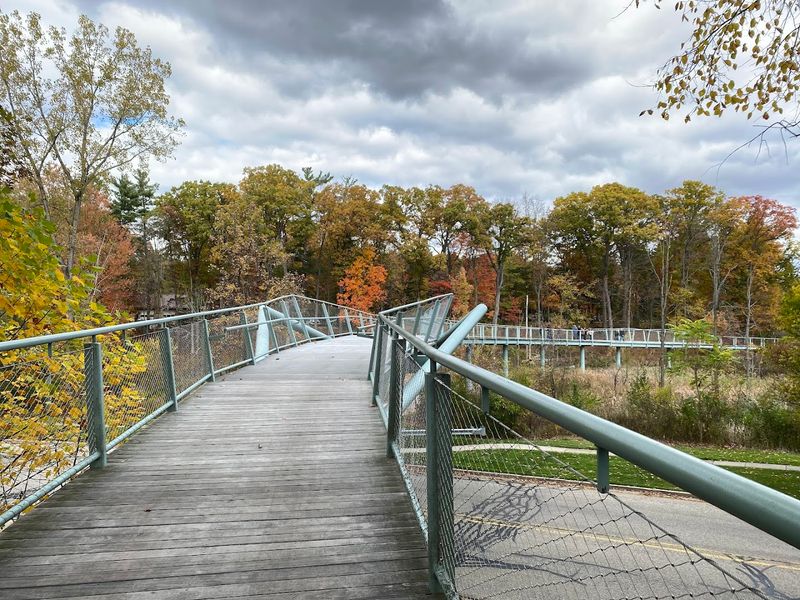
Dow Gardens are growing at 1809 Eastman Ave, Midland, Michigan 48640. The place sits close to central Midland, so the arrival feels easy before the scenery takes over.
Follow Eastman Avenue in, park, and leave the rush at the car. This is not a place that needs a dramatic entrance.
Once you step inside, the city drops back quickly. Paths, trees, flowers, and quiet corners make the short trip feel much farther from town than it really is.
Give The Canopy Walk Proper Time
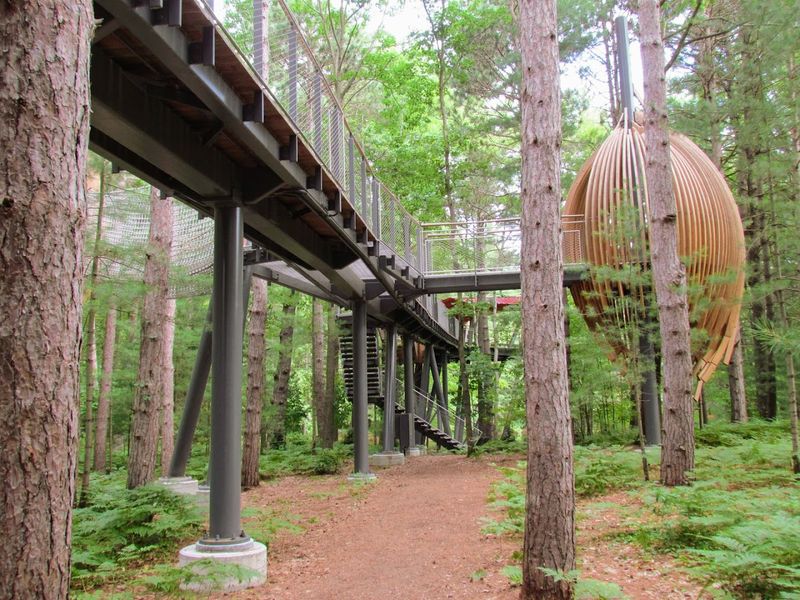
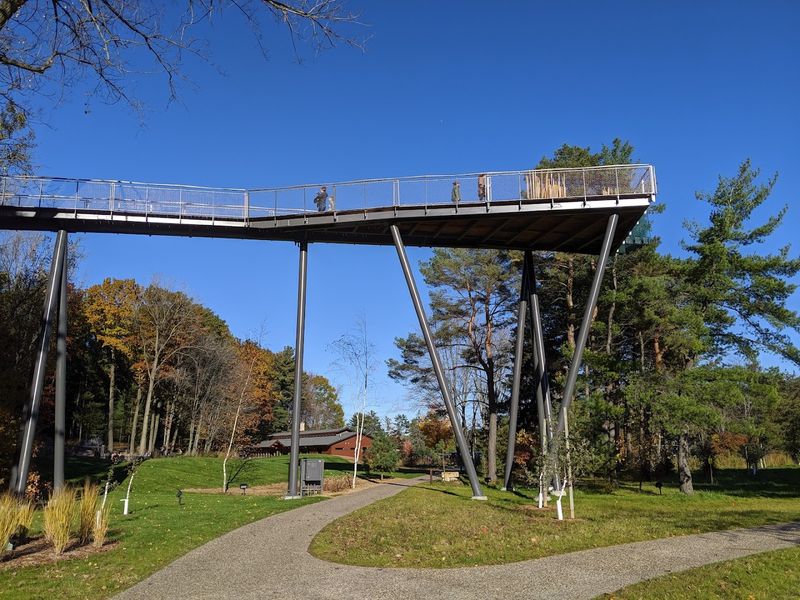
The headline attraction at Dow Gardens is in Whiting Forest, and it deserves more than a quick detour. The canopy walk stretches 1,400 feet and rises as high as 40 feet, making it the longest canopy walk in the United States.
From up there, the forest stops being background scenery and becomes the main event.
The practical tip is simple: allow time and energy for the approach, because reaching it from the Visitor Center can mean roughly 0.7 mile of walking. Once there, move slowly across the platforms, especially the glass-floored sections, which change your perspective more than any photograph suggests.
Children often make a beeline for the cargo net grove, but adults tend to linger over the layered views.
Do Not Skip The Pines If Tours Are Running
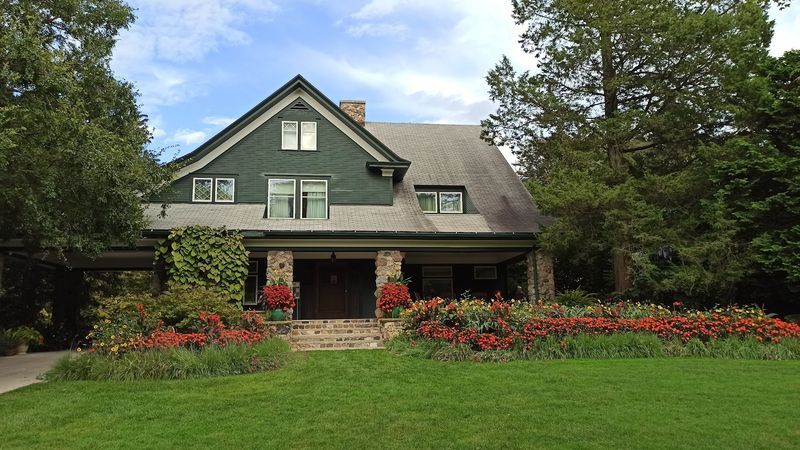
For all the planting drama outside, The Pines gives Dow Gardens its emotional center. Built in 1899 as the home of Herbert H. and Grace A.
Dow, it is now a National Historic Landmark, still furnished with family pieces that make the estate feel lived in rather than merely interpreted. The house explains why the gardens have such a personal, almost narrative quality.
Herbert Dow envisioned the grounds as a magical space, and that idea becomes easier to understand after seeing where the family actually lived. Guided tours are typically offered Thursdays and Fridays from March through November, with self-guided opportunities on the first Saturday of the month in that same season.
There is an additional fee, and it is worth planning around.
The Children’s Garden Is Clever, Not Chaotic
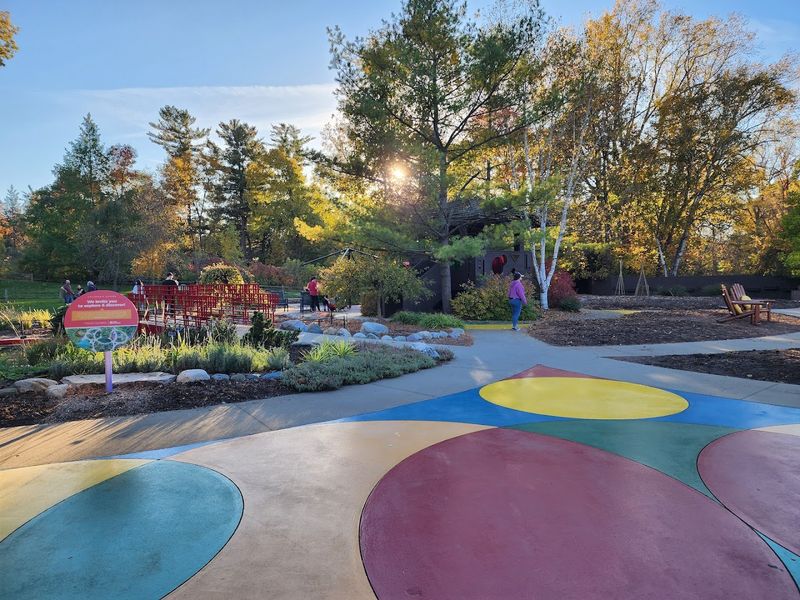
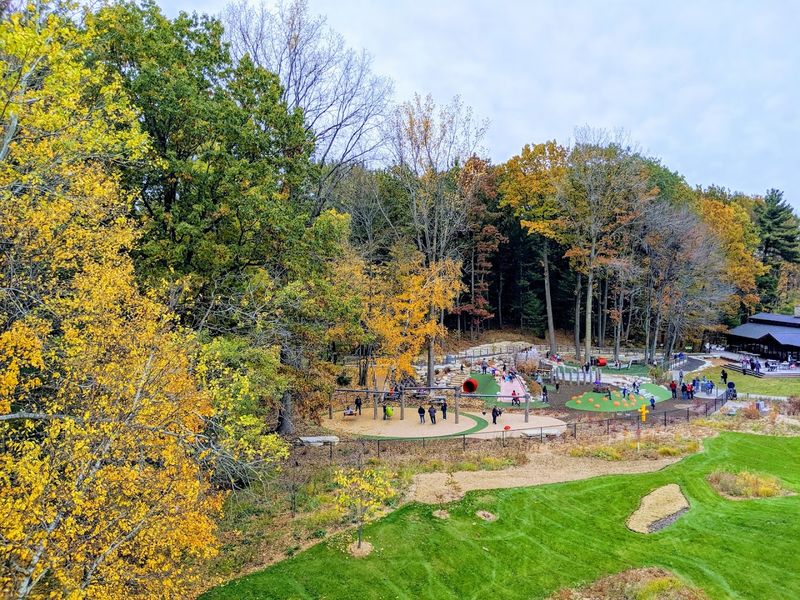
The Children’s Garden succeeds because it treats play as a form of noticing. Instead of dropping a playground into a garden, it folds whimsical sculpture, tunnels, bubble tables, and water features into the larger landscape so curiosity stays tied to plants, textures, and movement.
That design keeps the area lively without making it feel separate from the rest of the property.
Even if you are not visiting with children, it is worth a walk through for the inventiveness alone. Families should know that summer often includes Friday morning Storytime sessions, generally from mid-June through mid-August, aimed at ages three to seven.
The whole section feels thoughtfully scaled, with enough interaction to hold attention but enough greenery to keep the tone calm.
Notice How Art Is Tucked Into The Planting
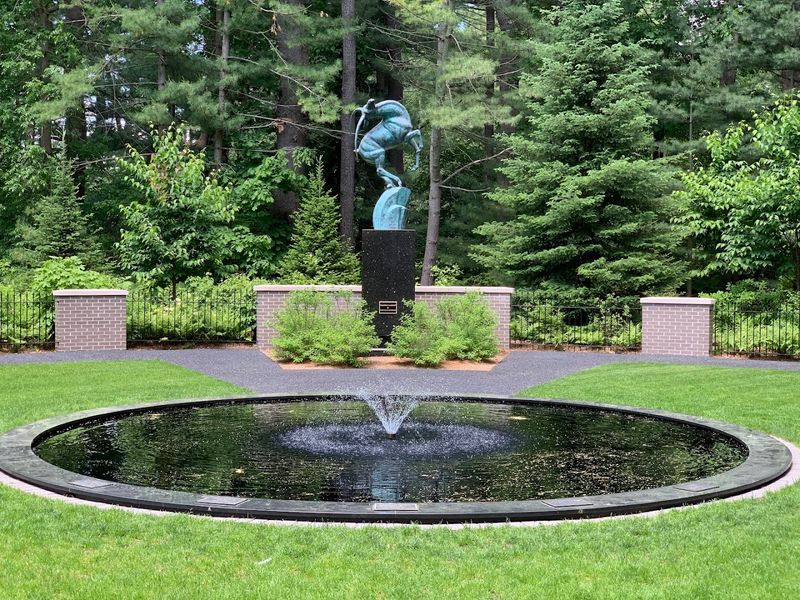
One reason Dow Gardens feels storybook-like without becoming sugary is its restraint with art. Ceramic totems by Michigan artist Helen Hierta appear through the grounds in a way that rewards attention rather than demanding it, and the broader property consciously blends art, music, architecture, and horticulture.
The result is whimsical in the literal sense: imaginative, but still grounded.
I liked that nothing shouted for applause. A sculpture might rise beside a path or planting bed, then let the surrounding pines or flowers finish the composition, which keeps the experience from turning into an outdoor gallery with plants as decoration.
If you tend to walk quickly, pause at transitions between spaces, because that is often where the design quietly places its oddest and best details.
Use The Conservatory As A Tonal Reset
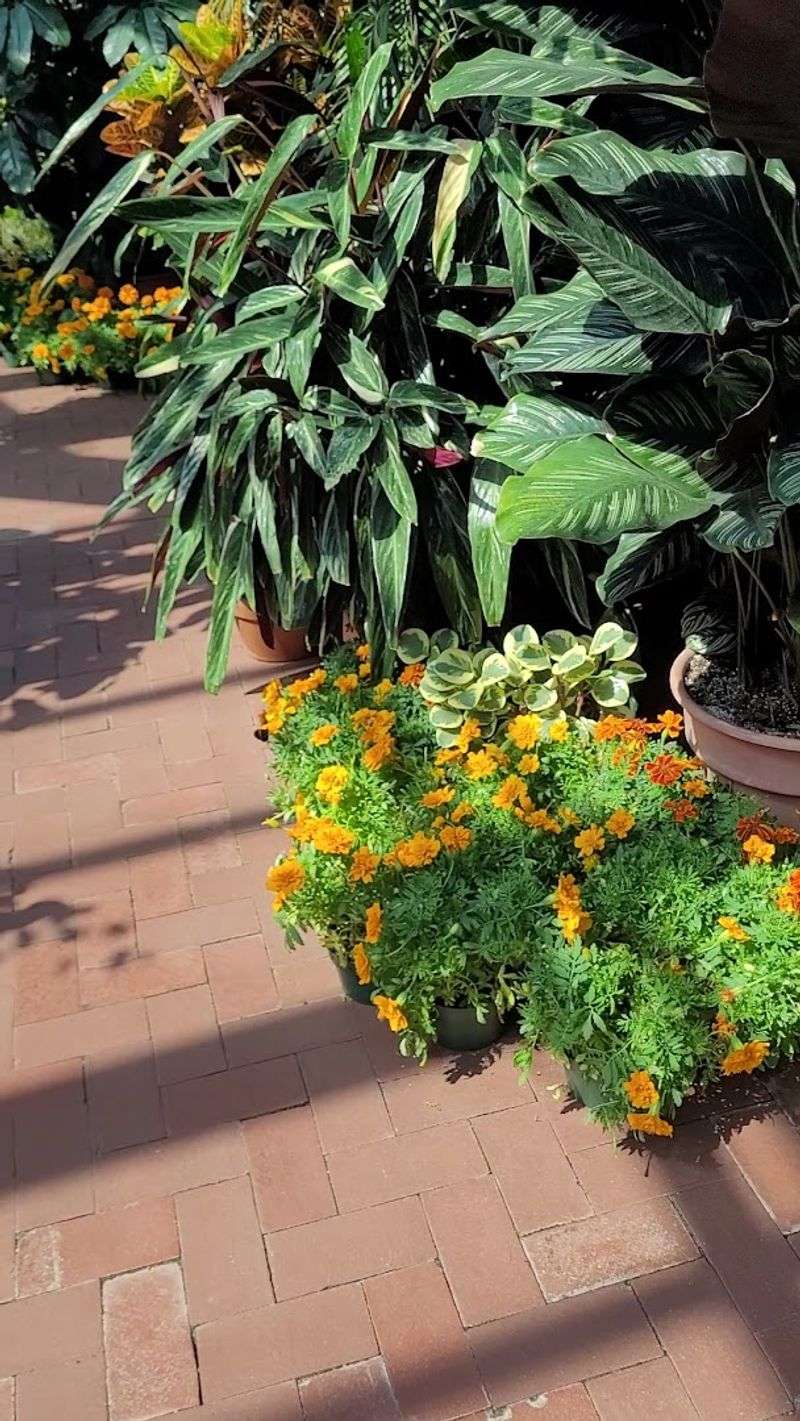
After a stretch outdoors, the conservatory changes the rhythm in a very satisfying way. It is warm, dense, and lush, with tropical and exotic plants arranged around vibrant blooms, trailing greenery, and soothing water features.
Instead of broad landscape composition, the focus narrows to leaf shape, humidity, and the intimate drama of enclosed planting.
That contrast matters because Dow Gardens is not only about open paths and long views. The conservatory gives you a concentrated botanical experience that can be especially welcome on a cool day, and it adds a different register to the visit without feeling like a side attraction.
If energy is fading, this is a smart midpoint stop before heading back into the larger grounds with renewed attention.
Accessibility Here Is Part Of The Design, Not An Afterthought
Dow Gardens handles accessibility with a level of calm competence that deserves mentioning plainly. The grounds include more than three miles of barrier-free, hard-surfaced pathways, benches are placed throughout, accessible restrooms are available, and a limited number of wheelchairs can be reserved at no charge.
Those details shape the visit for everyone, not just for visitors specifically seeking them.
Because the site is large, comfort planning matters as much as accessibility planning. Strollers and wagons are sensible choices for small children, and anyone should bring shoes meant for sustained walking rather than a decorative stroll.
The best part is that these practical supports do not feel intrusive, since the infrastructure is folded into the gardens with the same care given to plantings and views.
Treat Logistics As Part Of The Pleasure

A little logistical awareness makes Dow Gardens feel effortless instead of overlong. Standard daily admission is $15 for adults, $5 for students ages four to seventeen or adult students with valid ID, and children three and under are free, while an annual pass is $30 per person.
That pricing encourages repeat visits, which honestly suits the place better than a one-time sprint.
The gardens are generally open Tuesday through Sunday, with summer hours often running 9 AM to 8 PM, though seasonal schedules vary. Picnics are welcome on the grounds, but outside food and beverages are not allowed indoors, and concessions are available at the Whiting Forest Cafe.
A little planning around meals, weather, and distance pays off quickly on a property this large.
Respect The Rules Because They Protect The Mood
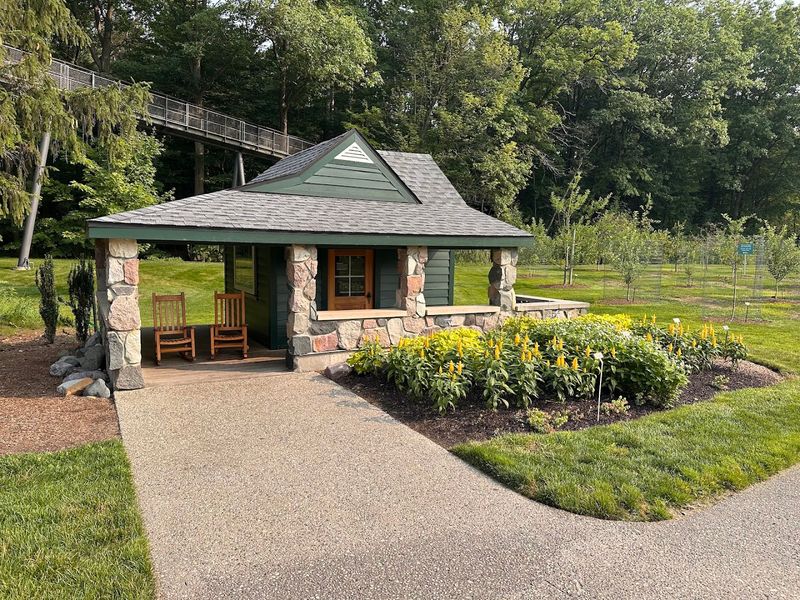
Some garden rules feel bureaucratic, but at Dow Gardens they mostly preserve the atmosphere you came for. It is a non-smoking campus, including vaping, only service animals are permitted, drone photography is not allowed, and recreational equipment such as frisbees or skateboards is off limits.
Children under sixteen must be supervised, which helps keep shared spaces comfortable and predictable.
I appreciated how these guidelines support the place’s quiet concentration. Water, birdsong, footfalls on paths, and the occasional delighted voice from the Children’s Garden carry farther when machinery and clutter are absent, and the result is a landscape that actually feels contemplative.
If you want a visit built around noticing, the rules are less about restriction than protecting the texture of the day.
Leave Room For Whatever Special Event Is On
Dow Gardens is steady enough for an ordinary visit, but special programming can shift the tone in rewarding ways.
Seasonal offerings and temporary exhibits have included events such as Christmas Walk with illuminated paths and luminaries, along with touring attractions and classes that bring different audiences into the same landscape.
The underlying design is strong enough to absorb those additions without losing itself.
That means checking the calendar is not just a practical step but a creative one. You might prefer the gardens at their quietest, or you might enjoy arriving when the grounds are hosting something that changes how familiar paths are read after dusk or in a particular season.
Either way, the official website is the place to confirm dates, hours, and any extra-ticket experiences before you go.