
10 South Carolina Day Trips So Beautiful You’ll Want To Hit The Road Today
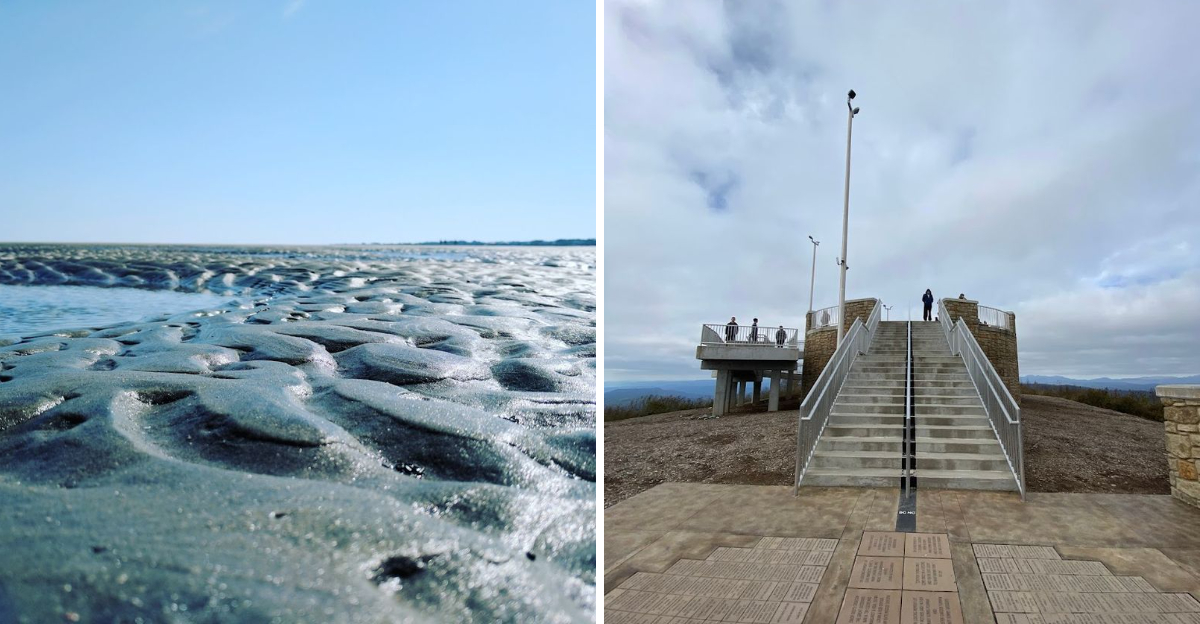
Most people think you need a week-long vacation to see the best of South Carolina.
You really don’t.
In South Carolina, you can stand beside a mountain waterfall in the morning and watch the sun set over the Atlantic Ocean that same day. Few states pack so much variety into such a manageable distance.
That is what makes road trips here so addictive.
One day leads to another. One destination turns into three.
Before long, you’re taking detours simply because a scenic sign caught your attention.
The best part?
Many of the state’s most beautiful places can be explored in a single day.
We’re talking mountain overlooks. Historic towns.
Hidden gardens. Coastal escapes.
Swamps that feel straight out of another world.
Each offers a completely different side of SC.
If your camera roll needs new scenery and your weekend needs a little adventure, these South Carolina destinations make a strong case for getting in the car and seeing where the road leads.
Table Rock State Park
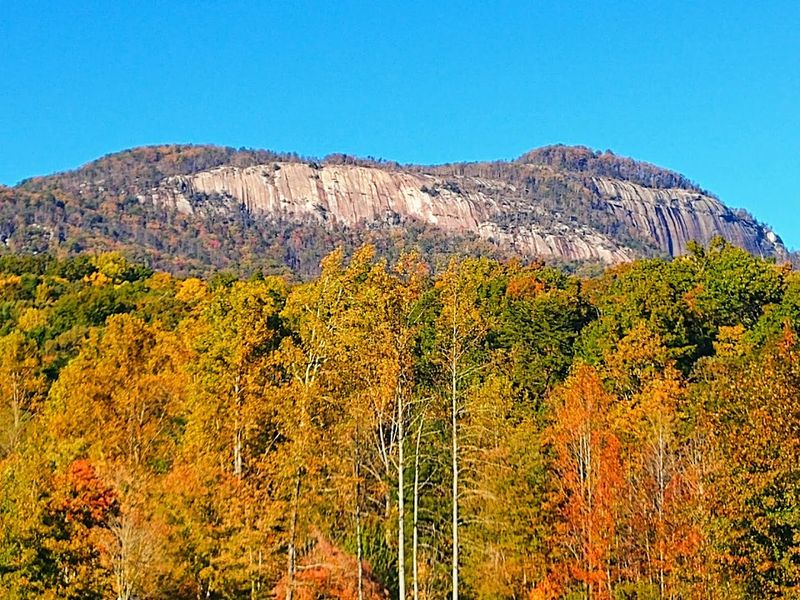
Perched in the Blue Ridge foothills near Pickens, Table Rock State Park spreads across more than 3,000 acres of forest, lakes, and rocky slopes that feel like a different world.
The main trail climbs nearly 2,000 feet to the summit of Table Rock Mountain, rewarding every switchback with views that stretch across the Upstate and into North Carolina on clear days.
I remember pausing halfway up, legs burning, only to realize the view from that ledge already beat most overlooks I had seen before.
Pinnacle Lake sits at the base, calm and glassy most mornings, perfect for a quick paddle or a photo stop before you start the climb.
The park also offers shorter trails, picnic shelters, and a small museum that tells the story of the Civilian Conservation Corps crews who built the stone structures in the 1930s.
Spring wildflowers blanket the understory, and autumn sets the ridgelines on fire with color, making nearly any season a good time to visit.
Every time I leave Table Rock, I find myself planning the next hike before I even reach the car.
Hunting Island State Park
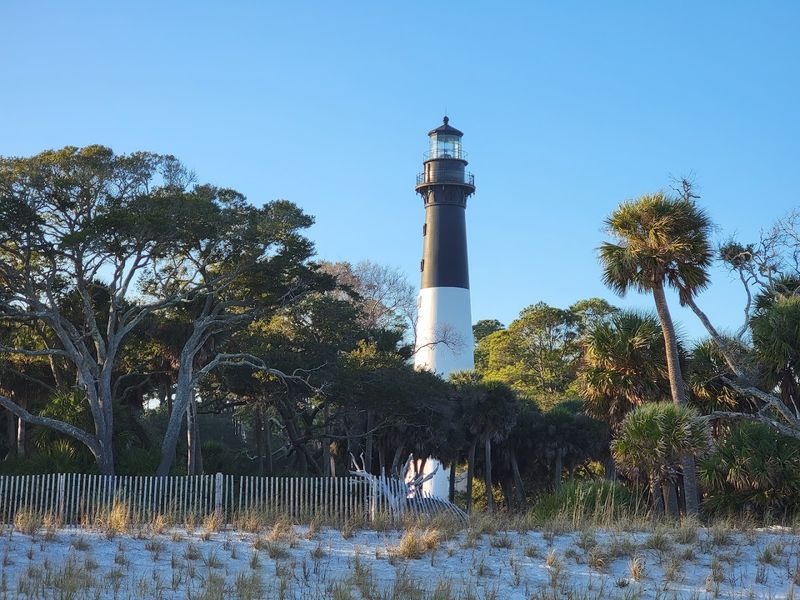
Barrier island magic happens at Hunting Island State Park, a 5,000-acre stretch of maritime forest, marsh, and beach near Beaufort that feels untouched despite its popularity.
The lighthouse stands as the park’s signature landmark, built in 1859 and still open for climbers willing to tackle the 167-step spiral staircase to the top.
I climbed it on a breezy afternoon, and the view of the Atlantic meeting the salt marsh made every step worth the effort.
Below, the beach runs for miles, wide and flat, with driftwood sculptures shaped by storms and tides creating natural art installations along the sand.
Erosion constantly reshapes the shoreline here, and you can see fallen palm trees and exposed roots that tell the story of the island’s slow migration inland.
Trails wind through the maritime forest, where Spanish moss drapes the oaks and loggerhead turtles nest in summer.
Camping spots sit steps from the beach, and I have watched dolphins cruise the surf line during breakfast more than once.
Hunting Island always reminds me why South Carolina’s coast holds such a strong pull.
Caesars Head State Park
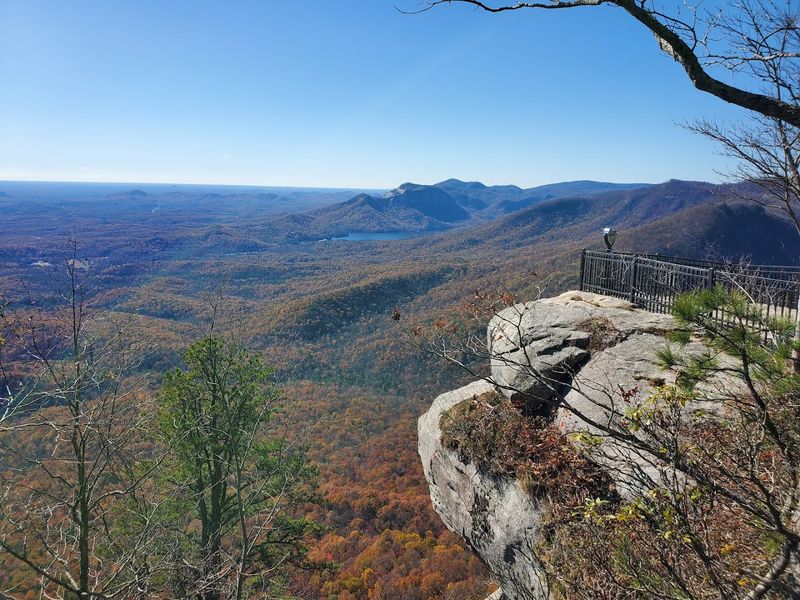
Standing at the edge of Caesars Head, 3,208 feet above sea level near Cleveland, you get a view that drops your stomach and lifts your spirit at the same time.
The overlook juts out over the Blue Ridge Escarpment, a massive rock face that plunges more than 400 feet and offers a panorama of layered ridges fading into the distance.
I visited on a foggy morning once, and watching the clouds roll through the valleys below felt like standing inside a painting that kept changing every few minutes.
The park connects to Jones Gap State Park through the Mountain Bridge Wilderness Area, creating a network of trails that range from easy walks to challenging backcountry routes.
Raven Cliff Falls, accessible via a moderate trail, drops 420 feet over a series of cascades and draws hikers year-round.
Hawks and raptors use the updrafts along the escarpment for migration, and autumn brings birdwatchers with binoculars and patience.
Winter ice can coat the rocks and trees, turning the overlook into a frozen wonderland that feels almost alpine.
Caesars Head never fails to deliver a view worth the drive up the winding mountain roads.
Botany Bay Heritage Preserve
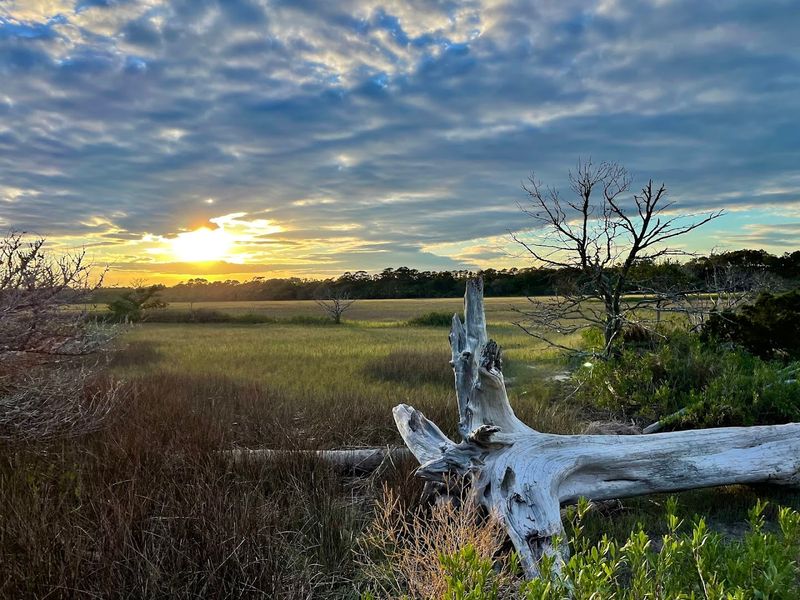
Botany Bay Heritage Preserve, tucked on the southern tip of Edisto Island, offers a raw, windswept beach experience that feels miles away from the crowded resorts just up the coast.
The preserve protects more than 4,600 acres of maritime forest, salt marsh, and barrier beach, managed for wildlife rather than sunbathers.
I walked the beach at low tide and found myself surrounded by bleached driftwood skeletons, twisted and sculpted by years of storms and tides, creating one of the most photogenic shorelines in the state.
The boneyard beach, as locals call it, stretches for nearly a mile, with fallen trees half-buried in sand and waves lapping at their roots.
Trails loop through the forest interior, where deer, alligators, and hundreds of bird species thrive in the protected habitat.
Old plantation roads crisscross the property, hinting at the history layered beneath the current conservation focus.
Sunrise here paints the driftwood in gold and pink, and I have never seen another photographer complain about waking up early for the light.
Botany Bay always leaves me feeling like I discovered a secret the rest of the coast forgot to mention.
Falls Park on the Reedy
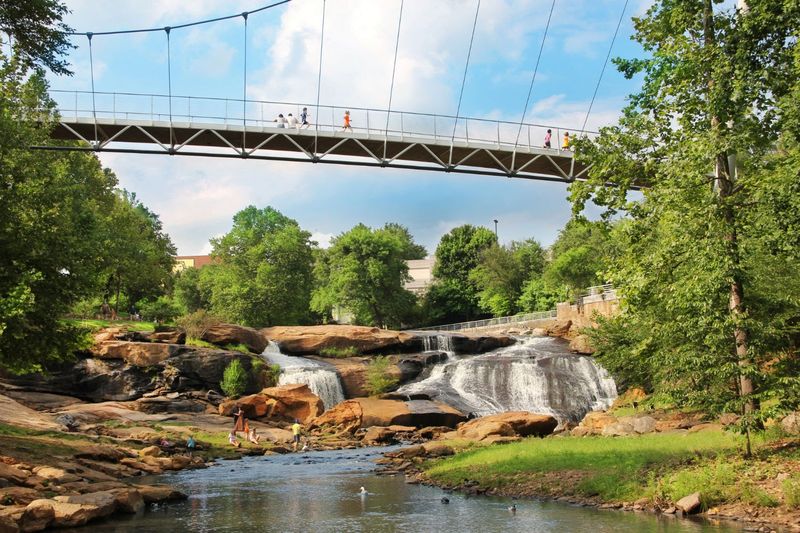
Right in the heart of downtown Greenville, Falls Park on the Reedy transforms 32 acres of riverfront into a green oasis where waterfalls tumble past modern architecture and historic mills.
The Liberty Bridge, a curved suspension footbridge, arcs over the Reedy River and offers a postcard view of the falls framed by gardens and skyline.
I crossed it on a summer evening, and the sound of the water mixed with live music drifting from nearby restaurants created a vibe that felt equal parts natural and urban.
The falls themselves drop in a series of cascades, especially impressive after spring rains when the river runs high and fast.
Pathways wind through the park, connecting overlooks, shaded benches, and open lawns where locals spread picnic blankets and let kids chase geese.
The old Camperdown Mill, visible from the bridge, stands as a reminder of Greenville’s textile past, now converted into apartments that overlook the water.
Gardens bloom year-round, with seasonal plantings that keep the park colorful even in the quieter months.
Every visit to Falls Park reminds me that the best day trips sometimes hide in plain sight, right in the middle of a thriving city.
Brookgreen Gardens
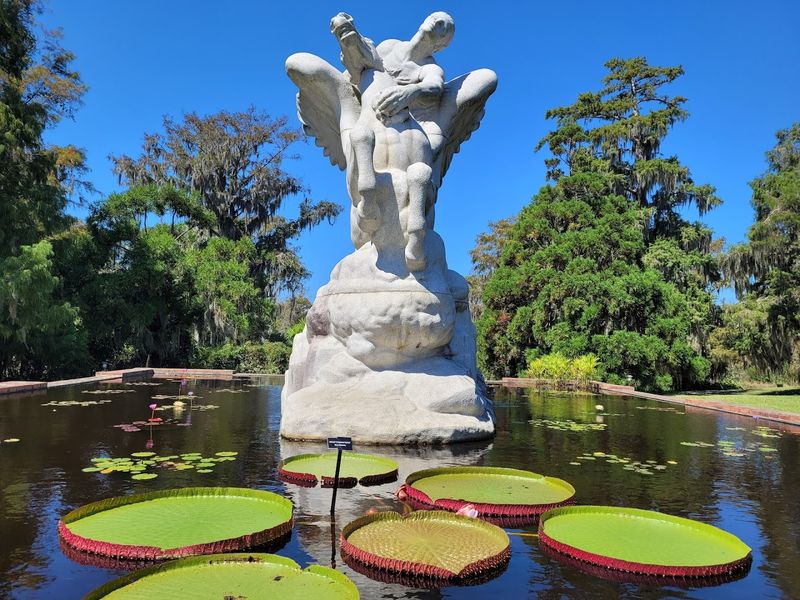
Between Murrells Inlet and Pawleys Island, Brookgreen Gardens sprawls across a former rice plantation, now home to the largest collection of American figurative sculpture in the country.
More than 2,000 works dot the gardens, tucked among centuries-old live oaks, reflecting pools, and carefully designed landscapes that blend art with nature.
I wandered the pathways on a quiet weekday, and each turn revealed another bronze figure or abstract piece that seemed to grow naturally from the setting.
The Lowcountry Zoo occupies part of the property, focusing on native species like river otters, alligators, and red wolves in habitats that mimic their natural environments.
Seasonal exhibits rotate through the galleries, and the outdoor spaces change character with the blooming cycles of azaleas, camellias, and magnolias.
A butterfly house opens in warmer months, and I have spent far too long inside watching monarchs and swallowtails drift between the flowers.
The history of the land, from colonial rice cultivation to Gilded Age retreat to modern cultural institution, adds depth to every sculpture and garden bed.
Brookgreen always feels like a place where art, history, and horticulture decided to throw a party and forgot to end it.
Kiawah Island
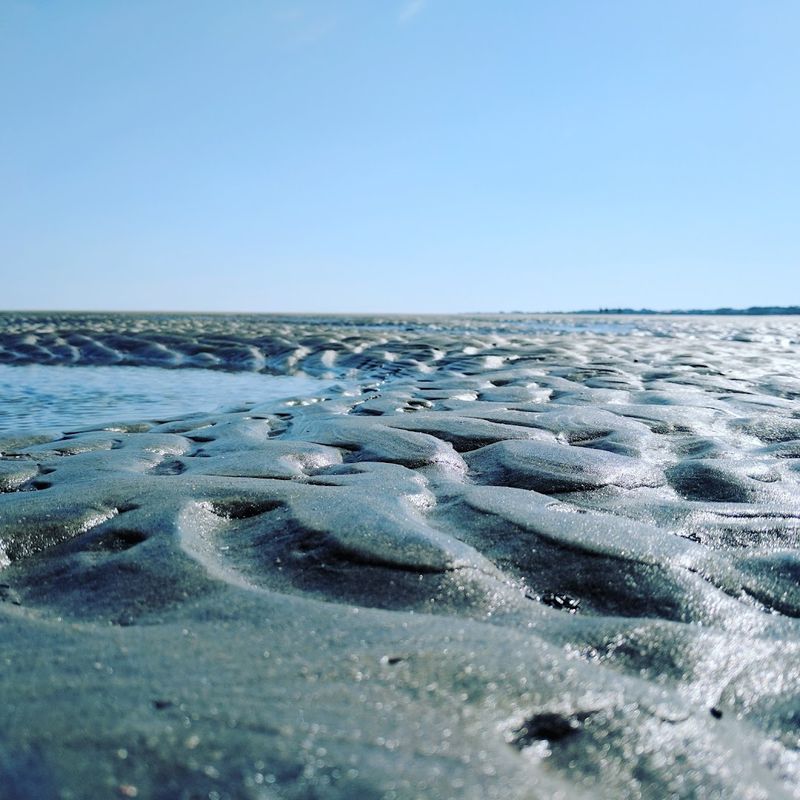
Kiawah Island stretches along the coast south of Charleston, a barrier island where ten miles of beach meet maritime forest, golf courses, and a commitment to conservation that keeps development low and wildlife visible.
The island’s beach ranks among the best on the East Coast, wide and firm at low tide, perfect for long walks where you might spot dolphins cruising just beyond the breakers.
I biked the island’s trails one morning, pedaling through tunnels of live oaks and past lagoons where herons and egrets fished in the shallows.
More than 30 miles of paved paths connect the island’s neighborhoods, beaches, and nature centers, making a car optional once you arrive.
The Kiawah Island Golf Resort hosts world-class courses, including the Ocean Course, but you do not need to golf to appreciate the landscape.
Night Heron Park offers boardwalks through salt marsh and forest, with interpretive signs explaining the ecology of the Lowcountry barrier islands.
Loggerhead turtles nest on the beach in summer, and volunteers mark and monitor the nests to protect the hatchlings.
Every sunset on Kiawah feels like the island is showing off, painting the sky in colors that make you forget to check your phone.
Sassafras Mountain
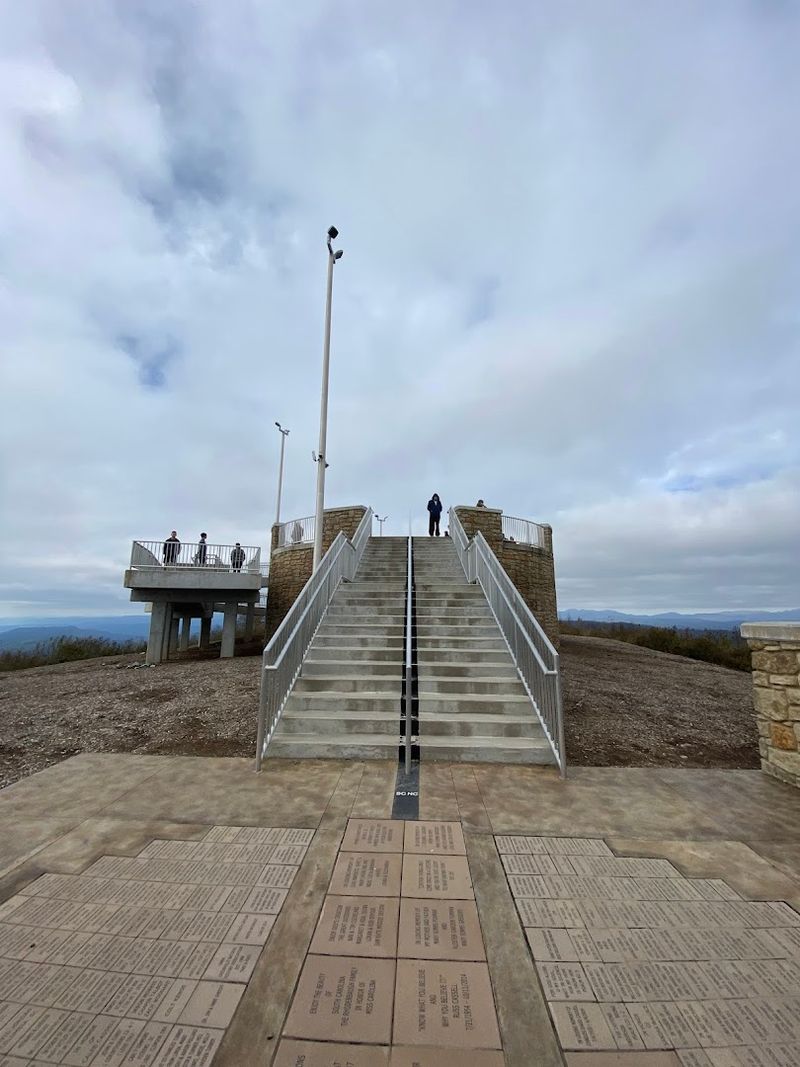
At 3,553 feet, Sassafras Mountain claims the title of South Carolina’s highest point, a summit near Salem that feels more like North Carolina or Tennessee than the Lowcountry most people picture.
A short paved trail leads from the parking area to the top, where a stone observation tower offers 360-degree views of three states on clear days.
I climbed the tower steps on a crisp fall afternoon, and the patchwork of ridges and valleys stretching in every direction made the 20-minute drive up the mountain roads feel like a journey to another region entirely.
The summit sits on the border of South Carolina and North Carolina, and you can literally stand with one foot in each state while taking in the panorama.
Foothills Trail, a long-distance hiking route, passes near the summit, connecting Sassafras Mountain to Table Rock and other Upstate peaks.
Spring wildflowers and autumn color make seasonal visits especially rewarding, though summer can bring afternoon clouds that obscure the views.
The area remains relatively quiet compared to other mountain destinations, and I have had the summit to myself more than once on weekday mornings.
Sassafras Mountain always reminds me that South Carolina holds more topographic variety than most people expect.
Congaree National Park
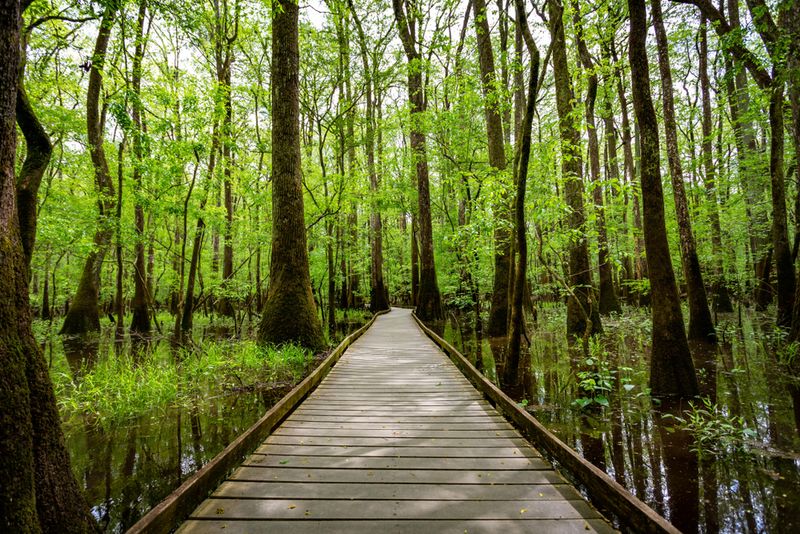
Congaree National Park, located southeast of Columbia near Hopkins, protects the largest intact expanse of old-growth bottomland hardwood forest in the southeastern United States.
Towering loblolly pines, bald cypress, and water tupelo rise from the floodplain, creating a cathedral-like canopy that filters light into shades of green and gold.
I walked the Boardwalk Loop Trail on a humid summer morning, and the stillness of the forest, broken only by birdsong and the occasional splash of a turtle, felt almost otherworldly.
The elevated boardwalk keeps your feet dry while winding through sections that flood regularly, part of the natural cycle that sustains this unique ecosystem.
Canoeing the Cedar Creek when water levels allow offers a different perspective, paddling beneath the canopy and between massive trunks that have stood for centuries.
Fireflies synchronize their flashes here in late spring, a phenomenon that draws crowds willing to hike in after dark for the light show.
Ranger-led programs explain the ecology and history of the park, from Native American use to logging threats to eventual protection.
Congaree always leaves me feeling small in the best way, surrounded by trees that have witnessed more history than any book could capture.
Charleston Historic District
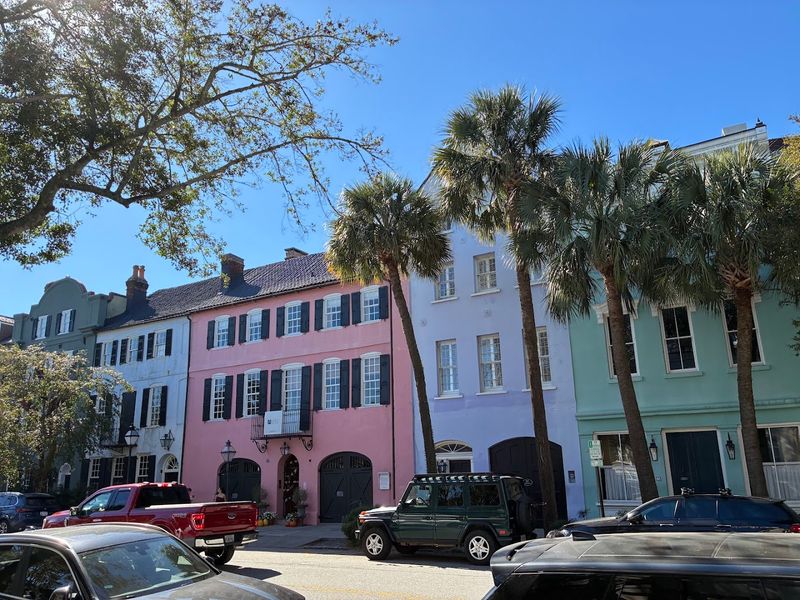
Charleston’s Historic District, concentrated below Broad Street and along the Battery, packs centuries of American history into a walkable grid of cobblestone streets, pastel townhouses, and hidden gardens.
Rainbow Row, a stretch of 13 colorful Georgian houses on East Bay Street, has launched a thousand postcards and Instagram posts, but the real magic happens when you wander the side streets away from the crowds.
I spent an afternoon exploring the alleys and churchyards, discovering fountains, wrought-iron gates, and architectural details that reward slow observation.
The Battery promenade runs along the waterfront, offering views of Fort Sumter and the harbor where the Civil War began, with antebellum mansions lining the inland side.
Historic house museums like the Nathaniel Russell House and Aiken-Rhett House open their doors to visitors, preserving period furnishings and telling stories of the people, both free and enslaved, who lived and worked there.
Church steeples punctuate the skyline, earning Charleston its nickname as the Holy City, and many congregations welcome visitors to tour their sanctuaries.
Markets, cafes, and galleries fill the ground floors of historic buildings, blending preservation with modern commerce in ways that keep the district alive rather than frozen in time.
Charleston always feels like a city that respects its past while refusing to become a museum.