
This Wild North Carolina Island Is Home To Horses That Still Roam The Sand Freely
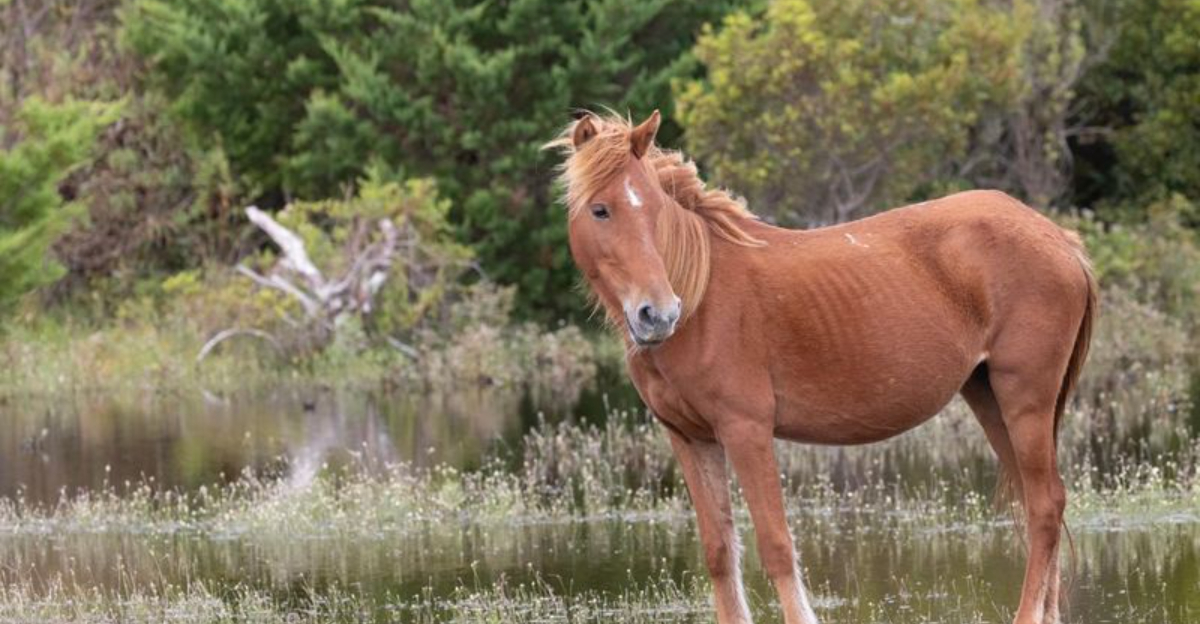
Freedom has long been symbolized by the image of a horse running untamed across an open landscape. There’s something timeless about watching these powerful animals move wherever they please, guided only by instinct and the rhythms of nature.
While such scenes may seem like relics of the past, they still exist on a remote island off the coast of North Carolina, where wild horses continue to roam freely across sandy beaches and windswept dunes.
Far removed from busy roads, crowded attractions, and modern distractions, this untamed stretch of coastline offers a rare glimpse into a world that feels remarkably unchanged.
Visitors arrive in search of the island’s famous horses, but often discover something even more memorable. A sense of wildness, solitude, and natural beauty that has become increasingly rare along America’s shores.
A Barrier Beauty With Zero Zip Codes
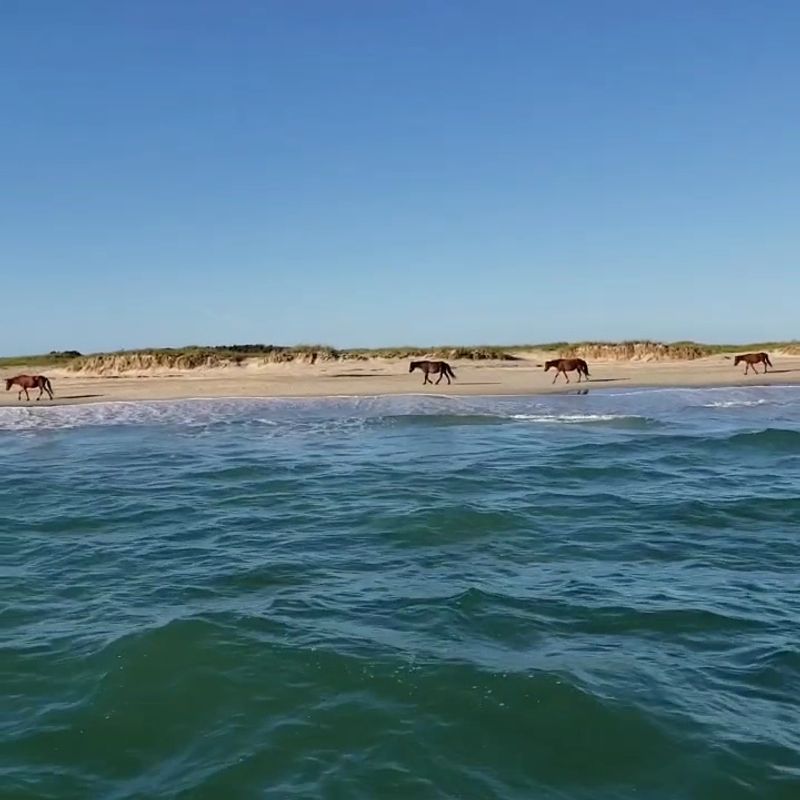
Shackleford Banks does not ask for your attention politely. It grabs you by the collar the moment you step ashore.
Located about three miles off the coast of Beaufort, North Carolina, this uninhabited barrier island stretches roughly nine miles long and sits at the southern tip of Cape Lookout National Seashore.
There are zero roads here. Zero buildings.
Zero convenience stores. Just pure, untouched coastal wilderness that feels like stepping into a nature documentary.
The landscape shifts dramatically as you walk across it, from wide sandy beaches on the ocean side to dense maritime shrub and salt marshes on the sound side.
The island sits in a fascinating geographic sweet spot where the warm Gulf Stream and cooler coastal waters meet nearby.
This creates a surprisingly rich ecosystem that supports not just horses but also loggerhead sea turtles, shorebirds, and a dazzling variety of coastal plant life.
The whole place feels ancient and alive at the same time. Shackleford Banks is the kind of place that makes you realize how rarely we experience truly untouched land anymore.
The Original Outer Banks Locals
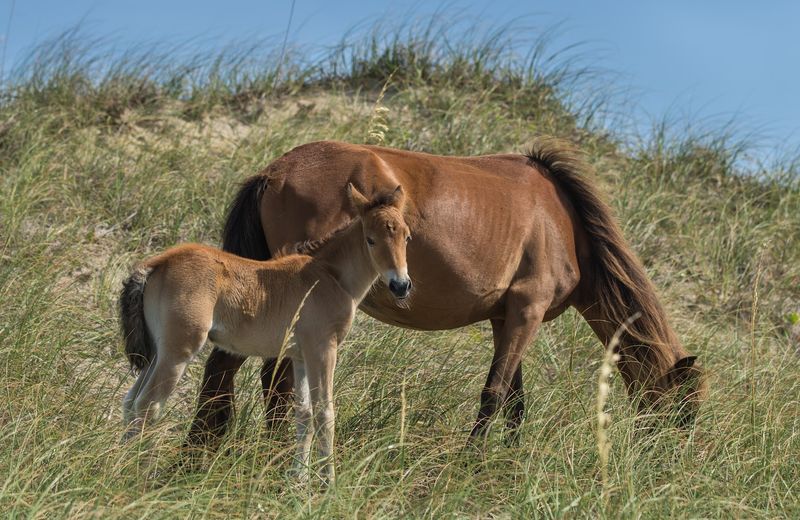
Long before beachside cottages and vacation rentals became a thing, Banker horses were already calling the Outer Banks home.
These compact, sturdy horses are descendants of Colonial Spanish mustangs, and their genetic lineage traces back to horses brought over from Spain and Portugal centuries ago.
What makes Banker horses so remarkable is how perfectly they have adapted to island life. They are smaller than typical horse breeds, with thicker coats and a stocky build that helps them handle the harsh coastal environment.
They graze on salt marsh grasses and drink from natural freshwater ponds scattered across the island.
Genetic studies have confirmed what history suggested all along: these horses carry DNA closely linked to Spanish breeds, making them one of the most genetically significant wild horse populations in North America.
The Foundation for Shackleford Horses works alongside the National Park Service to monitor each horse individually and keep the herd at a healthy, sustainable size. These horses are not a novelty or a tourist attraction.
They are living, breathing proof that some creatures were simply built for freedom.
The Shipwreck Legend
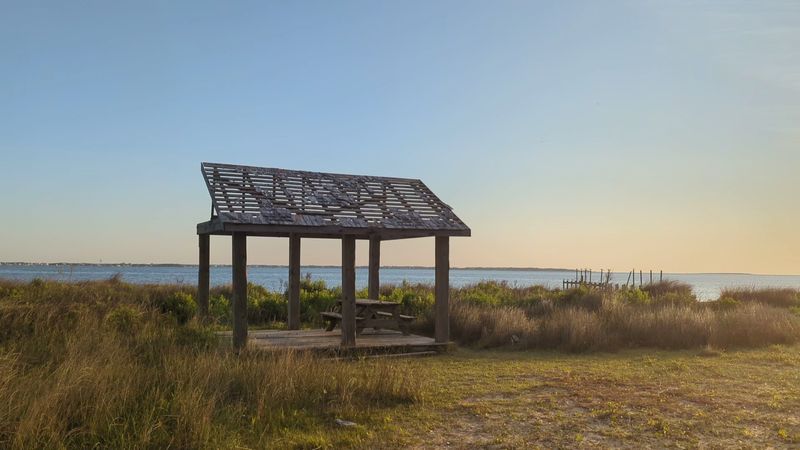
Every great wild horse story needs an equally great origin story, and Shackleford Banks delivers one that sounds like it was lifted straight from a Hollywood adventure film.
Legend has it that the ancestors of these horses swam ashore from Spanish shipwrecks off the North Carolina coast, possibly as far back as the 1500s.
Spanish explorers and colonizers regularly transported horses by ship, and the treacherous waters of the North Carolina coast, sometimes called the Graveyard of the Atlantic, claimed many vessels over the centuries.
The theory goes that horses aboard these ships either escaped or were released, and they swam to the barrier islands where they eventually thrived.
While the exact details remain part folklore and part history, genetic research has given the legend serious credibility.
The DNA of Shackleford horses does match closely with Iberian breeds, which supports the idea that their roots are genuinely Spanish in origin.
Whether the full story involves dramatic shipwrecks or gradual abandonment by early settlers, the result is the same: a herd of wild horses with a backstory that is genuinely hard to top.
How To Actually Get To Shackleford Banks
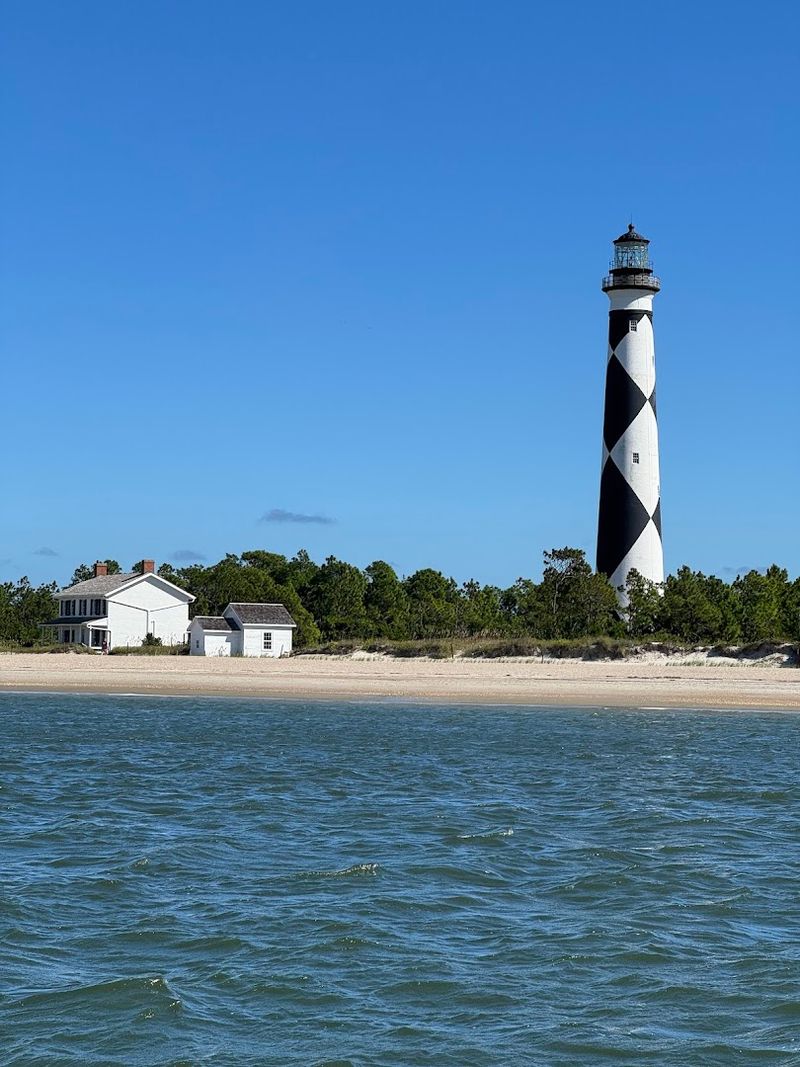
Getting to Shackleford Banks is part of the adventure, and honestly, the journey sets the tone perfectly. The island has no bridge, no causeway, and no drive-through access.
You either arrive by private watercraft or hop on a passenger ferry from nearby Beaufort or Harkers Island.
The ferry ride takes roughly 45 minutes from Beaufort, and the approach to the island is stunning. You can often spot horses grazing near the shoreline before you even step off the boat.
Ferry services operate seasonally, so checking schedules in advance is always a smart move before planning a trip.
Once you arrive, the island is yours to explore on foot. There are no marked trails, no guided paths, and no designated horse-viewing areas.
You simply walk, look around, and let the island reveal itself to you at its own pace.
Bring water, sunscreen, and comfortable walking shoes because the terrain ranges from soft sand to thick maritime brush. Visitors are asked to stay at least 50 feet away from the horses at all times, which honestly just means you get to observe them doing their wild thing without any interference.
What The Horses Actually Eat Out There
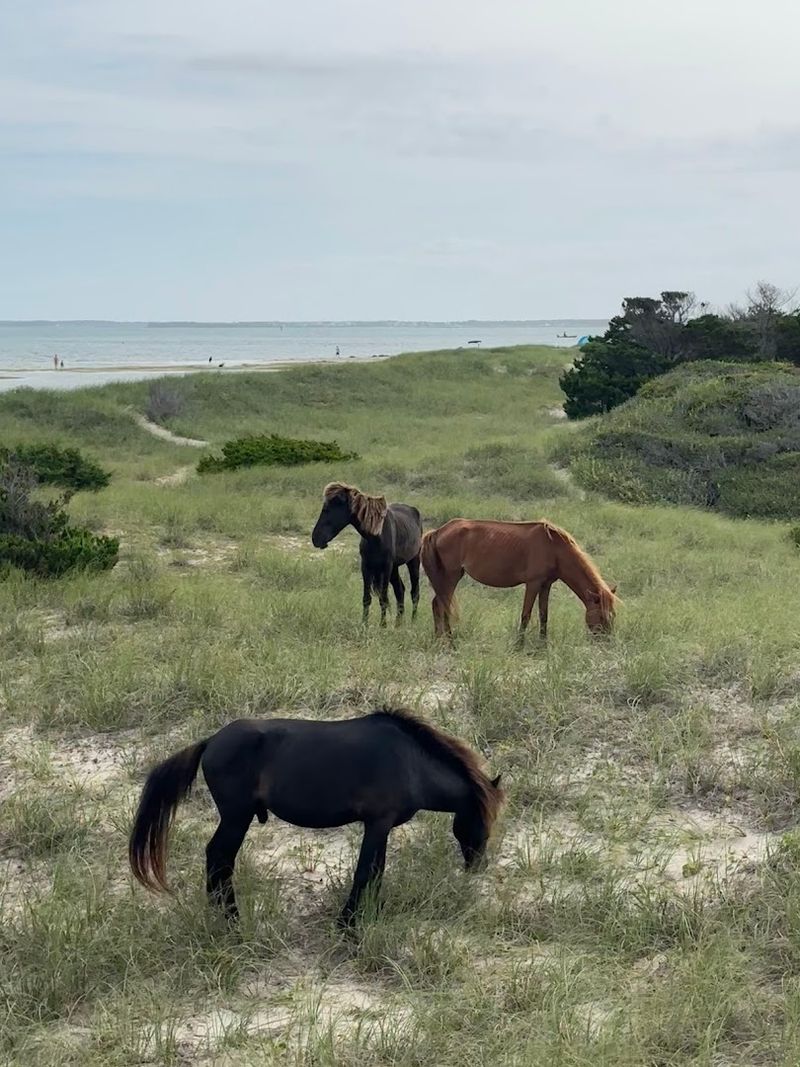
You might wonder how a herd of over a hundred horses survives on a remote barrier island with no hay deliveries or grain buckets in sight.
The answer is surprisingly elegant. Shackleford horses have spent so many generations on this island that their digestive systems have fully adapted to the local food supply.
Their primary diet consists of salt marsh cordgrass, sea oats, and other tough coastal vegetation that most animals would not touch.
The island also has natural freshwater ponds, which provide the horses with drinking water year-round. During drier seasons, they have been observed pawing at the ground to reach subsurface water, which is a clever behavior that speaks to generations of island survival knowledge.
Because their diet is so different from domestic horses, Shackleford horses tend to have rounder bellies, which is completely normal and healthy for them.
They are not overfed or underfed. They are simply tuned in to their environment in a way that most animals never get the chance to be.
Watching them graze calmly at the edge of a marsh at sunset is one of those quietly spectacular moments that sticks with you long after you leave the island.
Guardian Angels With Clipboards
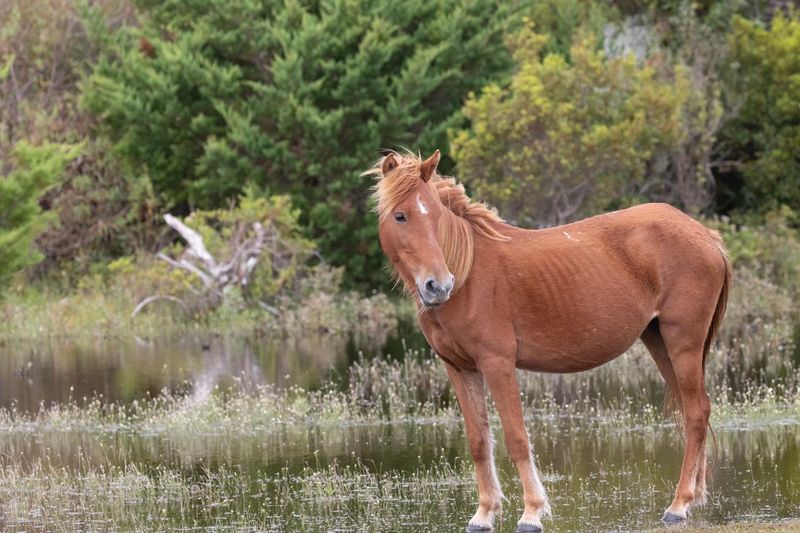
Wild does not mean unprotected, and the horses of Shackleford Banks have a dedicated team looking out for them. The Foundation for Shackleford Horses works in close partnership with the National Park Service to monitor the herd, track individual horses, and manage population levels to ensure long-term sustainability.
Each horse in the herd is individually identified, named, and tracked over time. The Foundation maintains detailed records of births, family groupings, and health patterns.
When the herd grows beyond what the island can comfortably support, fertility management is used to gently regulate population size without removing horses from the island.
This careful balance between wild freedom and responsible management is what allows the herd to thrive without damaging the fragile island ecosystem.
The Foundation also plays a big role in public education, helping visitors understand how to observe the horses respectfully and why maintaining a safe distance matters so much.
Their work is a reminder that protecting wild spaces is an active, ongoing effort that requires both passion and science working together. The horses of Shackleford Banks are genuinely lucky to have such committed advocates in their corner.
Best Time To Visit For A Real Horse Encounter
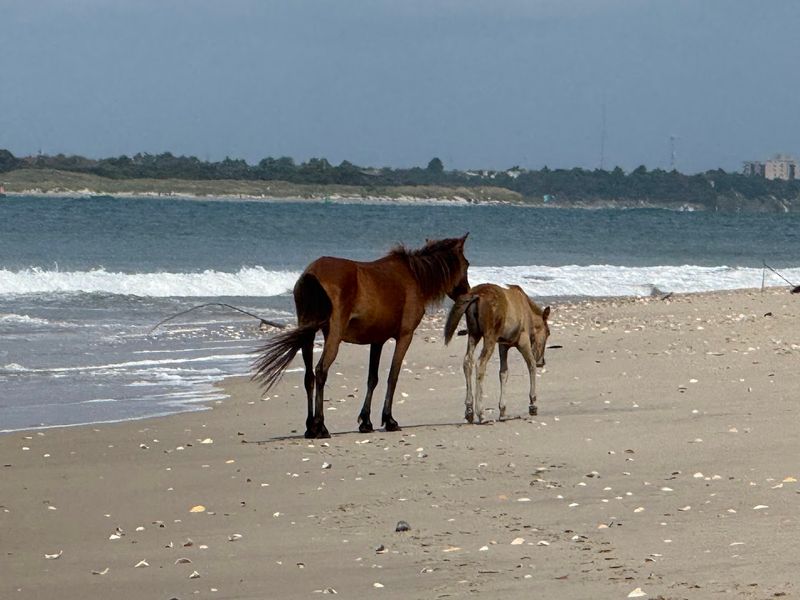
Timing your visit to Shackleford Banks can make a real difference in what you experience out there. Spring and fall are widely considered the best seasons to visit.
The weather is mild, the crowds are thinner, and the horses tend to be more active and visible during the cooler parts of the day.
Summer visits are absolutely doable, but the heat and humidity can make long beach walks pretty intense. Horses also tend to seek shade and shelter during the hottest midday hours, so early morning ferry trips give you the best chance of seeing them out in the open.
The golden light of a summer morning on Shackleford is genuinely something special, even if the humidity reminds you why humans invented air conditioning.
Winter visits offer a quieter, more solitary experience. The ferry schedule is reduced, but the island feels even more remote and untouched in the off-season.
Horses are often spotted closer to the beach during winter months as they search for warmth and shelter. No matter when you go, patience is your best tool.
This is their island, and they move on their own schedule, which is honestly the most refreshing thing about the whole experience.
Other Wild Horse Herds Worth Knowing About In North Carolina
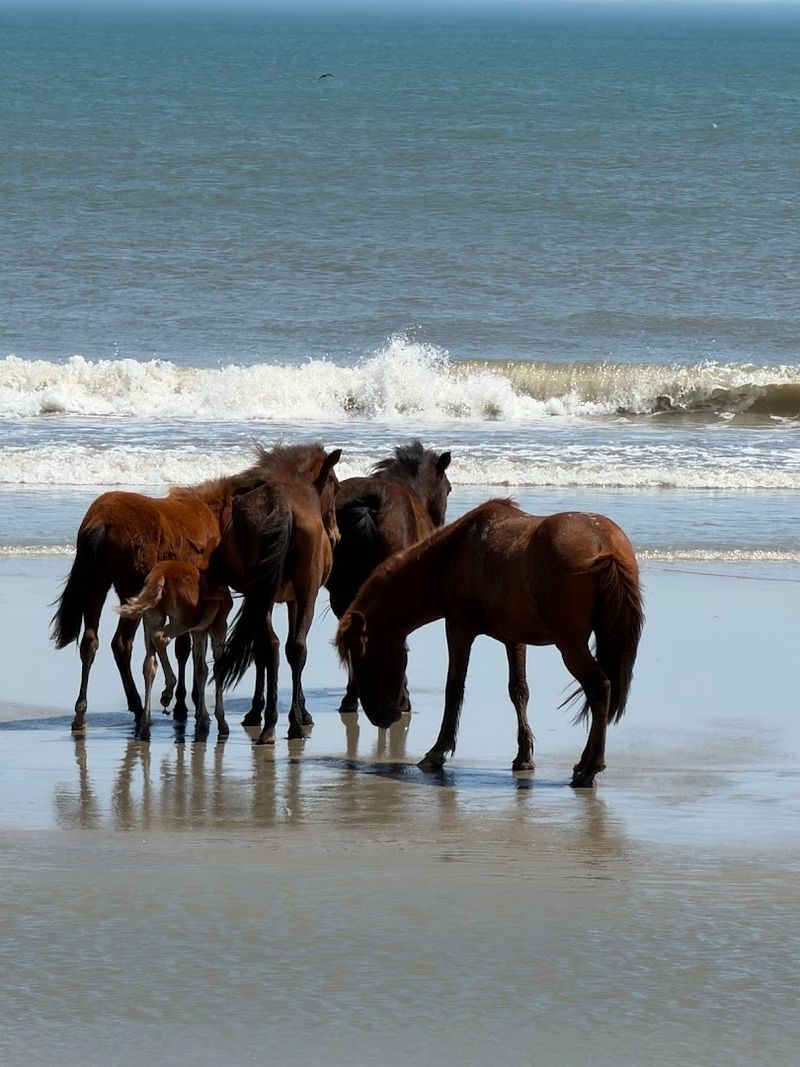
Shackleford Banks might be the crown jewel, but North Carolina is quietly one of the best states in the entire country for wild horse encounters.
Up on the northern Outer Banks, the Corolla wild horses roam the four-wheel-drive beaches of Currituck County in a way that feels almost surreal.
The Corolla herd, also Spanish mustangs, shares the beach with vehicles and visitors in a unique arrangement that is unlike anywhere else in the world.
Seeing a herd of wild horses trot past a beach truck on a sunny afternoon is the kind of thing that makes you stop and question whether you are dreaming. The herd numbers around 100 horses and is managed by the Corolla Wild Horse Fund.
Ocracoke Island is home to a smaller group of Banker ponies, now kept in a protected 180-acre enclosure within Cape Hatteras National Seashore.
The Rachel Carson Reserve near Beaufort also hosts a small feral herd of fewer than 35 horses. Each of these herds has its own story, its own character, and its own slice of North Carolina coastal magic.
The whole state is basically a wild horse highlight reel.
Why Shackleford Banks Stays With You Long After You Leave
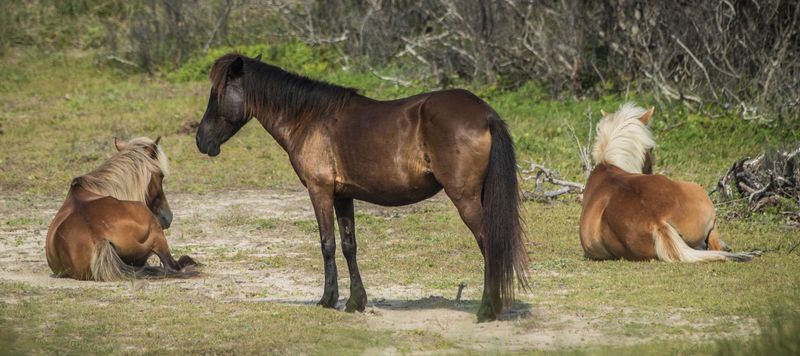
There is something about Shackleford Banks that is genuinely hard to shake once you have been there. It is not just the horses, though they are absolutely the headline act.
It is the whole feeling of the place: the silence, the scale of the sky, the way the island seems completely indifferent to the modern world rushing by just a few miles away.
Standing on that beach and watching a group of horses graze at the edge of the surf with zero concern for your presence is a quietly humbling experience.
They are not performing for you. They are just living, which somehow makes watching them feel like a privilege rather than a tourist activity.
Shackleford Banks is the kind of place that recalibrates your sense of what matters. In a world where everything seems to demand your attention every second of every day, this island operates on a completely different frequency.
The horses do not have schedules. The marsh does not care about trends.
And for a few hours, neither do you. If you have ever needed a reminder that wild and free are still possible in this world, Shackleford Banks is the answer.
Have you ever stood somewhere and felt completely, unexpectedly at peace?