
You Need To Visit This Gorgeous Secret Beach In Washington Immediately
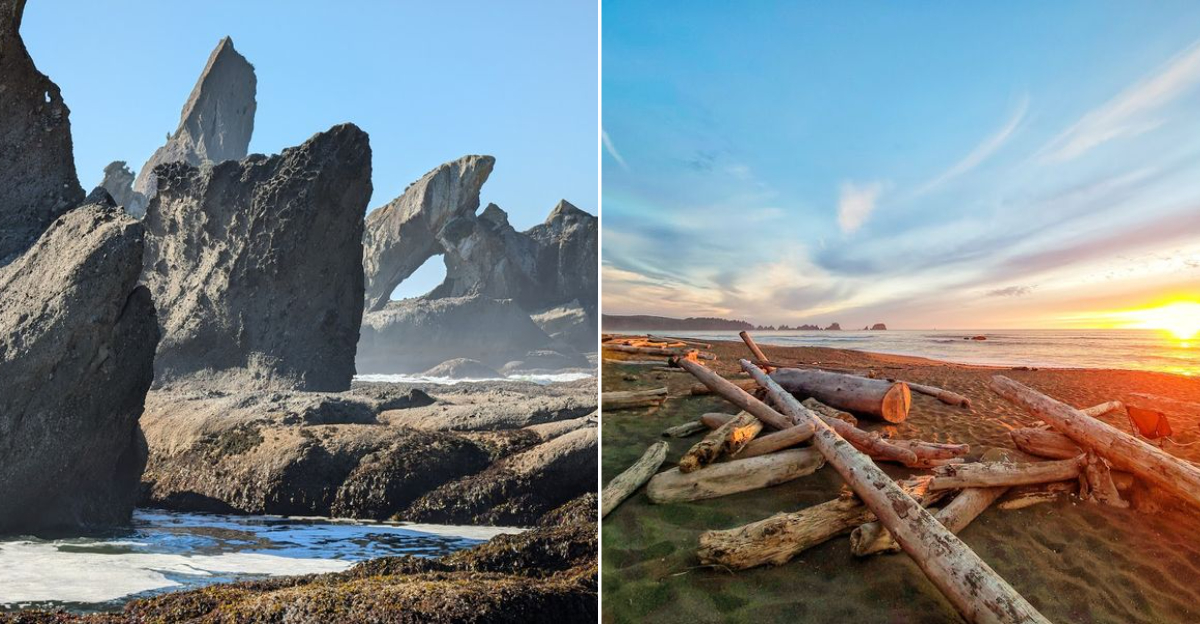
A secret beach always sounds a little dramatic until you find one that actually feels like it deserves the title.
This gorgeous stretch of Washington coast has that rare, end-of-the-map feeling, where the forest seems to open slowly and the ocean appears like a reward for making the effort. There is nothing overly polished about it, which is exactly the charm.
The sand, waves, driftwood, and sea stacks all feel wonderfully untamed, like nature skipped the fancy brochure and went straight for the jaw-drop. It reminds me of the kind of places people used to stumble on during long drives, before every hidden gem had a thousand photos attached to it.
Even now, it still feels quietly protected from the usual rush. I visited on a foggy morning in late September, and I still think about it nearly every week.
The Wild Setting That Makes Shi-Shi Beach Unforgettable
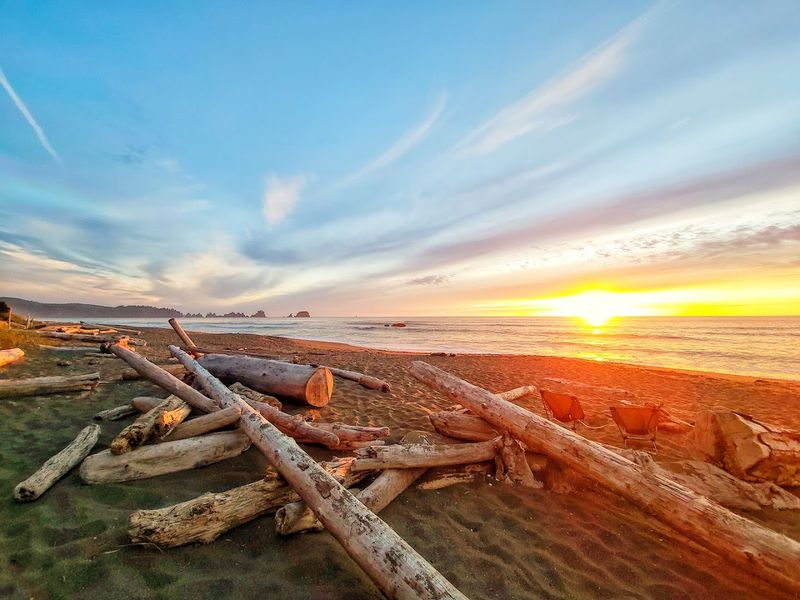
Standing at the edge of Shi-Shi Beach for the first time, I genuinely had to pause and take a breath. The scale of it catches you off guard, even after a two-mile hike through dense coastal forest.
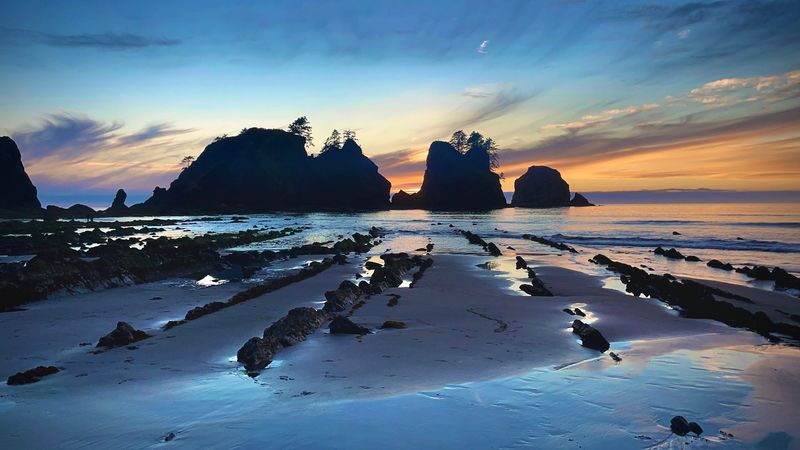
The beach stretches roughly two miles along the Pacific, lined with massive sea stacks that rise dramatically from the surf like ancient sentinels.
Located within Olympic National Park’s coastal wilderness near Neah Bay, Washington, this beach earned its “best nature beach” title from the Travel Channel for very good reason.
There are no lifeguards, no concession stands, and no parking lots within sight. What you get instead is raw, unfiltered Pacific coastline that feels genuinely untouched.
The wind carries a sharp saltwater bite, the sand is dark and coarse, and the sound of the ocean fills every corner of the air around you. Visiting here is less like going to a beach and more like stepping into a living, breathing landscape that operates entirely on its own terms.
The Drive, The Ferry, And The Road To Neah Bay
Reaching Shi-Shi Beach is part of the adventure, and honestly, the drive itself sets the mood perfectly. From Seattle, the journey takes roughly four and a half hours and includes a Washington State Ferry crossing, which adds a scenic and relaxing stretch over Puget Sound before you hit the road again.
Once off the ferry, you follow Highway 112 west along the Strait of Juan de Fuca, with sweeping water views on one side and thick evergreen forest on the other.
The road narrows and the towns get smaller the further west you travel, and by the time you reach Neah Bay, you feel like you have genuinely left the modern world behind.
Neah Bay itself is a small community on the Makah Indian Reservation, and the final stretch of road out to the trailhead passes through reservation land.
Fill up on gas and grab any last-minute supplies in town, because there is nothing waiting for you at the trailhead except trees and trail.
Permits You Need Before You Hit The Trail
Before you even think about lacing up your boots, there are two permits you need to sort out. Skipping either one is not worth the risk, because rangers do check and fines are real. Getting organized ahead of time takes about ten minutes and saves a lot of stress on the day of your hike.
The first is the Makah Recreation Permit, which is required for all visitors accessing trailheads on the Makah Indian Reservation. It costs $20 and is valid for the entire calendar year.
You can pick it up at local shops in Neah Bay or at the Makah Tribal Museum, and paying in cash speeds things up considerably.
The second is the Wilderness Camping Permit from Olympic National Park, which is required for any overnight stay. It costs $8 per person per night plus a flat $6 permit fee.
Book this one through Recreation.gov well in advance, especially if you are planning a summer trip, because spots fill up fast.
Mud, Boardwalks, And Coastal Forest Magic
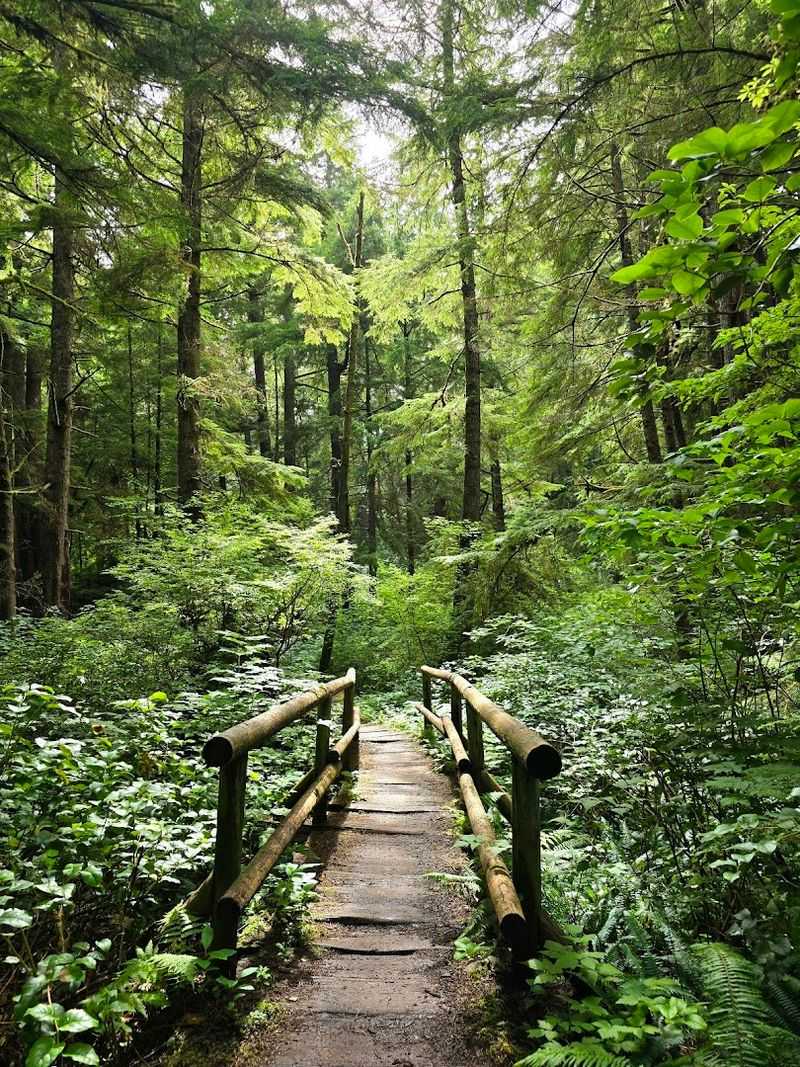
The trail to Shi-Shi Beach is about 2.3 miles each way, and I would describe it as moderately challenging with one very important caveat: it can be outrageously muddy.
When I hiked it in late September, sections of the trail looked more like a slow-moving creek than a footpath. Waterproof boots are not optional here, they are the single most important gear decision you will make.
The route winds through lush coastal forest, where towering Sitka spruce and western red cedar create a canopy so thick the light filters through in long green shafts. Wooden boardwalks help you cross the worst boggy sections, though they can be slippery when wet, so take your time on them.
Near the end of the trail, the forest opens up and you begin a steep descent of around 150 to 200 feet down to the beach itself. That descent is where the sound of the ocean suddenly gets louder, the trees thin out, and the full drama of the coastline reveals itself all at once.
Point Of Arches: The Crown Jewel At The South End
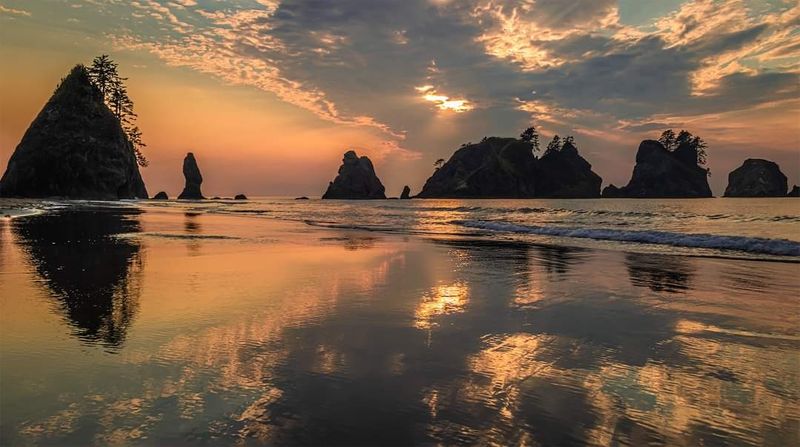
If Shi-Shi Beach is the destination, then Point of Arches is the reason to stay longer. Located about 1.5 miles south of where the trail meets the beach, this mile-long stretch of natural rock arches and jagged formations is one of the most visually spectacular places I have ever stood.
The shapes the ocean has carved into these rocks over thousands of years are genuinely hard to believe. Timing your visit to Point of Arches around low tide is absolutely essential.
At high tide, access becomes limited and some routes close off entirely. At low tide, you can weave between the arches, peer through natural tunnels, and explore the rocky shelves where tide pools cluster in abundance.
I spent nearly three hours wandering through the arches on a falling tide, and every turn revealed something new: a hidden cove, a perfectly framed view of the Pacific, a sea stack with a jagged silhouette against a pale sky.
Plan to arrive at the arches at least two hours before low tide to make the most of your time there.
Tide Pools Teeming With Life
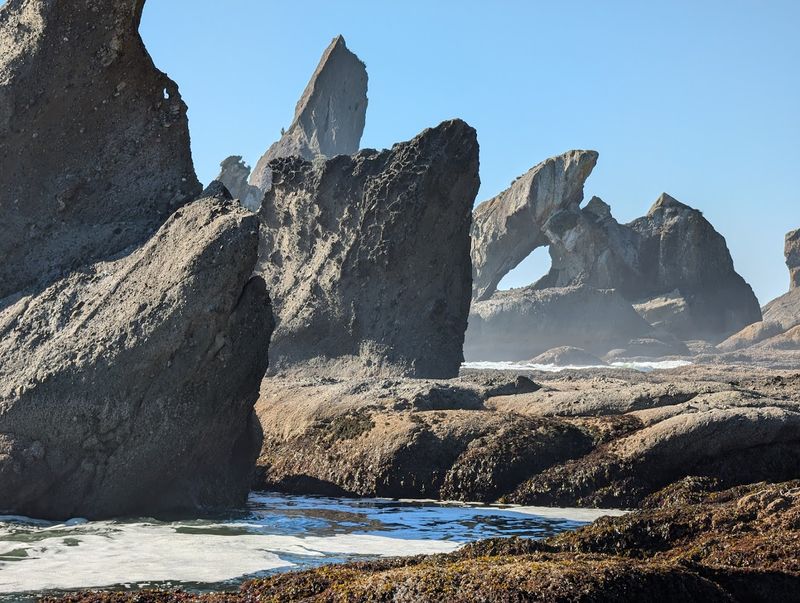
The tide pools at Shi-Shi Beach are among the richest on the entire Olympic coast, and spending even thirty minutes exploring them feels like peering into a miniature ocean world.
I crouched down beside one pool near Point of Arches and counted purple sea urchins, orange sea stars, bright green anemones, and at least four different types of crab within a single arm’s reach.
These ecosystems are fragile, so stepping carefully is non-negotiable. The rocks are also extremely slick, especially when covered in wet algae, so moving slowly and watching your footing protects both you and the creatures living there.
Flat-soled shoes with good grip make a real difference when you are scrambling around on the rocky shelves. Low tide is the magic window for tide pool exploration, so check the tide charts before your visit and build your schedule around them.
The National Oceanic and Atmospheric Administration website offers free, accurate tide predictions for this stretch of coast, and using them is one of the smartest things you can do before you arrive.
Wildlife Encounters That Will Stop You In Your Tracks
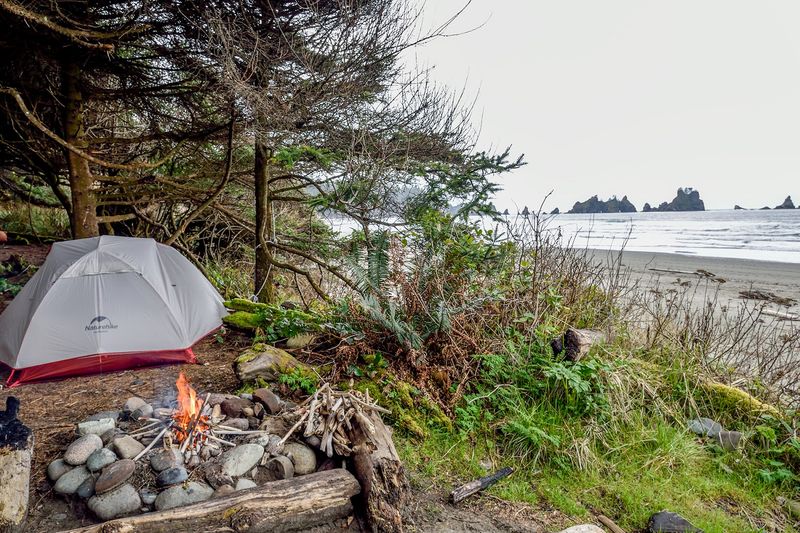
On my first morning at Shi-Shi Beach, a bald eagle landed on a piece of driftwood about forty feet from my tent. It sat there for a full minute, completely unbothered by my presence, before launching itself back into the grey sky with one powerful wingbeat.
That moment alone was worth the entire trip. Wildlife sightings at Shi-Shi are common and varied.
Harbor seals bob in the surf just offshore, great blue herons stalk the water’s edge with prehistoric patience, and peregrine falcons occasionally tear across the sky at speeds that are genuinely shocking.
Western gulls are constant companions along the beach, and if you are lucky with timing, offshore orca and blue whale sightings have been reported by visitors.
Bioluminescence is another after-dark possibility that not many people know about. On calm nights during certain seasons, the breaking waves can glow with faint blue-green light caused by bioluminescent plankton.
I did not see it on my trip, but fellow campers who stayed a second night reported a faint glow in the surf, and I have been slightly jealous ever since.
Camping On The Beach
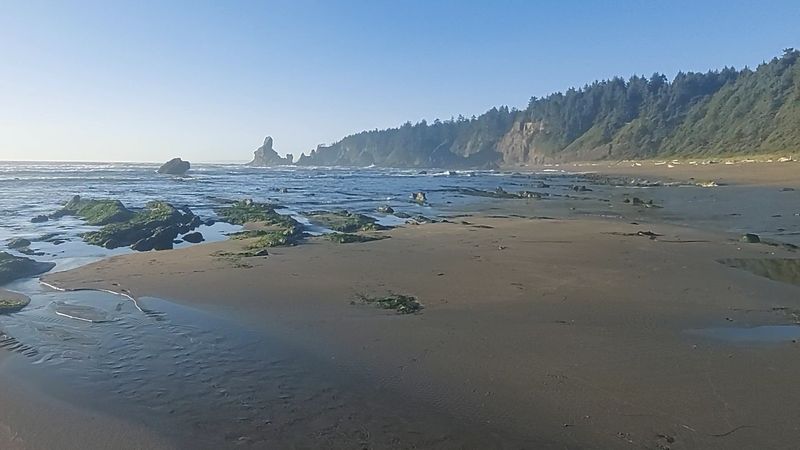
Camping at Shi-Shi Beach is one of those experiences that recalibrates your sense of what a good night’s sleep actually requires.
Your tent goes above the high tide line, which matters more than it sounds, so always check tide charts before choosing your spot. Sites are scattered both along the beach and tucked into the forest edge, giving you a choice between open sky views and sheltered windbreaks.
Campfires are permitted on the beach in existing fire rings, using driftwood collected from the beach. This is one of the few places in Olympic National Park where beach fires are allowed, and sitting beside one while listening to the surf is a genuinely special experience.
Three pit toilets are available on-site, which is a small but meaningful comfort after a long day of hiking. Water is available from Petroleum Creek and Willoughby Creek near the camping area, but it must be filtered or boiled before drinking.
A reliable water filter is essential gear for this trip. Bear canisters are mandatory for storing all food and scented items, and rangers enforce this rule consistently, so pack one before you leave home.
Best Times To Visit And What Each Season Offers
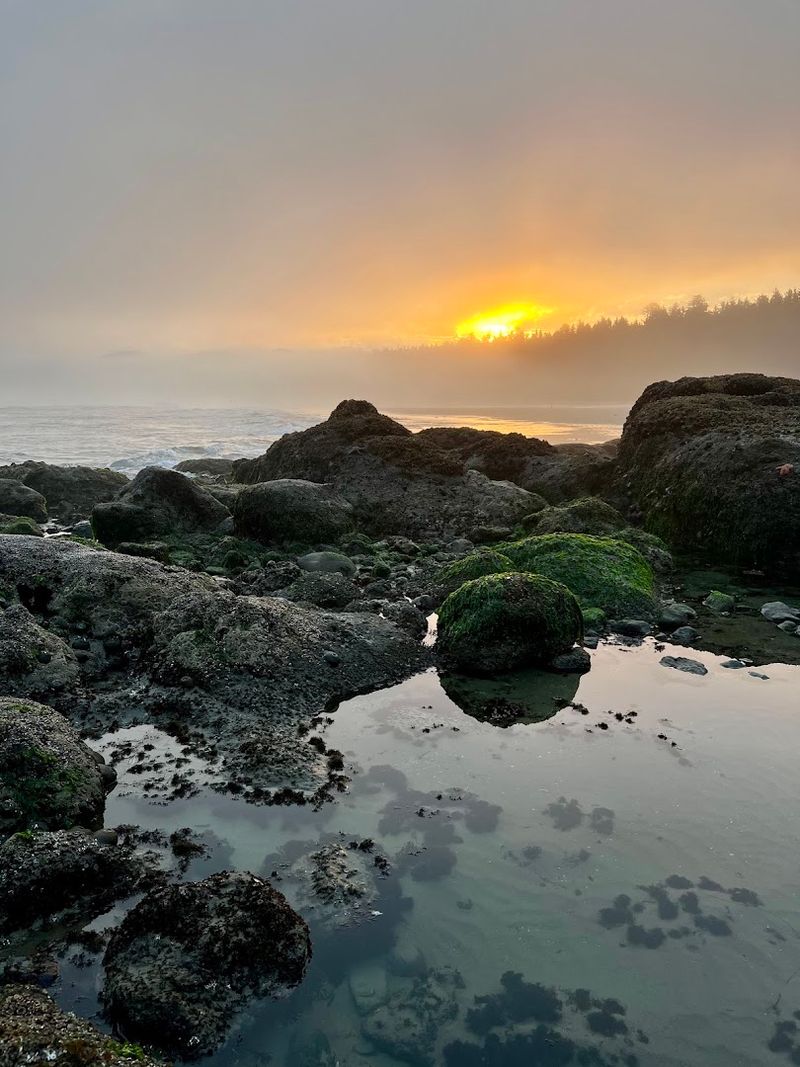
Shi-Shi Beach is open year-round, but each season delivers a noticeably different experience. Summer, specifically July through early September, brings the longest days and the most reliable dry weather.
The trade-off is crowds, and on peak summer weekends, up to 250 campers may be sharing the beach. That is still far fewer than most coastal campgrounds, but it is a different vibe than having the place nearly to yourself.
Late spring, particularly May, and fall, especially October, are my personal recommendations for anyone who wants solitude without sacrificing scenery.
The weather can still be wet and the trail will almost certainly be muddy, but the beach feels like it belongs to you in a way that summer simply cannot offer. Wildflowers bloom along the trail edges in May, and fall brings moody low clouds that make the sea stacks look even more dramatic.
Winter visits are possible for experienced hikers who are comfortable with wet conditions and shorter daylight windows. The coast in winter has a raw, powerful energy that is hard to describe and even harder to forget once you have felt it firsthand.
Essential Gear And Tips
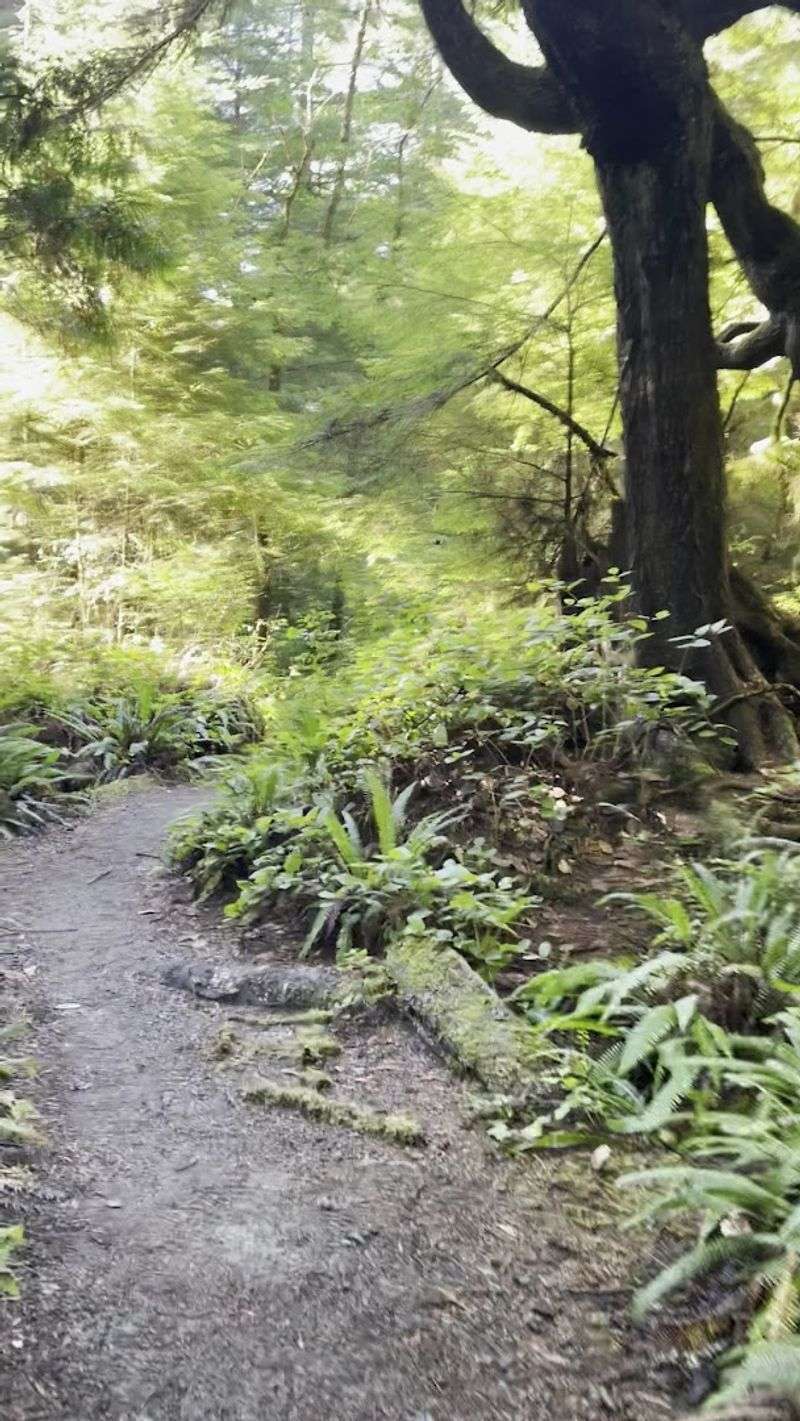
A few practical choices made before you leave home will determine how much you enjoy this trip. Waterproof boots are the single most critical piece of gear, full stop.
I cannot overstate how muddy the trail gets after even a light rain, and the Olympic Peninsula averages over 100 inches of precipitation per year in some areas. Wet feet on day one will ruin everything that follows.
A quality rain jacket, trekking poles for the steep descent to the beach, and a water filter for the creek water are all strongly recommended. Pack out everything you bring in, following Leave No Trace principles, because this coastline stays beautiful only because visitors take that responsibility seriously.
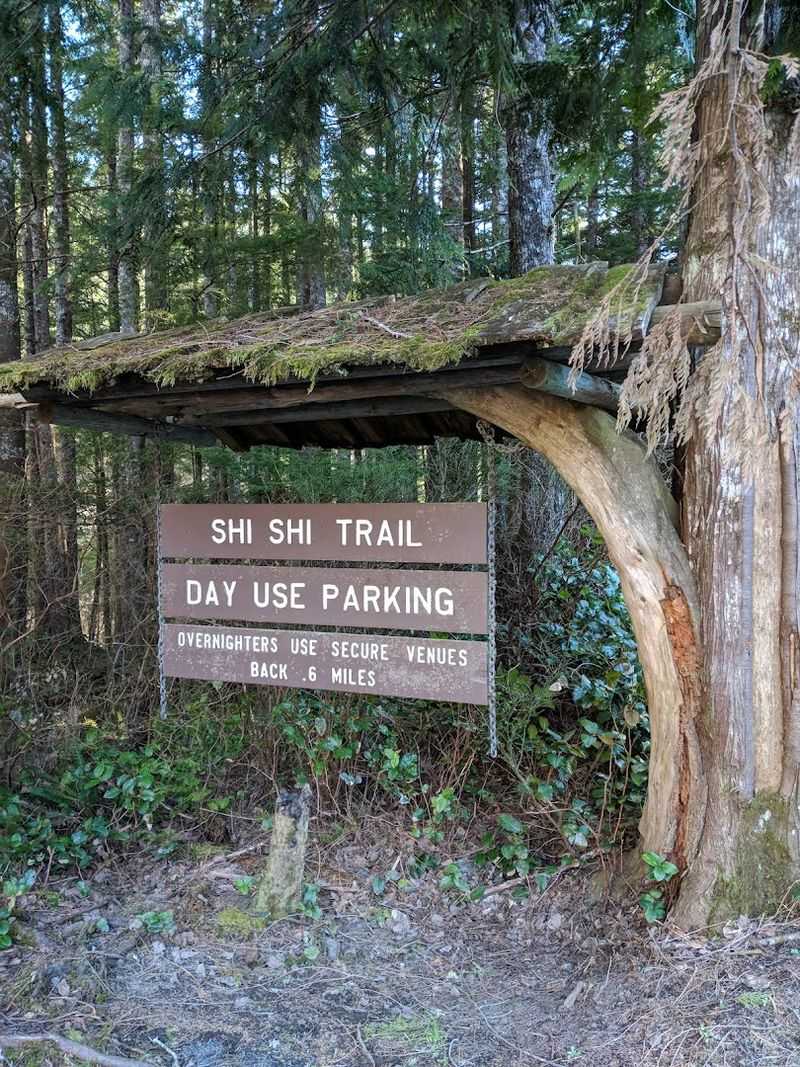
A bear canister is mandatory for campers and needs to be packed before you arrive. Overnight parking is not allowed at the trailhead.
The Makah Tribe operates designated private parking lots nearby for overnight visitors, typically charging $10 per day in cash only, so bring small bills.
Confirming current parking availability and rates through local sources before your trip is a smart move, since logistics in remote areas can shift seasonally.