
These Historic Covered Bridges In Ohio Feel Like Stepping Into Another Era
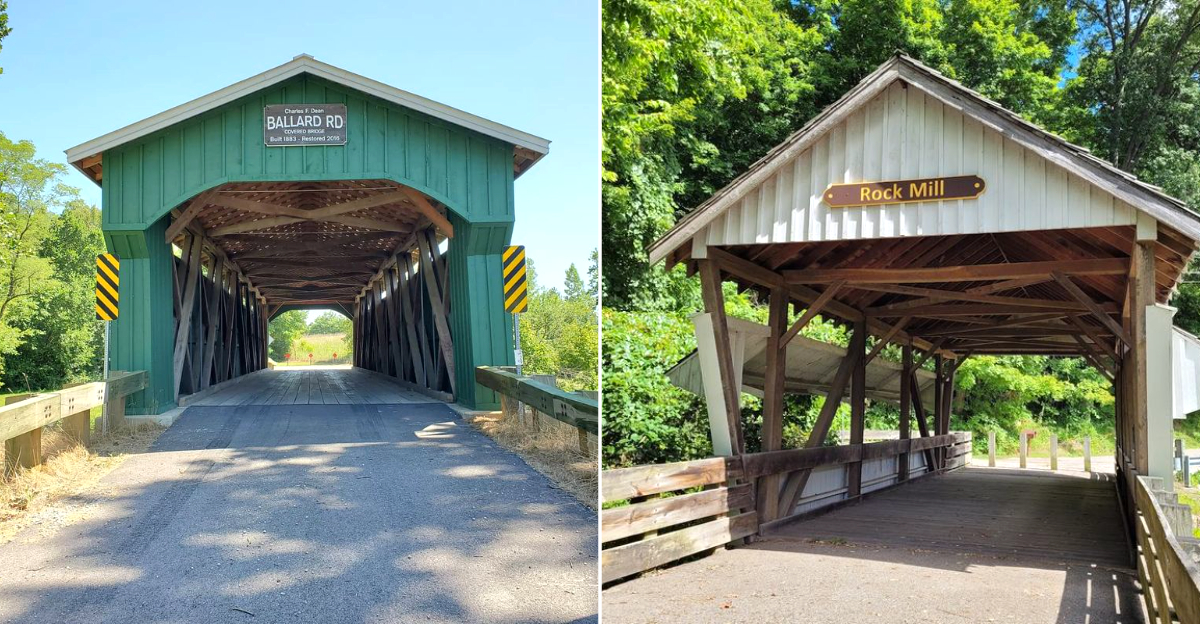
Ohio’s covered bridges feel like little time capsules hiding on country roads.
One minute you are driving past fields, creeks, and quiet woods, and the next you are rolling up to a wooden landmark that looks like it has been patiently waiting for visitors since the 1800s.
That is the charm of chasing these bridges across the state. Some cross rushing streams, some sit near old mills or peaceful farmland, and others turn a simple backroad drive into the kind of slow, scenic detour that makes you glad you took the long way.
These 12 historic Ohio covered bridges bring together craftsmanship, small-town history, and plenty of photo-worthy stops.
Bring comfortable shoes, leave room for a few unplanned pauses, and let the old wooden beams do what they do best: make the past feel surprisingly close.
1. Everett Covered Bridge, Peninsula
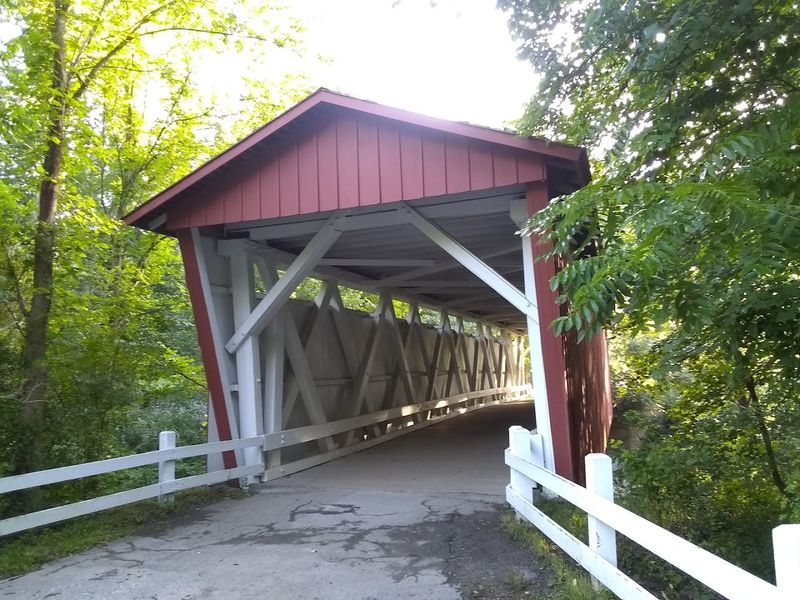
The current Everett Covered Bridge near Peninsula, Ohio, is a historically accurate reconstruction of the covered bridge that once crossed Furnace Run in what is now Cuyahoga Valley National Park.
The bridge stretches gracefully over Furnace Run Creek, and the surrounding forest makes it feel like you have wandered into a storybook illustration.
The historic bridge was lost to a flood in 1975, and a carefully rebuilt version was completed in 1986 using a design patterned on the 1869 Smith Truss style.
Hikers on nearby park trails frequently stop here to soak in the scenery, making it a natural meeting point for outdoor lovers.
The best time to visit is during fall, when the surrounding trees burst into shades of orange and red that reflect beautifully off the water below.
Parking is available nearby, and the trail leading to the bridge is easy enough for families with young children.
Whether you are a history buff, a nature walker, or simply someone who appreciates beautiful craftsmanship, this bridge delivers an experience that feels genuinely rare.
2. Newton Falls Covered Bridge, Newton Falls
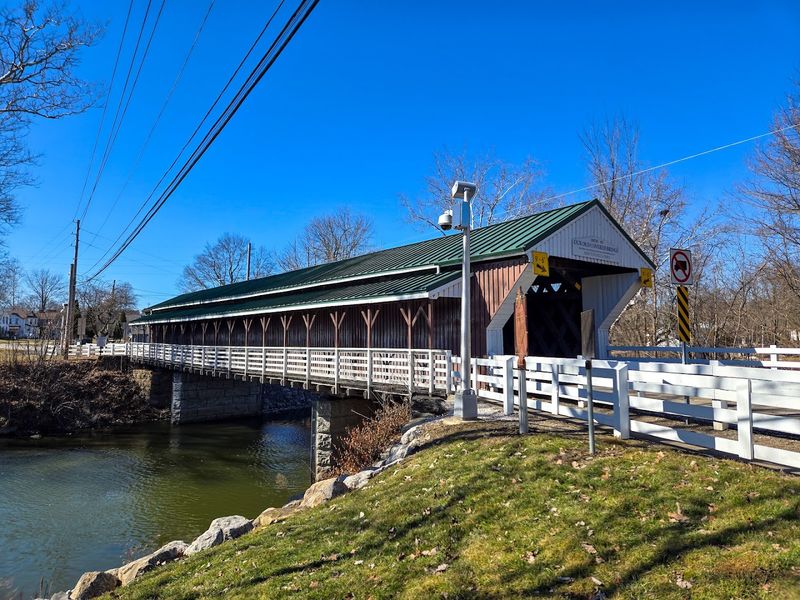
Right in the heart of Newton Falls, Ohio, sits one of the oldest covered bridges in the state, and it has been standing proudly since 1831.
The Newton Falls Covered Bridge is located on Arlington Road and spans the East Branch of the Mahoning River, making it a picturesque stop for anyone passing through Trumbull County.
What makes this bridge especially fascinating is that it still carries vehicle traffic, which means you can actually drive through it rather than just admire it from the outside.
The Town lattice truss design gives the structure a sturdy elegance that holds up beautifully even today.
Locals take quiet pride in this bridge, and you will often find people pausing on the nearby sidewalk just to take it all in.
Spring is a particularly lovely time to visit, when the river runs full and the surrounding trees are bright with new growth.
It is history you can literally roll through.
3. Eldean Covered Bridge, Troy
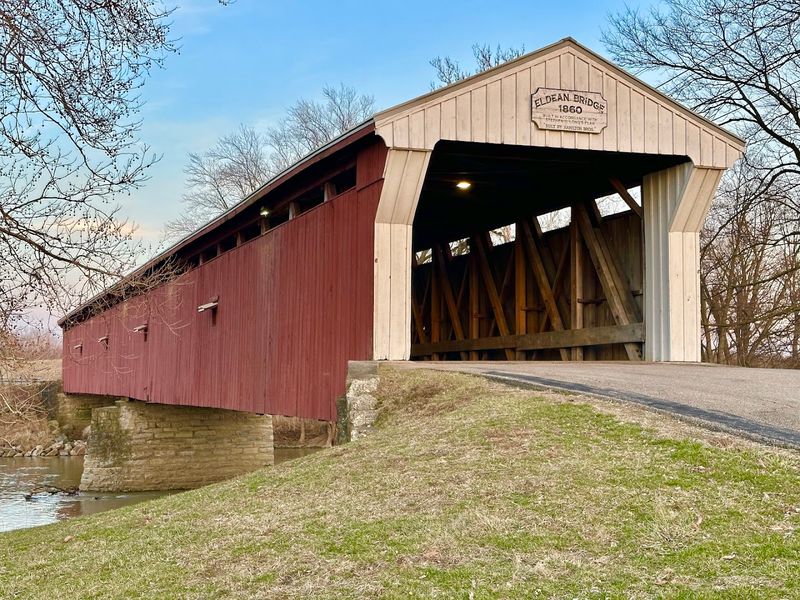
Stretching an impressive 224 feet across the Great Miami River, the Eldean Covered Bridge near Troy, Ohio, is one of the longest surviving covered bridges in the entire state.
Built in 1860, this double-span structure uses a Long truss design that has kept it standing strong through more than 160 years of Ohio weather.
Located at 794 Eldean Road, the bridge sits in a peaceful rural setting that feels completely removed from the buzz of modern life.
Cattle graze in nearby fields, and the river moves quietly below, creating a scene that practically begs you to slow down and breathe.
The Miami County Park District maintains the area, so the grounds around the bridge are well kept and easy to explore on foot.
Photographers especially love the late afternoon light here, when golden rays pour through the open ends of the bridge and illuminate the aged timber inside.
Bring comfortable shoes and plan to linger a while.
4. Roberts Covered Bridge, Eaton
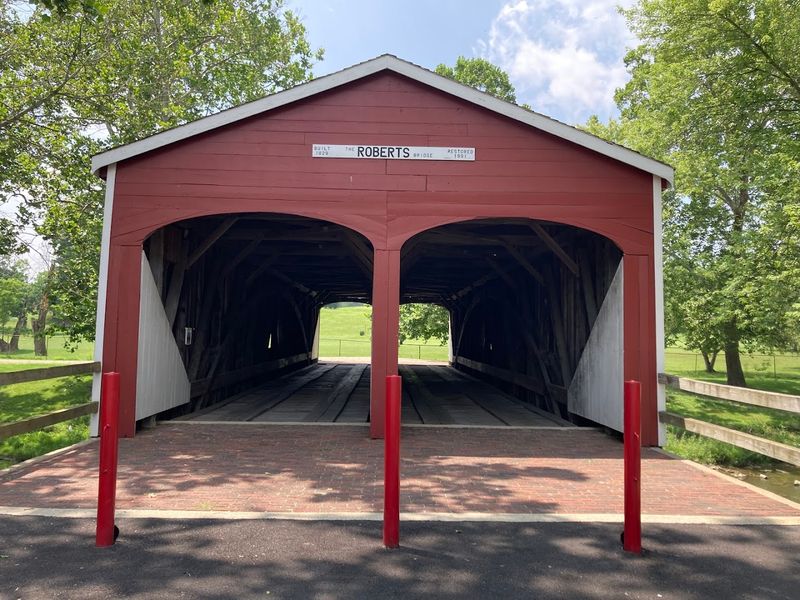
Preble County, Ohio, is famous for its collection of covered bridges, and the Roberts Covered Bridge in Eaton is widely considered one of its finest examples.
Constructed in 1829, this bridge holds the distinction of being the oldest surviving covered bridge in Ohio, a fact that makes every visit feel like a genuine brush with early American history.
Located at 101 Water Street, it spans Seven Mile Creek and still welcomes visitors who want to walk across its weathered wooden floor.
The Burr arch truss construction was cutting-edge engineering for its time, and seeing it up close gives you a real appreciation for the skill of 19th-century builders.
Eaton itself is a charming small town worth exploring, with local shops and eateries that add a pleasant layer to your day trip.
Fall weekends tend to draw larger crowds, so arriving early in the morning gives you the bridge mostly to yourself.
Quiet moments here feel genuinely priceless.
5. Mull Covered Bridge, Fremont
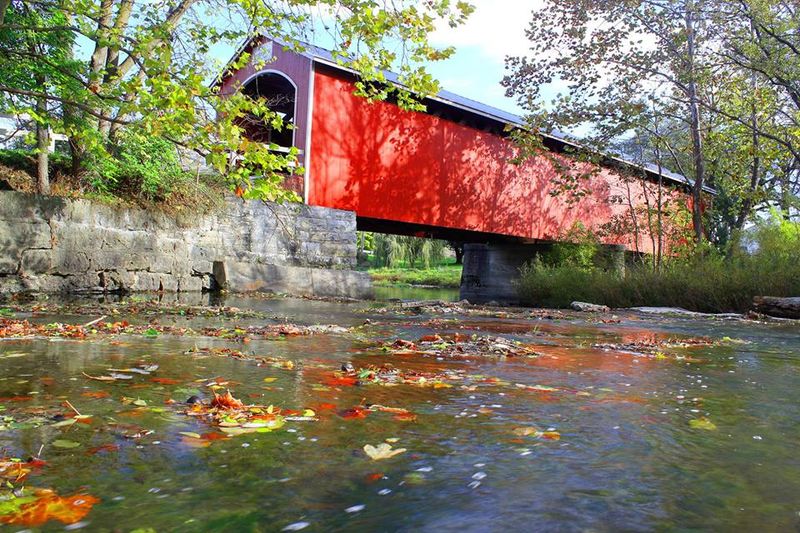
Tucked along County Road 9 near Fremont, Ohio, the Mull Covered Bridge is a quiet treasure that most travelers speed right past without ever knowing it exists.
Built in 1851, this Town lattice truss bridge was built near the Mull Mill area and remains one of the last covered bridges in northwest Ohio.
The setting here is wonderfully rural, with open farmland stretching out nearby and the quiet creekside landscape giving the bridge a calm, tucked-away feel.
Sandusky County has done a commendable job of protecting this landmark, and informational signage near the site helps visitors understand the bridge’s construction and historical significance.
Birdwatchers will find the area especially rewarding, as the creekside habitat supports a variety of songbirds and waterfowl throughout the warmer months.
If you are building a covered bridge road trip through northern Ohio, this stop pairs well with other Sandusky County history and outdoor stops nearby.
Low-key and lovely in equal measure.
6. Parker Covered Bridge, Upper Sandusky
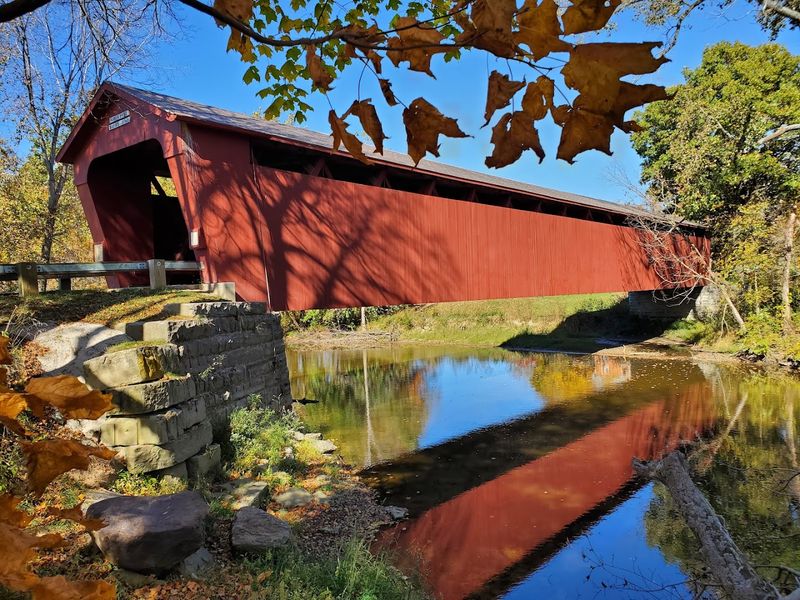
Not far from the small town of Upper Sandusky, Ohio, the Parker Covered Bridge stands as one of Wyandot County’s most treasured historic landmarks.
Spanning the Sandusky River along Everhart Road, also known as Township Road 40, this bridge was built in 1873 using a Howe truss design that was common across rural Ohio during that period.
The surrounding landscape is wide open and deeply pastoral, with cornfields and fence lines framing the bridge in a way that makes every photograph look like it belongs on a postcard.
Wyandot County is proud of its covered bridge heritage, and the Parker Bridge is regularly included in local heritage tours and autumn driving routes.
Because the bridge still carries a rural road, visitors should stay aware of local traffic while stopping to admire the structure or take photos.
Morning visits are especially atmospheric, with mist sometimes rising off the river and birds calling from the nearby tree line.
History feels close here.
7. Ballard Road Covered Bridge, Xenia
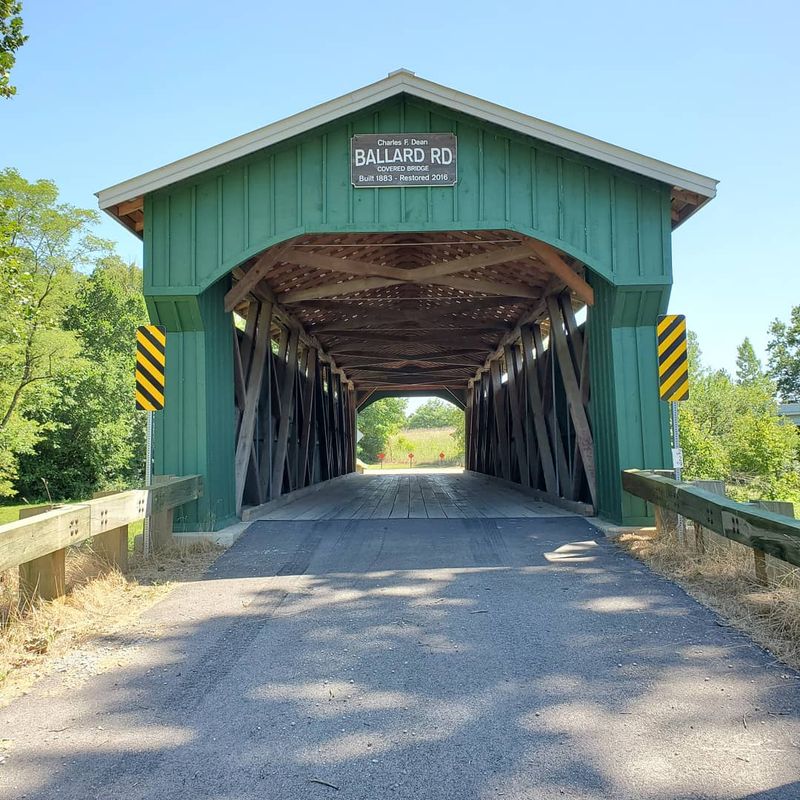
Greene County, Ohio, is home to several covered bridges, and the Ballard Road Covered Bridge near Xenia is one of the most accessible and well-maintained of the bunch.
Located at 199 North Ballard Road, this bridge was built in 1883 and spans the North Branch of Caesar Creek with a sturdy seven-panel Howe truss that has aged remarkably well.
The road leading to the bridge winds through classic Ohio countryside, giving the whole approach a slow-paced, unhurried quality that modern highways simply cannot replicate.
Greene County Parks maintains the site, and the surrounding area has been developed into a small natural retreat where visitors can picnic, walk, and simply enjoy the outdoors.
The bridge interior still shows original timber markings and hand-cut joinery, details that reward visitors who take the time to look closely.
Autumn is the peak season for visits, but the area is honestly beautiful in every season, including a crisp and frosty January morning.
Simplicity at its most satisfying.
8. Armstrong Covered Bridge, Cambridge
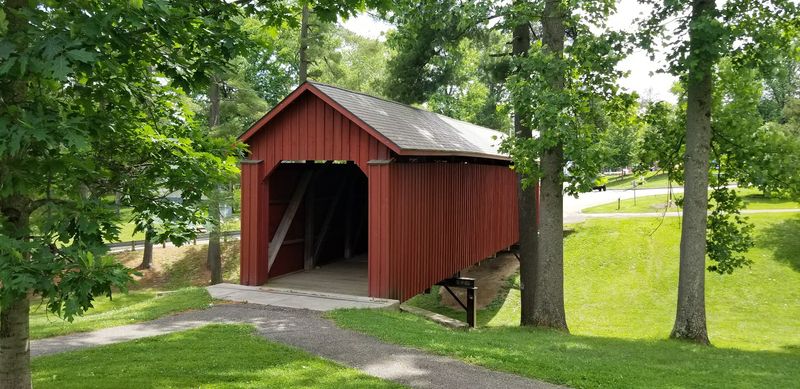
Guernsey County, Ohio, holds a well-earned reputation for its scenic covered bridges, and the Armstrong Covered Bridge near Cambridge sits at the top of many visitors’ lists.
Built around 1849, this bridge is located inside Cambridge City Park near downtown and now carries a walking path over a small creek.
The bridge originally crossed Salt Creek near Clio before being relocated to Cambridge City Park in the 1960s, and its multiple kingpost truss construction speaks to the practical ingenuity of mid-19th-century builders.
The city park setting gives the bridge a calmer backdrop than you might expect so close to downtown, especially when the leaves turn in October.
Cambridge itself is a welcoming small city with a strong appreciation for local history, and the covered bridge fits naturally into the broader story of the region’s heritage.
Visitors often combine a stop here with a drive along the Guernsey County Covered Bridge Driving Tour, which connects several historic bridges across the county.
The small creek and walking path give the visit an easy, low-effort charm that works well for families and casual explorers.
9. Rock Mill Covered Bridge, Lancaster
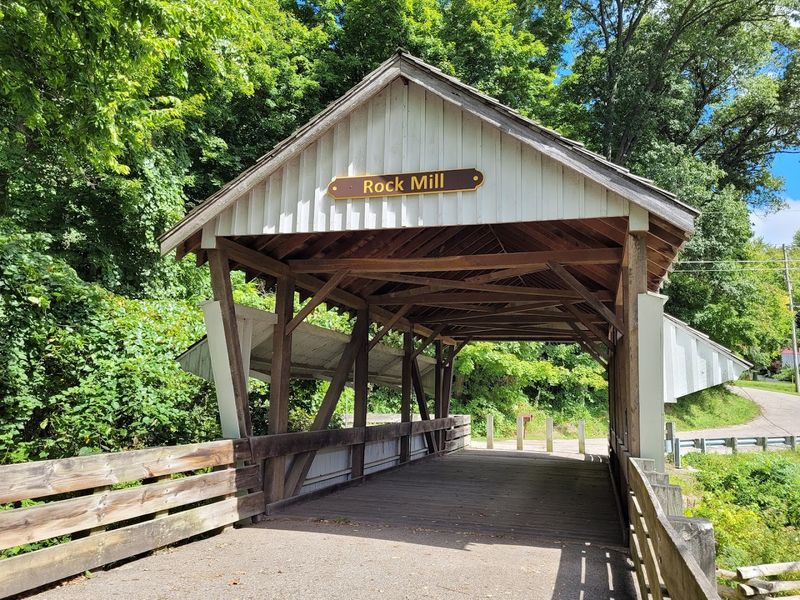
Few covered bridge stops in all of Ohio come with a built-in waterfall, but the Rock Mill Covered Bridge near Lancaster is one of the lucky exceptions.
Located at 1429 Rockmill Place NW, this 1901 bridge spans the Hocking River near a stunning limestone gorge and a historic grist mill that dates back to 1824.
The combination of the covered bridge, the old mill, and the rushing water creates a scene so visually rich that photographers sometimes spend an entire afternoon here without running out of new angles.
The Fairfield County Park District manages the Rock Mill area, and a short route connects the parking area to both the bridge and the restored mill.
The gorge walls are dramatic and the water is loud, especially in early spring when seasonal flow makes the setting feel even more powerful.
This is genuinely one of the most spectacular natural settings attached to any covered bridge in the state.
Come prepared to be wowed.
10. John Bright No. 2 Covered Bridge, Lancaster
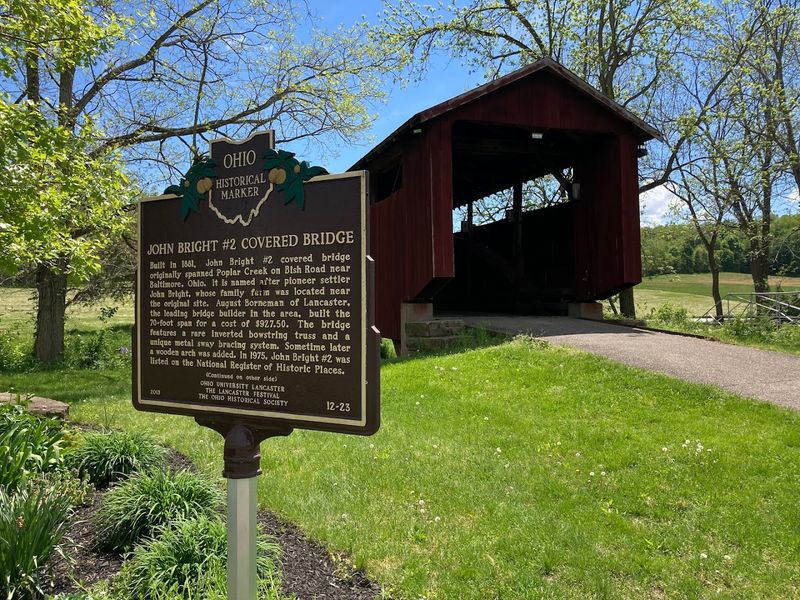
Fairfield County is so rich in covered bridge history that Lancaster alone is home to multiple historic examples, and the John Bright No. 2 Covered Bridge is one worth seeking out specifically.
Built in 1881 and located at 1570 Granville Pike, this bridge now spans Fetters Run on the Ohio University Lancaster campus and uses a reverse bowstring truss system that makes it especially distinctive.
The bridge originally spanned Poplar Creek near Baltimore, Ohio, before being preserved and moved to its current Lancaster location.
The name refers to a local landowner from the 19th century, and that personal connection to the land gives the bridge a grounded, community-rooted character that larger landmarks sometimes lack.
Fairfield County’s covered bridge driving tour conveniently includes this stop alongside Rock Mill and Mink Hollow, making it easy to see all three in a single afternoon.
Three bridges, one county, zero regrets.
11. Harpersfield Covered Bridge, Geneva
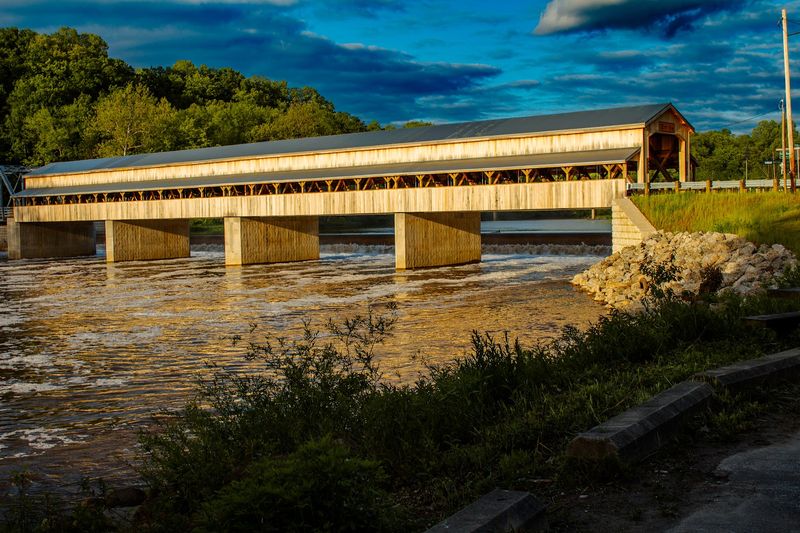
Spanning the Grand River at an impressive 228 feet, the Harpersfield Covered Bridge near Geneva, Ohio, ranks among the longest covered bridges remaining in the state.
Located at 1122 Harpersfield Road in Ashtabula County, this bridge was built in 1868 and has been thoughtfully maintained to preserve both its structural integrity and its historic character.
Ashtabula County is actually the covered bridge capital of Ohio, boasting more historic covered bridges than any other county in the state, and Harpersfield is widely regarded as one of the finest examples in the collection.
A pedestrian walkway runs alongside the main vehicle lane, so visitors can stroll through at their own pace and admire the timber framing up close.
The Grand River below is popular with anglers and kayakers, adding a lively outdoor energy to the area that makes the stop feel like more than just a history lesson.
Plan to stay long enough to watch the river for a while.
12. Root Road Covered Bridge, Conneaut
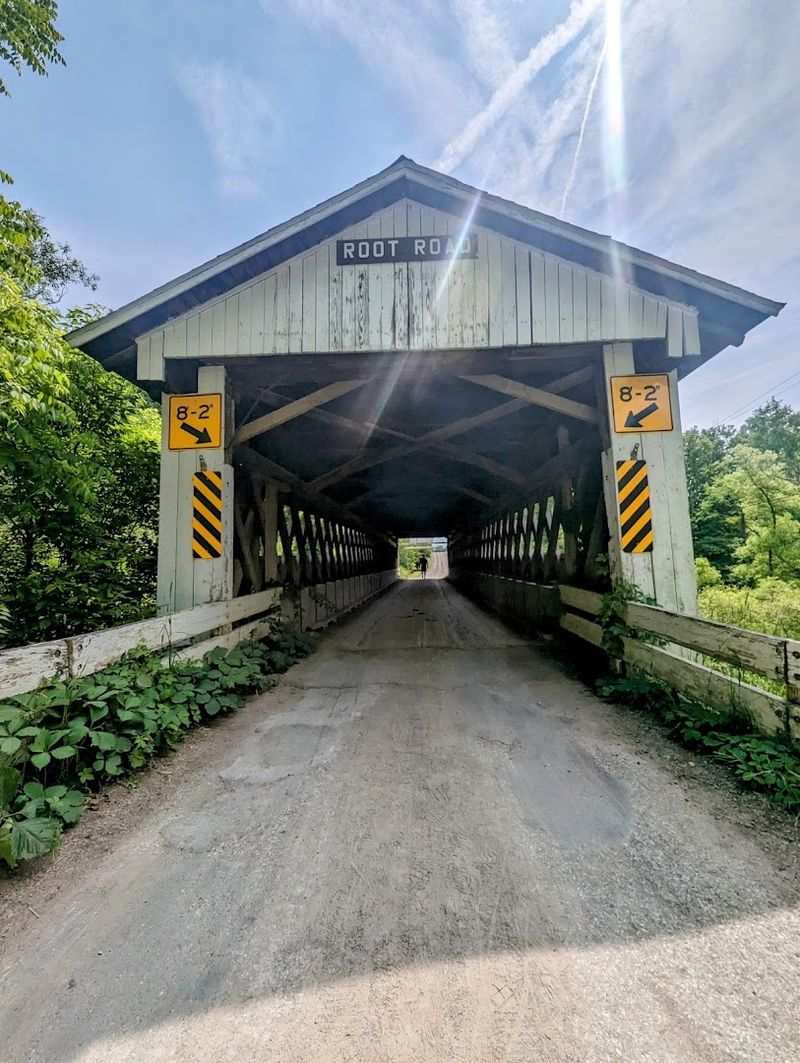
Near the shore of Lake Erie in Conneaut, Ohio, the Root Road Covered Bridge offers a surprisingly serene escape tucked into the northeastern corner of the state.
Located at 4680 Root Road in Ashtabula County, this 114-foot bridge was built in 1868 and crosses the Ashtabula River using a Town lattice design that has kept it standing through more than 150 years of Ohio weather.
The surrounding landscape is dense with hardwood forest, and the canopy overhead creates a cool, shaded atmosphere that makes summer visits especially pleasant.
Ashtabula County’s annual Covered Bridge Festival draws thousands of visitors each October, and Root Road is one of the stops that gets included in the official festival driving tour.
The bridge feels refreshingly remote despite being within easy driving distance of the Lake Erie shoreline, which means you can pair your bridge visit with a lakeside afternoon without much effort.
Two very different landscapes, one very satisfying day trip.