
12 Under-The-Radar Things To Do In Michigan That Even Locals Don’t Know About
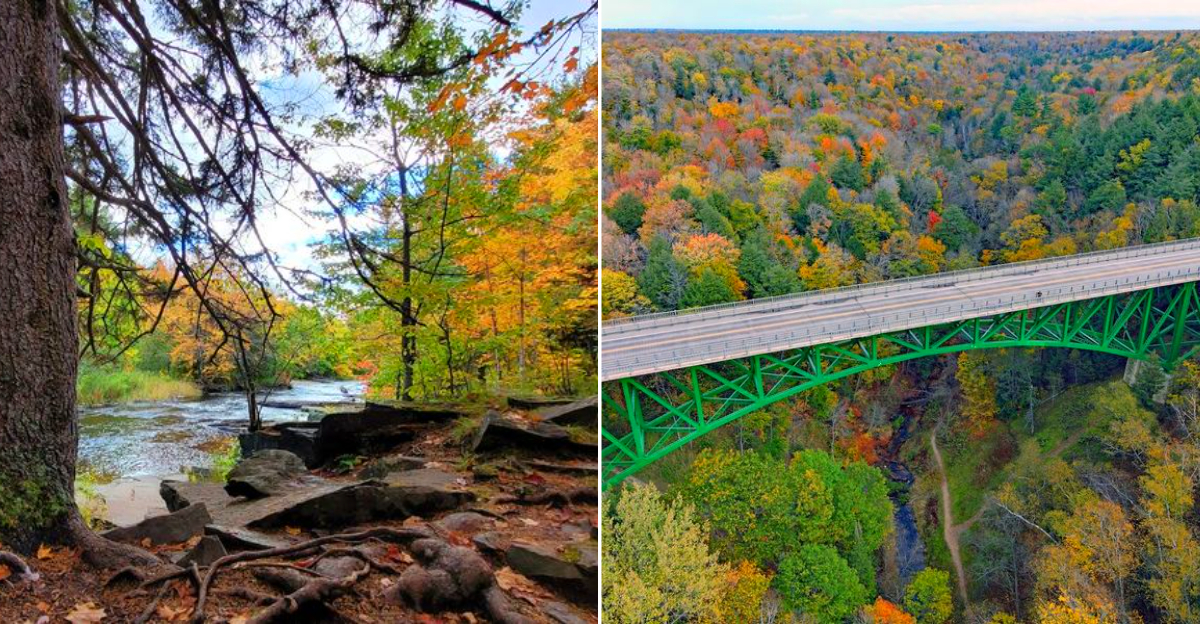
You could live in Michigan your entire life and still miss half of what makes it extraordinary. The state has a way of tucking its best secrets behind unmarked trailheads down country roads that Google Maps treats like suggestions and inside buildings that do not bother advertising themselves.
While everyone lines up at the same overlooks and posts the same lighthouse photos there are frozen caves waiting to be explored historic towns sitting quietly on forgotten shorelines and gorges that carved themselves into the landscape long before anyone thought to name them.
These are the spots that locals walk past every day without realizing what they are missing the kind of places where you pull over not because the sign told you to but because something about the light or the silence made you curious enough to stop.
The most memorable experiences in Michigan hide just off the main road and finding them takes nothing more than a willingness to take the turn nobody else takes.
12. Canyon Falls
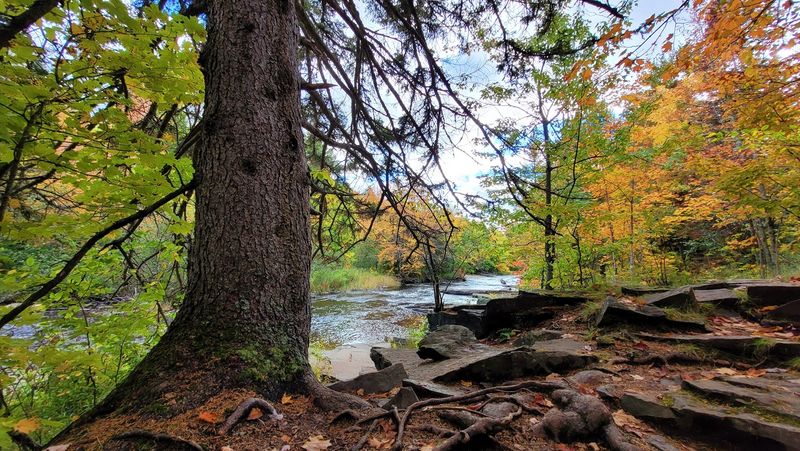
The trail to Canyon Falls begins quietly, almost modestly, then drops into a gorge that feels far more dramatic than most people expect from Michigan.
The Sturgeon River narrows, accelerates, and throws itself through dark rock, with stairways and lookout platforms giving you changing angles the whole way. It is compact, but not small in feeling.
This site sits in Baraga County and is managed with simple infrastructure that lets the landscape do the work. After rain, the water sounds bigger than the map suggests, and the air turns cool and mineral-rich near the canyon walls.
Wear shoes with grip, take the stairs slowly, and give yourself time to linger at more than one overlook, because the falls reveal themselves in pieces rather than all at once.
11. Oswald’s Bear Ranch
There is something undeniably unusual about rounding a bend in Newberry and finding a long-running bear ranch in the middle of the Upper Peninsula.
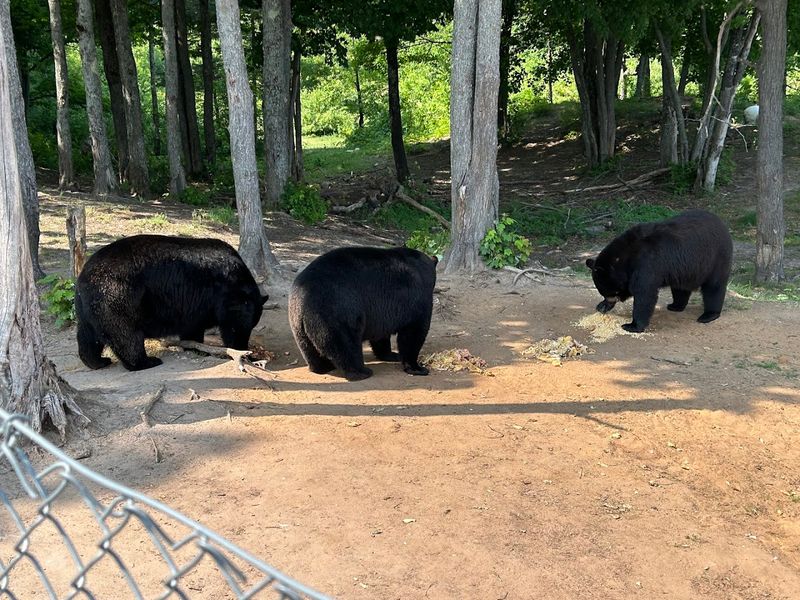
Oswald’s Bear Ranch is a private attraction focused on rescued and captive black bears, with spacious enclosures and a distinctly old-school roadside character. It feels both regional and specific, which is part of why it stays in your head long after the visit ends.
The ranch has operated for decades and is best known for allowing close but controlled viewing of animals people usually only glimpse in the woods.
That proximity gives the stop its strange appeal, especially for travelers used to seeing black bears only on warning signs, trail maps, or distant roadside flashes. You are there for observation, not wilderness, and that distinction matters.
Go with measured expectations, read the posted information, and treat it as a curious UP institution rather than a polished theme-stop, because its value is in that rough-edged local identity and the slightly surprising feeling of finding it there.
10. Eben Ice Caves
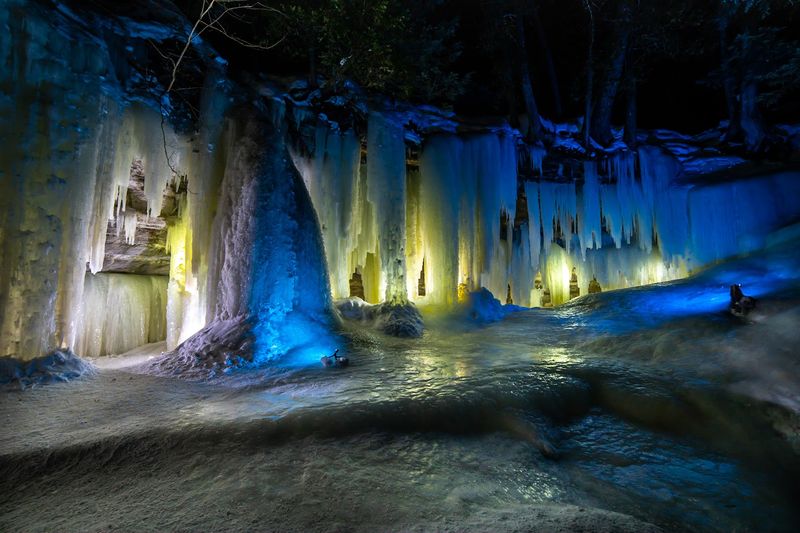
In deep winter, the woods near Eben turn theatrical. Water seeps over sandstone in the Rock River Canyon area, freezes layer by layer, and creates towering ice curtains that glow blue, white, and faintly green depending on the light.
They are called ice caves, though they are really frozen formations built against a cliff face.
The hike is short but often slippery, and conditions change fast with temperature swings and foot traffic. I liked arriving early, before the narrow path got churned up and the cold still felt clean rather than punishing.
The silence helps too, broken only by boots, breath, and the occasional crackle of ice settling overhead. Even a quick visit can feel like walking into a temporary cathedral, one that disappears as soon as the season softens into spring.
Bring traction, dress for a standing-around kind of cold, and remember that the magic here is seasonal and fragile, usually best from roughly December through March when freeze-thaw patterns cooperate.
9. Estivant Pines Nature Sanctuary
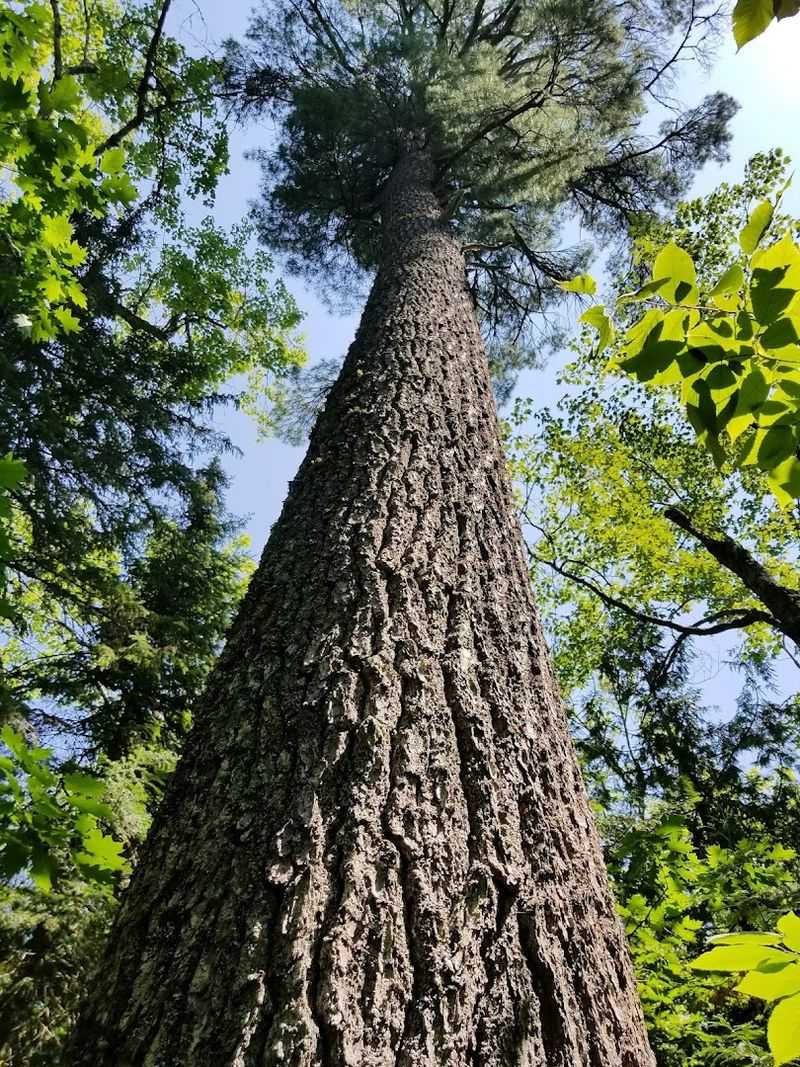
Estivant Pines does not announce itself with spectacle. What makes it remarkable is scale of a quieter kind: old-growth eastern white pines rising straight up, some estimated to be well over a century old, with a forest floor that muffles your steps and recalibrates your sense of time.
On the Keweenaw, that kind of preserved forest feels especially precious.
The sanctuary protects one of Michigan’s last remaining stands of old-growth white pine, and the trails are gentle enough to encourage slow looking instead of box-checking. Birdsong carries differently here, and even the light seems taller.
Come for a walk rather than a workout, wear bug protection in warmer months, and read the interpretive signs, because the story of what survived logging gives the place much of its emotional weight.
8. Grand Island Trail
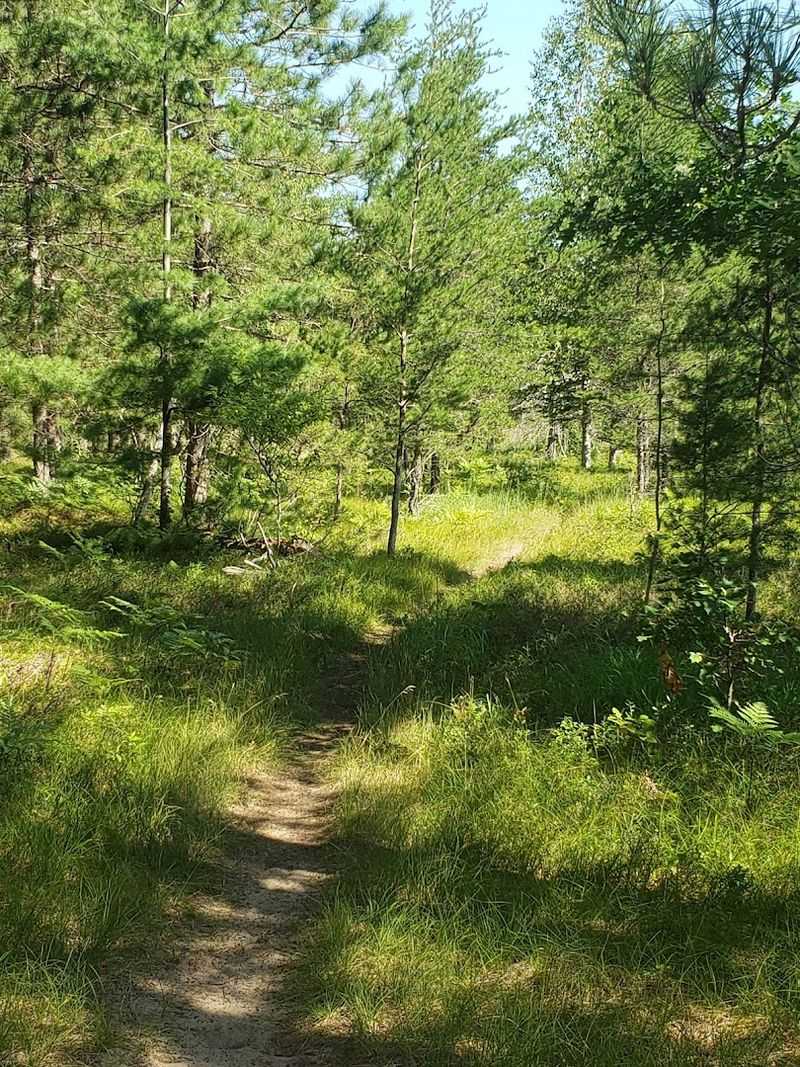
Just offshore from Munising, Grand Island feels like a place people talk around rather than about. The island has a network of trails and roads crossing forest, inland lakes, cliffs, and Superior shoreline, so every route seems to shift mood halfway through.
It is one of those destinations where the ferry ride is only the prologue.
Managed within the Hiawatha National Forest, Grand Island is popular with bikers and hikers who want a longer day than the mainland often offers. The scenery changes fast, from quiet woods to exposed views over Lake Superior, which keeps the miles interesting.
Check current ferry schedules and trail conditions before you go, bring more water than you think you need, and choose one section well rather than trying to conquer the whole island at once.
7. Fayette Historic State Park
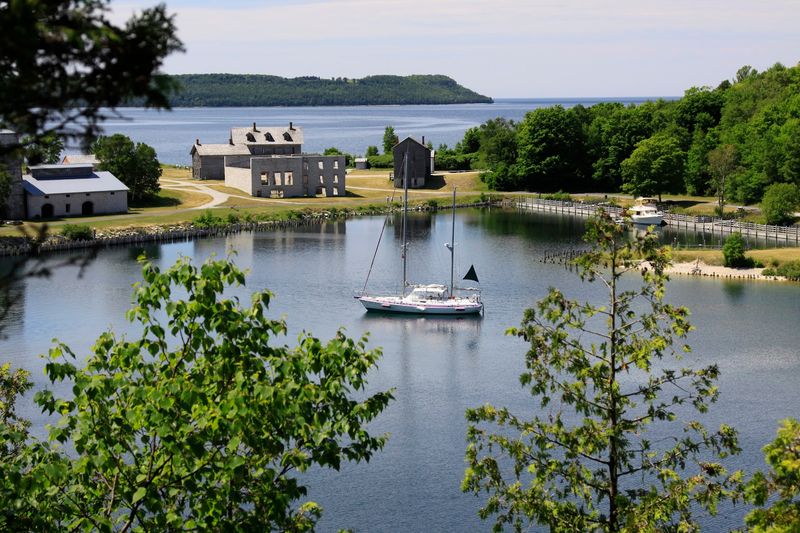
Fayette is one of those rare historic sites where the setting does half the storytelling. The preserved town sits between high limestone bluffs and a protected harbor on Big Bay de Noc, and the contrast between industrial history and clear blue water is unexpectedly moving.
You walk through a former iron-smelting community, but the place never feels sealed behind glass.
From the 1860s into the 1890s, Fayette was a busy company town, and many structures still stand, including workers’ quarters, industrial remains, and management buildings. Weathered walls, open doorways, and lake wind make the ruins feel readable rather than distant, as if the landscape is still holding the outline of daily life.
The bluff trail adds context by showing how strategically tucked away the settlement really was. Visit both the museum spaces and the shoreline, and if the weather is clear, stay late enough for slanting evening light, which gives the whole harbor a quiet, almost stage-set clarity.
6. Black Rocks At Presque Isle
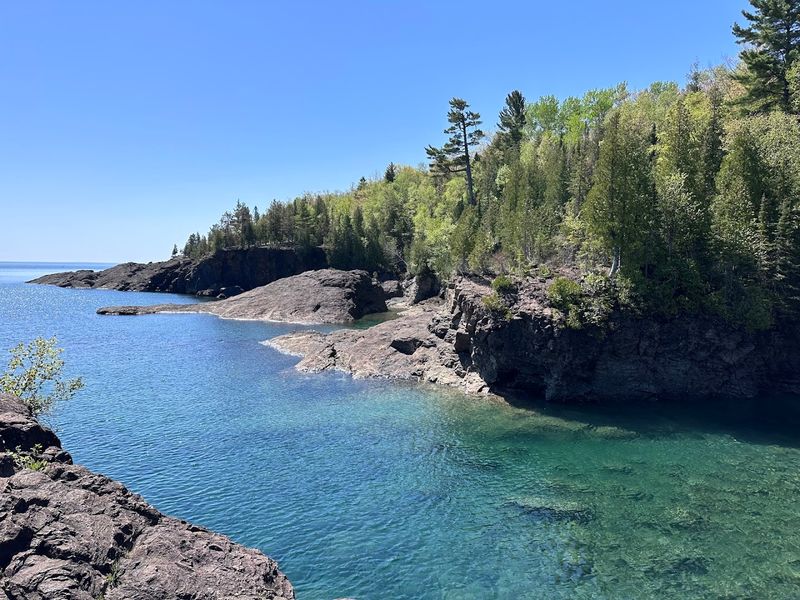
At Presque Isle in Marquette, the black rock shoreline looks sculpted for drama. These dark formations are ancient volcanic rock, and the edge above Lake Superior draws swimmers, sunset watchers, and people content to simply sit with the wind in their ears.
Even on a crowded evening, the place keeps a wild streak.
Local custom includes cliff jumping in designated conditions, but the lake is cold, powerful, and never a casual prop for photos. On calmer days, the contrast between nearly black stone and bright water is striking enough without leaving the ledge.
The whole scene has a raw northern beauty, especially when waves slap the rock below and gulls cut across the open sky. It feels less like a city park than a meeting point between town, stone, weather, and deep water.
Go for golden hour if you can, wear shoes that handle uneven surfaces, and treat every wave with respect, because Superior changes moods quickly and does not care whether you planned for them.
5. Turnip Rock
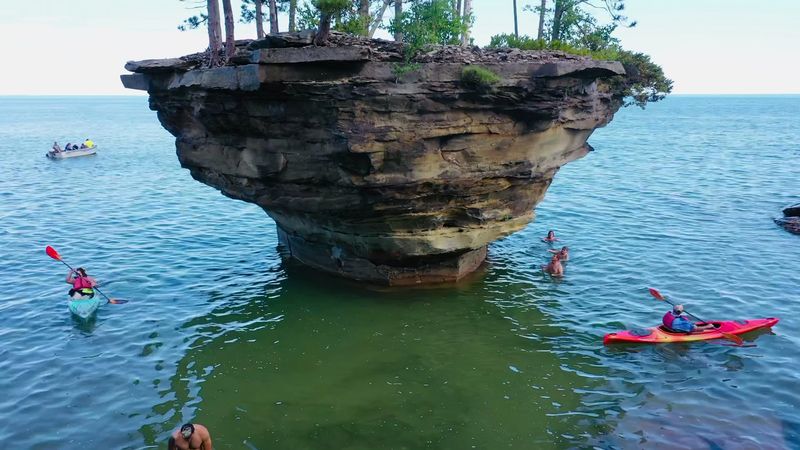
Turnip Rock has the kind of shape that sounds made up until you finally paddle toward it. This small offshore formation near Port Austin narrows at the base, flares at the top, and carries a little crown of trees, making it one of Michigan’s most recognizable geological oddities.
It is visible only from the water or neighboring private shoreline.
Most people reach it by kayak, typically launching from Port Austin for a round trip of several miles along the Lake Huron coast. The route can be beautiful and manageable in good conditions, but wind and waves matter more than distance.
As it comes into view, the scale feels playful, like a natural sculpture waiting at the end of a shoreline procession. The trees on top make it feel even stranger, as if the lake balanced an island on a pedestal.
Start early, check marine weather carefully, and do not underestimate open-water fatigue, because the reward here is not just the rock itself but the whole slow approach along layered shoreline and clear blue water.
4. Kitch-Iti-Kipi
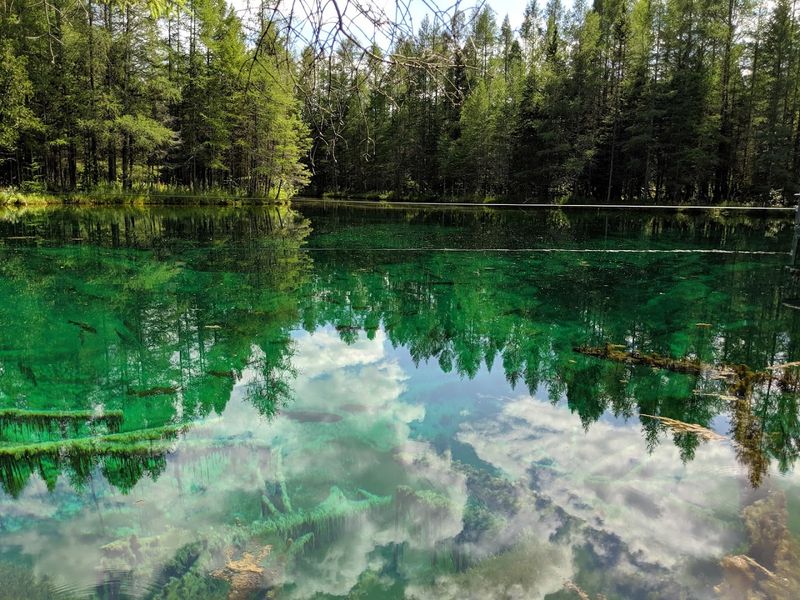
Kitch-iti-Kipi looks unreal in the most straightforward way possible. Michigan’s largest freshwater spring is so clear that trout, ancient logs, and constantly bubbling sand vents appear suspended rather than submerged, while the water holds its remarkable blue-green color in nearly any weather.
The self-operated observation raft moves slowly enough to make everyone fall quiet.
Located in Palms Book State Park, the spring is fed by thousands of gallons of water per minute and stays around the same cold temperature year-round. I have rarely seen a place that turns a simple viewing platform into such a hypnotic experience.
The raft’s open center makes the spring feel almost bottomless at first, then strangely intimate as details sharpen below you. Even children tend to lower their voices, as if the water asks for attention rather than excitement.
Arrive early or in shoulder season for a calmer visit, bring cash for the park entry if needed, and let your eyes adjust before looking down, because the depth reveals itself gradually.
3. Silver Lake Sand Dunes
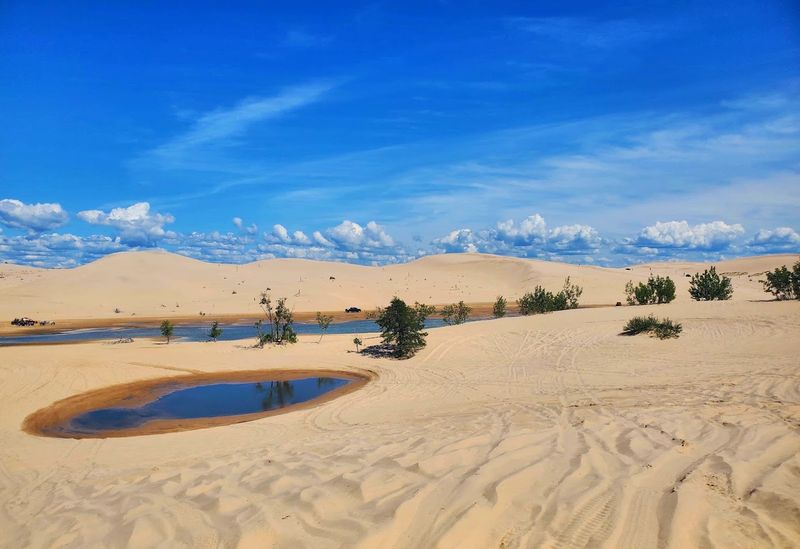
Silver Lake Sand Dunes are not exactly unknown, but they are often overshadowed by better-publicized Lake Michigan beach towns. What surprises first-time visitors is the scale: steep sandy ridges, inland water, forest edges, and a designated off-road vehicle area that gives the whole landscape a kinetic, almost cinematic energy.
It is both playground and ecosystem.
The dunes sit between Silver Lake and Lake Michigan, and different access points create very different experiences, from quiet overlooks to engine-filled adrenaline. If you want scenery more than noise, choose your timing carefully and explore the pedestrian areas or book a sunset ride with a licensed operator.
Wind can make the sand feel relentless by midday, so carry water, protect your electronics, and expect a place that is more varied than its postcard version suggests.
2. Cut River Bridge
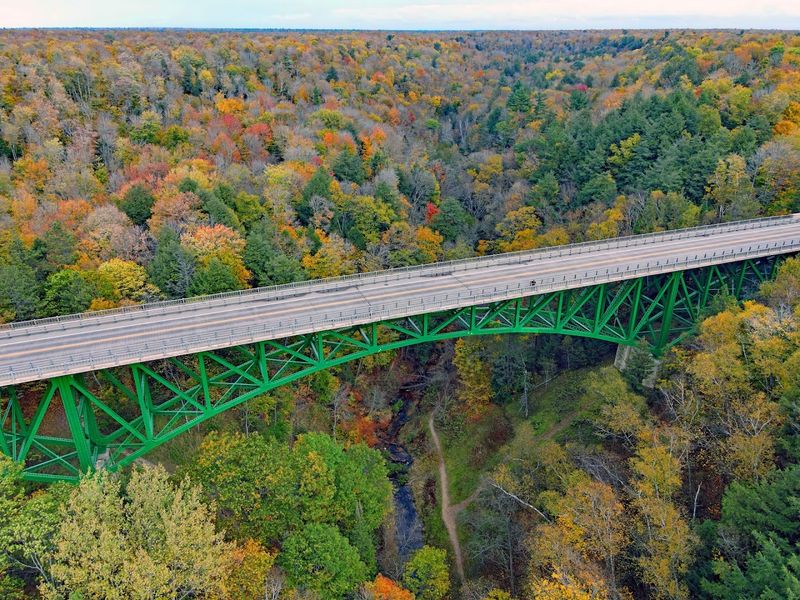
Driving US-2, you could almost miss the fact that one of Michigan’s most dramatic roadside views is hiding under the pavement. Cut River Bridge spans a deep wooded gorge near Lake Michigan, and trails from the roadside rest area descend beneath the steel structure to the river mouth and shoreline.
The engineering is impressive, but the setting keeps it from feeling purely industrial.
Completed in the 1940s, the cantilever bridge remains a landmark in the eastern Upper Peninsula and a rewarding place to stretch your legs. The stairs down are substantial, and the climb back up is a reminder that gravity is always collecting its fee.
Down below, the bridge feels even larger, its metal frame rising above the trees while the river works quietly toward the lake. That shift in perspective makes the stop feel less like a quick pull-off and more like a small discovery.
Stop for both the overlook and the hike below, especially in fall, when color fills the ravine and the bridge seems to hover between forest and sky.
1. Arcadia Dunes
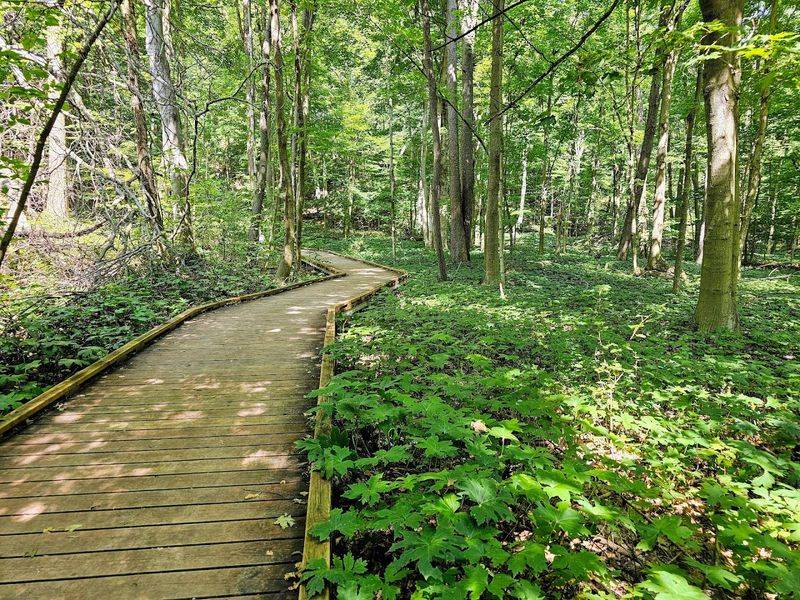
Arcadia Dunes has the generous feeling of a place designed by topography rather than tourism. Managed by The Nature Conservancy, this preserve combines high bluffs, open fields, forest patches, and lake views that arrive suddenly after quiet stretches of trail.
The mood changes with each turn, especially when the wind moves through the grasslands. Trails here range from easy walks to longer loops, and the nearby C.S. Mott Nature Preserve adds even more protected shoreline and habitat.
You get beauty, yes, but also a strong sense of how deliberate conservation can keep a coast from becoming overworked. Bring layers because conditions shift near the lake, start late enough for evening light if possible, and do not rush the overlooks, which reward patience more than mileage.