
10 Easy Washington Hikes With Truly Stunning Views
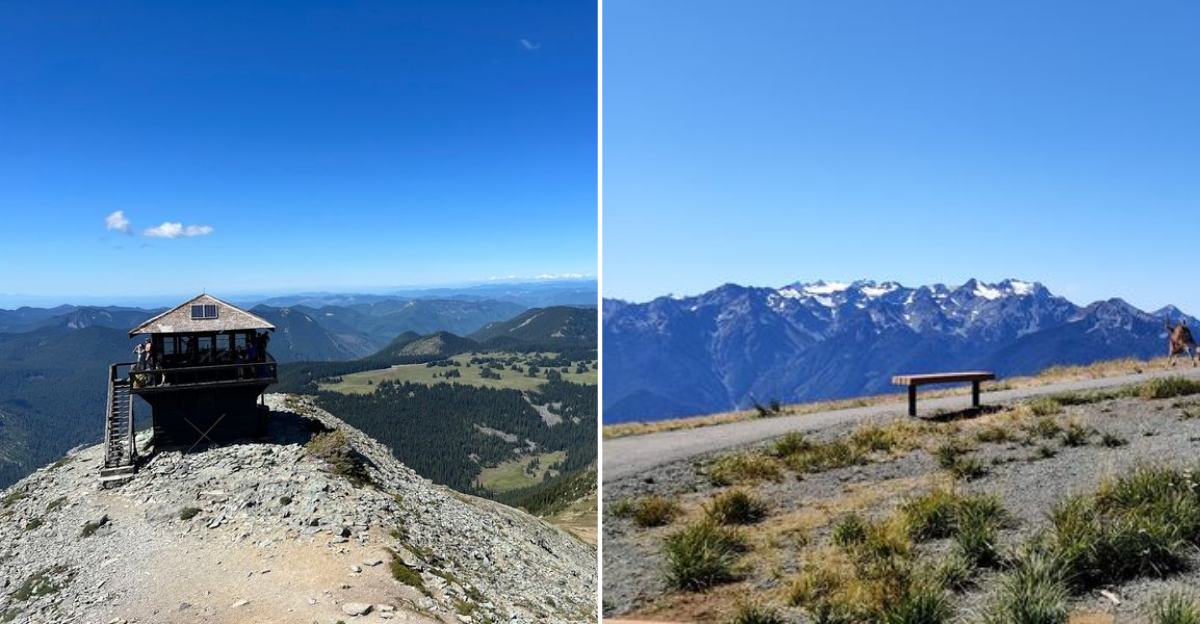
Gravity is a cruel mistress, especially when she decides that the steepest part of the trail should be right at the very end. Despite the burning sensation in my calves, the pursuit of a perfect alpine backdrop keeps me dragging my limbs up various inclines every single weekend.
Capturing a sunrise over the craggy skyline of Washington feels like discovering a secret, private paradise that somehow managed to hide in plain sight.
This list is my personal Washington curated selection of trails where the effort-to-beauty ratio is skewed heavily in favor of the hiker.
Forget grueling, three-day expeditions, these short adventures are all about big rewards and minimal suffering. Life is far too short to settle for mediocre scenery, so let’s get moving toward those clouds.
1. Rattlesnake Ledge Trail, North Bend
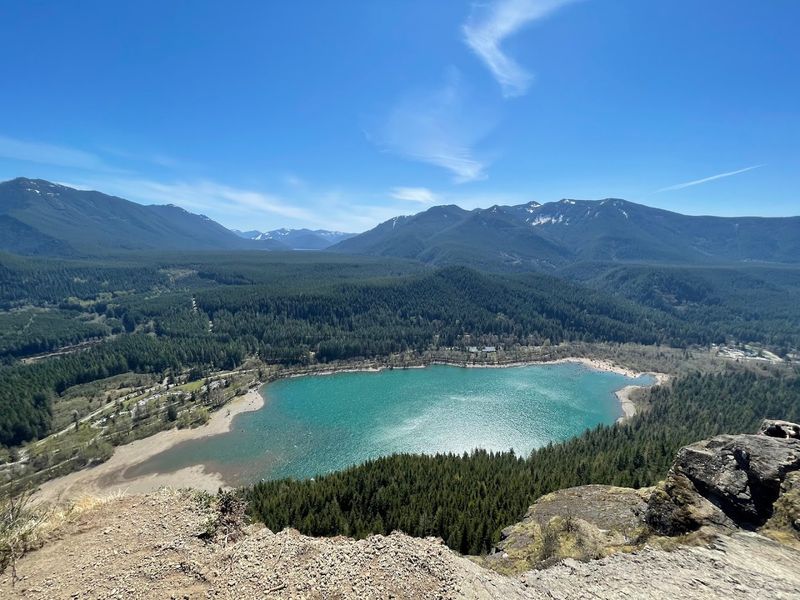
Few hikes near Seattle deliver a payoff quite like this one. Rattlesnake Ledge sits just outside North Bend, Washington, and the trail winds through lush old-growth forest and fern-draped slopes before opening onto a dramatic rocky overlook roughly 1.9 miles in.
The views stretch across Rattlesnake Lake, the Cedar River watershed, and iconic peaks like Mount Si and Mount Washington. The round trip runs about 3.8 to 5.3 miles with around 1,100 to 1,500 feet of elevation gain, which puts it squarely in easy-to-moderate territory.
No permit is required, making it one of the most accessible big-view hikes in the state. Fall is the sweet spot for visiting since summer weekends can get genuinely crowded.
Multiple ledges reward hikers who push a little farther beyond the main overlook. Pack a lunch, find a flat rock, and soak in the kind of scenery that makes you forget your phone exists.
The trail is popular for a reason, so an early start can make the whole experience feel calmer. Even with the steady climb, the final view makes the effort feel surprisingly fair.
2. Naches Peak Loop, Mount Rainier Area
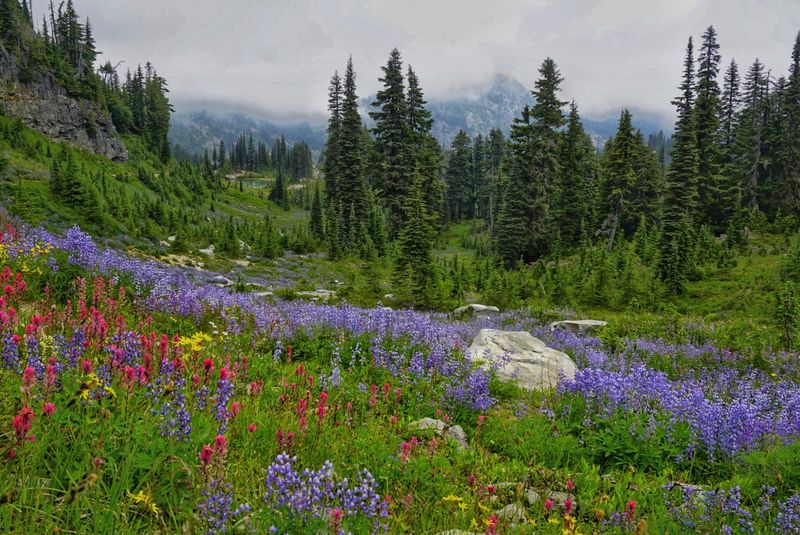
Standing at the edge of a wildflower meadow with Mount Rainier filling the entire horizon is an experience that genuinely stops you mid-step.
The Naches Peak Loop, located near the Chinook Pass entrance to Mount Rainier National Park in Washington, is one of those rare trails where the scenery keeps topping itself with every quarter mile.
The loop covers 3.3 to 4.25 miles with about 500 to 725 feet of elevation gain, making it very manageable for most hikers. A portion of the route follows the legendary Pacific Crest Trail, and glassy alpine ponds mirror the surrounding peaks in a way that feels almost theatrical.
Wildflower season peaks in early to mid-August, though the views of Rainier are spectacular from July through October.
Hiking clockwise gives you the best angle on the mountain early in the loop. A Northwest Forest Pass is required for parking. Honestly, this trail belongs on every Washington bucket list.
The trail never asks too much, but it gives back constantly with meadows, water, mountain views, and wide-open alpine air. Start early if you want quieter paths, because this loop is far too pretty to stay secret for long.
3. Cape Flattery Trail, Neah Bay
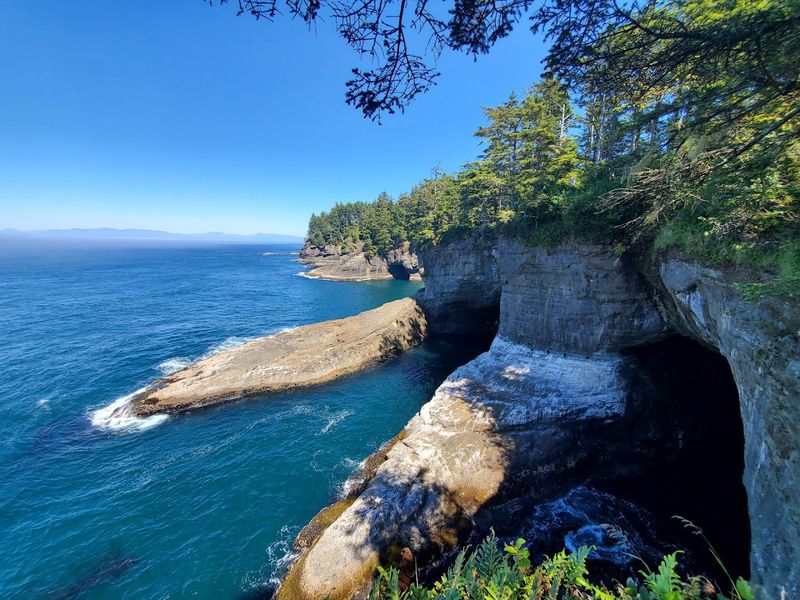
Cape Flattery sits at the most northwesterly point of the contiguous United States, and the trail that gets you there is refreshingly short at just 1.2 to 1.5 miles out and back.
Located on the Makah Reservation near Neah Bay, Washington, this compact path threads through cedar forest before delivering you to a series of wooden observation decks perched above churning Pacific waters.
The views are genuinely dramatic. Sea stacks rise from jade-green swells, Tatoosh Island floats offshore with its historic lighthouse, and on lucky days you might spot sea lions, puffins, or even migrating whales.
The elevation change is modest, around 229 to 308 feet, though the trail mixes dirt paths, boardwalks, and stairs.
A Makah Recreation Pass is required and can be purchased at the Makah Tribal Center in Neah Bay.
The trail is open year-round, though checking for fog before heading out is a smart move. This is the kind of place that makes the long drive feel completely worth it. The short distance makes the payoff feel almost unfair in the best way.
Every overlook seems to reveal a new angle of the coastline, from crashing waves below to seabirds cutting across the wind. The boardwalk sections also add a sense of anticipation, as if the trail is slowly leading you toward the edge of the map.
4. Sol Duc Falls Trail, Olympic National Park
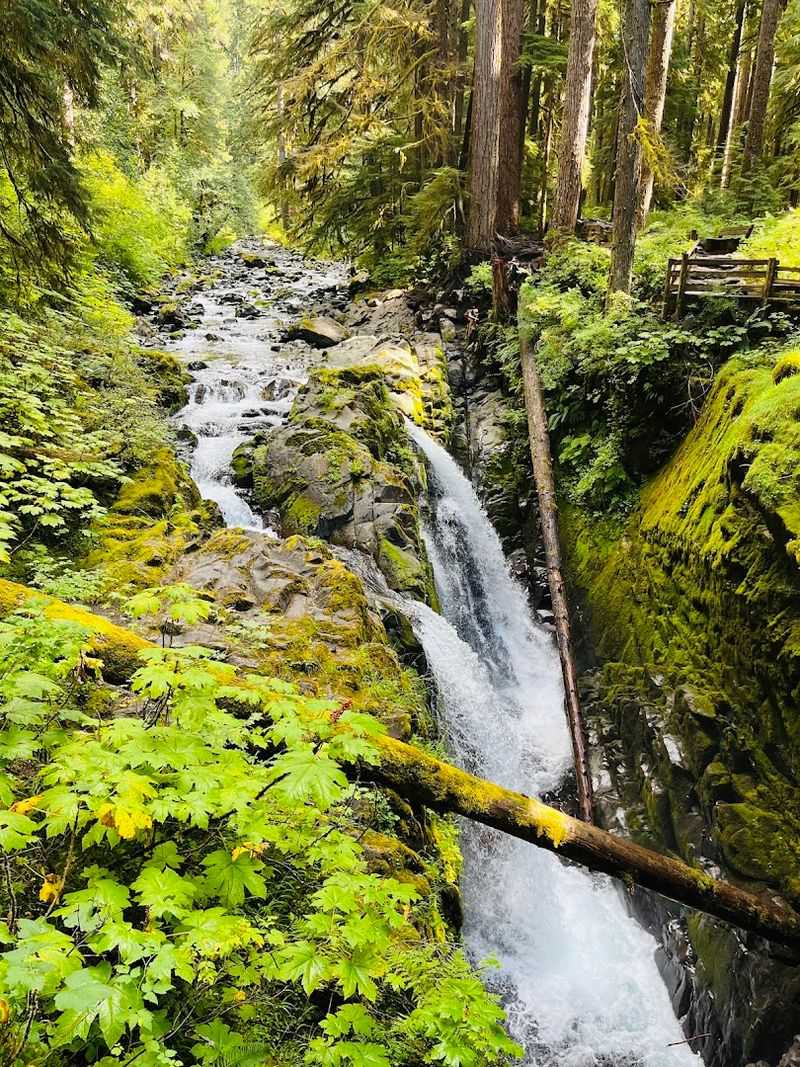
There is something almost surreal about Sol Duc Falls. The water splits into three channels and crashes into a narrow basalt canyon just 50 feet below, and the whole scene is framed by some of the most impressively mossy old-growth forest in the Pacific Northwest.
The trailhead sits inside Olympic National Park in Washington, and the round trip is only about 1.6 to 1.8 miles.
Elevation gain is minimal at around 200 feet, which makes this one of the most family-friendly big-payoff hikes in the state. A wooden bridge positioned directly in front of the falls gives you a front-row seat to the action without getting soaked.
Spring and early summer are the prime times to visit when snowmelt pushes the water volume to its most thunderous.
An Olympic National Park pass is required for entry. The surrounding forest, draped in club moss and ferns, adds an otherworldly quality to the walk even before you reach the falls.
Plan to linger here longer than you expect.
5. Marymere Falls Trail, Olympic National Park
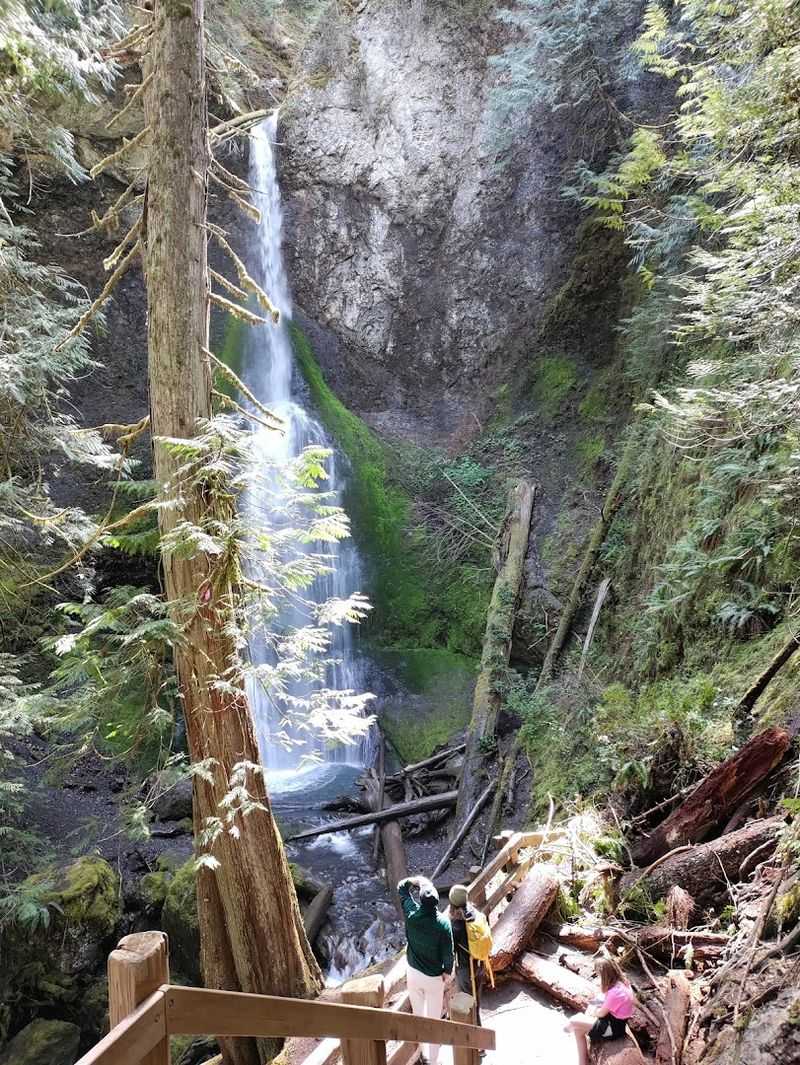
In the rainforest near Lake Crescent in Olympic National Park, Washington, Marymere Falls has been charming hikers for generations.
The trail is just 1.7 to 2.0 miles round trip and passes through a cathedral of old-growth trees draped in moss before revealing a 90-foot waterfall spilling down a fern-covered cliff face.
The hike includes a short, somewhat steep climb near the end, along with some natural log stairs, but nothing that would stop a motivated 8-year-old. Both a lower and upper viewpoint frame the falls from different angles, so take your time at both.
The surrounding forest is so lush and green that even the walk to the falls feels like a reward. Lake Crescent is visible early on the trail, adding a gorgeous turquoise bonus to the experience. An Olympic National Park pass is required.
The trail is open year-round and honestly looks beautiful in every season, including the moody gray of a Pacific Northwest winter day. Give yourself extra time, because this is not a view you will want to rush.
6. Gold Creek Pond Loop, Snoqualmie Pass
The kind of place that makes you feel like you accidentally wandered into a screensaver.
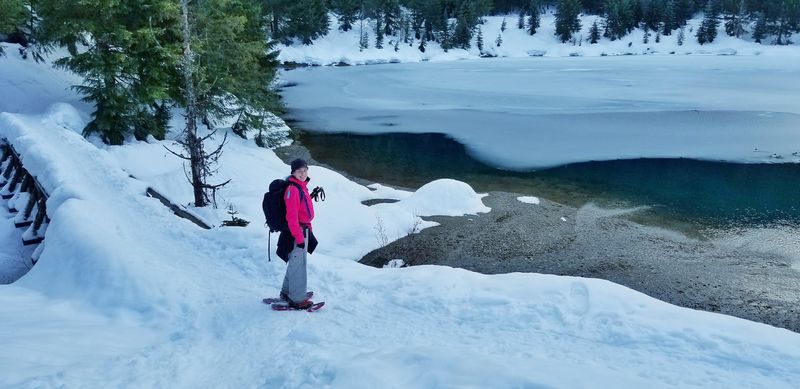
Located near Snoqualmie Pass in Washington, this 1.2-mile loop circles a strikingly beautiful glacial pond ringed by towering peaks of the Alpine Lakes Wilderness, and the reflection on calm mornings is almost too pretty to believe.
The trail is essentially flat with only about 45 to 100 feet of elevation change, making it one of the most accessible hikes in the state. It is ADA-friendly and stroller-compatible, so it works for just about anyone.
In winter, the area transforms into a beloved snowshoeing destination, and the snowy peaks reflecting in the partially frozen pond have their own quiet magic.
A Northwest Forest Pass is required during warmer months, and a Sno-Park Permit is needed in winter. Wildlife sightings are common, so keep your eyes open near the water.
This short loop punches well above its weight in the scenery department. The path is easy enough for a slow stroll, which makes it perfect for anyone who wants big mountain scenery without a demanding climb.
Arrive early on a calm day, and the reflection alone can make the whole trip feel worth it.
7. Wallace Falls Trail, Wallace Falls State Park
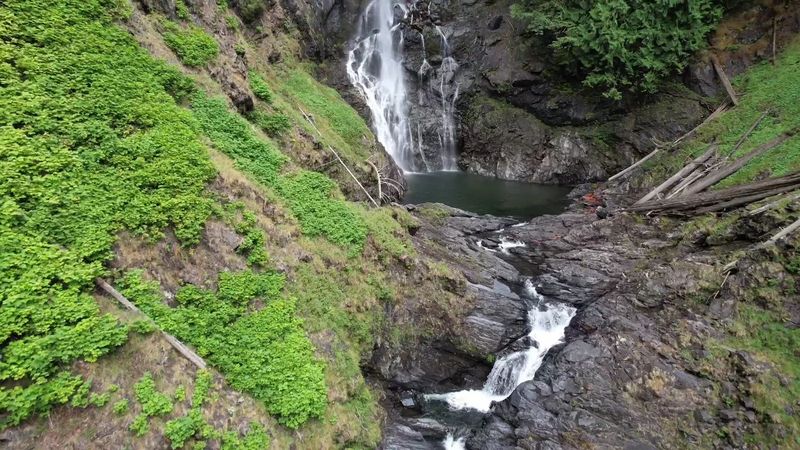
Wallace Falls earns its reputation. Located in Wallace Falls State Park near Gold Bar in western Washington, this trail leads past three separate waterfalls along the Wallace River, each one more impressive than the last.
The Middle Falls viewpoint is the real showstopper, delivering both a close-up of the rushing water and a sweeping panorama of the Skykomish River Valley and distant Olympic Mountains.
The round trip to the Middle Falls runs about 5 miles with roughly 1,200 feet of elevation gain, which qualifies as easy-to-moderate rather than a casual stroll.
Bridges and well-maintained switchbacks make the climb manageable even for younger hikers. April through June is the best window for seeing the falls at full roar thanks to peak snowmelt and spring rainfall.
A Discover Pass is required for parking. The forest along the route is dense, fragrant, and full of mossy boulders that beg to be photographed.
Few state park hikes in Washington offer this much waterfall variety in a single outing.
8. Hurricane Hill Trail, Olympic National Park
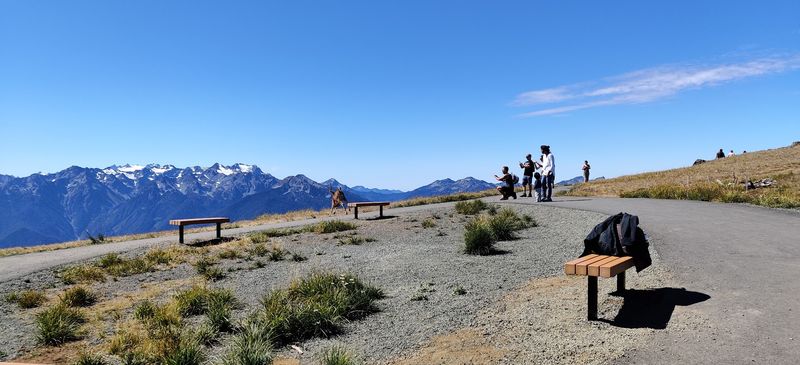
Starting from Hurricane Ridge, one of the most accessible high-elevation areas in Olympic National Park, Washington, the Hurricane Hill Trail rewards hikers with some of the broadest mountain views in the entire park.
The trail runs about 3.1 to 3.5 miles round trip with roughly 650 to 800 feet of elevation gain along a wide, partially paved path. At the summit, the Olympic Mountains fan out in every direction while the Strait of Juan de Fuca shimmers in the distance below.
July brings wildflowers in full bloom across the open subalpine terrain, and black-tailed deer are a regular presence along the route. Winter transforms the area into a snowshoeing playground with equally dramatic scenery.
A $30 per vehicle entrance fee or a National Parks Annual Pass is required. Starting early in the morning on summer weekends helps beat the crowds that gather at Hurricane Ridge.
The combination of big mountain scenery and manageable distance makes this trail genuinely hard to top. For a hike that feels this open and dramatic, Hurricane Hill stays surprisingly approachable.
9. Franklin Falls Trail, Snoqualmie Pass
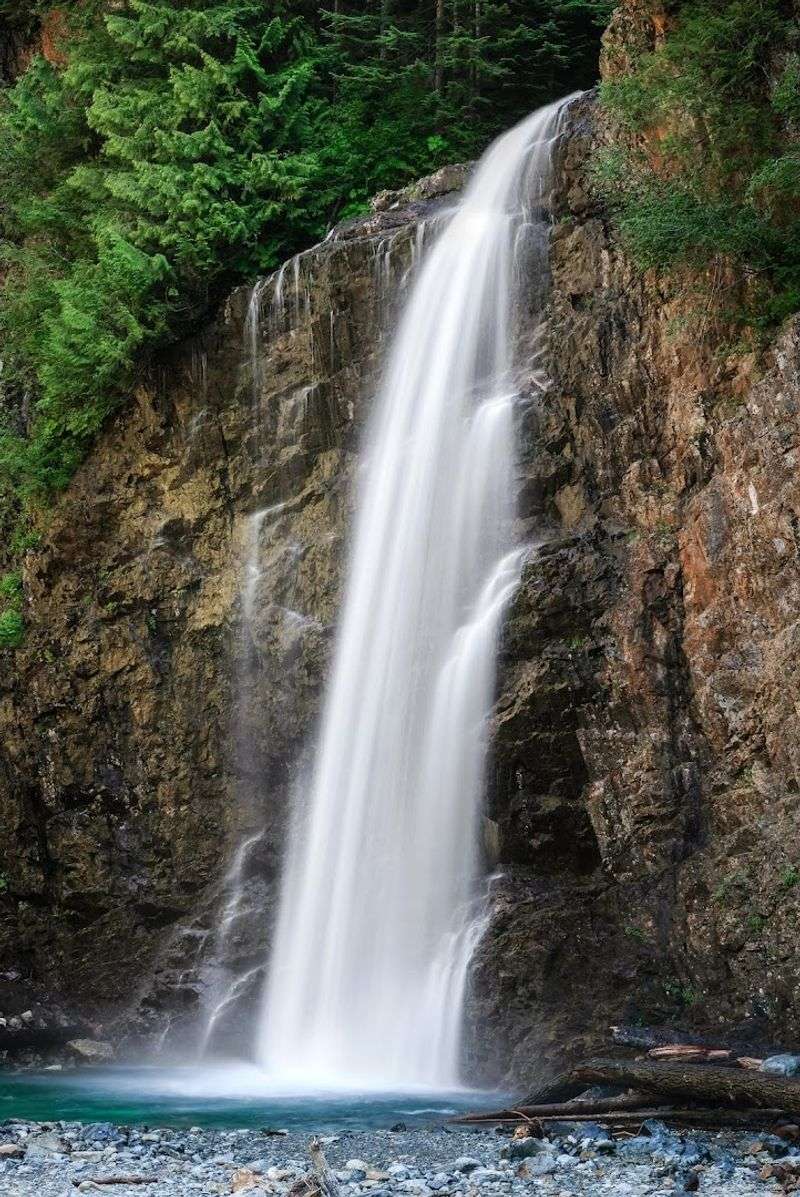
Franklin Falls has a way of sneaking up on you. The trail follows the South Fork Snoqualmie River through beautiful old-growth forest, and then suddenly a 70-foot wall of white water appears around a bend and fills your entire field of vision.
Located near Snoqualmie Pass in Washington, this is one of the most rewarding short hikes in the state for the effort involved. The round trip is about 2.0 to 3.0 miles from the main parking lot with only 337 to 420 feet of elevation gain, making it accessible to almost anyone.
Families with young children make up a big portion of the crowd on weekends, and for good reason. In winter, the falls partially freeze into spectacular curtains of ice that attract photographers from across the region.
A Northwest Forest Pass is required for parking. Peak water flow runs from April through July when snowmelt fills the river to its noisiest. Stepping up close to the base of the falls, where the mist hits your face, is a fully sensory experience worth every step.
10. Mount Fremont Fire Lookout, Mount Rainier National Park
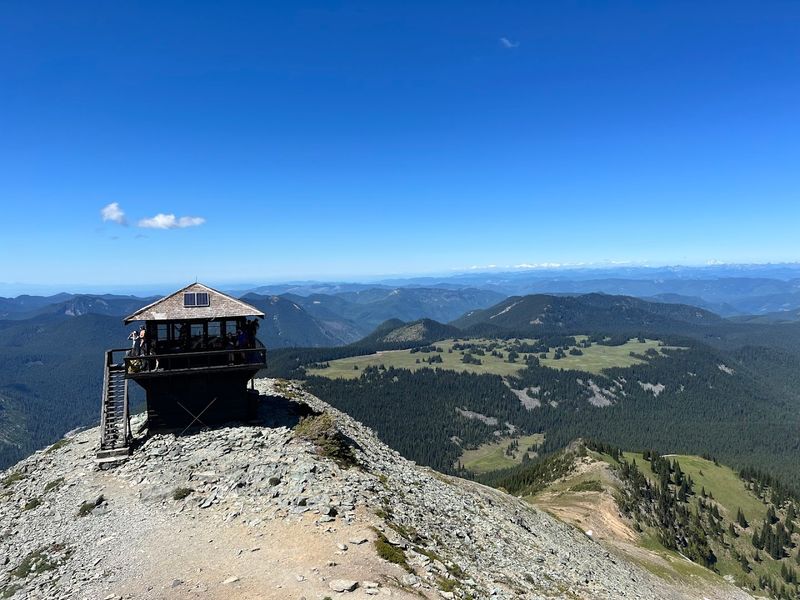
At 7,181 feet, the Mount Fremont Fire Lookout is one of the highest fire lookouts in Mount Rainier National Park, and the 360-degree views from the top are the kind that make you stand there in silence for a few minutes just processing what you are seeing.
Mount Rainier dominates the horizon, with the Willis Wall and Emmons Glacier visible in remarkable detail. The trail starts from Sunrise, the highest point accessible by car in the park, and covers about 5.4 to 5.6 miles round trip with roughly 800 to 971 feet of elevation gain.
Subalpine meadows line the route, wildflowers bloom in abundance mid-summer, and mountain goats are spotted here often enough that you should keep your camera ready. The Cascade Range and even the Olympic Mountains appear on clear days.
A Mount Rainier National Park pass is required. The trail is typically snow-free from mid-July through September.
Catching the sunrise or sunset from this lookout is an experience that tends to stay with you for a long time.