
This Picture-Perfect Arkansas Bridge Is Worth The Trip Before Everyone Finds It In 2026
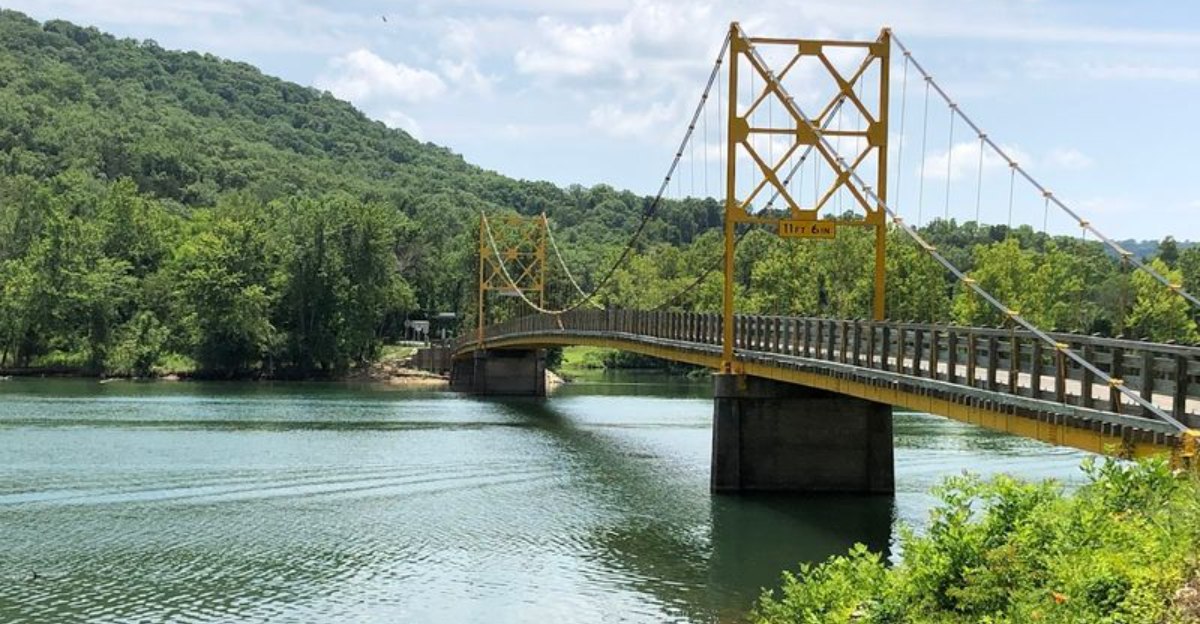
A narrow bridge with bright yellow cables has been stretching over the White River since 1949, and somehow, it still feels like a surprise when it comes into view ahead.
No big sign prepares you for it. No dramatic buildup tells you to slow down.
Then the river opens below, the hills rise around it, and this one lane wooden crossing suddenly feels like something you were lucky to catch.
This is not the kind of stop people forget five minutes later. You pause.
You wait your turn. You cross one vehicle at a time.
The boards beneath you give the ride a little heartbeat, and the view does the rest.
It is also the last suspension bridge in Arkansas still open to vehicles, which makes the experience feel even more rare today.
Before this White River crossing starts landing on every 2026 road trip list, here are eight facts that explain the fascination.
A Quiet Span Over The Water
Some places earn their reputation slowly, quietly, and without any fanfare at all, and that is exactly how this bridge has built its following over the decades.
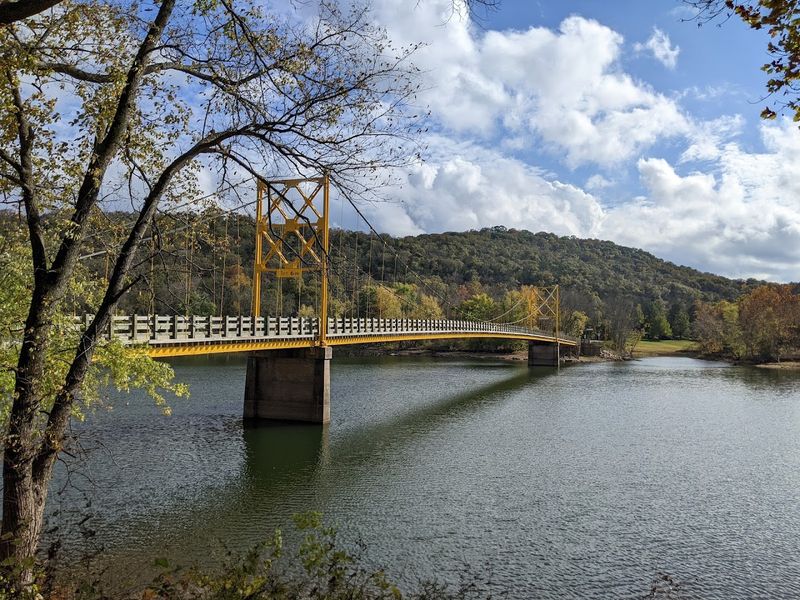
This bridge stretches 554 feet across the White River, threading through a valley where the Ozark Mountains rise on both sides like a natural curtain.
The first time I stood at the entrance and looked down the length of it, I felt like the landscape had been arranged specifically for that single view.
The wooden deck, the yellow-painted cables, and the shimmer of the river below all come together in a way that feels almost too composed to be real.
At the small park on the north end, travelers can read the history plaques and start to understand what makes this crossing so unusual.
Photographers in particular tend to linger here far longer than planned, chasing the light as it moves across the water and the hillsides throughout the day.
You can find this unforgettable landmark, known as the “Little Golden Gate” Bridge, at Eureka Springs, AR 72631, with the bridge itself sitting by Beaver along Highway 187. Its official name is Beaver Bridge.
Suspension Lines In The Ozark Light
There is a specific hour in the morning when the light filters through the Ozark tree line and hits those yellow suspension cables in a way that makes every photographer reach for their camera at the same time.
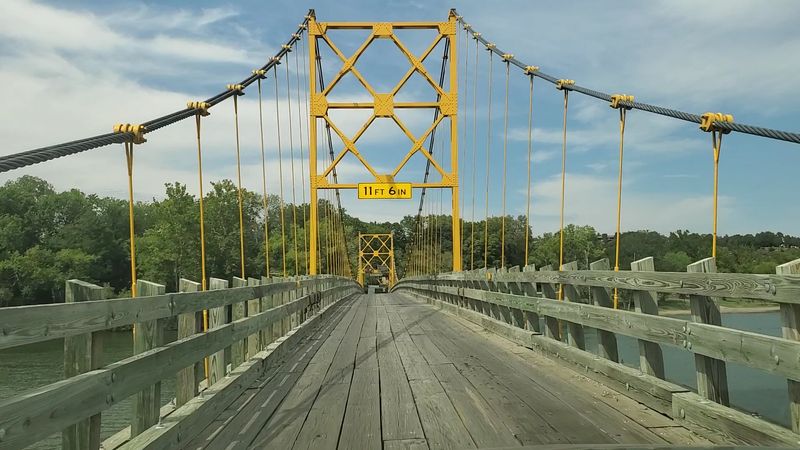
Built in 1949, the Beaver Bridge was constructed with a classic suspension design that closely mirrors the look of its famous San Francisco namesake, just scaled down to a charming single-lane width.
The twin towers anchor the cables at each end, and the whole structure has a visual rhythm that draws your eye straight down to the river surface below.
I stood on the north bank one clear morning and watched the shadows of the cables stretch across the wooden deck like a graphic design no artist could have planned better.
The bridge was repainted a distinctive yellow in recent years, which made an already photogenic structure practically glow against the surrounding green hills.
That yellow tone catches every shift in the Ozark light, turning the bridge into something different depending on whether you visit at sunrise, midday, or late afternoon.
Honestly, the suspension geometry alone is reason enough to make the trip out here with a fully charged camera battery.
A One-Lane Crossing With Old-Soul Charm
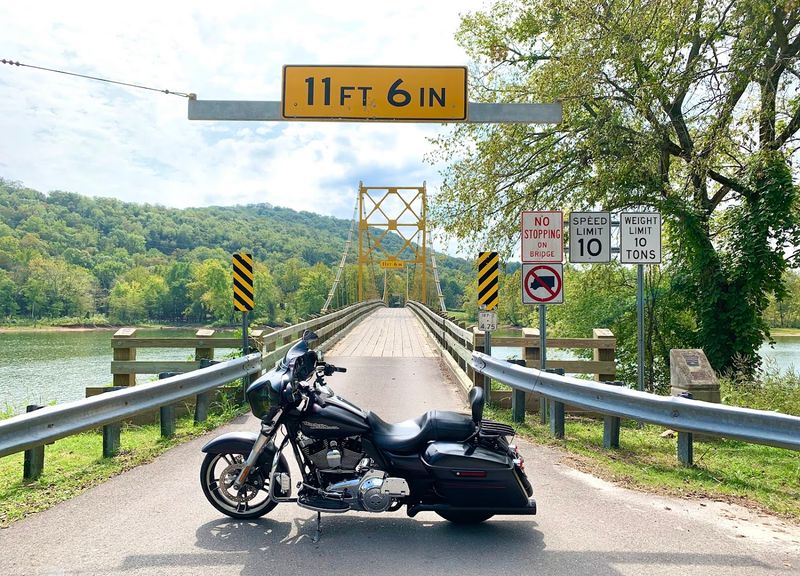
You pull up to the one-lane bridge and quickly realize you have to wait your turn. It feels like a small time-travel moment in the middle of a modern road trip.
The Beaver Bridge is just 11 feet wide, which means only one vehicle can cross at a time, with signs and traffic control helping manage the flow at each end.
The crossing is slow by design, so every trip over the deck becomes a careful, deliberate experience rather than a quick pass-through.
I remember gripping the steering wheel a little tighter the first time I drove across, listening to the wooden planks flex and thump beneath my tires in a rhythm that felt both unsettling and oddly satisfying.
The feeling lands somewhere between nervous and delighted, which is exactly why the crossing stays with people after they leave.
The bridge also carries a strict weight limit of 5 tons, so large RVs and heavy trucks are not permitted, keeping the experience intimate and unhurried.
The narrow width, slow pace, and wooden sound create a crossing that feels genuinely personal, like the bridge is making you pay attention to every single foot of its 554-foot length.
Golden Rails Above The White River
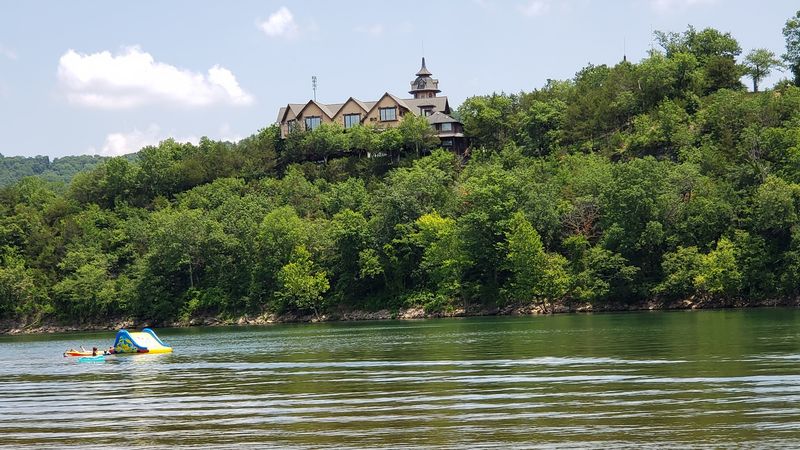
The deck gives you a direct view of the White River moving below. It is one of those travel moments that quietly rewires your brain.
The White River runs through a valley that the Ozark Mountains have shaped over millions of years, and from the bridge deck you get an open view of both the water and the ridgelines flanking it.
The yellow-painted railings frame that view like a picture border, which is part of why the scene can feel almost unreal.
I leaned against the railing on my second visit and watched the current below shift from deep green to pale silver as a cloud passed overhead, and I stayed there far longer than I intended.
The river level varies by season, so the view changes throughout the year, with higher spring flows creating a more dramatic rushing sound beneath the deck.
Summer visits tend to reveal clearer water and better visibility near the rocky riverbed, which adds another layer of interest for anyone who enjoys watching water move.
Every angle from this deck offers something worth photographing, and the golden rails just make the whole composition easier to work with.
Where The Road Narrows Beautifully
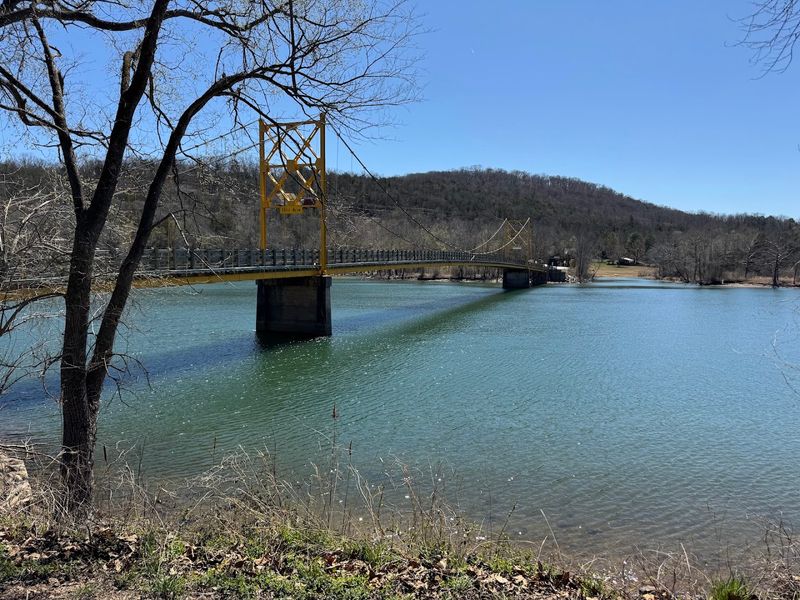
The drive to this bridge feels like part of the adventure. The road leading out from Eureka Springs does not let you forget that for a single minute.
The route winds through a valley with mountains rising on either side and the river threading through the middle, creating one of the most scenic stretches in this part of Arkansas.
The road itself is narrow and curves through the hillside in a way that demands your full attention, which means putting the phone down and actually watching where you are going.
I took a motorcycle out on one of my visits, and riding that valley road with the tree canopy overhead and the river visible through the gaps felt like the kind of experience that justifies owning a motorcycle in the first place.
The approach from either direction offers different scenery, so some travelers make a loop of it rather than simply retracing their route back.
A few small local stops along the way can make the drive feel less like a straight shot and more like a slow little outing before you reach the bridge.
The road earns its place in the story here because it sets the mood long before the bridge comes into view.
A Vintage Bridge Framed By Hills
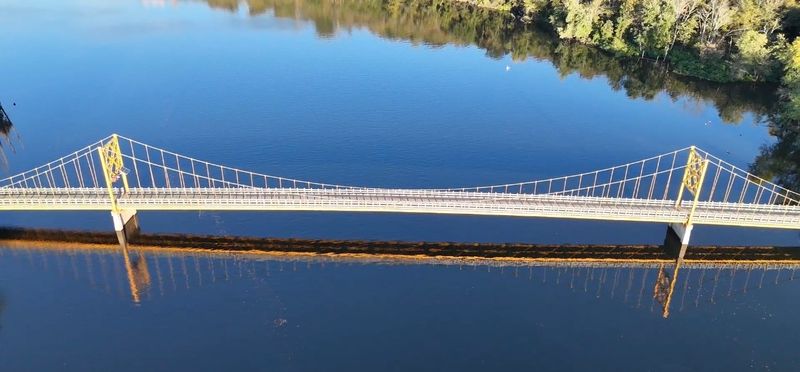
From a distance, the Beaver Bridge looks like something a set designer placed in this valley on purpose, because the hills frame it so perfectly that it barely seems accidental.
The structure was added to the National Register of Historic Places in 1990, a recognition that honors both its architectural rarity and its connection to a site with deep regional history going back to a ferry landing established here in 1850.
That long history gives the bridge a layered meaning that you feel even if you do not know the dates, because the place carries a sense of having been important to people for a very long time.
I walked the short trail near the north bank and looked back at the full span against the hillside, and the yellow towers rising above the tree line gave the whole scene a storybook quality.
Autumn is particularly spectacular here, when the Ozark hardwoods turn orange and red and wrap the bridge in a seasonal color show that draws photographers from across the region.
Spring brings lush green growth that softens the hillsides and reflects in the river, giving the same scene an entirely different personality.
No matter the season, the hills always make the bridge look like it belongs exactly where it is, which is the best compliment any structure can receive.
River Reflections Beneath The Deck
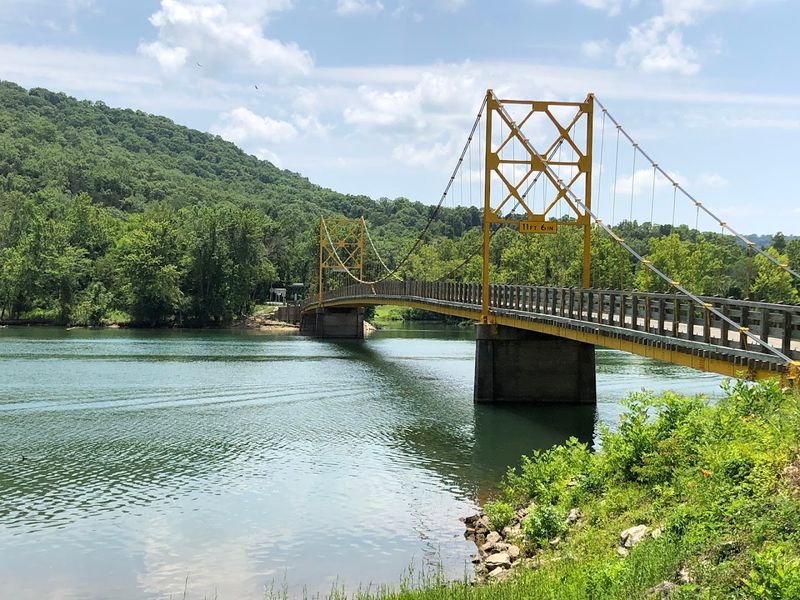
Calm mornings along the White River can turn the water into a mirror. The reflection doubles the visual impact of the bridge overhead, making the scene even more rewarding before the breeze picks up.
I reached the riverbank just after sunrise on one visit and found the entire bridge reflected in the still water below, with the yellow cables appearing to stretch both upward and downward at the same time.
That kind of reflection shot is the one that ends up framed on walls, and this location can deliver it beautifully when the conditions cooperate.
The day-use picnic area near the bridge offers a bench right at the water’s edge, which makes it easy to sit, watch the reflections shift, and enjoy the sound of the river without rushing anywhere.
Time at the water level gives the whole place a different feeling, especially after you have already crossed the bridge by car.
The river here also attracts local wildlife in the early hours, so patience at the bank sometimes rewards you with herons or turtles going about their morning routines.
Below the deck, the White River just keeps doing what it has done for centuries, and the bridge above it only adds to that timeless quality.
A Hidden Crossing With Timeless Views
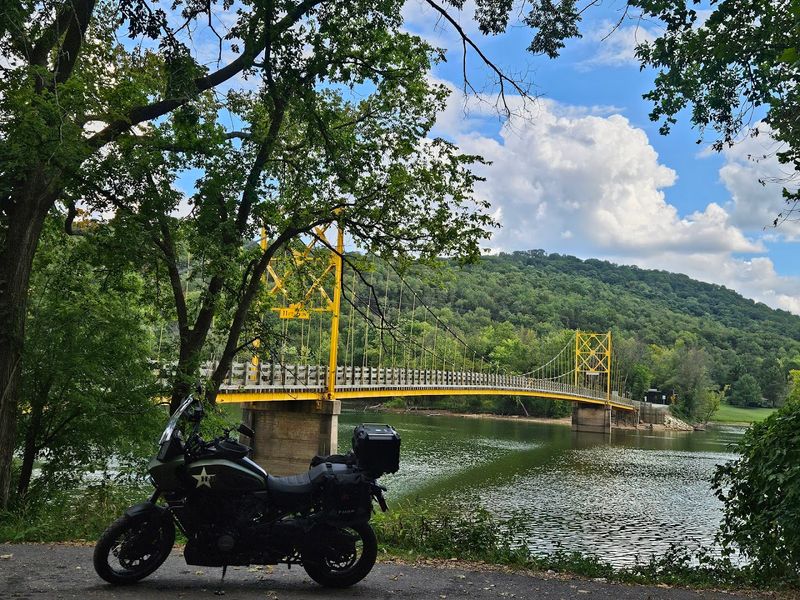
A quiet little crossing can feel surprisingly special when most travelers still do not know about it. For now, this bridge remains easy to miss for many people passing through Arkansas.
The Beaver Bridge still feels like a detour that rewards curiosity, especially for travelers who love old roads, quiet river views, and places with a strong sense of character.
Visiting before the crowds arrive means you can linger at the picnic bench by the water, walk the short trail, and cross the bridge without a line of cars stacking up behind you.
I crossed it on a quiet Tuesday afternoon and had the whole span to myself for a full minute, which felt like a small personal privilege that will not always be available.
Access can change when repair work or safety checks are needed, so it is smart to confirm current bridge conditions before making the drive.
There is no admission fee to cross, which makes the entire experience one of the best free things to do in the state.
Before 2026 brings more attention to this corner of the Ozarks, the bridge rewards those who make the effort now with views and a sense of quiet discovery that money genuinely cannot buy.