
This Washington Road Trip Leads To Eerie Abandoned Sites
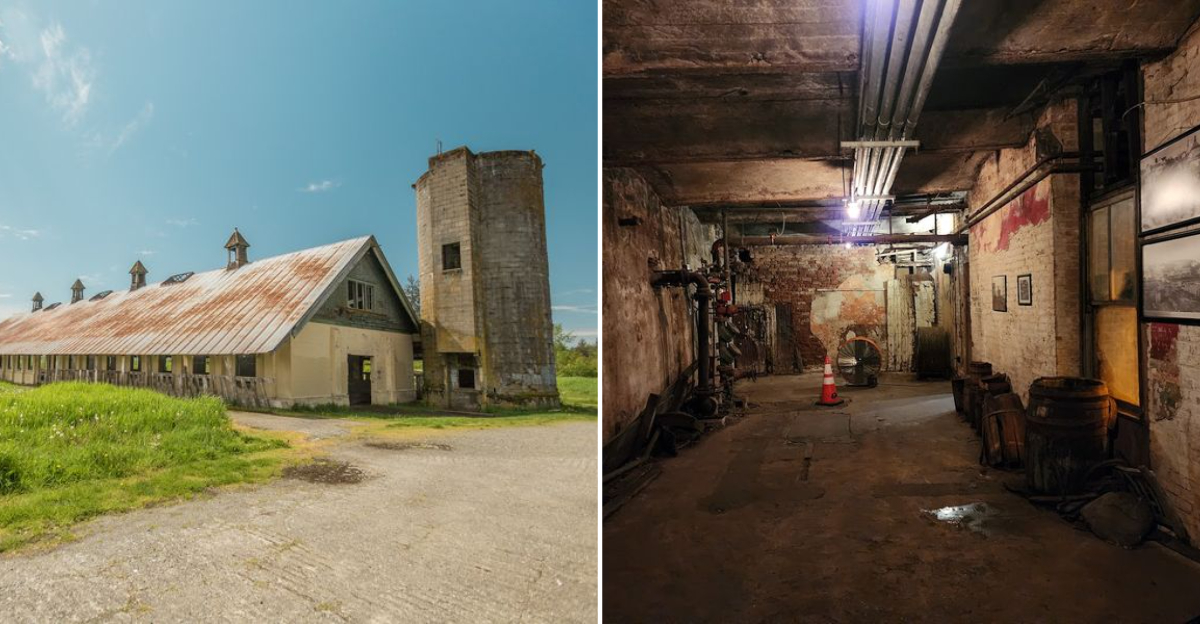
Nothing cures a boring weekend like trespassing (legally, of course) on the forgotten architecture of yesteryear. Most folks flock to the landmarks, but a true adventurer knows that the best stories are written in peeling paint and missing floorboards.
Washington hides some of the Pacific Northwest’s most haunting places, tucked away in forests, valleys, and quiet corners where towns once thrived.
Old mining camps, forgotten hospitals, empty schoolhouses, and military bunkers sit silent now, slowly being reclaimed by moss, weeds, and weather. These stops carry real stories about people who worked, studied, and built lives in communities that eventually faded away.
This road trip takes you through the eerie remains of Washington’s past, where history feels close enough to touch and every crumbling wall whispers something about the lives that came before.
1. Northern State Recreation Area, Sedro-Woolley
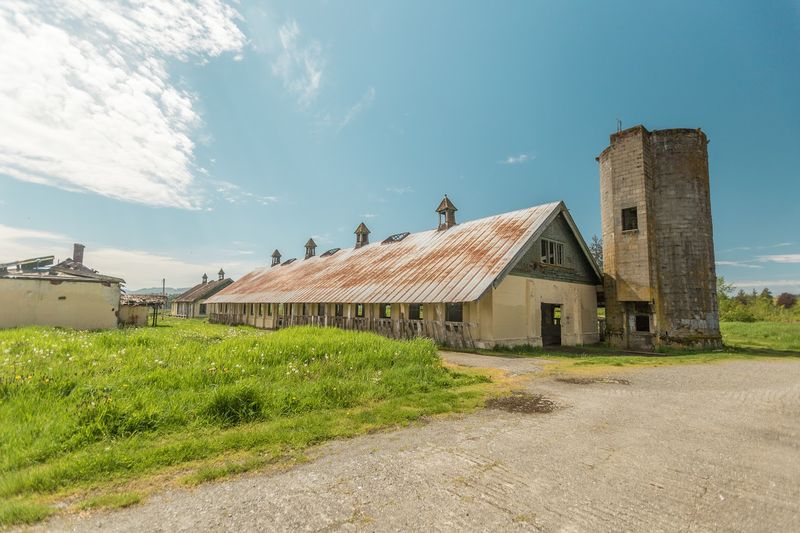
Pulling into the parking area near Sedro-Woolley, I felt the weight of this place before I even stepped onto the trail. Northern State Recreation Area sprawls across land that once held one of Washington’s largest hospitals for the mentally ill, opening in the early 1900s and housing up to 2,700 patients by the 1950s.
Walking paths now lead past graffiti-covered cannery walls and collapsed farm buildings that once fed asylum residents through occupational therapy programs. The hospital closed in the 1970s as public attitudes shifted, and an on-site cemetery holds at least 1,487 patients who never left.
Parts of the property still operate as a Job Corps center, but the abandoned sections remain open for curious visitors.
Every weathered board and rusted hinge carries the echo of routines, treatments, and lives lived in isolation. I left feeling unsettled by the contrast between the peaceful trails and the heavy history beneath them.
2. Fort Worden, Port Townsend
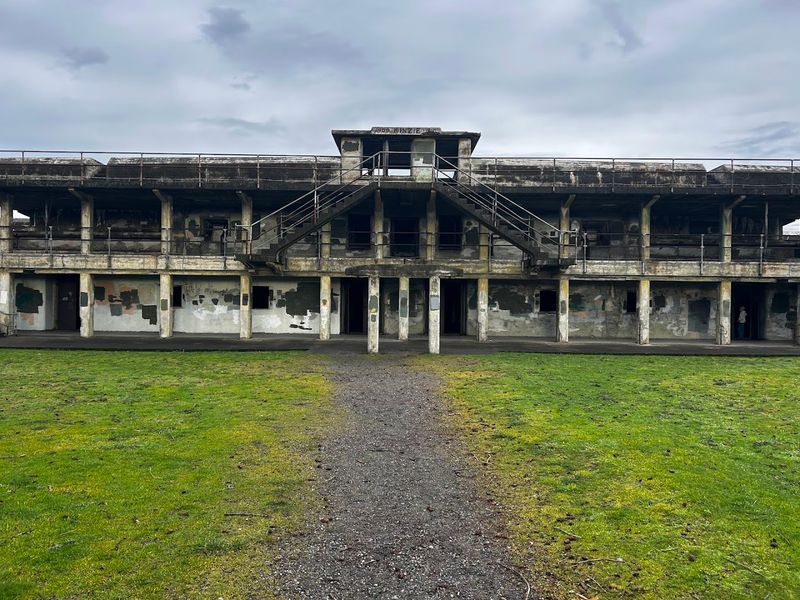
Wandering through Fort Worden’s abandoned batteries, I couldn’t shake the feeling that I was stepping through layers of time.
Built in the late 1800s as part of the Triangle of Fire defense system protecting Admiralty Inlet, this military installation now serves as a state park where camping, beaches, and eerie exploration blend together.
The dark passageways inside the bunkers twist and turn, lit only by shafts of daylight breaking through openings in the concrete. Port Townsend itself carries a haunted reputation, with spots like Manresa Castle and The Palace Hotel adding to the area’s spooky atmosphere.
I found myself drawn back to the batteries again and again, peering into the shadows and imagining soldiers stationed in these cold, damp chambers. The contrast between the cheerful park setting and the fortress-like bunkers creates a strange, unsettling vibe.
Every visit leaves me wondering what stories these walls could tell if they could speak.
3. Monte Cristo, Near Granite Falls
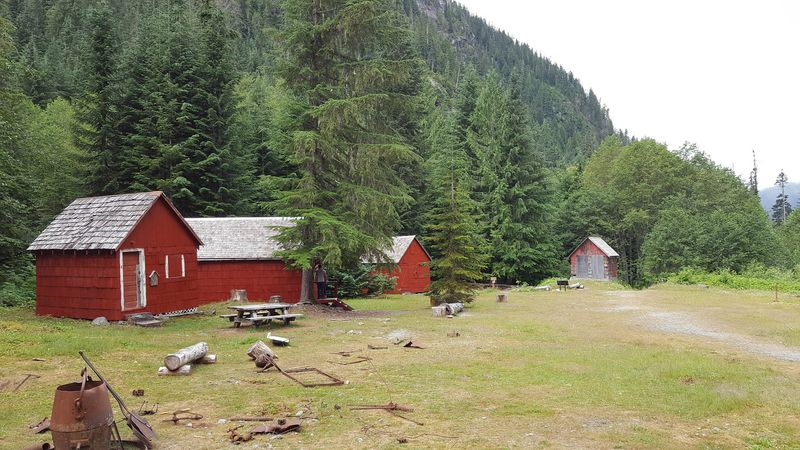
Reaching Monte Cristo requires commitment, an 8-mile roundtrip hike from the Barlow Pass trailhead that winds through dense forest before revealing the ghostly remains.
This mining town exploded in the 1890s when prospectors struck gold and silver, but production stalled by the early 1900s as funding dried up and ore quality declined.
Most relics disappeared in 2016 when officials removed unstable structures, but rusty signage, scattered equipment, and a few stubborn buildings still cling to the mountainside.
The hike itself feels like a pilgrimage, each step carrying you further from modern life and deeper into Washington’s boom-and-bust mining history. I remember pausing near an old foundation, trying to picture families living here, raising children, and believing this town would last forever.
The silence now feels almost accusatory, as if the forest itself is judging the hubris of those early settlers. Every rusted nail and weathered board tells a story about ambition meeting reality in the mountains.
4. Govan Schoolhouse, Lincoln County
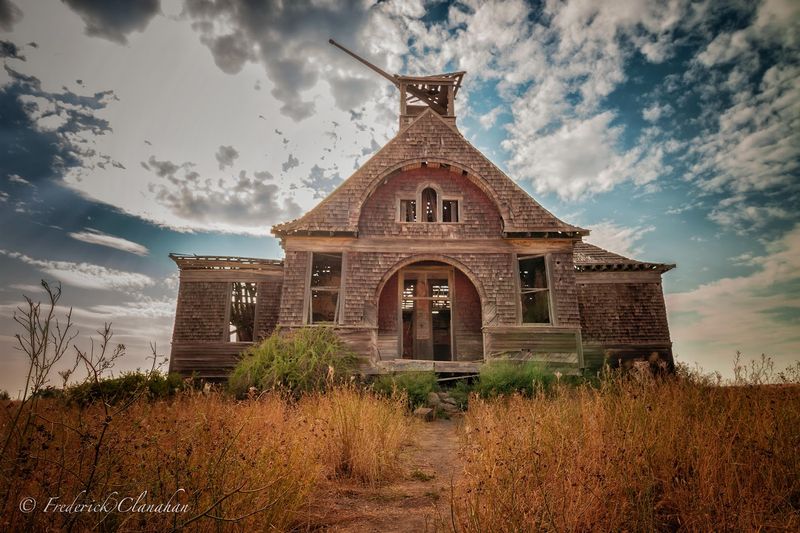
One of eastern Washington’s most photogenic ruins, its peaked roof and boarded windows rising from a sea of golden grass.
This former railway and ranching town sprang up in 1889, but its fate was sealed when Highway 2 construction allowed residents to easily reach larger communities for work and services.
The schoolhouse closed in the 1940s, and whispers of unsolved brutal murders from the 1900s add an extra layer of unease to the abandoned site.
I visited on a windy afternoon, and the creaking boards sounded almost like voices calling across the empty fields. The post office building still stands nearby, its windows dark and its purpose long forgotten by everyone except local history buffs.
Standing in front of the schoolhouse, I couldn’t help imagining children’s laughter echoing through rooms that now hold only dust and shadows. The loneliness here feels almost physical, pressing down like the weight of all those abandoned dreams.
5. St. Ignatius Hospital, Colfax
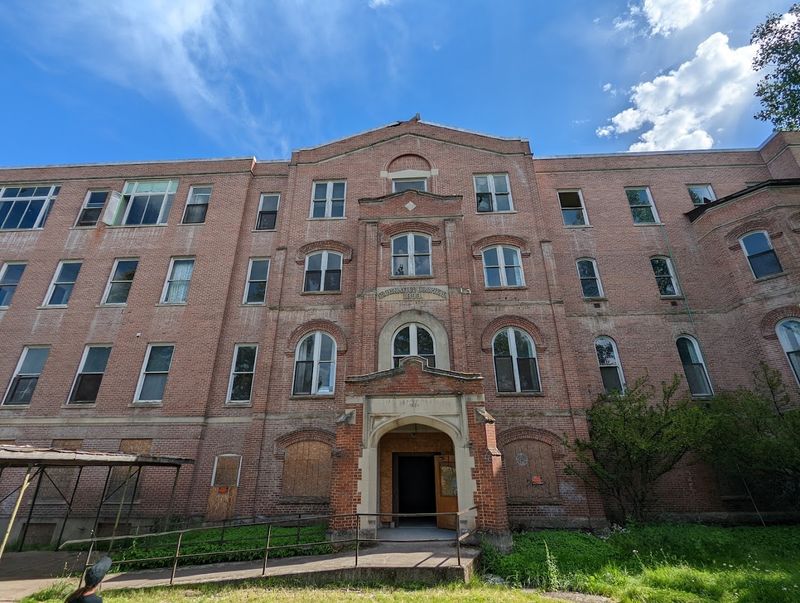
St. Ignatius Hospital looms over Colfax with a presence that feels both tragic and defiant, its walls holding stories that reality TV shows like Ghost Adventures and Paranormal Lockdown have tried to capture.
The Sisters of Providence built this facility in 1892 to bring healthcare to the Washington Territory, and it served the community faithfully until transitioning to assisted living and finally closing in 2000.
Reports of paranormal activity have swirled around the building for years, with visitors claiming to hear footsteps, voices, and other unexplained sounds echoing through empty hallways.
I approached the building on a gray morning, and even from the outside, something about the structure felt off, like it was watching me as much as I was watching it. The architecture speaks to a time when hospitals were built to last, with thick walls and high ceilings that now amplify every creak and groan.
Whether you believe in ghosts or not, the hospital’s history of suffering and healing leaves an imprint that’s impossible to ignore.
6. Nighthawk, Okanogan County
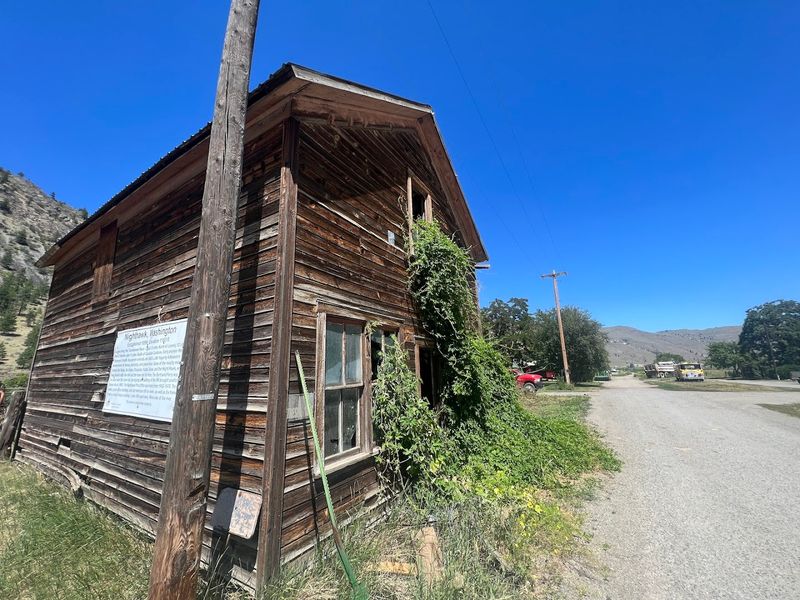
This place takes you back to Washington’s earliest mining days, with the district’s roots stretching to the 1860s when prospectors first combed these hills for precious metals.
Many original structures from 1903 still stand, including the Nighthawk hotel, the original schoolhouse, a mining office, and an old mill that once processed ore from surrounding claims.
The town feels frozen in time, with weathered wood and rusted metal creating a tableau that could easily serve as a Western movie set.
I spent an afternoon photographing the mill, fascinated by the way sunlight filtered through gaps in the boards and illuminated decades of dust. Unlike some ghost towns that feel completely empty, Nighthawk retains a stubborn presence, as if the buildings themselves refuse to give up.
Walking between structures, I kept expecting to see a miner emerge from one of the doorways, pickaxe in hand and ready for another shift. The history here isn’t abstract; it’s concrete, tangible, and eerily well-preserved.
7. Liberty, Kittitas County
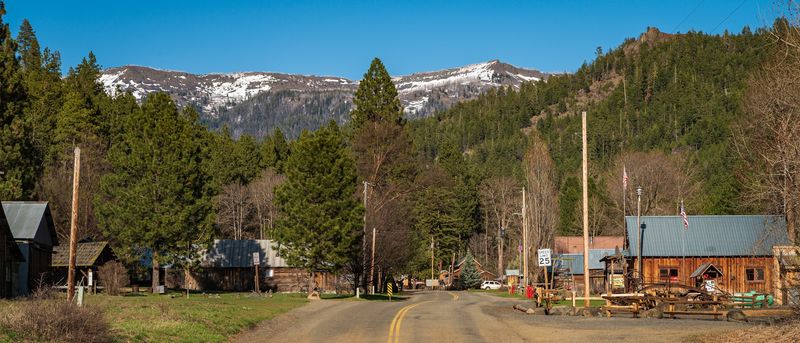
Liberty wears its history proudly as Washington’s oldest mining town, originally called Meaghersville when it served as the center of the state’s Gold Rush in the 1870s.
Unlike completely abandoned sites, Liberty survives as a living ghost town where a handful of residents maintain a connection to the past while welcoming curious visitors.
Old mining equipment sits displayed alongside interpretive signs that explain the boom-and-bust cycles that shaped this mountain community. Historic buildings line the quiet road, their darkened logs and weathered facades telling stories about frontier life in the Cascade foothills.
I visited during autumn when golden aspens framed the old structures, and the combination of natural beauty and human history felt almost overwhelming. The Thomas Meagher Cabin stands as a particularly evocative reminder of the pioneers who carved out lives in this rugged terrain.
Liberty proves that not all abandoned places stay empty; some transform into something between museum and memory, preserved by people who refuse to let the past disappear completely.
8. Lester, South of Snoqualmie Pass
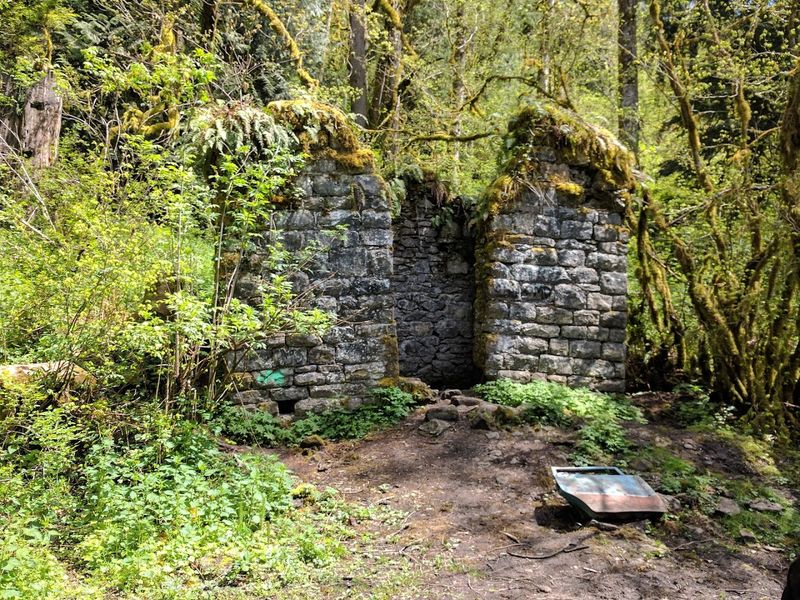
Lester hides in the forest south of Snoqualmie Pass like a secret the mountains are reluctant to share, accessible only to those willing to navigate rough roads and dense woods.
Established in 1892 as a logging and railway town, Lester thrived until steam engines gave way to diesel and electric power in the 1950s, rendering the stop obsolete. The remaining structures reportedly resemble something from a horror movie, with moss-covered walls, broken windows, and the oppressive silence of deep forest pressing in from all sides.
I remember feeling watched during my visit, though logically I knew it was just the forest’s natural stillness playing tricks on my mind. The damp air and towering evergreens create an atmosphere that feels primordial, as if the town is being slowly digested by the landscape.
One lone building stands as the primary remnant, its purpose long forgotten but its presence undeniably haunting. Lester reminds you that nature always wins eventually, reclaiming every human footprint given enough time.
9. Seattle Underground, Pioneer Square
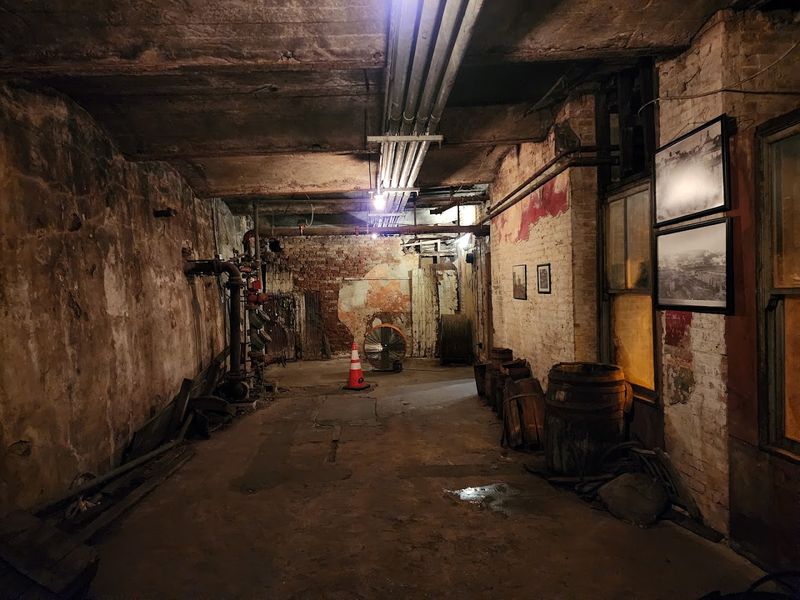
Beneath Seattle’s bustling streets lies a network of passages and basements that trace back to the aftermath of the Great Seattle Fire of 1889, creating an underground city that most visitors never see.
The area was largely abandoned by the early 20th century due to safety concerns and a ban on prostitution, though it had already gained a reputation for illicit activities during Prohibition.
Fears of bubonic plague eventually led officials to close off most sections, but not before up to 2,000 homeless people had made the tunnels their home.
Tours now guide small groups through accessible portions, where brick archways, old storefronts, and period artifacts create a time capsule of Victorian-era Seattle.
Reports of paranormal activity add an extra thrill for visitors hoping to experience something beyond the historical facts. I found the underground simultaneously claustrophobic and fascinating, each turn revealing another layer of the city’s hidden past.
The contrast between the modern city above and the abandoned world below creates a disorienting, slightly eerie experience.
10. Concrete Processing Plant, Near Concrete
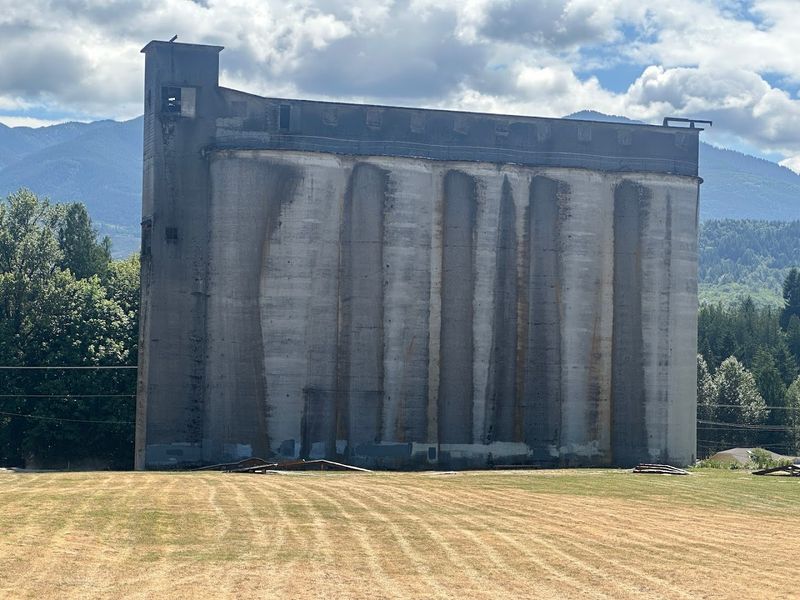
Locals call it Devil’s Tower, and the abandoned cement plant near Concrete earns that ominous nickname through decades of unsettling stories and tragic incidents.
The Washington Portland Cement Company began operations here in 1905 as the state’s first cement plant, processing materials until shutting down in the 1960s.
Visitors report feeling a heavy, oppressive atmosphere when approaching the ruins, with some claiming to hear disembodied voices echoing through the empty structures. Several people have lost their lives while exploring the unstable buildings, adding a layer of genuine tragedy to the site’s eerie reputation.
The concrete tower rises against the sky like a monument to industrial ambition gone cold, its windows empty and its purpose extinct.
I felt uneasy photographing the plant, as if something in the ruins resented my presence and wanted me gone. Whether the feeling comes from actual supernatural energy or just the weight of history and tragedy, Devil’s Tower lives up to its name in every unsettling detail.
11. Fort Casey, Whidbey Island
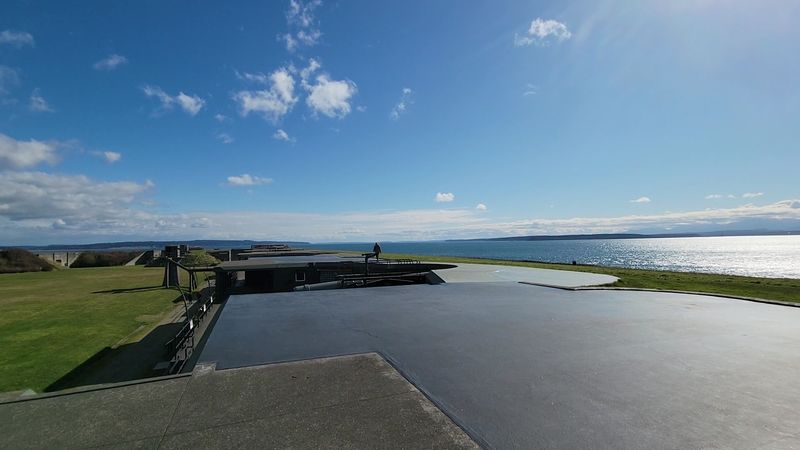
Fort Casey commands stunning water views from Whidbey Island, where military planners once positioned cannons to defend against naval threats as part of the Triangle of Fire defense system.
Built in the early 1900s, the fort now operates as a state park where families picnic near the same batteries that once held serious defensive purpose.
Two stories of tunnels wind through the fort, offering exploration opportunities that feel both historical and slightly spooky, especially when you venture into the darker sections.
A photogenic cannon still overlooks the water, providing a perfect spot for dramatic photos that capture both natural beauty and military history.
I spent hours wandering the tunnels, fascinated by the way sound echoed and distorted in the confined concrete spaces. The fort’s transformation from active military installation to family-friendly park creates an interesting juxtaposition between its original purpose and current use.
Fort Casey proves that abandoned military sites can serve new purposes while still maintaining their ability to transport visitors back to a more defensive, uncertain era.
12. Wellington Train Disaster Site, Near Stevens Pass
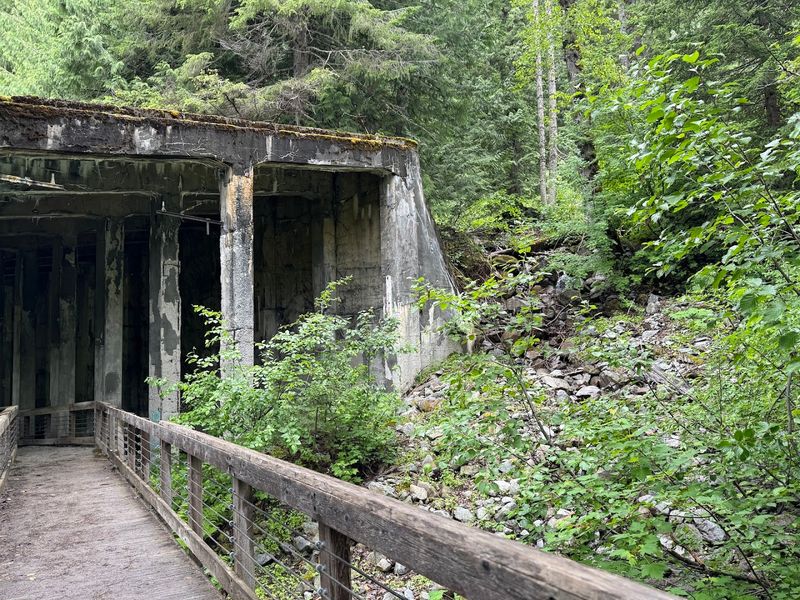
The town of Wellington no longer exists on maps; officials renamed it Tye after the 1910 avalanche that became one of America’s deadliest railway disasters.
Nearly 100 people perished when a massive snow slide swept two stranded passenger trains off the tracks and into the valley below, ending lives in an instant and haunting the region forever.
The site sits near Stevens Pass at what was once the west entrance to the original Cascade Tunnel, where winter storms could trap trains for days.
Visiting the area now, it’s hard to imagine the terror those passengers felt as snow piled higher and the mountain groaned above them. The tragedy led to significant changes in railway safety protocols and tunnel design, but those improvements came too late for the victims buried under tons of snow.
I stood at the site on a clear summer day, trying to picture the scene during that fatal winter night, and felt chilled despite the warm sunshine.
Wellington reminds us that nature’s power exceeds human engineering, no matter how confident we become in our technology.