
12 Wonderfully Weird Places In Colorado That’ll Make You Do A Double Take
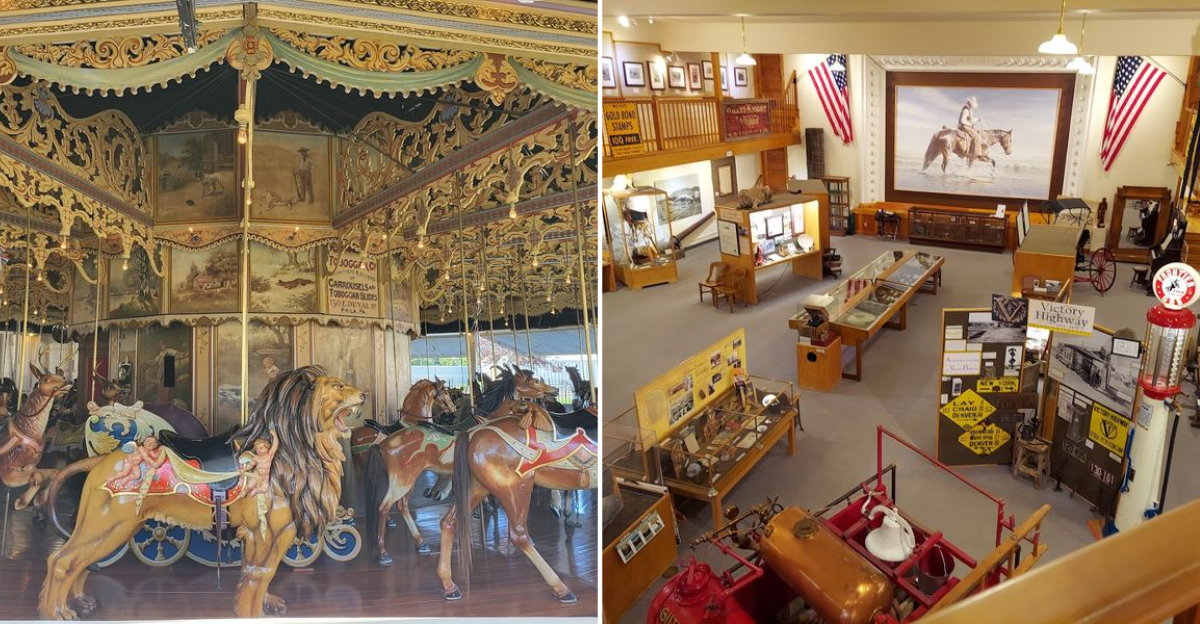
The weirdest road trips are the ones that make you pull over before your brain has fully processed what you just saw. Colorado may be famous for its mountains, ski slopes, and postcard-worthy views, but beyond the obvious beauty sits a whole other personality, quirky, curious, and wonderfully unexpected.
Between wide-open prairies, desert stretches, and winding mountain roads, you can find places that feel like they were designed to start conversations before you even park the car. Think oddball art, roadside surprises, mysterious landmarks, and photo stops that make everyone in the group say, “Wait, what is that?” That is the fun of exploring beyond the usual itinerary.
You are not just checking off attractions, you are collecting stories. The Centennial State’s strangest corners reward the travelers who stay curious, take the detour, and leave room in the day for something completely unforgettable.
1. UFO Watchtower – Hooper / San Luis Valley
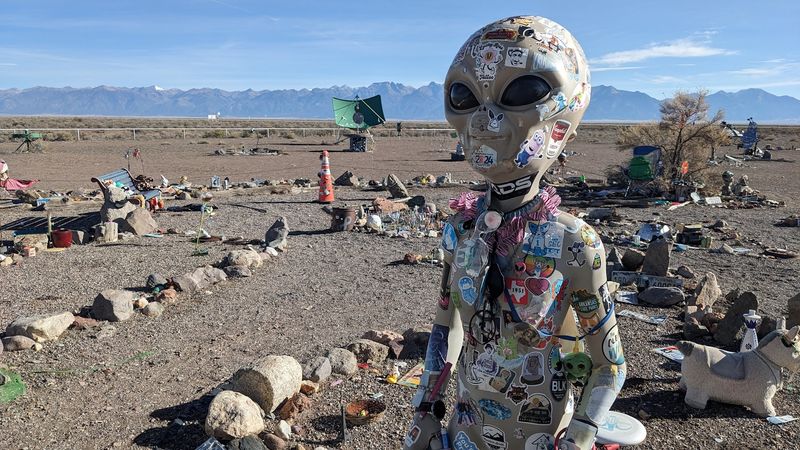
Standing alone in the flat, windswept San Luis Valley, the UFO Watchtower looks exactly like what would happen if someone took alien conspiracy theories and turned them into a roadside attraction with genuine heart. The tower itself is modest, but the surrounding “healing garden” is something else entirely, a sprawling circle of stones, crystals, figurines, and personal mementos left by visitors from all over the world.
People come here half-joking and leave genuinely moved. The valley is one of the most active UFO sighting locations in the country, and standing on that platform at dusk, scanning a horizon that stretches forever in every direction, you start to understand why the believers believe.
Listed hours run 10 to 5, and camping is available if you want to stick around after dark for some serious sky-watching. My honest take: even if nothing flies overhead, the sheer weirdness and sincerity of this place makes it one of Colorado’s most memorable stops.
Bring a lawn chair, an open mind, and maybe a flashlight. You won’t regret it.
2. Colorado Gators Reptile Park – Mosca
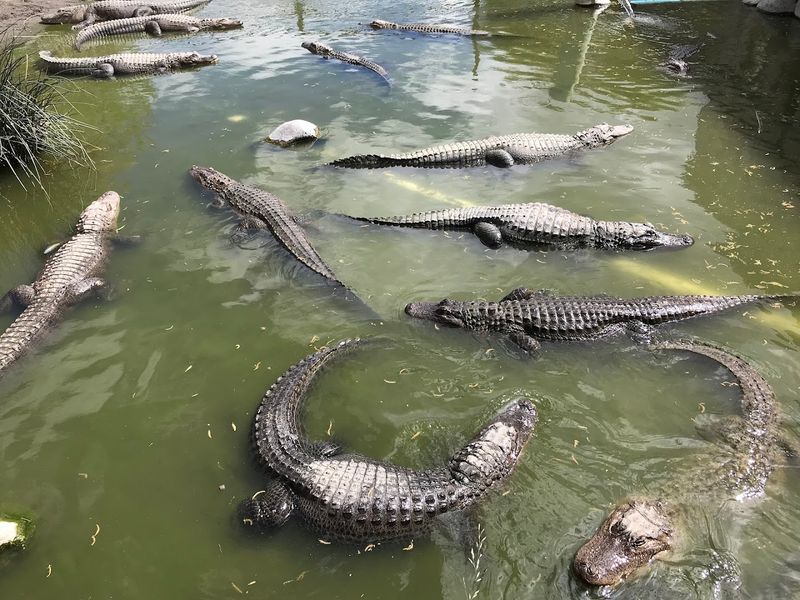
Nobody expects to find alligators in the Colorado mountains, and yet here we are. Colorado Gators Reptile Park in Mosca started as a tilapia fish farm heated by natural geothermal springs.
When the fish farm needed something to eat the dead tilapia, the owners bought a few alligators. One thing led to another, and now it’s a full reptile rescue facility with hundreds of gators, snapping turtles, pythons, and assorted scaly residents that needed a second chance.
The whole setup feels wonderfully accidental, like someone’s fever dream became a legitimate conservation effort. And it genuinely is legitimate.
The park rescues animals that can no longer be kept as pets or were seized by authorities, giving them a permanent home in an unlikely corner of the San Luis Valley.
Open daily in 2026, this is the kind of place kids absolutely lose their minds over and adults secretly enjoy just as much. Plan for at least an hour and a half.
Standing two feet from a ten-foot alligator, separated by nothing more than a low fence, has a way of making you feel very awake and very alive.
3. Cano’s Castle – Antonito
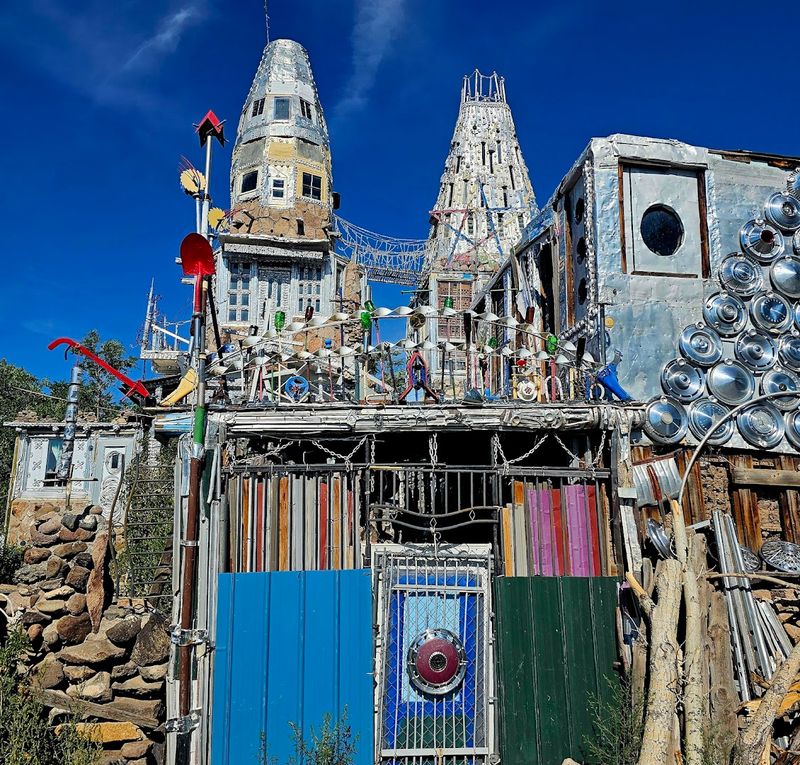
Cano’s Castle is the kind of place that stops you mid-sentence. You’re driving through Antonito, a small town near the New Mexico border, and then suddenly there it is, a shimmering, glittering structure built almost entirely from cans, aluminum foil, bicycle parts, and scrap metal, rising improbably from a residential lot.
Donald “Cano” Espinoza spent decades constructing this folk-art masterpiece, driven by a vision that mixed spirituality, patriotism, and raw creative obsession. The result is genuinely unlike anything else in the American Southwest.
Light catches the aluminum surfaces at different angles throughout the day, making the whole structure seem almost alive depending on when you show up.
It’s private property, so the respectful move is to admire it from the road and keep your visit considerate. No climbing fences, no trespassing, just genuine appreciation from a respectful distance.
Viewable year-round, Cano’s Castle is one of those rare places where you feel the weight of one person’s singular vision. Pair it with a stop in Antonito for lunch before catching the Cumbres and Toltec Scenic Railroad nearby, and you’ve built yourself a genuinely unforgettable Southern Colorado day.
4. Crestone Ziggurat – Crestone
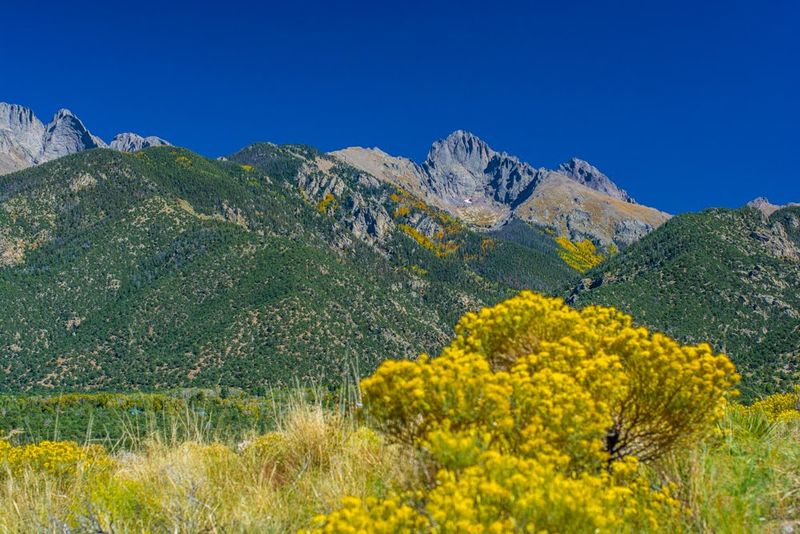
Crestone is already one of Colorado’s stranger towns, a tiny community at the base of the Sangre de Cristo Mountains that somehow hosts more spiritual centers, meditation retreats, and sacred sites per capita than almost anywhere in North America. So it tracks that there’s also a ziggurat here.
The Crestone Ziggurat is a stepped pyramid-style tower that looks like it was teleported directly from ancient Mesopotamia and dropped at the edge of the San Luis Valley. It sits quietly on the landscape, free and open to the public, inviting visitors to walk around it, photograph it, and puzzle over its existence with complete freedom.
Nobody quite agrees on what to make of it, and that ambiguity is honestly part of the charm. Crestone draws people searching for something, and the ziggurat seems to quietly accommodate whatever that something might be.
I’d recommend visiting in the morning when the light on the Sangre de Cristos is extraordinary and the air is still cool. Combine it with a walk through Crestone’s various spiritual centers and garden spaces, and you’ll leave feeling like you spent the day in a very different dimension of Colorado.
5. Kit Carson County Carousel – Burlington
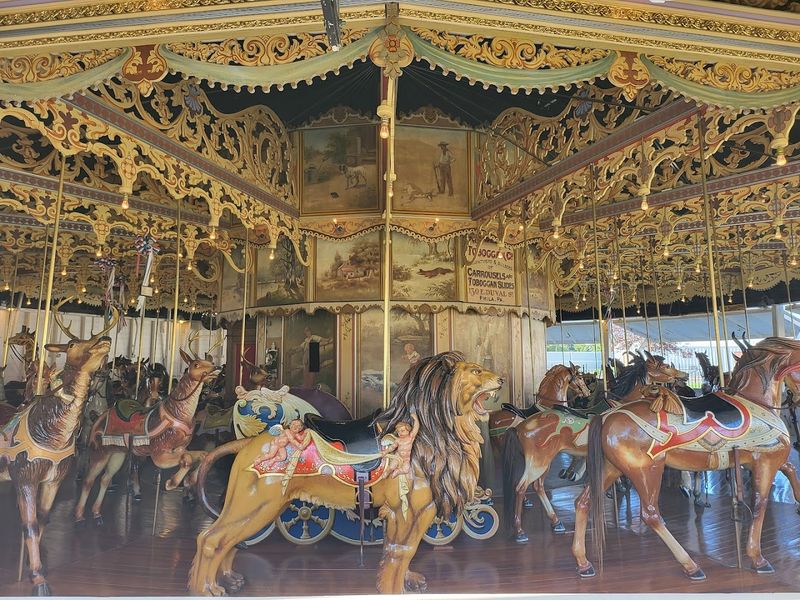
Near the Kansas border, in the small eastern Colorado town of Burlington, sits one of the oldest and best-preserved carousels in the entire United States. Built in 1905 by the Philadelphia Toboggan Company, the Kit Carson County Carousel has been spinning continuously for over a century, and the hand-carved wooden animals still wear their original paint.
Walking up to it feels like stepping through a time portal. The craftsmanship is extraordinary, every horse, every goat, every decorative panel painted with the kind of care and detail that modern manufacturing simply doesn’t replicate.
The carousel is a National Historic Landmark, which means it’s been officially recognized as something worth protecting forever.
It opens Memorial Day through Labor Day, running from 11 to 6, and rides are famously inexpensive, making it one of those rare attractions that delivers maximum joy for minimal cost. Burlington is about three hours east of Denver, so this works beautifully as a destination stop on a cross-state road trip rather than a quick detour.
Bring the kids, obviously, but also bring yourself. Adults light up on this thing just as reliably as children do, and that says everything about what genuine craftsmanship can still accomplish.
6. Museum of Northwest Colorado – Craig
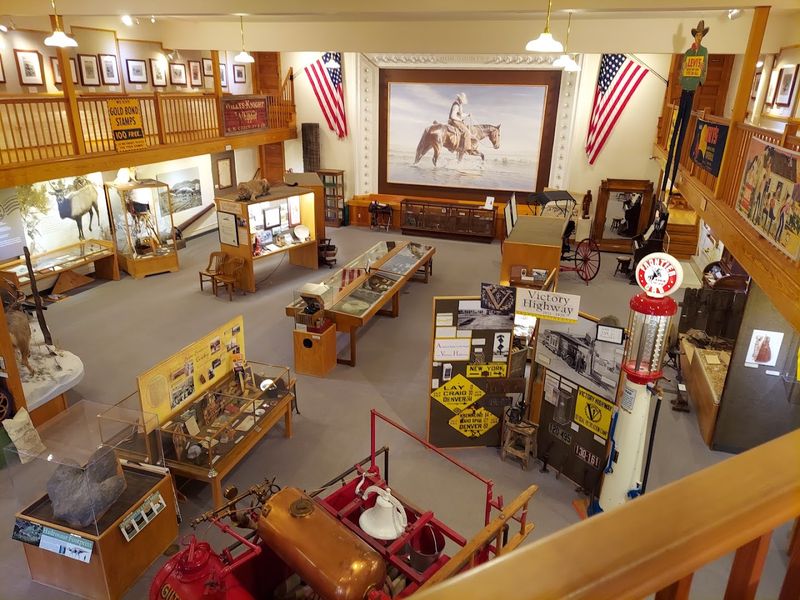
Craig, Colorado doesn’t make most tourist itineraries, and that’s exactly why the Museum of Northwest Colorado feels like such a discovery. Tucked inside a former armory building, this free museum holds what is widely considered one of the most impressive collections of cowboy and gunfighter gear anywhere in the American West.
We’re talking thousands of pieces: saddles, spurs, chaps, rifles, holsters, bits, and personal belongings from real working cowboys and lawmen of the late 1800s and early 1900s. The collection was assembled over decades by dedicated local collectors who understood that this material culture was disappearing fast and worth preserving with urgency.
Free admission means there’s zero barrier to walking in and spending a solid two hours completely absorbed in a world that most museums only gesture toward. The staff are genuinely knowledgeable and enthusiastic, the kind of people who can tell you the story behind a particular spur if you ask.
Craig sits along US-40 in the Yampa Valley, making it a natural stop on a northwestern Colorado road trip loop. Open year-round, it’s one of those places that earns its keep in any itinerary by delivering far more substance than its modest exterior suggests.
7. Creations from Mufflers – Cortez
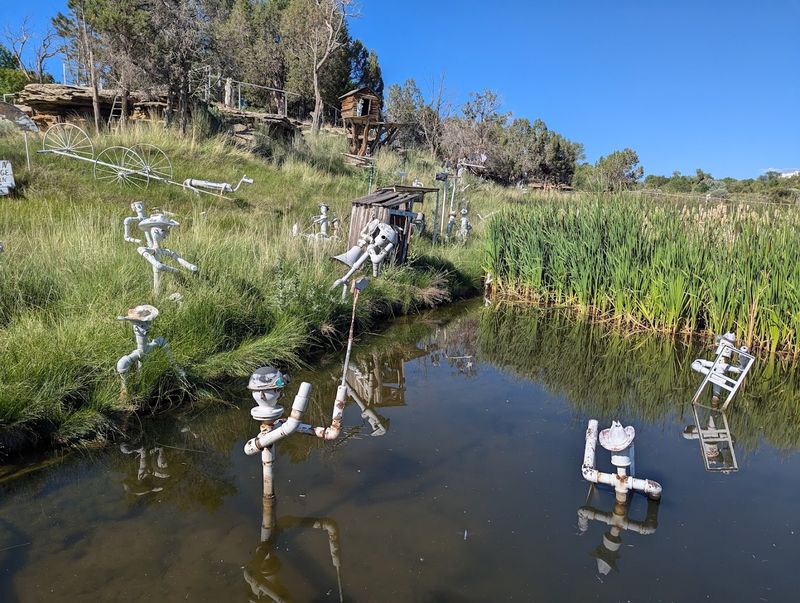
Cortez, the gateway town to Mesa Verde National Park, has a secret weapon that most visitors drive right past on their way to ancient cliff dwellings. Somewhere in town, a yard full of small metal people and creatures made entirely from mufflers, exhaust pipes, bicycle parts, and assorted scrap metal waits patiently for people who bother to slow down.
It’s outsider art in its purest form, unselfconscious, resourceful, and oddly charming. The figures have real personality despite being assembled from automotive salvage.
Some appear to be in conversation, others seem to be working or dancing, and a few are doing things that require a second look to fully process.
This is the kind of stop that takes fifteen minutes but generates forty-five minutes of conversation afterward. Kids find it hilarious.
Adults find it strangely moving. I find it a useful reminder that creativity doesn’t require expensive materials or formal training, just a particular kind of seeing.
If you’re already making the drive to Mesa Verde, adding this to your Cortez time costs you nothing except a pleasant pause. Keep your eyes open as you drive through town; the yard announces itself when you’re not expecting it, which is exactly the right way to find it.
8. The World’s Largest Fork – Creede
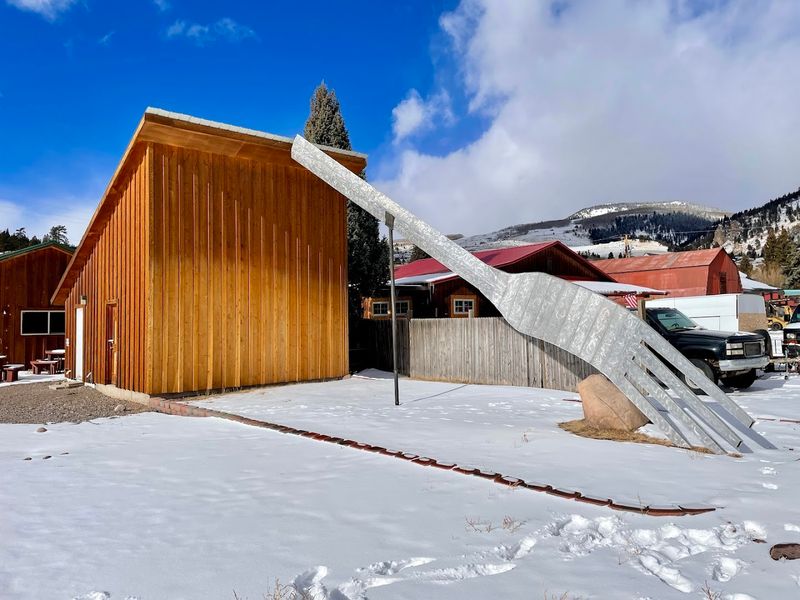
Creede is the kind of mountain town that looks like it was designed by someone who genuinely loved Colorado and wanted to capture everything good about it in one small valley. Silver mining history, a legendary repertory theater, stunning canyon scenery, and a population that hovers around four hundred people.
Oh, and a forty-foot, six-hundred-pound aluminum fork.
The World’s Largest Fork stands in Creede with the calm confidence of something that has absolutely nothing to prove. It’s enormous.
It’s a fork. It’s in the mountains.
There is no elaborate backstory required because the fork is its own explanation and its own reward.
Getting to Creede involves a scenic drive through the Rio Grande valley that’s worth doing regardless of the fork situation. The town itself rewards wandering, with galleries, a good diner or two, and the kind of relaxed pace that makes you reconsider your normal weekend habits.
The fork is outdoors and viewable anytime, which means there’s no planning required beyond simply showing up. Pair it with a performance at the Creede Repertory Theatre if timing allows, and you’ve assembled one of the more unexpectedly satisfying day trips available in Southern Colorado.
9. South Park City Museum – Fairplay
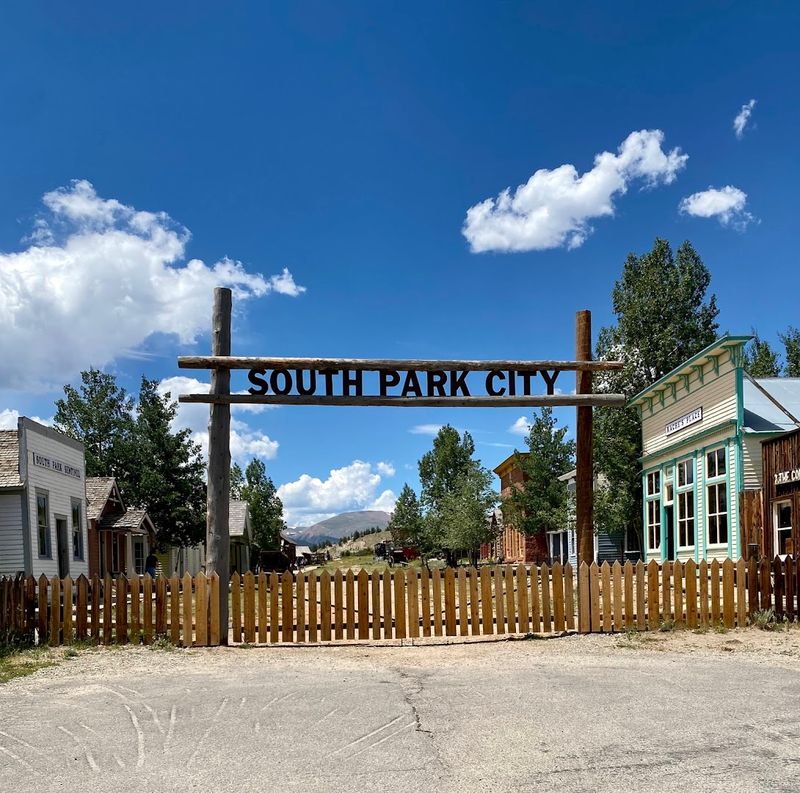
South Park City Museum in Fairplay is not a theme park recreation. It’s an actual assemblage of more than forty authentic structures, relocated from real mining camps across the region and filled with genuine period artifacts.
Walking through it feels less like visiting a museum and more like wandering into a town that simply stopped one afternoon in 1880 and never quite resumed.
The detail is remarkable. General stores still have their original merchandise on shelves.
Saloons have bottles behind the bar. Homes have furniture arranged as if someone just stepped out for a moment and will be back shortly.
The whole place carries a quiet, atmospheric weight that replica environments simply cannot manufacture.
Open mid-May through mid-October, it’s a natural anchor for a South Park basin road trip that could also include Fairplay’s charming downtown and the nearby Arkansas River headwaters. Budget at least two hours, more if you have curious kids or a genuine interest in Colorado mining history.
The admission is reasonable and every dollar supports continued preservation of structures and artifacts that would otherwise be lost. I left Fairplay genuinely grateful this place exists and mildly annoyed it took me so long to visit it.
10. Masonville Mercantile – Masonville/Loveland Area
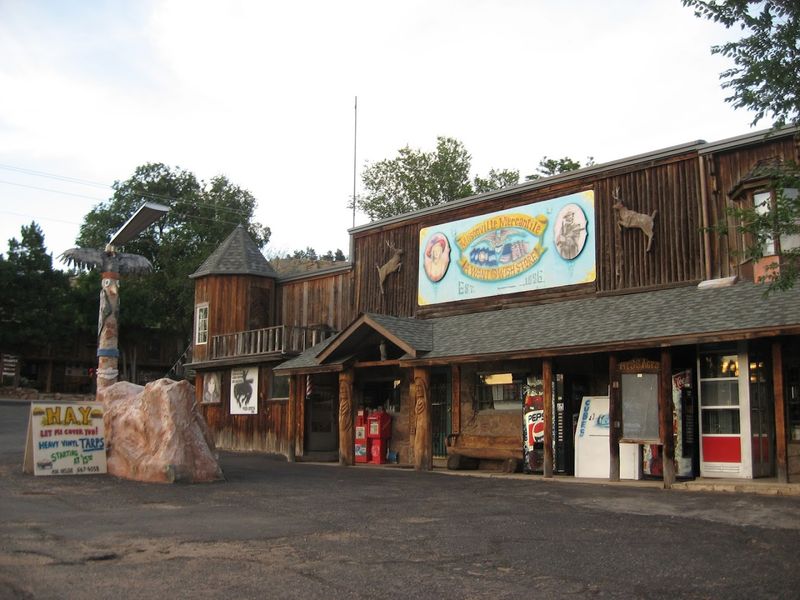
Some places earn their reputation simply by outlasting everything around them. Masonville Mercantile, tucked in the small community of Masonville between Loveland and Estes Park, is currently celebrating its 130th season, which means it was already old when your grandparents were young.
That kind of longevity doesn’t happen by accident.
The mercantile functions as a gift shop, a local landmark, and an unofficial community anchor all at once. The inventory leans eclectic and regional, the kind of selection that rewards browsing rather than targeted shopping.
You go in for one thing and leave with three things you didn’t know you needed and a conversation you weren’t expecting.
Summer hours make it a natural stop on the way to or from Rocky Mountain National Park, a drive that passes directly through the Masonville area along the Devil’s Backbone corridor. The surrounding landscape is beautiful in its own right, foothills country with open meadows and red rock formations that deserve more attention than they typically receive.
My suggestion: build Masonville Mercantile into a morning loop that starts in Loveland, heads up through Masonville, and connects to Estes Park for lunch. It adds texture and local flavor to a drive that’s already scenic on its own terms.
11. May Natural History Museum – Near Colorado Springs
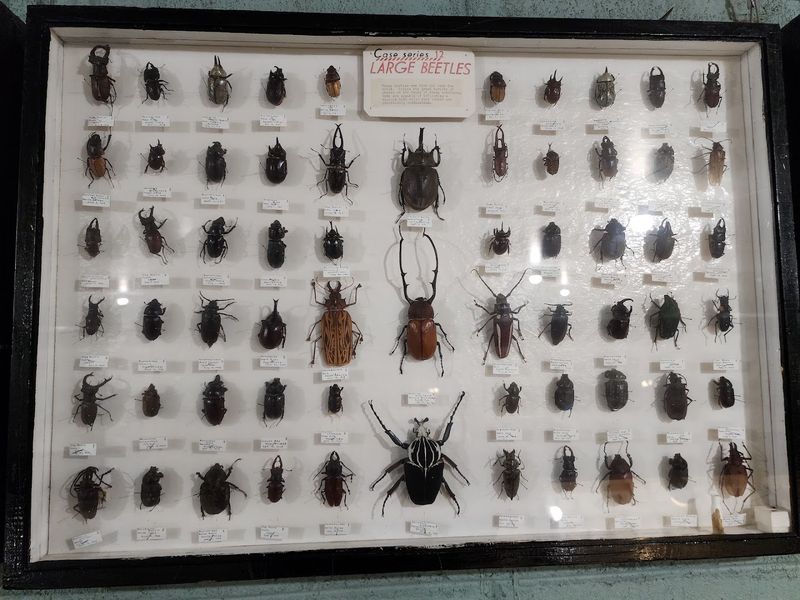
About fifteen miles southwest of Colorado Springs, the May Natural History Museum houses one of the largest private collections of tropical invertebrates on the planet. James May spent decades traveling the world collecting insects, and the result is a museum that feels simultaneously like a Victorian curiosity cabinet and a legitimate scientific institution.
The specimens are genuinely extraordinary. Beetles the size of your fist, moths with wingspans wider than your hand, stick insects of implausible length, and thousands of other creatures displayed in old-school cases that make the whole experience feel like a discovery from another era.
The building itself reinforces this, unpretentious and slightly time-worn in the best possible way.
Open May 1 through October 1, from 9 to 6 daily, it’s positioned perfectly for a Colorado Springs area day that might also include Garden of the Gods or Chautauqua. The admission is modest and the experience is genuinely memorable for anyone with even a passing curiosity about the natural world.
Kids who claim to hate bugs frequently become fascinated within ten minutes. Adults who thought they outgrew wonder tend to rediscover it in the moth cases.
That’s a pretty reliable return on a low-stakes afternoon investment.
12. Giant Campbell’s Tomato Soup Can – Fort Collins
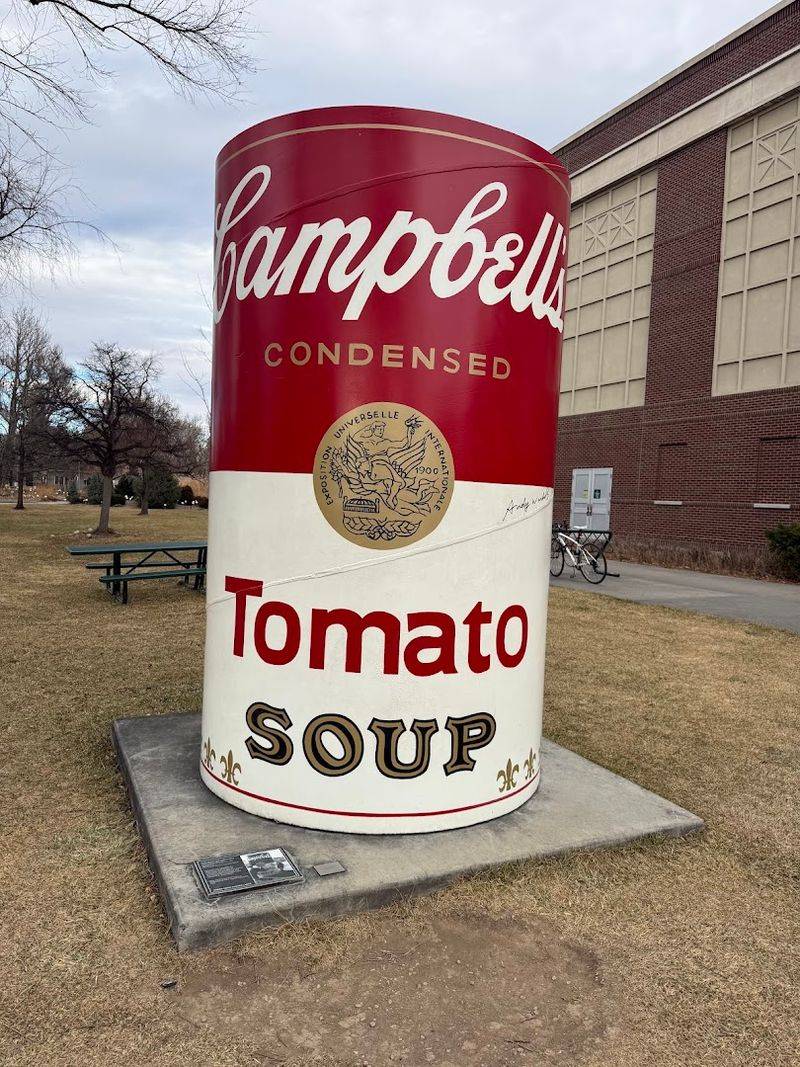
Fort Collins is a college town that takes public art seriously, and nowhere is that commitment more cheerfully absurd than on the grounds of Colorado State University’s University Center for the Arts. Standing outside is a giant Campbell’s Tomato Soup Can rendered in the unmistakable style of Andy Warhol’s iconic pop art images, large enough to make you stop mid-stride and reconsider your relationship with condensed soup.
It’s playful, it’s bold, and it’s completely free to visit any time you happen to be walking the CSU campus. The surrounding University Center for the Arts complex is worth exploring even beyond the can, hosting galleries, performance spaces, and rotating exhibitions throughout the academic year.
Fort Collins itself is one of Colorado’s most walkable and enjoyable mid-sized cities, with a thriving craft drinks scene, a beautifully preserved historic downtown, and a trail system along the Poudre River that rewards an afternoon stroll. The soup can works perfectly as an anchor for a Fort Collins day that might also include Old Town, a brewery stop, and dinner somewhere local.
It’s the kind of thing you photograph ironically and then find yourself genuinely charmed by, which is exactly what good public art is supposed to do.