
This Nebraska River Valley Fills With Thousands Of Sandhill Cranes In One Of America’s Wildest Seasonal Shows
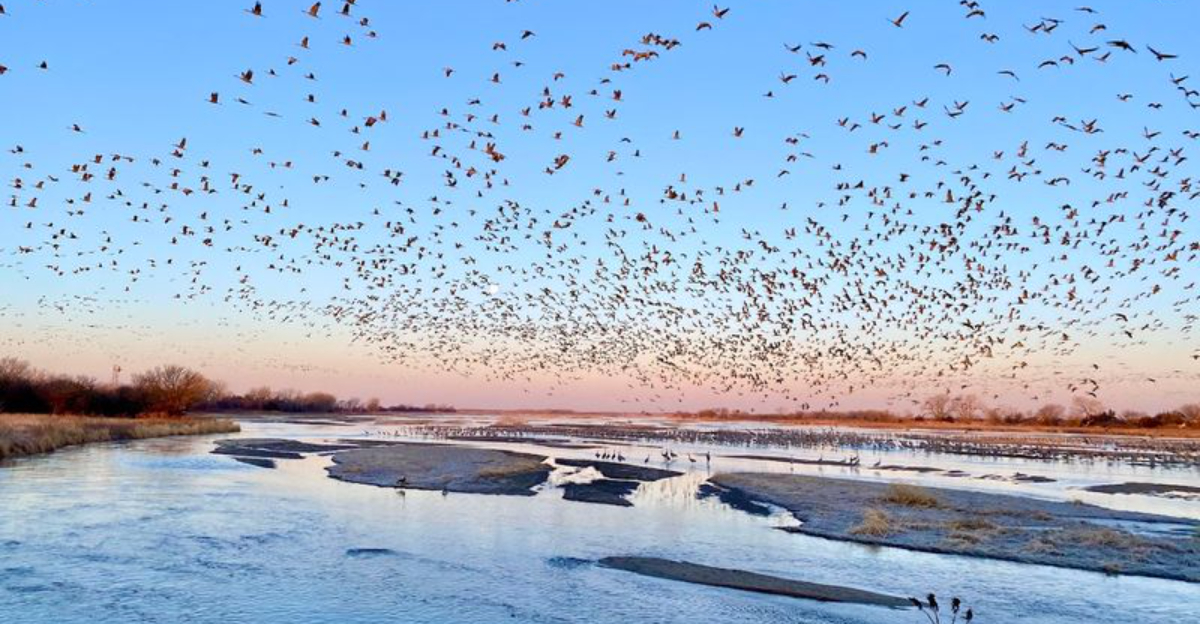
Every year, Nebraska pulls off one of nature’s most underrated blockbuster events. And barely anyone outside bird nerd circles talks about it enough.
In the wide-open stretch of the Platte River Valley, thousands upon thousands of sandhill cranes drop in like they’ve booked the same chaotic group holiday. The sky fills with them at sunrise and sunset, their calls echoing across the water like something ancient and slightly unreal.
It’s loud, it’s crowded, and somehow perfectly choreographed without anyone being in charge. For a few weeks, this quiet river valley turns into a living runway of wings, movement, and raw instinct.
No tickets, no fences, just instinct, migration, and a stopping point that has been the same for generations.
And then, as suddenly as they arrive, they’re gone again, leaving behind a strangely quiet landscape that feels like it just woke up from a dream.
The Sheer Scale Of The Sandhill Crane Migration
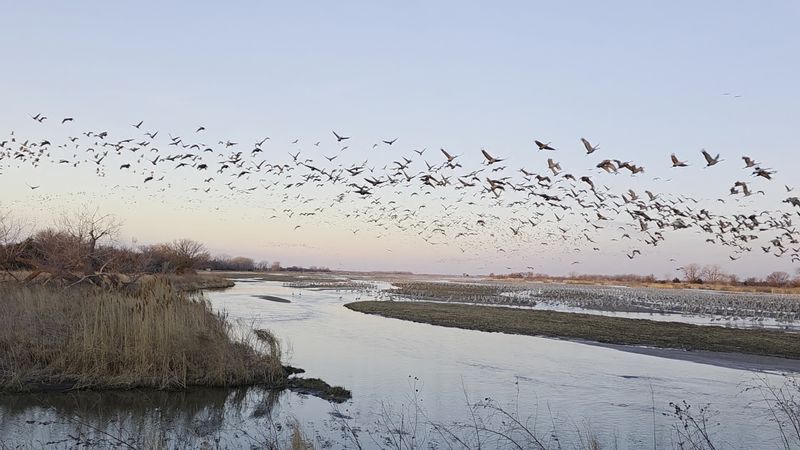
Nothing prepares you for the moment 100,000 birds take flight at once. The sound alone is something your brain struggles to process, a deep, rolling thunder of wings that feels more like a stadium crowd than a flock of birds.
It is one of those experiences that rewires your understanding of what nature is actually capable of.
Each spring, roughly 600,000 to over one million Sandhill Cranes converge on the Platte River Valley in central Nebraska. That figure represents more than 80% of the entire world population of Sandhill Cranes.
The sheer density of birds in one place is almost impossible to visualize until you are standing right there watching it happen.
The migration runs from mid-February through mid-April, with peak numbers typically hitting in mid-to-late March. Individual cranes tend to stay in the area for about a month, fueling up on leftover grain from nearby cornfields.
They bulk up by 15 to 20% of their body weight before heading north to breeding grounds as far away as Alaska, Canada, and eastern Siberia. This is nature operating at full volume.
Your Gateway To The Greatest Show On Earth
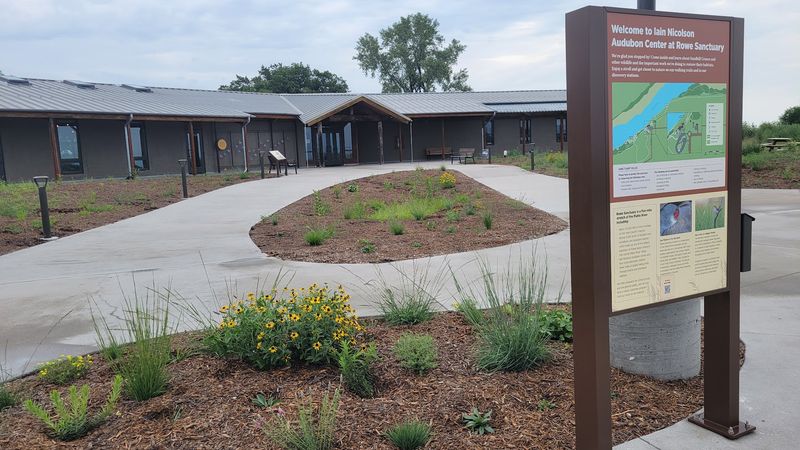
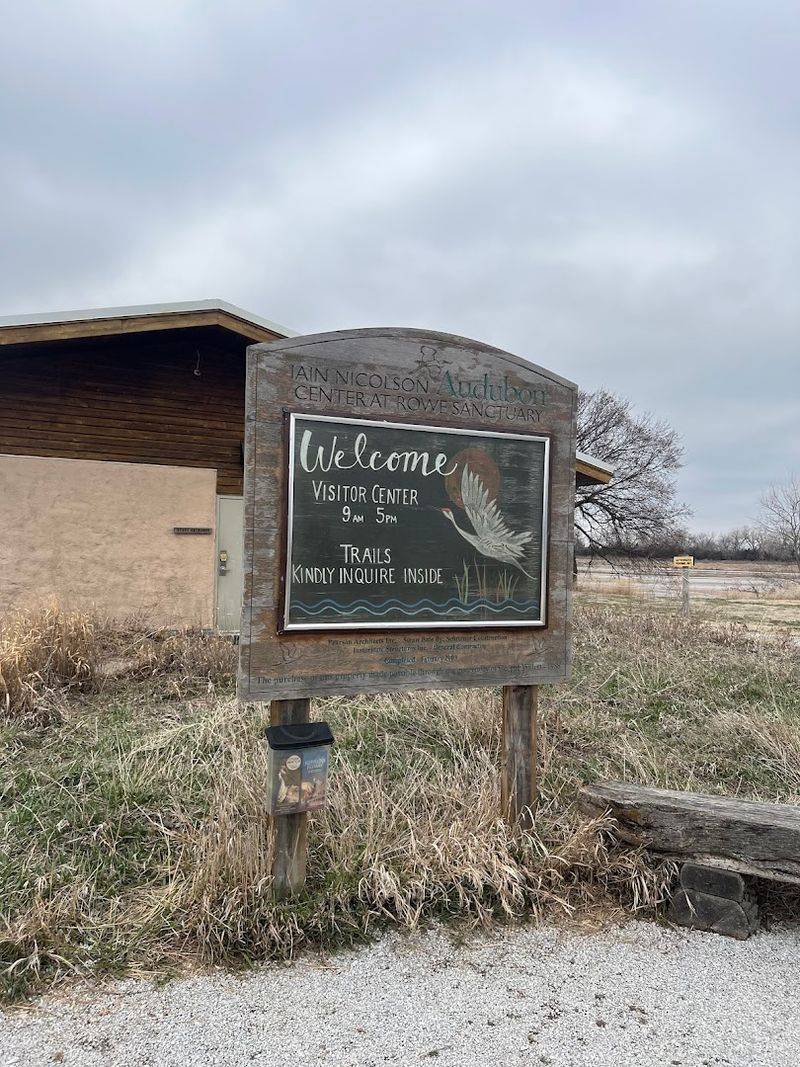
Tucked along the banks of the Platte River at 44450 Elm Island Rd, Gibbon, NE 68840, the Iain Nicolson Audubon Center at Rowe Sanctuary is where the magic gets organized. This 3,000-acre nature sanctuary is not just a pretty building with a nice view.
It is the command center for one of the most important conservation efforts in the American Midwest.
The center underwent a stunning renovation completed in December 2024, and the new facility is a serious upgrade. Think floor-to-ceiling windows overlooking the Platte River, expanded educational spaces, and a layout that feels both welcoming and deeply connected to the landscape around it.
The building uses red lighting in the parking area at night to minimize disturbance to wildlife, which is a thoughtful touch that shows how seriously this place takes its mission.
Trails are open daily from dawn to dusk, and admission to the building and trails is completely free. The center is open Wednesday through Saturday from 10 AM to 5 PM.
You can reach them at 308-468-5282 or visit audubon.org/rowe to plan your trip before the cranes arrive.
Sunrise Viewing Blinds That Will Change Your Life
Alarm goes off at 4 AM and somehow, you are not even annoyed. That is the magic of booking a sunrise guided tour at Rowe Sanctuary.
You walk out to one of the specially designed viewing blinds called Discovery Stations, positioned right along the river, and then you wait. The anticipation is half the experience.
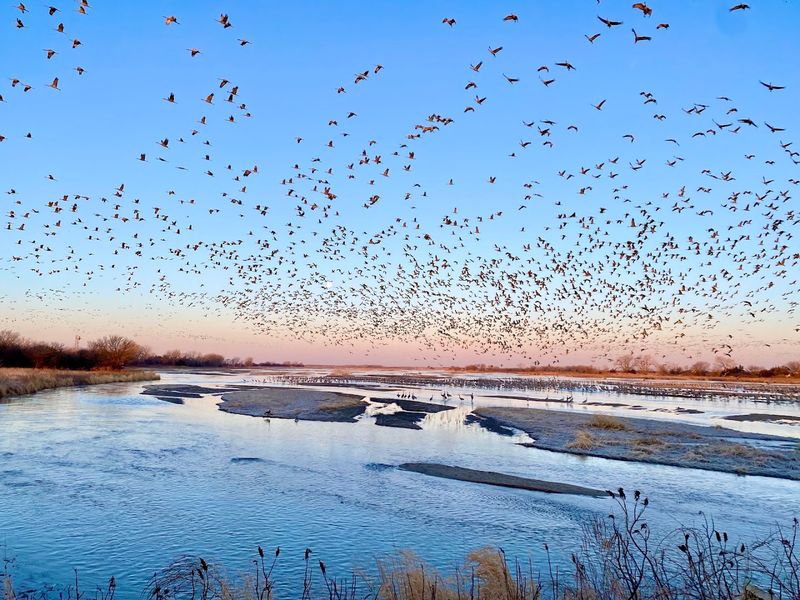
When the cranes begin their morning liftoff, the sound builds like applause at a concert. Thousands of birds launch from the sandbars in waves, filling the sky with motion and noise.
People have described it as sounding like inbound airplanes mixed with the stomping of a massive crowd. It is loud, chaotic, and completely magnificent.
The blinds themselves are thoughtfully designed with benches, warming rooms, and enough space for groups without feeling cramped. Photographers love them because the setup accommodates tripods and long lenses without issue.
Guided sunrise tours are ticketed experiences that sell out fast, so booking early is not just a suggestion, it is a survival strategy. Reservations open in January each year, and tours regularly fill up within days of going live.
The Evening Show Is Equally Spectacular
Here is a hot debate that has been simmering among crane enthusiasts for years: sunrise or sunset, which tour is better? Spoiler alert, both camps are absolutely right.
The evening experience at Rowe Sanctuary is its own kind of extraordinary, and writing it off as just the second option would be a mistake.
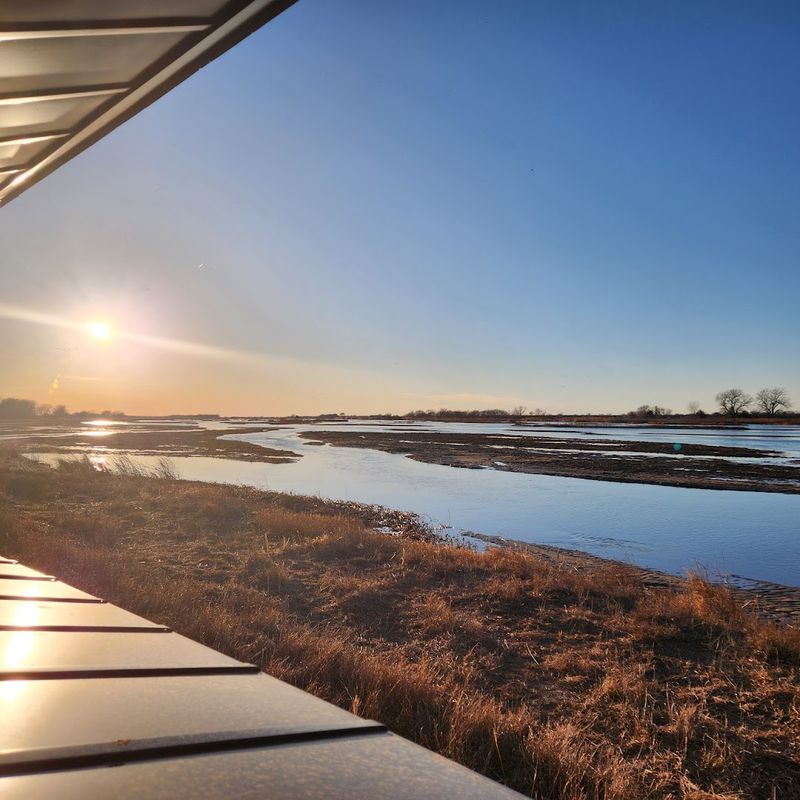
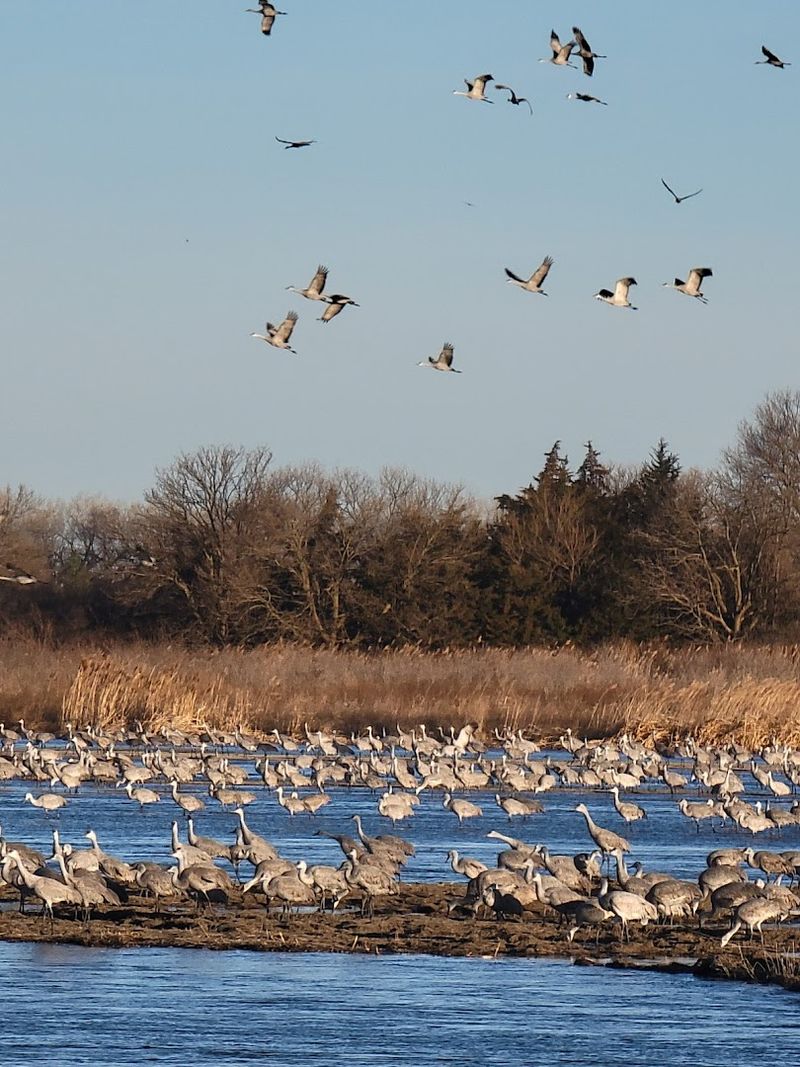
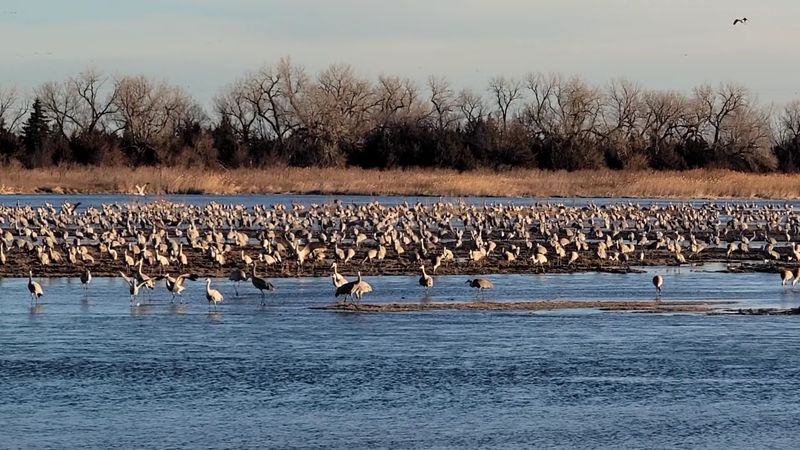
As the sun dips toward the horizon, cranes begin returning from nearby cornfields and wet meadows in massive, swirling formations. They circle overhead in the thousands before gradually settling onto the sandbars for the night.
The sky looks like something a special effects team would design if they had an unlimited budget and a deep love of birds.
Before roosting, the cranes engage in elaborate courtship dances, leaping, bowing, and calling out to each other in a display that is equal parts graceful and wonderfully goofy.
Watching 100,000 birds negotiate their sleeping arrangements on a shallow river sandbar is genuinely one of the most entertaining things nature offers. The guided sunset tours follow the same booking process as sunrise, and experienced visitors often recommend doing both on the same day for the full picture.
A Shallow Wonder That Makes It All Possible
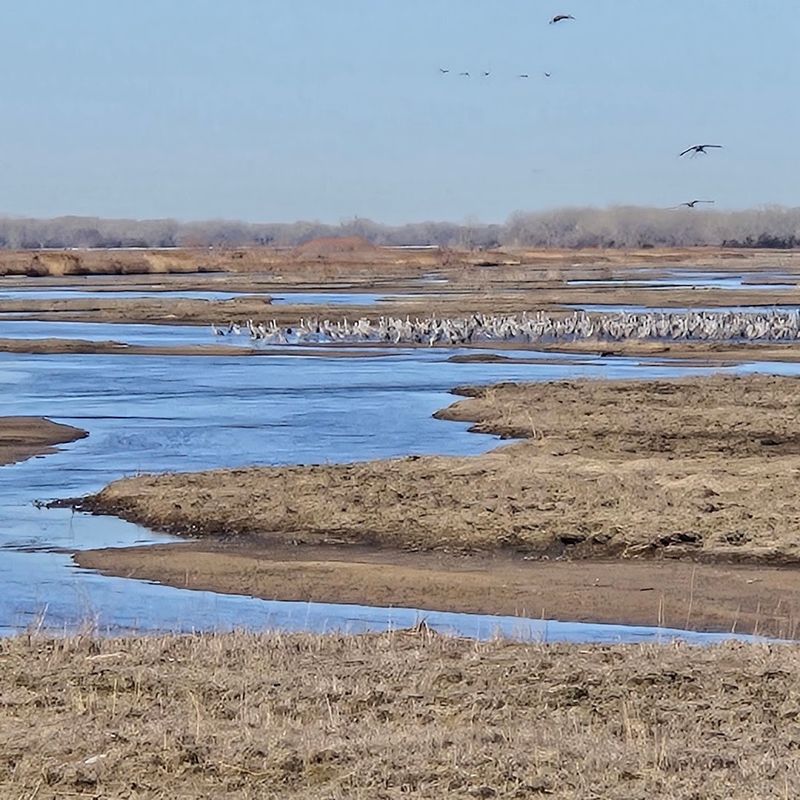
Not all rivers are created equal, and the Platte River is proof that sometimes shallow is better. This braided, wide, and surprisingly shallow waterway is the reason the Sandhill Crane migration happens here and not somewhere else.
The exposed sandbars act as natural sleeping platforms, giving cranes a safe place to roost overnight where predators like coyotes cannot sneak up on them undetected.
The river corridor stretching through central Nebraska functions as a critical highway in what is known as the Central Flyway, one of North America’s major migratory bird routes.
The combination of the river’s structure and the surrounding agricultural landscape creates a perfect refueling stop. Cranes spend their days in nearby cornfields, picking up leftover grain from the previous harvest, and return to the river each evening.
The Rowe Sanctuary covers a five-mile stretch of this river, and at peak migration that stretch can hold between 100,000 and 200,000 cranes at one time.
Conservation efforts here focus on maintaining the river’s wide, open character by managing vegetation along the banks. Without that work, the sandbars would disappear, and so would the cranes.
The Celebrity Sighting Of Migration Season
Spotting a Whooping Crane during migration season is the birding equivalent of running into a celebrity at a coffee shop.
These birds are critically rare, and catching a glimpse of one among the massive flocks of Sandhill Cranes is the kind of moment that makes people cry happy tears on the side of a Nebraska highway.
Whooping Cranes are significantly larger than their Sandhill cousins and bright white, making them stand out dramatically against the grey-brown sea of Sandhills.
They typically pass through the Platte River corridor in early April, slightly later than the peak Sandhill concentration. The chance of seeing one is not guaranteed, but it is real enough to keep hopeful eyes scanning the horizon.
The population of Whooping Cranes has recovered from a historic low of just 15 birds in the 1940s to a few hundred today, largely thanks to conservation programs that protect critical stopover habitat like the Platte River Valley. Rowe Sanctuary plays a meaningful role in that recovery story.
Seeing one in the wild, even briefly, is a reminder that conservation work actually makes a difference when people commit to it.
Exhibits, Trails, And Learning Opportunities At The Visitor Center
Even when the cranes are not front and center, the Rowe Sanctuary Visitor Center gives you plenty to explore.
The newly renovated building opened in December 2024 and features expanded educational exhibits covering the Platte River ecosystem, the biology of Sandhill Cranes, and the broader story of the Central Flyway.
The displays are genuinely engaging, not the dusty-poster variety you might expect from a rural nature center.
From the building itself, large windows frame a live view of the Platte River. It is the kind of design that makes you feel connected to the landscape even when you are standing indoors holding a cup of coffee.
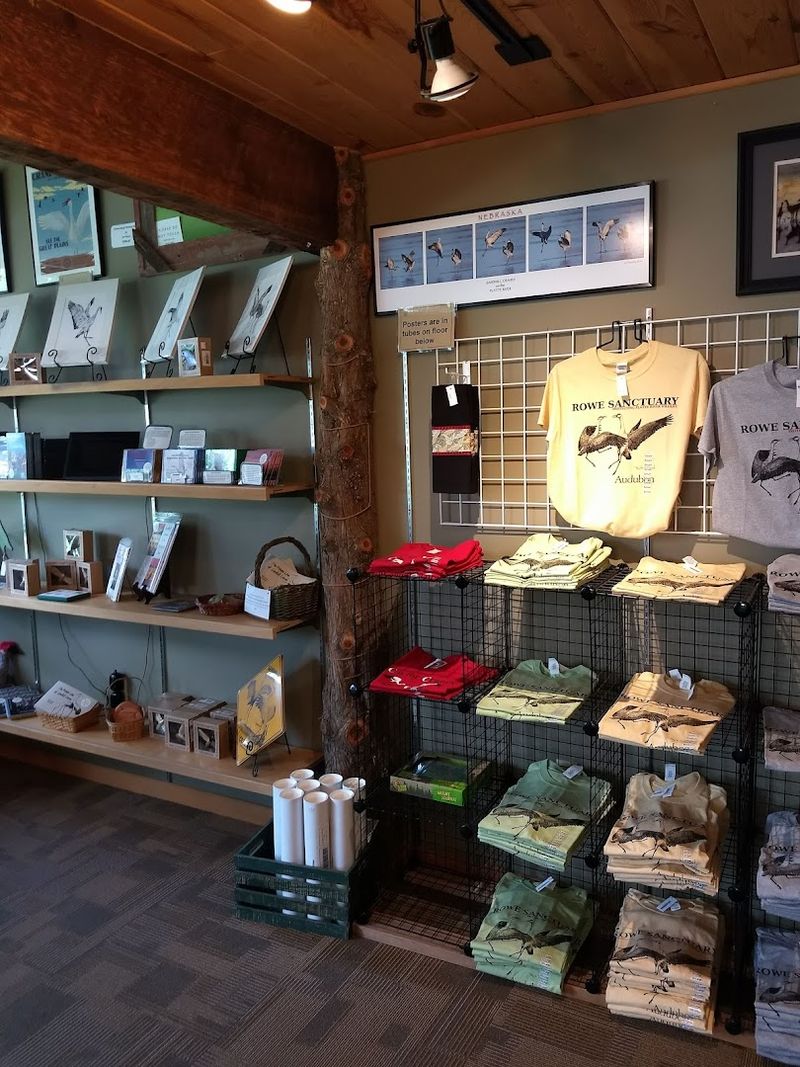
A well-stocked gift shop rounds out the experience with keepsakes, field guides, and nature-themed items at reasonable prices.
The walking trails wind through sanctuary grounds and are open daily from dawn to dusk at no charge. They offer a quieter, more personal way to experience the river corridor outside of guided tour hours.
Whether you are a first-time visitor or returning for your fifth migration season, there is always something new to notice along the trail. The river has a way of rewarding patience.
The Economic And Cultural Impact Of Crane Season In Central Nebraska
Here is a number that puts things into perspective: the Sandhill Crane migration contributed an estimated 28 million dollars to central Nebraska’s economy in 2025 alone.
That figure comes from the steady stream of visitors who travel from across the country and around the world specifically to witness this event. A flock of birds is, quite literally, holding up the local economy every spring.
Hotels in Kearney and surrounding communities fill up weeks in advance during peak migration. Local restaurants, shops, and tourism businesses all feel the impact of crane season in a very real way.
The migration has become a cultural identity marker for the region, something that communities here are genuinely proud of and actively work to protect.
The Rowe Sanctuary, as a nonprofit operation, channels proceeds directly back into conservation and sanctuary maintenance.
Visiting is not just a personal experience, it is a contribution to something larger. Every ticket purchased for a guided tour, every item bought in the gift shop, and every donation made helps ensure that this migration corridor stays intact for future generations.
That is a pretty good reason to book a trip.
How To Plan Your Visit For The Best Possible Experience
Timing is everything when it comes to crane season, and a little planning goes a long way. The peak window runs from mid to late March, and that is when you want to be standing on the banks of the Platte River with your binoculars and your best pair of warm socks.
Nebraska in March is unpredictable, so layering is not optional.
Guided tour reservations open in January each year through the Audubon website at audubon.org/rowe. Tours sell out quickly, so setting a reminder for when booking opens is genuinely useful advice.
Both sunrise and sunset tours are worth doing, and many visitors who have attended multiple times say that doing both in the same day is the definitive way to experience the migration fully.
The Visitor Center is open Wednesday through Saturday from 10 AM to 5 PM. Trails and outdoor areas are accessible daily from dawn to dusk with no admission fee.
Golf cart assistance is available for those who need help reaching the viewing blinds. Whether this is your first crane season or your tenth, Rowe Sanctuary has a way of making every visit feel like the first time.
Are you ready to witness one of nature’s greatest performances?