
12 Hidden Historic Gems In Washington Worth Exploring
If you think history is just dusty textbooks and statues of guys in powdered wigs, you clearly haven’t been digging deep enough.
I’ve spent the last few months acting like an amateur archaeologist, wandering down alleyways and ducking into basements most people walk right past. It turns out that some of the best stories aren’t written on plaques, they’re hidden behind unmarked doors and overgrown ivy.
Exploring the secret side of Washington is like finding a glitch in the matrix where the past and present decide to throw a private party.
Put down your phone, lace up some comfortable shoes, and get ready to discover the weird, wonderful, and genuinely shocking spots that most tourists completely miss while they’re busy staring at the big, shiny monuments. Washington State holds more than just towering evergreens and Seattle’s skyline.
1. Fort Simcoe Historical State Park, White Swan
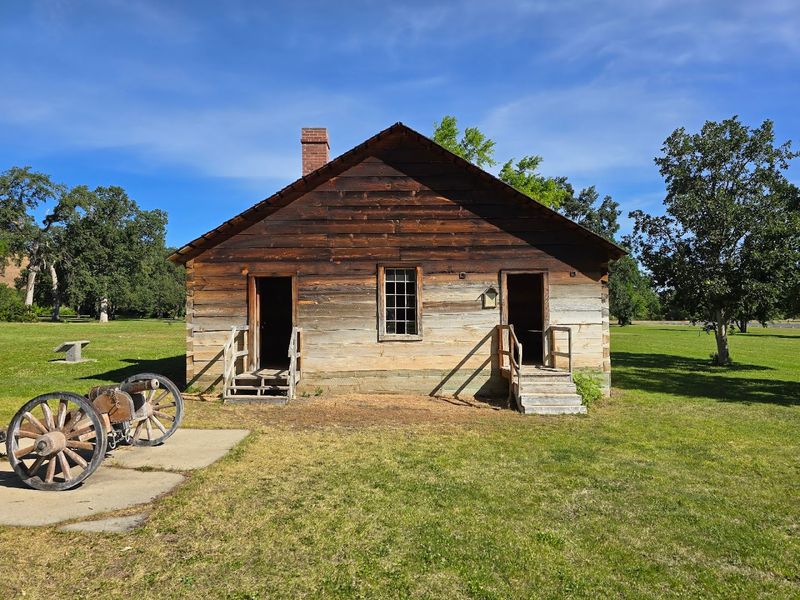
Picture yourself standing where soldiers once drilled in the 1850s, surrounded by five original buildings that have weathered more than 160 winters.
Fort Simcoe served as a military post during tense times between settlers and the Yakama Nation, and today the preserved structures tell both sides of that complicated story.
The captain’s quarters, barracks, and blockhouse stand exactly where they were built, offering a rare glimpse into frontier military life. Interpretive displays throughout the grounds explain the fort’s role and the people who lived here.
The park’s remote location near White Swan means you’ll often have the place nearly to yourself. Plan your visit between April and September, as the park closes for winter.
Pack a picnic and spend time exploring the grounds at your own pace. The quiet grounds make the fort feel especially reflective, with wide-open space giving each building room to speak.
Because the site is not crowded, the history feels more personal than polished. It is a stop that rewards slow wandering, especially for travelers interested in Washington’s layered frontier past.
2. Cedar Creek Grist Mill, Woodland
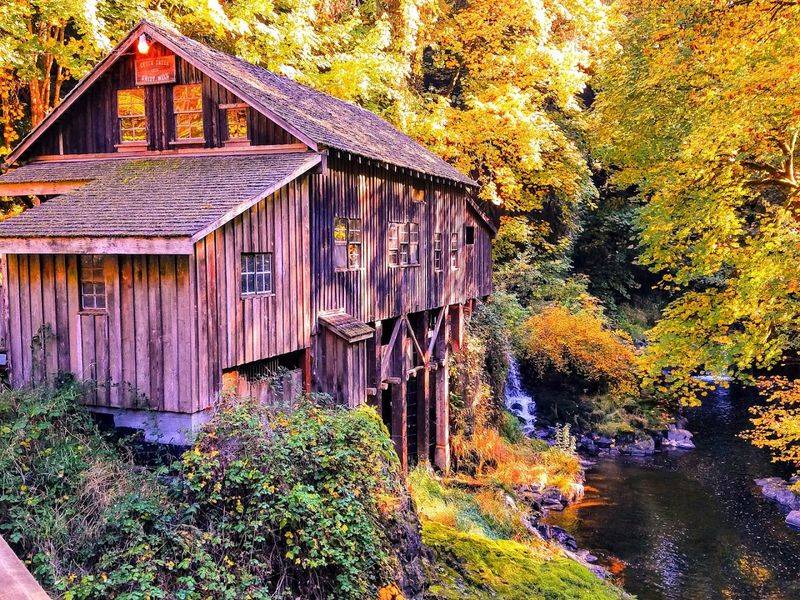
Water still turns the massive wheel at this 1876 mill, just as it did when farmers brought wheat by wagon to be ground into flour. Cedar Creek Grist Mill stands as one of the few working water-powered mills left in Washington, and watching the original machinery clatter to life feels like stepping backward through time.
The four-story wooden structure sits beside a charming covered bridge that photographers absolutely adore. Inside, volunteers demonstrate the milling process on weekends, explaining how grain becomes flour using equipment that’s been grinding away for nearly 150 years.
The mill produces stone-ground flour you can actually purchase. Check their schedule before visiting, as hours vary seasonally.
The surrounding woodland setting makes this spot especially beautiful during fall color season. The sound of the water and gears gives the visit a rhythm that feels both peaceful and alive.
The covered bridge adds an extra dose of old-fashioned charm before you even step inside. It is a simple, scenic stop that makes Washington’s rural history feel wonderfully tangible.
3. Thorp Mill, Thorp
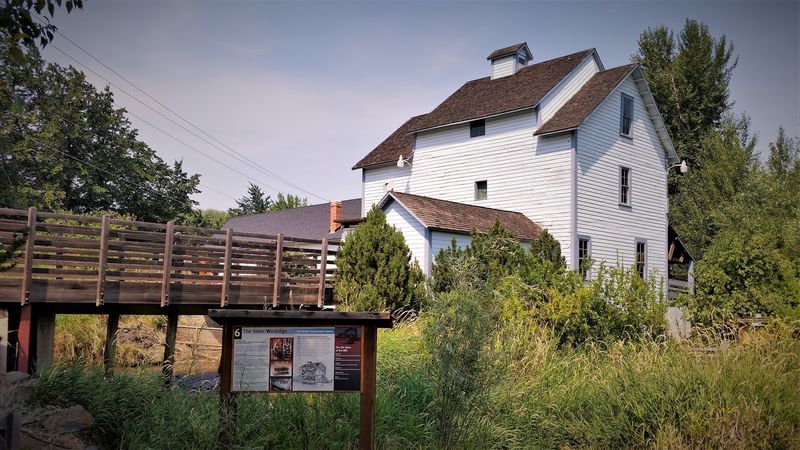
Rising four stories above the Kittitas Valley, this 1883 grain mill dominates the tiny crossroads of Thorp like a cathedral of commerce. The building housed the economic heart of this farming community, where wheat from surrounding fields was transformed into flour and shipped by rail to distant markets.
Original milling equipment fills the interior, from massive grinding stones to belt-driven elevators that once hauled grain to upper floors. Outdoor interpretive stops explain the milling process and the families who operated this business for generations.
Tours run during the main travel season, offering detailed looks at machinery most people have never seen.
Highway travelers often zip past without noticing this rural treasure. Stop, stretch your legs, and discover why this mill mattered so much to early Washington settlers.
The size of the building alone hints at how important grain once was to the valley’s rhythm. Inside, the old machinery gives the place a hardworking beauty that feels practical rather than polished.
It is a quiet stop, but it tells a big story about farming, railroads, and Washington’s early growth.
4. Northern State Recreation Area, Sedro-Woolley
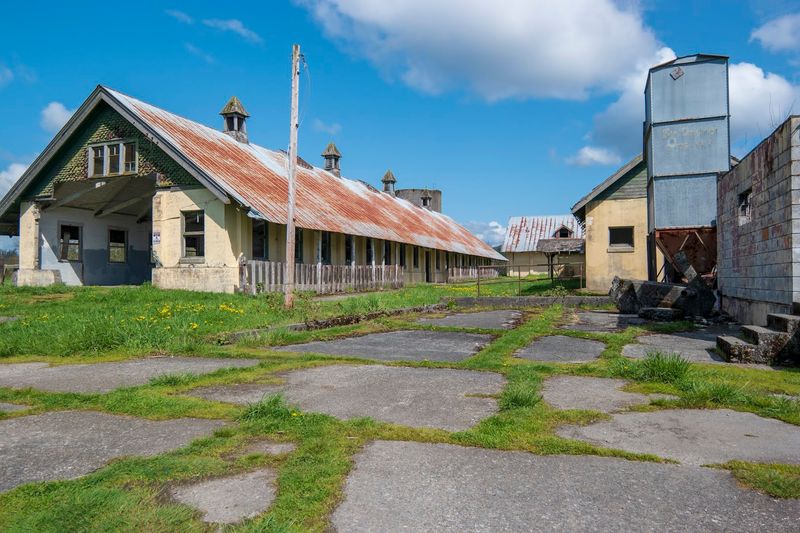
Trails wind past buildings that once housed a self-sustaining community where patients farmed, built furniture, and operated their own power plant.
Northern State Hospital operated for decades as a massive institution, and today the recreation area preserves remnants of that complex history across hundreds of acres.
Old farm buildings, fields, and forested paths create an unusual hiking experience where nature reclaims human construction. Some structures remain off-limits, but the accessible grounds offer plenty to explore.
Interpretive information helps visitors understand what this place was and how attitudes toward mental health treatment have evolved.
The setting feels hauntingly peaceful, with mountain views and quiet trails that attract few crowds. Bring curiosity and respect for the thousands of people whose lives unfolded within these boundaries.
Nature has softened the edges of the old campus, but the history still feels close with every step. It is the kind of place that invites reflection, especially when the trails pass from open fields into quiet woods.
5. Fort Columbia State Park, Chinook
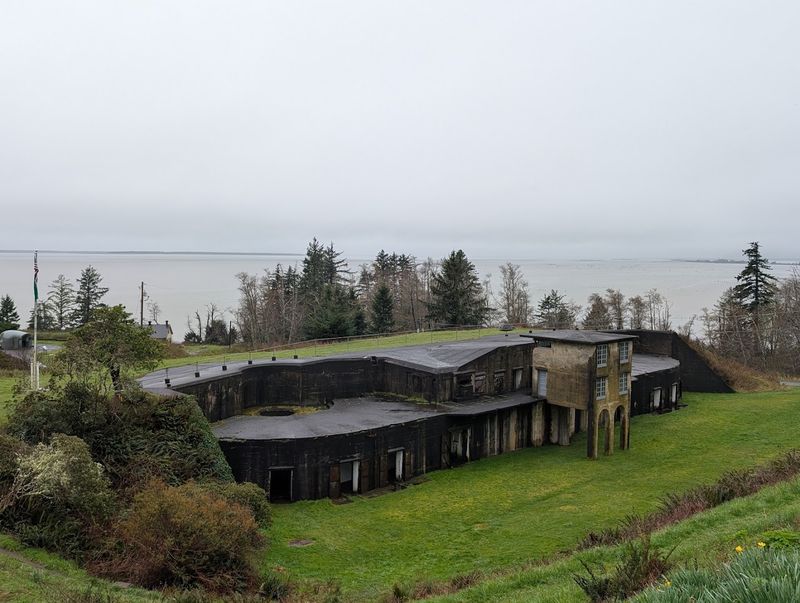
Cannons once pointed from these bluffs toward the Pacific, ready to defend the Columbia River entrance from threats that never materialized.
Fort Columbia represents one of America’s best-preserved coastal defense installations, with batteries, barracks, and command posts still standing more than a century after construction.
The fort’s location offers stunning river views where the Columbia meets the ocean, and forested trails connect various military structures. Unlike busier coastal attractions, this park maintains a peaceful atmosphere where you can explore at leisure.
The interpretive center explains the fort’s role in harbor defense and the soldiers who served here.
Several restored buildings show how military families lived during the fort’s active years. The combination of history, scenery, and solitude makes this stop special for anyone interested in military heritage.
6. Port Gamble Historic District, Port Gamble
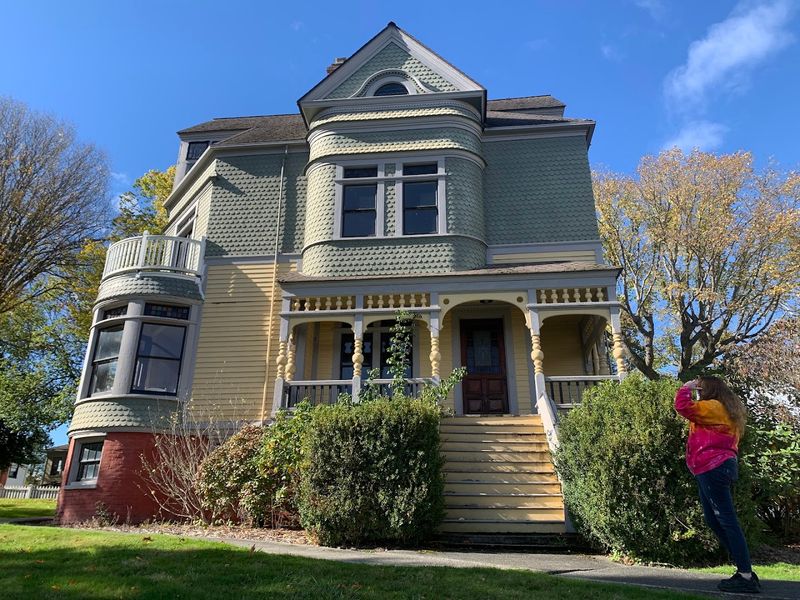
Walking these streets feels like entering a New England village that somehow ended up on Hood Canal’s shore. Port Gamble was built by lumber company owners from Maine, and they recreated the architecture of their hometown with such detail that the entire village became a living museum.
Victorian homes, a classic general store, and a historic church line tidy streets where lumber workers once lived. The museum tells stories of the mill that sustained this community for more than 150 years.
Waterfront views add natural beauty to the historical setting, and the compact layout makes everything easily walkable.
Unlike single historic buildings, the whole town serves as the attraction here. Browse the shops, read historical markers, and imagine life in a company town where the mill whistle dictated everyone’s schedule.
The village rewards slow wandering because every storefront and porch seems to hold another piece of the company-town story.
Its polished charm makes the history easy to enjoy, but the mill roots give it real depth. It is one of Washington’s rare places where an entire community feels preserved, not just a single landmark.
7. Fort Okanogan Interpretive Center, Brewster
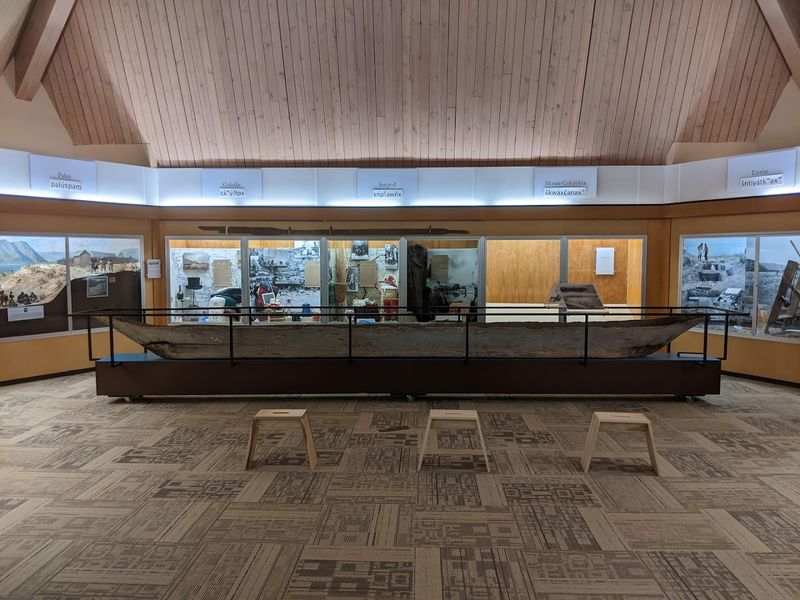
Perched above the Columbia River where traders once exchanged furs for goods, this interpretive center preserves stories of the Okanogan people and the earliest commercial ventures in the region.
Fort Okanogan began as a fur trading post in 1811, making it one of Washington’s oldest European-American settlements.
The center’s exhibits explain how this location connected indigenous trade networks with global commerce, forever changing life in the interior Northwest. Displays honor the Okanogan people’s history and their relationship with this landscape long before traders arrived.
The bluff location provides sweeping river views that help visitors understand why this spot mattered strategically.
Summer brings the best visiting conditions, with full access to outdoor interpretive areas. The remote location means fewer visitors, giving you space to absorb the layered history this place holds.
8. Claquato Church, Chehalis
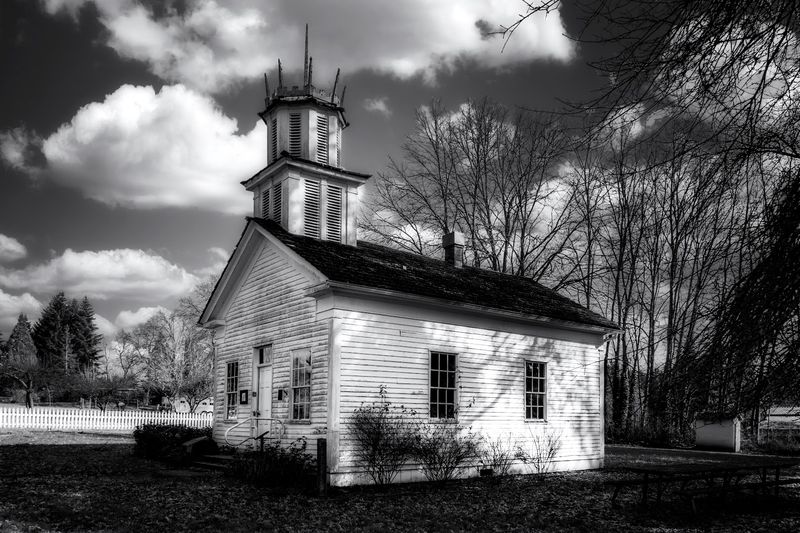
White paint gleams on boards that were nailed together before the Civil War began, making this 1858 structure one of Washington’s oldest surviving churches.
Claquato Church served a community that has long since faded, leaving only this building and the cemetery beside it as reminders of early settlement.
The simple architecture reflects frontier practicality, with none of the elaborate details that would mark later church construction. Historical markers explain Claquato’s brief prominence and why the town disappeared while nearby Chehalis grew.
The peaceful cemetery holds pioneers whose names appear in early Washington records.
Public access focuses on exterior viewing and historical interpretation, though special events occasionally open the building. The quiet setting invites reflection on communities that thrived briefly before history moved elsewhere, leaving only these silent witnesses behind.
9. Historic Dungeness Schoolhouse, Sequim
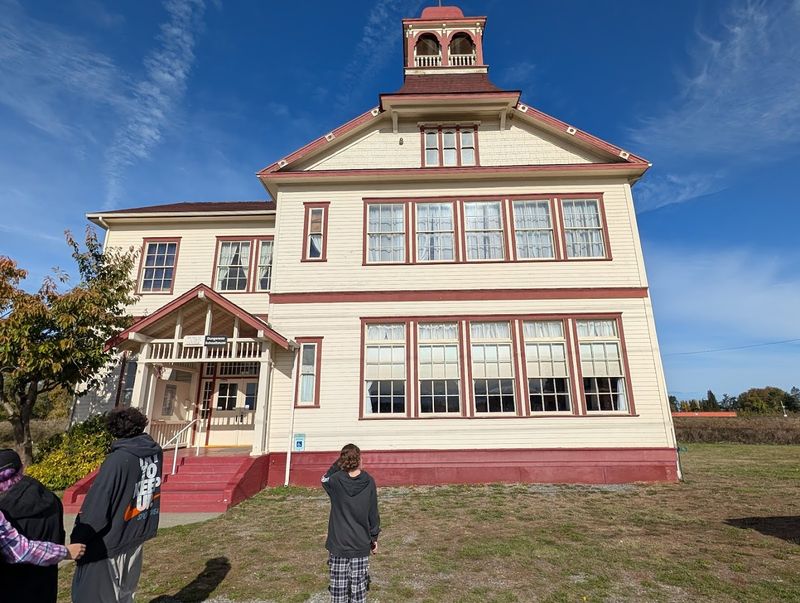
Children’s voices once filled classrooms where local families gathered for education and community events, and this 1892 schoolhouse still stands as a charming piece of Sequim’s past.
The building served students for decades, with an expansion in 1921 showing how the community grew and invested in education.
The schoolhouse architecture shows typical rural design from Washington’s territorial days, when one-room schools dotted the landscape. Its location near Dungeness Bay and the Dungeness River adds scenic appeal to the historical interest.
The building represents countless similar schools that once served farming and fishing communities throughout the region.
This stop works beautifully as part of exploring the Dungeness area’s natural attractions. While you’re visiting for the river or bay, take a moment to appreciate how education happened in rural Washington before consolidated school districts changed everything.
10. Dayton Historic Depot Museum, Dayton
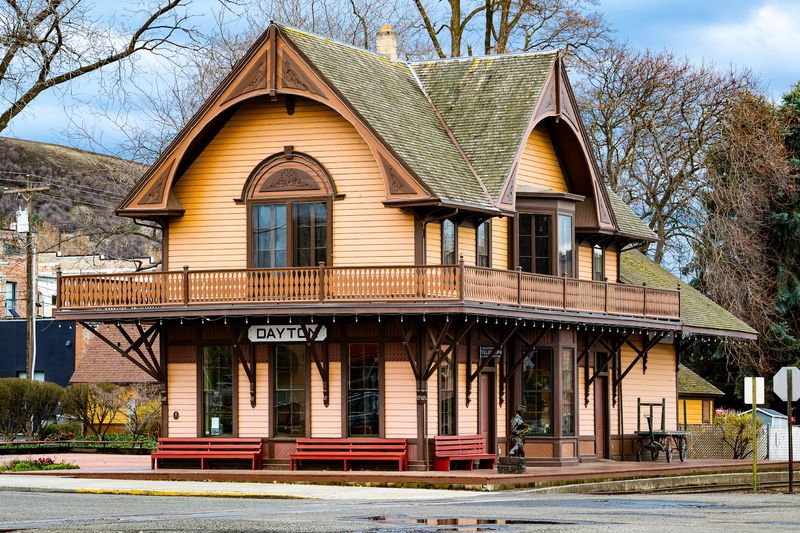
Trains no longer stop at Washington’s oldest surviving passenger depot, but the beautifully restored 1881 building welcomes visitors interested in railroad history and small-town life.
The depot served Dayton for generations, connecting this wheat-country community to distant markets and bringing manufactured goods to local stores.
Restoration work has returned the building to its Victorian-era appearance, with period details that show how railroad stations functioned as community gathering spots. Museum exhibits inside explore local history, agriculture, and the railroad’s crucial role in eastern Washington’s development.
The attention to architectural detail makes the building itself as interesting as the displays.
Seasonal hours mean planning ahead is essential for a visit. The depot sits in downtown Dayton, a town that retains considerable historic charm beyond just the railroad station.
11. Stonehenge Memorial, Maryhill
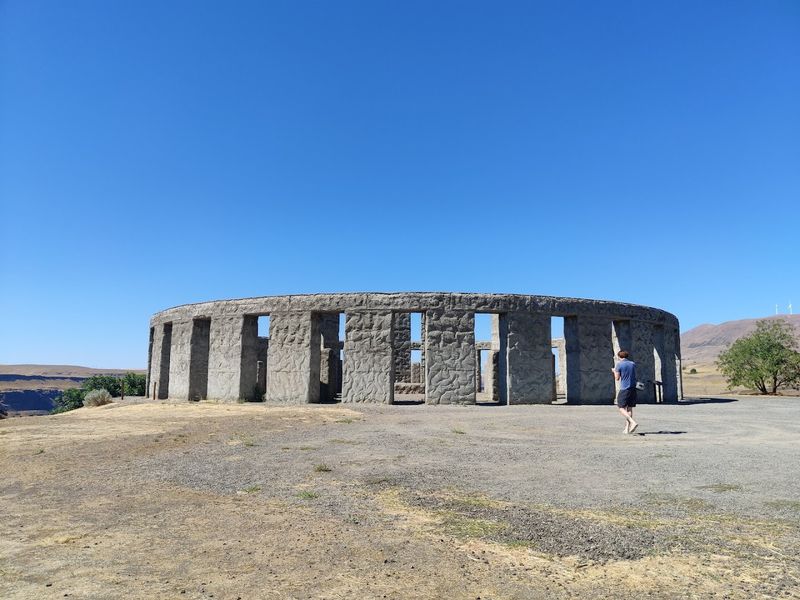
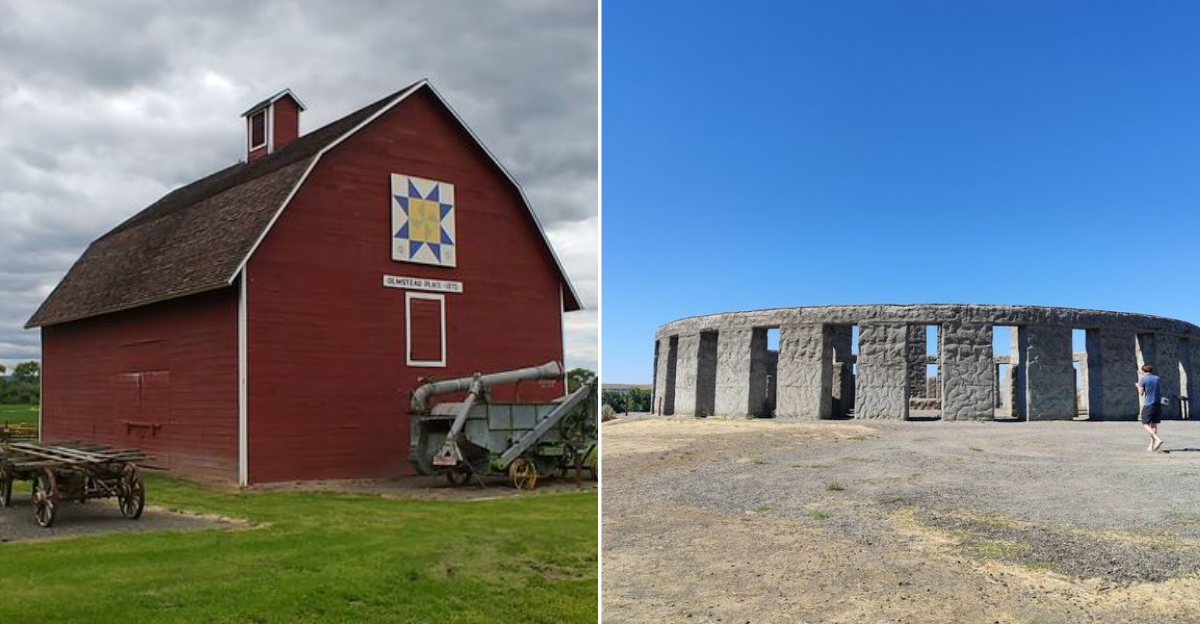
Concrete pillars rise against the sky above the Columbia River, forming a full-scale Stonehenge replica that serves as a solemn memorial to fallen soldiers.
Built by entrepreneur Sam Hill, this monument reflects early 20th-century ideas about ancient Britain and honors those who died in World War I.
The memorial stands complete, unlike England’s ruined original, and its dramatic gorge location adds powerful natural beauty to the commemorative purpose. Interpretive signs explain Hill’s vision and the names of local servicemembers remembered here.
The site remains open daily from dawn to dusk with free admission, making it accessible for travelers exploring the Columbia Gorge.
Few monuments combine ancient inspiration, modern construction, and natural grandeur quite like this one. The combination of history, remembrance, and stunning views creates an unforgettable stop along Washington’s scenic highways.
The quiet setting encourages visitors to slow down rather than treat it as a quick photo stop. Looking out over the river, the memorial feels both unusual and deeply respectful.
12. Olmstead Place State Park, Ellensburg
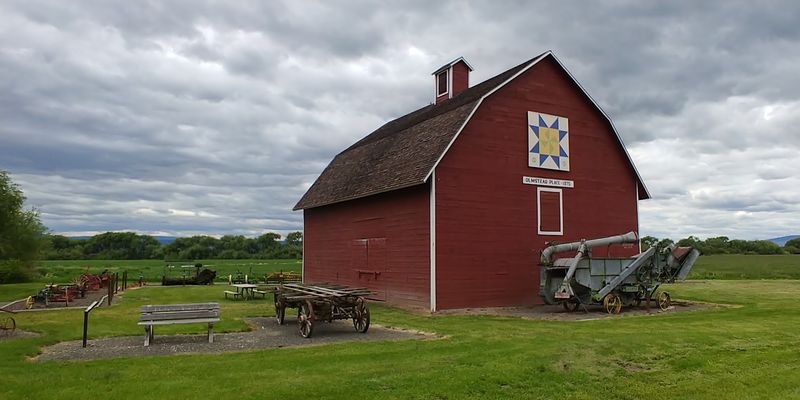
Step into a pioneer family’s life frozen in time at this 217-acre working farmstead that began in 1875 when the Olmstead family filed their homestead claim.
The original log cabin, red dairy barn, and vintage farm equipment stand exactly where they were placed over a century ago, offering an authentic glimpse into early agricultural life in the Kittitas Valley.
Walking through the smoke-scented cabin or watching demonstrations of historic farming techniques reveals the grit required to transform raw frontier land into productive farms.
Four generations of Olmsteads farmed here, representing thousands of Washington pioneers who shaped the state’s agricultural heritage.
The farmstead also shows how daily survival depended on steady hands, shared labor, and a deep understanding of the land. Every weathered board and handmade tool adds texture to the story, making the place feel less like a display and more like a family memory.
Seasonal programs and living-history events help bring the old routines back to life for modern visitors. The surrounding fields give the site a quiet openness that makes it easy to imagine wagons, livestock, and long workdays under the valley sky.
It is the kind of stop that turns a simple farm visit into a close look at Washington’s pioneer roots.