
This Eerie Two-Mile Trail Leads To A Forgotten Town In Washington
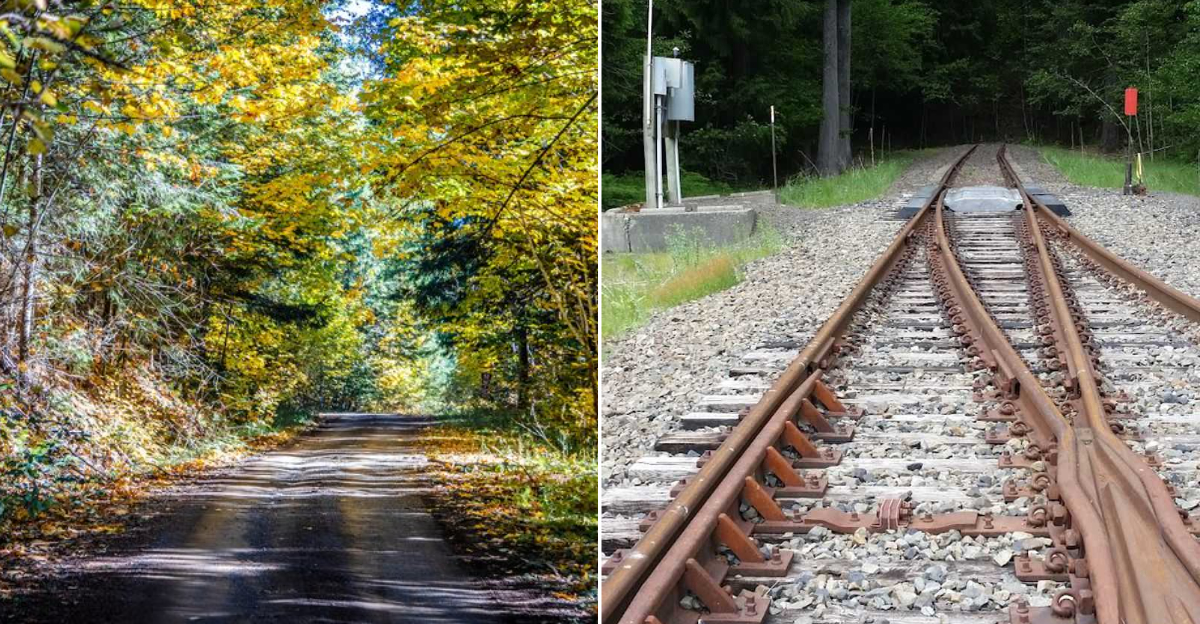
Most people spend their weekends brunching or catching up on laundry, but I prefer to spend mine getting lost in the wilderness while aggressively swatting at mosquitoes. Today’s mission was simple: find the remnants of a vanished community before the forest swallows them whole.
There’s something undeniably funny about trekking through the mud, squinting at gnarly roots, and pretending I know exactly what I’m doing as a wilderness explorer.
I’ve trekked across many hidden gems, but the eerie, two-mile path I discovered today topped them all. It’s a strange feeling knowing that beneath the canopy of Washington, the echoes of a once-thriving town are still playing hide-and-seek with anyone brave enough to venture off the beaten path.
This place once buzzed with nearly 1,000 residents, a train depot, a hotel, and a school, all built around the Northern Pacific Railway’s route over Stampede Pass.
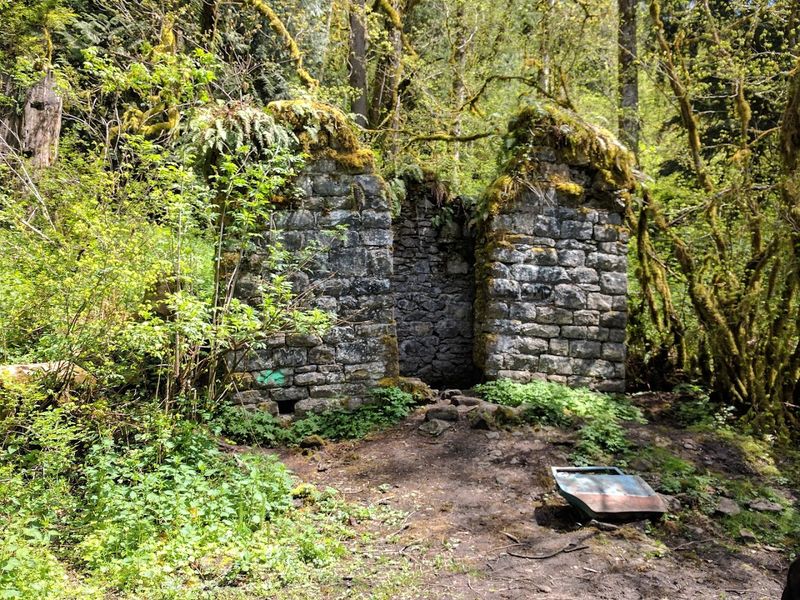
Today, the buildings are mostly gone, replaced by mossy foundations, scattered rail ties, and a silence that feels like it has its own weight.
The Origins Of A Railway Town
Back in 1892, a modest logging camp called “Deans” was carved out of the dense forests near Stampede Pass in King County, Washington. It did not stay small for long.
The Northern Pacific Railway had big plans for this stretch of mountain terrain, and the camp quickly transformed into a full company town supporting one of the most important rail routes in the Pacific Northwest.
The town was eventually renamed Lester, in honor of telegraph operator Lester Hansaker, whose name stuck long after the telegraph lines went quiet. At its peak, Lester had a population of roughly 1,000 people living and working within its boundaries.
It had a train depot, a hotel, a school, and all the everyday infrastructure that made it feel like a real, thriving community. What makes this origin story so fascinating is how quickly a place can rise from nothing.
A few determined workers, a railway company with ambition, and a mountain pass created an entire world that most people today have never heard of. That swift rise makes Lester feel less like a forgotten dot on a map and more like a vanished chapter of Washington rail history.
How The Town Slowly Faded Away
Not every town fades gracefully, and Lester’s story is proof of that. The first serious blow came in 1902, when forest fires swept through the region and damaged much of what the community had built. Recovery was possible, but the bigger threat was quietly arriving in the form of progress itself.
As steam locomotives gave way to diesel engines, the need for regular stops along the Stampede Pass route dropped sharply. Lester had existed largely to service those steam engines, and when the industry no longer needed that service, the economic heart of the town stopped beating.
Families packed up and moved on, businesses closed, and the buildings began their slow surrender to the surrounding forest.
The shift from steam to diesel might sound like a dry technical detail, but for the people of Lester it meant the end of everything they had built. It is a reminder that even thriving communities can be undone by changes happening far outside their borders, in boardrooms and engineering labs they never visited.
By the time the trains no longer needed Lester, the town had already begun losing the reason it existed.
Tacoma Water And The Road Closure
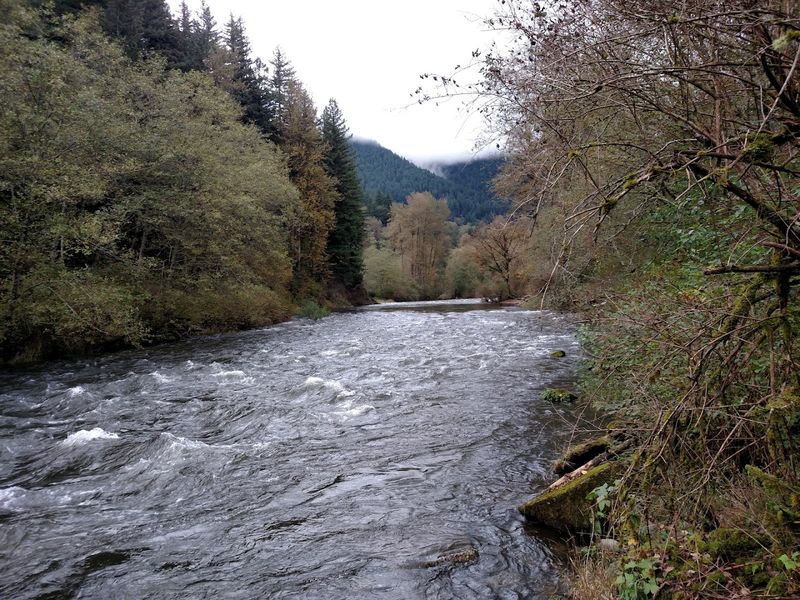
By the 1960s, what remained of Lester was not just a ghost town, it was sitting on land that the city of Tacoma had a very specific interest in protecting. Tacoma Water began acquiring property in the area to safeguard the Green River Watershed, which serves as a primary source of drinking water for the city.
That mission eventually led to something that sealed Lester’s fate as a forgotten place: the closure of the only road leading in. When Tacoma Water restricted vehicle access to that road, Lester became effectively invisible to casual passersby.
You could not stumble upon it by accident anymore. Reaching it required intention, planning, and a willingness to hike two miles on an unmaintained trail. For most people, that was too much effort for a place they had never heard of.
For curious explorers, though, the road closure created something almost magical: a destination that rewards only the people willing to earn it.
The watershed protection that locked Lester away also preserved whatever remained, keeping it from becoming a roadside curiosity stripped bare by easy access. In that way, Lester became harder to reach, but also harder to erase completely.
The Last Resident Of Lester
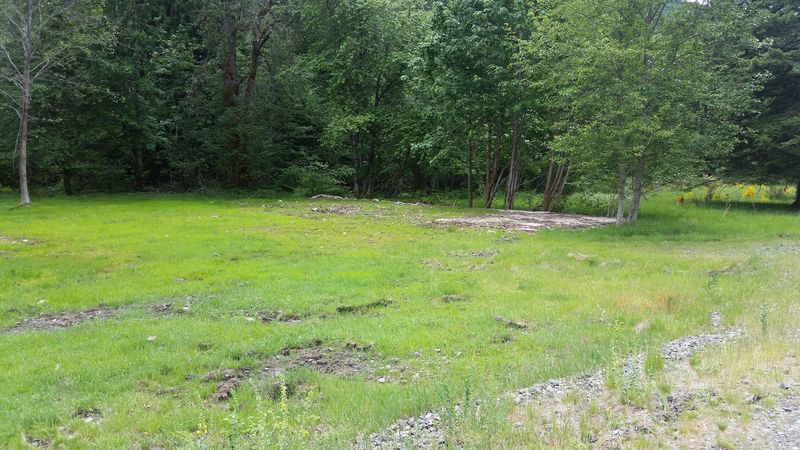
Every ghost town has a last chapter, and in Lester’s case, that chapter belonged to Gertrude Murphy. A schoolteacher by profession, Murphy stayed in Lester long after everyone else had left, living in a town that had essentially dissolved around her.
She remained there until her passing in 2002 at the age of 99, which means she witnessed nearly a full century of Lester’s entire existence. There is something quietly remarkable about that kind of devotion to a place.
While the railway moved on, the businesses closed, and neighbors departed one by one, Murphy held her ground. Her presence gave Lester a human heartbeat for decades longer than it might otherwise have had.
When she was gone, the town truly became a ghost. Tacoma Water moved forward with demolishing most of the remaining freestanding structures in 2017, citing public safety and watershed security.
What Gertrude Murphy’s long life had held together in spirit, the machinery of practical necessity eventually cleared away, leaving foundations and memories where a school and a community once stood.
Her story makes Lester feel less like an abandoned place and more like a town that had one final witness.
What Remains On The Ground Today
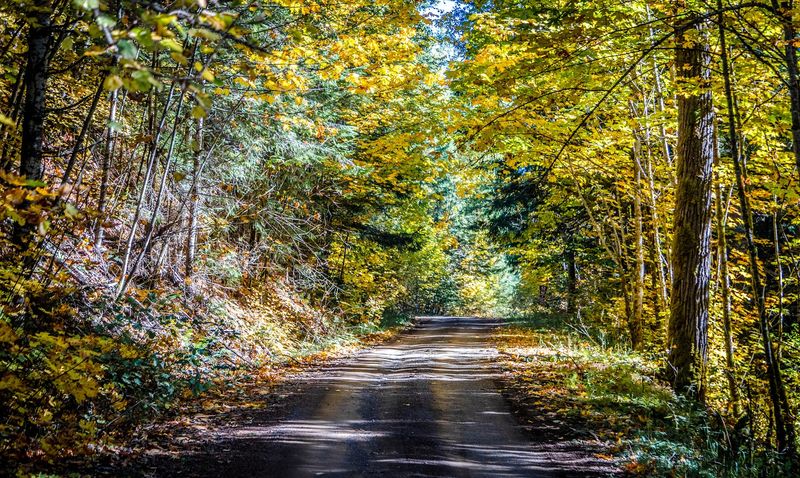
Walking into what used to be Lester today feels a bit like reading a book with most of the pages torn out. The buildings are gone, but the foundations remain, low concrete outlines pressing up through the soil and moss like sentences waiting to be finished.
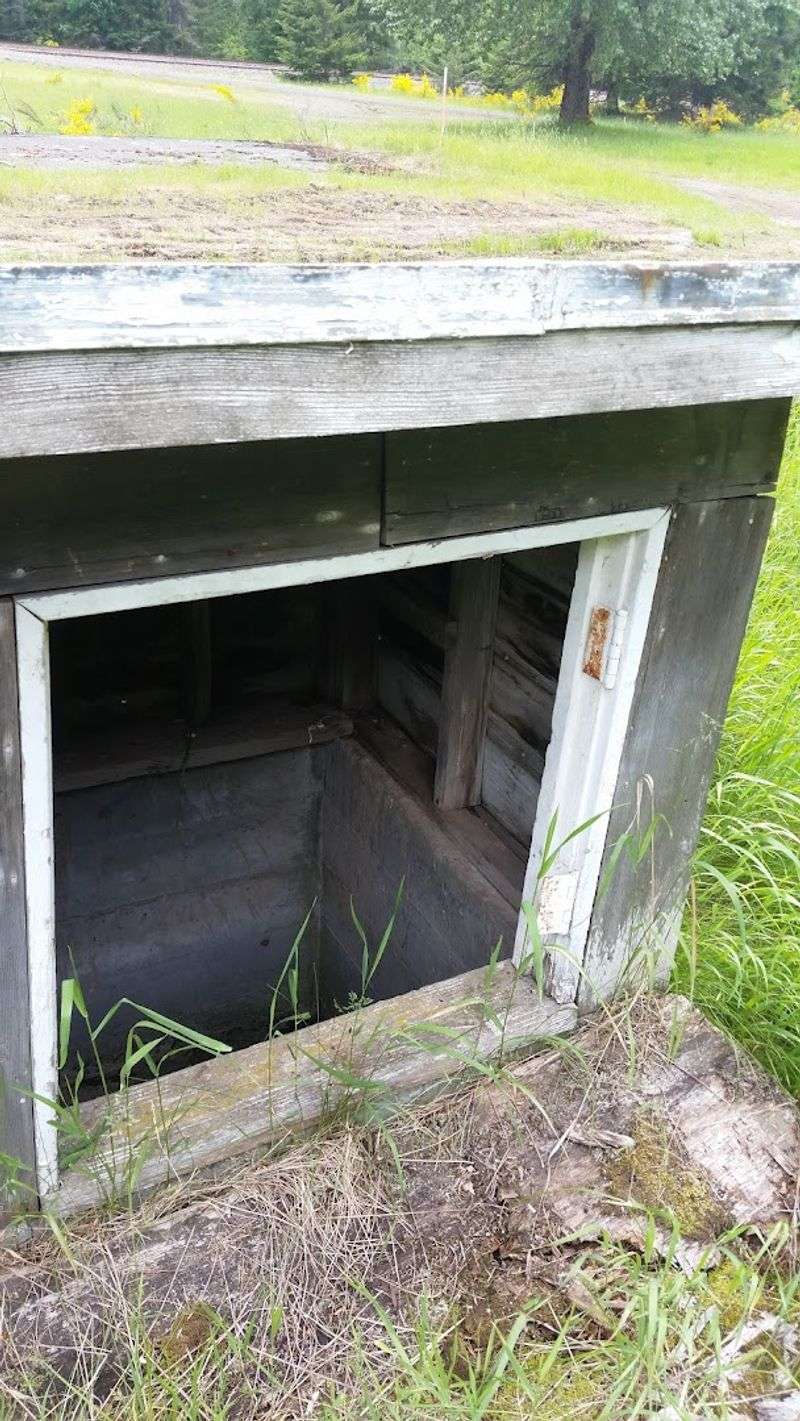
Scattered among the trees you can also find old rail ties, a few lengths of track, and a small switching building that somehow survived the 2017 demolition.
Each foundation tells a story without words. Stand in the right spot and you can almost map out where the hotel stood, where families gathered, where children ran between buildings on their way to school.
The forest has moved aggressively to reclaim the space, but it has not completely erased the geometry of what was once a structured, purposeful community.
Photographers and history enthusiasts tend to find Lester especially rewarding because there is so much texture here: rusted metal, weathered wood, lichen-covered stone, and the constant backdrop of the Cascade Mountains pressing in from every direction.
The remains are subtle, but they are real, and they are worth the walk.
How To Get There And What To Expect On The Trail
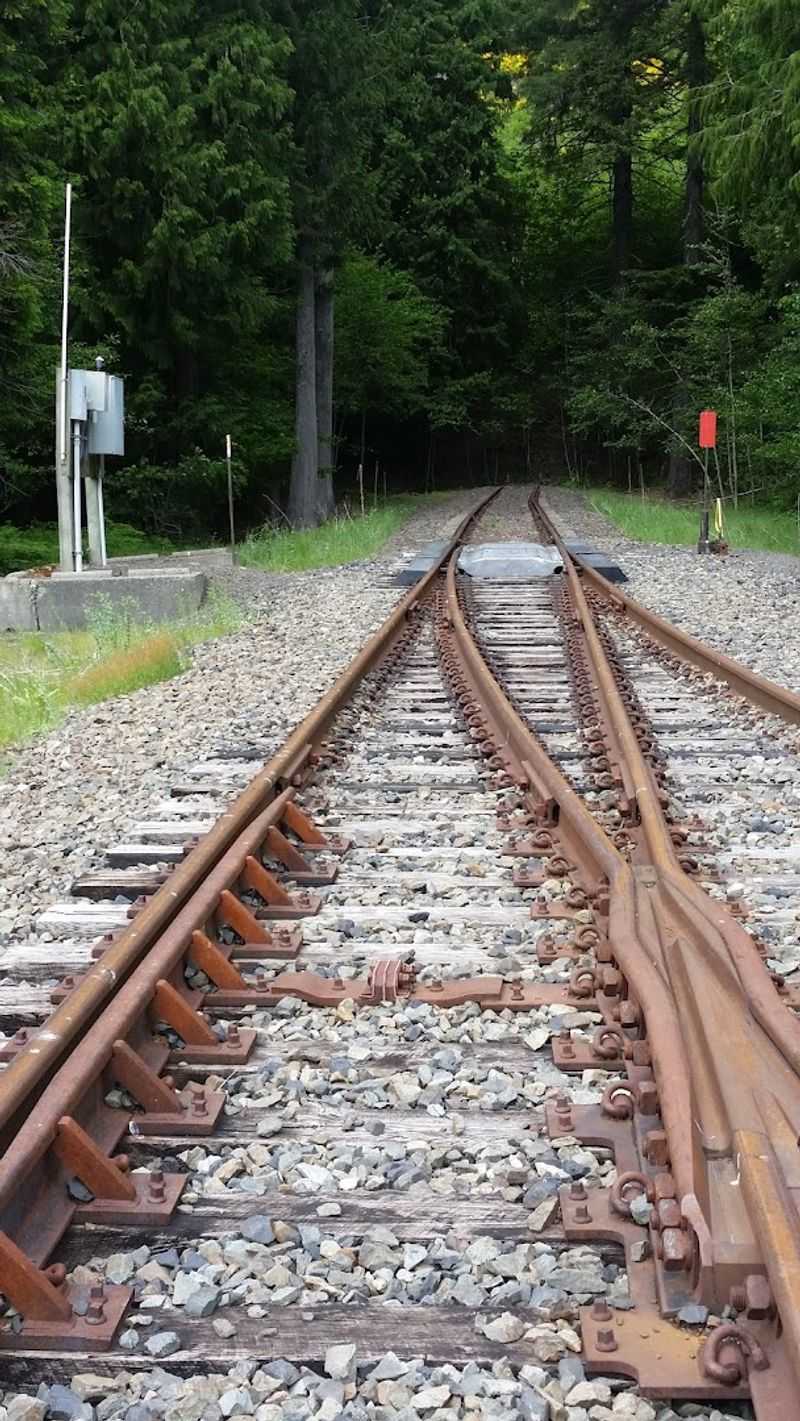
Getting to Lester takes a little planning, but the route is straightforward once you know it. Take I-90 to Exit 62 near Snoqualmie Pass and then follow a gravel forest service road for approximately 15 miles over Stampede Pass.
You will eventually reach a bridge where vehicle access is restricted, and that is where the hike begins. From the bridge, the trail to the former town site is roughly two miles long and generally flat, which makes it accessible for most hikers.
That said, expect rocky patches, washboard sections, and a surface that has not been maintained during winter months. Sturdy shoes are a smarter choice than casual sneakers, especially if there has been recent rain.
Also worth noting: access from the western side is blocked by Tacoma Water, so the eastern approach off I-90 is your only option.
The hike itself is peaceful and atmospheric, winding through second-growth forest with occasional glimpses of the surrounding Cascade terrain. Plan for a half-day trip, bring water and a snack, and give yourself time to wander the site slowly rather than rushing through it.
Why This Place Is Worth The Hike
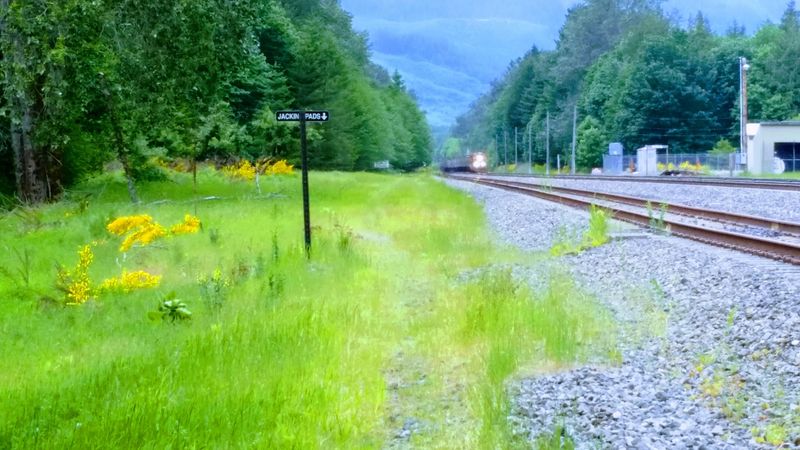
Some travel experiences are loud: big views, busy streets, crowded overlooks with photo lines. Lester offers something in the opposite direction.
The reward here is quieter, more personal, and honestly more memorable for exactly that reason. You have to earn this one, and that effort changes how you receive it.
Standing among the foundations of a town that once held 1,000 people, knowing that a schoolteacher lived here alone for decades after everyone else left, knowing that the forest has been slowly and patiently taking it all back for over a century, creates a feeling that is hard to manufacture any other way.
History feels more tangible when you are standing in the middle of it rather than reading about it on a sign. Lester is located in King County, Washington, in the Cascade Mountains near Stampede Pass, and it does not advertise itself.
There are no gift shops, no guided tours, no entrance fees. Just a two-mile trail, a set of forgotten foundations, and the kind of stillness that reminds you how quickly a place, and a way of life, can disappear.