
This Quiet North Dakota Preserve Lets You Spot Bison, Elk, Prairie Dogs, And Deer In One Place
Have you ever felt that sudden, childlike excitement when you spot a wild animal and forget, even for a second, that the world is complicated? That’s exactly the feeling this quiet North Dakota preserve brings back without even trying.
Here, bison move like living landmarks across the prairie, elk appear in the distance as if they’re part of the horizon itself, and prairie dogs pop in and out of their little towns like curious neighbors checking who’s visiting.
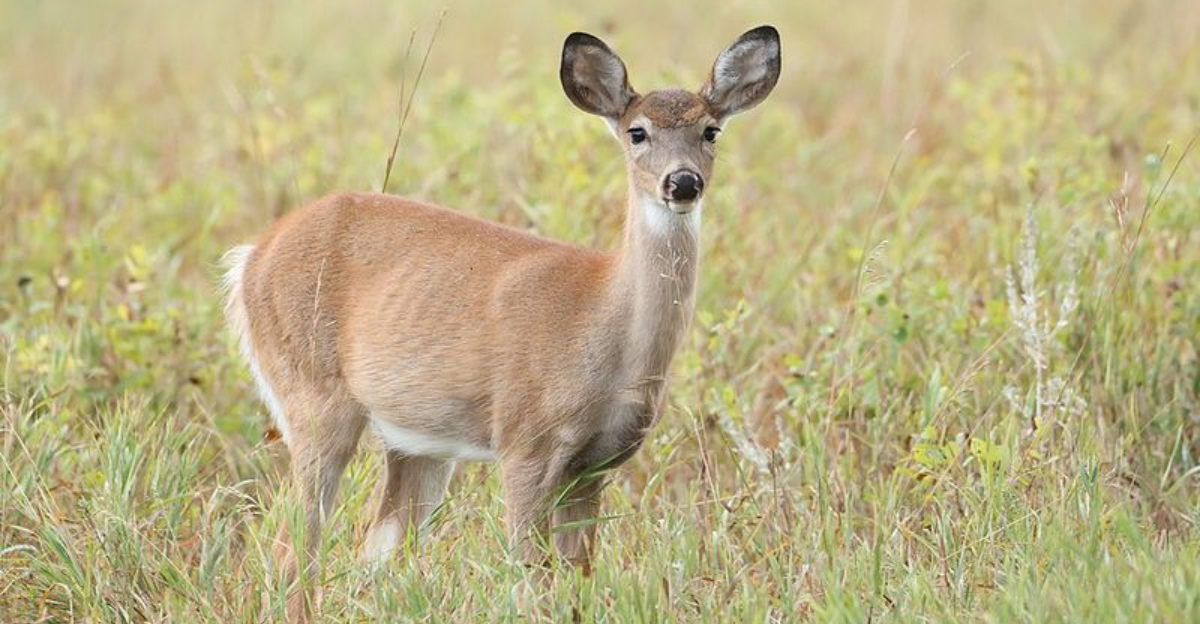
Deer drift through the grass with a calm that feels almost protective of the place, as if they know this freedom is something fragile and worth guarding.
What I felt here was simple, but rare. Wonder without noise. The kind you usually only have as a child, when seeing animals up close feels like discovering magic that actually exists.
And somehow, that feeling doesn’t fade here. It stays with you, quiet and steady, just like the land itself.
The Living Icons Of The Prairie
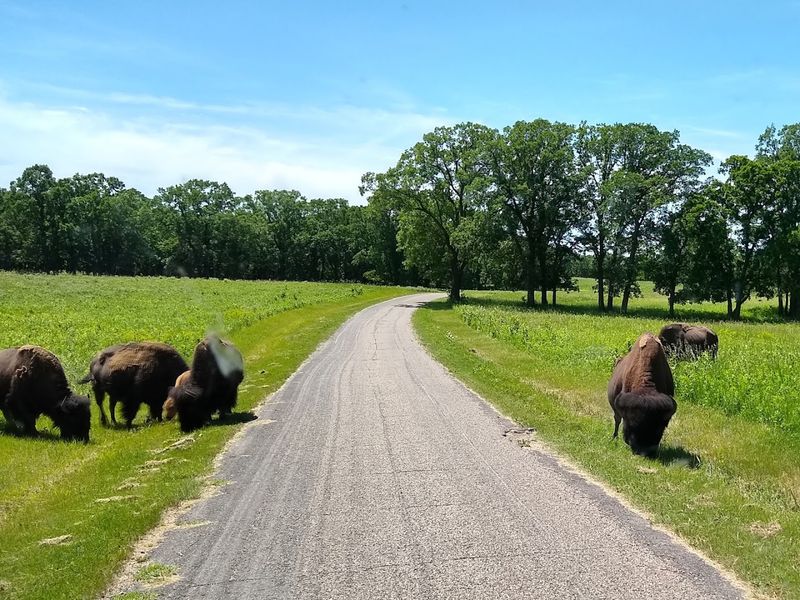
Nothing prepares you for the moment a bison steps out from the tree line and just stares at you. These animals are enormous, calm, and completely unbothered by your presence, which somehow makes the encounter even more thrilling.
White Horse Hill was actually established in 1914 specifically to help save bison and elk from disappearing forever. That conservation mission is still very much alive today.
The bison population is carefully managed to keep the herd healthy and the habitat balanced, so every animal you see is thriving in a well-maintained ecosystem.
The 4-mile self-guided auto tour route takes you right through the bison enclosure, and visitors are required to stay in their vehicles for safety. That rule makes total sense once you see how close these animals can get to your car.
Spotting a bison calf in early summer is one of those moments that genuinely stops time. The preserve is open daily from 8 AM to sunset, giving you plenty of golden-hour opportunities to catch these magnificent creatures at their most photogenic.
Bison watching at White Horse Hill is not just a checkbox on a road trip itinerary. It is the kind of experience that reminds you how powerful and beautiful the natural world truly is.
The 4-Mile Auto Tour Route You Will Want To Drive Twice
Honestly, the auto tour route at White Horse Hill is the kind of drive that makes you forget you even had a destination.
Located at 2107 Park Drive in St. Michael, North Dakota, the preserve opens its gates at 8 AM daily, and getting there early gives you the best chance of catching wildlife out in the open before the midday heat sets in.
The 4-mile loop winds through a stunning mix of oak and aspen woodland, mixed-grass prairie, and wetland edges.
Around every bend, there is something new to see. Bison grazing near the marsh, a white-tailed deer disappearing into the tree line, or a red fox trotting across the road like it owns the place.
The route runs annually from the second Saturday in May through mid-October, so timing your visit within that window is worth planning ahead.
Because the route passes through the large animal enclosure, staying in your vehicle is a firm rule, and it is one that actually enhances the experience. There is something uniquely intimate about watching a bison cross the road just a few feet from your windshield.
Drive it once for the wildlife, then loop back around just to soak in the scenery all over again.
The Elusive Giants Worth Waiting For
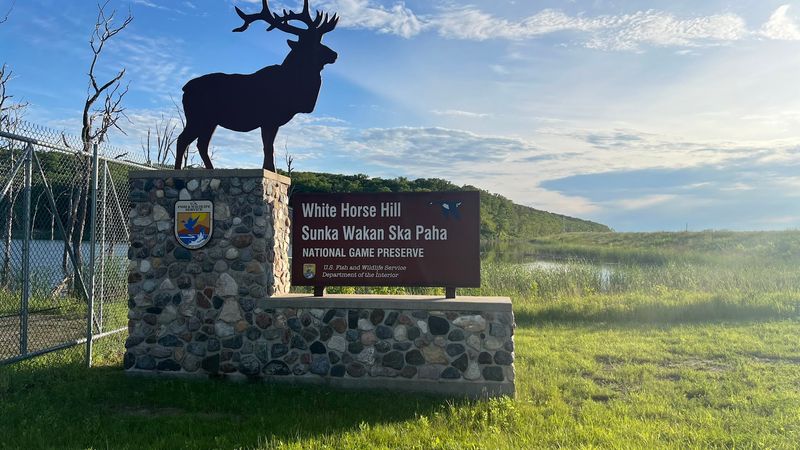
Spotting an elk at White Horse Hill feels like winning a small lottery. These animals are naturally cautious, and their tendency to blend into the woodland edges makes every sighting feel genuinely earned.
When you do catch a glimpse, especially a large bull with a full rack, it is absolutely breathtaking.
The preserve has managed elk alongside bison since its early days as a big game refuge in 1914. Today, the population is kept intentionally small, typically under 20 animals, to protect the habitat and ensure each individual animal stays healthy.
That careful management is exactly why the ecosystem here looks so lush and undisturbed.
Elk tend to be most active during early morning and late evening hours, so timing your visit around sunrise or the hour before sunset dramatically improves your chances.
The woodland areas near the auto tour route are prime elk territory, and patience really does pay off here. Bring binoculars and keep the noise level low.
Elk are sensitive to sound and movement, so a quiet approach goes a long way. Seeing one of these animals standing silently among the oak trees is the kind of wildlife moment that gets permanently burned into your memory.
The Most Entertaining Neighborhood In North Dakota
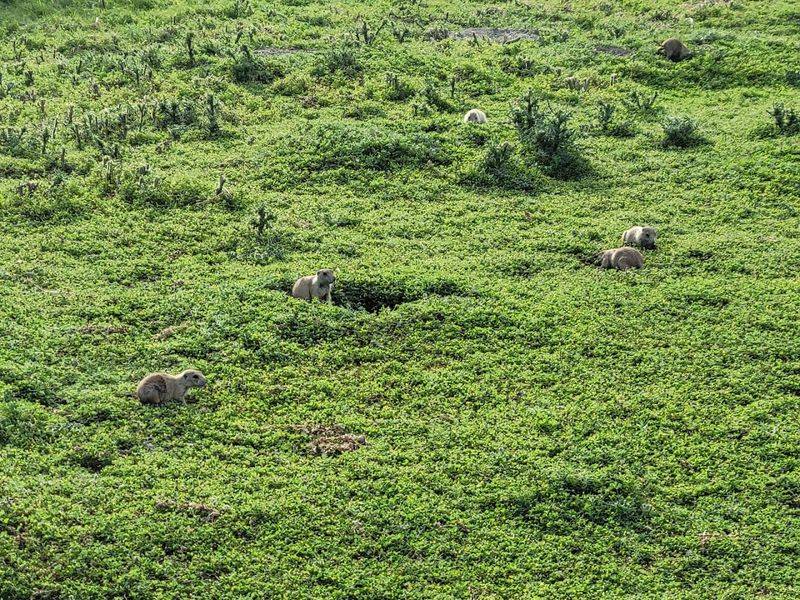
If bison are the headliners at White Horse Hill, prairie dogs are absolutely the opening act that steals the show.
These tiny, barrel-shaped creatures have their own dedicated town within the preserve, complete with a network of burrows, sentry posts, and what can only be described as a very busy social calendar.
Black-tailed prairie dogs are highly communicative animals.
They use a series of barks and chirps to warn each other about approaching visitors, which means the moment you walk near their colony, the whole neighborhood goes on alert.
Watching them pop up, freeze, bark furiously, and then disappear underground is genuinely one of the funniest wildlife experiences you can have for free.
The prairie dog area is accessible from the visitor center, and you can spend a surprising amount of time just watching the activity unfold.
Every few minutes something new happens: a standoff between two residents, a youngster exploring too far from the burrow, or a sudden mass retreat underground for no obvious reason.
Prairie dogs are also an important part of the ecosystem here, providing habitat for other animals and maintaining the grassland structure. They are small, chaotic, and completely captivating.
You have been warned.
The Graceful Wanderers Of The Woodland Edge
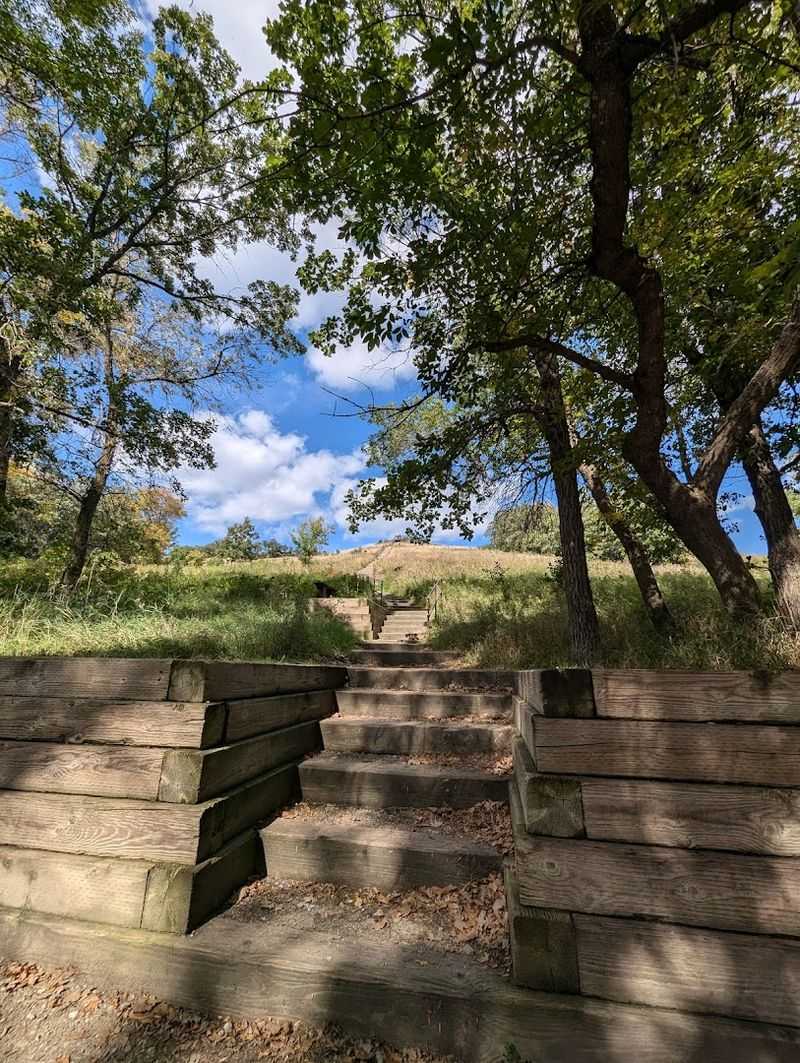
White-tailed deer have a way of appearing exactly when you stop looking for them. One moment the trail is empty, and the next there is a doe standing perfectly still among the oak trees, watching you with enormous dark eyes.
That quiet, almost theatrical reveal is part of what makes seeing deer at White Horse Hill so consistently satisfying.
The preserve’s mix of woodland, prairie, and wetland habitat is tailor-made for white-tailed deer. They use the forest for cover, the prairie edges for grazing, and the wetlands as water sources throughout the seasons.
Because the ecosystem is so well maintained, the deer here look healthy and calm rather than skittish or stressed.
Deer are most visible during the early morning and late afternoon hours, especially along the hiking trails that wind through the woodland sections of the preserve.
The trails cover more than 3 miles of varied terrain, giving you a real chance to move quietly through deer habitat rather than just observing from a vehicle. Wearing neutral colors and moving slowly makes a noticeable difference in how close deer will let you get before bounding away.
Watching a white-tailed deer disappear gracefully into the trees is one of those simple, beautiful moments that needs no filter.
Over 3 Miles Of Hiking Trails Through Prairie, Woodland, And Wetlands
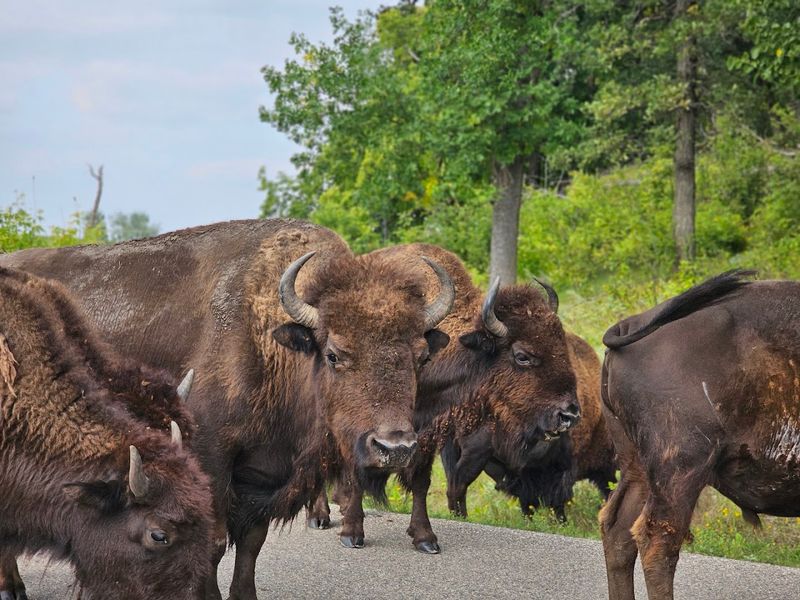
The hiking at White Horse Hill is genuinely underrated. Most people come for the auto tour and leave without realizing that the trails offer an entirely different and arguably richer way to experience the preserve.
More than 3 miles of designated paths wind through three distinct habitat types: mixed-grass prairie, native deciduous forest, and wetland edges.
The woodland section is particularly stunning. Nearly 700 acres of native forest featuring oak, ash, basswood, and aspen create a canopy that feels more like Minnesota than North Dakota, which is a comparison that visitors from the region make frequently.
The light filtering through those leaves on a clear morning is genuinely gorgeous. Some trails run close enough to the lakeshore that you get glimpses of Devils Lake through the trees.
All trails begin near the visitor center, and hiking clockwise is generally recommended for the best flow and viewpoints.
There is also a short accessible trail roughly a quarter mile long with interpretive signs, making the preserve welcoming to a wide range of visitors.
Dogs are welcome on the trails as long as they are kept on a leash. Just remember that foot travel is not permitted inside the large animal enclosure, so the hiking and auto tour experiences are intentionally kept separate.
Both are worth doing.
193 Steps To A View That Earns Every One
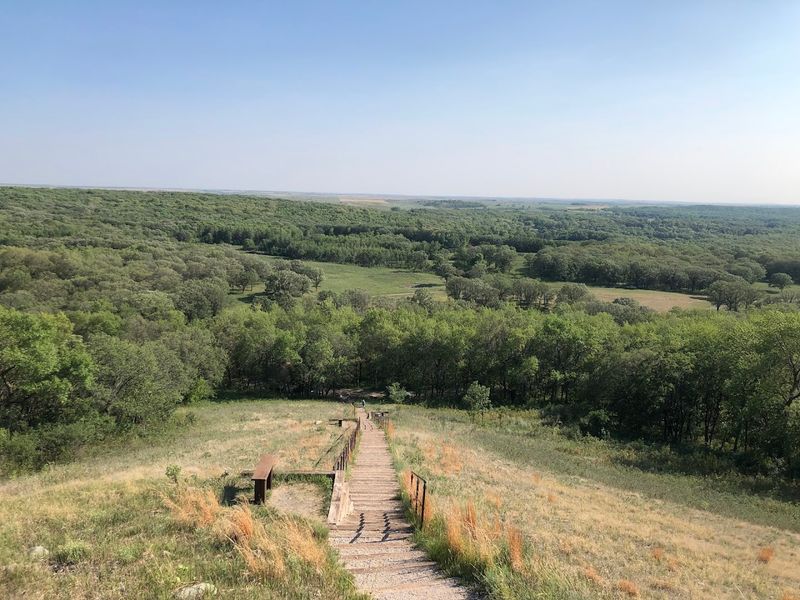
Let us be honest: 193 steps sounds like a lot until you reach the top and see what is waiting for you.
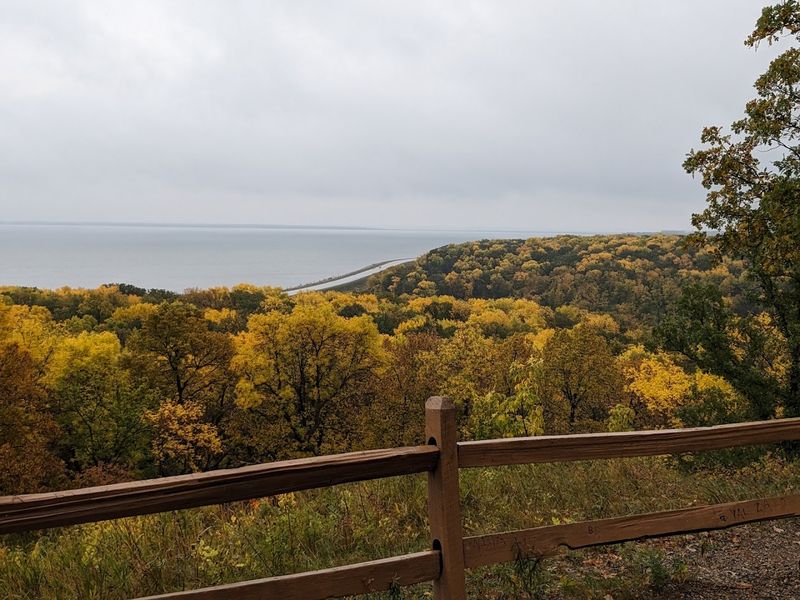
The overlook platform at White Horse Hill delivers one of the most sweeping views in all of eastern North Dakota, with Lake stretching out in the distance and a patchwork of forest, prairie, and wetland rolling out in every direction below.
There is a working telescope at the top, which is a genuinely thoughtful touch. You can scan the meadows and woodland edges for wildlife activity from above, giving you a bird’s-eye perspective that completely changes how you read the landscape.
Spotting a bison herd from elevation hits differently than seeing one up close on the auto tour. Both experiences are remarkable in completely different ways.
The climb itself follows a well-maintained staircase, and while it is a workout, it is absolutely manageable. The overlook is accessible year-round during preserve hours, which run from 8 AM to sunset daily.
Parking near the overlook is limited, so arriving early or being patient pays off.
Standing at the top with the wind moving through the trees below and Devils Lake glittering in the distance, you realize this view is one of North Dakota’s best-kept secrets.
A Birder’s Quiet Paradise
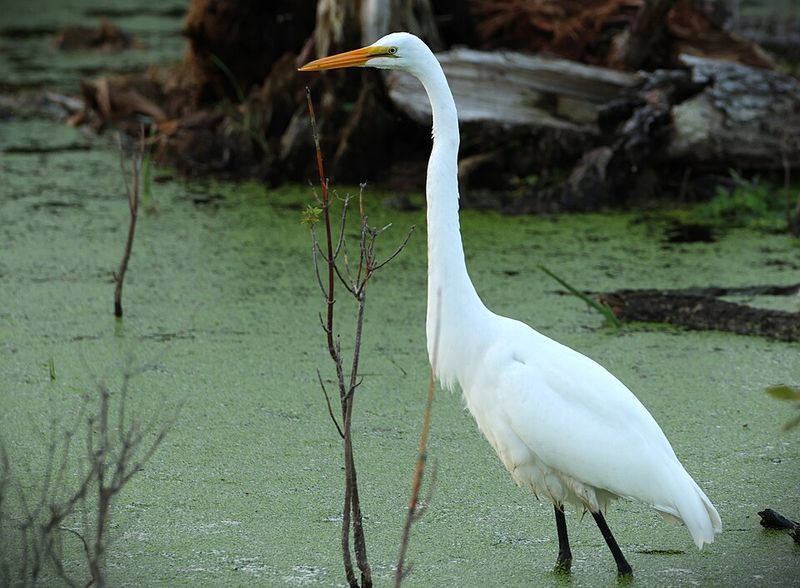
Birders, this one is for you. White Horse Hill National Game Preserve has recorded more than 214 bird species across its varied habitats, making it one of the most rewarding spots for bird observation in the entire region.
The combination of wetlands, prairie, and forest creates nesting and feeding opportunities for an extraordinary range of species.
Bald eagles are among the most exciting sightings here, and they appear with enough regularity to make every visit feel like a real possibility.
Waterfowl flock to the wetland areas, which provide ideal habitat for nesting throughout the warmer months. Songbirds fill the woodland sections with sound from early spring through late summer, creating a layered acoustic experience that is genuinely calming.
The preserve’s wetlands are especially productive for bird watching because they attract species that would not typically be found in the surrounding grassland landscape.
Bringing a good pair of binoculars and a field guide transforms a casual walk into an active and rewarding identification session.
Early morning visits tend to yield the highest bird activity, especially during migration season in spring and fall. With over two hundred species documented here, even experienced birders are likely to add something new to their life list.
White Horse Hill is quietly one of North Dakota’s finest birding destinations, and it deserves far more recognition than it gets.