
This Abandoned South Carolina Fort Was Built For A War That Never Arrived
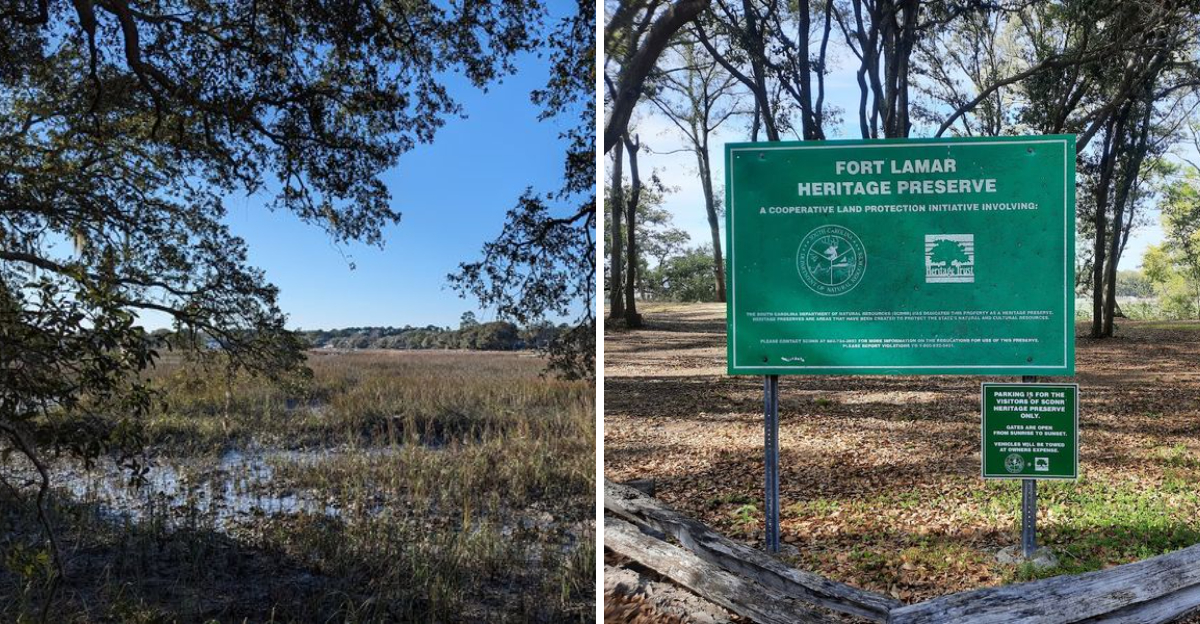
Some of the most fascinating historic sites in South Carolina do not look historic at all.
At first glance, Fort Lamar appears almost ordinary.
Live oaks cast long shadows across the landscape. Marsh grasses sway in the breeze.
Birds call from the surrounding wetlands. The scene feels peaceful enough to belong on a postcard.
That tranquility is deceptive.
Beneath the quiet beauty lies a place where history once unfolded with extraordinary urgency. The earthworks still remain, subtle reminders that this now-serene corner of South Carolina once played a role in a struggle that helped shape the future of the nation.
That contrast is what makes Fort Lamar so compelling.
The setting invites you to relax.
The history demands that you pay attention.
And the more you learn about what happened here, the more remarkable the landscape becomes.
Some places preserve history behind glass.
This one preserves it in the ground beneath your feet.
Constructed In Haste During 1862
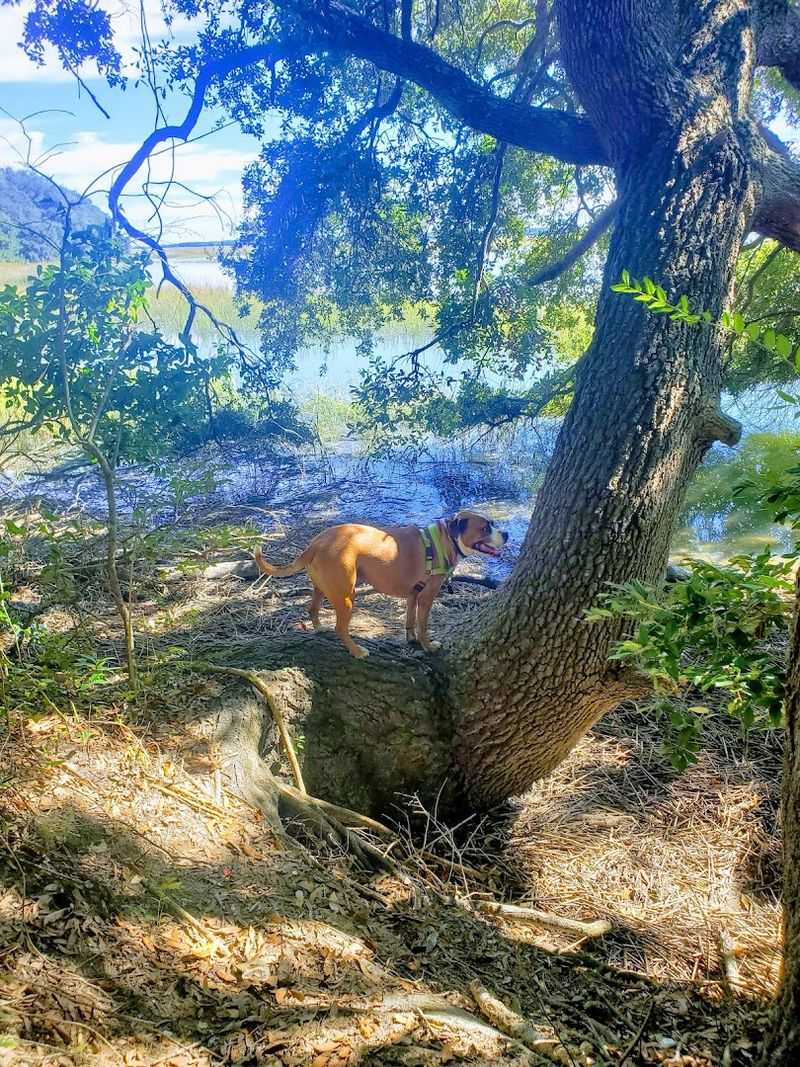
Confederate engineers broke ground on Fort Lamar in early 1862, racing against intelligence reports that Union forces planned to push inland toward Charleston. The design followed a simple pattern common to earthwork forts, with walls built by layering dirt, sand, and whatever materials soldiers could haul to the site.
I walked the perimeter one afternoon and tried to picture crews working in Carolina heat, shoveling and packing earth while officers studied maps and argued over angles of fire. The fort never received the heavy artillery or reinforced positions that its designers originally planned, because events moved faster than construction schedules.
What remains today are the grass covered mounds and depressions that outline where soldiers stood, slept, and watched the marsh for enemy movement. The hasty construction meant the fort relied more on geography and determination than engineering sophistication.
Standing at the highest point of the earthworks, I could see how the builders used the natural landscape to their advantage, positioning the fort to command views of the surrounding waterways and approaches.
Named After A Local Planter Family
The Lamar family owned land in this part of James Island long before the first shovel of dirt turned for the fort, and their name attached itself to the fortification almost by default. Local records show the Lamars as planters who worked the fertile soil and participated in the social and economic life of the Charleston area.
When I first arrived at the preserve, I noticed how the street name and the fort name both carry that family connection, creating a thread between modern suburban life and a landscape shaped by agriculture and conflict. The family likely watched their property transform from farmland into a military position, though historical accounts offer few details about their personal reactions.
What strikes me most is how names persist long after the people who bore them fade from memory. The Lamar name now marks a quiet park where joggers pass and birders scan the marsh, while the family itself has dissolved into genealogical records and faint mentions in county histories.
That layering of time and identity gives the place an extra dimension beyond the military story.
The Battle Of Secessionville Unfolded Here
June 16, 1862 arrived hot and tense, with Union forces moving through the predawn darkness toward the Confederate positions at Fort Lamar. The engagement that followed became known as the Battle of Secessionville, named for the small community nearby, and it turned into one of the few significant land battles fought in South Carolina during the war.
I stood on the trail and read the faded information panels that describe how 3,500 Union troops attacked a Confederate force of roughly 1,250, expecting to overwhelm the defenders and open a path to Charleston. The math should have favored the attackers, but the terrain, the fortifications, and the determination of the defenders shifted the outcome.
Walking the same ground where soldiers charged and fell gives me an odd feeling, part reverence and part disbelief that such violence unfolded in a place now so peaceful. The battle lasted only a few hours, but it convinced Union commanders to abandon their plans for a direct assault on Charleston from this direction.
That decision shaped the rest of the war in the region.
Outnumbered Defenders Held Their Ground
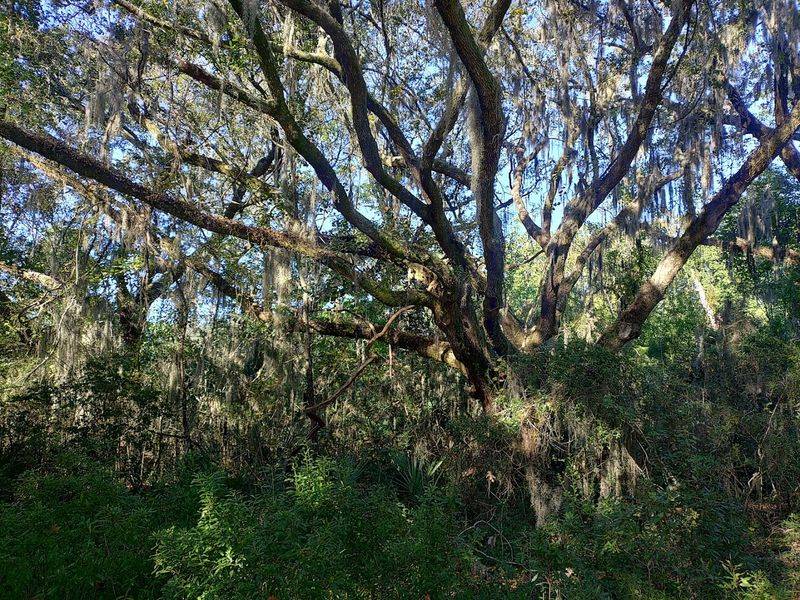
The numbers tell a story that still surprises historians: roughly 1,250 Confederate soldiers held off an attacking force nearly three times their size. I tried to imagine the psychological weight of watching that many enemy troops advance toward your position, knowing you were outmanned and hoping your earthworks and firepower would be enough.
The defenders benefited from the fort’s design, which concentrated their firepower and forced the Union troops to attack across open ground and through difficult terrain. Contemporary accounts describe intense musket fire and hand to hand fighting at certain points along the line, with both sides suffering casualties in the confusion and smoke.
What impresses me most is the discipline required to hold a position when retreat must have seemed like a reasonable option. The Confederate force included regular army units and local militia, all fighting to protect Charleston and the surrounding communities from occupation.
By the time the Union forces withdrew, the defenders had proven that earthwork fortifications and determined soldiers could overcome numerical disadvantages, at least for one morning in June.
The Expected Siege Never Materialized
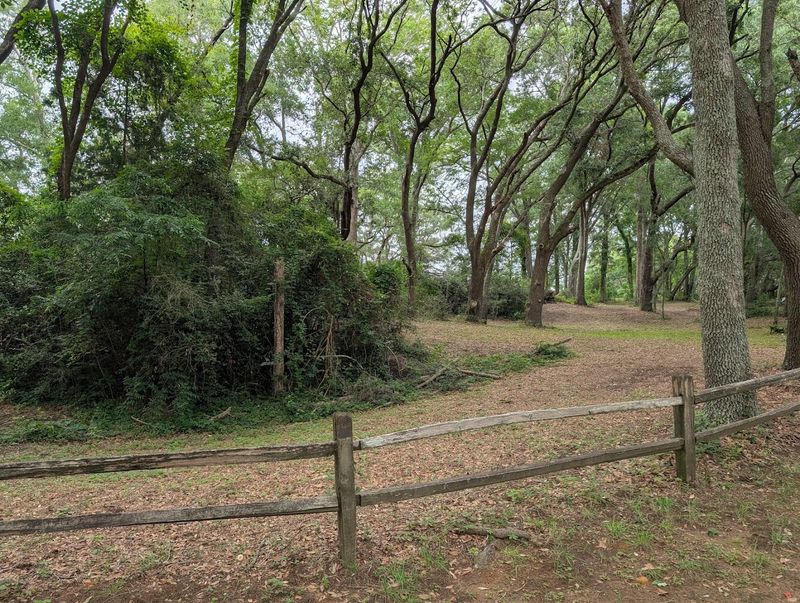
Fort Lamar was built to withstand a prolonged siege, with positions planned for artillery, supply storage, and troop rotations. The designers anticipated weeks or months of bombardment and assault, preparing for a campaign that would test every aspect of the fort’s defenses.
Instead, the Union attack lasted a single morning, and after the repulse at Secessionville, Federal forces shifted their strategy away from direct land assaults toward Charleston. I find it fascinating that so much effort went into building a fort for a siege that never came, leaving the earthworks to weather and time rather than enemy fire.
Walking the trails, I noticed how nature has softened the military edges, filling in the ditches and rounding the walls into gentle hills. The fort served its purpose by existing, deterring attacks and anchoring the defensive line, even though it never faced the sustained combat its builders expected.
That anticlimax is part of military history too, the forts that stood ready and never fired a shot in anger, their value measured in battles that did not happen.
Earthworks Still Define The Landscape
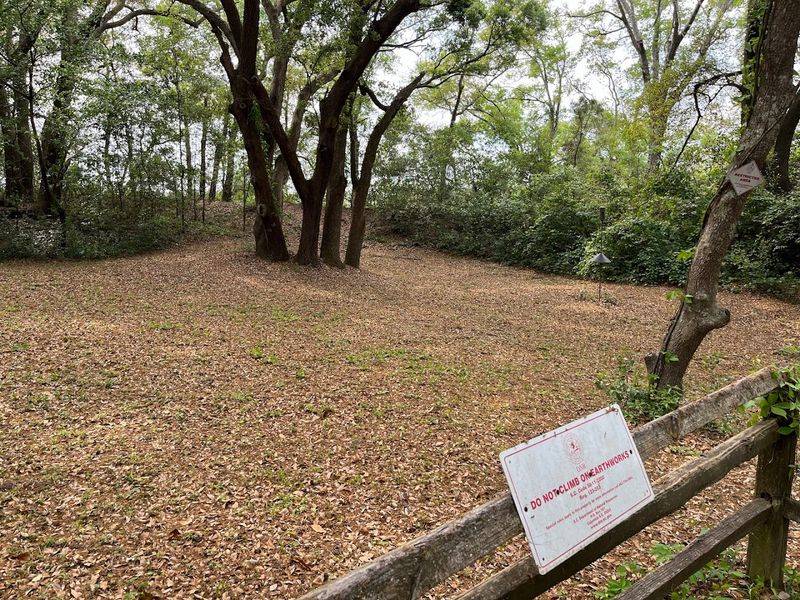
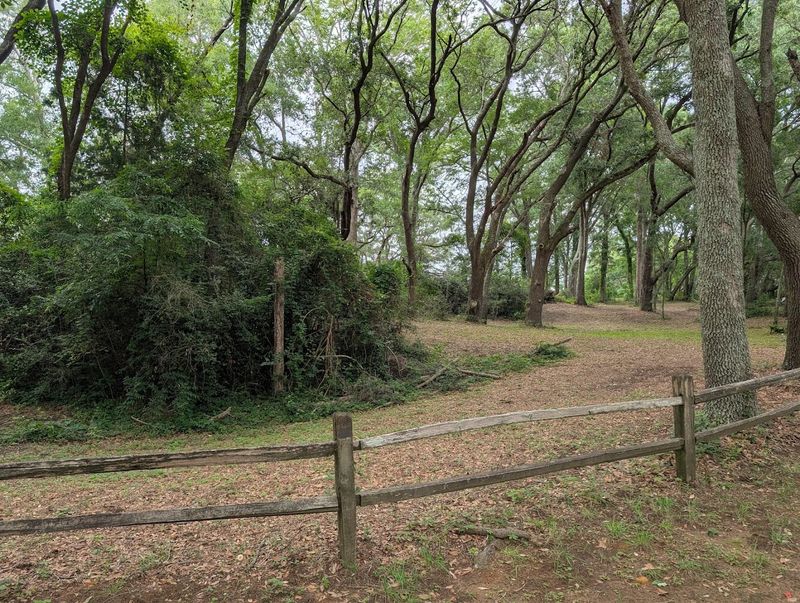
The most striking feature of Fort Lamar today is how visible the earthworks remain, even after more than 160 years of weathering, vegetation growth, and the encroachment of suburban development. The ridges and depressions follow the original defensive lines, creating a topography that clearly marks where soldiers built walls, dug trenches, and established firing positions.
I walked the short trail that winds through the preserve and found myself constantly aware of the shaped ground beneath my feet, the way the path rises and falls according to military logic rather than natural contours. The earthworks feel both fragile and permanent, eroded by rain and roots yet still holding their basic form.
Some sections show more deterioration than others, with vegetation obscuring the details and making it harder to distinguish intentional features from natural settling. The preserve’s managers face a constant challenge in maintaining the site without altering the historical landscape, balancing preservation with accessibility.
What remains is enough to help visitors visualize the fort’s layout and understand how the defenders used the terrain to their advantage.
Second Most Important Civil War Site In The State
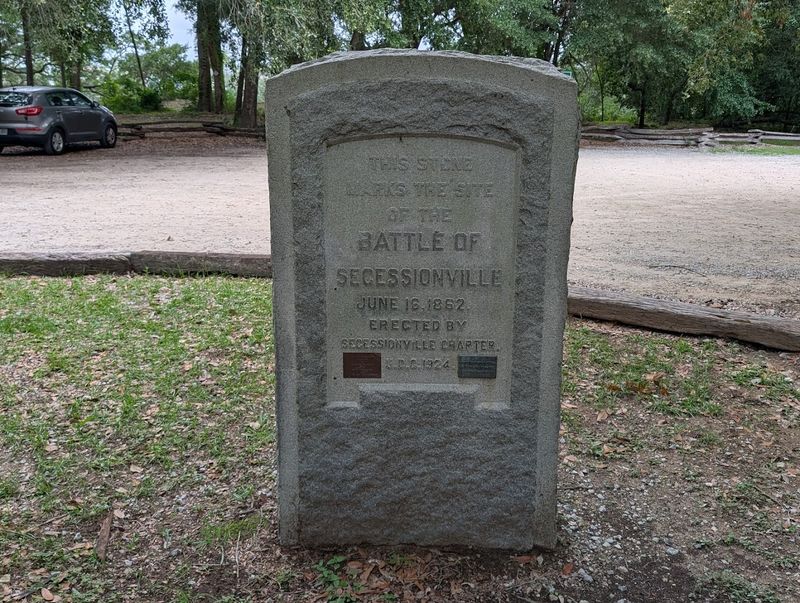
Historical assessments rank Fort Lamar as the second most significant Civil War site in South Carolina, a designation that reflects both the military importance of the Battle of Secessionville and the preservation quality of the earthworks. Only Fort Sumter, where the war began, holds a higher ranking in the state’s Civil War heritage.
I learned this fact from one of the informational brochures at the kiosk, and it made me reconsider how much attention the site receives compared to its historical weight. The ranking speaks to the battle’s strategic significance, the number of troops engaged, and the impact on subsequent military operations in the Charleston area.
Yet the preserve remains relatively unknown, visited mostly by local history enthusiasts and birders rather than the crowds that flock to more famous battlefields. That quiet obscurity creates an opportunity to experience the site without the interpretive layers and tourist infrastructure that can sometimes distance visitors from the actual ground.
The designation also brings responsibility, reminding state and local authorities that the earthworks deserve protection and thoughtful management for future generations who want to understand South Carolina’s role in the war.
Self Guided Trails Offer Historical Context
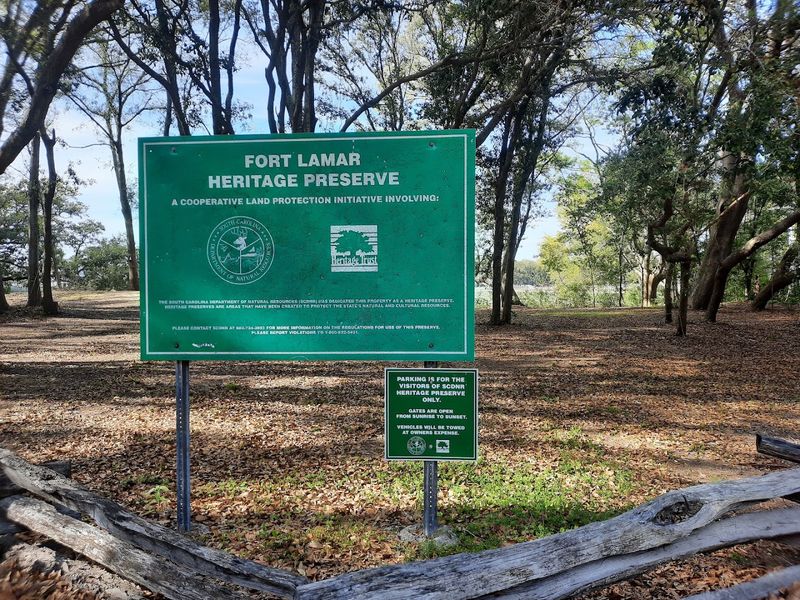
The preserve provides self guided trails with informational materials available at the entrance kiosk, allowing visitors to explore the earthworks at their own pace while learning about the site’s history. The trail system is short, covering the main features of the fort in a walk that takes maybe twenty or thirty minutes if you stop to read the markers and study the terrain.
I grabbed a brochure from the kiosk and followed the numbered stops, matching the descriptions to the features around me. The system works well enough, though some visitors complain that the maps have faded and the signage along the trail could be more detailed.
What I appreciate about the self guided approach is the freedom it gives you to linger at spots that interest you and skip past sections that do not. The trail winds through the earthworks and out toward the marsh, offering views of the water and the surrounding landscape that help explain the fort’s strategic position.
The interpretive materials focus on the Battle of Secessionville, the fort’s construction, and the broader context of the war in the Charleston area, providing enough information to make the visit meaningful without overwhelming you with military minutiae.
Marsh Views Frame the Historic Setting
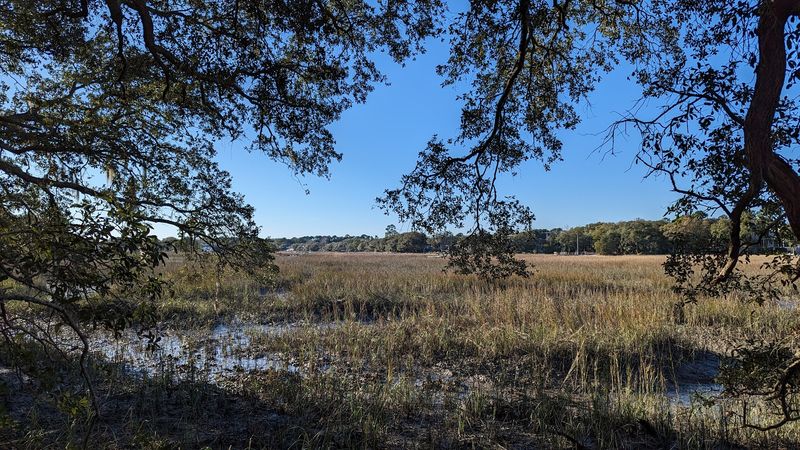
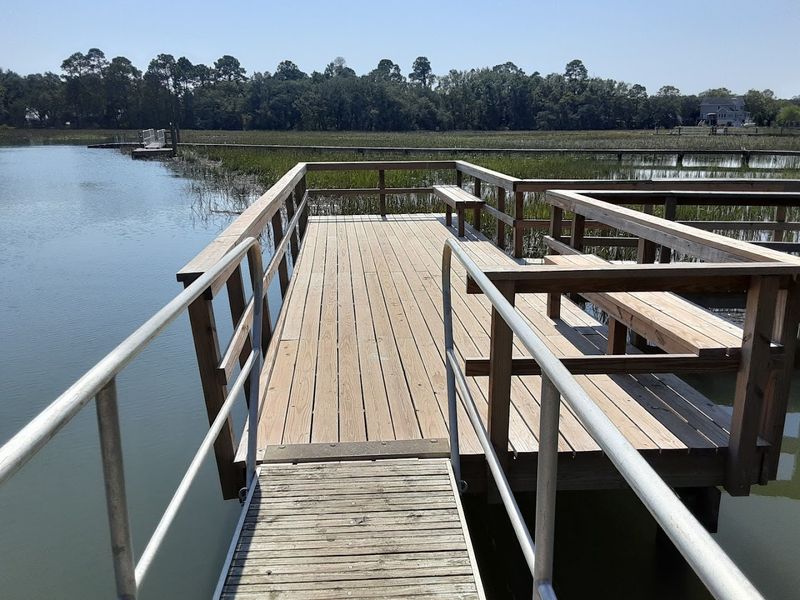
One of the unexpected pleasures of visiting Fort Lamar is the view across the marsh, where tidal creeks wind through spartina grass and the horizon opens up in a way that suburban neighborhoods rarely allow. The marsh played a tactical role during the Civil War, limiting approach routes and providing a natural barrier that Confederate defenders incorporated into their defensive plans.
I spent several minutes just watching the marsh grasses move in the breeze, trying to imagine how soldiers perceived this landscape when their survival depended on reading every movement and shadow. The setting feels timeless in certain lights, especially early morning or late afternoon when the sun angles across the water and the modern world recedes.
Birders love the preserve for this reason, noting it as an eBird hotspot where migrating species stop to rest and feed. The marsh ecosystem thrives here, supporting a diversity of wildlife that probably looks much the same as it did in 1862, give or take some invasive species and water quality changes.
That continuity between past and present gives the site a meditative quality, blending history with the ongoing life of the lowcountry environment.
Preservation Challenges Continue Today
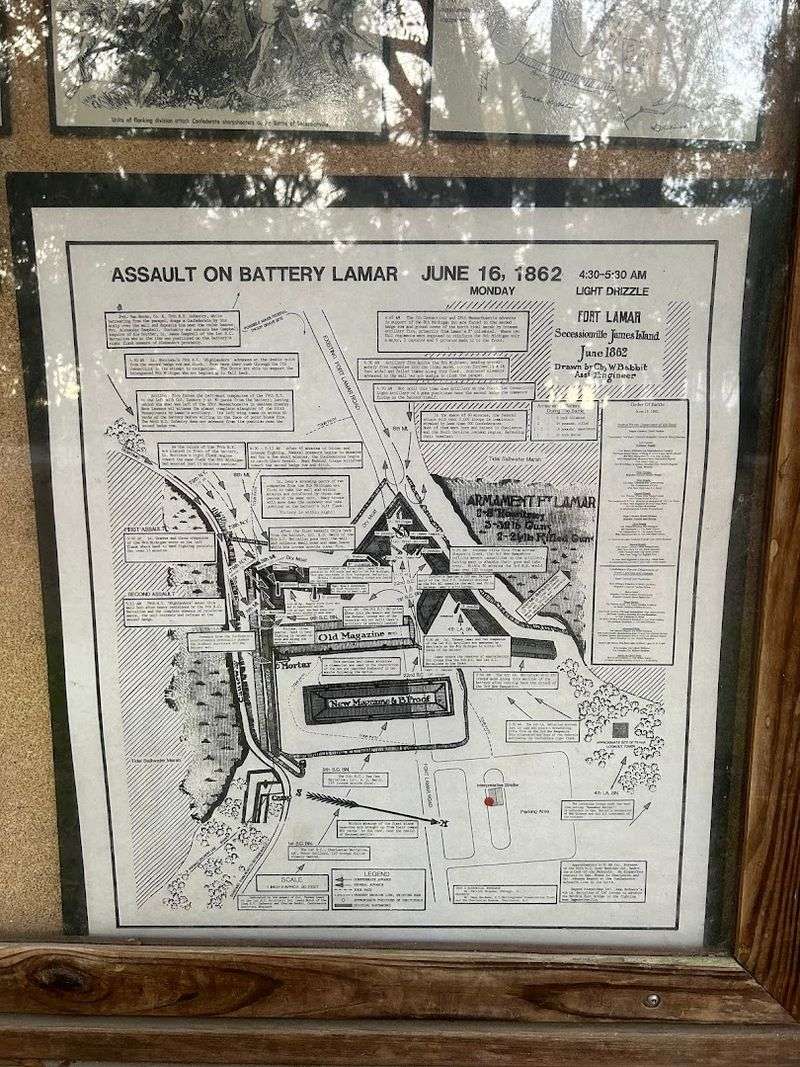
Despite its historical ranking, Fort Lamar faces ongoing preservation challenges, including limited funding, aging interpretive materials, and the constant pressure of vegetation growth that obscures the earthworks. Several visitor reviews mention faded maps, illegible signage, and a general sense that the site could benefit from more attention and resources.
I noticed these issues during my visit, particularly the worn condition of the information panels and the difficulty in distinguishing some of the fort’s features from the surrounding landscape. Preservation of earthwork fortifications presents unique challenges because the features are subtle and easily eroded, requiring careful management to prevent further deterioration while keeping the site accessible.
The preserve also contends with its location in a developing area, where residential neighborhoods press close to the historical boundaries and modern life creates a context very different from the rural setting that existed when the fort was built. Balancing public access, historical integrity, and limited budgets requires difficult choices about where to invest time and money.
The site deserves better support, given its significance, but it continues to offer value even in its current state, providing a place where history remains visible for those willing to look.