
This Arkansas River Hideaway Is Where Summer Slows Down In The Best Way
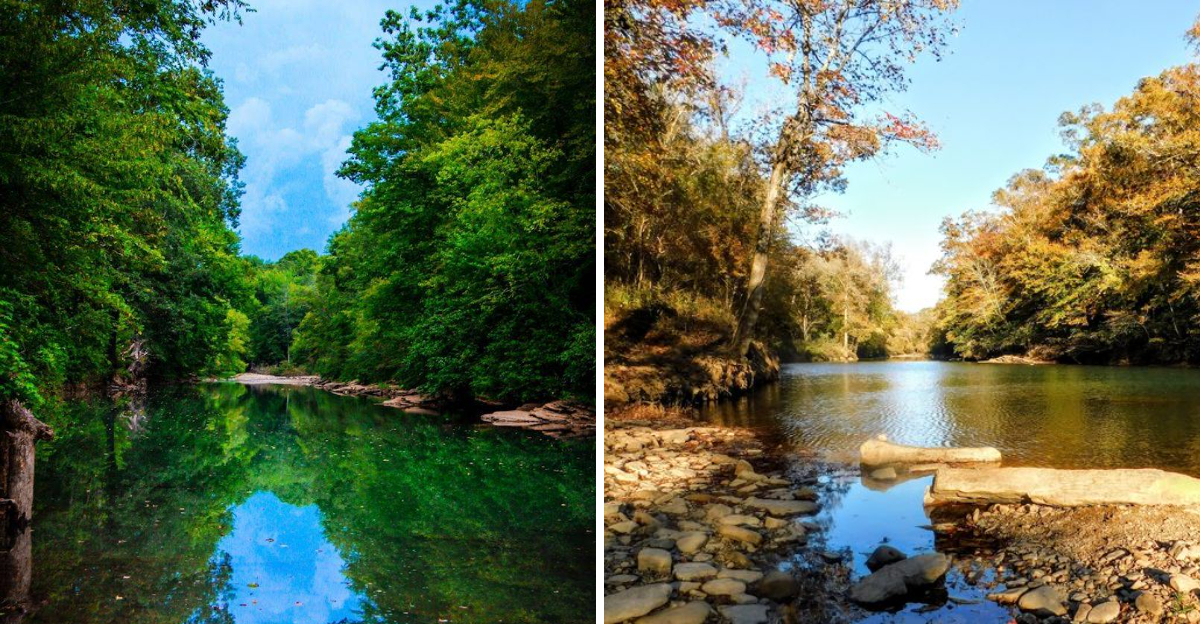
A river can change the whole mood of a day, especially when it moves like it has nothing to prove. That is the pull of this quiet Arkansas escape.
You arrive with road dust on your shoes and too many tabs open in your brain. Then the water takes over.
The rocky bank gives you a place to wander. The bluffs make everything feel a little more dramatic without asking for attention.
Shade hangs over the campsites just enough to make summer feel friendly again. This is not a place for rushing through a checklist.
It is for sitting close to the river and letting the afternoon stretch out. Maybe you wade for a while.
Maybe you watch the light move across the rocks. Either way, your phone starts to matter less.
By the time evening settles in, you remember how nice it feels to have no urgent next step.
Where The River Moves Slowly Past The Bluffs
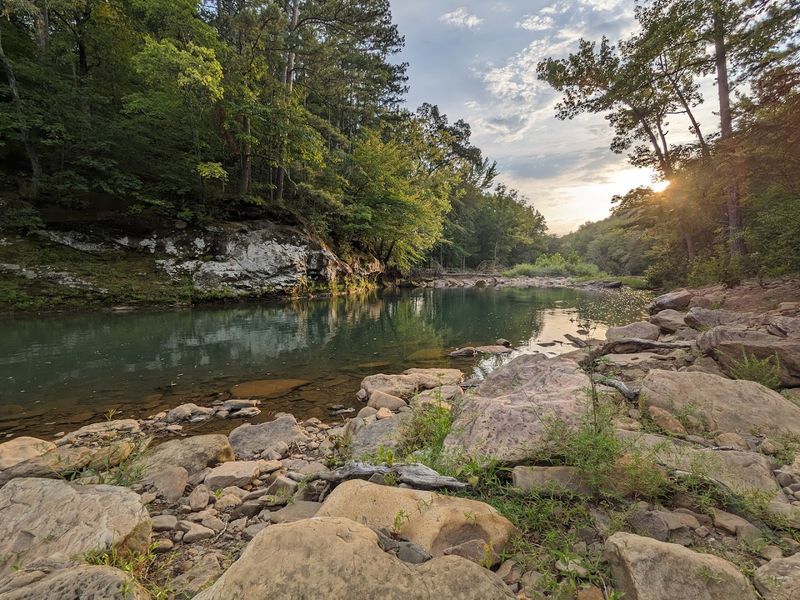
Stand at the water’s edge here and the first thing you notice is how the current barely seems to be in a hurry at all.
The Mulberry River at this spot winds past dramatic rock bluffs that rise straight out of the hillside, giving the whole scene a layered, textured look that feels almost painted.
I spent a full afternoon just watching the water catch the light as it moved around the bend, and it never got old.
The bluffs themselves are classic Ozark geology, sandstone and limestone stacked in rough shelves that have been shaped by centuries of water and weather.
Reflections of the cliff face shimmer on the surface when the water is calm, which it often is during summer low flows.
Paddlers use this stretch as a put-in for longer float trips, which means the river is well-traveled by canoe and kayak throughout the warmer months.
Even on a busy weekend, the bluffs absorb the sounds of the camp and give back only birdsong and the steady murmur of moving water. That trade feels very fair to me at Wolf Pen Recreation Area, Forest Service Rd 1003L, Oark, AR 72852.
Primitive Campsites Beneath The Ozark Canopy
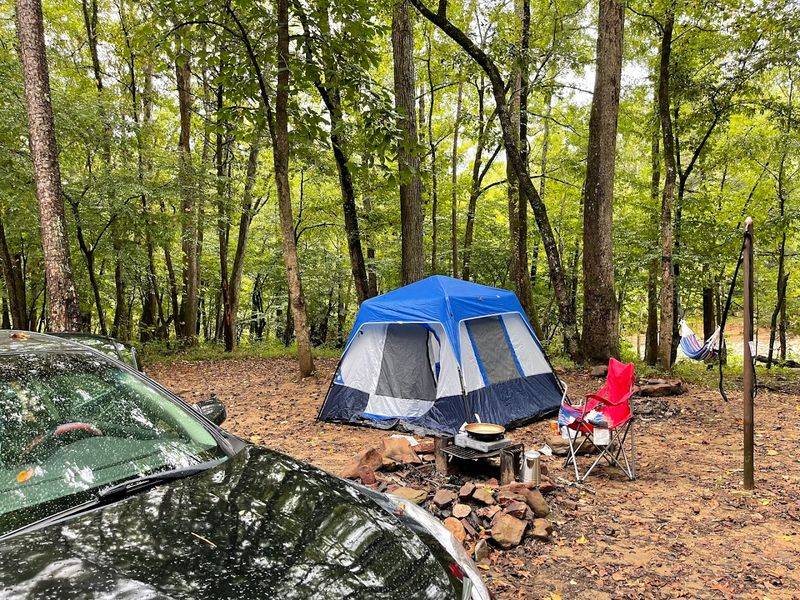
Five to six campsites sit directly along the riverbank here, each one tucked under a canopy of hardwoods that makes the afternoon heat feel almost manageable.
No reservations are taken, which means you either show up and claim a spot or you keep driving, so arriving early on a summer Friday is genuinely good advice.
Each site comes with a metal fire ring and an elevated grill, which is a small but meaningful detail when you are trying to cook breakfast without bending over a low flame all morning.
Vault toilets and trash service are provided, but there is no potable water on site, so packing in your own supply or bringing a reliable filter is not optional.
The fee is ten dollars per night, reduced to five dollars with a federal pass, paid at a self-serve station on arrival.
What makes these sites feel special is not what they include but what they leave out: no electrical hookups, no crowded loops, no noise ordinance signs needed because nobody is making that kind of noise anyway.
Sleeping a few feet from the river with nothing but tree canopy above you is a reminder that the best campsites are often the simplest ones.
Quiet Mornings Along The Mulberry River
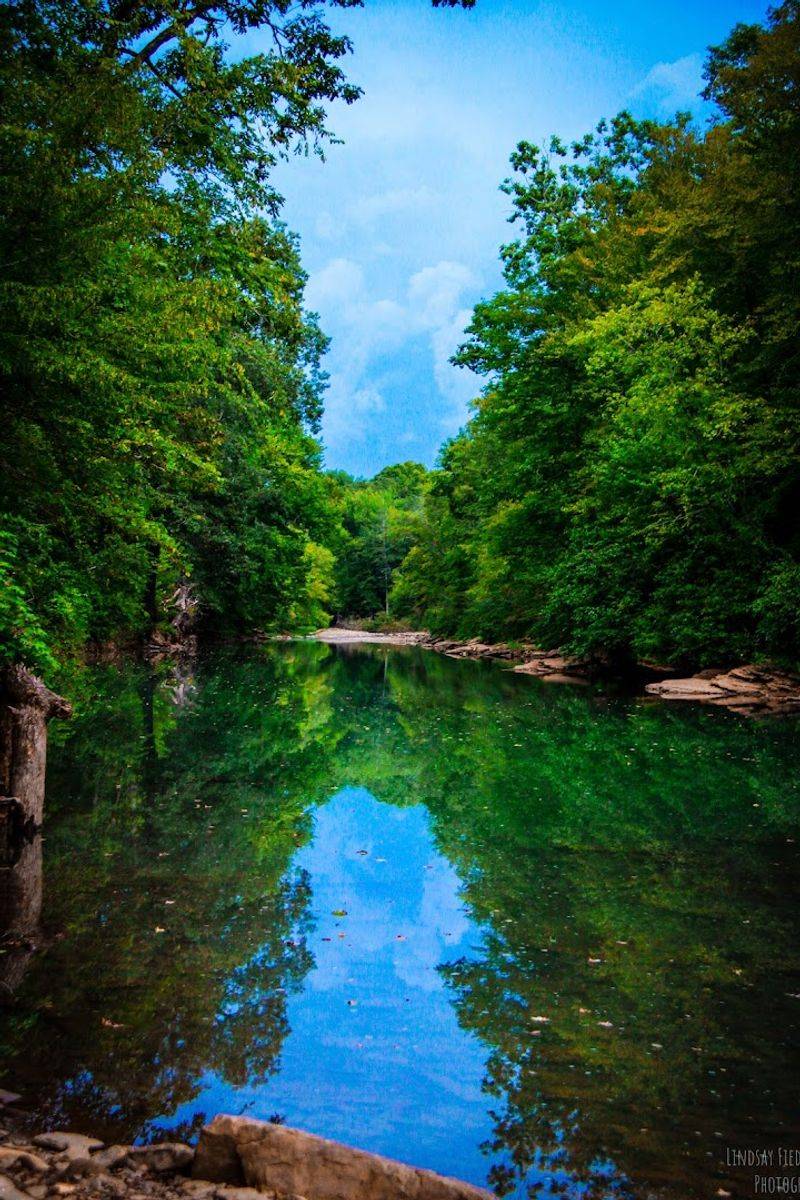
Early mornings at this spot belong to a different world entirely from what most people wake up to on a Tuesday.
The mist sits low over the Mulberry River just after sunrise, and the only sounds are the water moving over shallow rocks and whatever birds have decided that your campsite is worth investigating up close.
I made coffee on the camp grill one morning and sat on a flat rock at the water’s edge for nearly an hour without checking my phone once, which felt like a personal record.
The river runs clear enough that you can watch small fish holding position in the current, barely moving their fins, doing absolutely nothing and looking entirely at peace with that decision.
Morning light hits the water at a low angle and turns the surface into something that looks like hammered copper, especially where the current quickens over the shallow gravel bars.
Anglers tend to get out early here, working the deeper pools near the bluff bases where the water stays shaded and cool well into the morning.
A quiet morning on the Mulberry has a way of resetting your internal clock in the best possible direction.
Rocky Banks Made For Summer Wandering
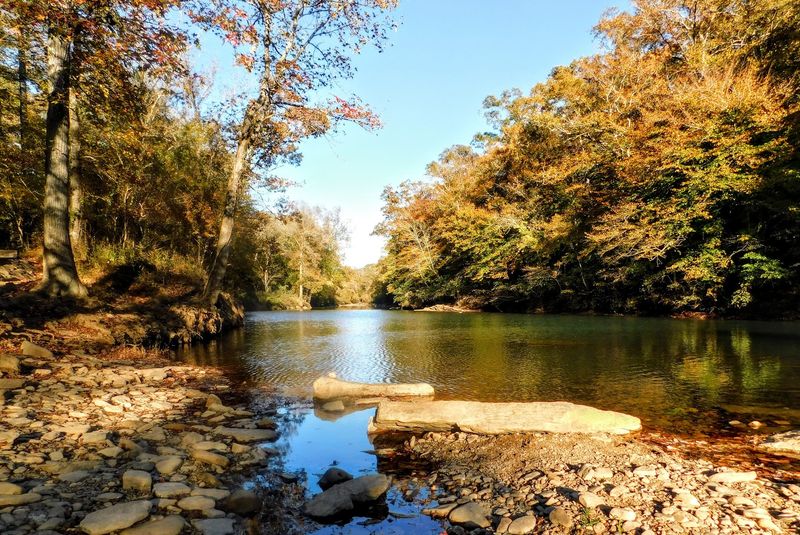
Rocky riverbanks are a polarizing thing: some people see them as uncomfortable and others see them as a natural playground, and I am firmly in the second group.
The banks along the Mulberry here are covered in smooth river stones of every size, from flat skipping rocks to larger boulders that make perfect perches for watching the water go by.
Wading is easy because the river drops off gradually from the bank, giving you plenty of shallow water to navigate before you hit the deeper swimming holes.
Summer water temperatures in the Mulberry typically sit between seventy and eighty degrees Fahrenheit, which is warm enough to stay in for hours without turning into a human icicle.
Families spread out along the banks and claim their own little patches of shoreline, setting up chairs and towels on whatever flat stone arrangements they can find.
The rocky terrain also makes the area feel wilder and less manicured than a traditional park beach, and that rawness is a big part of the appeal for people who prefer their nature without the guardrails.
Every step along the bank turns up something worth looking at, and that is the kind of wandering that makes a summer afternoon disappear fast.
A Forest Escape With A Slow Southern Rhythm
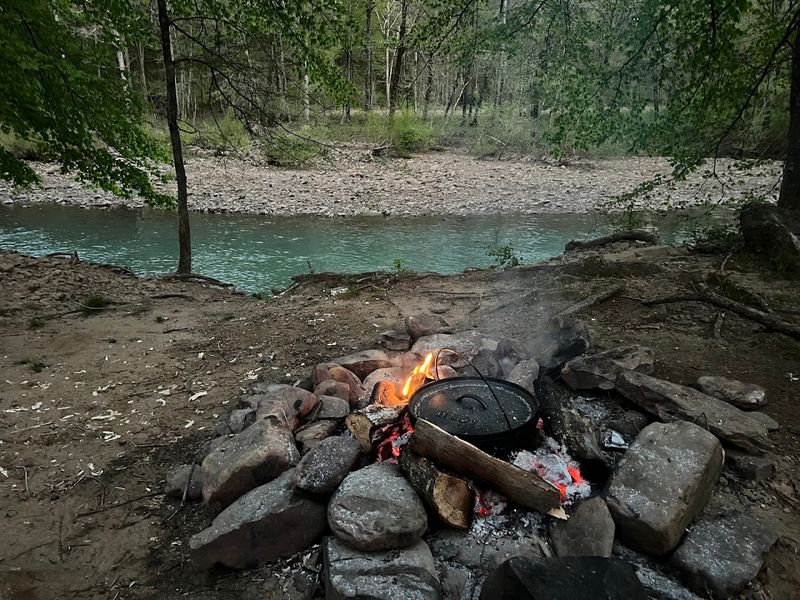
Northwestern Arkansas has a specific kind of quiet that you do not find everywhere, and this campground sits right at the center of it.
The Ozark-St. Francis National Forest wraps around the site on all sides, meaning the trees are not just scenery but the actual walls of your temporary living room.
That level of forest coverage keeps temperatures noticeably cooler than open campsites, and it also creates a sense of enclosure that makes the outside world feel genuinely far away.
I hung a hammock between two oaks one afternoon and read for three hours straight, which is about two and a half hours longer than I usually manage before something interrupts me.
The pace of life at this campground follows the river: slow, steady, and completely indifferent to whatever is happening on a news feed somewhere.
Local wildlife moves through the area regularly, including deer along the tree line at dusk and songbirds that seem to rotate shifts throughout the day.
Bear-proof trash receptacles are on site for a practical reason, which is a small reminder that you are sharing this forest with residents who were here long before the campsites were marked.
The forest here does not perform for visitors; it simply continues, and you are welcome to slow down and join it.
Shaded Trails Near Scenic River Access
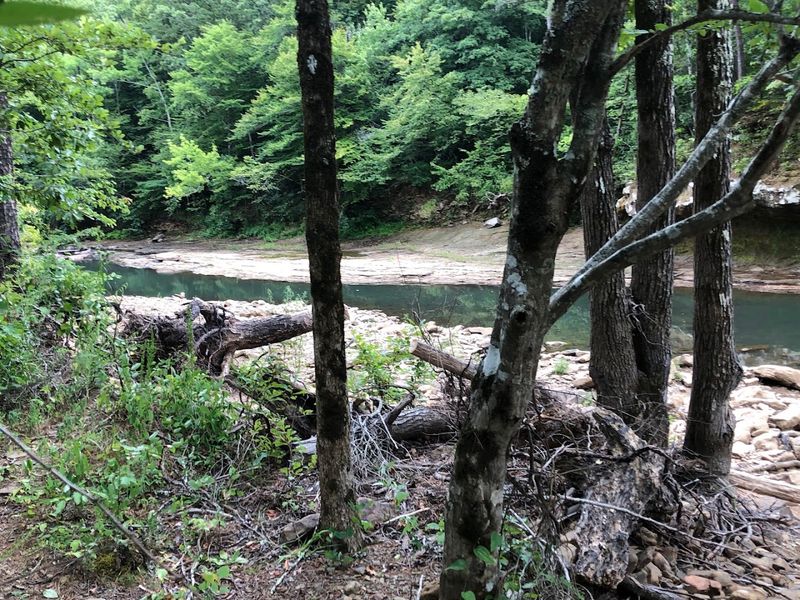
Trail access near this campground adds a second dimension to a visit that might otherwise be entirely water-focused.
Paths wind through the surrounding national forest, offering enough elevation change to give your legs a workout while keeping the scenery interesting the whole way.
The tree cover on most of these routes is dense enough that hiking in mid-afternoon heat is actually bearable, which is not something you can say about every trail system in the region.
Several of the paths loop back toward the river, giving you regular glimpses of the Mulberry through the trees and occasional access points where you can scramble down to the bank for a quick wade.
The terrain mixes flat floodplain sections near the water with steeper bluff-side routes that reward the climb with elevated views of the river valley below.
Footwear that can handle both wet rocks and dry forest trail is worth packing, because the transition between the two happens faster than you expect out here.
I came across a section of trail that ran right along the base of a bluff wall one afternoon, with the rock face on one side and the sound of the river on the other, and it felt like the whole forest had arranged itself just for that walk.
Where Campfire Light Meets Bluffside Views
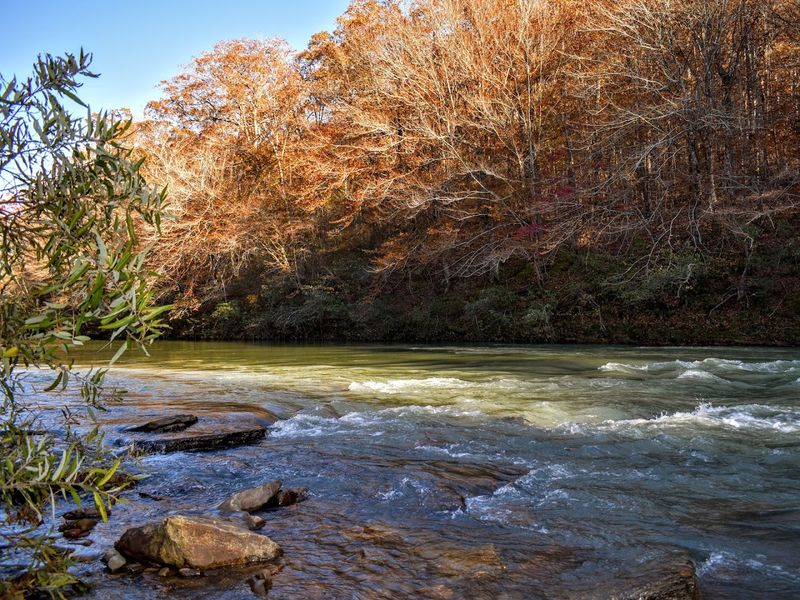
Evenings at this campground have a specific quality that is hard to put into words but very easy to experience.
Once the sun drops behind the bluff line, the light changes fast, going from golden to deep orange to a blue-gray dusk that settles over the river like a slow exhale.
The fire rings at each site are well-positioned to take advantage of that bluffside backdrop, so your campfire ends up framed by the dark silhouette of the rock face across the water.
Sitting by the fire here feels different from a campground surrounded by RV hookups and ambient generator noise, because the only competing light source is the river catching the last of the sky’s reflection.
Stars appear early and clearly out here, partly because the nearest town with significant light pollution is a comfortable distance away and partly because the forest canopy frames the sky in a way that makes the stars feel closer than usual.
The sound of the river at night is a constant low background note that does more for sleep quality than any white noise app I have ever tried.
Campfire evenings on the Mulberry bluff are the kind of memory that tends to stick around long after the smoke smell has washed out of your jacket.
A Rustic Hideaway Wrapped In Green
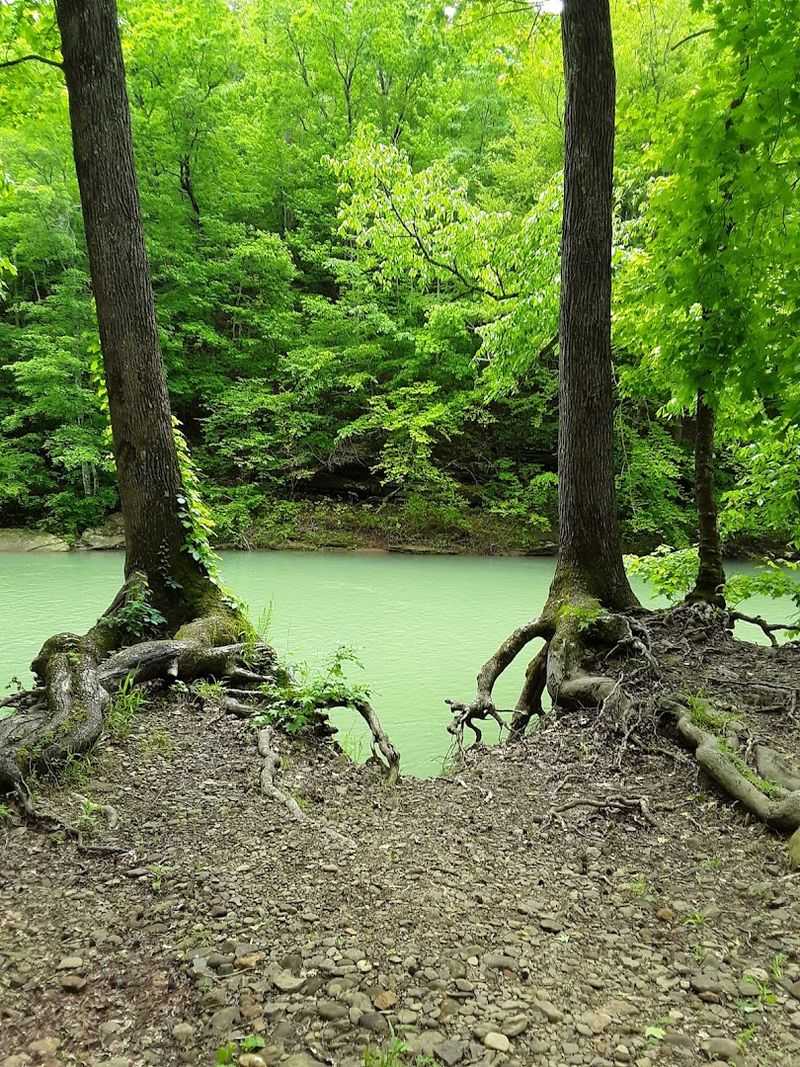
Some campgrounds feel like they are trying very hard to be something, and some feel like they have simply always been there, and this one is firmly the latter.
The whole area has a lived-in, unhurried character that you notice within the first few minutes of arrival, from the way the sites are positioned along the bank to the way the forest just takes over wherever the cleared ground ends.
Cell service is essentially nonexistent out here, which depending on your relationship with your phone is either a minor inconvenience or the best news you have heard all week.
The surrounding green is relentless in the best possible way during summer, with the hardwood canopy filling in overhead and the undergrowth pressing close along the forest edges.
Day visitors can use the area for swimming and picnicking, and a day-use fee applies, so the spot is not exclusively for overnight campers.
The campground’s remote character means that people who make the drive here tend to be genuinely looking for quiet, which keeps the overall atmosphere relaxed and respectful without anyone having to post a sign about it.
Wolf Pen Recreation Area is exactly the kind of place you stop telling people about once you decide it is yours to keep.