
These 12 Must-Visit Michigan Gardens Belong On Your Travel List
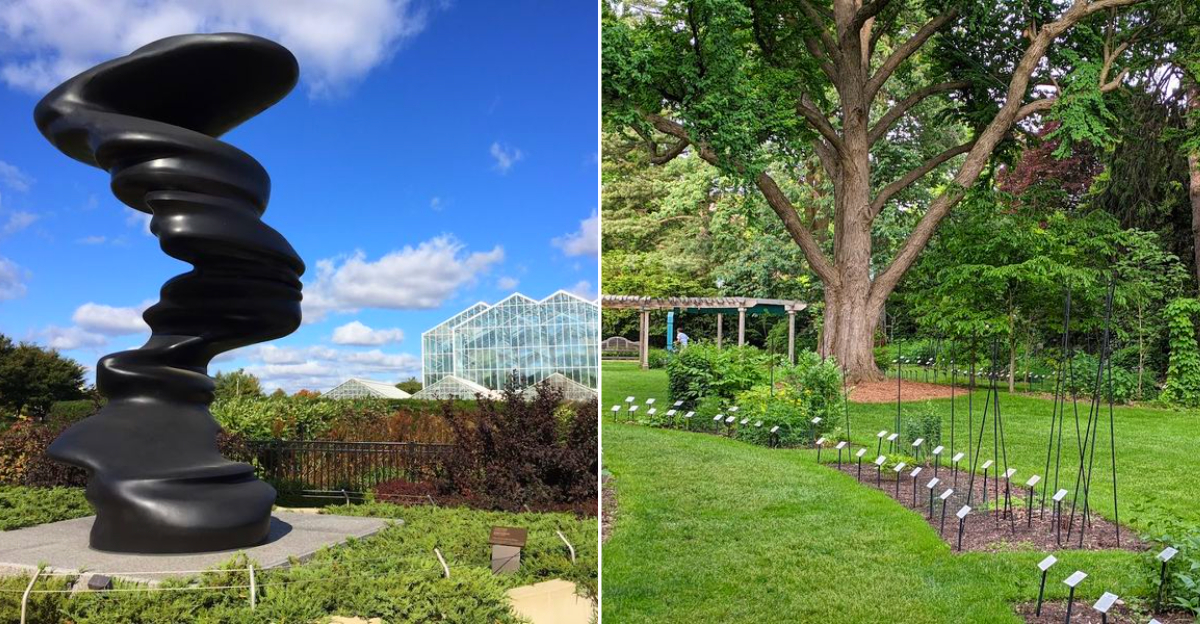
Something shifts when you step from a parking lot into a garden. The air cools, the noise drops, plus color replaces concrete in every direction.
Michigan holds more of these transitions than most people realize: formal rose beds tucked behind university walls, winding paths through old-growth ferns, plus entire hillsides that bloom on a single spring weekend.
Each garden on this list earned its place by offering something the others cannot. A glass conservatory from the early 1900s, a landscape designed to echo the mountains of Kyoto, a tulip display that empties the surrounding towns of residents for an afternoon.
Some focus on native prairie grasses while others cultivate rare orchids behind climate-controlled glass. Walk far enough into any of them plus the road noise fades, replaced by birdsong plus the crunch of gravel underfoot. Michigan gardens prove the state grows more than forests and farmland.
12. Frederik Meijer Gardens And Sculpture Park
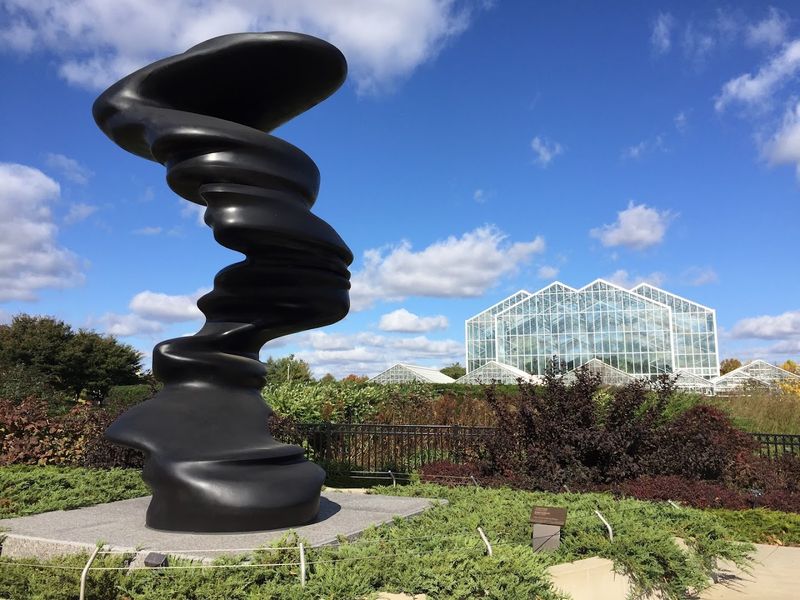
Across more than 150 acres at 1000 E. Beltline Avenue NE in Grand Rapids, horticulture and contemporary art continually reshape one another.
A garden path may lead toward a monumental sculpture, a waterfall, a quiet pond, or an entirely different planting style without making the property feel fragmented.
The Richard and Helen DeVos Japanese Garden is one of the most contemplative sections, combining carefully shaped landscapes with modern artwork and long views across water.
Indoors, tropical plants provide an immediate escape during colder months, while the Lena Meijer Children’s Garden encourages hands-on exploration rather than formal observation.
More than a conventional botanical garden, the property asks visitors to think about how human-made objects behave within living landscapes. Some sculptures dominate their surroundings, while others reveal themselves gradually among trees and perennial beds.
Plan several hours and wear comfortable shoes. The grounds are extensive, but the changing balance of art, architecture, water, and plant life prevents the walk from becoming repetitive.
11. Dow Gardens

In the center of Midland at 1809 Eastman Avenue, 110 acres of carefully designed landscapes have grown from the former home grounds of Herbert and Grace Dow.
Spring brings thousands of bulbs, while summer fills the beds with annuals, perennials, water features, bridges, and dense layers of color. The Estate Garden preserves some of the property’s residential character, but the wider grounds never feel trapped in the past.
A pedestrian bridge connects the main gardens with Whiting Forest, where woodland trails and an elevated Canopy Walk shift the perspective from flower beds to treetops. That contrast makes it possible to experience formal horticulture and a more immersive forest environment during the same visit.
Families can spend time in the Children’s Garden, while quieter paths around streams and mature trees provide space for a slower pace.
The property is large enough to reward repeat visits because each season changes its emphasis. Come for spring color, summer shade, autumn structure, or simply the satisfaction of seeing how deliberately every transition has been arranged.
10. Matthaei Botanical Gardens
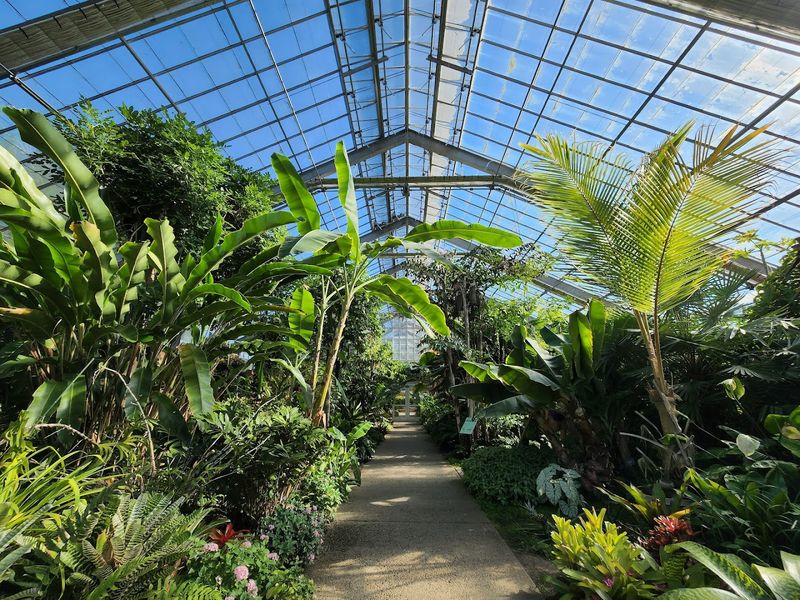
Just outside central Ann Arbor at 1800 N. Dixboro Road, cultivated gardens, natural areas, research habitats, and nearly three miles of trails form a destination that is both beautiful and quietly educational.
The indoor conservatory moves through contrasting climate zones, allowing visitors to experience tropical, temperate, and arid plant life during one compact walk.
Outside, native Michigan species, perennial beds, a carefully shaped herb-knot garden, and restored ecological areas demonstrate how horticulture can support conservation rather than compete with it.
Children have their own exploratory space in the Gaffield Children’s Garden, while adults can continue toward wetlands, woodland trails, and prairie environments beyond the formal plantings.
Because the site belongs to the University of Michigan, labels and collections often encourage closer observation without turning the visit into a lecture. Casual walkers can enjoy the scenery, while more serious plant enthusiasts have enough detail to remain occupied for hours.
Admission is free, though parking is metered. Remember that the conservatory is closed on Mondays when planning the full indoor-outdoor experience.
9. Nichols Arboretum
Along the Huron River at 1600 Washington Heights in Ann Arbor, broad hills, wooded trails, and open meadows create a looser experience than a formal botanical garden.
Known locally as “the Arb,” this University of Michigan property works equally well for plant lovers, runners, students, and anyone looking for a contemplative walk close to the city.
Paths climb and descend through natural areas before opening toward river views, giving even a short visit a satisfying sense of movement.
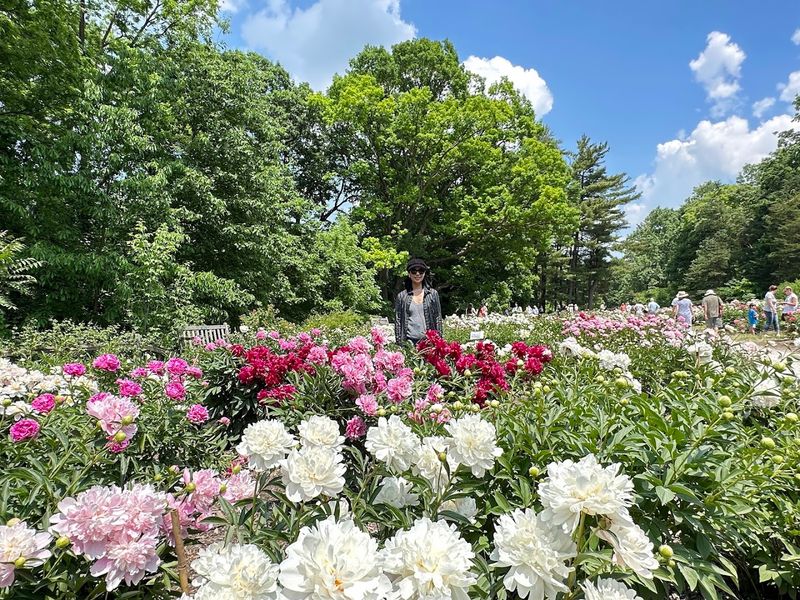
The W.E. Upjohn Peony Garden becomes the main attraction in late May and June, when hundreds of historic plants produce one of the most anticipated seasonal displays in the region.
Crowds gather during peak bloom, but the collection is large enough to reward slow attention to individual colors, forms, and fragrances.
Beyond peony season, the hills and trails remain worth visiting throughout the year. Autumn emphasizes the tree canopy, winter reveals the shape of the land, and summer turns the riverside paths into shaded escapes.
8. Belle Isle Conservatory
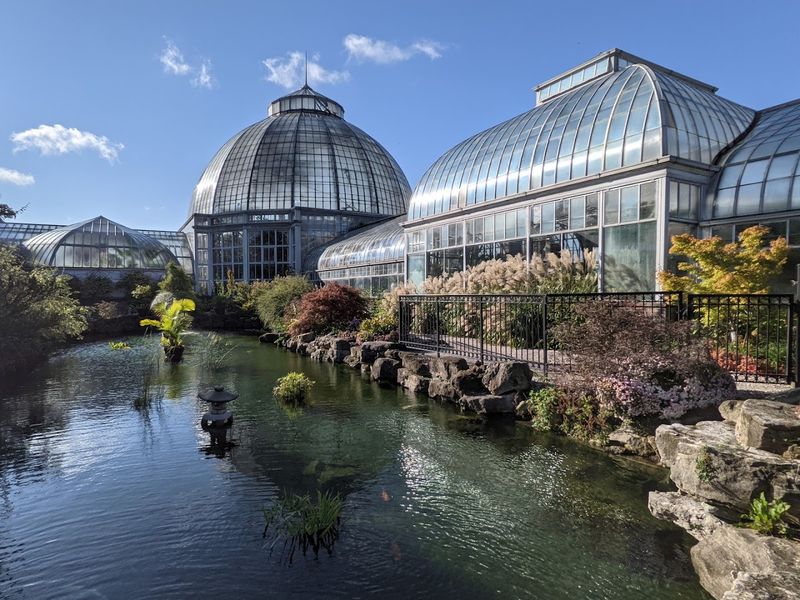
Inside Belle Isle Park at 99 Pleasure Drive in Detroit, a historic glasshouse offers warm air, filtered light, and dense plant life only minutes from the city center.
Opened in 1904 and recently restored, the conservatory contains five distinct display houses. Tall palms dominate the central dome, while tropical plants, cacti, succulents, ferns, and rotating seasonal displays occupy the surrounding wings.
The building itself is part of the attraction. Curved glass, white structural framing, and the soaring Palm House create an old-world sense of drama that remains impressive even before you begin studying individual plants.
Formal outdoor gardens extend the visit during warmer months, and the nearby Belle Isle Aquarium makes it easy to combine two historic attractions in one stop.
Admission is free, although vehicles entering the island require a Michigan Recreation Passport. The conservatory is generally open Wednesday through Sunday, so check current facility hours before traveling.
Winter may be the most satisfying time to visit, when stepping from Detroit cold into humid greenery feels almost medicinal.
7. W.J. Beal Botanical Garden
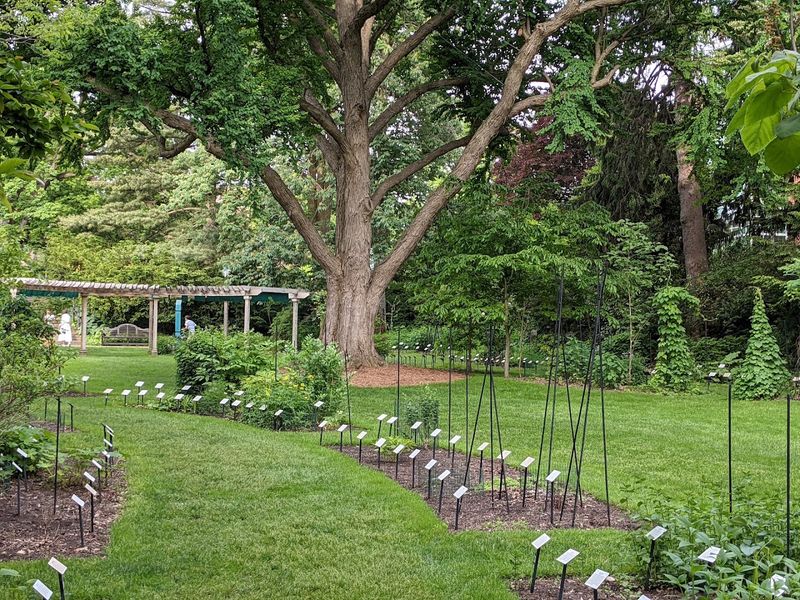
Beside the Red Cedar River on the Michigan State University campus, this historic garden can be entered near 330 W. Circle Drive in East Lansing.
Established in 1873, it is recognized as the oldest continuously maintained university botanical garden in the United States.
That long history gives the landscape a purpose beyond decoration: generations of students and researchers have used it to study plant classification, agriculture, ecology, medicine, and the relationships between people and vegetation.
Thousands of plants are arranged in collections that emphasize how species are used, related, and adapted. Edible plants may appear near medicinal examples, while threatened Michigan species remind visitors that a botanical garden can function as a form of preservation.
The setting remains relaxed despite its academic role. Paths, benches, river views, and the surrounding campus make it easy to visit without planning a formal tour.
Admission is free, and the garden is generally accessible from dawn to dusk. Late spring through early autumn provides the fullest display, but the site’s historical importance makes even a quiet off-season walk worthwhile.
6. Windmill Island Gardens
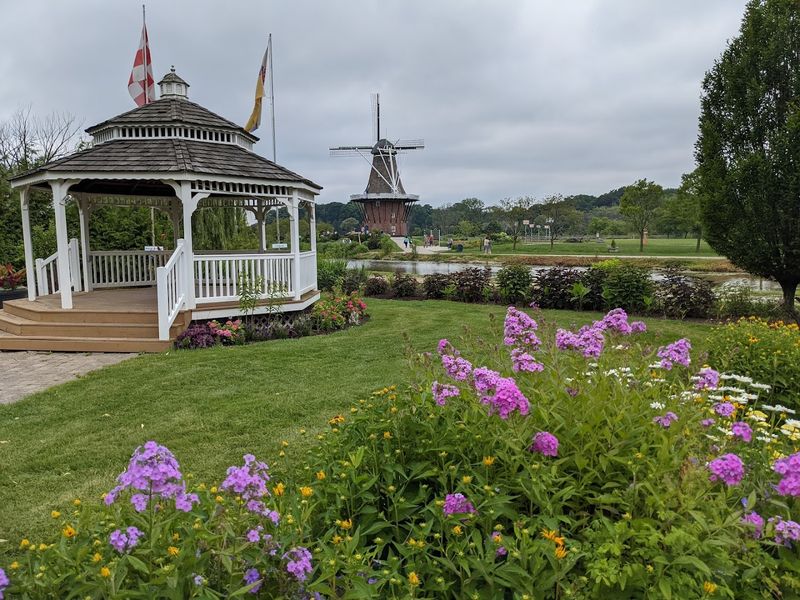
At 1 Lincoln Avenue in Holland, spring color surrounds De Zwaan, the only authentic working Dutch windmill operating in the United States.
The 36-acre park becomes especially vivid from late April into early May, when tulips appear in large formal displays ahead of and during the city’s Tulip Time festivities. Daffodils, hyacinths, and other bulbs add layers of color before summer annuals and perennials take over later in the season.
The windmill gives the garden a distinctive visual anchor, but the grounds include more than one photograph. Visitors can follow paths beside canals, cross small bridges, listen to a street organ, and explore Dutch-inspired buildings and displays.
Peak tulip bloom depends on spring weather and generally lasts only a couple of weeks, so flexibility is useful when flowers are the main reason for visiting. Festival days bring the largest crowds, while quieter mornings outside major event times allow more room to appreciate the planting design.
Go early for softer light, calmer paths, and a clearer view of how the beds frame the historic mill.
5. Fernwood Botanical Garden
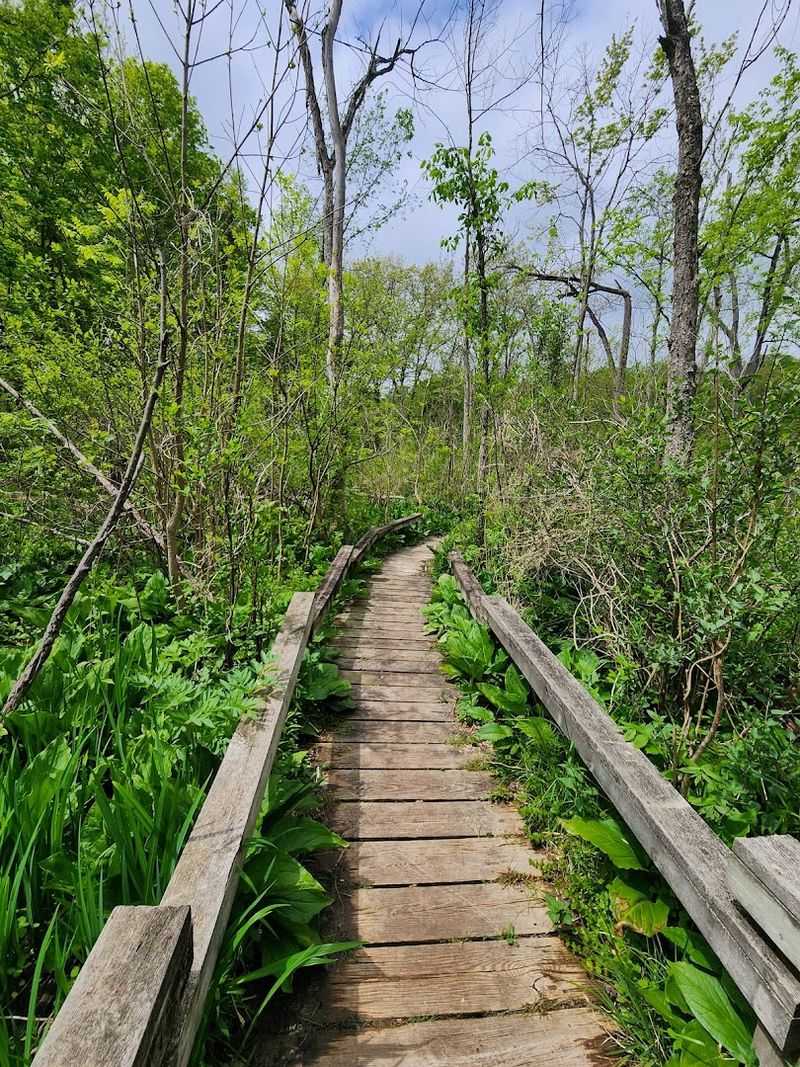
Above the St. Joseph River at 13988 Range Line Road near Niles, cultivated gardens and protected natural areas share 105 acres without competing for attention.
Formal spaces include a Japanese garden, an herb garden, a perennial border, a rain garden, a railway garden, and a notable collection of hardy ferns. Beyond them, walking trails move through forest, wetland, prairie, and other ecosystems that support birds and native wildlife.
That combination gives the property a refreshing lack of stiffness. One path may feel carefully designed, while the next becomes noticeably wilder and asks visitors to pay attention to sound, soil, water, and changing light.
The fern collection is especially satisfying for anyone drawn to texture rather than dramatic flowers. Repeated greens, layered fronds, and shaded planting conditions demonstrate how subtle a garden can be without becoming monotonous.
The grounds are open year-round from Tuesday through Sunday, and every season offers a different emphasis. Bring comfortable shoes and binoculars when possible.
Birdlife is an important part of the experience, and the best discoveries may happen above the flower beds.
4. Hidden Lake Gardens
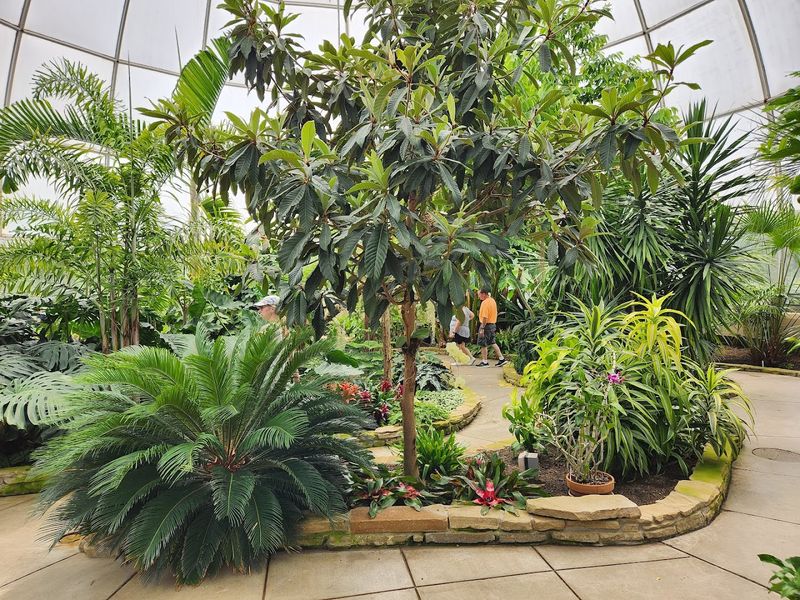
Across 755 acres at 6214 W. Monroe Road near Tipton, botanical collections, forest trails, scenic drives, a conservatory, and an arboretum create one of Michigan’s most expansive garden destinations.
The elevated Reach for the Sky Canopy Walk provides the property’s most dramatic perspective, carrying visitors above the forest floor and toward a suspension bridge among the trees. Back at ground level, hiking routes and paved roads make it possible to explore the landscape at several speeds.
Inside the conservatory, tropical, temperate, and arid environments offer contrasting plant collections throughout the year. The bonsai courtyard introduces another scale entirely, turning attention from broad landscapes toward carefully shaped trunks, roots, and branches.
Because the property is so large, trying to see everything during one hurried visit can become counterproductive. Choose a few priorities, then leave room for unplanned stops beside the lake or along the forest paths.
Summer brings the fullest greenery, autumn intensifies the canopy experience, and winter makes the conservatory especially appealing. This is a place where horticulture feels connected to the larger landscape rather than confined to ornamental beds.
3. Leila Arboretum
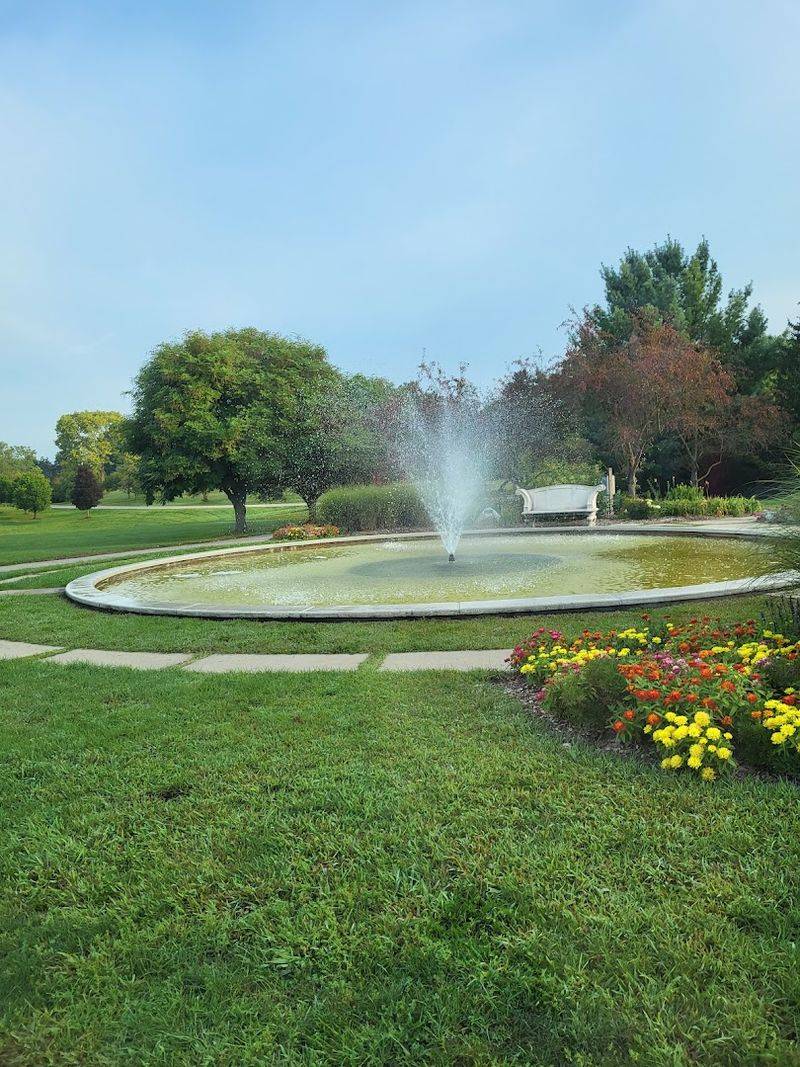
Across 72 public acres at 928 W. Michigan Avenue in Battle Creek, gardens, mature trees, community projects, sculpture, and open lawns create a relaxed destination without an admission fee.
The Kaleidoscope Garden provides the most concentrated horticultural experience, with seasonal beds and educational plantings arranged for close exploration. Nearby, the Children’s Garden encourages younger visitors to interact with nature rather than simply admire it from a path.
Fantasy Forest adds an unexpected artistic dimension. Large sculptures carved from trees damaged by the emerald ash borer turn ecological loss into a strange and imaginative outdoor gallery.
Elsewhere, walking paths, community-farm projects, disc golf, and broad green spaces make the arboretum feel actively used rather than preserved only for quiet observation. That community character is one of its greatest strengths.
The main grounds are open daily from dawn to dusk, while the Kaleidoscope Garden follows more limited seasonal hours. Bring a picnic or combine the visit with nearby Kingman Museum.
The property rewards an informal afternoon more than a tightly scheduled tour.
2. The Botanic Garden At Historic Barns Park
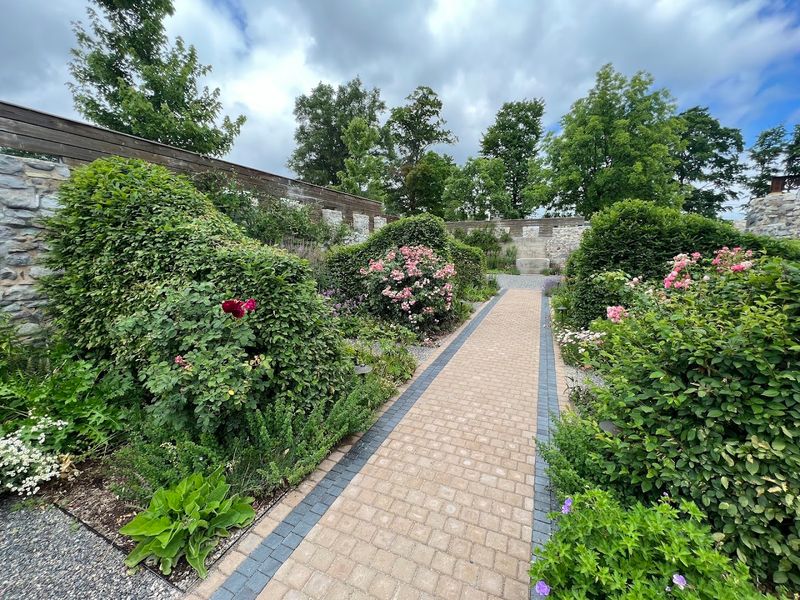
On 25 acres at 1490 Red Drive in Traverse City, a developing public garden combines native plants, community involvement, regional history, and the atmospheric remains of a former agricultural complex.
Historic barns and stone structures give the property an identity unlike a conventional flower garden. Paths lead through spaces designed to emphasize plants native to northwestern Michigan, wildlife habitat, ecological education, and the relationship between cultivated land and the surrounding region.
Because the garden is still evolving, visitors can see a living public project rather than a finished landscape frozen in one ideal form. New beds, volunteer work, seasonal programming, and restoration efforts all remain visible parts of the experience.
The setting within Historic Barns Park also connects the gardens to trails, rolling meadows, community agriculture, and the wider Grand Traverse Commons area.
Admission to the grounds is free, and docent-led tours are available by arrangement from April through October. Pair the visit with a walk through the surrounding park.
The combination of horticulture, history, and active community stewardship gives this destination more depth than its modest scale initially suggests.
1. Cranbrook House And Gardens
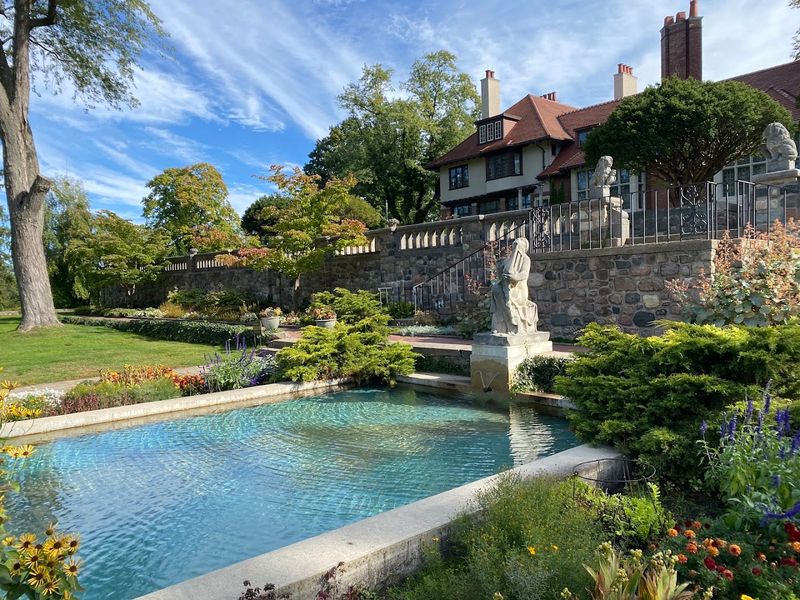
Hidden within the larger Cranbrook campus at 380 Lone Pine Road in Bloomfield Hills, formal terraces, fountains, woodland paths, and carefully framed views surround an Arts and Crafts-era estate.
The gardens were shaped as an extension of Cranbrook House, so architecture and landscape continually respond to one another.
Stone walls hold planting beds above lawns, stairs create unexpected changes in elevation, and pathways move between intimate enclosures and wider views across the property.
Some sections feel almost European in their formality, while others soften into woods, water, and less controlled planting. That contrast prevents the grounds from becoming overly polished.
The historic house can be visited through scheduled tours, but the gardens deserve time on their own. Look closely at how plants are used to guide movement, conceal buildings, and reveal sculptures or architectural details only after visitors reach the right angle.
Garden hours and seasonal access should be checked before traveling. The property works especially well during late spring and early summer, when flowers soften the stonework and the estate’s carefully planned geometry becomes easiest to read.