
You Will Feel A Million Miles Away At The Most Remote State Park In Washington
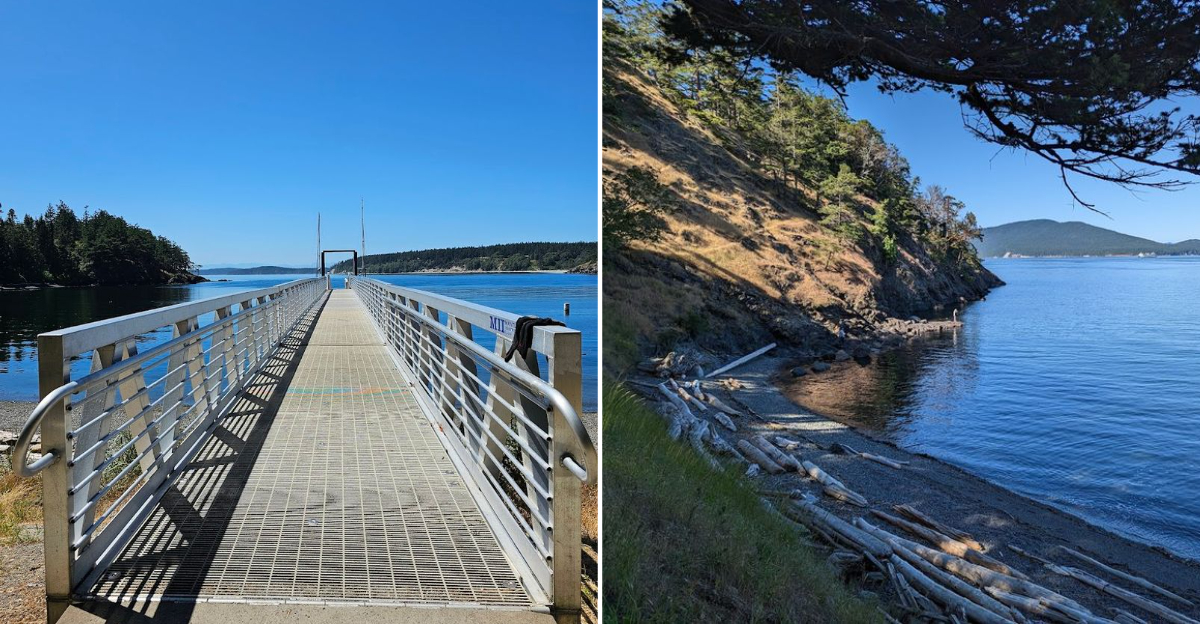
I’ve always been the type of person who needs to unplug before I completely lose my mind to email notifications. Last summer, I stumbled upon James Island, and let me tell you, it’s the ultimate “don’t look for me” destination.
Located in the San Juan archipelago, this place is so quiet you can actually hear your own thoughts, which, honestly, can be a little terrifying at first.
It’s easily the most remote state park in Washington, and short of a carrier pigeon, there’s no way to reach you. If you’re craving a total digital detox where the only “ping” you hear is a seagull overhead, pack your kayak.
You’ll feel a million miles away from reality, even if you’re technically just a short boat ride from civilization.
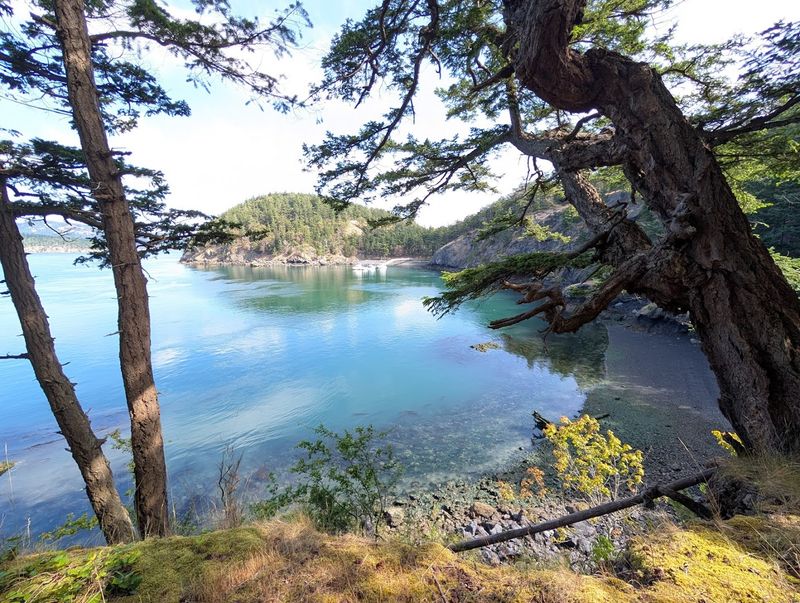
The island covers roughly 113 acres of forested hills, white sand beaches, and rocky shorelines that look straight out of a painting. By the time I set up my tent in East Cove, I was already convinced this was one of the most quietly spectacular spots in the entire Pacific Northwest.
Getting There: The Watercraft-Only Adventure
No roads lead to James Island Marine State Park, and honestly, that is the whole point. The only way to reach this secluded slice of the San Juan archipelago is by private boat or kayak, which immediately filters out the casual day-tripper crowd.
The nearest launch points include marinas around the Lopez Island and Anacortes areas of Washington State. I paddled out on a sea kayak, and the crossing felt like a quiet ceremony.
Each stroke through the glassy water pulled me further from cell towers, car horns, and inbox notifications. The park sits near Blakely Island and overlooks Thatcher Pass in Rosario Strait, so the scenery during the approach is already stunning before you even land.
Planning your entry matters here. Check tidal conditions carefully, especially if you are kayaking, because Rosario Strait can run strong currents.
Arriving with a loaded kayak on an incoming tide makes life much easier, and giving yourself extra time on the water turns the journey itself into the first real attraction of the trip.
The History Behind The Name
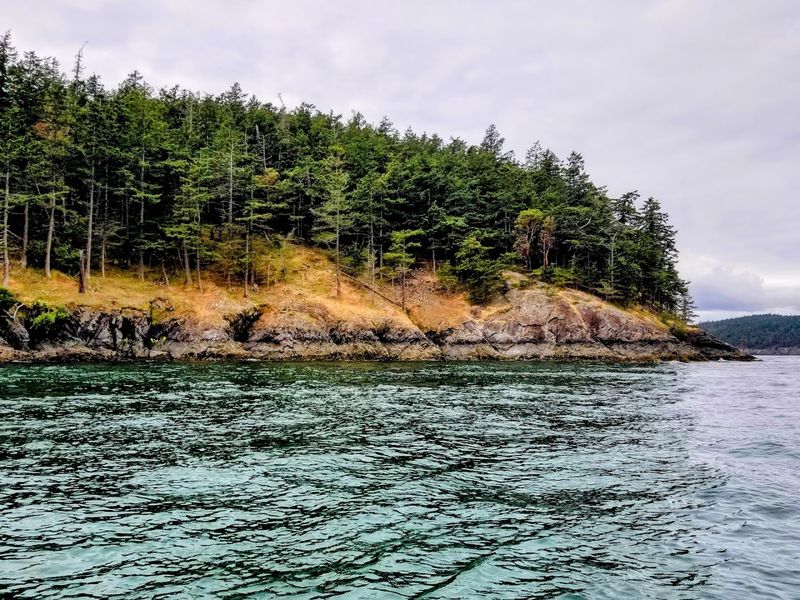
Long before Washington became a state, James Island was already carrying centuries of human history. The island has served as a traditional homeland for Coast Salish Indigenous people for thousands of years, and their deep connection to these waters and forests shaped the landscape long before any park boundary existed.
The island received its current name in 1841, when Commander Charles Wilkes of the U.S. Exploring Expedition named it in honor of Reuben James, a naval hero celebrated for his bravery during the First Barbary War.
That naming history gives the island a surprisingly rich backstory for a place with no roads or electricity. The Washington State Parks and Recreation Commission was granted the island in 1964, and it officially became a state park in 1974.
So the park is relatively young in official terms, but the land itself carries layers of meaning that stretch back generations. Standing on the bluffs and knowing all of that history adds a quiet depth to every view.
Two Hills, One Isthmus, And Views That Stop You Cold
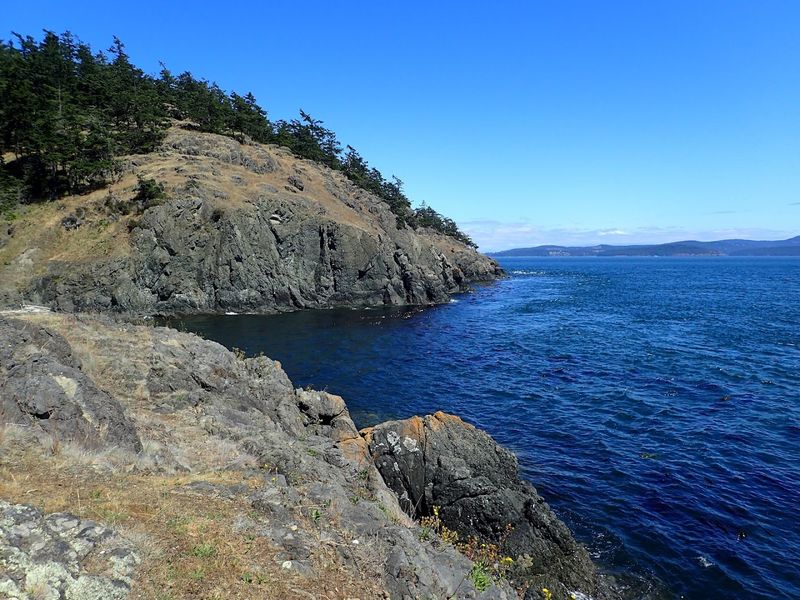
The physical shape of James Island is genuinely unusual and worth understanding before you arrive. Two forested hills rise more than 200 feet above sea level, connected by a low isthmus that holds two white sand beaches on either side.
From above, the island looks like a green dumbbell floating in blue water.
I hiked the bluff-top trail on my second morning, and the payoff was immediate. The trail runs about 1.5 miles and rewards you with sweeping views of Rosario Strait, the surrounding San Juan Islands, and on a clear day, the distant peaks of the Cascade Range.
The contrast between the dark fir forest and the bright water below is the kind of scene that makes you stop walking and just stare. The isthmus itself is a natural gathering spot where campers tend to drift in the late afternoon.
The two beaches face different directions, so you can almost always find one side sheltered from the wind. Watching the light shift across the water from that narrow strip of sand is a simple pleasure that never gets old.
Camping On The Edge Of The World
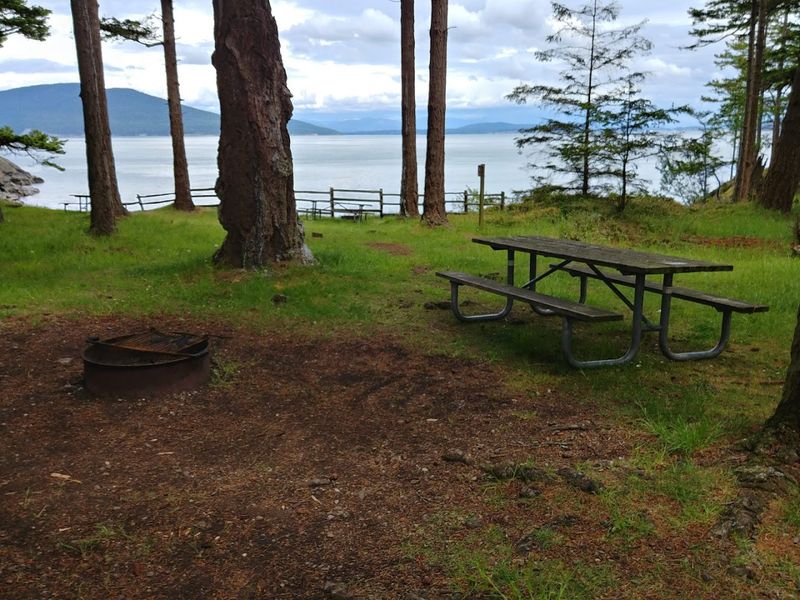
Camping at James Island is as stripped-down and satisfying as it gets. The park offers 13 primitive campsites spread across three areas: East Cove, West Cove, and the Saddle Area. All sites are first-come, first-served, so arriving early or mid-week gives you the best shot at a good spot.
There is no potable water anywhere on the island, which is one of the most critical planning details you need to remember.
Every drop you drink, cook with, or use for cleaning must come with you. I brought a water filter as backup, but the park strongly recommends carrying all your fresh water from the mainland.
There is also no electricity, no garbage service, and no camp store. You pack in everything and pack out everything, which keeps the island remarkably clean and unspoiled. The pit and composting toilets are well-maintained given the remote setting.
Some sites are specifically reserved for human-powered and wind-powered watercraft users, which is a nice touch that rewards the paddlers who worked hardest to get there.
Moorage Options For Boaters
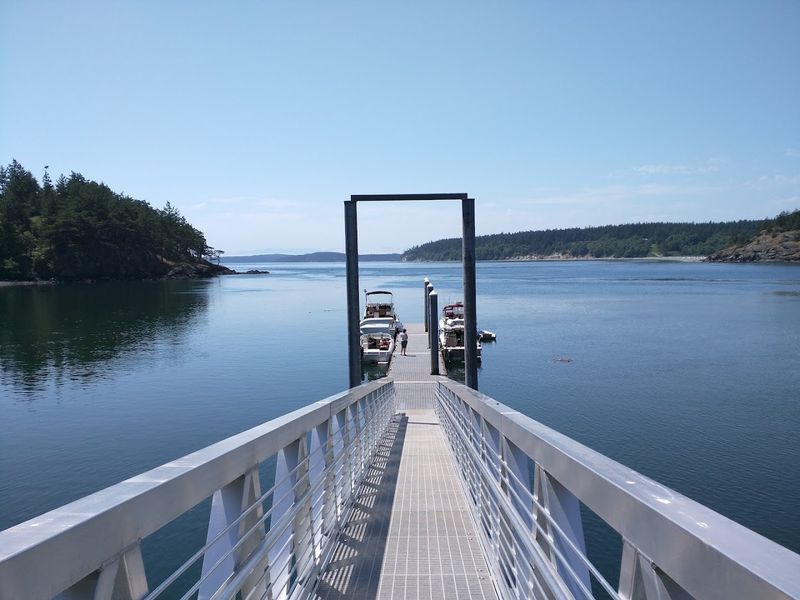
Boaters have solid options for staying overnight at James Island, and the park keeps its moorage facilities open year-round.
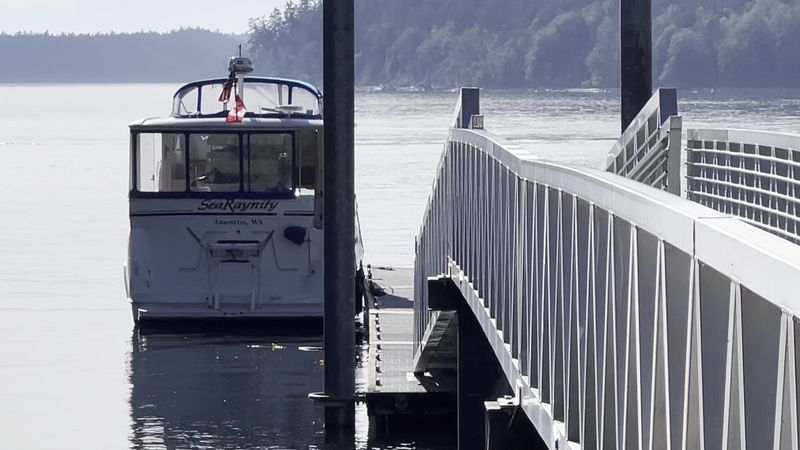
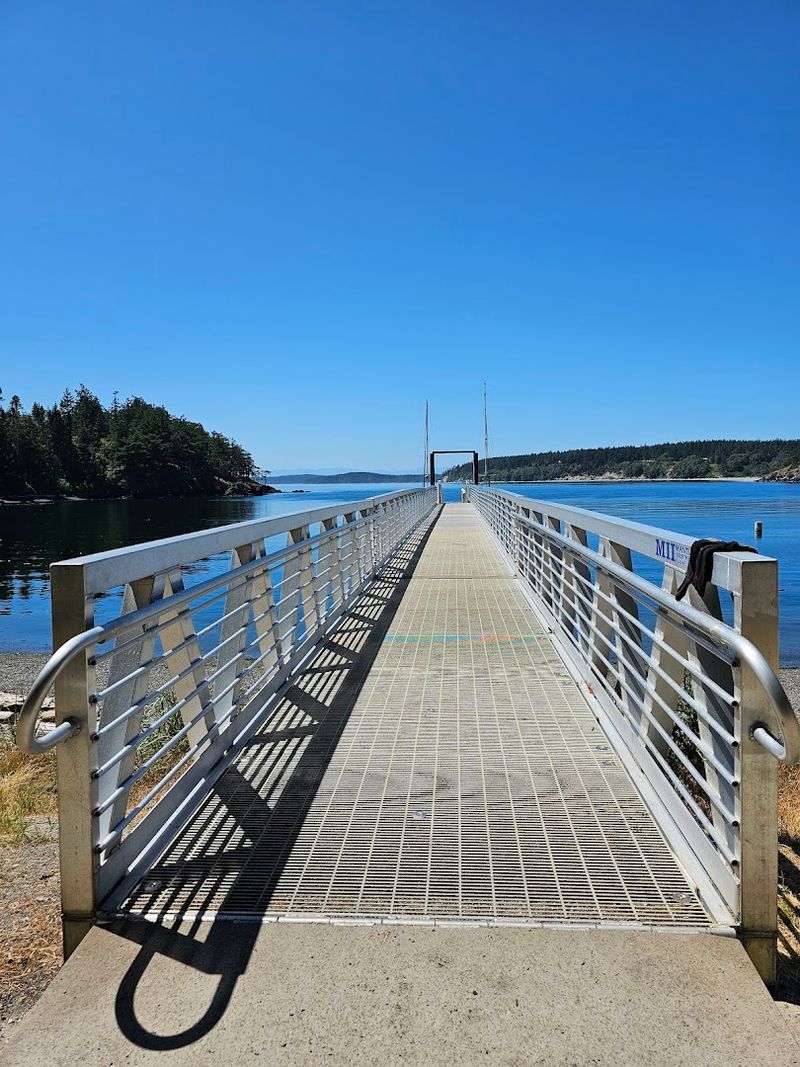
West Cove features a 128-foot dock that can handle multiple vessels at once, while East Cove offers four mooring buoys for those who prefer swinging at anchor without touching the dock.
Mooring fees apply year-round regardless of season, so budget for that as part of your trip cost. One firm rule to know: boats longer than 45 feet are not permitted on the buoys.
That restriction keeps the cove manageable and prevents larger vessels from overwhelming the quiet atmosphere that makes the park special. I watched a family on a small sloop tie up at the West Cove dock just before sunset on my first evening.
They were unloading gear with the kind of practiced efficiency that comes from many seasons of marine camping.
The dock itself has a solid, well-worn feel to it, and seeing boats gently rocking in that protected cove as darkness settled over the fir trees was one of the more peaceful sights of the entire trip.
Activities That Fill Every Hour Outdoors
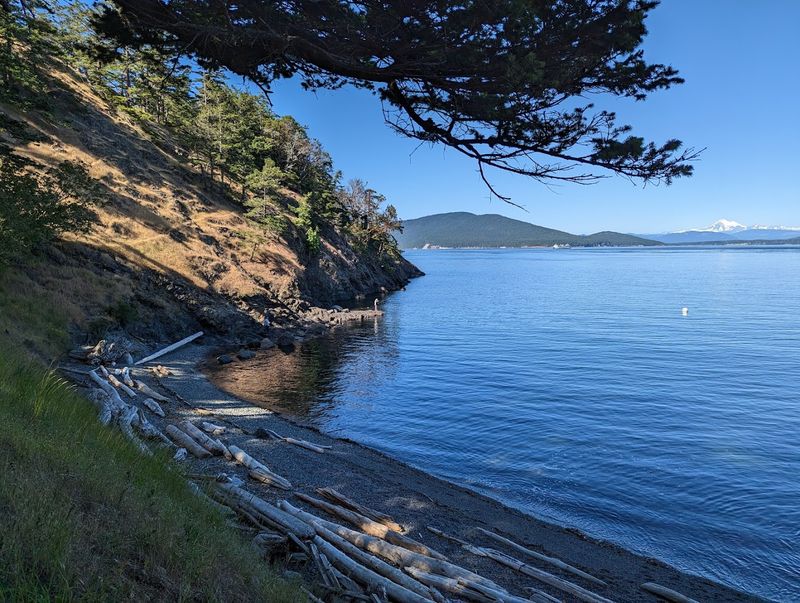
Sitting still is genuinely difficult on James Island because there is always something happening along the shoreline or in the surrounding water.
The list of activities reads like a Pacific Northwest outdoor enthusiast’s checklist: kayaking, paddleboarding, boating, saltwater fishing, crabbing, clamming, and oyster harvesting are all on the table depending on the season and tidal conditions.
Fishing is particularly productive around the island, with good opportunities for salmon and bottom fish in the deeper channels nearby.
I spent an afternoon trying my luck with a handline from the dock, and while I am not exactly a seasoned angler, the experience of fishing in that setting felt rewarding regardless of what I caught.
Beach exploration and tidepooling along the rocky shoreline are endlessly entertaining, especially at low tide when the pools reveal sea stars, anemones, and small crabs going about their business.
The 1.5-mile bluff-top trail adds a hiking dimension to the day, and wildlife viewing from the bluffs or the beach can turn a short walk into an unexpectedly long and satisfying afternoon.
Wildlife Encounters You Will Not Forget
Wildlife watching at James Island operates on the island’s schedule, not yours, which makes every encounter feel genuinely earned.
Harbor seals are a near-constant presence, often lounging on exposed rocks near the shoreline or popping their whiskered heads up to check on passing kayakers with an expression of mild curiosity.
The surrounding waters of Rosario Strait sit within known orca territory, and sightings of orca pods passing through are possible, though never guaranteed. I did not see orcas on my visit, but two kayakers I met at the East Cove dock described watching a small pod move through the strait the previous morning.
That alone was enough to make me spend the next two hours scanning the water with fresh attention. Raccoons deserve a specific mention because they are bold, clever, and entirely unintimidated by campers.
They will investigate your camp with impressive determination if you leave food unattended. Hanging your food or using a dry bag stored inside your tent vestibule is the practical move, and treating it as a puzzle to outsmart rather than an annoyance makes the whole experience more fun.
Practical Tips For Making The Most Of Your Visit
A few practical details can make the difference between a smooth island adventure and a stressful one. The single most important thing to remember is the water situation: bring more fresh water than you think you need.
A general rule for multi-day camping is one gallon per person per day, and on James Island there is zero margin for running short. Check Washington State Parks reservation and fee information before you go, because mooring fees and park regulations can change seasonally.
The park has no ranger station on the island itself, so arriving informed is entirely your responsibility. Tide charts and current tables for Rosario Strait are essential reading for kayakers, and they are freely available through NOAA and various marine weather apps.
Pack out every piece of trash without exception, and keep your camp clean to avoid raccoon raids overnight. A bear canister or hang system works well for food storage.
Cell service is essentially nonexistent on the island, so download offline maps, weather forecasts, and any navigation data before you leave the dock.
The reward for all this preparation is a place that feels genuinely, completely removed from ordinary life.