
This Scenic Maine Road Trip Uncovers 13 Hidden Places With Wild Rock Formations
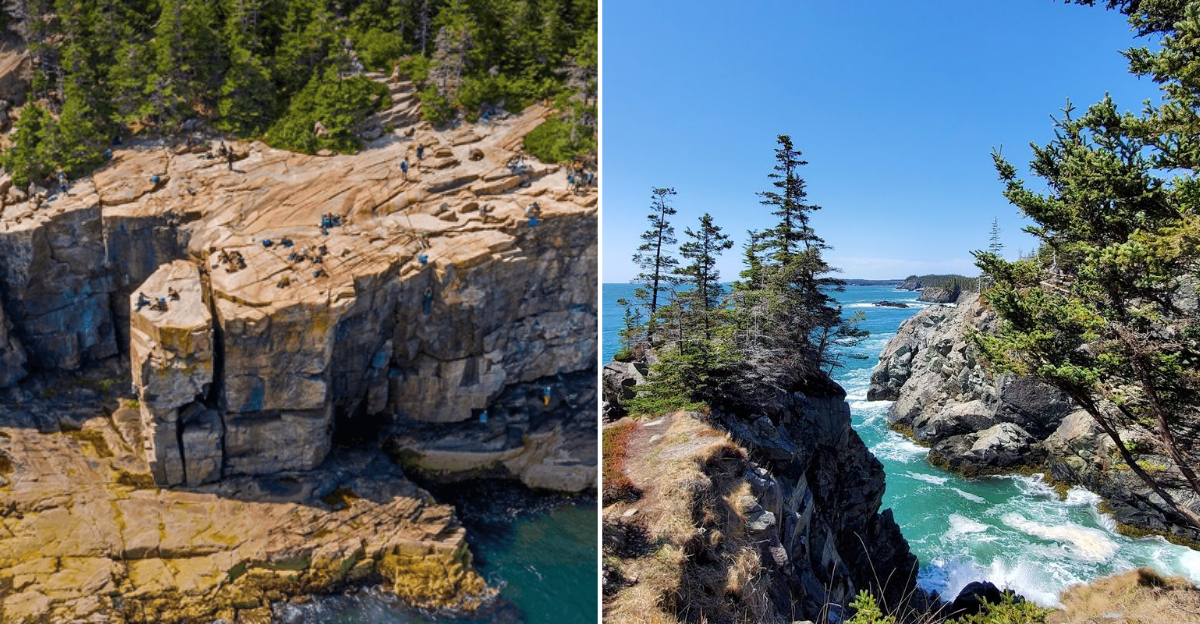
Maine does not ease you into its wild side. It likes to surprise you. One bend in the road brings quiet pine woods and salt marshes, and the next drops you beside a giant boulder, a roaring gorge, or a cliff getting slammed by Atlantic waves. That is what makes this trip so fun.
These are not just pretty places to snap a quick photo and leave. They are the kind of rocky wonders that make you slow down, wander closer, and wonder how time managed to create something so dramatic.
You will find glacier-tossed boulders, hidden mountain ponds, and canyon walls that feel almost cinematic. Pack good shoes and a little curiosity, because these 13 Maine stops have a way of stealing the whole day.
1. Coos Canyon, Byron
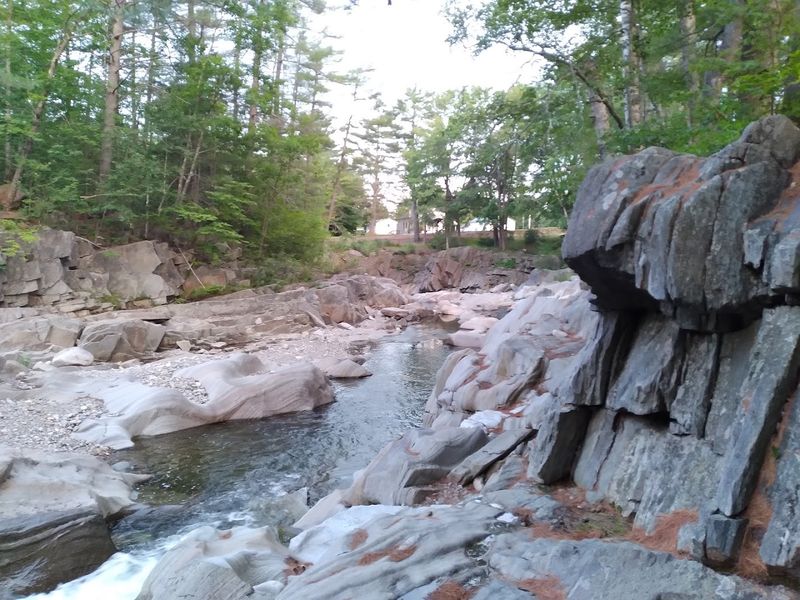
Few roadside stops in Maine reward curiosity quite like Coos Canyon in Byron, where the Swift River has spent thousands of years carving through pink and white quartz-streaked bedrock.
The canyon walls rise steeply on both sides, creating swirling patterns that look almost too artistic to be natural. It sits right along Route 17, making it one of the most accessible geological wonders in the entire state.
What makes Coos Canyon especially fun is that it doubles as a gold panning spot. Visitors have been finding small flakes and even occasional nuggets here since the 1800s, and you can rent panning equipment nearby during warmer months.
The rushing water adds a soundtrack that makes the whole experience feel wonderfully wild.
Summer is the most popular time to visit, but early autumn brings stunning foliage that frames the rocky gorge in brilliant orange and red. Parking is free, the trails are short, and the views are genuinely unforgettable for such a low-effort stop.
2. Daggett Rock, Phillips
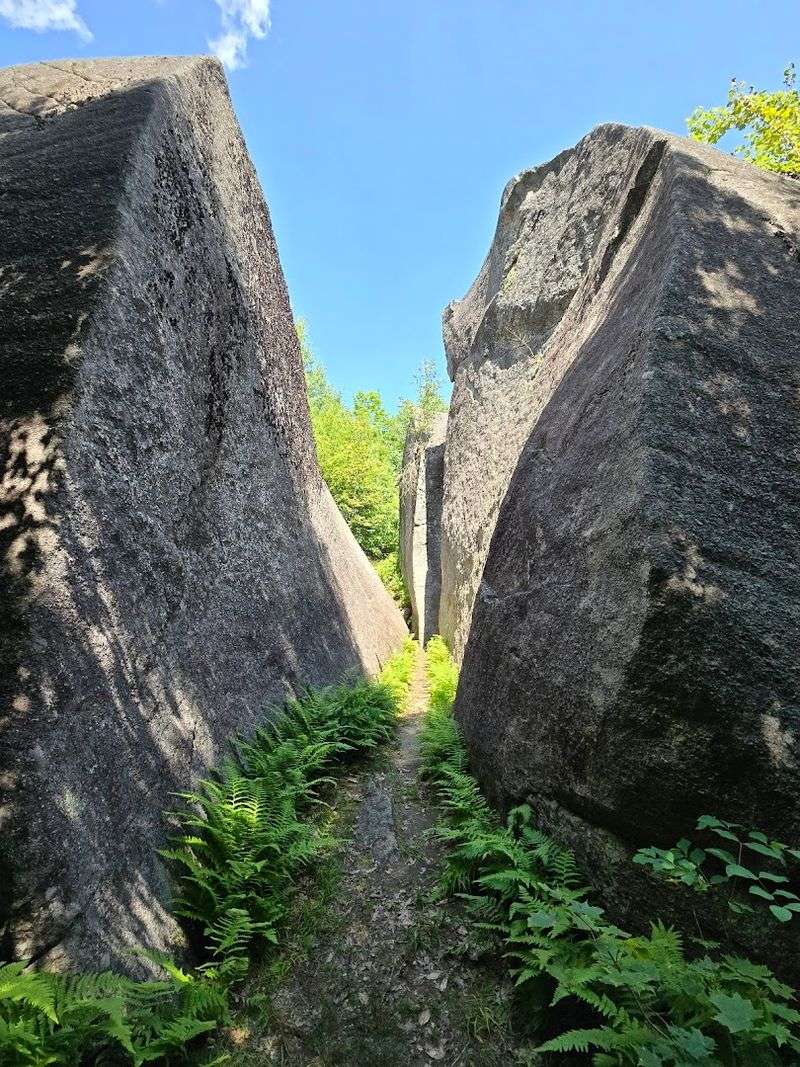
Daggett Rock earns its reputation simply by existing. Sitting in the woods near Phillips, Maine, this glacial erratic is one of the largest boulders of its kind in all of New England, and standing next to it puts your own size into immediate, humbling perspective.
The rock was deposited here by a retreating glacier roughly 10,000 years ago, which means it has been sitting in that forest longer than most human civilizations have been around.
Getting there involves a short and pleasant walk through the woods, making it a great quick adventure for families or anyone who enjoys a low-key hike with a big payoff at the end. The trail is not heavily trafficked, so there is a good chance you will have the boulder entirely to yourself.
Bring a wide-angle lens if you have one, because standard shots rarely capture just how enormous this thing truly is. It is the kind of place that makes you stop talking mid-sentence and just stare.
3. Gulf Hagas, Brownville
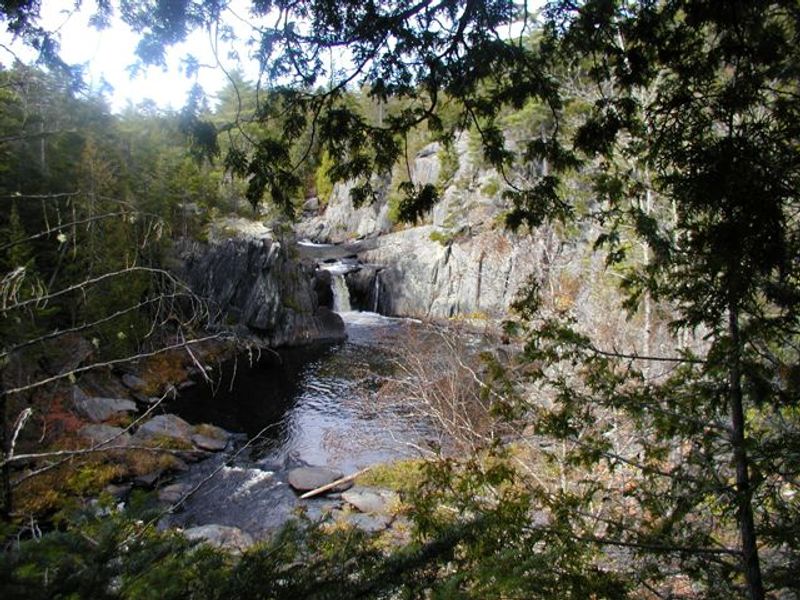
Sometimes called the Grand Canyon of Maine, Gulf Hagas is a slate gorge carved by the Pleasant River near Brownville that stretches for about three miles and drops up to 130 feet in places.
The walls are dark and dramatic, the waterfalls are loud and powerful, and the whole experience feels genuinely remote even though the trailhead is reachable by car. It sits within the Katahdin Iron Works State Historic Site area and requires a small fee to enter.
The hike around the rim is roughly eight miles round trip, so comfortable footwear and plenty of water are non-negotiable. Along the way you will pass four named waterfalls, each with its own personality, from wide curtain falls to narrow chutes that shoot through tight rock channels.
Spring and early summer bring the highest water levels and the most dramatic roaring, while fall turns the surrounding forest into a canvas of warm colors. Either way, Gulf Hagas is the kind of place that earns a spot on your personal greatest-hits list.
4. Petite Manan Point, Steuben
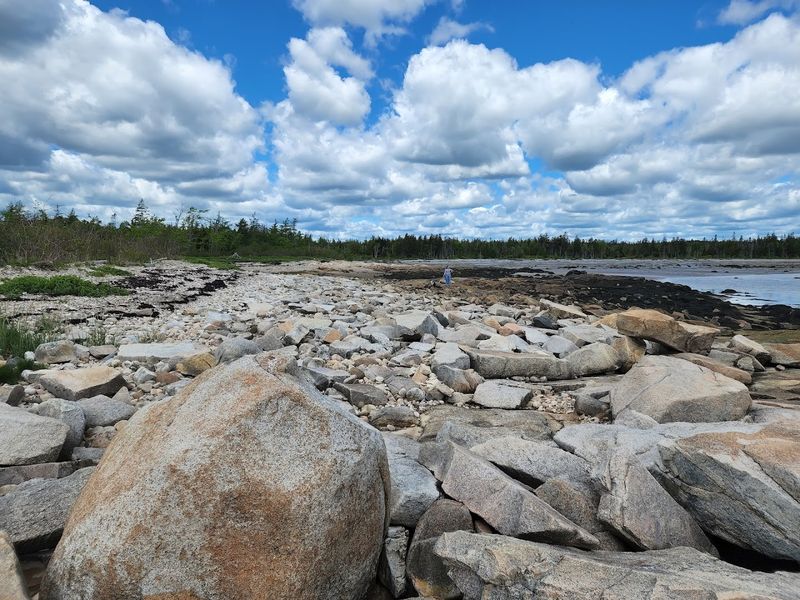
The name sounds delicate, but Petite Manan Point in Steuben delivers a rugged, wind-swept coastal experience that is anything but small in impact.
Part of the Maine Coastal Islands National Wildlife Refuge, this peninsula juts into the Gulf of Maine and offers miles of hiking trails that weave through blueberry barrens, spruce forests, and right down to the rocky shoreline.
The pink granite ledges along the water here are spectacular, polished smooth in some spots and fractured into dramatic angular blocks in others.
At low tide, tide pools form in the crevices and fill with sea stars, periwinkles, and tiny crabs. The Petit Manan Lighthouse, one of the tallest in Maine, is visible offshore and adds a classic coastal Maine visual to the whole scene.
Birding is exceptional here during migration seasons, but even if you are not carrying binoculars, the raw scenery alone justifies the drive down the long access road. Arrive early on weekends to secure parking and enjoy the trails in peace.
5. Boot Head, Lubec
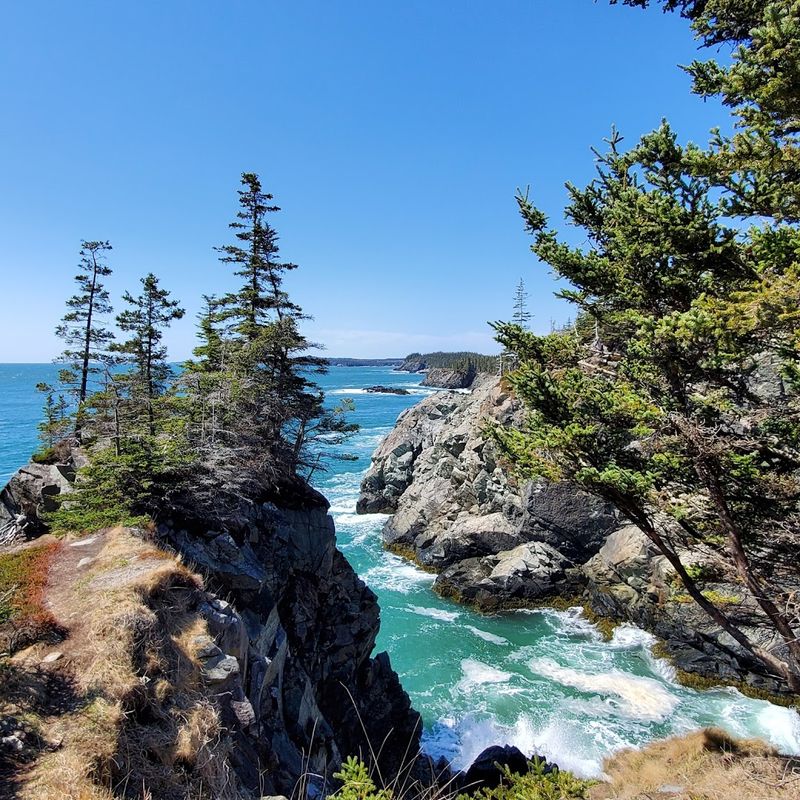
Boot Head Preserve sits near the eastern edge of Lubec, the easternmost town in the contiguous United States.
That geographical bragging right alone makes it worth the drive, but the real draw is the coastline itself: a series of jagged, dark-toned rock formations that drop sharply into the churning waters of the Bay of Fundy.
The preserve is managed by Maine Coast Heritage Trust and offers trails through coastal forest, bog, cobble beach, and open headland scenery.
The rock ledges at Boot Head are particularly striking because the Bay of Fundy has some of the highest tidal ranges in the world, meaning the shoreline looks dramatically different depending on when you arrive.
On a clear day, you can see across to Campobello Island in New Brunswick, Canada, adding an international dimension to your hike. Early morning fog rolling in over those dark rocks creates an atmosphere that feels both eerie and deeply beautiful at the same time.
6. Otter Cliff, Acadia National Park
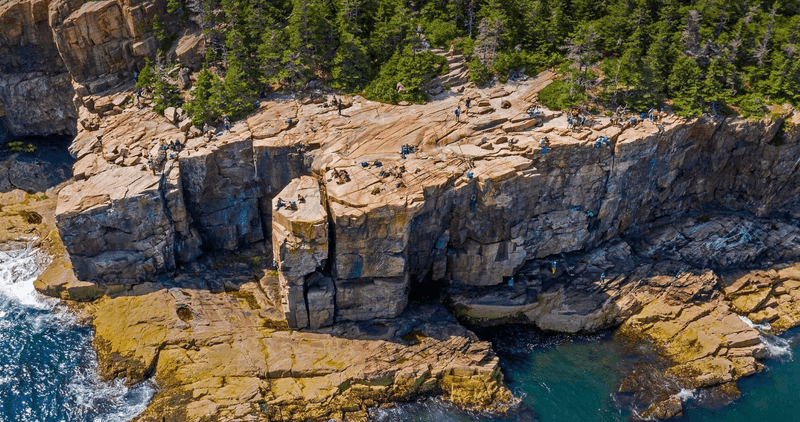
Rising about 110 feet straight out of the Atlantic Ocean, Otter Cliff in Acadia National Park is one of the most photographed rock faces on the entire East Coast of the United States.
The pink Cadillac granite here is part of the intrusive igneous bedrock that forms much of Mount Desert Island, and its warm rosy hue against the deep blue ocean is a color combination that never gets old.
Rock climbers have made Otter Cliff legendary in the climbing community, with routes ranging from beginner-friendly to genuinely technical. Watching climbers work their way up those sea-washed walls while waves boom below is both thrilling and slightly nerve-wracking from the viewing area above.
The Park Loop Road passes right by, so even visitors who are not hiking can pull over and take in the view. Sunset light turns the granite a deep amber color that makes the whole cliff glow, and that is roughly when the parking area fills up fastest. Arrive with time to spare.
7. Schoodic Point, Winter Harbor
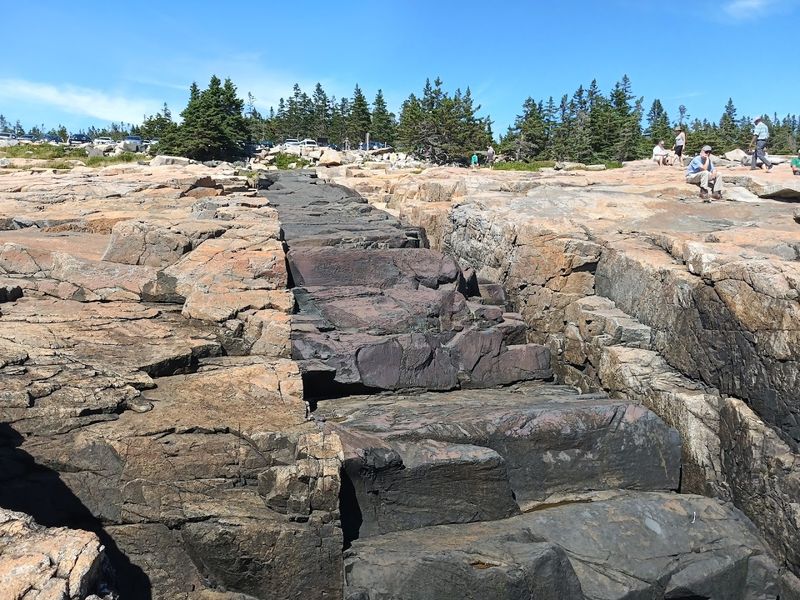
Schoodic Point occupies the only mainland section of Acadia National Park, sitting across Frenchman Bay from the main park in the town of Winter Harbor.
What makes this spot geologically fascinating is the contrast: dark, angular basalt dikes cut directly through the lighter pink granite, creating a dramatic striped pattern across the rock surface that looks almost hand-painted.
The exposed headland takes the full force of Atlantic swells, and when the surf is up, watching waves explode against those fractured rocks is one of the most exhilarating free experiences in Maine.
The sound alone is worth the visit. Spray can shoot twenty feet into the air during a good storm swell, so check forecasts and plan accordingly.
Because Schoodic sits outside the main island park, it tends to draw fewer crowds than popular spots like Thunder Hole, giving you more room to wander the rocky shoreline at your own pace. The loop road around the point is also perfect for cycling.
8. Mount Battie, Camden
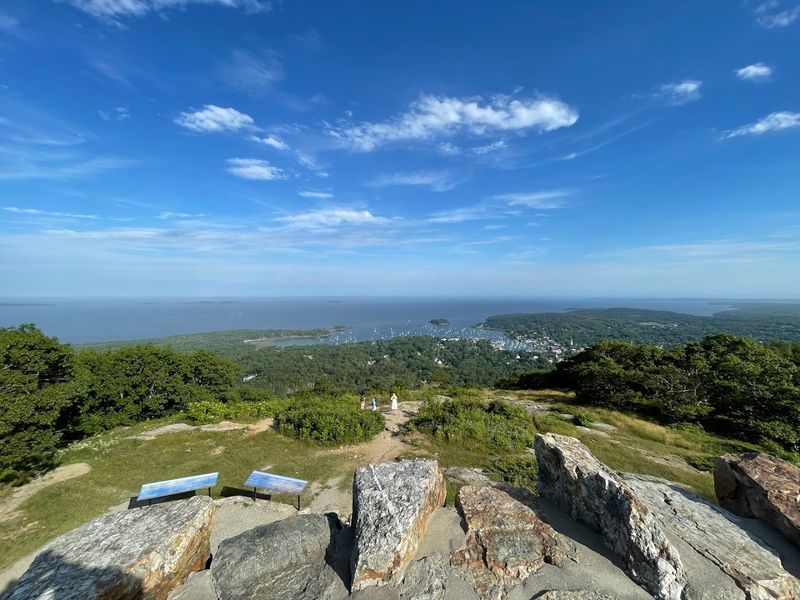
Mount Battie sits right above the charming coastal town of Camden, and the view from its rocky summit is the kind of panorama that makes people pull out their phones and immediately call someone to describe what they are seeing.
Penobscot Bay spreads out below in a patchwork of blue water, green islands, and white sailboats, with the Camden Hills rolling away in every direction.
You can reach the summit either by hiking one of several trails through Camden Hills State Park or by driving the toll road that winds to the top.
The summit itself is open granite ledge, weathered and cracked into natural platforms that make perfect spots for sitting and staring. A stone tower built in 1921 adds a historic focal point to the already impressive scene.
Poet Edna St. Vincent Millay wrote about the view from Mount Battie in her famous poem “Renascence,” which she composed as a teenager in Camden. That literary connection gives the place a quiet extra layer of meaning that rewards those who know the story.
9. Pemaquid Point, Bristol
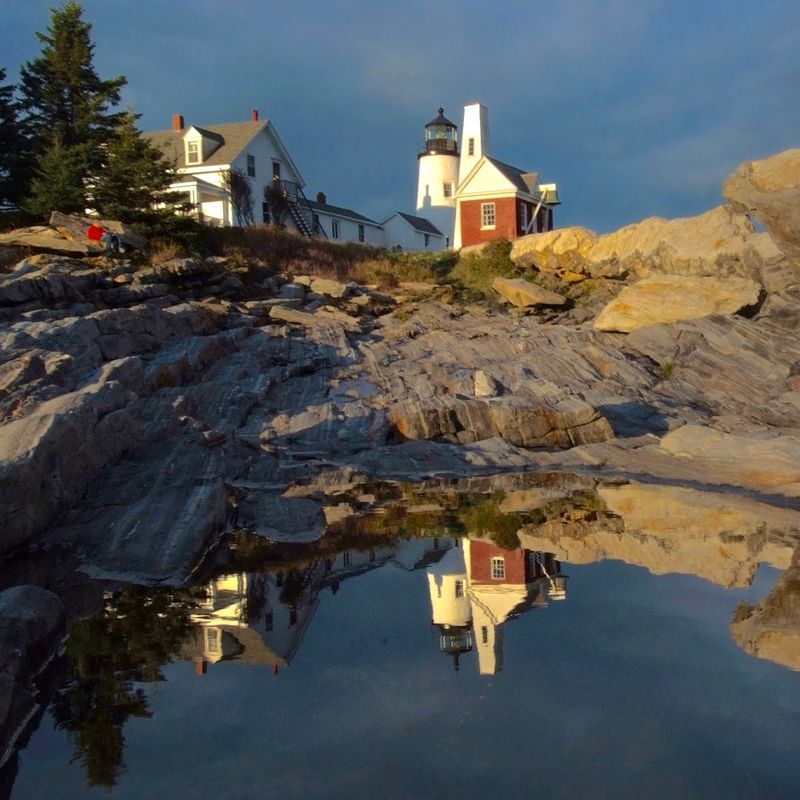
Pemaquid Point might be the single most photographed lighthouse in Maine, and the rocks in front of it deserve just as much attention as the tower itself.
The ledges here are metamorphic rock that has been folded, tilted, and twisted into wild rippling patterns over hundreds of millions of years. Walking across them feels like walking across a frozen wave of stone.
The light station was established in 1827, while the present tower dates to 1835, and it stands at the tip of the Pemaquid Peninsula in Bristol, marking a notoriously rocky stretch of coastline.
The Fishermen’s Museum inside the lighthouse keeper’s house tells that story with artifacts and photographs that give the place real historical weight.
Low tide is the best time to explore the full extent of the rock ledges, which extend surprisingly far out toward the water. Wear shoes with good grip because the rock surface, while beautiful, can be slippery near the waterline.
Admission is a small fee and completely worth it.
10. Giant’s Stairs, Bailey Island
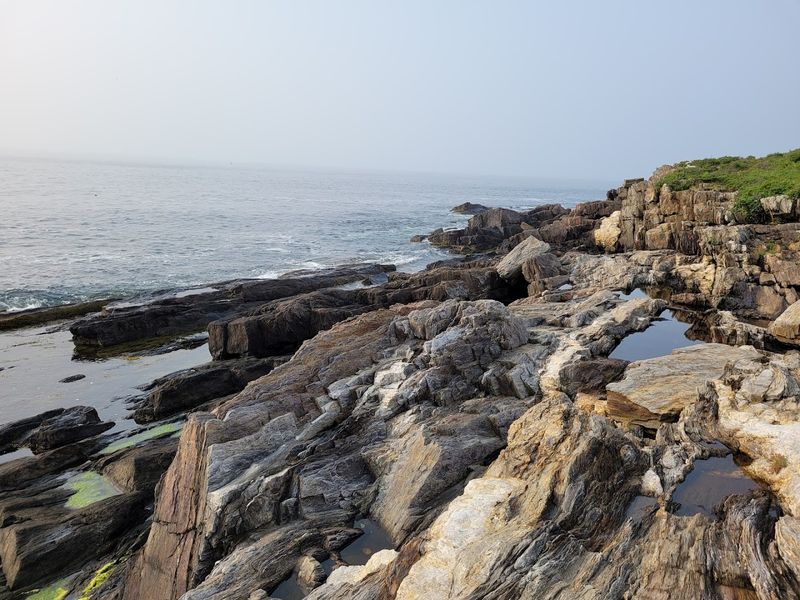
Bailey Island, connected to Orr’s Island by Harpswell’s unique cribstone bridge, is home to one of the most aptly named geological features in New England. Giant’s Stairs gets its dramatic step-like look from ancient bedrock and a dark mafic dike that weathered into bold, stair-like forms along the shore.
Several trails lead toward the pond and summit area, including the direct Brook Trail and steeper routes with boulder scrambles, such as the Loop Trail’s famous narrow chimney section.
The short trail to the formation starts near the Land’s End parking area and winds through coastal spruce before opening onto the rocky shoreline. The boulders are large enough that scrambling between them requires some careful footwork, making it more adventure than stroll.
High surf days turn this spot into a front-row seat for some of Maine’s most powerful wave action. The rocks absorb and redirect each wave in slightly different ways, creating a constantly changing show.
Photographers tend to stake out positions here for hours, and it is easy to understand why once you see it.
11. Bubble Rock, Mount Desert Island
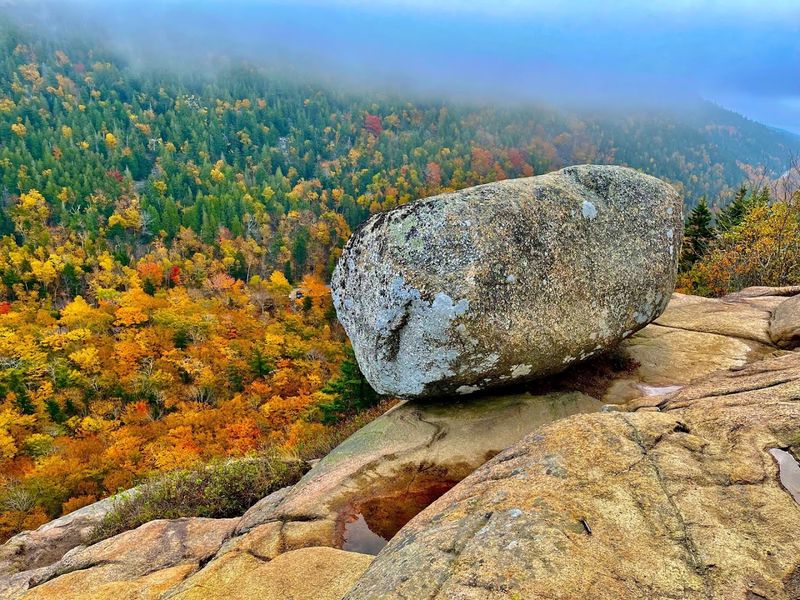
Balancing on the edge of South Bubble Mountain in Acadia National Park on Mount Desert Island, Bubble Rock is a glacial erratic that looks like it was placed there as a dare.
The roughly 100-ton boulder sits on a sloped granite ledge at the summit, appearing to defy gravity so convincingly that tourists have been posing in “pushing” photos next to it for generations.
The hike up South Bubble from the Jordan Pond trailhead is about two miles round trip and involves some moderate scrambling on open granite slabs.
The views from the summit stretch across Jordan Pond and out toward the Cranberry Isles, making the effort more than worthwhile even without the boulder as the main attraction.
Geologists believe the rock was carried here from somewhere north of Bar Harbor by glacial ice during the last Ice Age and deposited when the ice melted. That is a journey of many miles without a single step taken under its own power, which is a genuinely remarkable geological story.
12. Tumbledown Mountain, Weld
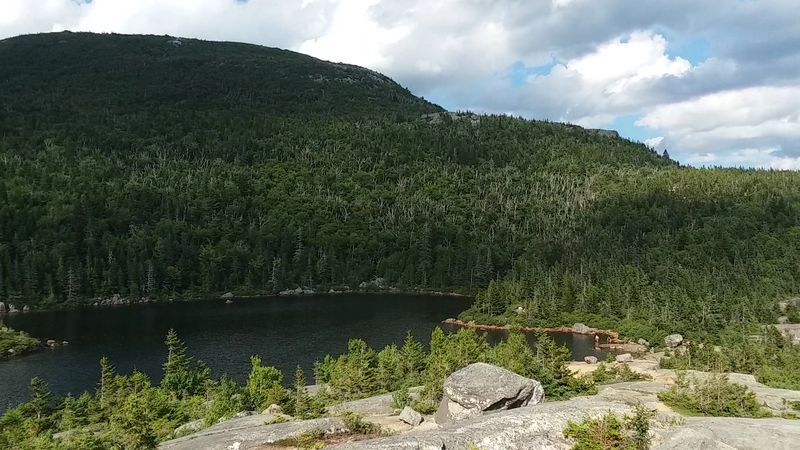
Tumbledown Mountain near Weld in western Maine punches well above its weight class. At roughly 3,068 feet, it is not the tallest peak in the state, but it features something genuinely rare for Maine: a high-elevation alpine pond sitting in a rocky cirque just below the summit.
Tumbledown Pond, surrounded by granite walls and open sky, is one of those places that stops hikers in their tracks every single time.
Several trails lead to the summit, ranging from a steep scramble through a boulder-choked chimney on the Brook Trail to longer ridge walks with more gradual elevation gain.
The chimney route involves pulling yourself through a narrow gap between massive boulders, which is either thrilling or claustrophobic depending on your personality.
The summit ridge is open and rocky, offering views west toward the Rangeley Lakes region and east toward the Mahoosuc Range. Fall colors hit this area hard in late September, painting the forest below in shades that make the already dramatic rocky ridgeline look even more striking from above.
13. Cutler Coast Public Reserved Land, Cutler
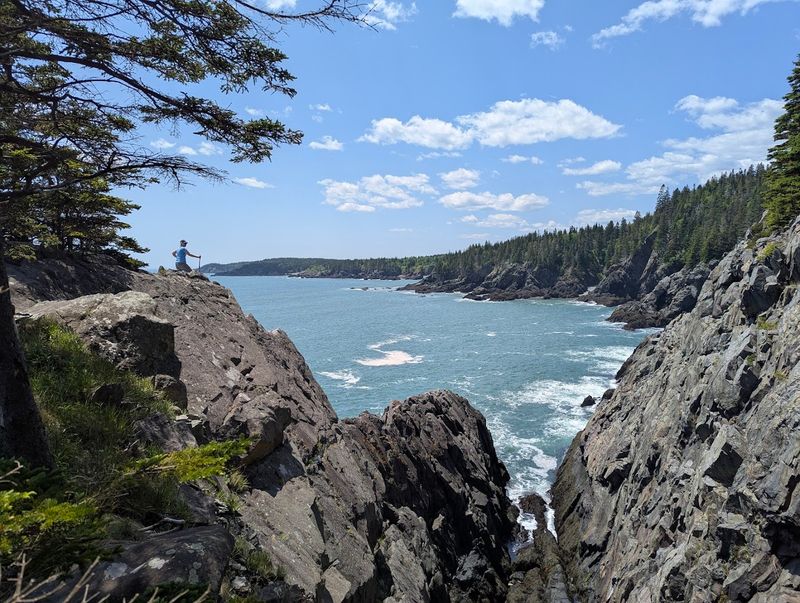
Raw, remote, and genuinely wild, the Cutler Coast Public Reserved Land in the town of Cutler offers some of the most dramatic coastal cliff scenery in all of Maine.
The Bold Coast Trail runs along headlands where dark metamorphic rock drops 100 feet or more straight into the cold Atlantic, creating a landscape that feels more like the coast of Iceland than anything you might expect from New England.
The main loop trail is about 10 miles and takes most hikers a full day to complete.
Along the way, the path alternates between dense spruce forest and open cliff-top ledges where the views are completely unobstructed and the wind reminds you exactly where you are. Whales, seabirds, and harbor porpoises are occasionally spotted from the cliff tops.
Cell service is essentially nonexistent out here, which is actually part of the appeal. Bring a paper map, pack enough food and water, and plan to arrive early because the trailhead parking area is small.
The solitude and scenery at Cutler Coast are rewards that genuinely feel earned.