
11 Underrated Hiking Trails In Maine With Suspension Bridges You’ll Remember
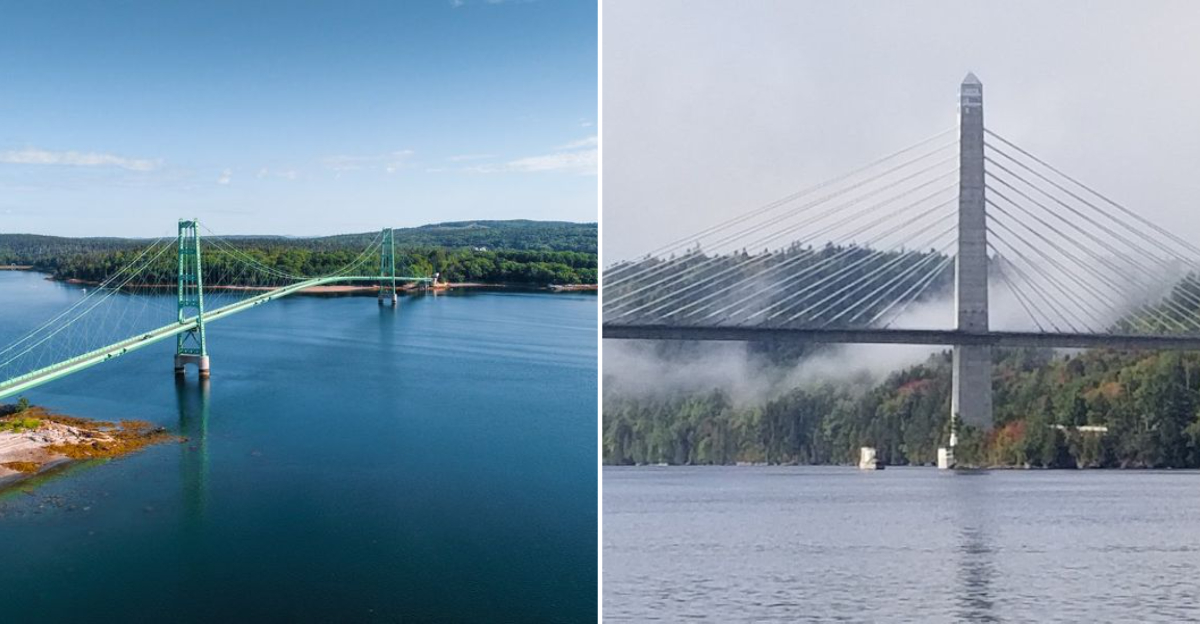
Maine has a funny way of sneaking up on you. One minute, you are walking through quiet woods, and the next, there is a narrow bridge swaying above the water like it has been waiting there just to surprise you.
That is the magic behind these spots. This list brings together Maine trails, scenic walks, and memorable bridge crossings that add a little adventure to an ordinary day outside.
Some are easy enough for a relaxed family outing, while others lead into wilder forests, rocky shores, river gorges, and old crossings packed with character. A few feel peaceful, a few feel dramatic, and all of them make Maine’s trail scene feel a lot more exciting than you might expect.
1. Wiggly Bridge And Steedman Woods, York, Maine
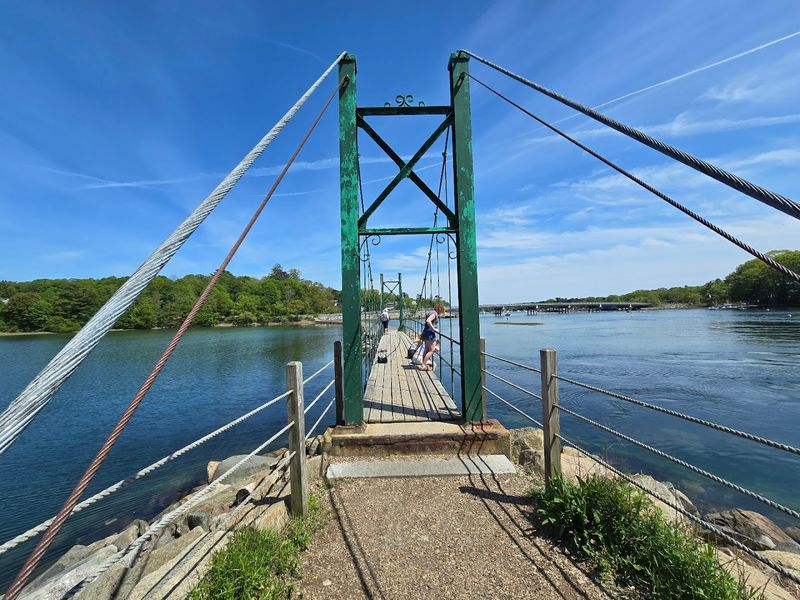
Something about a bridge called the Wiggly Bridge just demands your attention. Located in York, Maine, this tiny pedestrian suspension bridge is widely considered one of the smallest suspension bridges in the world, and crossing it feels like a private joke between you and the trail.
It bounces, it sways, and yes, it wiggles, but that is entirely the point.
The bridge connects to the Steedman Woods trail system, a peaceful loop through coastal forest that runs alongside a tidal creek. The contrast between the quiet woods and the nearby ocean makes this one of the most underrated short hikes on the southern Maine coast.
You can cover the full loop in under an hour, making it ideal for families with young kids or hikers looking for a low-key afternoon outing.
Parking is available near Hartley Mason Reserve off Route 103. The trail surface is mostly packed dirt and boardwalk, so it stays manageable even after rain.
Go early on summer mornings to beat the crowds and catch the tidal light on the water. This little bridge punches well above its weight in charm.
2. Androscoggin Swinging Bridge, Brunswick And Topsham, Maine
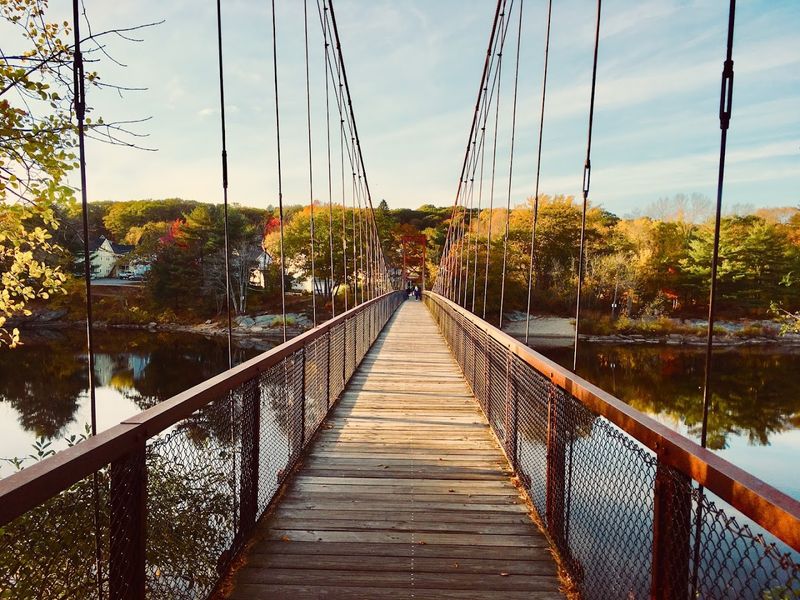
Connecting the towns of Brunswick and Topsham across the Androscoggin River, this swinging bridge has been a local landmark for generations.
Built in 1892 and reconstructed over the years, it stretches more than 300 feet across the water and gives you a front-row seat to the river’s power, especially during spring runoff when the current moves fast and loud beneath your feet.
The bridge is part of a broader trail network that links riverfront paths on both sides of the Androscoggin. Hikers and cyclists use it regularly, and the crossing feels surprisingly dramatic for a bridge in the middle of two small New England towns.
The wooden deck and cable railings give it an old-school feel that newer pedestrian bridges simply cannot match.
Access the bridge from the Brunswick side via the Androscoggin Bicycle and Pedestrian Path, or from the Topsham side near the Topsham Fair Mall area.
Spring and fall are the best seasons for a visit, when the river is full and the foliage adds color to the scene. The bridge moves just enough underfoot to remind you that it has real history behind every plank.
3. Moxie Falls Trail, The Forks, Maine
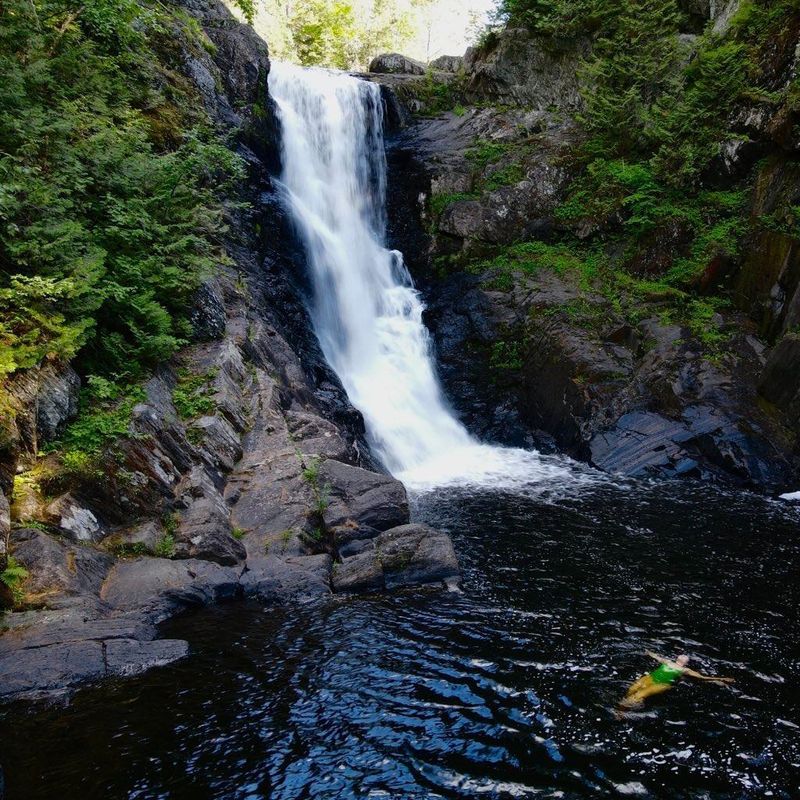
Moxie Falls is one of those places that earns its reputation the moment you see it. At roughly 90 feet tall, it is one of Maine’s highest waterfalls, and the trail leading to it includes sturdy built sections that help hikers reach the main viewpoint safely.
The bridge frames the gorge beautifully and gives hikers a safe perch to take in the full scale of the falls. The trailhead is located off Lake Moxie Road near The Forks, a small community in Somerset County known as a gateway to the Kennebec River.
The hike itself is about 2 miles round trip, which makes the payoff feel almost unfair. The path winds through dense northern forest, crossing the stream twice before arriving at the base of the falls.
Late spring is the best time to visit when snowmelt sends the water volume to its peak. Fall foliage season runs a close second, with the surrounding hardwoods turning gold and orange above the gorge.
Wear waterproof footwear since the trail gets muddy near the stream crossings. Few short hikes in Maine deliver this level of raw, dramatic scenery.
4. Footbridge Beach Trail, Ogunquit, Maine
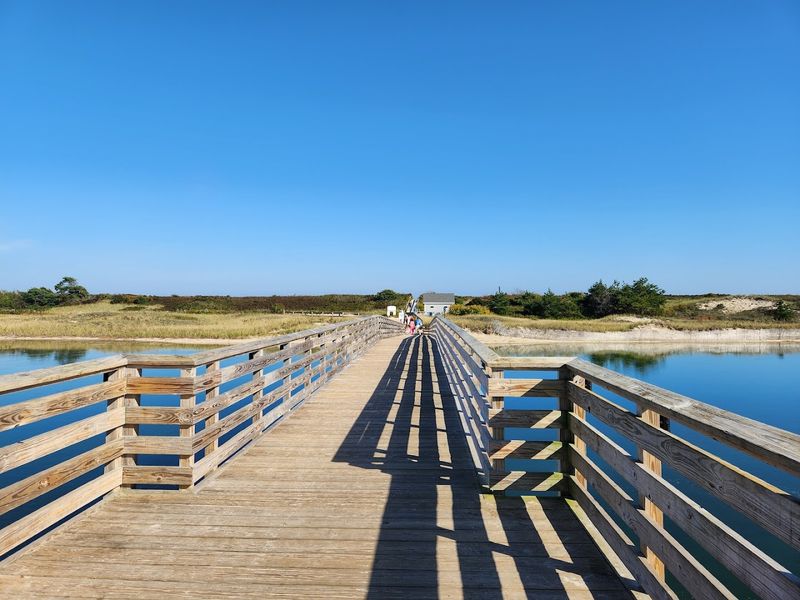
Not every bridge crossing needs to feel like an expedition. The footbridge in Ogunquit, Maine, is a beloved local landmark that connects the town center to Footbridge Beach, one of the quieter stretches of sand along the southern Maine coast.
The crossing spans the Ogunquit River estuary and takes about thirty seconds to walk, but it opens up a completely different world on the other side.
Footbridge Beach sits just north of the more popular Ogunquit Beach, which means it tends to attract a more laid-back crowd.
The sand here is wide and clean, the surf is gentle enough for swimming, and the views back toward the estuary are genuinely lovely. Families, couples, and solo walkers all find something to enjoy on this stretch of shoreline.
The bridge is accessible from Beach Street in Ogunquit village, and parking fills up fast on summer weekends, so arriving before 9 a.m. is a smart move.
The surrounding Marginal Way cliff walk is also worth adding to your visit, creating a satisfying half-day loop along the coast. Sometimes the best hiking destinations are the ones that sneak up on you between the dunes.
5. Appalachian Trail, Monson To The 100-Mile Wilderness, Maine
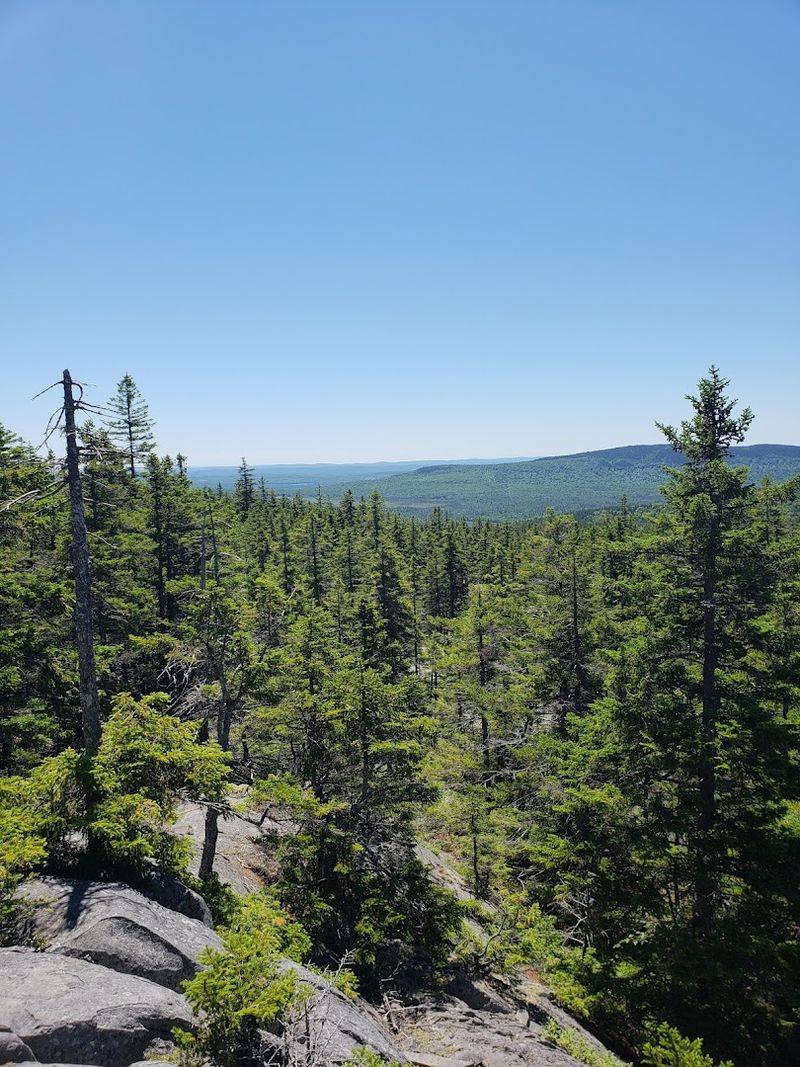
The 100-Mile Wilderness is the most remote stretch of the entire Appalachian Trail, and it begins just outside Monson, a small town in Piscataquis County.
This section of the AT covers roughly 100 miles of backcountry terrain before reaching Abol Bridge near Baxter State Park, and along the way it includes many stream and river crossings that hikers remember long after the trip is over.
Bridges in this section are not decorative. They are essential.
Spring stream crossings can be dangerously high, and the suspension footbridges that span rivers like the Piscataquis and the Pleasant River are genuine lifelines for through-hikers. The craftsmanship on some of these structures is impressive given how deep in the backcountry they sit.
Most hikers tackle this section over seven to ten days, but shorter out-and-back day hikes from the Monson trailhead are possible for those who want a taste of the wilderness without a full resupply mission.
Shaw’s Boarding House in Monson is a legendary hiker hostel and a great place to get trail beta. The 100-Mile Wilderness earns every bit of its fearsome reputation.
6. Penobscot Narrows Bridge Observatory, Prospect, Maine
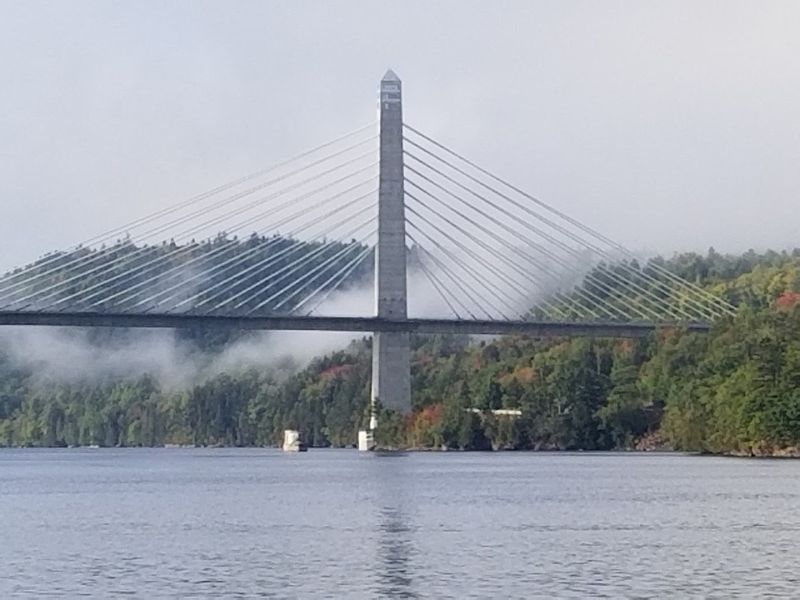
Technically a road bridge with a public observatory, the Penobscot Narrows Bridge in Prospect, Maine, offers one of the most dramatic elevated perspectives in the entire state.
The bridge spans the Penobscot River between Prospect and Verona Island, and the observatory sits 420 feet above the river inside the northern tower, making it one of the highest public bridge observatories in the world.
Visitors access the observatory through Fort Knox State Historic Site, a remarkably well-preserved granite fort on the Prospect side of the river.
The combination of the fort’s history and the bridge’s engineering creates a visit that satisfies both outdoor enthusiasts and history buffs in a single afternoon.
The views from the top stretch across the river valley, the surrounding hills, and on clear days, all the way to Acadia National Park.
The observatory is open seasonally from May through October, and admission is bundled with Fort Knox entry. Plan at least two hours to do both justice.
The bridge itself is a striking piece of modern engineering that contrasts beautifully with the 19th-century stonework of the fort below. Heights feel entirely worth it when the panorama looks like this.
7. Two Cent Bridge, Waterville, Maine
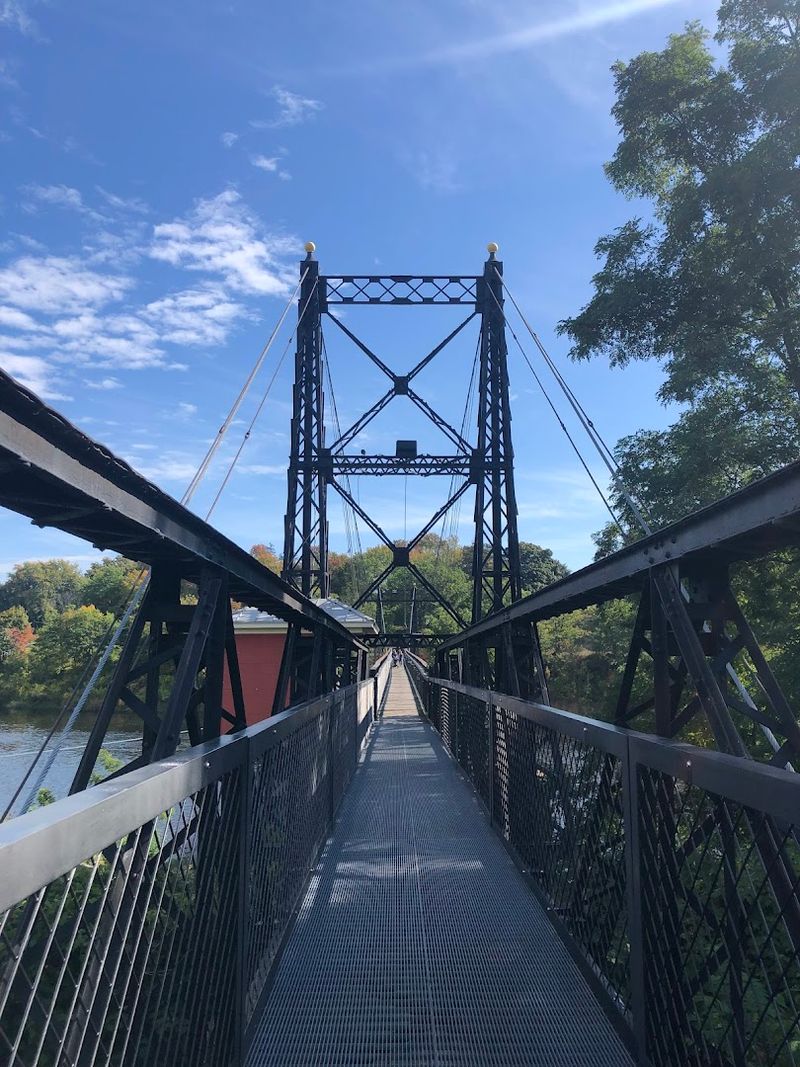
Built in 1901, the Two Cent Bridge in Waterville, Maine, earned its name from the toll that pedestrians once paid to cross the Kennebec River.
Today the crossing is free, but the bridge still carries that same slightly creaky, wonderfully old-fashioned character that made it famous in the first place. At roughly 275 feet long, it is one of the oldest surviving pedestrian suspension bridges in the United States.
The bridge connects downtown Waterville to the town of Winslow on the opposite bank, and it sits along a riverside trail system that makes for a pleasant urban hike.
The Kennebec runs wide and powerful here, and the view from mid-bridge gives you a great sense of how the river shaped this part of central Maine. Colby College is nearby if you want to extend your visit with a walk around campus.
Parking is available in downtown Waterville within easy walking distance of the bridge. The surrounding area has a handful of local cafes and shops worth exploring before or after your crossing.
History nerds will appreciate the interpretive signage near the bridge that explains its construction and original purpose. A two-cent bridge has never felt more priceless.
8. Deer Isle Bridge Trail, Deer Isle, Maine
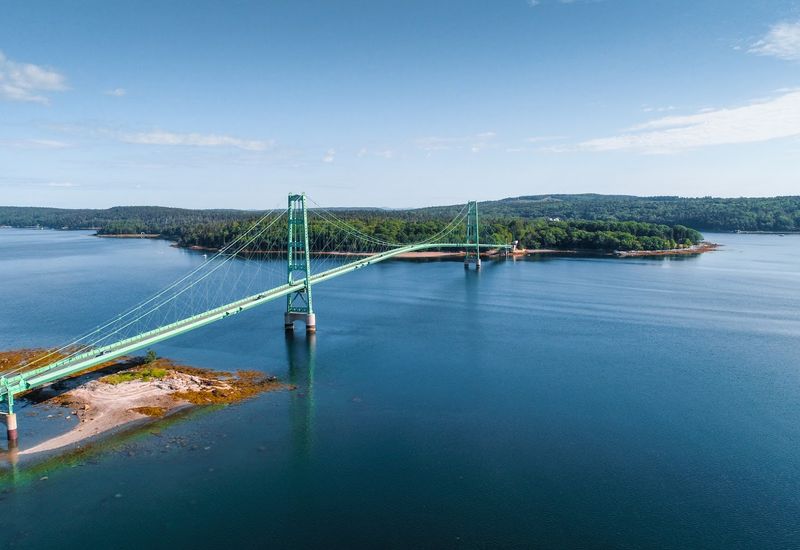
Deer Isle is the kind of place that quietly rewrites your expectations of coastal Maine. To get there, you cross the Deer Isle-Sedgwick Bridge, a slender suspension span that arcs over Eggemoggin Reach and deposits you onto an island where lobster boats outnumber tourists on most days of the year.
The bridge itself is worth stopping for, with views across the reach that stretch toward the open Atlantic on one side and wooded coves on the other.
Once on the island, hiking options include trails through Barred Island Preserve and Settlement Quarry, where old granite quarrying operations left behind tide pools and open ledges with sweeping ocean views.
The island’s remote feel is a big part of its appeal, and the trails here reward visitors who take their time rather than rushing through.
The bridge is located on Route 15, roughly 45 miles south of Ellsworth. Fall is an outstanding time to visit, when the island’s spruce and hardwood forests create a vivid contrast against the grey-blue water.
Stonington, the island’s main village, is a working fishing community with enough character to fill an entire afternoon on its own. Cross the bridge and stay longer than you planned.
9. Wire Bridge, New Portland, Maine
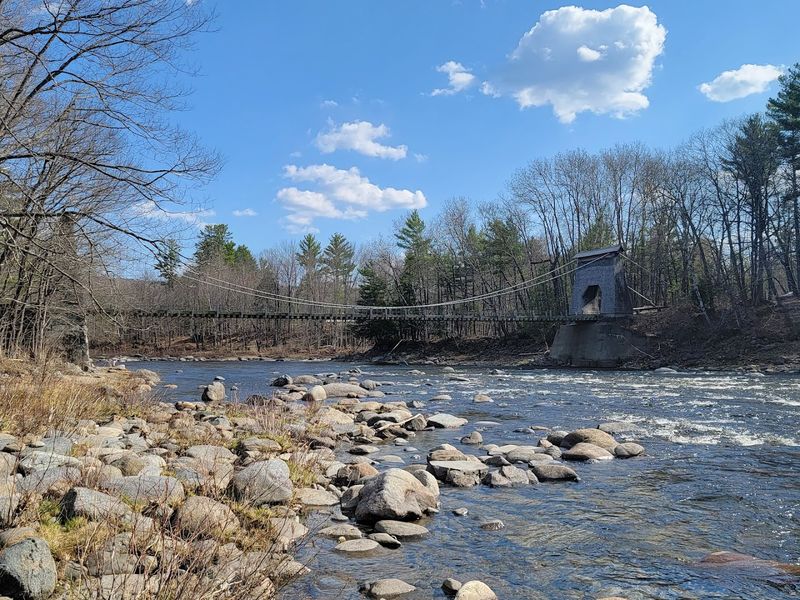
Few bridges in New England have the Wire Bridge’s combination of age, engineering novelty, and sheer visual character. Built in 1841 in New Portland, Somerset County, it is one of only a handful of surviving wire suspension bridges in the United States.
The cables are original iron wire twisted into ropes, and the whole structure has a hand-crafted quality that modern infrastructure simply does not replicate.
The bridge spans the Carrabassett River and is open to foot traffic and light vehicles, though most visitors choose to walk it slowly and absorb the craftsmanship up close.
The surrounding area is rural and quiet, with the river running clear over a rocky streambed below. It is the kind of spot where you stop talking and just listen for a few minutes.
New Portland is located about 20 miles north of Farmington on Route 146. The bridge sits just off Wire Bridge Road and is easy to find with a basic map or GPS.
There are no formal hiking trails attached to the bridge, but the riverside banks offer plenty of room to wander. Covered bridge enthusiasts and history lovers consistently rank this as one of Maine’s most rewarding off-the-beaten-path stops.
10. Hemlock Bridge, Fryeburg, Maine
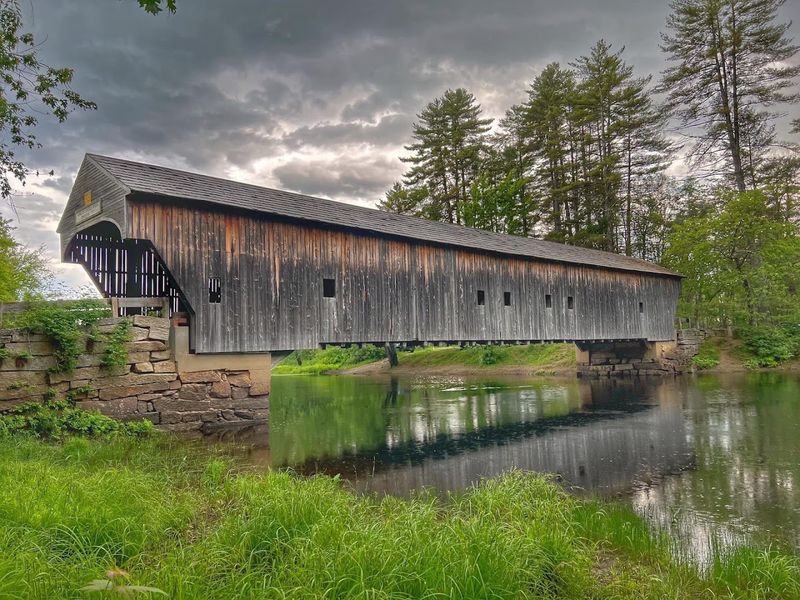
Covered bridges and suspension bridges are cousins in the world of historic crossings, and Hemlock Bridge in Fryeburg earns its place on this list through sheer beauty and accessibility.
Built in 1857, it spans the Old Channel of the Saco River in Oxford County and remains one of the most photogenic structures in western Maine. The surrounding landscape of flat farmland, river meadows, and distant mountain ridges makes the short walk to the bridge feel like stepping into a painting.
The bridge is located off Hemlock Bridge Road, about five miles north of Fryeburg center. It sits within a broader network of Saco River trails and canoe routes that make the area popular with paddlers and hikers alike.
In summer, the river here is calm and clear, ideal for a wade or a swim near the bridge’s downstream side. Fall foliage season is the undisputed peak time to visit, when the surrounding maples and birches go full spectacle mode against the red-painted bridge.
Parking is available in a small gravel lot near the bridge entrance. Combine this stop with a drive through the Fryeburg area for a full day of western Maine countryside.
Old bridges tell stories, and this one has been talking for over 160 years.
11. Bailey Island Bridge, Harpswell, Maine

The Bailey Island Bridge in Harpswell, Maine, is genuinely one of a kind. Completed in 1928, it is the only remaining open cribstone bridge in the world, constructed from interlocking granite blocks stacked without mortar so that tidal currents can flow freely through the gaps.
Walking across it feels less like hiking and more like walking on the skeleton of the ocean itself. The bridge connects Orr’s Island to Bailey Island along Route 24, about 12 miles south of Brunswick.
The surrounding Harpswell peninsula is a maze of coves, causeways, and working fishing harbors that reward explorers willing to follow the road wherever it leads. Giant’s Stairs, a nearby hiking trail on Bailey Island, adds a rugged coastal scramble to the visit with dramatic ocean ledge views.
Low tide is the best time to walk the bridge and peer through the granite gaps at the rushing water below. The Giant’s Stairs trailhead is located off Washington Avenue on Bailey Island and offers a short rocky coastal walk of about a half mile.
Bring layers regardless of the season since ocean breezes keep things cool even in August. No other bridge in Maine, or anywhere else, looks quite like this one.