
This Haunted Arkansas Road Trip Leads To Places Locals Still Whisper About
Grab your keys and get ready for a road trip that feels less like sightseeing and more like stepping into a story people never fully explain. Arkansas can look calm in the daylight, but this route follows places with a colder kind of pull.
You will move through historic rooms and quiet paths where the past seems a little too close. Some stops are famous for their eerie reputations.
Others work slower, using silence instead of spectacle. That mix is what makes the drive so addictive.
One minute you are admiring old brick or wide open land. The next, you are wondering why the air changed.
This is a trip for anyone who likes history with a shiver running through it. Keep the route handy and bring someone brave.
One stop may stay with you longer than expected, especially after dark, when memory feels loud on the drive home later.
1. Crescent Hotel, Eureka Springs
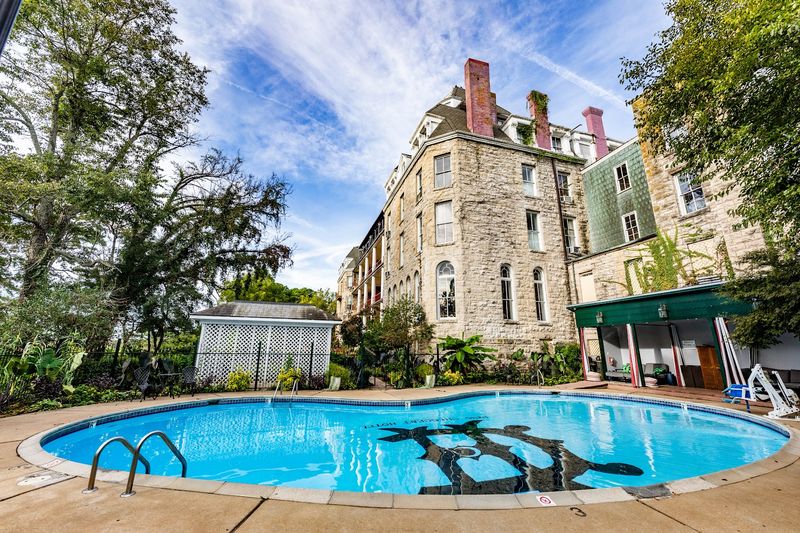
Locals around Eureka Springs call it “America’s Most Haunted Hotel,” and after one night inside, I completely understand why.
The Crescent Hotel sits at 75 Prospect Ave, Eureka Springs, AR 72632, perched dramatically on a hilltop where its stone Victorian architecture catches every shadow the Ozarks can throw at it.
Built in 1886, this property has lived many lives, including a deeply troubling chapter when it operated as a fraudulent cancer clinic run by a con man named Norman Baker.
Guests today still report seeing a nurse pushing a gurney through empty corridors, and a stonemason named Michael, who reportedly fell to his end during construction, is said to roam the property with unsettling regularity.
Room 218 has its own chilling reputation, and Room 419 is where a former patient named Theodora supposedly lingers, rearranging belongings and making her presence felt in quiet but unmistakable ways.
Children’s laughter echoes in the hallways even when no children are checked in, which is the kind of detail that makes you want to sleep with the lamp on.
The hotel leans into its haunted identity with nightly ghost tours that walk you through the most active spots, and the guides know their history cold.
I stayed in the main building, kept the television off, and heard footsteps in the hall at 2 a.m. when the corridor outside was completely empty.
Few places reward the curious traveler quite the way this hilltop landmark does.
2. Eureka Springs Historic District, Eureka Springs
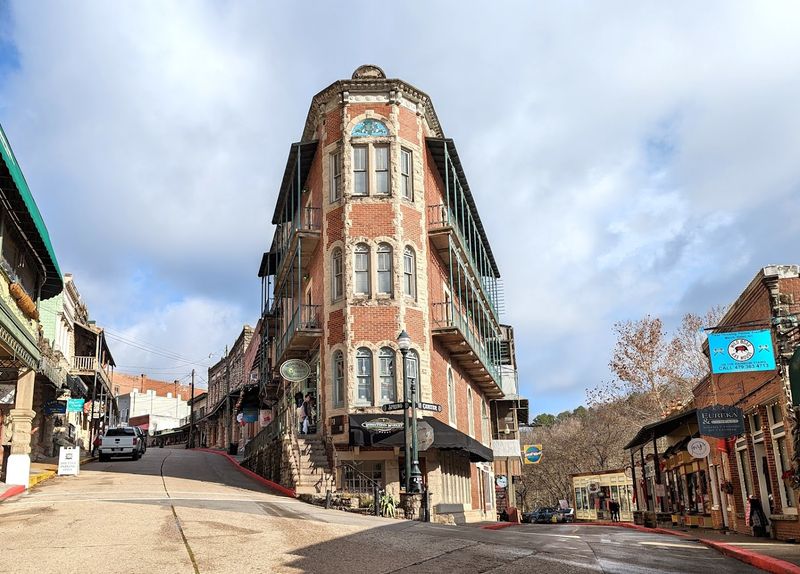
Just a short walk from the Crescent, the Eureka Springs Historic District wraps around you like a town frozen somewhere between the 1880s and a fever dream.
Located in Eureka Springs, AR 72632, the district is a National Register-listed historic district packed with Victorian storefronts, steep winding streets, and buildings that seem to lean toward each other like they are sharing secrets.
No two streets run parallel here, which means getting happily lost is practically part of the itinerary.
The town grew up fast around its famous healing springs, and that boom-era energy still crackles in the architecture, the art galleries, and the surprisingly good coffee shops tucked into century-old stone buildings.
Local shopkeepers will quietly tell you about the Blue Spring ghost sightings if you ask the right way, and the old Basin Park Hotel nearby has its own reputation for unexplained activity.
I spent a late afternoon wandering the Spring Street corridor, watching the light change across the limestone facades, and felt the distinct sensation that someone was walking just behind me on an otherwise empty block.
The district also hosts ghost tours in the evenings that connect several reportedly active buildings into one atmospheric walk.
Arkansas has no shortage of historic towns, but Eureka Springs operates on a frequency that feels slightly out of sync with the present, and that quality is exactly what makes it so compelling.
Plan at least half a day here, and bring a jacket even in summer because the shade runs deep.
3. Pea Ridge National Military Park, Garfield
Few places carry the weight of history quite like an open field where a major battle once decided the fate of an entire region.
Pea Ridge National Military Park sits at 15930 National Park Drive, Garfield, AR 72732, and it covers more than 4,000 acres of some of the most well-preserved Civil War terrain in the entire country.
The park marks the site of a pivotal 1862 confrontation that helped secure Missouri for the Union, and the land has changed remarkably little since that conflict played out across its ridges and hollows.
Rangers will tell you that visitors walking the trails at dusk sometimes freeze mid-step, swearing they hear cannon fire rolling in from the tree line when the air is perfectly still.
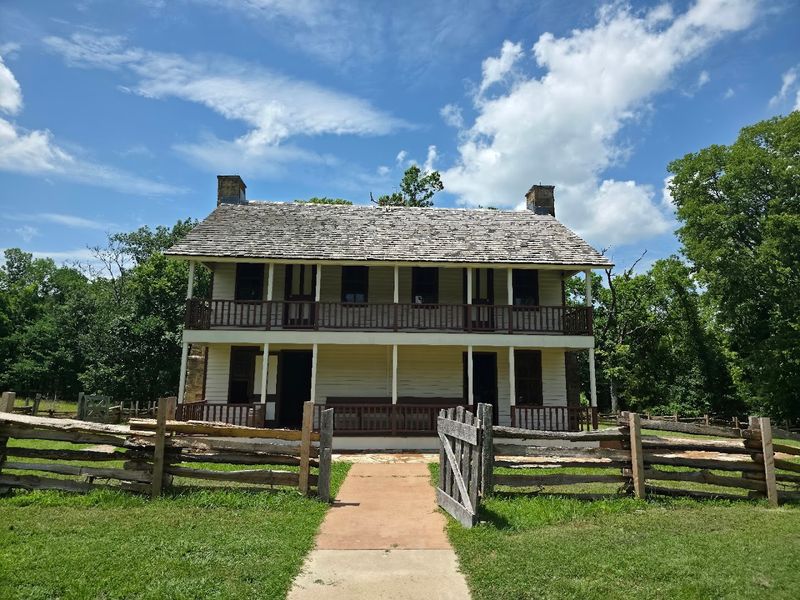
Ghostly shapes near the Elkhorn Tavern site, one of the most fought-over spots on the battlefield, have been reported by hikers who had no idea about the location’s history before their encounter.
I took the auto tour route in the early evening, and the way the light fell across Leetown battlefield made the whole landscape feel suspended between two time periods at once.
The visitor center provides excellent historical context before you head out, and the interpretive markers along the road are detailed enough to make the past feel genuinely close.
Wildlife is abundant here too, so you may spot deer drifting across the same ground where soldiers once held their positions.
Quiet, haunting, and historically essential, this park rewards every minute you give it.
4. MacArthur Park Historic District, Little Rock
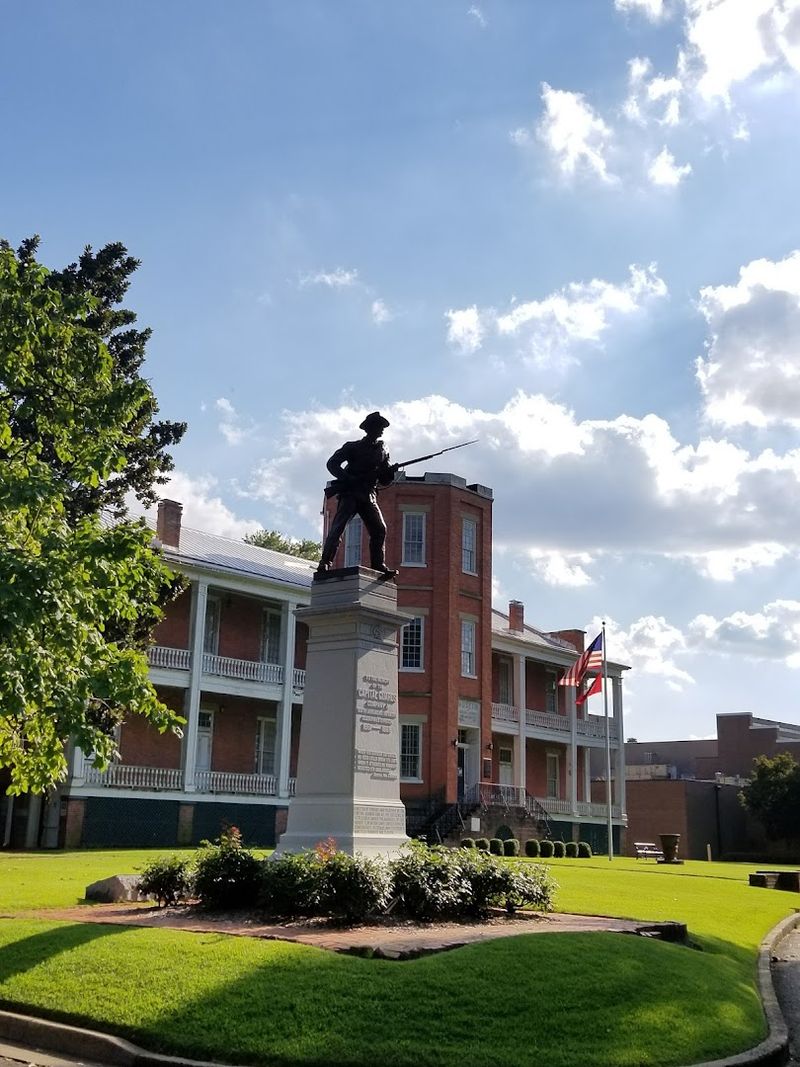
The building at the center of this Little Rock landmark has seen more conflict, drama, and unexplained activity than most structures ten times its size.
MacArthur Park Historic District is anchored by the old Tower Building at 503 E 9th St, Little Rock, AR 72202, a Civil War-era arsenal constructed around 1840 that now houses the MacArthur Museum of Arkansas Military History.
The structure earned its haunted reputation through a long list of violent and turbulent events, including battles, accidents, and at least one duel fought in its shadow.
Visitors have reported shadowy figures moving through rooms that were clearly empty, and disembodied voices have been heard in the lower levels where the building’s darkest history played out.
Paranormal investigation teams have spent nights here and come away with recordings they struggle to explain through conventional means.
The museum itself is genuinely worth the visit for its military history collection, which spans from the Civil War through more recent conflicts and is presented with real care.
I found the courtyard particularly atmospheric, where the old brick walls seem to absorb the afternoon heat and release something harder to name after the sun goes down.
The surrounding park adds a layer of peaceful contrast to the building’s intense history, with walking paths and mature trees creating a setting that feels both beautiful and slightly charged.
History and mystery share the same address here, and neither one feels like it plans to leave anytime soon.
5. Mount Holly Cemetery, Little Rock
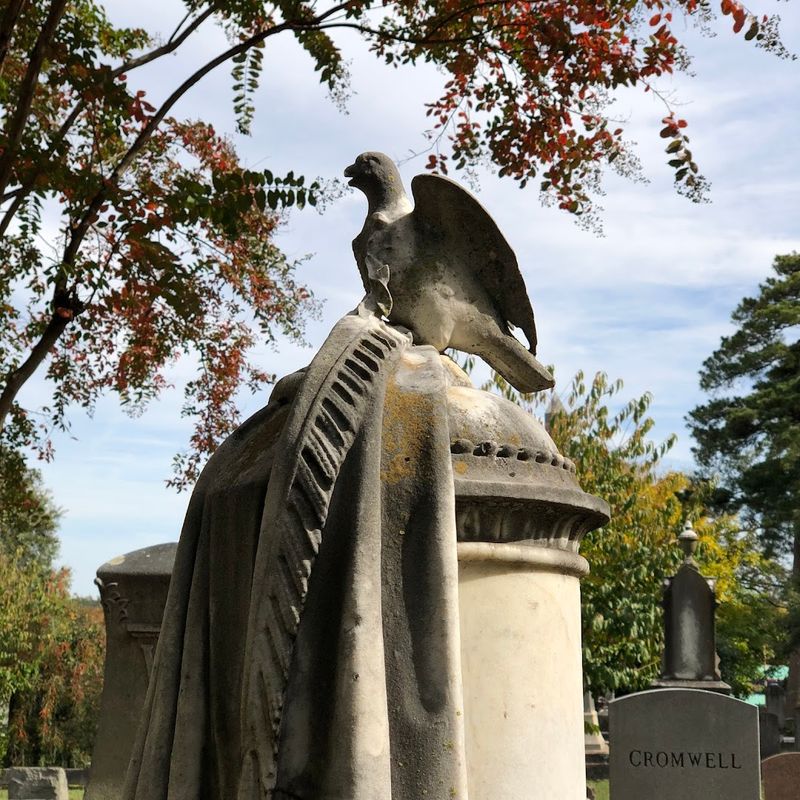
Locals have called it the Westminster Abbey of Arkansas for years, and a single walk through its iron gates makes the comparison feel entirely earned.
Mount Holly Cemetery rests at 1200 S Broadway St, Little Rock, AR 72202, and it serves as the final resting place for governors, generals, and some of the most prominent figures in the state’s long history.
The grounds are beautiful in a solemn, deliberate way, with towering oaks framing ornate Victorian-era monuments that have stood through more than a century of Southern seasons.
Reports of strange activity here go back generations, with visitors describing statues that appeared to shift position between one glance and the next, and voices that seemed to rise from nowhere in particular.
Some visitors have captured photographs showing unexplained lights hovering near certain grave sites, and those images circulate quietly among paranormal enthusiasts who treat this cemetery as one of the South’s most credible haunted locations.
I visited on a grey afternoon when the light was flat and even, which made the white marble monuments glow in a way that felt almost theatrical.
The cemetery is open to respectful visitors and offers a genuinely moving experience even if you arrive with zero interest in the paranormal.
Reading the names and dates carved into the stones gives you a compressed tour of Arkansas history that no museum can quite replicate.
Leave the headphones at home here, because the sounds of this place deserve your full attention.
6. Old State House Museum, Little Rock
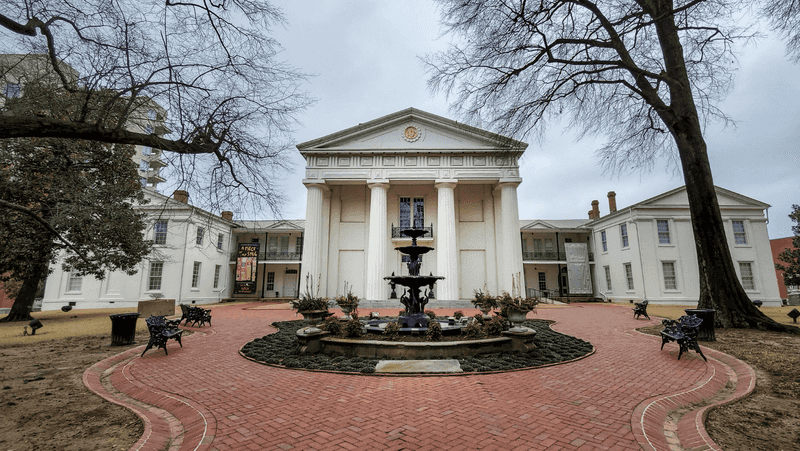
Built before the Civil War reshaped everything around it, this Greek Revival building on West Markham Street carries a quiet authority that hits you the moment you see those white columns.
The Old State House Museum stands at 300 W Markham St, Little Rock, AR 72201, and it holds the distinction of being the oldest surviving state capitol building west of the Mississippi River.
The building served as Arkansas’s seat of government through some of the most turbulent decades in American history, and that kind of concentrated human drama tends to leave marks that go beyond the physical.
Staff members have quietly acknowledged over the years that certain rooms feel different after hours, and that the sound of footsteps in empty chambers is not entirely unusual.
The legislative hall, where some of the state’s most heated debates once echoed off the walls, reportedly carries an energy that visitors frequently describe as charged or watchful.
As a museum, the Old State House does exceptional work presenting Arkansas history through well-curated exhibits that cover everything from territorial politics to the civil rights era.
I spent a long morning working through the galleries and found myself lingering in the old legislative chamber, partly because of the architecture and partly because something about the room made leaving feel oddly difficult.
The building is surrounded by a small but well-kept landscape that softens its formal appearance and makes it approachable.
History this layered rarely comes packaged in a building this well-preserved.
7. Historic Malco Theatre, Hot Springs
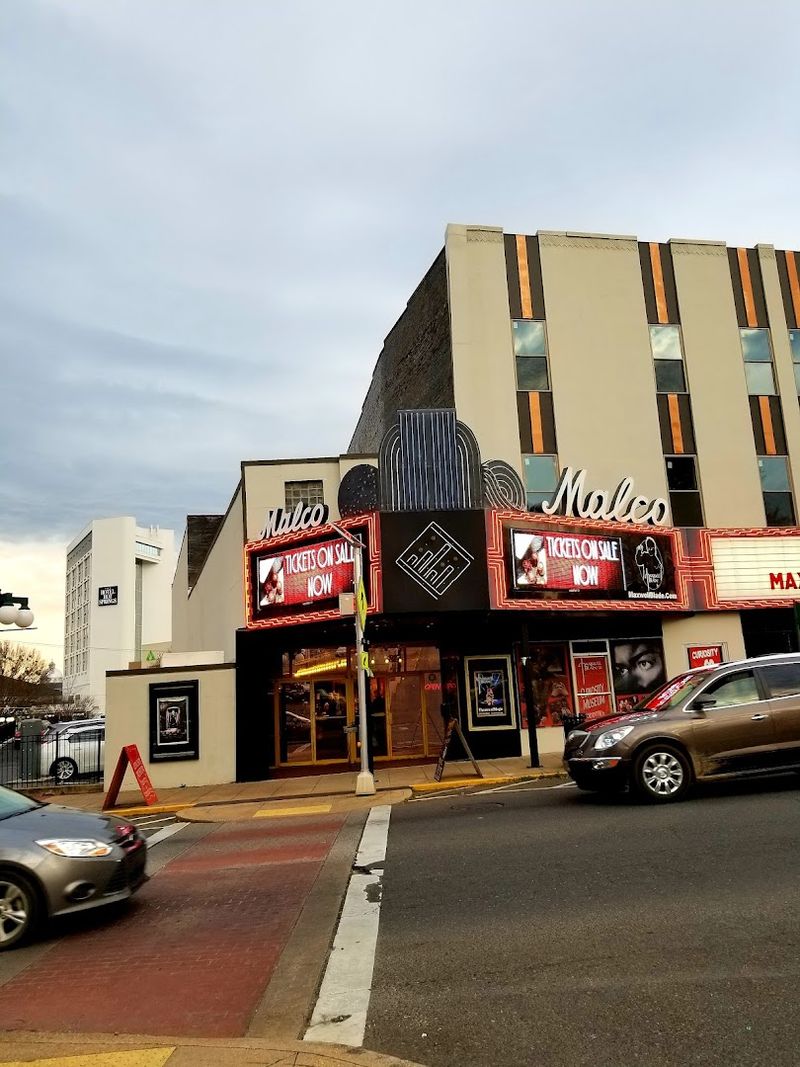
Central Avenue in Hot Springs has always had a theatrical personality, and the Malco fits right into that tradition while adding a few extra layers of mystery.
The Historic Malco Theatre sits at 817 Central Ave, Hot Springs, AR 71901, a beautifully preserved movie palace that opened its doors during Hollywood’s golden era and has been collecting stories ever since.
The ornate interior, with its layered architectural details and old-school projection booth, feels like stepping into a building that remembers every film it ever screened and every person who sat in its seats.
Reports of unexplained activity here include cold spots in the balcony section, shadowy figures spotted near the stage area after closing, and the occasional sound of a seat folding down in an otherwise empty auditorium.
The theatre has been used for paranormal investigation events that draw enthusiasts from across the region, and the findings from those sessions have kept the Malco firmly on Arkansas’s haunted landmark circuit.
Hot Springs itself is a fascinating backdrop for this stop, with its thermal baths, Bathhouse Row, and National Park setting creating a town that already operates somewhere between ordinary and extraordinary.
I caught an evening event at the Malco and spent as much time studying the ceiling details and the shadows in the corners as I did watching what was happening on stage.
The building has a personality that old theatres sometimes develop when they outlive their original era.
You will not walk out feeling indifferent about this place.
8. Fort Smith National Historic Site, Fort Smith
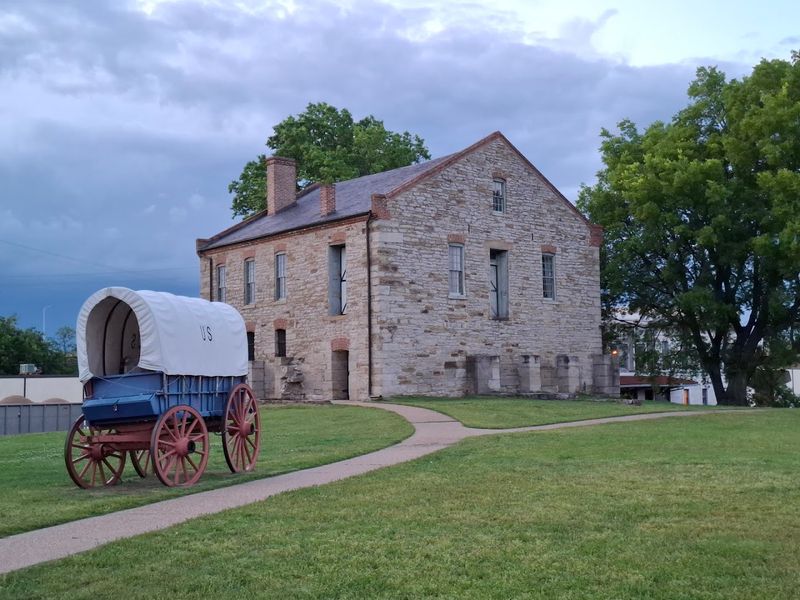
The reconstructed gallows at Fort Smith make the full weight of post-Civil War frontier justice feel impossible to ignore.
Fort Smith National Historic Site occupies 301 Parker Ave, Fort Smith, AR 72901, where the old federal courthouse and jail complex served as the base of operations for one of the most famous judges in American history.
Judge Isaac Parker, known widely as the Hanging Judge, presided over a court that handled cases from Indian Territory across the river, and the proceedings here were rarely routine or calm.
The old jail beneath the courthouse, known as Hell on the Border, is where the haunted reputation of this site is most concentrated, with visitors reporting oppressive sensations, unexplained sounds, and the distinct feeling of being observed in the underground cellblock.
Visitors can explore exhibits tied to the federal court, the jail, frontier law, U.S. deputy marshals, and the site’s long military history.
The site sits right along the Arkansas River, and that waterfront setting gives the whole complex a geographic drama that matches its historical weight.
I walked the cellblock slowly, reading the names scratched into the old walls, and found that the silence down there had a texture to it that I have not experienced anywhere else on this road trip.
History here is not behind glass.
It presses in from every direction, and the air itself seems to hold a charge.
9. Clayton House, Fort Smith
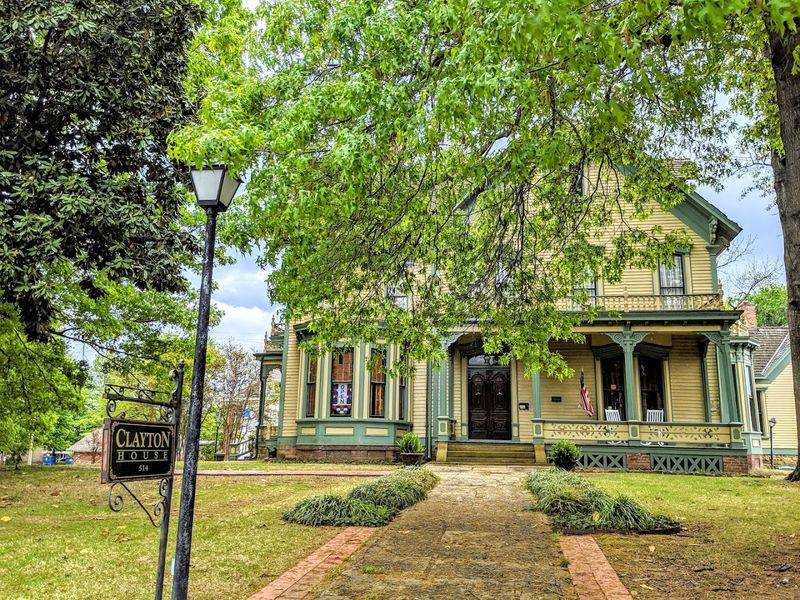
A few blocks from the federal courthouse, a Victorian mansion on North 6th Street carries its own quieter but equally persistent haunted reputation.
The Clayton House stands at 514 N 6th St, Fort Smith, AR 72901, a carefully preserved 19th-century home that served as a Union hospital during the Civil War before becoming a private residence for one of the region’s most prominent legal families.
That hospital chapter is where most of the reported activity seems to originate, with visitors describing footsteps moving through rooms that are visibly unoccupied and voices drifting from corners where no one is standing.
Figures in period clothing have been spotted near the staircase and in the upstairs hallway, described by multiple visitors who had no prior knowledge of the building’s history before their encounter.
The house is now operated as a museum and is maintained with impressive attention to period detail, from the furniture arrangements to the window treatments that filter the Fort Smith light in ways that feel authentically old.
Docents share both the official history and the stranger reports with a straightforward calm that makes the whole experience feel credible rather than theatrical.
I spent time in the parlor and the dining room, where the afternoon light moved across antique surfaces in patterns that seemed just slightly off from what the physics of the room should have produced.
Fort Smith rewards the traveler who takes time to move past the main historic site and explore what the surrounding streets still hold.
The Clayton House is the best reason to do exactly that.