
This Washington Shop Feels Like An Invitation Into A Collector’s Strangest Dreams
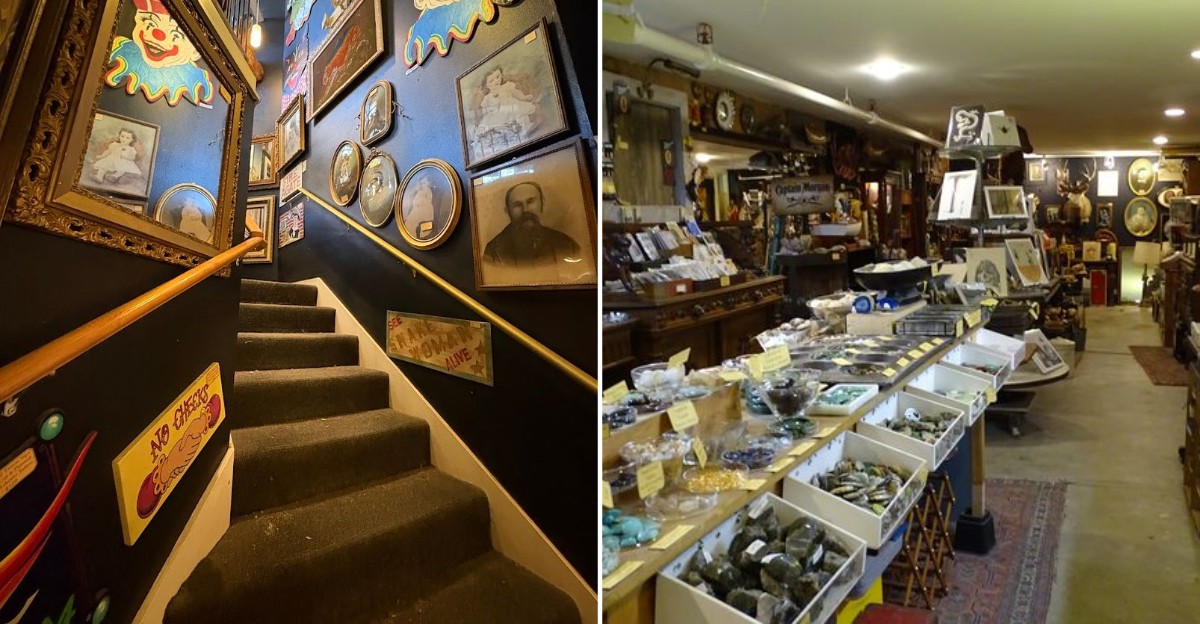
Washington is home to many polished boutiques, but this particular shop marches to the beat of a much stranger drum. Every square inch of the interior is packed with relics that make a person stop, squint, and wonder exactly what kind of life these objects led before arriving here.
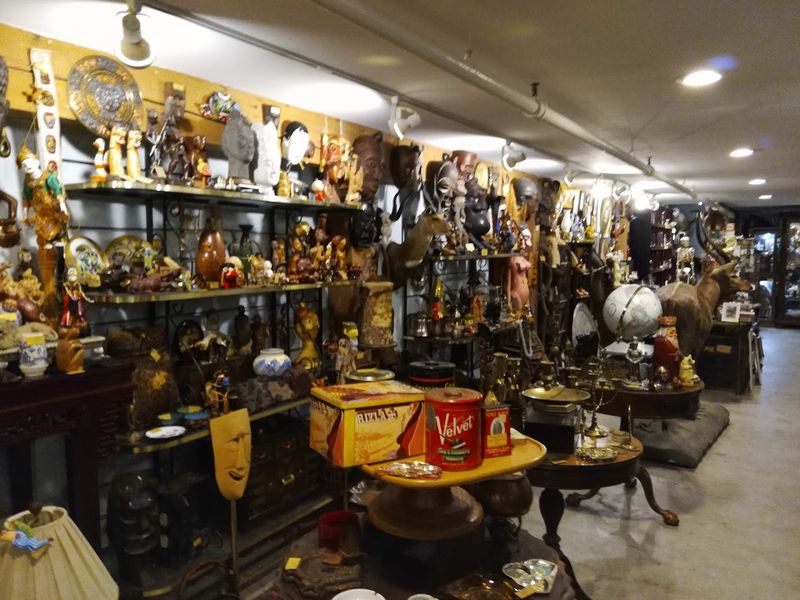
From taxidermy that leans into the whimsical to vintage trinkets that hum with a sense of forgotten history, the collection is a masterclass in organized chaos.
Browsing the aisles feels like an intimate invitation into the subconscious of a collector who never met a strange object they didn’t fall in love with. It is essentially a playground for the curious, provided one isn’t afraid of a few unblinking glass eyes watching their progress.
Founded in 2015 by Ryan Robbins, the shop grew from a flea market booth into something far harder to categorize, part natural history museum, part antique store, part collector’s fever dream.
The Story Behind Ballyhoo
Ryan Robbins did not set out to open one of Seattle’s most talked-about shops by accident. As a kid growing up near the waterfront, he spent hours mesmerized by Ye Olde Curiosity Shop, absorbing its strange and wonderful energy like it was a second education.
That childhood fascination never left him. He started small, running a flea market booth where he sold unusual items from his personal collection.
The response was strong enough that he took a leap and moved the whole operation into a basement space in Ballard, opening Ballyhoo in 2015. The name itself was a deliberate choice, meant to capture the spirit of drawing people in and holding their attention.
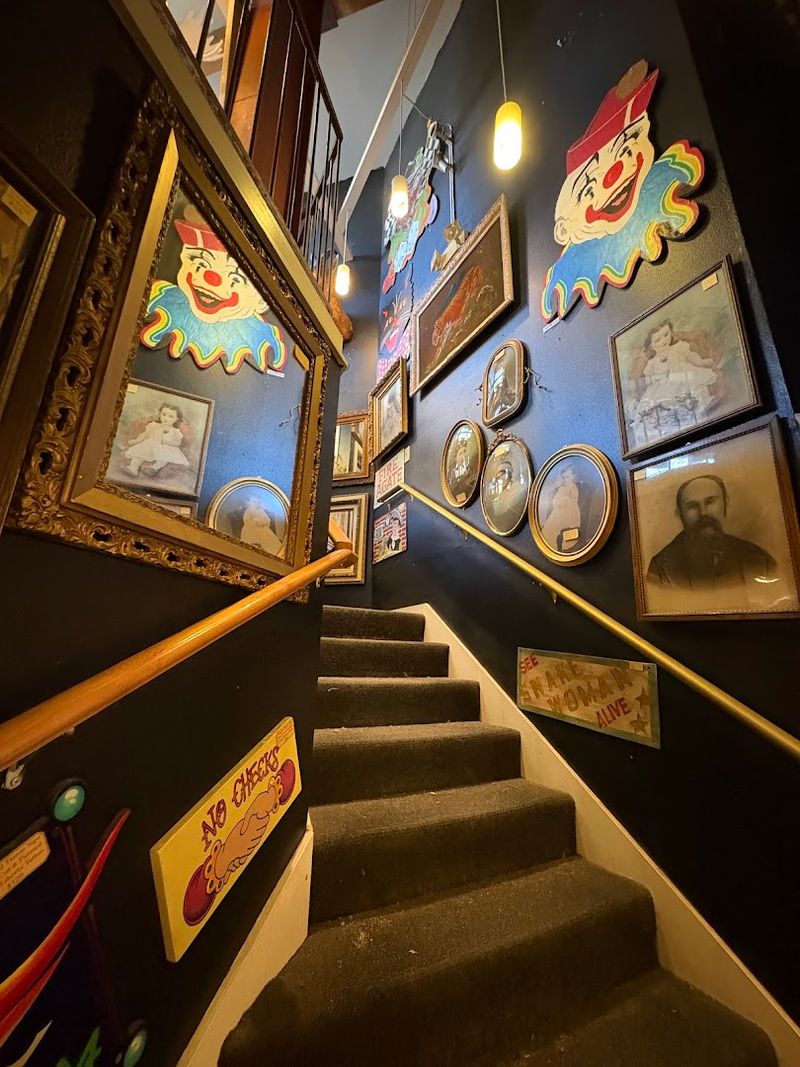
Robbins wanted visitors to feel transported the moment they crossed the threshold, and that feeling starts before you even reach the door. Descending the staircase to enter the shop is its own quiet ritual, a physical signal that you are leaving the ordinary world behind for something far more interesting.
The Atmosphere Inside
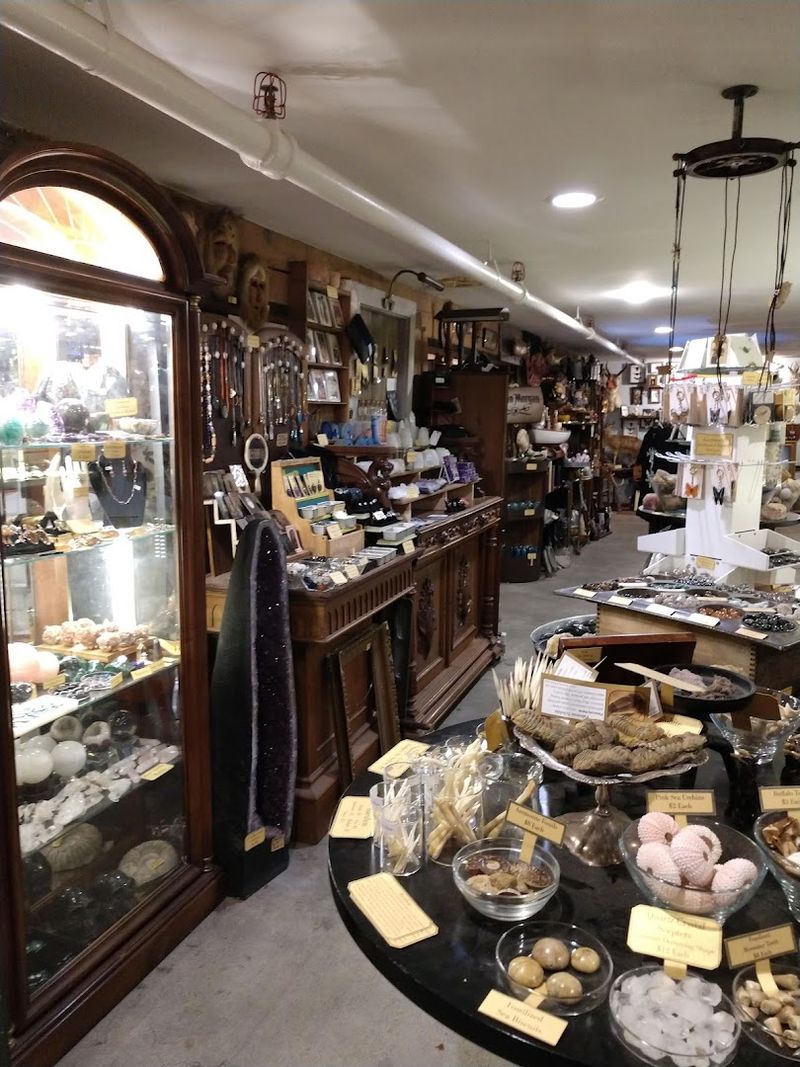
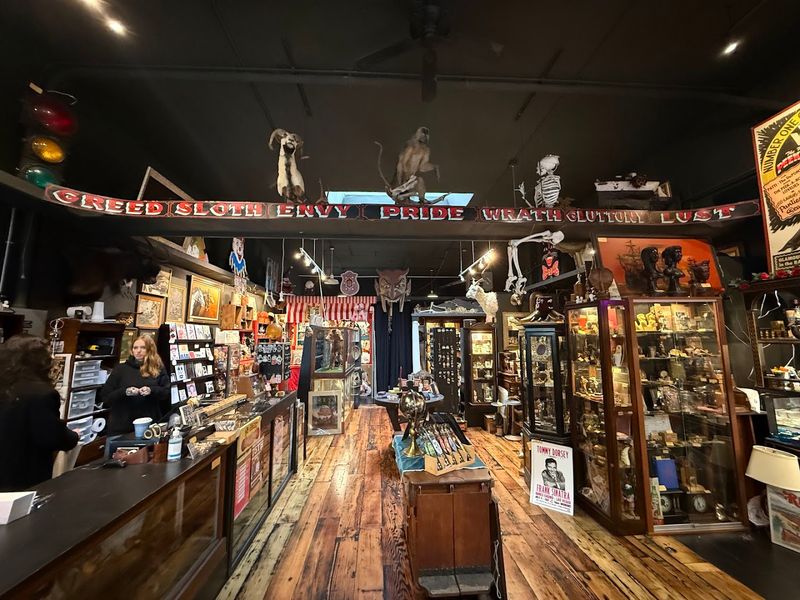
Walking into Ballyhoo feels a little like opening a door inside someone’s most elaborate imagination. The space is unapologetically maximalist, with treasures stacked, shelved, and arranged in a way that rewards slow, careful looking rather than a quick scan from the doorway.
Robbins has described the atmosphere as a funhouse with a slightly creepy vibe, but the creepiness never tips into discomfort. It stays on the right side of fascinating, the kind of feeling that makes you want to linger rather than leave.
Every corner holds something unexpected, and the density of the collection means that repeat visits almost always reveal something you missed before.
The layout borrows from both the natural history museum and the antique store, blending scientific specimens with vintage objects in a way that feels curated rather than chaotic.
Staff members add warmth to the whole experience, sharing stories and background details about items that transform a shopping trip into something closer to a guided tour through collected history.
Natural History Specimens
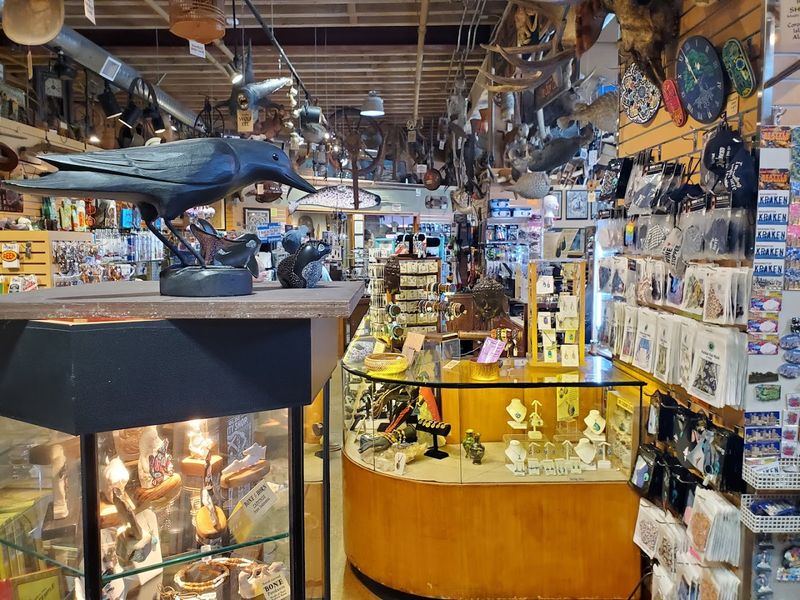
Few things stop a visitor in their tracks quite like a full human skeleton displayed alongside a mammoth tooth the size of a small brick. Ballyhoo’s natural history collection is genuinely impressive, spanning fossils, bones, geological specimens, and insect displays that would look at home in a university museum.
Mammoth teeth and ammonites sit alongside polished stones, sparkly rocks, and carefully pinned butterfly specimens. The range covers millions of years of natural history in a space small enough to walk across in under a minute, which makes the density feel almost surreal.
Human osteology is a particular specialty here, from full skeletons down to individual teeth and bones. Robbins sources animal taxidermy ethically through estate sales and flea markets, which means each piece carries its own backstory.
Knowing that a stuffed moose head or a raccoon in an unexpectedly cheeky pose arrived through a legitimate chain of ownership adds a layer of respect to the whole display that makes browsing feel thoughtful rather than exploitative.
Antique Oddities And Victorian Curiosities
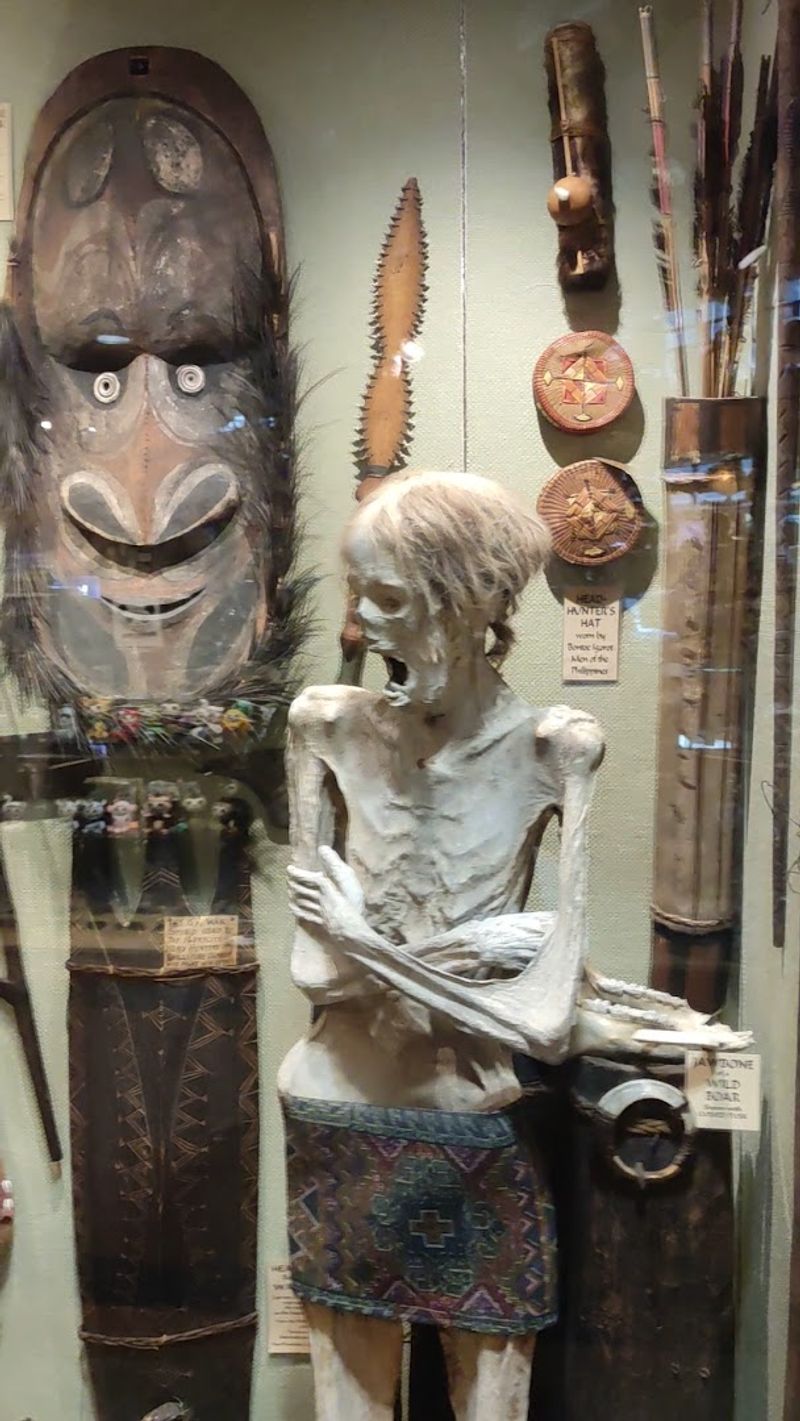
The antique side of Ballyhoo’s inventory is where history gets genuinely strange in the best possible way.
Antique dishes that glow under ultraviolet light due to trace amounts of uranium glaze sit near Victorian-era medical instruments that look more like props from a period drama than anything you would want near a doctor’s office.
Old black and white photographs of people whose names have long been forgotten line shelves alongside antique dolls with the kind of fixed expressions that have fueled countless ghost stories.
Skeleton keys, vintage tobacco tins, and tribal art from various parts of the world fill in the gaps between larger statement pieces.
What makes this section particularly compelling is that almost everything here is one of a kind. You will not find another shop in Seattle carrying the same selection, and the inventory rotates constantly, so the collection you see today will look noticeably different from what greets the next visitor.
That unpredictability is a big part of what keeps people coming back.
The Taxidermy Collection
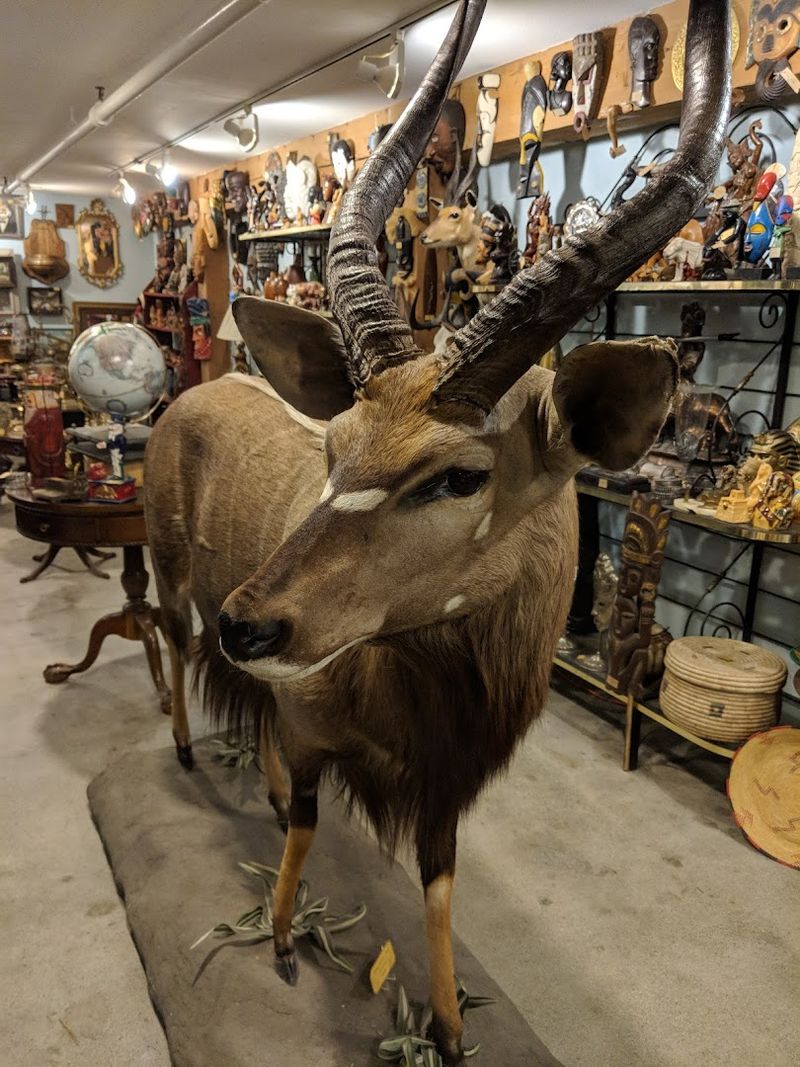
Taxidermy at Ballyhoo covers a wide range, from straightforward to genuinely show-stopping. The shop’s most famous resident is a two-headed calf that stands as a permanent display piece, not for sale at any price, which gives the shop a museum-quality anchor that draws visitors in on its own.
A raccoon posed in a famously irreverent gesture has become something of an unofficial mascot, photographed more times than most items in the shop and beloved by regular visitors who treat it like an old friend.
The stuffed moose head and various other animal specimens round out a collection that manages to feel respectful of the natural world even while being undeniably theatrical.
Robbins sources all animal pieces ethically, pulling from estate sales and flea markets rather than supporting new harvesting. That commitment matters to a lot of customers, and it shows in how the pieces are displayed, with care and context rather than shock value.
The taxidermy here tells stories rather than just filling space on a wall.
Mystery Boxes And One-Of-A-Kind Finds
One of the most popular offerings at Ballyhoo has nothing to do with a specific item you can see and evaluate before buying.
The shop sells mystery boxes, curated packages of curiosities assembled by Robbins and his staff, and they have developed a devoted following among customers who love the element of surprise.
Each box is different, and the contents reflect the same eclectic, wide-ranging taste that defines the shop itself. You might open one to find a fossil, a piece of vintage jewelry, and a small taxidermy specimen, or the combination could be entirely different.
The unpredictability is the whole point. Beyond the mystery boxes, nearly everything in the shop is available for purchase, which means a single visit can turn into an unexpectedly personal shopping experience.
Because the inventory changes constantly, there is always the quiet thrill of knowing that the item you are holding might not be there the next time you visit. That sense of now-or-never is a surprisingly effective motivator for collectors of all experience levels.
Planning Your Visit To Ballyhoo
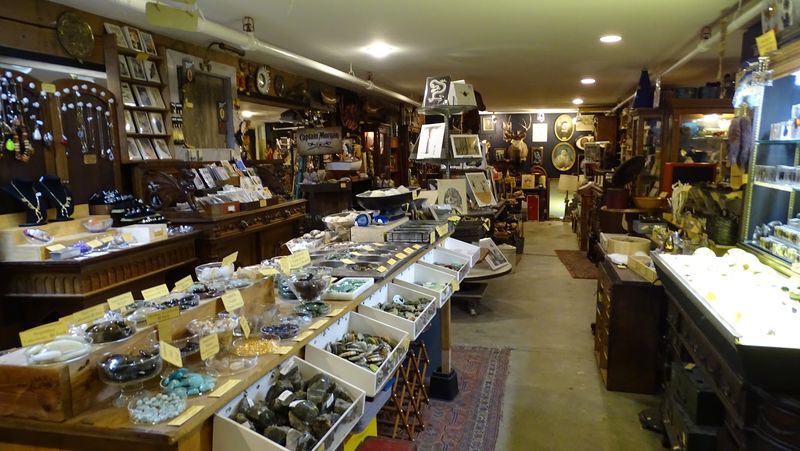
Getting to Ballyhoo is straightforward enough once you know where to look. The shop sits at 5333 Ballard Ave NW in Seattle’s Ballard neighborhood, a historic stretch of the city that combines old Scandinavian maritime character with a lively current food and arts scene.
The basement entrance is easy to spot once you are on the right block. Ballard itself is worth spending time in before or after your visit.
The neighborhood has a strong independent business culture, and the streets around Ballard Avenue offer plenty of places to eat and explore without ever feeling like a tourist trap. Pairing a trip to Ballyhoo with a walk through the neighborhood makes for a satisfying half-day or full afternoon.
Check the shop’s current hours before heading over, since hours can vary seasonally.
First-time visitors should budget more time than they think they need, because the density of the collection and the tendency to stop and ask questions about every third item makes a quick visit nearly impossible once you are inside.
Vintage Scientific Instruments
Old telescopes, brass compasses, and glass medical tools line certain corners of Ballyhoo like relics from a forgotten laboratory.
These pieces carry a particular kind of weight, each one was built by someone who believed deeply in measurement, in discovery, in understanding the world through careful observation.
Robbins sources these instruments from estate sales and private collections, selecting only pieces with genuine history behind them. Some still work perfectly.
Holding an antique magnifying glass here feels less like shopping and more like borrowing something from the past. For science lovers and history buffs alike, this section rewards slow, curious browsing.
Others simply sit with the quiet dignity of objects that have already lived long, useful lives.
A compass might have once helped someone read a map on an open road. That mix of purpose and mystery gives the section a wonderful old-world pull.
Every shelf seems to ask for a second look, because the smallest tool may have the most interesting story.