
This Massachusetts House Was Built From Newspapers And Somehow Still Stands
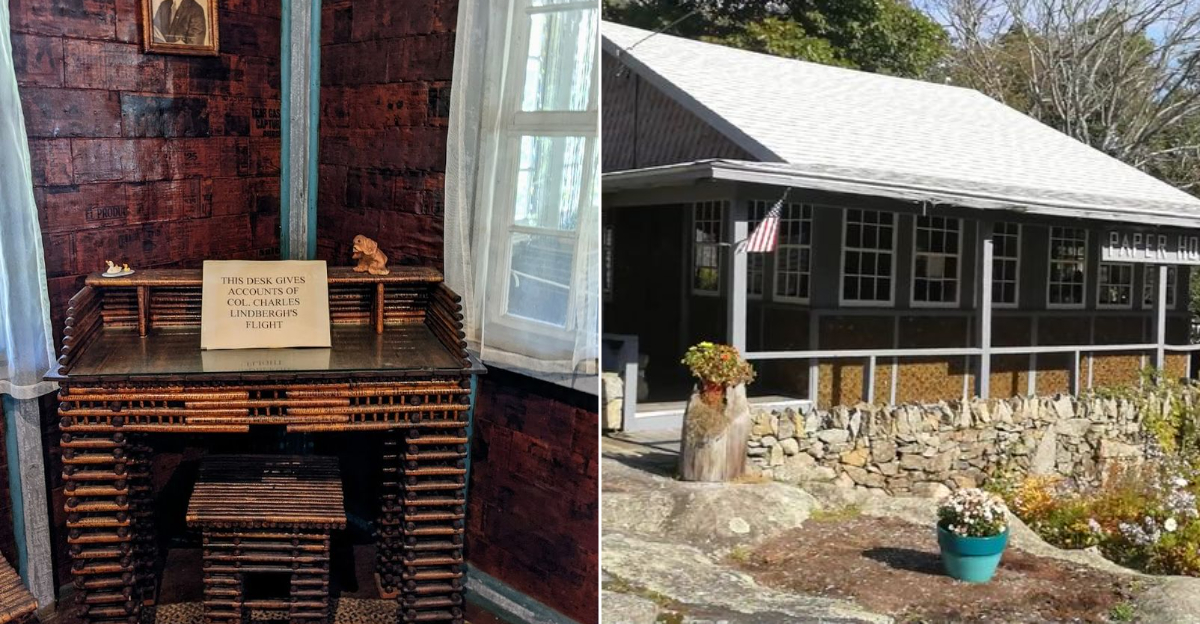
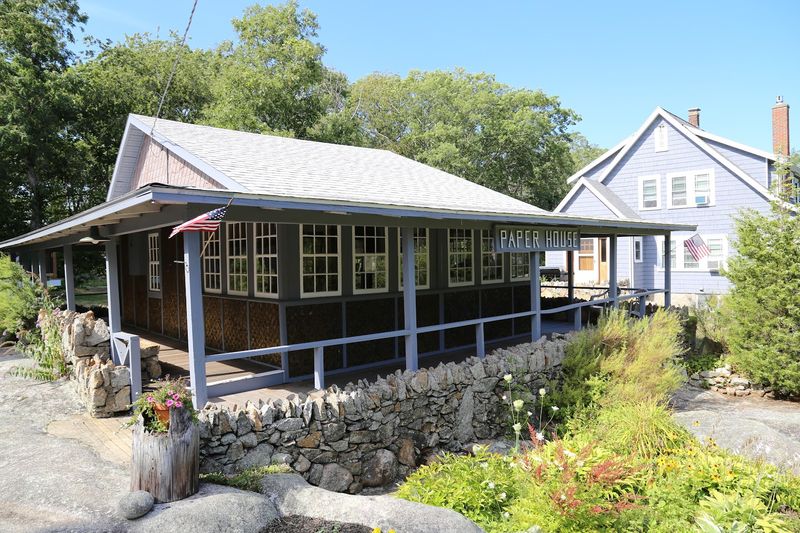
In Massachusetts, there’s a house that feels like it was built from a dare that somehow got out of hand. In the best way possible. At first, it looks like a simple seaside cottage.
Nothing unusual. Until you realize the walls aren’t wood or brick at all, but tightly pressed layers of old newspapers. Real printed pages, stacked, glued, and varnished into something that still stands decades later.
What started as an experiment slowly turned into something far more unusual. A home made from yesterday’s news.
Headlines, ads, stories, things meant to be temporary, locked together into a structure that refuses to fall apart. And that’s what makes it so strange.
It shouldn’t work, but it does. Like a physical reminder that even the most disposable things can outlast their purpose when put together with enough patience and obsession.
The Unlikely Origin Story Behind The Paper House
Not every great idea starts with a grand plan. Sometimes it starts with a pile of old newspapers and a curious mind that refuses to throw anything away.
The Paper House was the brainchild of Elis F. Stenman, a mechanical engineer who spent his career designing machines that made paper clips.
He began construction in 1922, originally intending the newspaper layers to serve as insulation inside the walls. But somewhere along the way, he made a bold decision: leave the paper exposed and see what happens.
That experimental spirit is what makes this place so fascinating to visit even today.
The house was completed in 1924 and served as Stenman’s summer retreat through 1930. What started as a practical experiment quickly became something much more meaningful.
It was a one-person passion project that turned into a permanent piece of American architectural history.
The whole thing feels like something out of a quirky indie film, except it is completely real.
A man, a dream, and approximately 100,000 newspapers later, one of Massachusetts most unusual landmarks was born. Creativity, it turns out, does not always need fancy materials.
Where Exactly You Can Find This Paper Marvel
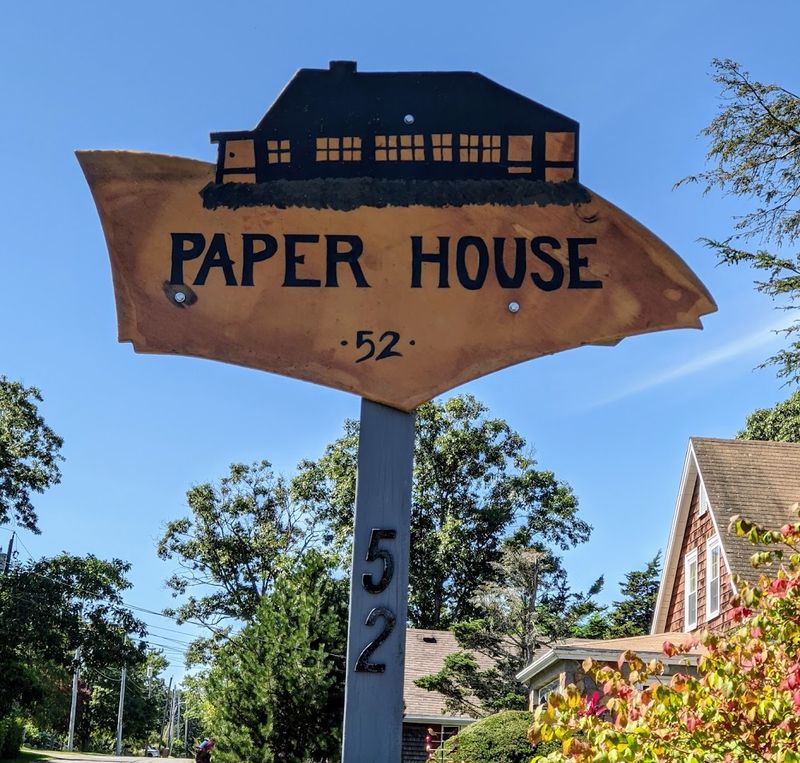
Tucked into a quiet residential neighborhood, this little gem sits at 52 Pigeon Hill Street in Rockport, Massachusetts.
It is the kind of place you might drive right past if you were not looking for it, which somehow makes finding it feel even more rewarding.
Rockport itself is a charming coastal town on Cape Ann, known for its art scene, rocky shoreline, and independently spirited character.
The Paper House fits right into that vibe. It is open to the public from the second Friday of April through the last Sunday of October, with hours running from 10 AM to 5 PM.
Admission is refreshingly affordable, just three dollars for adults and one dollar for children ages six to ten. The payment system runs on pure honor, with a donation box placed nearby.
No ticket booth, no velvet ropes, just trust and a genuine love for preserving something remarkable.
Parking is street parking in the neighborhood, so keep that in mind when planning your visit. The whole experience is self-guided, which means you set the pace and soak it all in however you like.
Some hidden gems really are worth the hunt.
100,000 Newspapers And One Very Ambitious Wall
Here is a number that will stop you mid-scroll: 100,000 newspapers. That is roughly how many copies were used to construct the walls of this remarkable little house.
Each wall panel is made of approximately 215 layers of newspaper pressed tightly together to form panels about one inch thick.
The layers were bound using a homemade glue made from flour, water, and apple peels. Once the panels were formed, they were sealed with marine varnish to protect against moisture and the famously unpredictable New England weather.
It sounds like a science experiment, and honestly, it kind of was.
What makes these walls even more interesting is that you can actually see the newsprint up close. Headlines, advertisements, and articles from the early twentieth century are right there, preserved behind layers of varnish like a time capsule you can walk around in.
There is a small hole in one wall section that lets visitors peer inside and see exactly how the layers stack up.
Standing in front of these walls feels surreal. You are essentially reading history while also standing inside it.
That combination of art, engineering, and sheer determination is what makes the Paper House unlike anything else you will ever visit.
The Secret Recipe That Holds It All Together
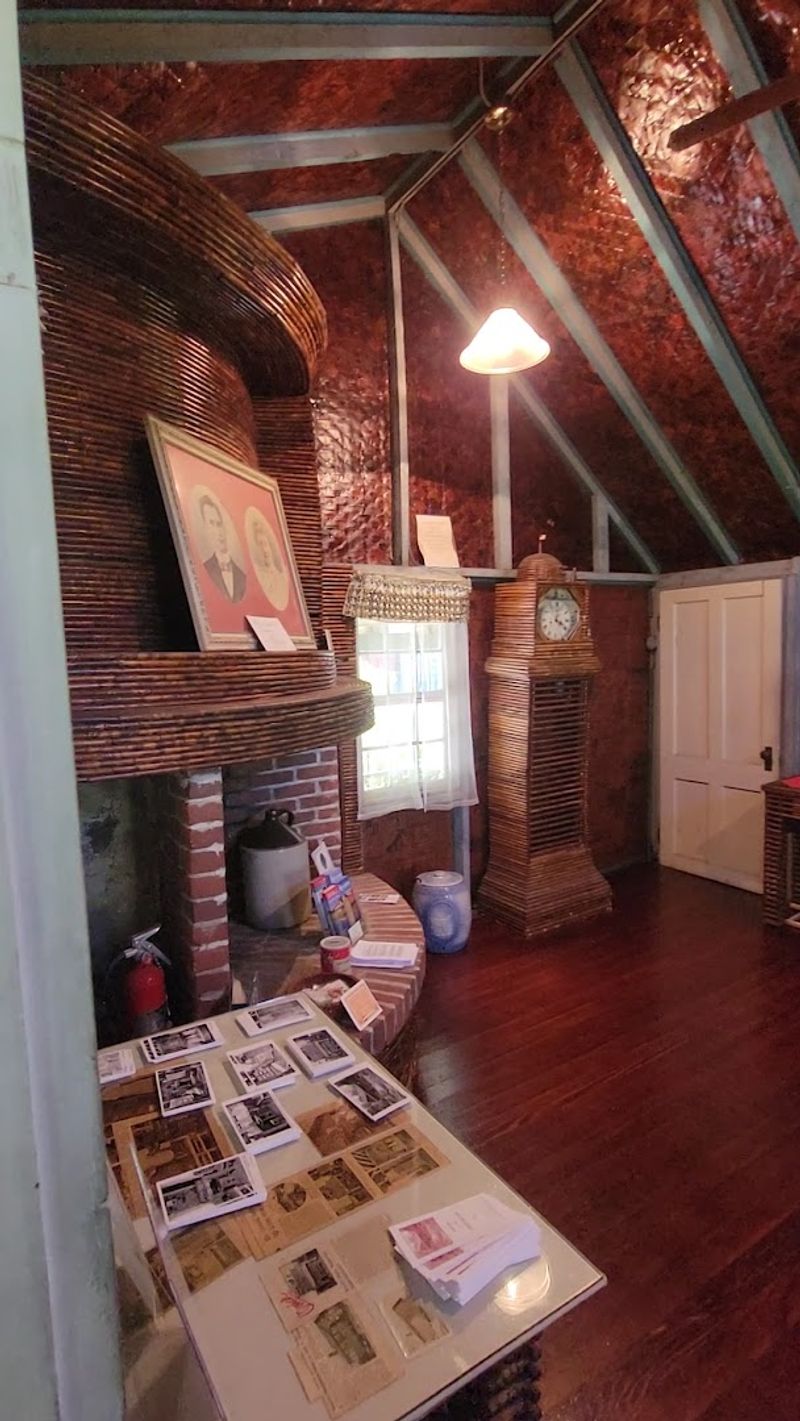
Forget everything you know about construction materials, because the glue holding these walls together is made from flour, water, and apple peels. Yes, you read that correctly.
The same basic ingredients you might find in a farmhouse kitchen were transformed into a binding agent that has kept 100,000 newspapers intact for nearly a century.
After the newspaper panels were formed and the homemade glue dried, each surface was coated with marine varnish. This is the same type of sealant used on boats to withstand saltwater and harsh weather conditions.
Applying it to newspaper walls was an unconventional move, but the results speak for themselves loud and clear.
The exterior walls receive a fresh coat of varnish every single year to maintain their durability. That consistent upkeep is a big reason the house has survived Massachusetts winters, coastal humidity, and decades of curious visitors pressing their noses up to the walls to read old headlines.
There is something deeply satisfying about knowing that a simple homemade formula is what keeps this building standing.
No high-tech sealants, no industrial adhesives. Just ingenuity, patience, and a surprisingly effective apple peel glue that apparently laughs in the face of time.
Furniture Made From Folded Headlines And Big Dreams
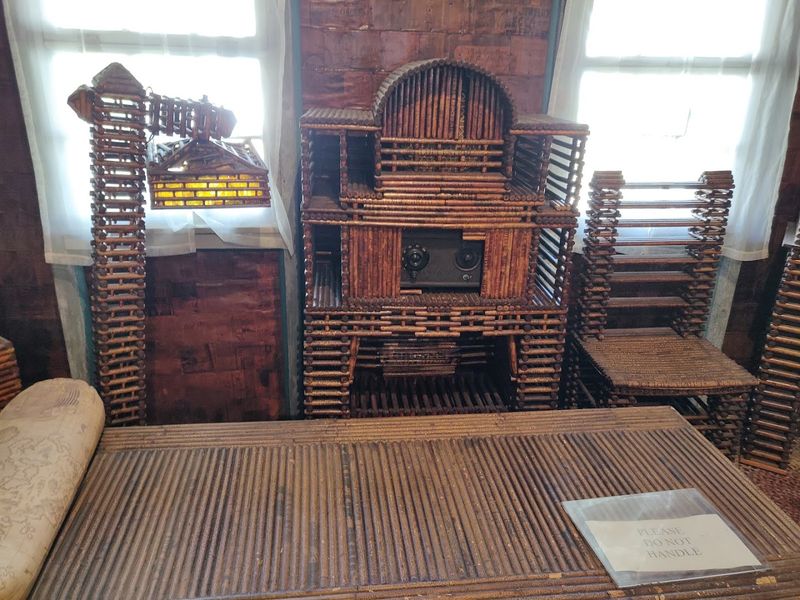
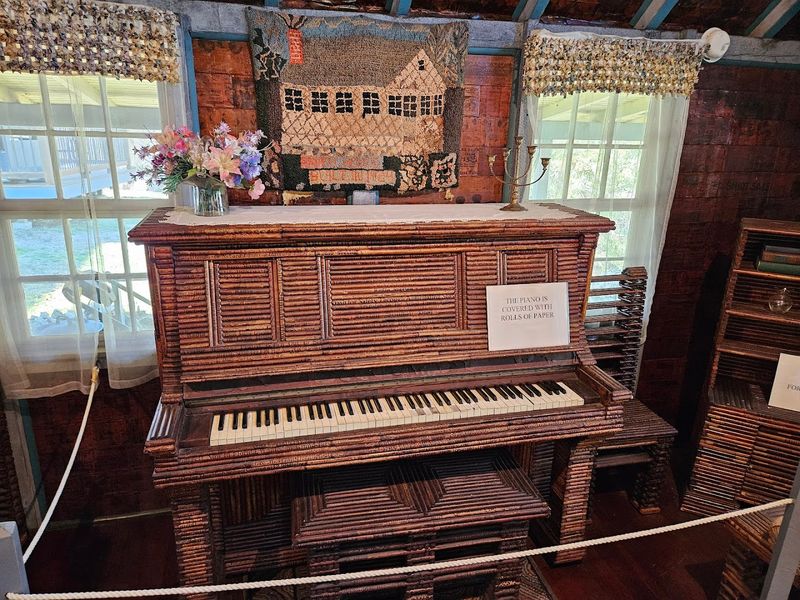
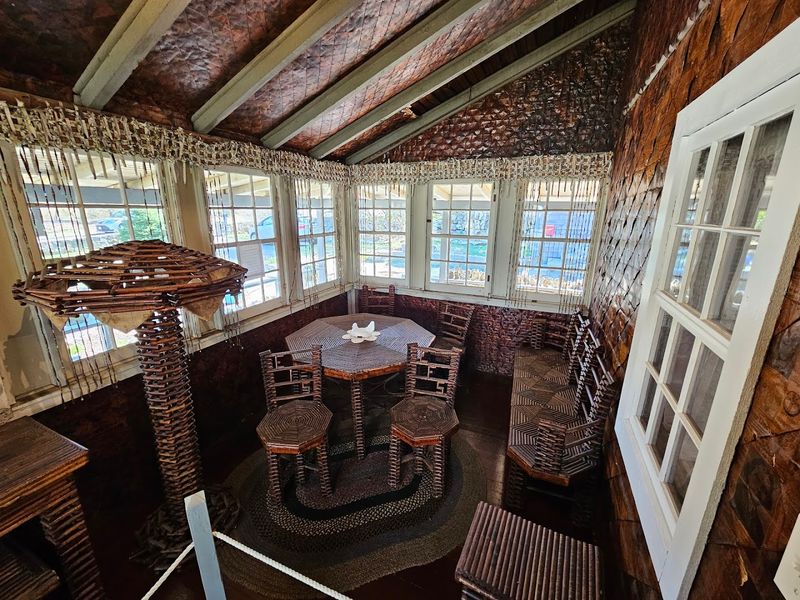
If you thought paper walls were impressive, wait until you see what is inside. Every single piece of furniture in the Paper House is crafted from tightly rolled and varnished newspapers.
Chairs, tables, lamps, a writing desk, and even a grandfather clock, all made from the same material as your recycling bin.
The craftsmanship is genuinely stunning. Each piece required careful rolling, shaping, and layering of newspaper to create forms sturdy enough to function as actual furniture.
The varnish finish gives everything a warm amber tone that makes the space feel surprisingly cozy rather than chaotic.
What takes it to another level is the intentionality behind which papers were used for each piece. The writing desk was constructed using newspapers covering Charles Lindbergh’s famous 1927 transatlantic flight.
The radio cabinet features headlines from Herbert Hoover’s 1928 presidential campaign. Every piece of furniture doubles as a history lesson.
Visitors often spend the most time here, leaning in close to read the headlines embedded in chair legs and table tops. It is like browsing a museum archive, except you could theoretically sit down in it.
The Paper House furniture collection is proof that recycling can be genuinely, breathtakingly artistic.
The Writing Desk That Tells A Famous Story
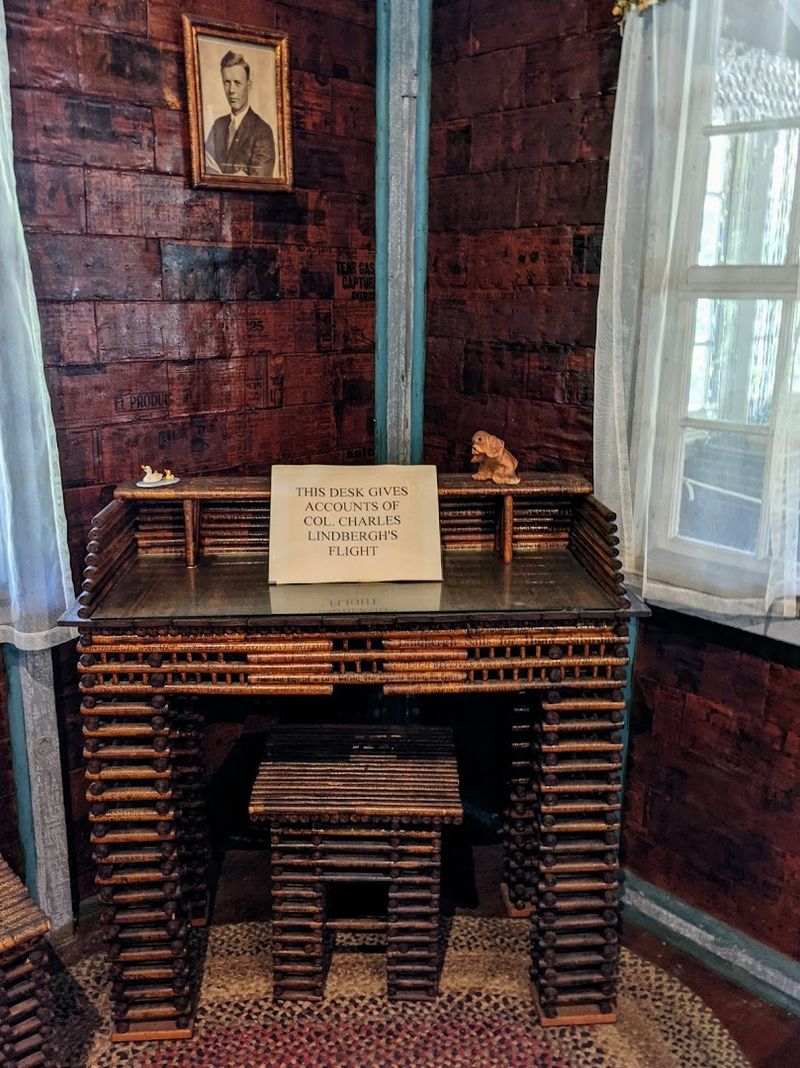
Charles Lindbergh completed his solo transatlantic flight in May 1927, and the entire world went absolutely wild over it.
Newspapers everywhere ran the story on their front pages. At the Paper House, those very front pages were rolled, shaped, and varnished into a writing desk that still sits in the house today.
Running your eyes over that desk is like flipping through a scrapbook of one of the most celebrated moments in aviation history.
The headlines are still legible through the varnish, preserved in a way that no digital archive could ever quite replicate. It is tactile history in the most literal sense.
This piece is one of the most talked-about items in the entire house. Visitors frequently pause here the longest, trying to make out the text and connect the dots between the object in front of them and the historical moment it represents.
There is something quietly powerful about that connection.
The desk is also a reminder of how thoughtfully the whole project was designed. Nothing was random.
Each piece of furniture was matched to a meaningful news event, turning the entire house into a curated archive of early twentieth century American life.
That level of intention is rare in any art form.
How This Paper House Has Survived Nearly A Century
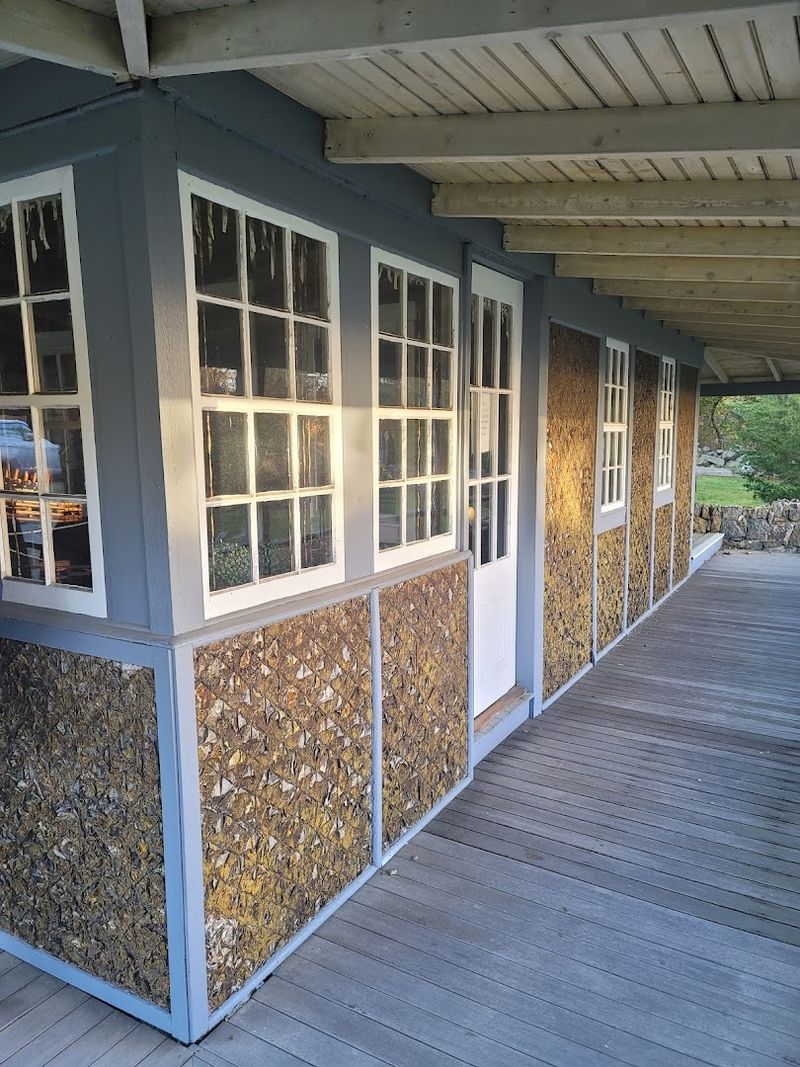
Surviving one New England winter is impressive. Surviving nearly a hundred of them while being made of newspaper is borderline miraculous.
The Paper House has managed to stay standing through brutal cold, coastal storms, and the general chaos of time, and it has done so with a few smart structural choices.
The house was built on a traditional wooden frame, with wood flooring and a standard roof. The paper walls were always the experimental element, never the structural backbone.
That distinction matters more than people realize when they first hear the building described as a paper house.
A porch was added in the early 1930s, providing an extra layer of protection for the more exposed wall sections. The roofing shingles on the peaks also help redirect rain and snow away from the delicate newspaper surfaces.
Combined with the annual varnish application, these features create a surprisingly effective defense system.
The house also has a functional brick fireplace, electricity, and once had running water for summer use. It was designed to be a livable space, not just a novelty.
The fact that it remains structurally sound after all this time is a testament to careful upkeep and a genuinely clever original design.
From Summer Hobby To Historic Museum
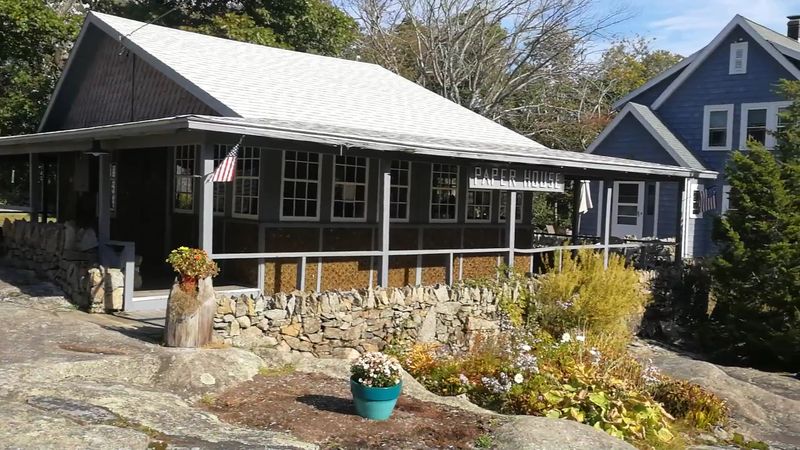
What began as one engineer’s summer experiment has grown into a beloved piece of New England history. The Paper House became an informal museum in the 1930s, welcoming curious visitors who had heard rumors of a house made entirely from old newspapers.
Today the house is operated as a historic house museum by a family member, keeping it in the hands of people who genuinely care about its preservation.
That personal connection to the property gives the whole experience a warmth that big institutional museums sometimes struggle to replicate.
The self-guided format means there is no rush, no tour group breathing down your neck, and no rehearsed script. You wander in, look around at your own pace, and leave whenever you feel ready.
It is refreshingly low-pressure for a place with this much to offer.
The museum is open seasonally, from the second Friday of April through the last Sunday of October. There are also occasional weekend openings in November for those who miss the regular season.
For just a few dollars, this is one of the most memorable stops you can make in all of coastal Massachusetts.
Why The Paper House Deserves A Spot On Your New England Road Trip
Some places earn their reputation through grandeur. Others earn it through sheer originality.
The Paper House falls firmly into the second category, and that is exactly why it belongs on any New England road trip worth its salt.
There is nothing else like it anywhere in the region, or really anywhere in the world.
Rockport itself is already a fantastic destination, with a picturesque harbor, local art galleries, and some seriously good seafood spots within walking distance of the water.
Adding the Paper House to your itinerary takes maybe thirty minutes out of your day, but it gives you a story you will be telling for years.
The experience is accessible, affordable, and genuinely surprising in the best way. Whether you are a history enthusiast, an architecture lover, or just someone who appreciates a completely bonkers creative achievement, this place delivers on every level.
Kids and adults alike tend to leave with wide eyes and a lot of questions.
So next time you are mapping out a coastal Massachusetts adventure, go ahead and plug 52 Pigeon Hill Street into your GPS.
You will pull up to a quiet neighborhood, walk into a house made of newspapers, and wonder how you ever almost missed it. What kind of road trip story is better than that?