
20 Bucket List Experiences You Can Only Have In Alaska
Have you ever looked at a map of Alaska and thought, “Yeah… that’s basically the final boss level of Earth”? Because you’re not wrong.
This is where bucket lists stop being cute little goals and start feeling like survival challenges with cinematic views.
Did you stood somewhere so massive and quiet that your own thoughts suddenly feel too loud? Or watched nature do something so dramatic you half expect Hans Zimmer to start playing in the background?
From glaciers that move like slow giants to skies that behave like they’re auditioning for a sci-fi film, Alaska doesn’t really do “ordinary days.” It does “wait, did that just happen?” days.
You don’t just visit. You get dropped into a world where everything feels bigger, colder, wilder, and somehow more real than real life.
And the best part? Every experience feels like it belongs on a bucket list you didn’t even know you were building until you got there.
1. Watch Brown Bears Fish At Brooks Falls
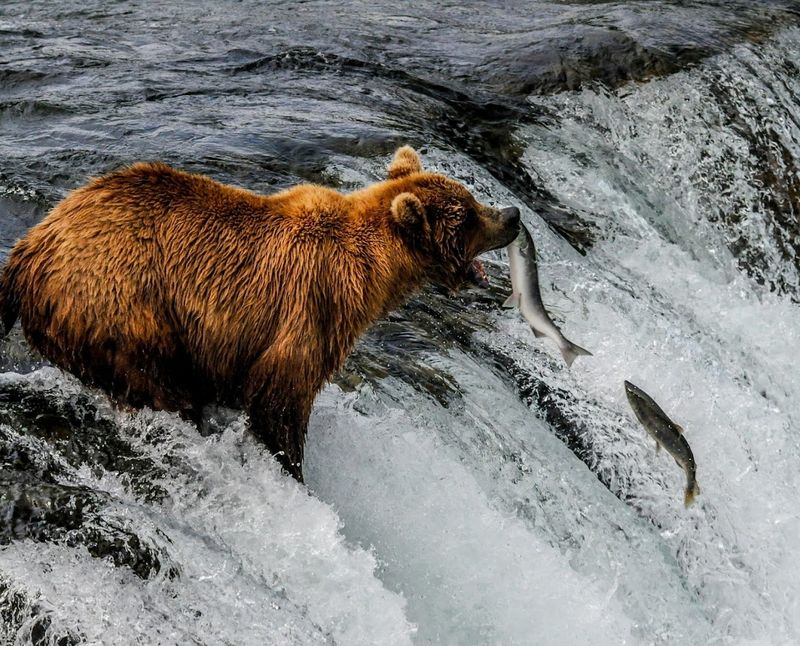
Nobody prepares you for the moment a brown bear launches itself into a waterfall and catches a salmon in its jaws.
At Brooks Falls in Katmai National Park, this is just Tuesday. During peak salmon season in July and again in September, dozens of massive brown bears gather along this iconic waterfall.
They stake out their favorite spots and wait for sockeye salmon to leap upstream.
Viewing platforms let you watch from a safe and respectful distance. The bears are so focused on fishing that they barely notice the cameras clicking above them.
Some bears are veterans with signature moves. Others are younger bears still learning the craft from the sidelines.
The National Park Service operates a live bear cam that streams globally, but nothing compares to being there in person.
Fly-in access from King Salmon makes this feel like a true expedition. Seeing it live rewires your understanding of wild Alaska forever.
2. Cruise Glacier Bay By Boat
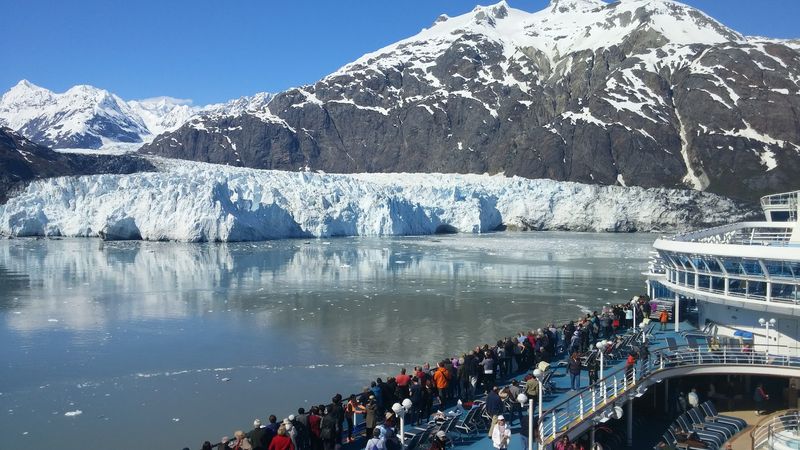
Glacier Bay National Park is one of those places that makes you feel genuinely small in the best possible way. Just 250 years ago, this entire bay was buried under a massive sheet of ice.
Today, it is a UNESCO World Heritage Site filled with tidewater glaciers, breaching humpback whales, and an almost absurd amount of natural beauty.
Boat tours navigate deep into the bay, getting close enough to hear glaciers groan and crack before releasing house-sized chunks of ice into the water.
That thunderous splash and the wave that follows is one of those sensory experiences you carry with you for years. Bald eagles circle overhead while sea otters float lazily on their backs nearby.
Access is typically by boat or floatplane from Juneau or Gustavus. The park limits visitor numbers to protect the ecosystem, which keeps the experience feeling intimate and wild.
Summer is peak season, and the long daylight hours mean you have maximum time to soak it all in.
3. Flightsee Denali And Land On A Glacier
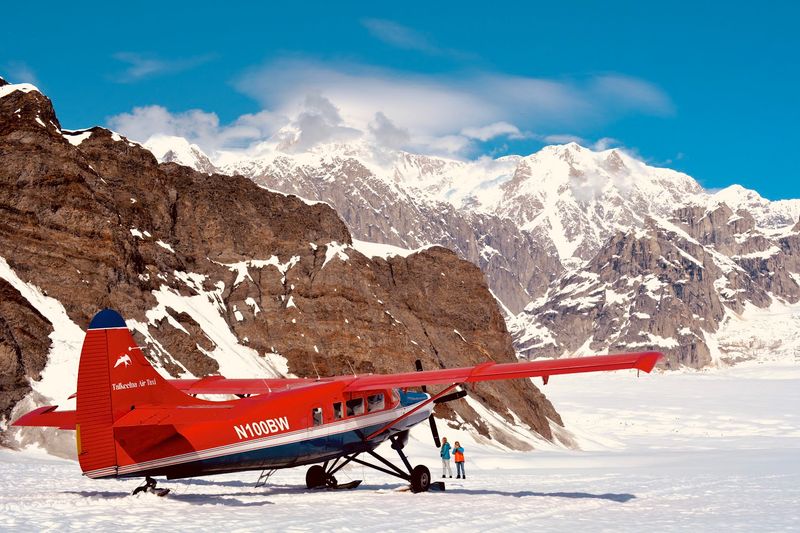
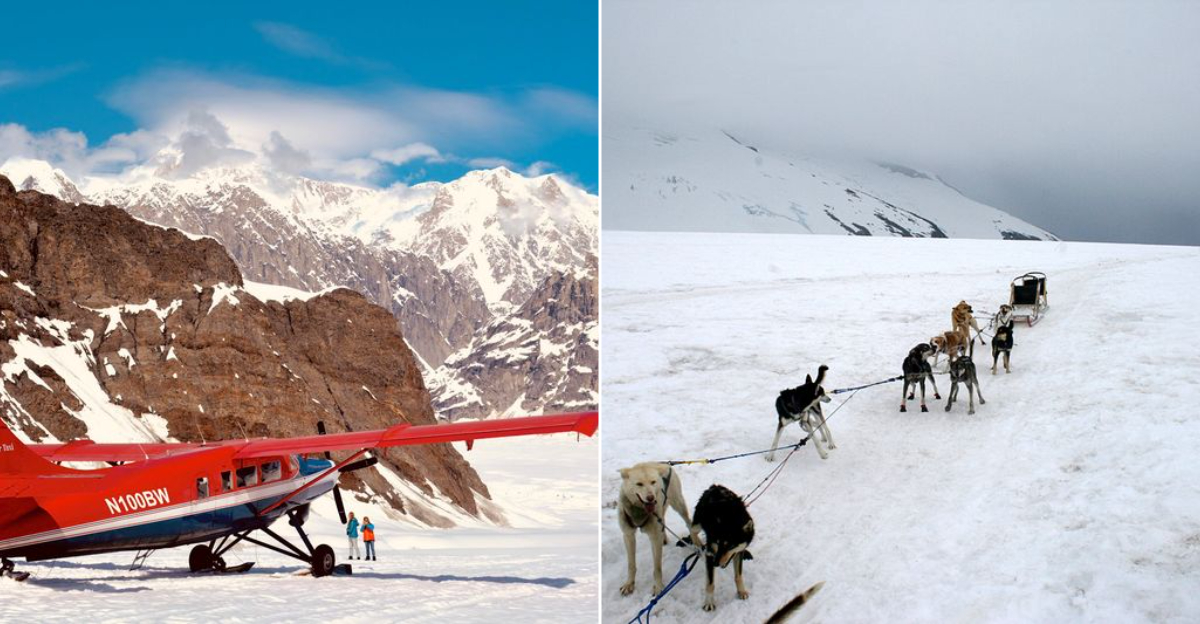
Imagine stepping off a tiny plane onto a glacier while North America’s tallest mountain fills your entire field of vision. That is exactly what happens on a Denali flightseeing tour out of Talkeetna.
Pilots navigate through the Alaska Range, banking past ridgelines dusted in permanent snow, before touching down on the glacier below.
The silence up there is almost supernatural. You are standing on thousands of feet of ancient ice with Denali looming at 20,310 feet above sea level.
Most people just stand there with their mouths open for a solid minute before remembering to take a photo.
Tour operators run these flights from late spring through summer when weather windows allow. Talkeetna is the classic launch point, and the whole experience typically runs about an hour in the air.
This is the kind of moment that permanently changes your definition of the word “mountain.” Book early because these spots fill fast.
4. Ride A Dog Sled Across Summer Glacier Snow
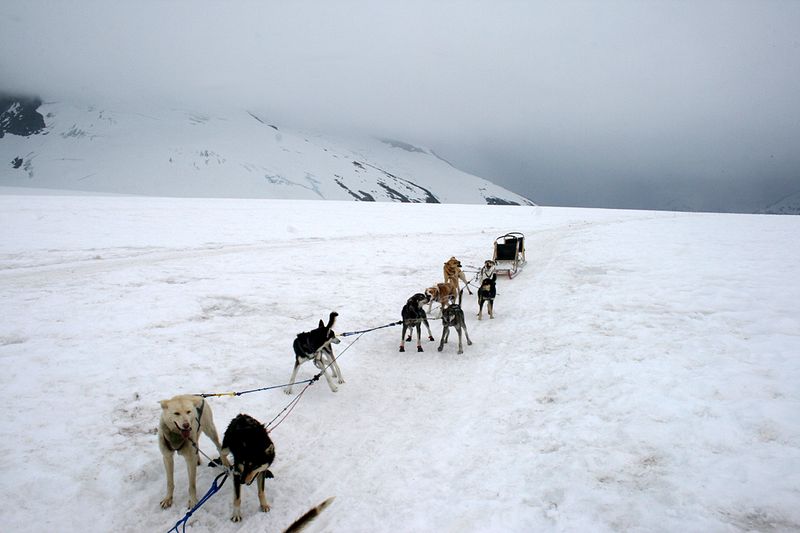
Here is a fact that will confuse your brain pleasantly: you can go dog sledding in Alaska in the middle of summer.
Glaciers hold onto their snow year-round, which means mushers set up camps right on the ice and run tours for visitors who would otherwise have to wait for winter.
Helicopter rides typically get you up to the glacier camp, where a team of enthusiastic huskies is already howling and ready to run.
These dogs are not pets playing dress-up. They are trained athletes who genuinely love their job with an almost embarrassing level of enthusiasm.
Locations like Juneau, Seward, Girdwood, and Knik Glacier all offer variations of this experience. Some tours let you hold the sled handles and feel the full pull of the team beneath you.
The combination of a helicopter, a glacier, and a dog sled in one afternoon is peak Alaska. Nothing else competes.
5. Take A Kenai Fjords Glacier And Wildlife Cruise
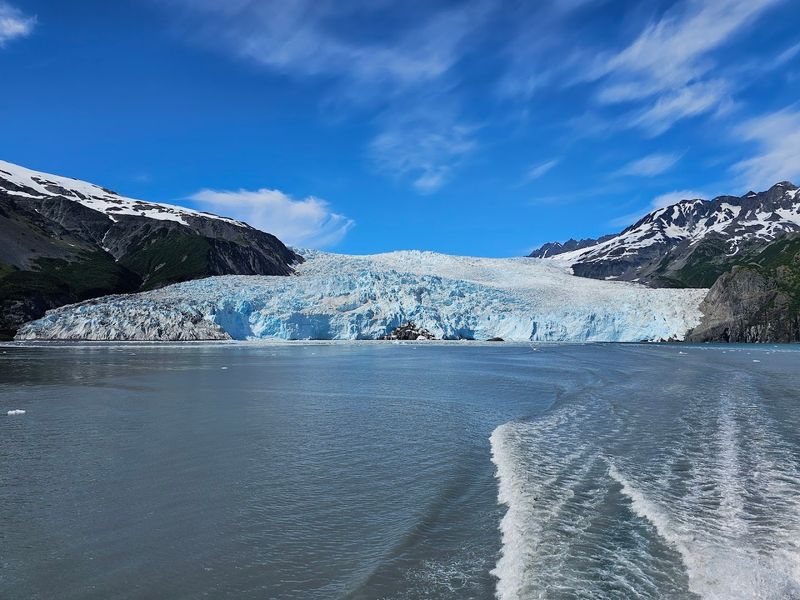
Seward might be a small town, but it punches way above its weight when it comes to launching epic adventures.
The Kenai Fjords glacier and wildlife cruise is the crown jewel of the area, and for very good reason. You sail through dramatic fjords carved by ancient glaciers, watching the landscape shift from forested coastline to sheer ice walls dropping straight into the sea.
Marine wildlife shows up in force on these tours. Orcas, humpback whales, Steller sea lions, Dall’s porpoises, sea otters, and enormous colonies of puffins are all regular sightings.
The star of the show is often the tidewater glaciers themselves, especially when a massive chunk of ice calves off and crashes into the water with a sound like rolling thunder.
Tours run from Seward’s small boat harbor and range from half-day trips to full-day adventures reaching the outer fjords.
The full-day option is absolutely worth it. Kenai Fjords delivers the kind of wildlife density that makes every minute on the water feel like a highlight reel.
6. Hike The Harding Icefield Trail
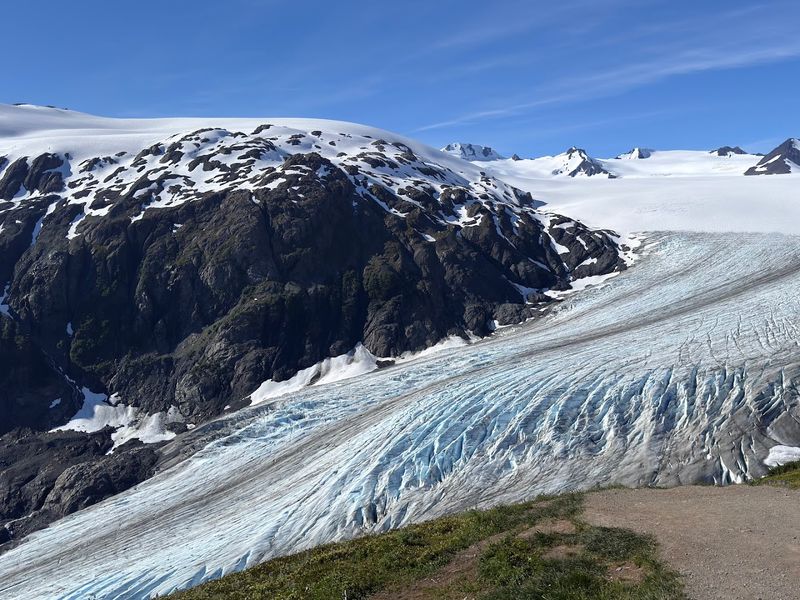
The Harding Icefield Trail is not a casual afternoon stroll. It is a serious, rewarding, lung-burning climb that earns you one of the most jaw-dropping views in North America.
The trail starts near Exit Glacier and gains around 3,000 feet of elevation over roughly 8.2 miles round trip. Every step upward reveals more of this ancient frozen world.
At the top, the Harding Icefield stretches out before you like a white ocean with mountain peaks poking through the surface.
These peaks are called nunataks, and they are the only things visible above the ice. The icefield covers nearly 700 square miles and feeds over 40 glaciers.
Standing at the edge of it genuinely scrambles your sense of scale.
The trail is open from late spring through early fall, and conditions can change fast. Layers, trekking poles, and solid footwear are non-negotiable.
Wildlife sightings including black bears, mountain goats, and marmots are common along the route. The effort required is real, but the payoff is absolutely extraordinary.
7. Walk The Ice At Matanuska Glacier
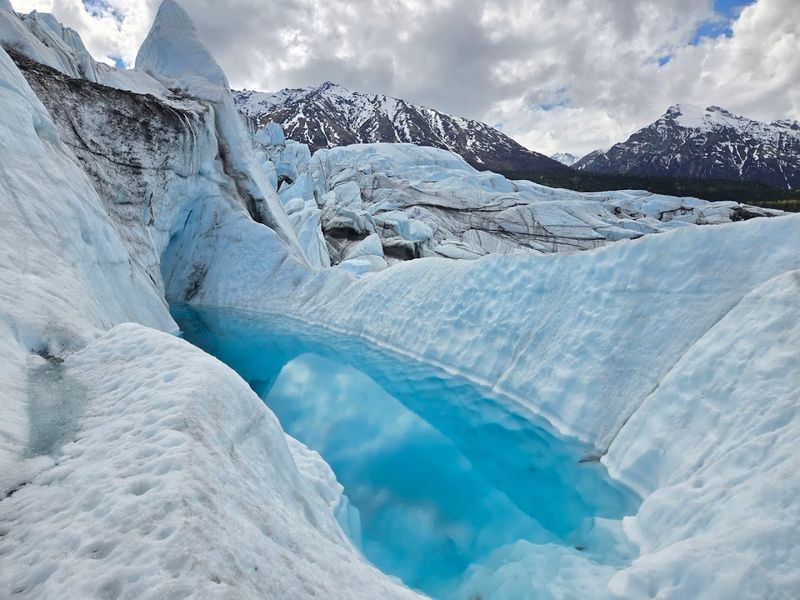
Matanuska Glacier is one of the most accessible glaciers in Alaska, and that accessibility makes it dangerously easy to underestimate how wild the experience actually is. Located about two hours northeast of Anchorage near the small community of Glacier View, this glacier stretches 27 miles long and 4 miles wide.
You can drive right up to the edge of it.
Guided tours take you out onto the ice itself, where the world turns into shades of white, gray, and electric blue. Crevasses split the surface in jagged patterns.
Meltwater streams carve channels through the ice in real time. The sounds alone, the dripping, the creaking, the occasional deep groan, make it feel alive.
No technical climbing experience is required for beginner tours, though crampons are provided and necessary.
The glacier is changing year by year, which means every visit offers a slightly different landscape. Walking on 10,000-year-old ice while the Chugach Mountains frame the scene is the kind of thing you describe at every dinner party for the next decade.
8. Ride The Alaska Railroad Denali Star
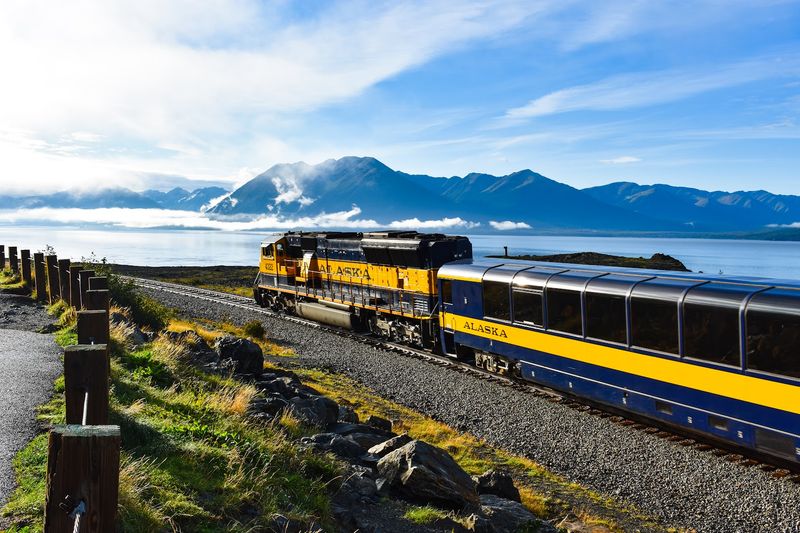
There is something deeply romantic about a long train journey through untouched wilderness, and the Alaska Railroad Denali Star delivers that fantasy in full.
This iconic train runs between Anchorage and Fairbanks, covering 356 miles of terrain that includes rivers, tundra, boreal forest, and mountain scenery that no road can match.
The observation cars have glass-domed ceilings that let you watch the landscape roll by in panoramic widescreen.
Wildlife sightings from the train are common. Moose wading through ponds, bears grazing on hillsides, and bald eagles perched in treetops are all regular appearances along the route.
The full journey takes about 12 hours, which sounds like a lot until you realize the scenery barely gives you a moment to look away.
The train makes stops at Talkeetna and Denali National Park, making it easy to build a multi-day Alaska itinerary around the route. This is not just transportation.
It is one of the great train experiences on the continent.
9. Take The Coastal Classic Train To Seward
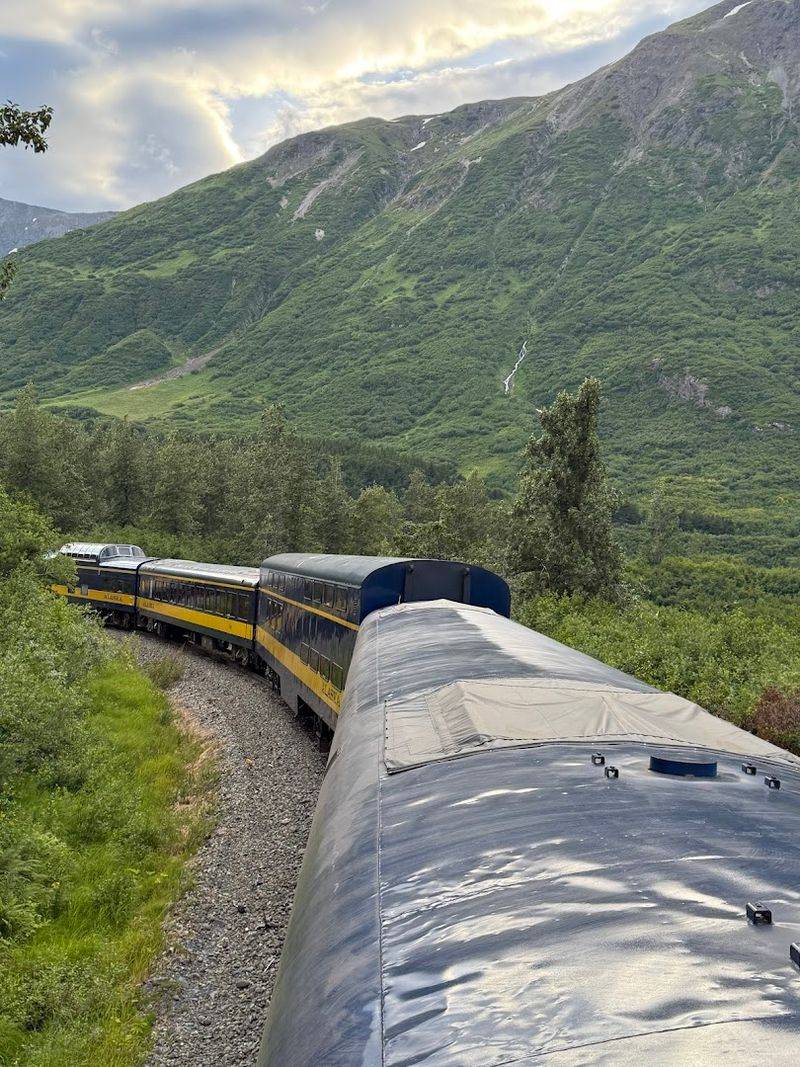
If the Denali Star is Alaska’s grand epic, the Coastal Classic is its breathtaking short story. Running between Anchorage and Seward, this seasonal train journey covers 114 miles of some of the most dramatic coastal scenery you will ever see from a train window.
The route hugs Turnagain Arm before climbing into the Kenai Mountains and descending toward the sea.
Turnagain Arm is famous for its extreme tidal fluctuations and frequent beluga whale sightings from the tracks.
The train then passes through tunnels blasted through granite, crosses high bridges, and delivers you into Seward with the kind of theatrical flair that makes arriving by car feel like a missed opportunity.
The Coastal Classic runs from late May through September, and the ride takes about four hours each way.
It pairs beautifully with a Kenai Fjords cruise if you want to stack two iconic Alaska experiences in one day. Seward from the train window, framed by glaciers and ocean, is a genuinely perfect arrival moment.
10. Cross The Arctic Circle On The Dalton Highway
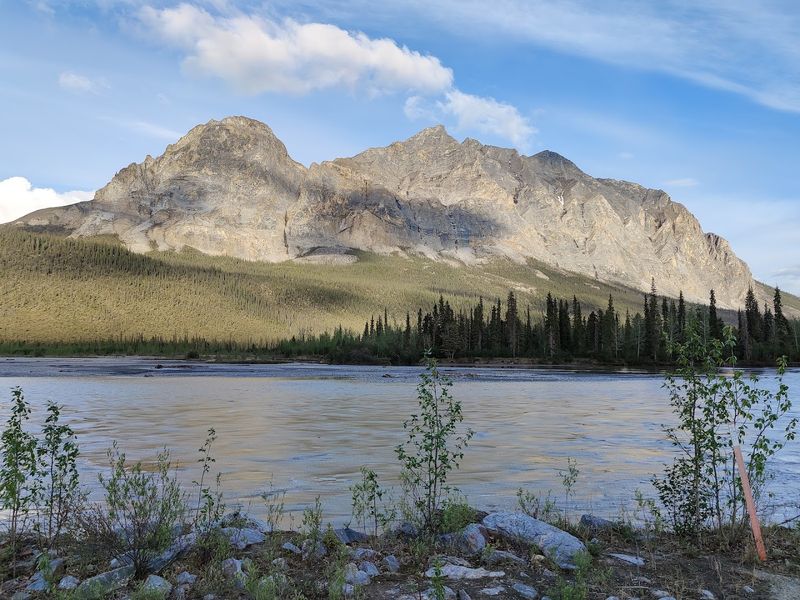
The Dalton Highway is not a road trip for the faint of heart, and that is exactly what makes crossing the Arctic Circle on it feel like such a genuine achievement.
Stretching 414 miles from Fairbanks to Deadhorse on the Arctic Ocean, the Dalton is mostly gravel, mostly remote, and entirely unforgettable. The Arctic Circle crossing sits at mile marker 115.
Most travelers stop at the official Arctic Circle sign for a photo that needs very little explanation back home. Beyond the sign, the landscape shifts dramatically as the boreal forest thins and gives way to open tundra.
The Brooks Range rises ahead like a fortress wall, and the sense of being genuinely far from everything is completely real.
Fuel stops are extremely limited, so planning is critical. Summer offers the bonus of the midnight sun, where the light simply refuses to quit.
Guided tours from Fairbanks handle the logistics if you prefer not to tackle the road independently. Crossing that latitude line feels like earning a geography badge you cannot buy anywhere else.
11. Dip A Toe In The Arctic Ocean
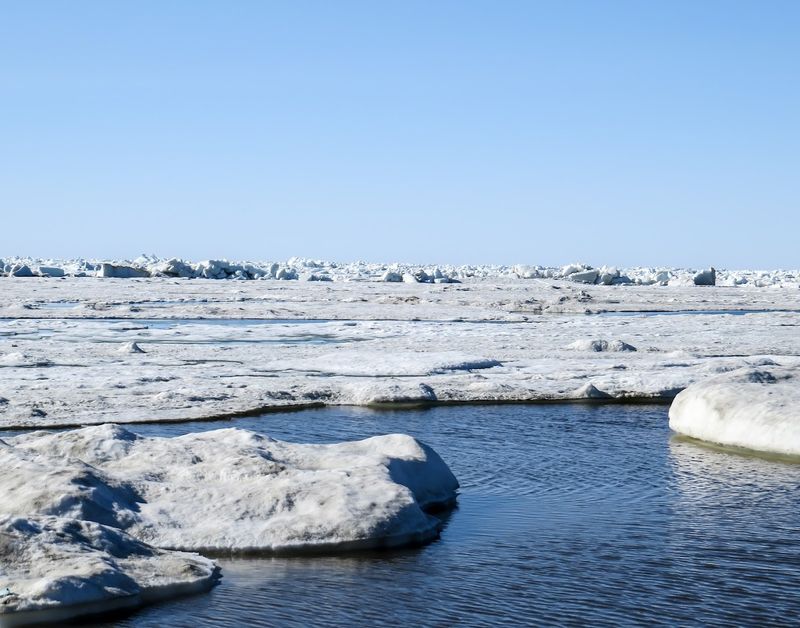
Utqiagvik, formerly known as Barrow, sits at the very top of Alaska and is the northernmost city in the entire United States.
Getting here already feels like an accomplishment since it requires a flight from Fairbanks or Anchorage. But the moment you step out onto the Arctic coastal plain and see the Arctic Ocean stretching to the horizon, the journey makes complete sense.
Touching the Arctic Ocean is one of those simple acts that carries enormous weight. The water is shockingly cold even in summer, and the flat, treeless landscape around you feels ancient and elemental.
Polar bears are present in the region, particularly in fall, which adds a certain thrilling context to every outdoor moment.
Summer visits bring the phenomenon of the midnight sun, where the sun stays above the horizon for 84 consecutive days.
The experience of standing at the top of North America under a sun that refuses to set is genuinely difficult to describe. Utqiagvik is remote, expensive to reach, and absolutely worth every bit of the effort.
12. See The Northern Lights Under Fairbanks’ Dark Skies
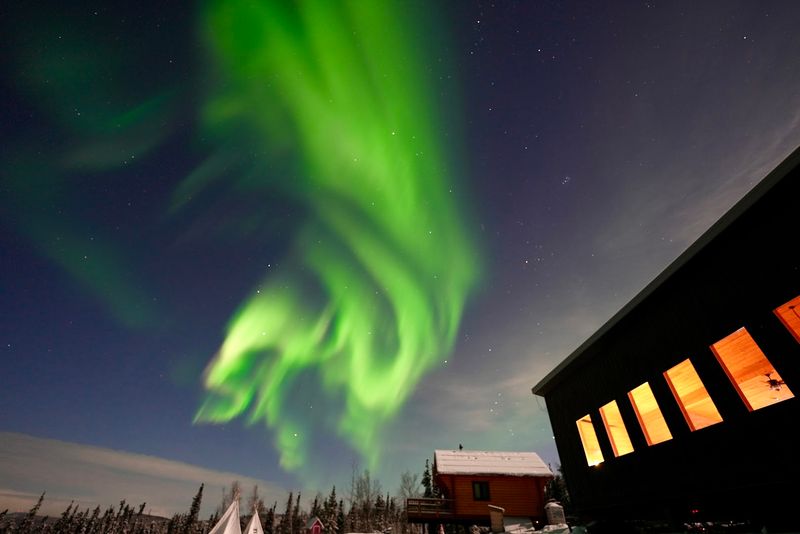
Fairbanks has built its entire winter identity around one spectacular natural phenomenon, and it fully delivers. Positioned directly under the auroral oval, Fairbanks sees the northern lights on roughly 240 nights per year.
That is not a typo.
The odds of witnessing the aurora borealis here are genuinely stacked in your favor from late August through April.
The lights themselves range from faint green wisps to full-sky explosions of purple, pink, and white that pulse and ripple with an almost musical quality. Stepping outside on a clear Fairbanks night and watching the sky ignite above a frozen forest is a sensory experience that photographs cannot fully capture.
Chena Hot Springs Road is a popular viewing spot, offering a natural thermal soak while you watch the show above.
Tour operators run dedicated aurora hunts that chase clear skies and dark conditions. Dress in serious layers because Fairbanks winters are legitimately cold.
But standing under a full aurora display in minus twenty degrees somehow feels completely worth it.
13. Explore Kennecott Mines
Wrangell-St. Elias is the largest national park in the United States, covering more land than the entire country of Switzerland.
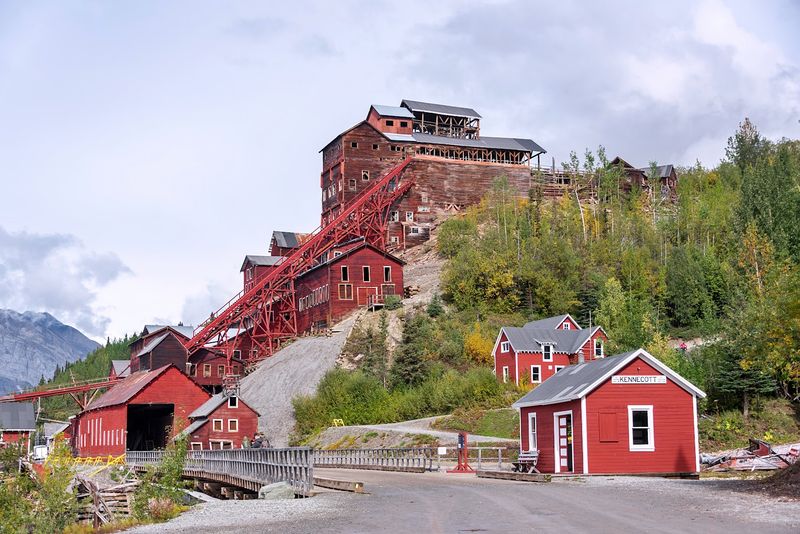
Tucked inside this enormous wilderness sits Kennecott, a National Historic Landmark that looks like someone built a small town on top of a glacier and then simply walked away.
The iconic red buildings rising against ice and mountain scenery create one of the most surreal visual combinations in Alaska.
Kennecott was once one of the most productive copper mines in the world, operating from 1903 to 1938. The mill town, the concentration mill, and the surrounding structures are remarkably well preserved given the remote location.
Guided tours explain the industrial history while the backdrop of glaciers and peaks provides constant visual drama.
Getting there involves a long drive down the unpaved McCarthy Road from Chitina, which is part of the adventure.
The nearby town of McCarthy serves as a base. Hiking, glacier walks, and exploring the Root Glacier are all options once you arrive.
Kennecott rewards the effort with history, scenery, and a feeling of genuine discovery.
14. Fly Into Gates Of The Arctic National Park
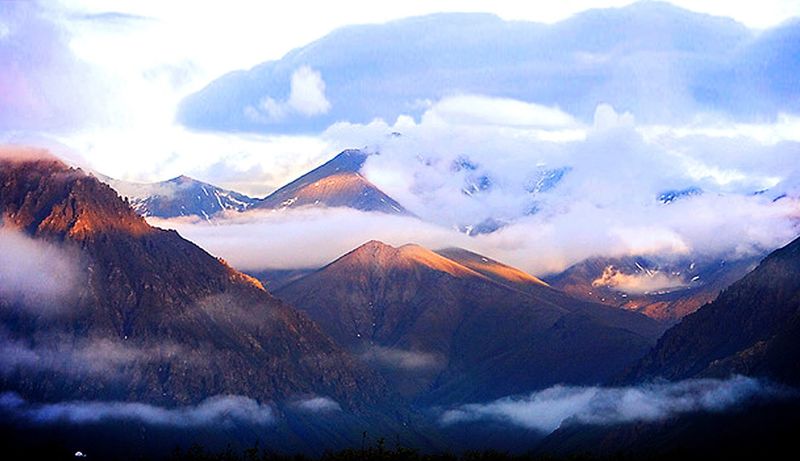
Gates of the Arctic National Park does not have roads, visitor centers, or trails. It does not have much infrastructure at all, and that is entirely the point.
Located entirely above the Arctic Circle in the Brooks Range, this is one of the most remote and least visited national parks on the planet. Getting in means flying in, full stop.
Bush planes out of Fairbanks or small gateway towns like Bettles drop visitors into a landscape that feels genuinely prehistoric.
River valleys carved by glaciers, caribou herds moving across open tundra, wolves, grizzlies, and Dall sheep going about their lives with no awareness of a world beyond this wilderness.
This is true backcountry travel, requiring solid experience, proper gear, and a self-sufficient mindset. The reward is complete immersion in a wilderness so intact and so vast that it recalibrates your sense of what wild actually means.
The Brooks Range is ancient, indifferent, and breathtakingly beautiful. Flying into it feels like entering a world that has no obligation to welcome you.
15. Kayak Among Icebergs Near Columbia Glacier
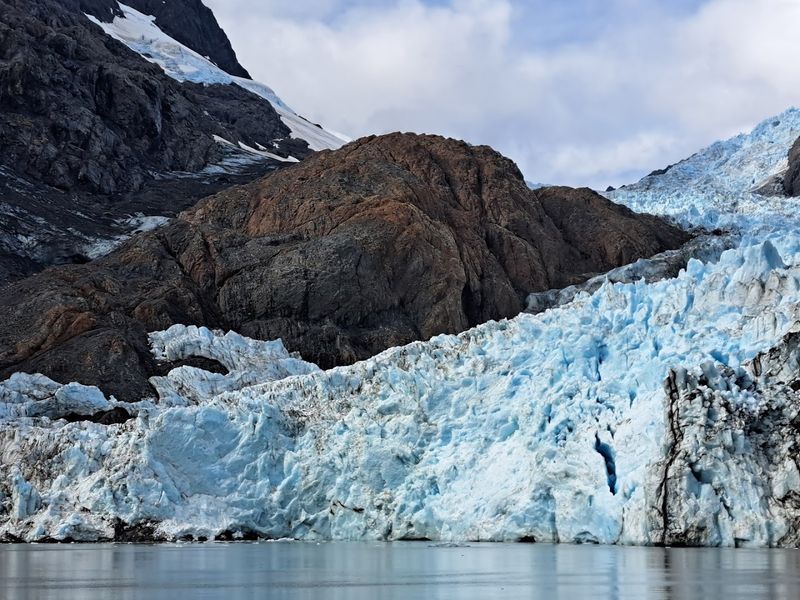
Columbia Glacier in Prince William Sound is one of the fastest retreating glaciers in the world, and while that is a sobering fact, it has also created an iceberg field of extraordinary beauty.
Kayaking among those icebergs near Valdez is one of the most surreal and quietly thrilling things you can do in Alaska.
The icebergs come in every shape and shade of blue, from pale aquamarine to deep cobalt. They groan, tilt, and occasionally roll without warning, which keeps your paddle strokes purposeful.
Harbor seals haul out on the flatter bergs, barely acknowledging the kayaks drifting past them.
Tour operators in Valdez run guided kayak trips into the iceberg field, ranging from half-day paddles to multi-day expeditions in Prince William Sound.
The combination of glacial ice, mountain scenery, marine wildlife, and the meditative rhythm of paddling creates an experience that feels both peaceful and wildly adventurous at the same time. Valdez delivers Alaska on an intimate, human scale.
16. Flightsee Misty Fjords National Monument
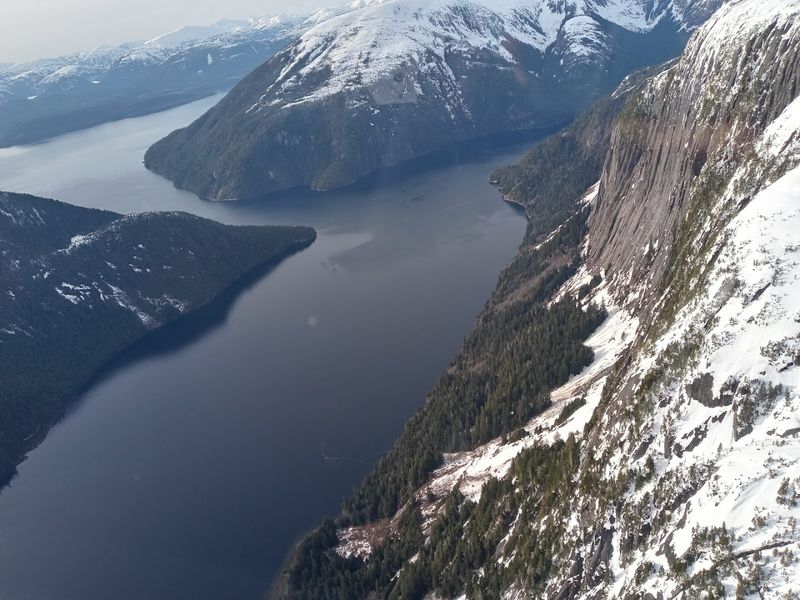
Misty Fjords National Monument near Ketchikan is one of Southeast Alaska’s best-kept secrets, and a floatplane tour is the only way to truly appreciate its scale.
The monument covers 2.3 million acres of ancient granite cliffs, deep fjords, and temperate rainforest so dense and green it almost looks digital.
Floatplanes leave Ketchikan and fly into the monument, banking through narrow canyon walls where waterfalls pour from hundreds of feet above.
The plane lands on glassy fjord water, the engine cuts, and the silence that follows is the kind that makes your ears ring. Loons call from somewhere in the mist.
Eagles watch from the cliff tops.
Some tours include a boat portion combined with the flight, giving you both an aerial and water-level perspective on the landscape.
The dramatic scale of the fjords, where walls rise nearly 3,000 feet straight from the water, is something that needs to be experienced rather than described. Ketchikan is easy to reach by cruise ship or ferry, making Misty Fjords one of the most accessible epic Alaska experiences.
17. Watch Walruses At Round Island
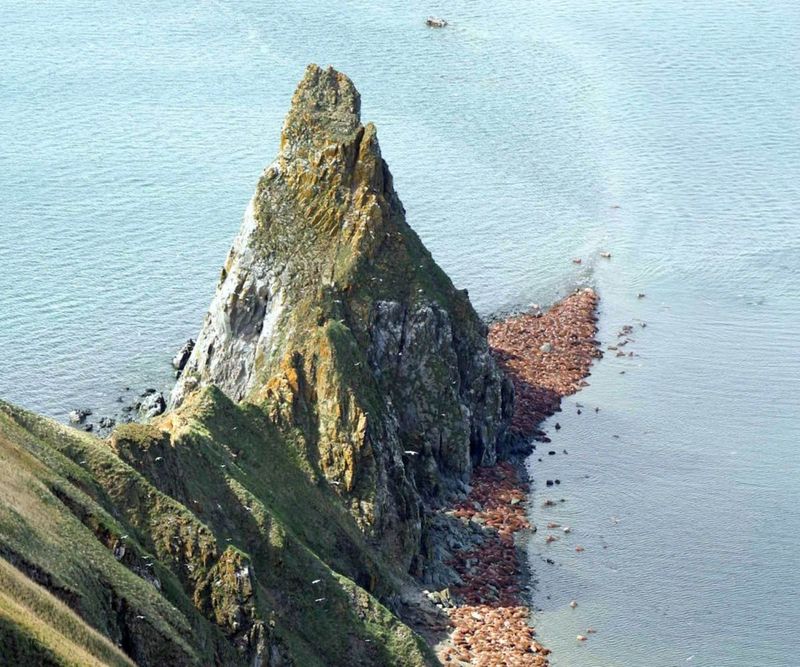
Round Island is one of those places that almost nobody outside of Alaska knows about, which makes visiting it feel like a genuinely exclusive experience.
Located in Bristol Bay in southwest Alaska, Round Island is part of the Walrus Islands State Game Sanctuary and serves as a major summer haul-out site for thousands of Pacific walruses.
The sight and sound of thousands of walruses crowded onto rocky beaches is something between a wildlife documentary and a comedy show.
They pile on top of each other, bellow, lumber around, and occasionally tumble into the water with impressive indifference. The smell is also memorable, in a way that no amount of preparation fully addresses.
Access requires a permit from the Alaska Department of Fish and Game, and the journey involves a floatplane or boat from Dillingham.
The remote logistics are part of what keeps the experience special. Camping is allowed on the island, and waking up to the sound of thousands of walruses at dawn is something you genuinely cannot replicate anywhere else on Earth.
18. Go Kodiak Brown Bear Viewing
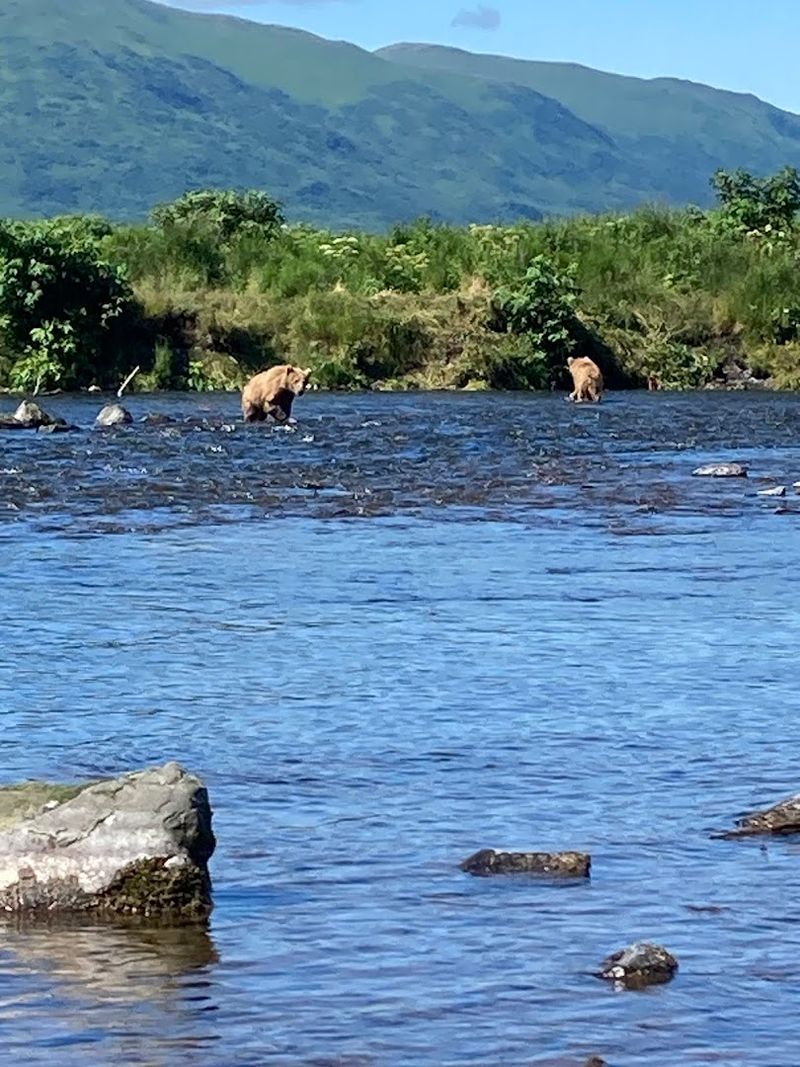
Kodiak Island is home to one of the largest brown bear subspecies on the planet, and the Kodiak brown bear has a reputation that precedes it by several hundred pounds.
Kodiak National Wildlife Refuge covers 1.9 million acres of the island and provides protected habitat for an estimated 3,500 of these magnificent animals.
Bear viewing tours typically involve a floatplane from the town of Kodiak to remote river or lake locations within the refuge.
The bears gather at salmon streams in summer and fall, creating viewing opportunities that rival anything at Katmai. The scale of a Kodiak bear up close, often reaching 1,500 pounds or more, is genuinely humbling in a way that recalibrates your position in the food chain.
The refuge has no roads, which means every visit requires a flight and a guide. That remoteness keeps encounters feeling wild and unscripted.
Unlike some bear viewing areas, Kodiak has a raw, unpolished quality that makes every sighting feel like something that was not guaranteed. That uncertainty is exactly what makes it so thrilling.
19. Experience Alaska Native Culture At The Alaska Native Heritage Center
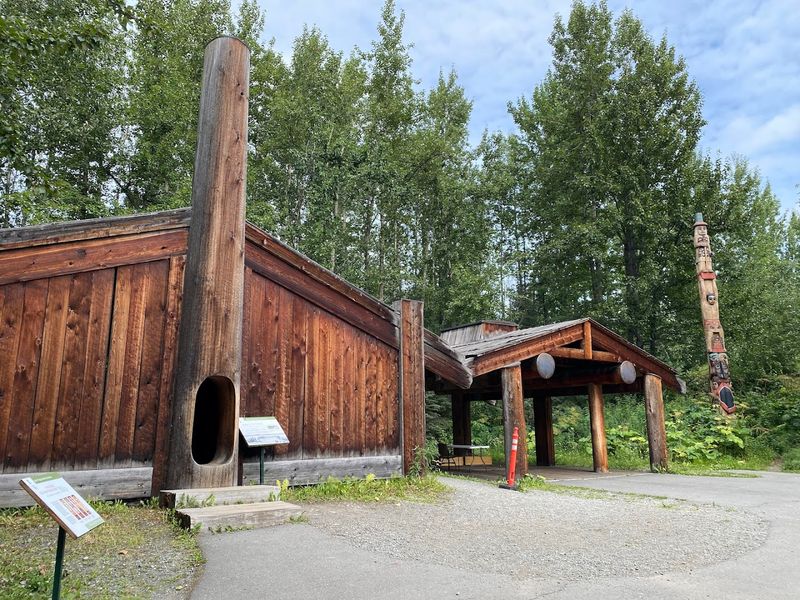
Alaska has been home to Indigenous peoples for thousands of years, and the Alaska Native Heritage Center in Anchorage offers one of the most thoughtful and comprehensive introductions to that living culture.
The center represents eleven distinct Alaska Native cultural groups, from the Athabascan peoples of the interior to the Yupik of the coast and the Inupiaq of the Arctic.
The outdoor village site features full-scale traditional structures including sod houses, a Tlingit clan house, and an Athabascan fish camp, all set along a lake with the Chugach Mountains in the background.
Cultural demonstrators share traditional crafts, storytelling, dance, and language in ways that feel genuine rather than performative.
The center is located just minutes from downtown Anchorage and makes an excellent first stop on any Alaska itinerary.
Understanding the depth and diversity of Alaska Native cultures transforms how you see the landscape itself. Every mountain, river, and coastline carries thousands of years of human relationship with this land.
The Heritage Center opens that door in a way that enriches every experience that follows.
20. Celebrate The Midnight Sun Above The Arctic Circle
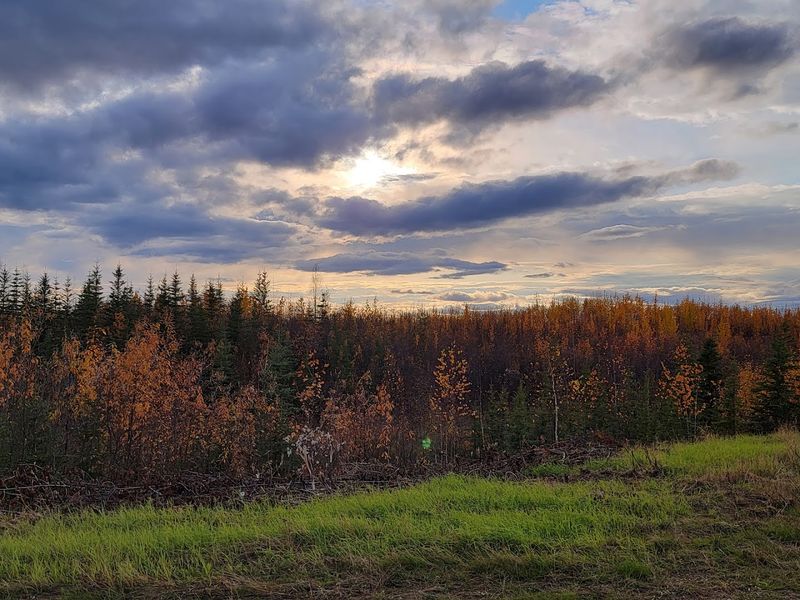
There is nothing quite like looking at your phone, seeing 2:17am, and watching the sun hang above the horizon like it forgot its schedule.
Above the Arctic Circle in Alaska, the midnight sun is not a metaphor or a tourist slogan. From late May through late July, the sun literally does not set.
The sky stays lit in shades of gold and amber through the entire night.
Utqiagvik holds the record for the most consecutive days of sunlight, with the sun staying above the horizon for 84 straight days. But even at the Arctic Circle line itself, you get at least one full day of around-the-clock sunlight at the summer solstice.
The psychological effect of continuous daylight is genuinely strange and wonderful.
Wildlife is active at all hours during this period, and hiking, photography, and simply sitting outside at midnight watching golden light paint the tundra are all experiences that feel uniquely Alaskan.
The midnight sun is Alaska’s summer superpower, and experiencing it above the Arctic Circle is one of those rare moments where the world reminds you it is still capable of genuine magic. Have you ever seen the sun at midnight?