
This Stunning Arizona Botanical Garden Is A Perfect Place To Spend A July Morning
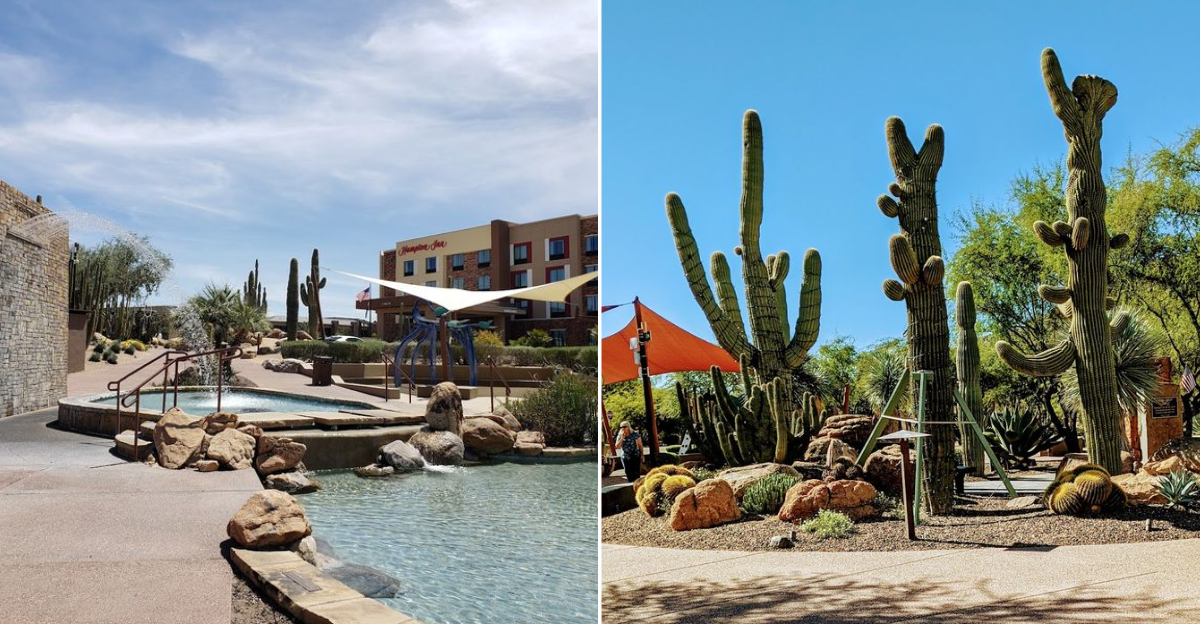
Honestly, you wouldn’t believe the secret spot I found for a July morning escape. Forget hiding out in the A/C with a lukewarm coffee; we’re talking about a dreamy botanical garden that feels like a total oasis in the middle of Arizona.
It’s got these winding paths through native flora that make you feel like you’ve been transported to a different planet, all while the morning sun creates the most magical golden glow.
I spent hours just wandering around, completely mesmerized by how vibrant and alive the desert can actually be when you know where to look.
Grab your sunglasses and put on some comfy shoes, because you seriously need to see this place for yourself before the heat decides to kick into full gear.
The Setting And Story Of Carefree Desert Gardens
Carefree Desert Gardens feels like one of those rare Arizona places that gives you a full morning without asking much in return.
Set along Easy Street in downtown Carefree, this free four-acre desert garden is open every day of the year and welcomes visitors with labeled Sonoran plants, public art, fountains, shaded seating, and easy paths made for slow wandering.
What looks modest at first quickly becomes more interesting once the details appear: more than 50 desert species, thoughtful landscaping, pet-friendly stations, and a setting that reflects Carefree’s artsy, unhurried personality.
The town sits north of Phoenix at about 2,500 feet above sea level, so July mornings can still bring that soft golden desert light before the afternoon heat takes over.
It is part botanical collection, part community gathering space, and part quiet retreat, making it a beautiful stop for anyone who wants to enjoy the desert without crowds, tickets, or complicated planning.
The Giant Sundial That Steals Every Conversation
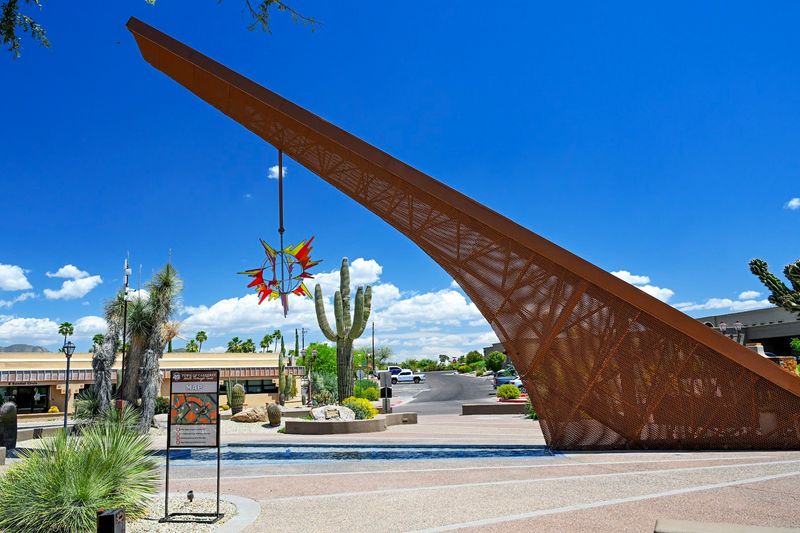
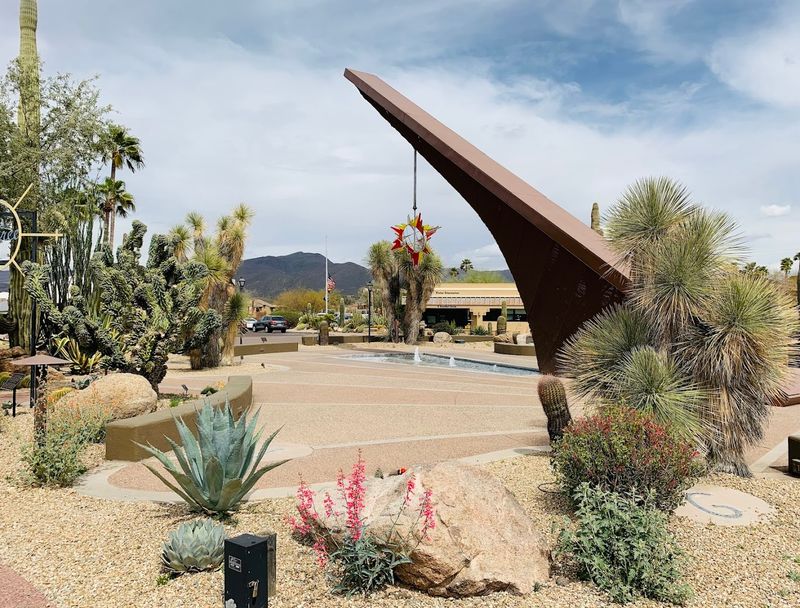
Some landmarks announce themselves quietly, and others just plant themselves in the middle of your field of vision and demand to be noticed. The Carefree Sundial belongs firmly in the second category.
Standing 62 feet long and 25 feet high, this is one of the largest sundials in North America, and it sits right inside the Desert Gardens as casually as if enormous timekeeping monuments were perfectly ordinary things to find on a morning walk.
I stood in front of it for a good five minutes before I even thought about taking a photo, which is unusual for me. There is something genuinely arresting about seeing a functional instrument at that scale. It is not just decorative.
On a clear day, which in Carefree means nearly every day, the gnomon casts a shadow that actually tells the time with impressive accuracy. The sundial was built in 1959, making it a contemporary of the town itself.
Desert Flora Worth Getting Up Early For
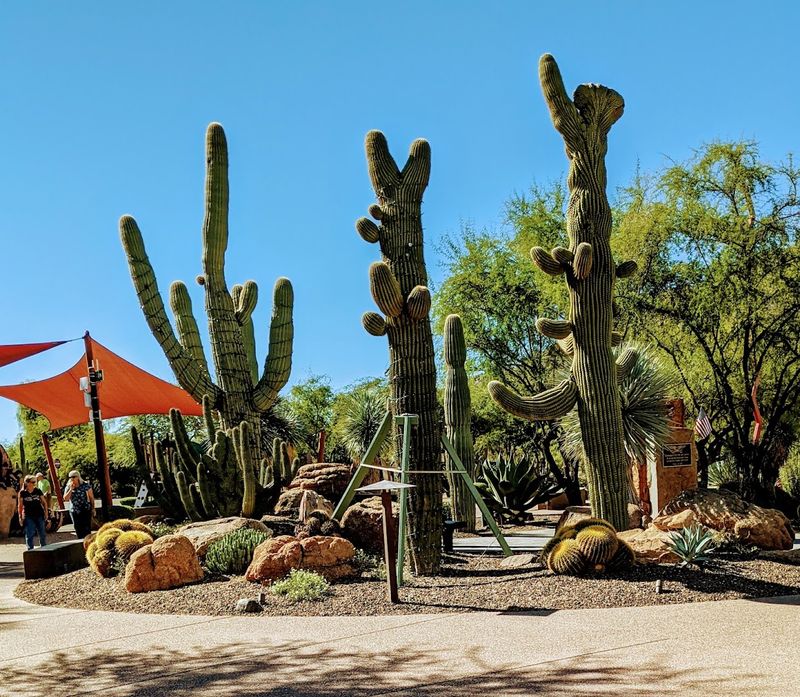
There is a particular kind of beauty in desert plants that takes most people a moment to tune into. Coming from a landscape of green lawns and leafy trees, the first impression of a cactus garden can feel a bit stark.
But spend even twenty minutes walking slowly through the Carefree Desert Gardens, reading the labels, noticing the textures and shapes, and that initial impression dissolves into something closer to genuine awe.
The garden features over 50 unique species of desert flora and fauna, which is a serious collection for a four-acre space. These are not just the obvious saguaros and prickly pears, although those are certainly here in fine form.
The collection includes rare specimens that most people have never seen outside of a field guide, plants with extraordinary adaptations, unusual growth forms, and in some cases, stories that stretch back thousands of years in the human history of the Sonoran Desert.
Every single plant in the garden is labeled, which might sound like a small thing but makes an enormous difference to the experience. I found myself stopping at plants I had walked past dozens of times in the wild and finally understanding what I was looking at.
The Sonoran Desert, which stretches across southern Arizona and into northwestern Mexico, is one of the most biologically diverse deserts on earth. Its plant life has evolved over millions of years to cope with extreme heat, irregular rainfall, and soils that would challenge most species.
The Splash Pad And Play Area For Families
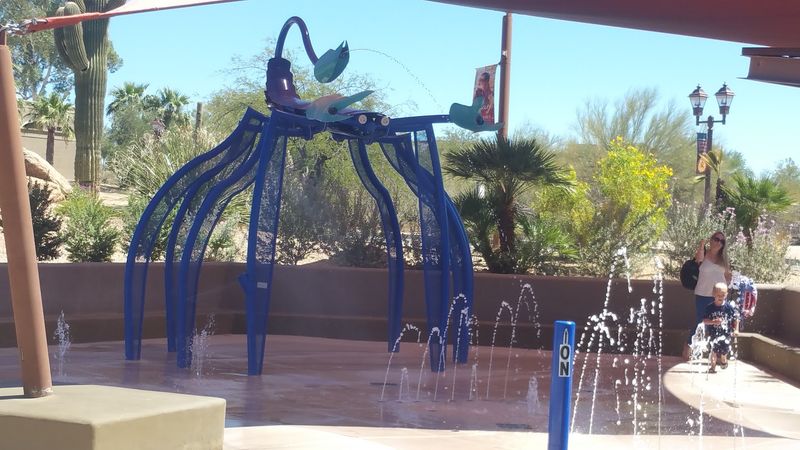
July in Arizona rewards families who plan ahead, and Carefree Desert Gardens makes that planning easier.
The free four-acre garden in downtown Carefree pairs labeled Sonoran plants, art, fountains, shaded seating, and stroller-friendly paths with the Kiwanis splash pad, a summer lifesaver for kids once the morning heat starts rising.
Families can begin early with a gentle walk through the botanical collection, stop at the sundial, point out desert species, and then let the splash pad take over when attention spans shrink.
The nearby play area adds a memorable Gila Monster slide, turning a real Sonoran Desert creature into something playful enough for children to remember. Pet stations make the garden easy for leashed dogs too, while shaded benches give parents a practical place to pause.
For visitors, the setup keeps the day simple: bring sunscreen, water, and dry clothes, then enjoy nature, learning, play, and cooling off without tickets or complicated planning.
Art, Sculptures, And The Creative Spirit Of tThe Garden
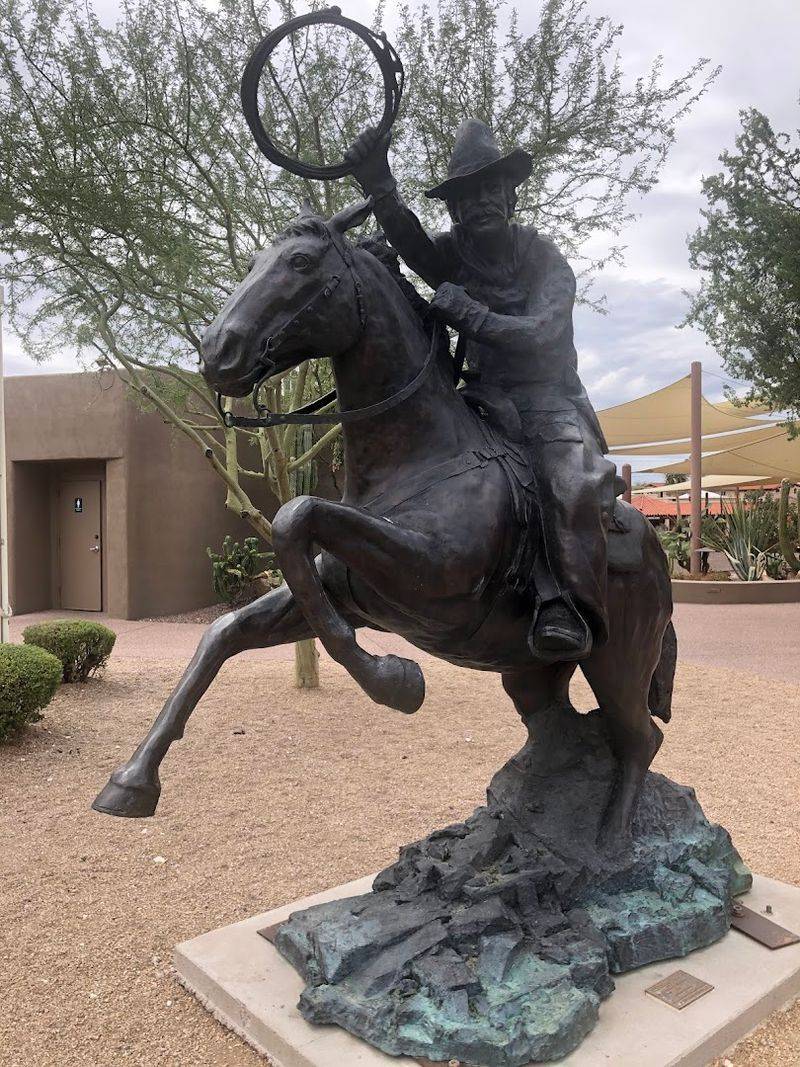
Not every botanical garden thinks to put art in its beds alongside the plants, but Carefree has always been a town that treats creativity as a basic civic value rather than a luxury.
The Desert Gardens reflect that ethos directly, with art installations and sculptures scattered throughout the space in a way that feels genuinely integrated rather than decorative in a superficial sense.
The art does not compete with the plants. It converses with them. Carefree has a well-established arts identity that predates its reputation as a retirement and resort destination.
The town has historically attracted artists, architects, and designers drawn to the quality of light, the dramatic landscape, and the sense of creative freedom that comes with living somewhere that takes its own personality seriously.
That history shows up in the Desert Gardens, where the curation of art alongside botanical specimens feels like a natural extension of the town’s character.
The sculptures I encountered on my visit ranged from representational pieces depicting desert wildlife to more abstract works that played with form and texture in ways that echoed the plants around them.
Why July Mornings Are The Secret Best Time To Visit
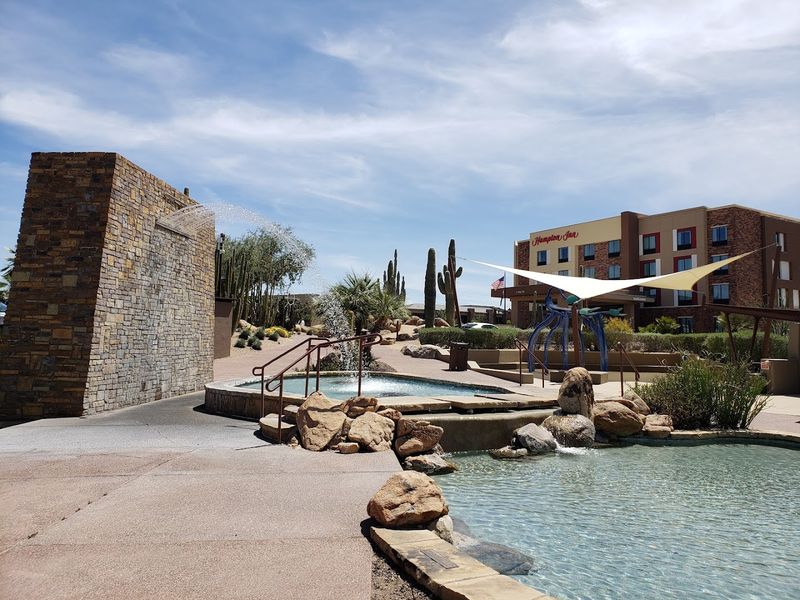
July in Arizona has a reputation that precedes it, and not always in flattering terms. The numbers are not subtle. Daytime highs in the greater Phoenix area regularly push past 105 degrees Fahrenheit, and the sun has a directness that feels almost confrontational by midday.
But here is what the reputation leaves out: Arizona mornings in July are genuinely stunning, and the Carefree Desert Gardens is one of the best places in the state to experience exactly that.
Arriving at the garden around 7 in the morning in July means stepping into a world that is still finding its footing for the day. The temperature is typically in the low to mid 80s, which in desert terms feels almost refreshing.
The light is that particular warm, low-angle gold that photographers spend their careers chasing, and it falls across the spines and surfaces of the cacti in ways that make the whole garden look like it is gently glowing from within.
The town’s position in the foothills of the Bradshaw Mountains means that mornings here have a crispness that the valley floor does not always share.
Practical Tips
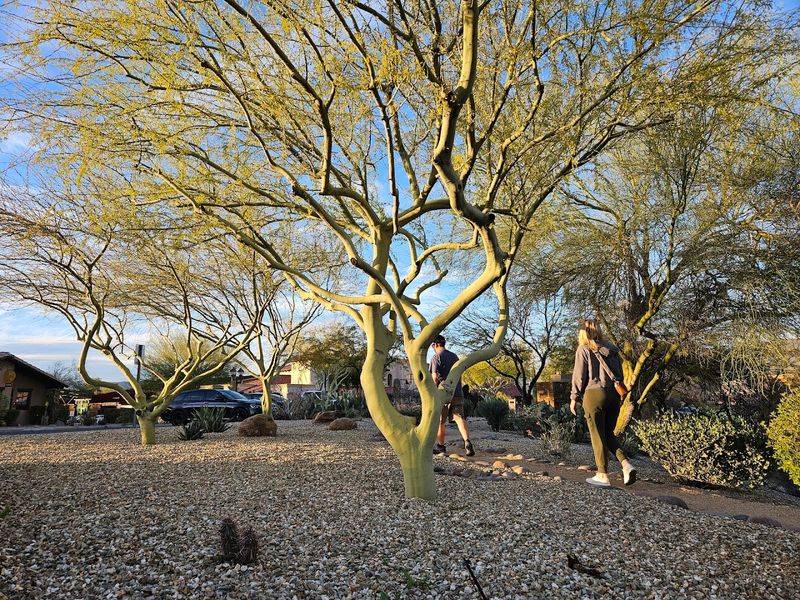
A visit to the Carefree Desert Gardens rewards a little advance thought, not because the logistics are complicated, but because a few small decisions can make the difference between a good morning and a genuinely memorable one.
The garden is free and open every day, which removes the biggest practical barriers, but the Arizona summer context means that timing, preparation, and awareness of the local environment will shape your experience significantly.
Arrive early. This is the single most important piece of advice for a July visit, and it bears repeating with some emphasis.
The difference between arriving at 7 in the morning and arriving at 10 is not just a matter of temperature. It is a difference in light quality, wildlife activity, crowd levels, and overall comfort. The garden at 7 a.m. in July feels like a private discovery.
By 10 a.m., the sun is already high and unforgiving, and the experience becomes more effortful than it needs to be. Water is non-negotiable. The Sonoran Desert at any time of year demands respect for hydration, and July amplifies that demand considerably.
The Broader Magic Of Carefree, Arizona
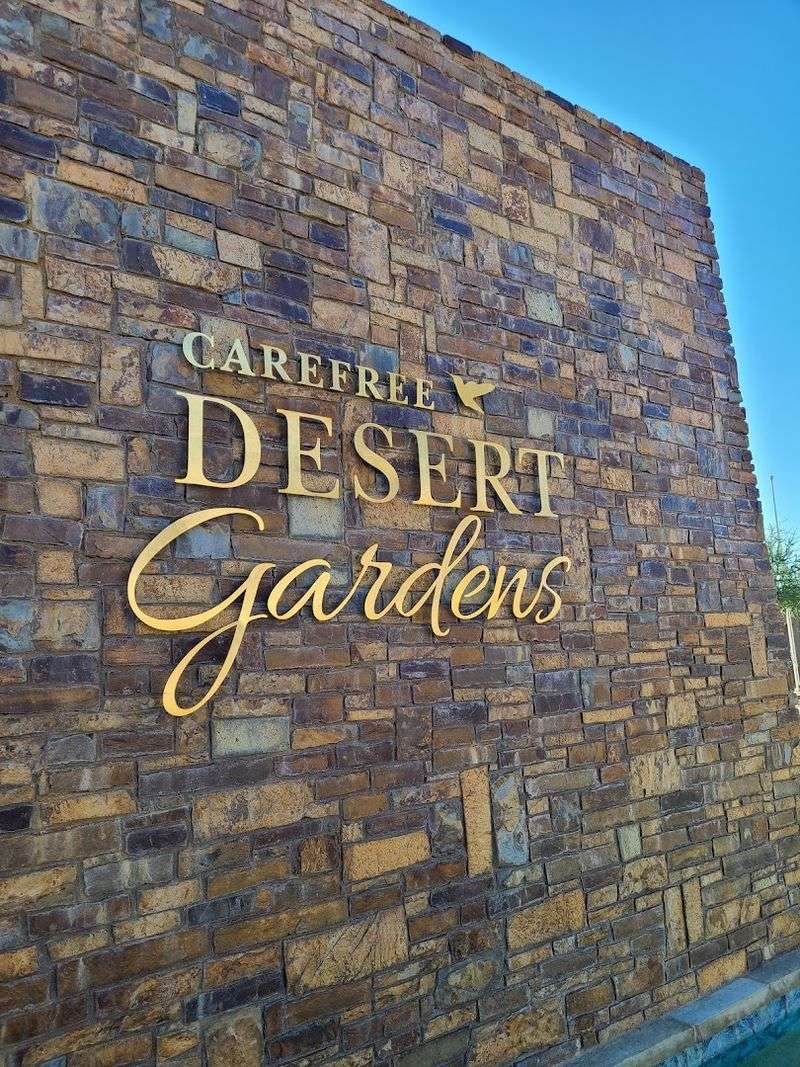
There is a town in the Sonoran Desert that named its streets Easy Street, Rocking Chair Road, and Never Mind Trail, and somehow managed to do it without being insufferable about it.
Carefree, Arizona is one of those places that commits fully to its own personality, and the Desert Gardens are the most concentrated expression of that commitment. But to understand the garden fully, it helps to understand the town it grew out of.
Carefree was developed in the late 1950s by K.T. Palmer and Tom Darlington, two developers who had a specific vision for what a planned desert community could look like.
Their idea was not to impose a suburban template onto the Sonoran Desert but to create a community that worked with the landscape, using the natural terrain, the native plants, and the extraordinary light as foundational design elements rather than obstacles to be overcome.
That philosophy was genuinely ahead of its time. The town sits at roughly 2,500 feet above sea level in the foothills of the Bradshaw Mountains, about 34 miles north of Phoenix.