
This Strange Desert City In Arizona Is What People In The 1970s Thought The Future Would Look Like
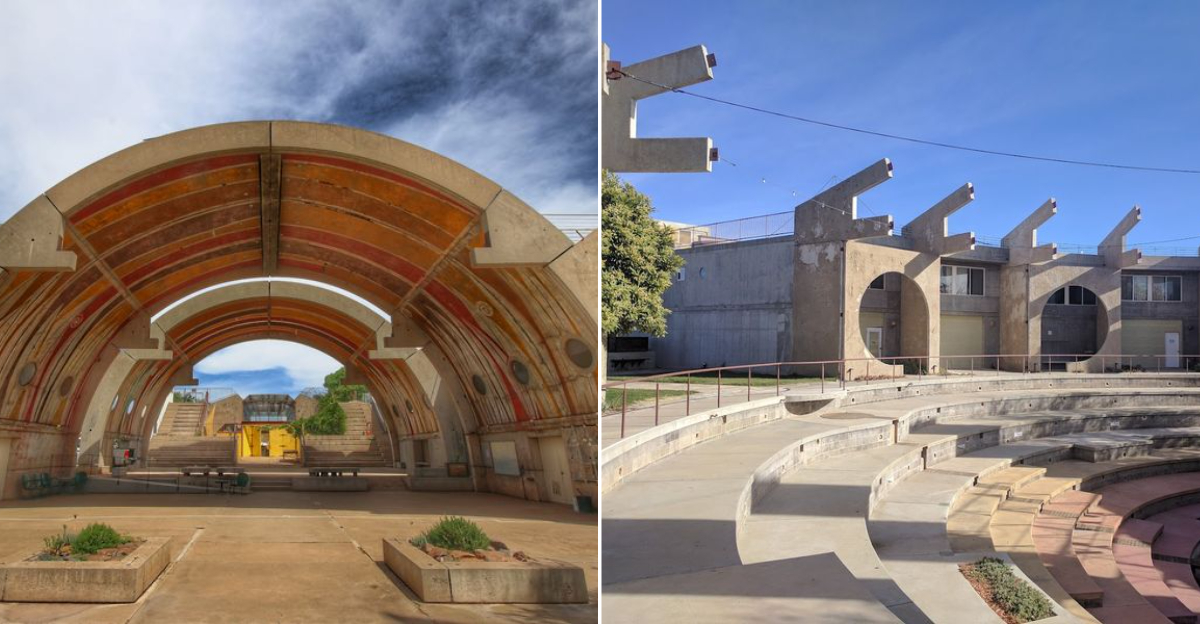
Getting lost in a concrete labyrinth might sound like a nightmare, but here, it’s an architectural adventure.
There is something undeniably charming about a place that captures the exact optimism of the 1970s, back when we were all convinced our homes would eventually resemble space stations nestled in the desert.
Arizona provides the perfect dramatic backdrop for this experiment in communal living, where every corner turned reveals sweeping curves and deliberate, thoughtful design.
It’s weird, it’s bold, and it’s surprisingly peaceful for a town that looks like it belongs on another planet. If you’ve ever wondered what humanity look like when it tries to redesign reality, you’ve come to the right place. Let’s explore this wild relic of high-concept living and see if the future still holds up.
Built starting in 1970, it was the bold vision of Italian-American architect Paolo Soleri, who believed cities could be compact, self-sufficient, and in harmony with nature.
Paolo Soleri’s Radical Vision For Urban Living
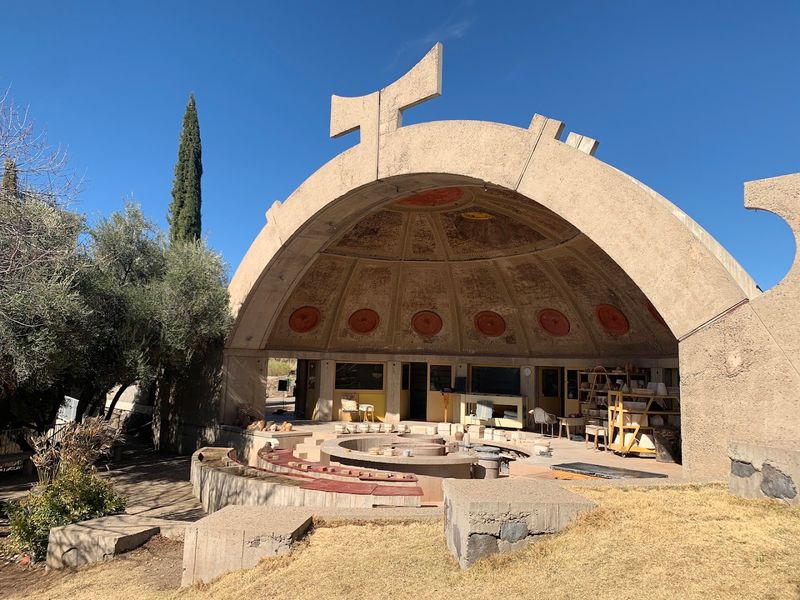
Paolo Soleri was the kind of thinker who looked at a sprawling American suburb and felt a deep sense of frustration. Born in Turin, Italy in 1919, he trained under the legendary Frank Lloyd Wright before eventually striking out with his own radical philosophy.
He called it arcology, a word he built by combining architecture and ecology, and it would become the driving force behind everything he created at Arcosanti.
Soleri believed that modern cities were wasteful, spread too thin, and deeply disconnected from nature. His solution was a super-dense, three-dimensional urban habitat where people lived, worked, and grew food all in one compact space. No cars, no sprawl, no throwaway consumerism.
Just intentional, community-centered living packed into a thoughtfully designed structure.
That idea still feels bold because Arcosanti was never meant to be a normal attraction or a polished museum piece. It was designed as a living experiment, which makes every concrete curve and open-air space feel tied to a much bigger question.
When construction began in 1970 on a mesa in central Arizona, Soleri was putting his philosophy to the test in the most literal way possible. His legacy continues to shape conversations about sustainable urban design today.
The Architecture That Stopped People In Their Tracks
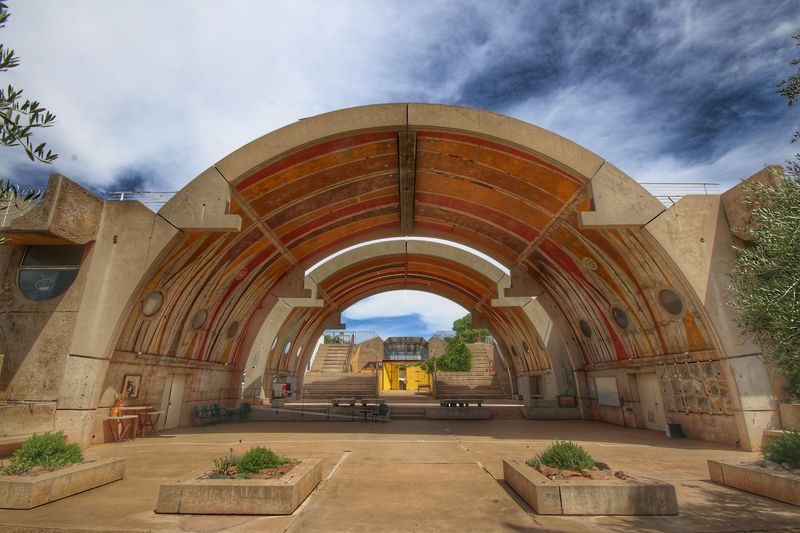
Standing on the edge of the Agua Fria River canyon and looking at Arcosanti for the first time is a genuinely surreal experience. Curved concrete vaults sweep upward like frozen waves.
Round apses open toward the sun. Massive greenhouse structures catch winter light while shading the interior from summer heat. Nothing about it looks like any town you have ever visited before.
Every building was constructed using an innovative earth-casting technique, where workers poured concrete directly over mounded soil forms.
Once the concrete set and the soil was removed, the result was those signature curved shapes that give Arcosanti its unmistakable look. Structures face southward to take full advantage of passive solar principles, keeping energy use low and natural light high.
The desert setting makes those choices feel even more practical, because shade, airflow, and sun exposure are not decorative details here. They are part of the entire design language, turning the harsh landscape into something the architecture works with instead of against.
New York Times architecture critic Ada Louise Huxtable called it the urban laboratory in the 1970s, and that phrase still fits perfectly. Walking through it feels less like touring a town and more like stepping inside an architectural experiment that never stopped running.
The Bronzed Heartbeat: Bell Casting At Arcosanti
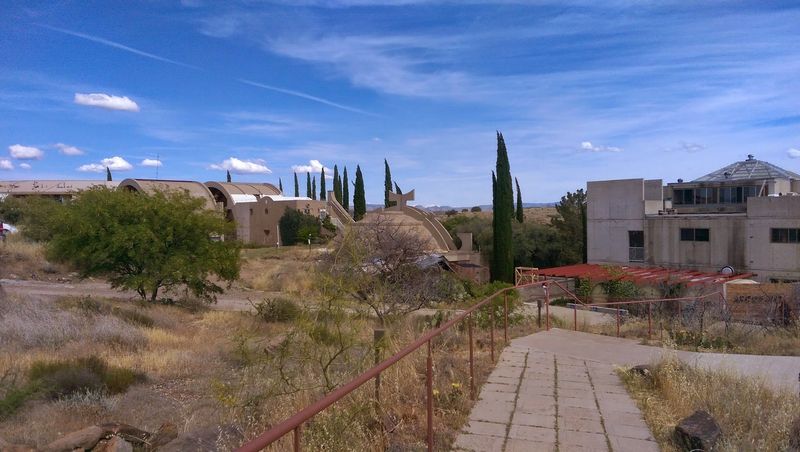
Ask any longtime visitor what sound they associate with Arcosanti, and the answer is almost always the same: bells.
The community has supported itself for decades through the casting of molten bronze and ceramic bells, which are sold to visitors and through the Cosanti Foundation. It is a surprisingly beautiful way to keep an architectural dream alive.
The bell-making process is a genuine craft. Artisans pour molten bronze into handmade molds, and the resulting bells carry a warm, resonant tone that feels completely at home in the desert air. Ceramic wind chimes made on-site are equally popular, and both make meaningful souvenirs that carry a piece of the Arcosanti story with them.
Revenue from bell sales funds the ongoing construction and maintenance of the community, making every purchase a small act of participation in the project. That connection gives the bells more weight than a typical gift-shop keepsake.
They become part artwork, part funding model, and part reminder that Arcosanti is still an active experiment rather than a finished relic.
Watching the casting process in person is one of the most memorable things you can do during a visit, equal parts art demonstration and industrial theater that genuinely earns its audience.
Life Inside The Community: Who Lives There
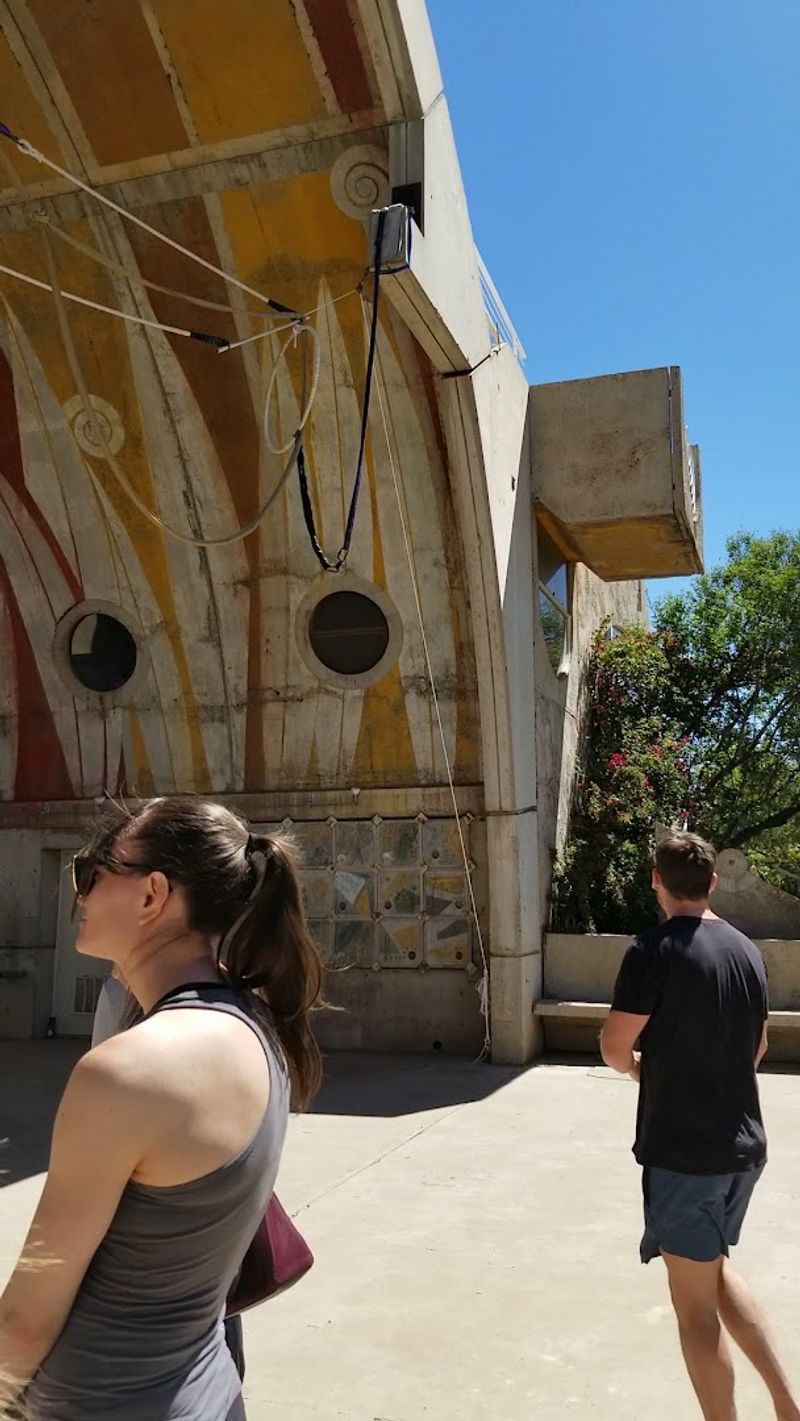
Arcosanti was originally designed to house 5,000 residents in its fully realized form. The reality has been a bit more intimate.
žAt any given time, somewhere between 50 and 150 people call the community home, made up mostly of interns, volunteers, and long-term residents who are deeply committed to the project and its principles.
Since construction began, over 8,000 participants have passed through Arcosanti’s five-week workshops, learning everything from construction techniques to community living.
These workshops are open to the public and attract people from all over the world who want to contribute something tangible to a project that still feels genuinely important.
Daily life at Arcosanti is communal in the truest sense. Residents share meals, work on construction, tend to the grounds, and participate in ongoing discussions about sustainability and urban design. It is not a resort or a retreat.
It is a working experiment in how people might choose to live together more thoughtfully, and that distinction makes every conversation you have there feel surprisingly meaningful.
A Child Of The 1970s: The Counter-Cultural Energy
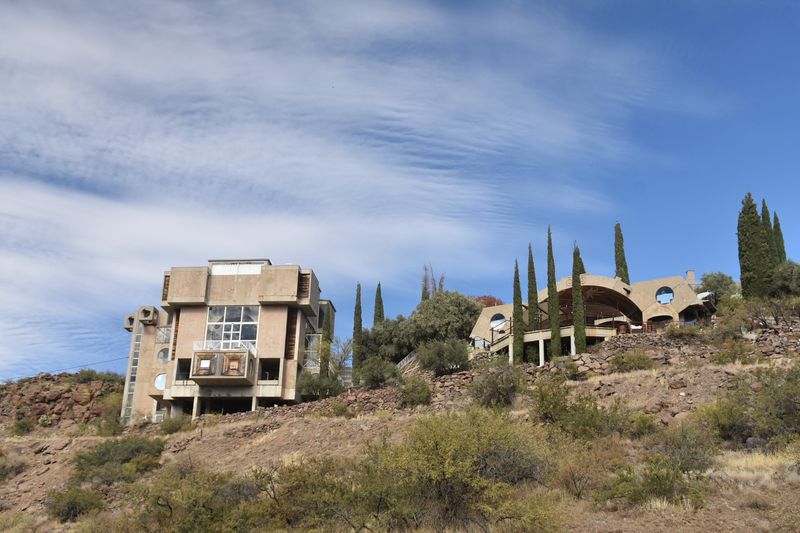
Arcosanti did not appear in a vacuum. It was born directly from the anxious, idealistic energy of the early 1970s, a time when Americans were grappling seriously with pollution, energy shortages, land conservation, and the growing sense that suburban sprawl was quietly hollowing out community life.
Soleri’s project was a direct response to all of those concerns at once. The counter-cultural movement of that era fed directly into Arcosanti’s DNA.
The idea that ordinary people could build an entirely new kind of city with their own hands, guided by ecological principles rather than profit, resonated deeply with a generation hungry for alternatives.
Volunteers arrived from across the country, drawn by the promise of participating in something genuinely different.
That 1970s optimism is still visible in every curved wall and sun-facing window at Arcosanti. The project captures a specific historical moment when the future felt both urgent and wide open, and spending time there is a vivid reminder of just how bold that generation’s imagination truly was.
What To Expect When You Arrive
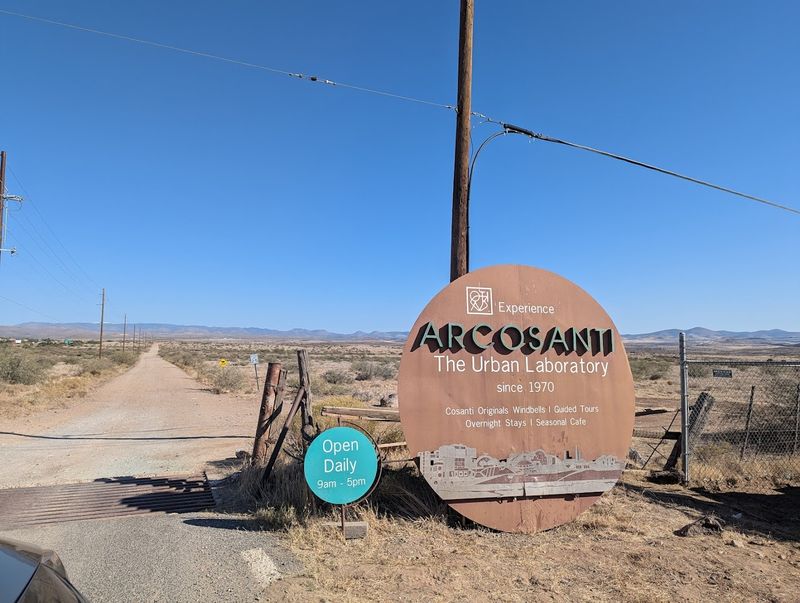
Arcosanti sits at an elevation of 3,732 feet in Yavapai County, central Arizona, about 70 miles north of Phoenix.
The address is 13555 S Cross L Road, Mayer, AZ 86333, and getting there takes you off the interstate and down a dirt road that feels like the perfect transition from the ordinary world to something decidedly unusual.
Guided tours run daily and are the best way to understand what you are actually looking at.
Knowledgeable guides walk you through the history, the architecture, and the ongoing construction, answering questions with the kind of genuine enthusiasm that only comes from people who truly believe in the place.
Tours typically last about an hour and are affordable for families. There is also a small cafe and a gift shop where you can pick up those famous bronze and ceramic bells.
If you want a longer stay, overnight accommodations are available on-site. Spring and fall offer the most comfortable temperatures for exploring the outdoor spaces, though the desert light in winter has its own quiet magic.
Why Arcosanti Still Matters In The 21st Century
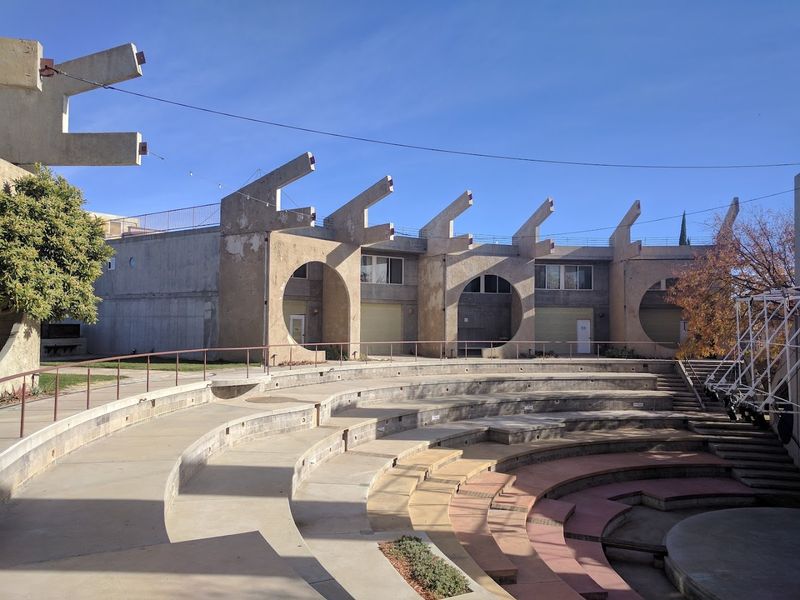
More than five decades after the first concrete was poured, Arcosanti continues to draw architects, urban planners, students, and curious travelers who sense that its central questions have only grown more relevant.
Climate change, urban density, housing affordability, and community erosion are not abstract problems anymore, and Soleri was asking pointed questions about all of them back in 1970.
The project has never been finished, and that is actually part of its honesty. Arcosanti does not pretend to have solved urban living. It presents itself as an ongoing experiment, a place where ideas are tested in real time by real people living real lives.
That openness gives it a credibility that polished utopian communities often lack. Visiting Arcosanti leaves you with a particular feeling that is hard to shake.
It is the sensation of standing inside someone’s sincere attempt to make the world better, imperfect and incomplete and still very much alive. In a world of finished products and curated experiences, that kind of raw, earnest ambition is quietly extraordinary.