
This Incredibly Preserved Arkansas Battlefield Feels Frozen By The Passage Of Time
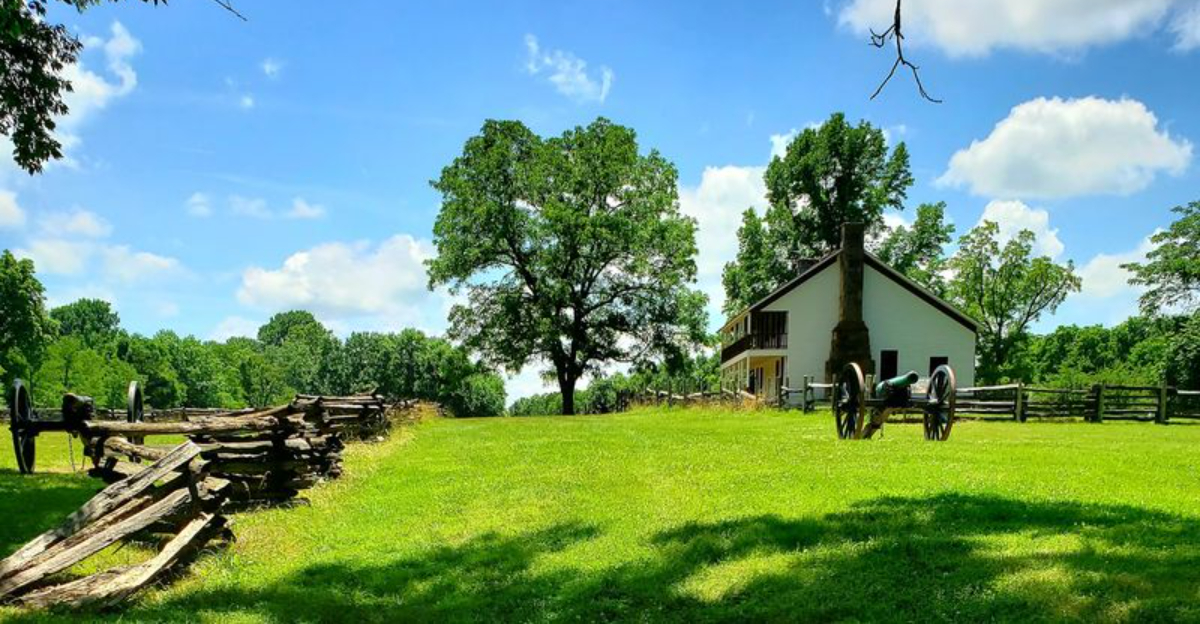
I thought this would be a quick history stop. A few markers, a quiet walk, maybe a photo or two.
Then the fields opened up, the cannon lines came into view, and the whole place started to feel heavier than I expected. This Arkansas battlefield has a way of slowing you down without asking.
The story goes back to March 1862, when Union and Confederate forces fought here in a battle that mattered far beyond these hills. Today, the roads, ridges, meadows, and landmarks still line up with the past in a way that feels unusually clear.
You do not have to be a Civil War expert to feel it. You only have to stand still for a moment and look around.
The silence does the rest, and that is exactly why this place leaves such a mark. Long after you leave, the fields still seem to follow you home.
Quiet Fields With A Heavy Past
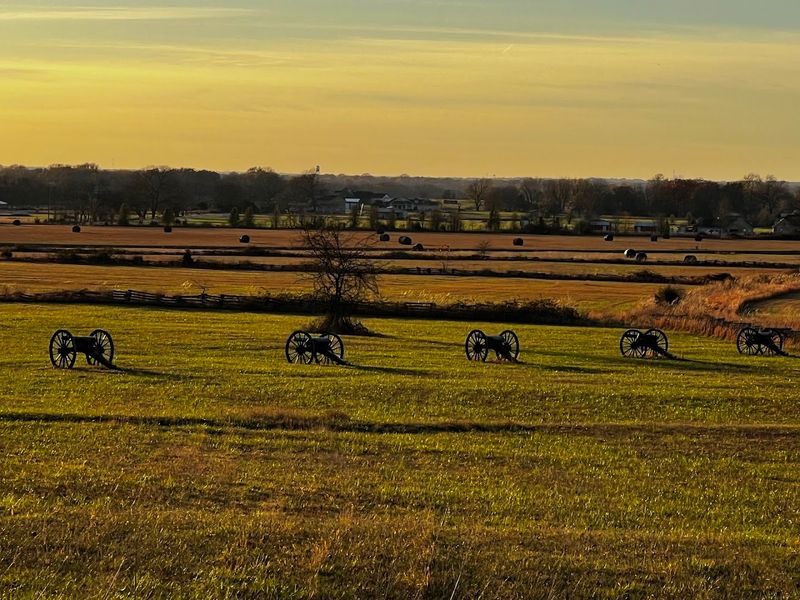
Some places carry weight you can feel before you even read a single historical marker. My first steps onto the open fields here stopped me mid-stride, not because of any dramatic scenery, but because of how profoundly undisturbed everything looked.
The ground stretches out in long, grassy swells that have barely been touched since March 1862, when Union and Confederate troops fought across this same terrain over two consecutive days.
Approximately 23,000 soldiers fought at Pea Ridge on March 7 and 8, 1862, in what became one of the largest Civil War engagements west of the Mississippi River, and the land still holds that story in its soil.
Congress created this park in 1956, and it was officially dedicated in 1963 during the Civil War Centennial, locking in protections that kept development away for decades. You can stand at the center of a field and see almost exactly what soldiers saw, which is both peaceful and deeply sobering.
You can find all of this preserved history at Pea Ridge National Military Park at 15930 National Park Dr, Garfield, AR 72732.
Where Cannon Lines Still Shape The View
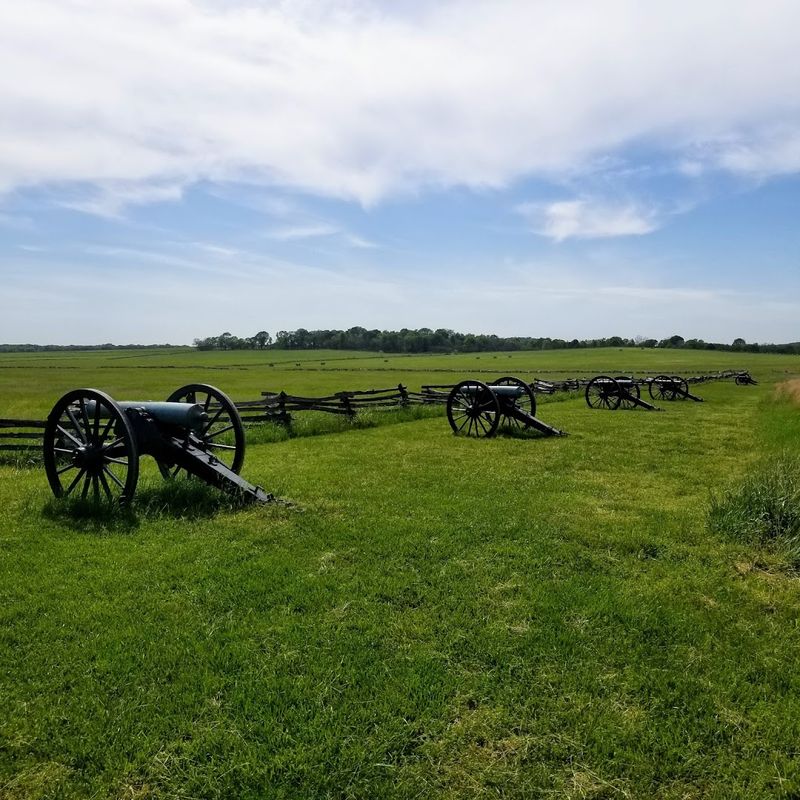
Few things reset your sense of scale like standing next to a row of Civil War-era cannons positioned exactly where artillery units once held the line. At this park, those cannon placements are not decorative afterthoughts.
They mark actual firing positions used during the Battle of Pea Ridge, and the sight lines from each placement help you understand the tactical logic of the battle in a way that no textbook ever quite manages.
The Union victory here was decisive, securing Missouri for the Union cause and reshaping the balance of power across the Trans-Mississippi West in ways that echoed for years.
Standing behind one of these cannons and looking across the field toward where Confederate forces advanced, the geometry of the battle snaps into focus immediately. The park maintains these positions with careful attention to historical accuracy, so nothing feels staged or overdone.
Every cannon you see represents a real decision made under real pressure by real soldiers on two of the most consequential days in Arkansas history.
A Lonely Landmark On Historic Ground
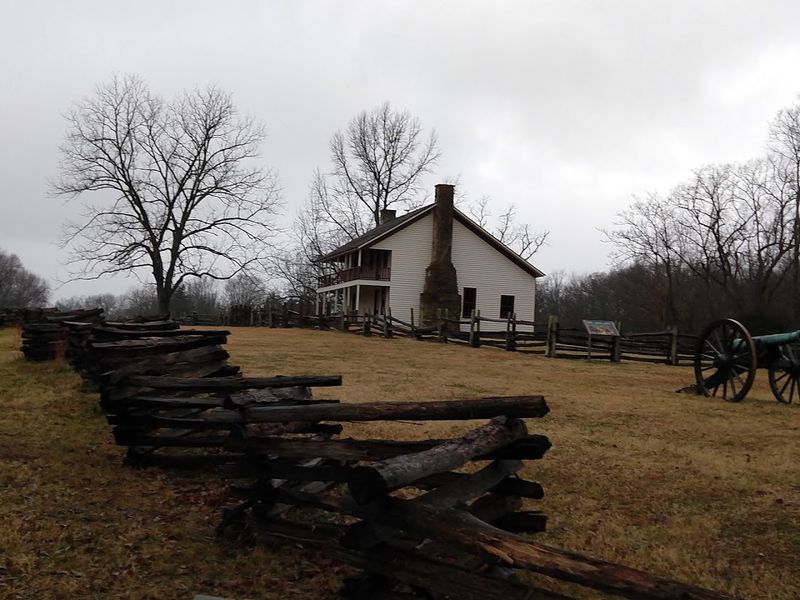
Elkhorn Tavern stands in the middle of the park like a sentence that refuses to end. The reconstructed wooden building served as a focal point of intense fighting during the battle, changing hands multiple times over those two March days in 1862.
What makes it remarkable now is how isolated it feels, surrounded by open land and tree lines with no modern clutter in sight. The reconstruction is faithful to the original structure, giving visitors a tangible anchor point for imagining the chaos that once swirled around this modest building.
Soldiers on both sides recognized its strategic value, and its position along the road made it a natural command and supply point.
I walked around the exterior slowly, reading the interpretive panels and trying to picture supply wagons, wounded soldiers, and officers on horseback filling this same clearing. Restrooms are available near the tavern, which is a practical detail worth knowing before you head out on the longer driving loop.
Elkhorn Tavern is one of those landmarks that rewards a slow, quiet visit rather than a quick photo stop.
Rolling Hills That Remember Everything
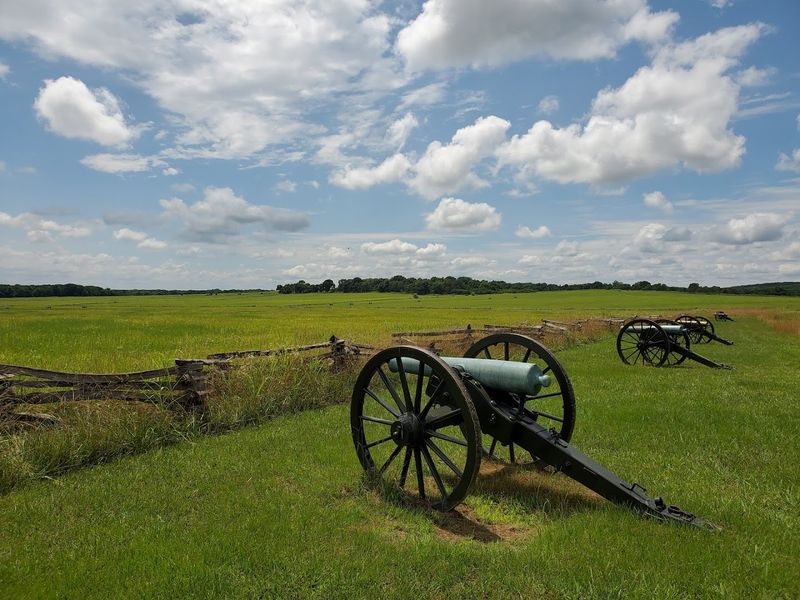
The topography here does something quietly brilliant: it explains the battle without saying a word. The rolling hills and ridge lines that define this landscape were not just scenery in 1862; they were tactical assets that both sides fought to control.
I followed the driving loop slowly, stopping at each numbered marker, and the hills kept reframing what I was looking at. A rise that looks gentle from a distance becomes a meaningful obstacle when you think about soldiers moving artillery across it under fire.
The park protects over 90% of the core battlefield, which means these contours are authentic, not reshaped by later construction or farming.
In 2023, the donation of the 140-acre Green homestead completed the park boundaries as originally envisioned 67 years earlier, adding even more of this rolling terrain to the protected area. Deer moved through the grass on the far side of one hill while I was parked at a stop, completely unbothered by my presence.
The hills here carry a quiet authority that grows on you the longer you stay.
Old Roads Through Battlefield Silence
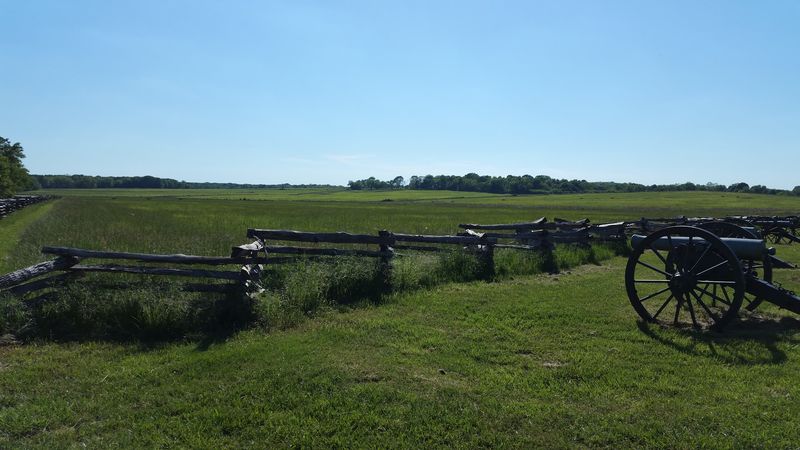
Road networks defined Civil War strategy, and the roads preserved inside this park carry that history in their very alignment. The Telegraph Road and Huntsville Road both played critical roles in the Battle of Pea Ridge, and segments of those original routes still exist within the park boundaries today.
Driving or walking along them gives you a direct physical connection to troop movements that historians have studied for over 160 years.
I found myself slowing down on one stretch of old road just to look at the tree line on either side and think about how exposed soldiers must have felt moving along this same corridor.
The silence on these roads is not empty; it has a texture to it that comes from knowing what happened here.
The park also contains a segment of the northern route of the Trail of Tears National Historic Trail, adding another layer of American history to the landscape. That overlap of two major historical events on the same ground is unusual and worth pausing to appreciate.
Old roads rarely carry this much meaning per mile.
Wooded Trails With Civil War Shadows
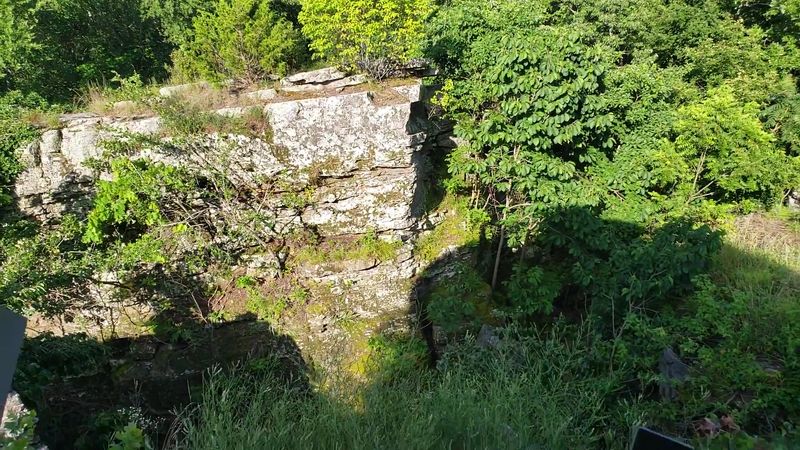
The tree lines at this park are not just scenery. During the battle, wooded areas provided cover, concealment, and chaos, as units lost contact with each other in the dense brush and fighting became fragmented and unpredictable.
Hiking the trails here puts you inside that same landscape, and the effect is genuinely immersive.
Tall oaks and hickories filter the light in ways that make the woods feel older than they are, and the trail surfaces stay close to the natural ground level, so you are walking on essentially the same earth that soldiers crossed.
The park offers several hiking options beyond the main driving loop, and the trails connect key battlefield positions that you cannot fully appreciate from a car window.
One practical note: tick awareness is important here, especially in warmer months, so long pants and a good check afterward are strongly recommended. The wooded sections feel remote even though the visitor center is never far away, which gives the hiking experience a genuine sense of solitude.
Spending time on these trails is the best way to understand why this Arkansas landscape mattered so much to both sides.
Open Meadows Beneath A Wide Arkansas Sky
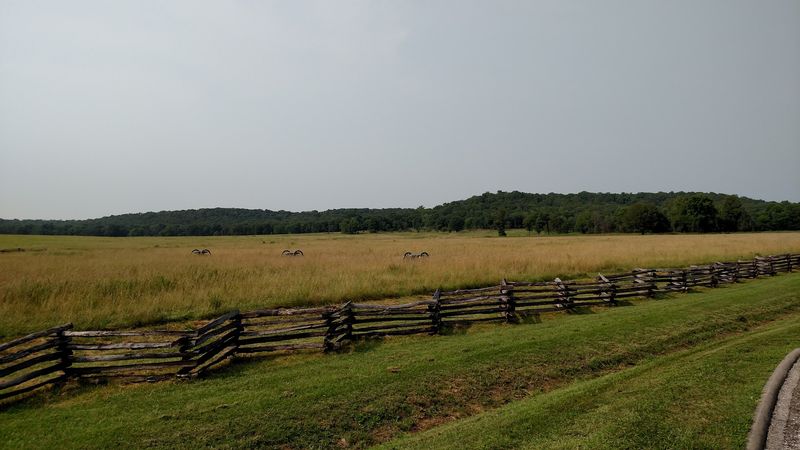
Big sky country is not a phrase most people associate with Arkansas, but the open meadows inside this park earn it honestly. When you step out of your car at one of the loop stops and look across a broad, flat clearing toward a distant ridge, the sky takes over the frame completely.
Those meadows are historically significant because open ground was where artillery was most effective and where large infantry formations maneuvered during the battle. Preserving them without encroachment means the visual experience today closely matches what both armies saw.
I visited on a partly cloudy afternoon, and the light kept shifting across the grass in long, slow waves that made the whole meadow look like it was breathing.
Wildlife adds an unexpected layer to the experience here. Deer are commonly spotted grazing in these open areas, and visitors have even reported armadillo sightings along the meadow edges.
The combination of historical weight and natural calm in these open spaces is the kind of thing that is hard to describe accurately but impossible to forget once you have experienced it yourself.
A Scenic Drive Through Preserved History
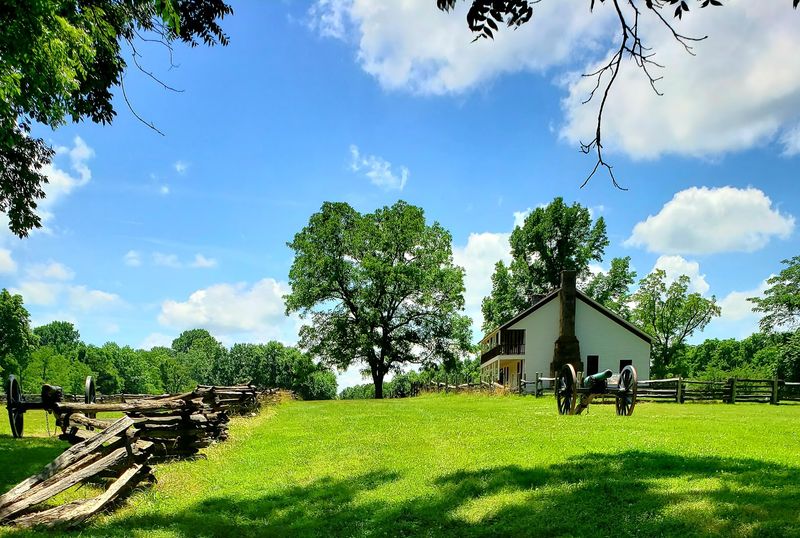
The self-guided driving loop at this park is one of the most satisfying ways I have ever spent a morning at a historic site. The route runs approximately seven miles, and it passes through eleven numbered stops that cover the full arc of the battle.
At each stop, you can read interpretive panels or use the downloadable ranger audio guide on your phone to hear detailed explanations of what happened at that exact location. The audio option is particularly well done and keeps you oriented without pulling your eyes away from the landscape.
The loop is one-way, which keeps traffic moving smoothly and gives every stop a calm, unhurried feeling.
Admission to the park is free, which makes the entire experience feel almost unreasonably generous given the quality of the visitor center, museum exhibits, and the 28-minute orientation film “Thunder in the Ozarks.”
The museum includes artifacts like period firearms, uniforms, and medical supplies that bring the human side of the battle into sharp focus.
This driving loop is the kind of experience that stays with you long after you have left the park behind.