
New Mexico’s 10 Best Hidden Treasures You’ve Probably Never Heard Of
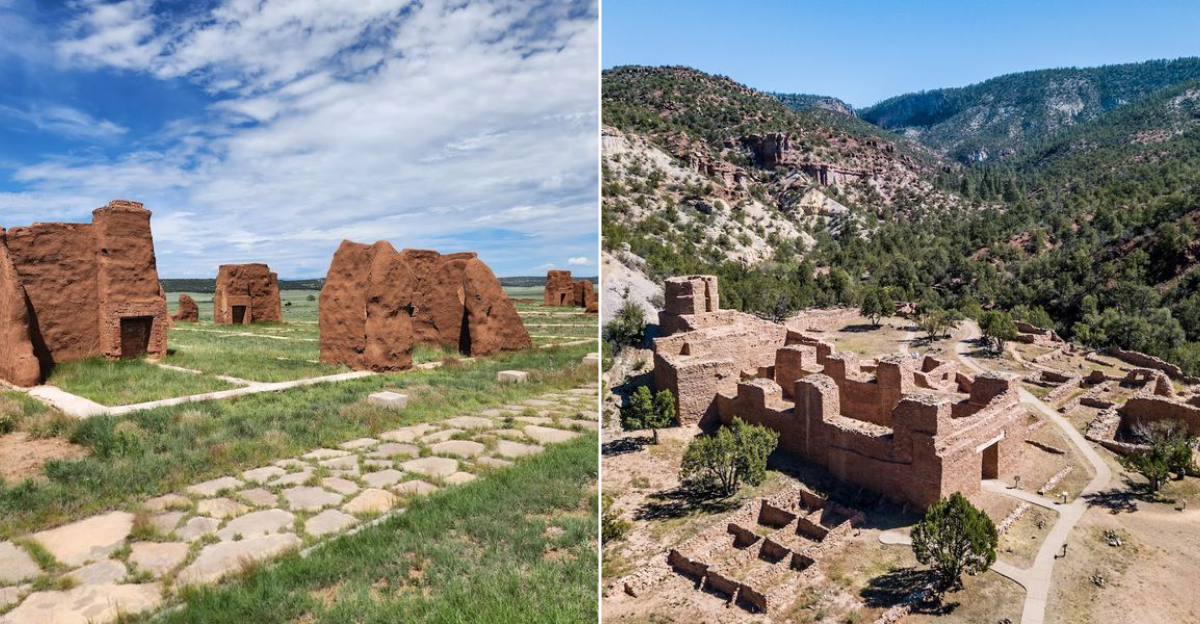
New Mexico has a talent for hiding the weird stuff in plain sight. You can be following what looks like an ordinary road, minding your business like a responsible adult, and suddenly the landscape starts acting suspicious.
A strange rock formation appears.
A quiet town turns oddly fascinating. A canyon, cave, ruin, overlook, or roadside oddity makes you wonder who approved this level of drama.
Nobody warns you properly. That is what makes these places so fun.
They do not shout for attention. They just wait, looking calm, while quietly preparing to hijack your whole afternoon.
Some are beautiful. Some are strange.
A few feel like New Mexico is showing off just because it can. These underrated spots prove the state still has secrets worth chasing.
1. City Of Rocks State Park
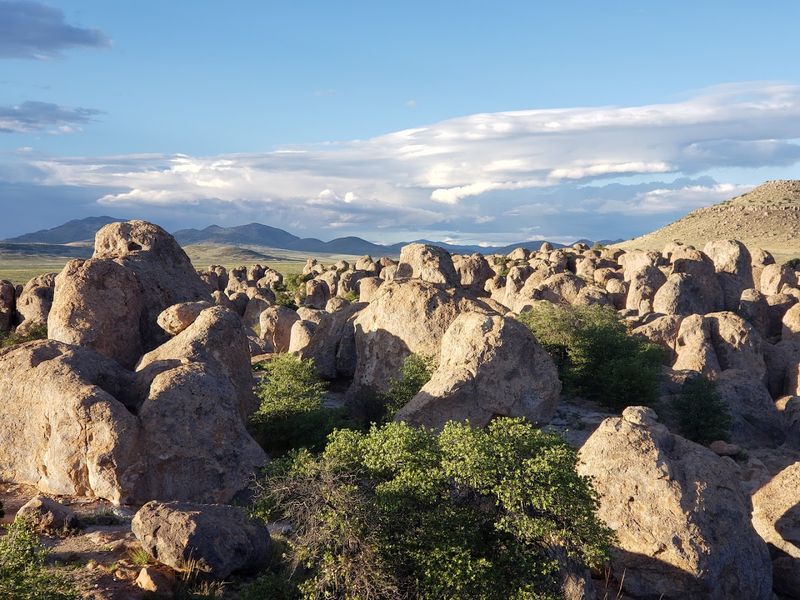
Imagine waking up surrounded by giant volcanic boulders that have been standing since before the dinosaurs checked out.
City of Rocks State Park looks like someone dropped a bag of enormous grey puzzle pieces across the New Mexico desert. Located at 327 Hwy 61, Faywood, NM 88034, this park sits in the Chihuahuan Desert and offers a camping experience unlike anything else in the Southwest.
These rocks were formed roughly 30 million years ago during a massive volcanic eruption. Over time, wind and rain sculpted them into towers, spires, and winding alleyways that feel like a natural maze.
Walking through them is genuinely surreal, like wandering through a sculpture garden designed by the earth itself.
The park is also one of New Mexico’s premier stargazing destinations. On a clear night with no moon, the sky above is absolutely breathtaking.
There is even an on-site observatory available for public use during special events. Tent camping and RV spots are nestled right among the formations, making every morning feel like a scene from a fantasy novel.
This park earns its spot on every hidden gem list without even trying.
2. Valley Of Fires Recreation Area
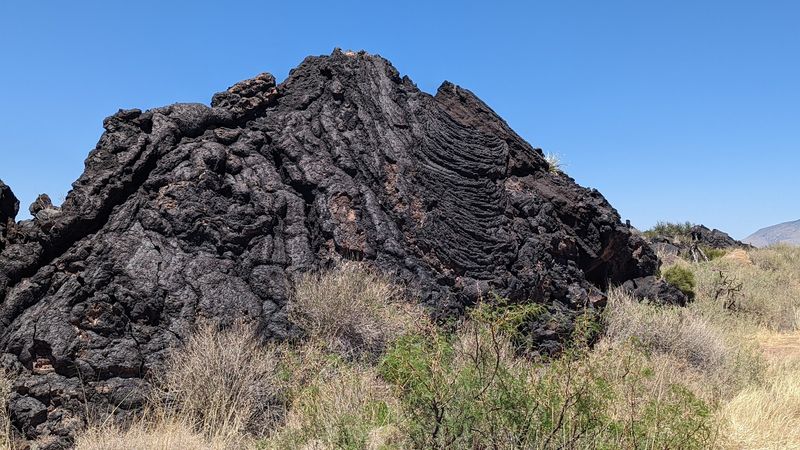
Standing at the edge of a massive black lava field feels like arriving on another planet. Valley of Fires Recreation Area is one of those places that stops you mid-step and makes you rethink everything you thought you knew about New Mexico.
Located along US 380, Carrizozo, NM 88301, this spot sits in the Tularosa Basin and stretches across one of the youngest lava flows in the continental United States.
The Malpais lava flow here is estimated to be between 1,500 and 5,000 years old. That is practically a newborn in geological time.
The hardened black basalt creates a striking visual contrast against the pale desert sky and the bright desert plants pushing through every crack they can find.
A short interpretive trail winds through the lava field, pointing out fascinating geological features and native plants that have learned to thrive in this extreme environment. Camping here means falling asleep to pure desert silence with stars blazing overhead.
There are very few places where you can pitch a tent on the edge of a prehistoric lava flow and call it a Tuesday. Valley of Fires is wildly underrated and completely worth the detour.
3. Three Rivers Petroglyph Site
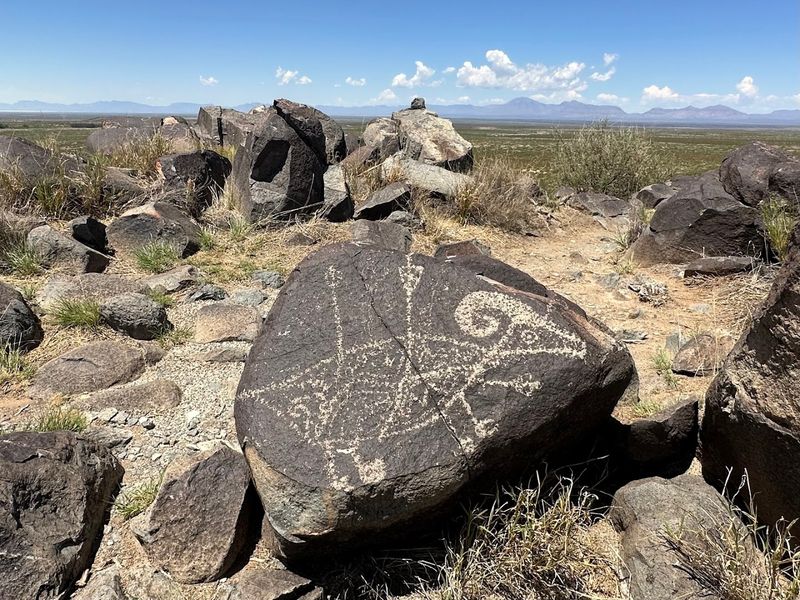
There is something quietly powerful about standing in front of a carving made by human hands over a thousand years ago.
Three Rivers Petroglyph Site holds more than 21,000 individual petroglyphs spread across a rocky ridge in the Tularosa Basin. Head to County Road B30, Tularosa, NM 88352, and you will find one of the most impressive and least crowded petroglyph sites in the entire country.
The carvings were created by the Jornada Mogollon people between 900 and 1400 CE. They depicted animals, human figures, masks, and geometric shapes that researchers are still working to fully understand.
Walking the trail feels like flipping through the pages of an ancient visual journal left behind for future visitors.
The site also includes the partially excavated ruins of a Mogollon village, adding even more historical depth to the experience.
Unlike some famous archaeological sites, Three Rivers feels refreshingly uncrowded and intimate. You can take your time with each carving without feeling rushed or overwhelmed.
The surrounding views of the Sacramento Mountains and the White Sands basin are stunning on their own. This place rewards slow, curious visitors who are willing to look closely at the world around them.
4. El Morro National Monument
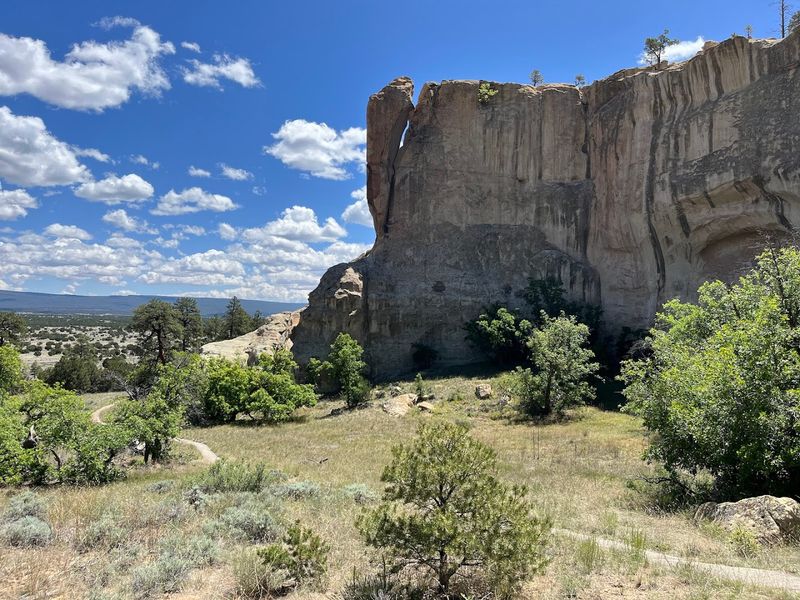
El Morro is basically a 2,000-year-old guestbook carved into a sandstone bluff, and it is one of the coolest things you will ever see.
Travelers, soldiers, and Ancestral Puebloans all stopped here over the centuries and left their marks on the rock. Find it at NM-53, Ramah, NM 87321, tucked away in western New Mexico near the Zuni Mountains.
The inscriptions range from Pueblo symbols dating back to before 1000 CE all the way to Spanish explorers leaving their names in the 1600s and American pioneers in the 1800s.
One inscription from 1605 was left by Juan de Onate, the Spanish colonial governor of New Mexico, making it one of the oldest non-native inscriptions in the country.
Two trails run through the monument. The shorter path takes you past the inscriptions at the base of the bluff.
The longer loop climbs to the top where ancient Pueblo ruins sit with panoramic views stretching for miles.
The whole area feels like an open-air history museum with zero velvet ropes. El Morro proves that history does not have to be locked behind glass to be extraordinary.
Sometimes it is just written on a rock, waiting quietly for someone to notice.
5. Fort Union National Monument
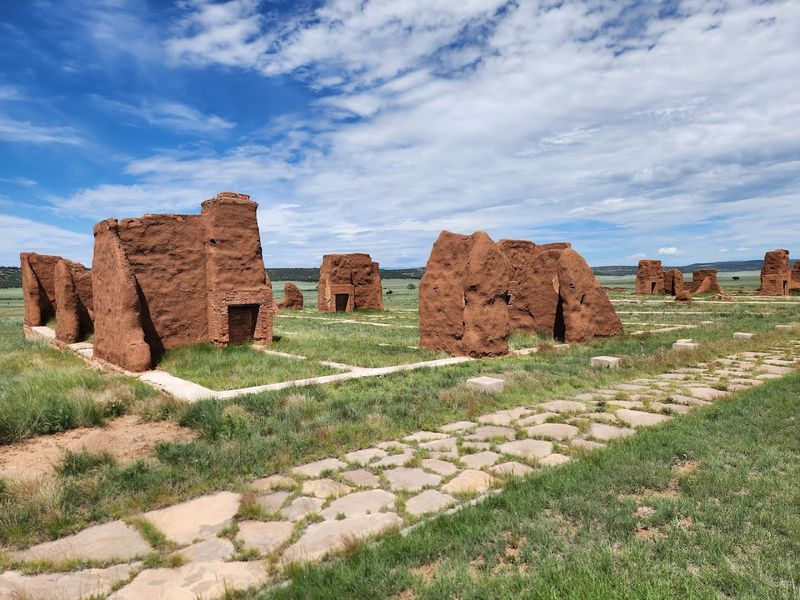
The first time you see the ruins of Fort Union rising out of the flat northeastern New Mexico grasslands, it honestly looks like a movie set. But this place is completely real, and its history runs deep.
Located at 3115 NM-161, Watrous, NM 87753, Fort Union was once the largest military fort in the American Southwest during the 1800s.
At its peak, the fort served as a major supply depot along the Santa Fe Trail, supporting military operations and civilian commerce across the region.
The adobe ruins that remain today stretch across several acres and include the outlines of barracks, storehouses, and officer quarters. Walking through them gives you a strong sense of just how massive this operation once was.
The National Park Service maintains the site beautifully, with a well-marked trail and interpretive signs that bring the history to life without overwhelming you. Rangers are available to answer questions and share stories that go well beyond what the plaques can cover.
The surrounding landscape of rolling grassland and big sky is quintessentially New Mexico. Fort Union is a place that history enthusiasts will absolutely love, but even casual visitors leave with a genuine appreciation for what happened here.
6. Salinas Pueblo Missions National Monument
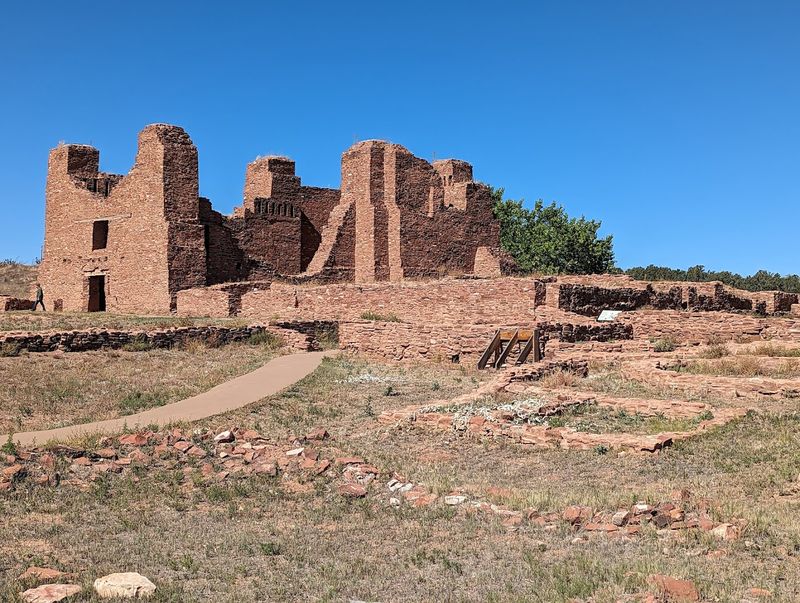
Red sandstone walls rising against a pure blue New Mexico sky is a sight that stays with you long after you leave. Salinas Pueblo Missions National Monument preserves the ruins of three 17th-century Spanish mission churches built on top of even older Pueblo settlements.
The main visitor center is located at 105 South Ripley Avenue, Mountainair, NM 87036, with three separate ruin sites spread nearby.
The three sites are Quarai, Abo, and Gran Quivira, each with its own distinct character and history. Quarai features some of the most dramatic architecture, with soaring walls that have survived centuries of New Mexico weather.
Native medicinal plants still grow along the trails winding through the surrounding pueblo ruins, connecting the present to a rich and layered past.
What makes this monument so special is the quiet. On most days, you will share the trails with very few other visitors.
Rangers occasionally offer demonstrations of traditional pottery and baking techniques using restored horno ovens, which adds a wonderful sensory layer to the visit.
The monument sits in the Estancia Basin, a landscape that feels removed from the modern world in the best possible way. This is history you can walk through, breathe in, and actually feel.
7. Jemez Historic Site
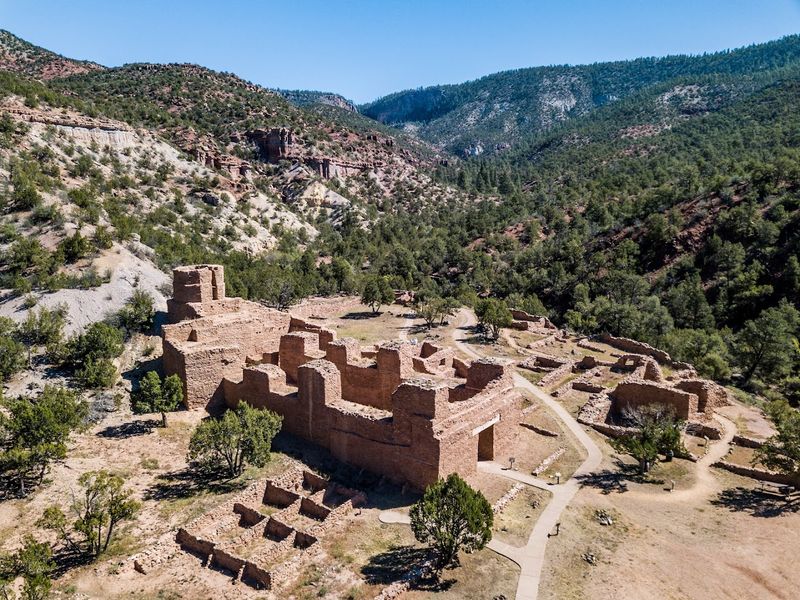
Tucked into a red rock canyon with a river running nearby, Jemez Historic Site feels like a place that time forgot in the most beautiful way.
This site preserves the ruins of Giusewa Pueblo and the 17th-century Spanish mission church of San Jose de los Jemez. Head to 18160 Hwy 4, Jemez Springs, NM 87025, and you will find a spot that blends natural beauty with fascinating layered history.
Giusewa was home to the Towa-speaking people of the Jemez region for centuries before Spanish missionaries arrived in the early 1600s.
The massive church walls still stand impressively tall, framing views of the surrounding canyon in a way that feels almost cinematic. A small but well-curated museum on-site helps visitors understand the cultural significance of what they are seeing.
The surrounding Jemez Valley adds to the experience considerably. Hot springs, waterfalls, and dramatic canyon scenery are all within easy reach of the historic site.
The combination of archaeology, architecture, and natural landscape makes this area one of the most rewarding half-day trips in northern New Mexico.
Most visitors to the Jemez area come for the hot springs and leave not even knowing this site exists, which means you often get the whole place practically to yourself.
8. Cerrillos Hills State Park
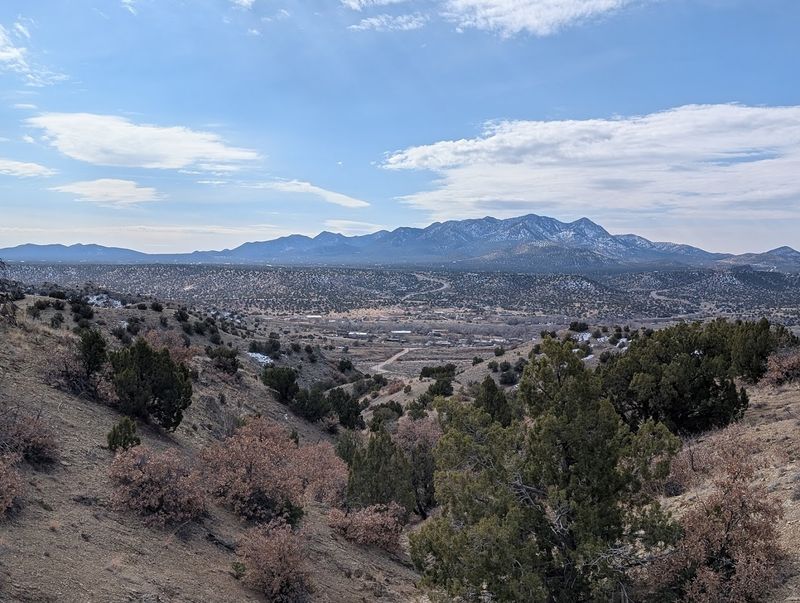
Not many state parks can claim a mining history stretching back over a thousand years, but Cerrillos Hills pulls it off with style.
The Pueblo people mined turquoise here long before Spanish explorers ever arrived, and the hills still carry the marks of that ancient industry. The park entrance is at 37 Main Street, Cerrillos, NM 87010, just outside the tiny and utterly charming village of Cerrillos.
The trail system here winds through juniper and pinon woodland, past old mine shafts, and over ridgelines with sweeping views of the Galisteo Basin.
The turquoise mined from these hills was traded across vast distances and found in archaeological sites as far away as Chaco Canyon. Walking these trails, you are literally following in the footsteps of ancient trade routes.
The nearby village of Cerrillos is worth exploring on its own. The Casa Grande Trading Post houses a turquoise mining museum built from 65,000 handmade adobe bricks, and the gift shop sells jewelry made with genuine local turquoise.
It is the kind of place where every object has a story.
Cerrillos Hills State Park proves that the most interesting history is often hiding in the quietest corners, waiting for curious people to come looking.
9. Earthship Biotecture Visitor Center
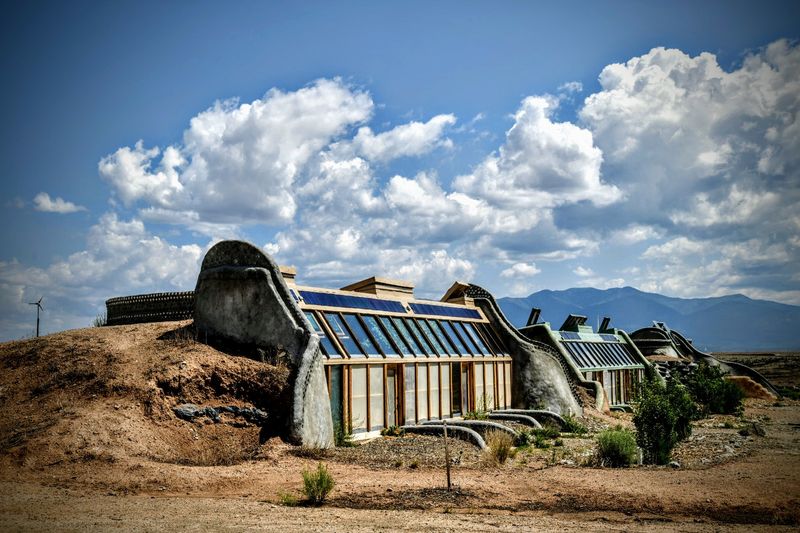
What if your house could feed you, heat itself, and collect its own water? That is not a hypothetical at Earthship Biotecture.
This community near Taos has been quietly redefining what sustainable living looks like for decades.
The visitor center is located at 2 Earthship Way, Tres Piedras, NM 87577, just outside Taos in the high desert plateau.
Earthships are off-grid homes built primarily from recycled materials including old tires, glass bottles, and reclaimed wood. The thick tire walls provide natural insulation, keeping interiors comfortable year-round without traditional heating or cooling systems.
Massive south-facing windows allow sunlight to warm the interior and grow food in built-in greenhouse planters.
Tours of the visitor center and model homes run regularly, giving curious visitors a real look inside these extraordinary structures. The interiors are surprisingly lush and warm, with tropical plants growing alongside desert succulents in the greenhouse corridors.
The whole community feels like a living experiment in human ingenuity. Earthship Biotecture challenges every assumption about what a home needs to function.
Whether you are an architecture enthusiast, an environmental advocate, or simply someone who loves a genuinely original idea, this place will expand your thinking in ways you did not expect coming in.
10. Los Luceros Historic Site
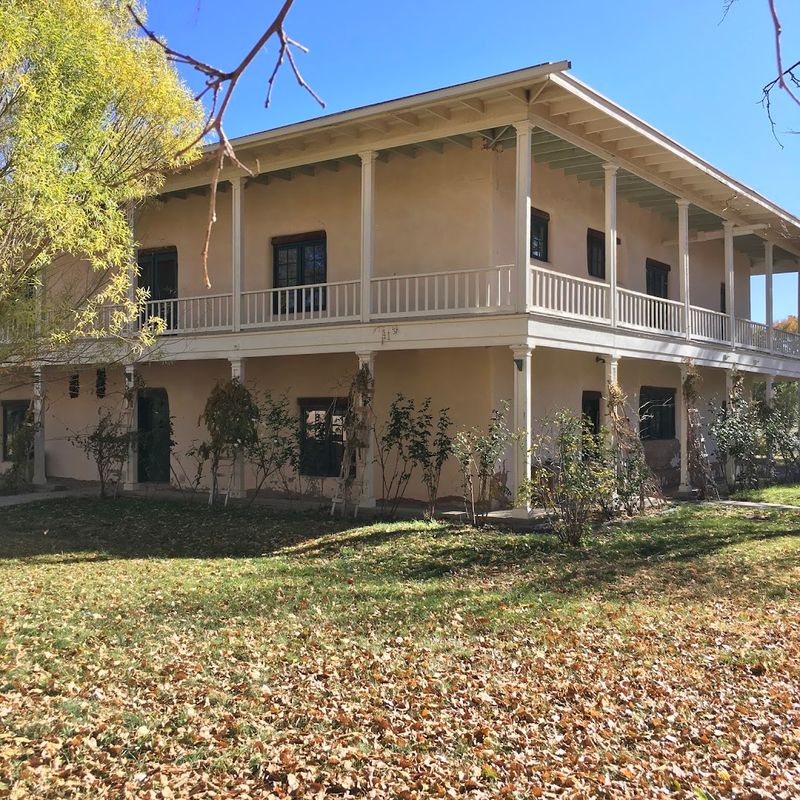
Los Luceros sits quietly along the Rio Grande as one of New Mexico’s oldest and most storied historic properties.
The hacienda grounds hold over 1,000 years of continuous human history, from ancient Pueblo settlements to Spanish colonial farming to 20th-century arts patronage. The site is located at 253 Co Rd 41, Alcalde, NM 87511, in the northern Rio Grande valley between Espanola and Taos.
The property includes a beautifully preserved adobe hacienda, historic outbuildings, and a working orchard that still produces fruit each season.
The surrounding cottonwood groves along the river create a canopy of shade and sound that feels completely removed from the modern world. In autumn, the cottonwoods turn brilliant gold, making the property look like a painting.
Los Luceros was once home to a notable arts patron who hosted some of the most celebrated artists and writers of the early 20th century. That creative spirit still seems to linger in the air.
The site is managed by Rio Arriba County and offers seasonal tours and cultural programs that bring its layered history to life.
Los Luceros is the kind of place that rewards visitors who take their time. Walk slowly, look closely, and let this remarkable corner of New Mexico tell its story at its own pace.