
12 Underrated Natural Wonders You Have To See In Arizona
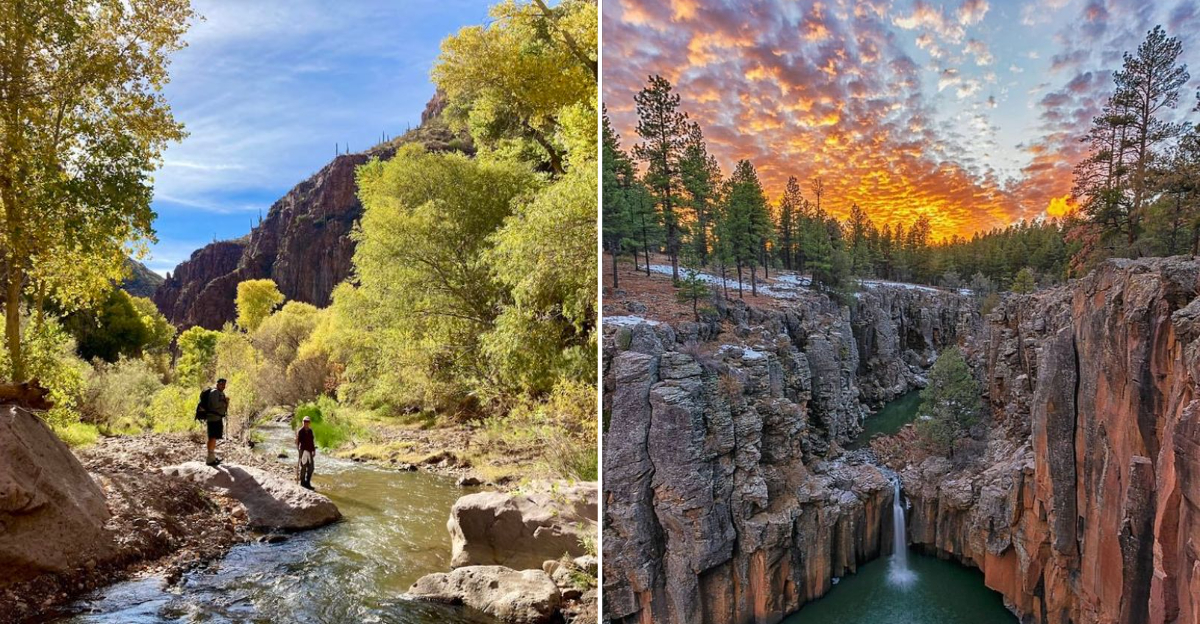
Buckle up, because we are about to leave the crowded tourist traps in the rearview mirror and head straight for the hidden gems that most travelers completely overlook.
While the famous landmarks get all the Instagram glory, the real heartbeat of the desert is found in the quiet, tucked-away corners that feel like a secret shared just between us.
Getting lost is half the fun when you’re exploring the rugged, sun-drenched majesty of Arizona, a landscape so dramatic it feels like Mother Nature decided to show off just for the sake of it.
From jagged canyons that whisper ancient stories to hidden water holes that defy the scorching heat, it is time to pack your boots and prepare to be genuinely floored. Forget the postcards, these are the spots that will actually change your life.
1. White Pocket, Vermilion Cliffs National Monument
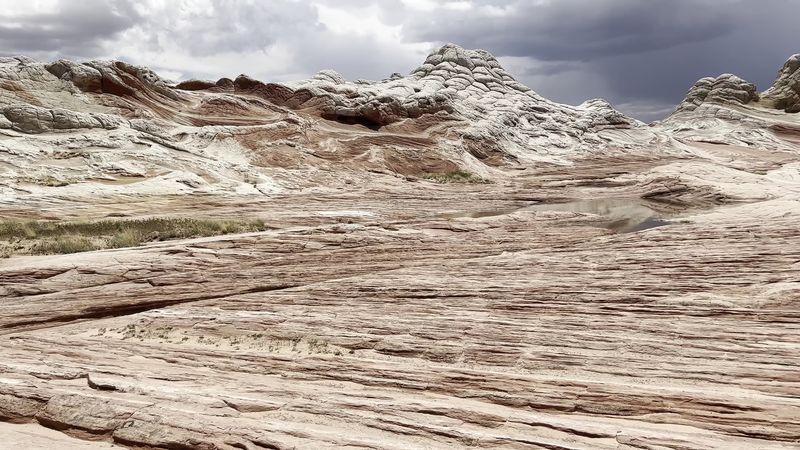
Somewhere in the remote northern corner of Arizona, the earth forgot to follow the rules. White Pocket, tucked inside Vermilion Cliffs National Monument, is a sandstone playground of swirling reds, creamy whites, burnt oranges, and soft tans that look almost too wild to be real.
The formations twist and bubble like frozen waves, and every step reveals a new pattern carved by millions of years of geological drama.
Getting here is part of the adventure. The Bureau of Land Management confirms that four-wheel-drive, high-clearance vehicles are required because access roads include deep sand and sharp rock. There are no services, no crowds, and no guardrails between you and this spectacular landscape.
The best light for photography hits in the early morning or late afternoon, when the colors pop against the sky. Plan ahead, bring plenty of water, and treat this place with the care it quietly demands.
2. Chiricahua National Monument, Willcox
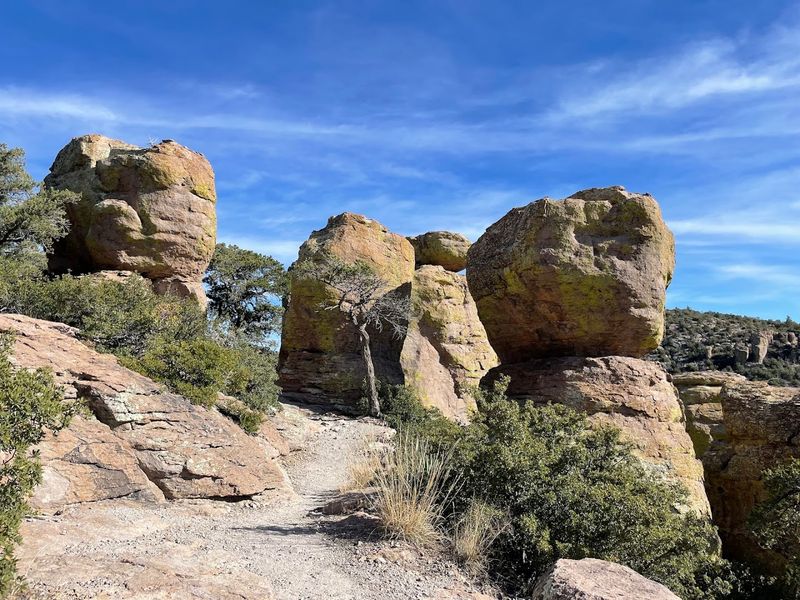
Rock spires, balanced boulders, and high-desert mountain air greet you at Chiricahua National Monument near Willcox in southeastern Arizona.
This place earns nicknames like “Wonderland of Rocks” for very good reason. Millions of years ago, a volcanic eruption deposited thick layers of ash that eventually eroded into the dramatic pinnacles and columns standing here today.
Echo Canyon Trail is one of the standout routes, weaving through a maze of towering stone columns that feel like a secret city. Massai Point offers sweeping panoramic views across the Sulphur Springs Valley that are genuinely hard to put into words.
Note that the Upper Rhyolite Trail is currently closed, so check the National Park Service website before building your itinerary.
Wildlife sightings here are surprisingly common, with coatimundis, white-tailed deer, and over 170 bird species calling this area home. Come for the rocks, stay for everything else Chiricahua quietly offers.
3. Tonto Natural Bridge State Park, Pine
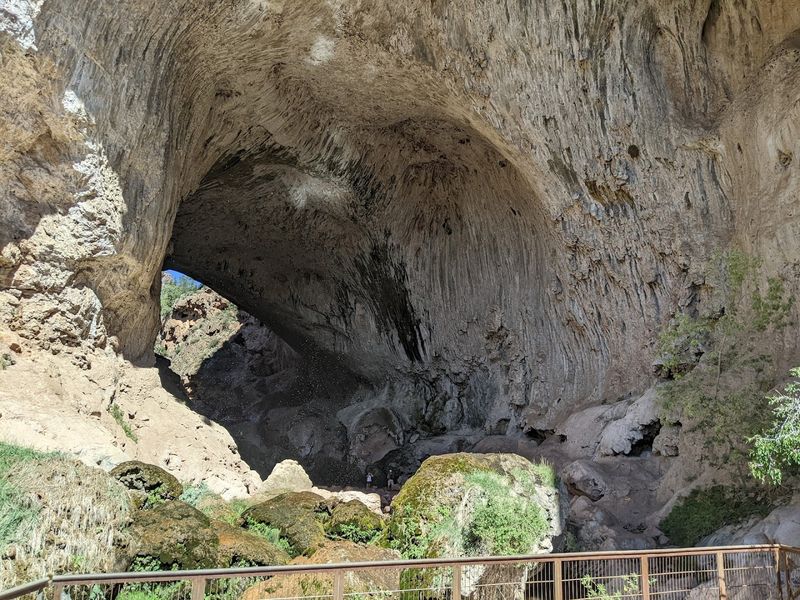
Believed to be the largest natural travertine bridge in the world, Tonto Natural Bridge State Park near the small town of Pine is the kind of place that makes your jaw drop the moment it comes into view.
The bridge stretches 183 feet high and spans 150 feet across a lush, green creek canyon that feels almost tropical compared to the surrounding Arizona landscape. Travertine, a type of limestone deposited by mineral-rich water, built this structure slowly over thousands of years.
Trails above and below the bridge give you dramatically different perspectives of the formation. The lower trail takes you right to the creek edge, where the sound of rushing water echoes off the stone walls.
Current park hours run from 9 a.m. to 5 p.m., with last entry at 4 p.m. and trails closing one hour before the park does. Weekday visits tend to be quieter, making the whole experience feel even more personal and unhurried.
4. Kartchner Caverns State Park, Benson
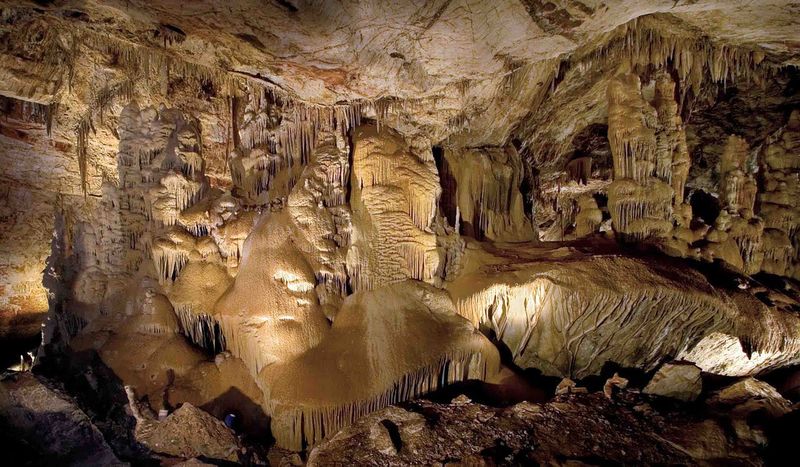
Two hikers stumbled onto this cave in 1974 and spent years keeping it a secret to protect it. That kind of dedication tells you everything about how special Kartchner Caverns State Park near Benson, Arizona, truly is.
Unlike dry, dusty caves you might have visited elsewhere, Kartchner is a living cave, meaning its formations are still actively growing, fed by water seeping through the limestone above.
The cave maintains a constant temperature of around 68 degrees Fahrenheit and nearly 99 percent humidity, which helps preserve the delicate stalactites, stalagmites, and rare formations like bacon strips and soda straws.
Cave tour reservations are strongly recommended through Arizona State Parks, and the Discovery Center is open from 8 a.m. to 5 p.m.
Children and adults alike tend to walk out of this cave looking a little stunned, which is honestly the best review any natural wonder can get. Book early, especially for weekend visits.
5. Lava River Cave, Flagstaff
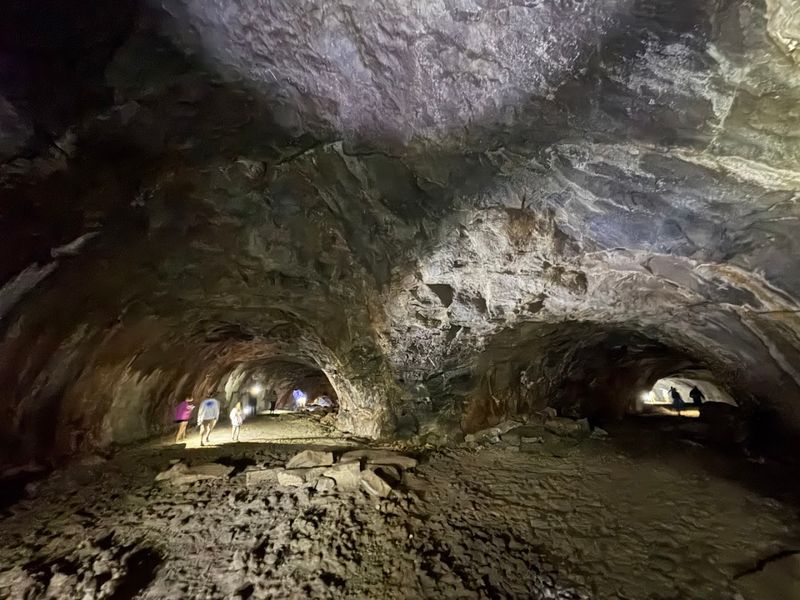
About 700,000 years ago, a volcanic eruption near what is now Flagstaff, Arizona, created something remarkable underground.
When lava flowed and the outer layer cooled and hardened, molten rock continued moving inside, eventually draining out and leaving behind a hollow tube stretching roughly one mile long. That tube is the Lava River Cave, and walking through it feels like stepping into another planet entirely.
Temperatures inside hover around 35 degrees Fahrenheit year-round, so layers are non-negotiable even on a scorching summer day. You will want at least two light sources per person because the darkness inside is total.
The Forest Service currently has timed reservation tickets in effect from early May through September 15, so plan ahead during that window.
There are no guided tours, no handrails, and no lighting installed inside the cave. That raw, unfiltered experience is exactly what makes Lava River Cave such a refreshingly different Arizona adventure worth putting on your list.
6. Watson Lake And The Granite Dells, Prescott
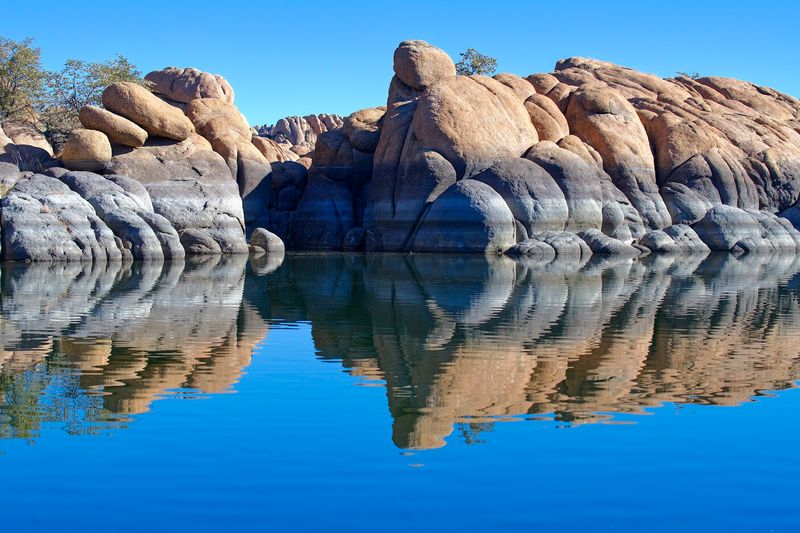
Stacked granite boulders tumbling into a shimmering lake sounds like a scene from a fantasy novel, but Watson Lake and the Granite Dells in Prescott, Arizona, are very much real.
The rounded, rust-colored rocks that crowd the shoreline are around 1.4 billion years old, shaped by water and weather into smooth, surreal formations that rise right out of the water’s edge.
Kayaking through the boulders is one of the most popular ways to experience the Dells, letting you weave between rock formations from a perspective the shoreline trails simply cannot offer.
Speaking of trails, the loop around Watson Lake gives hikers a constantly changing view that stays engaging the whole way around.
The City of Prescott lists Watson Lake Park at 3101 Watson Lake Park Rd, with summer hours running from 6 a.m. to 10 p.m.
Sunrise here is particularly striking, with pink and gold light reflecting off both the rocks and the water in a scene that feels genuinely cinematic.
7. Sycamore Rim Trail And Sycamore Falls, Williams
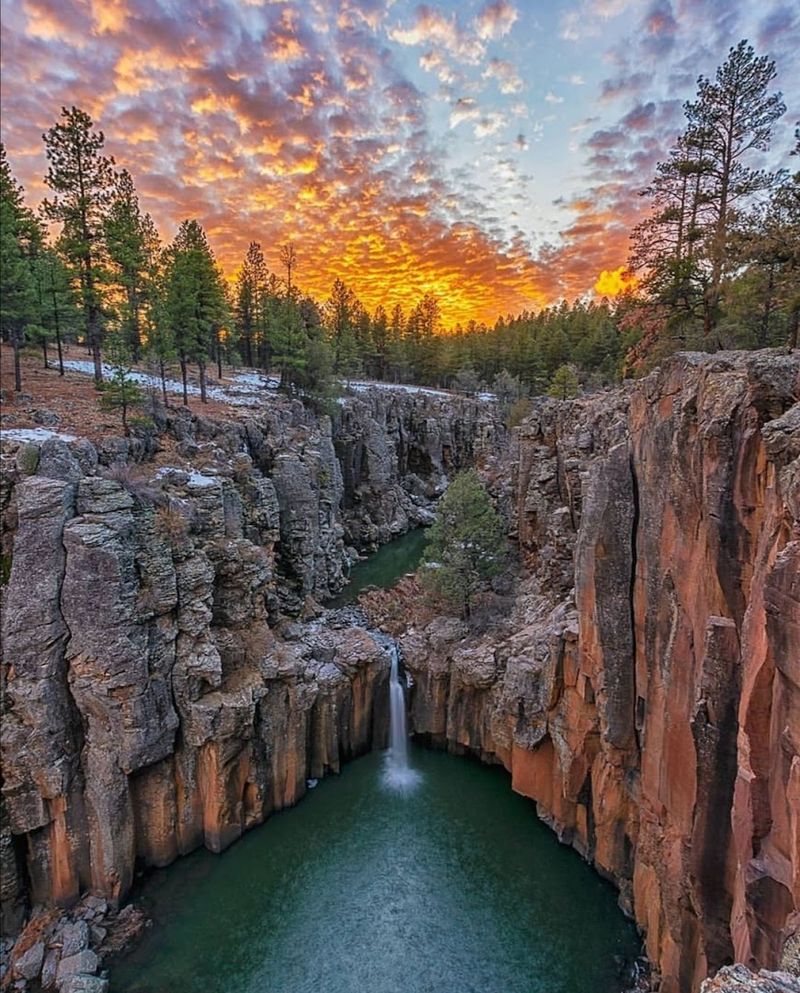
Not far from the Route 66 town of Williams, Arizona, a trail winds through cool ponderosa pine forest, past canyon overlooks, and toward one of the state’s most rewarding seasonal waterfalls.
Sycamore Rim Trail, officially listed by the Forest Service as Trail #45, loops for about 11 miles through high-country terrain that feels nothing like the low-desert landscapes Arizona is usually known for.
Sycamore Falls runs strongest after winter snowmelt and early spring rains, typically between March and May. Even when the falls run dry later in the year, the canyon views and forest atmosphere make the hike worth every step.
Elevation here sits around 7,000 feet, so temperatures stay noticeably cooler than in Phoenix or Tucson, making summer visits especially pleasant.
Wildlife sightings along the rim include mule deer, wild turkeys, and a surprisingly rich variety of birds. The Forest Service currently lists Sycamore Rim Trail #45 as open, so lace up and head out whenever the mood strikes.
8. Aravaipa Canyon Wilderness, Winkelman
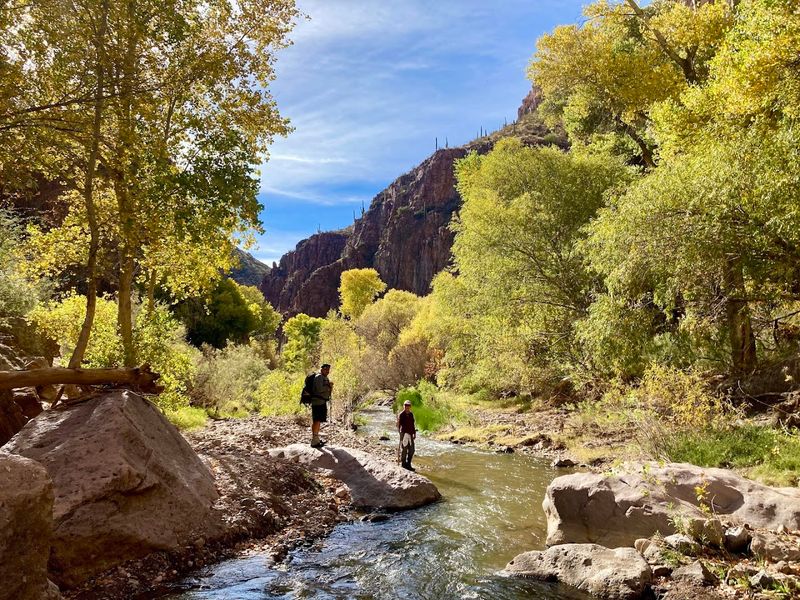
Aravaipa Canyon Wilderness near Winkelman, Arizona, is the kind of place that rewards patience. There are no roads through the canyon, no bridges, and no shortcuts. You enter by wading through Aravaipa Creek, crossing the water repeatedly as the canyon walls rise hundreds of feet on either side.
Cottonwood trees line the banks, birds call from the cliffs, and the whole atmosphere is one of total immersion in wild Arizona.
The Bureau of Land Management requires permits for all recreational visits, including hiking, backpacking, and side-canyon access. Permit numbers are limited to protect the ecosystem, so securing yours well in advance is a smart move.
The trailhead is located at the Aravaipa Canyon West Trailhead near Winkelman. Bighorn sheep, mountain lions, and over 200 bird species have been documented in this corridor.
If you are searching for an Arizona experience that feels genuinely remote and quietly powerful, Aravaipa Canyon delivers on every level without asking for much in return.
9. Gila Box Riparian National Conservation Area, Safford
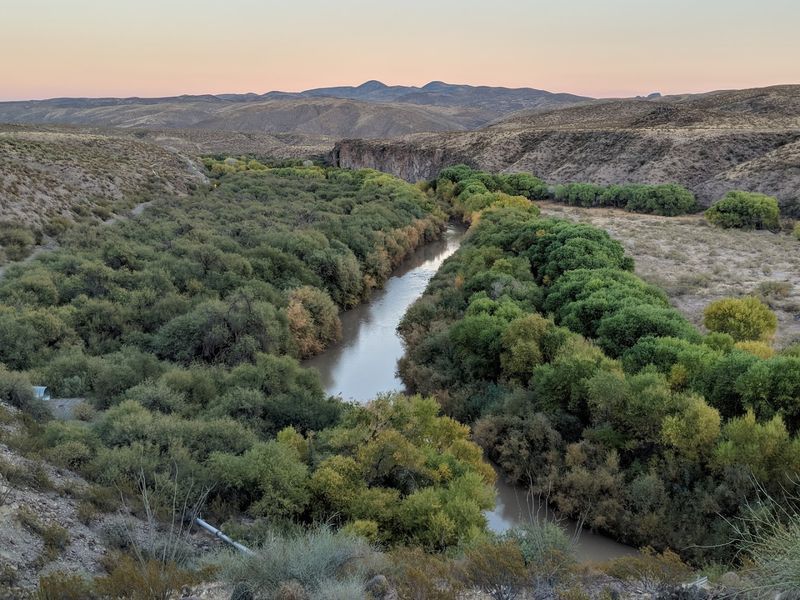
Rivers, sandy beaches, canyon walls, and cottonwood groves in the middle of the Arizona desert sound too good to be true, but the Gila Box Riparian National Conservation Area near Safford pulls it off with effortless charm.
The Bureau of Land Management describes this 23,000-acre conservation area as home to the Gila and San Francisco rivers, plus Bonita and Eagle creeks, creating a network of perennial waterways that support an extraordinary variety of wildlife.
Rafting and kayaking the Gila River through the canyon is a standout experience, with towering red walls rising above the water on both sides. Bald eagles are frequently spotted here during winter months, and the riparian corridor attracts over 300 bird species throughout the year.
The area around Safford sits at a lower elevation, making spring and fall the most comfortable seasons for exploration. Camping is available along the river corridor, turning a day trip into a proper overnight adventure that few Arizona travelers ever discover on their own.
10. Madera Canyon, Green Valley
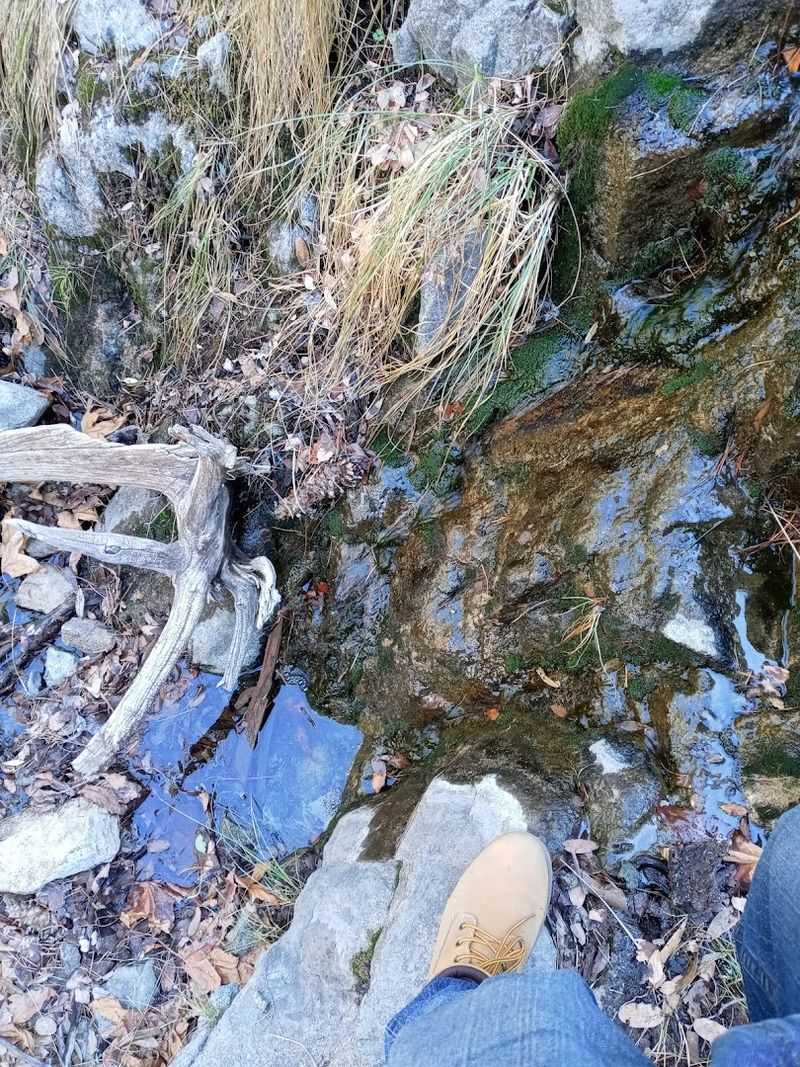
Birders from across the country quietly make pilgrimages to Madera Canyon in the Santa Rita Mountains south of Green Valley, Arizona, and once you visit, you will completely understand why.
Tucked into a shady mountain canyon, this spot is one of the most productive birding locations in the entire United States, with species like the elegant trogon, sulphur-bellied flycatcher, and multiple hummingbird varieties drawing serious wildlife enthusiasts every season.
Creekside picnic areas provide a relaxed base for a morning of wildlife watching, and Madera Nature Trail #88 gives hikers a gentle, well-maintained route through the canyon environment. The Forest Service lists the picnic area and trailhead as currently accessible.
Elevation here reaches around 5,400 feet at the main recreation area, providing welcome relief from the summer heat of the surrounding low desert.
Even if birds are not your primary passion, the shaded canyon setting, cool creek sounds, and mountain scenery make Madera Canyon a genuinely restorative place to spend a few slow, unhurried hours.
11. Coronado Cave, Hereford
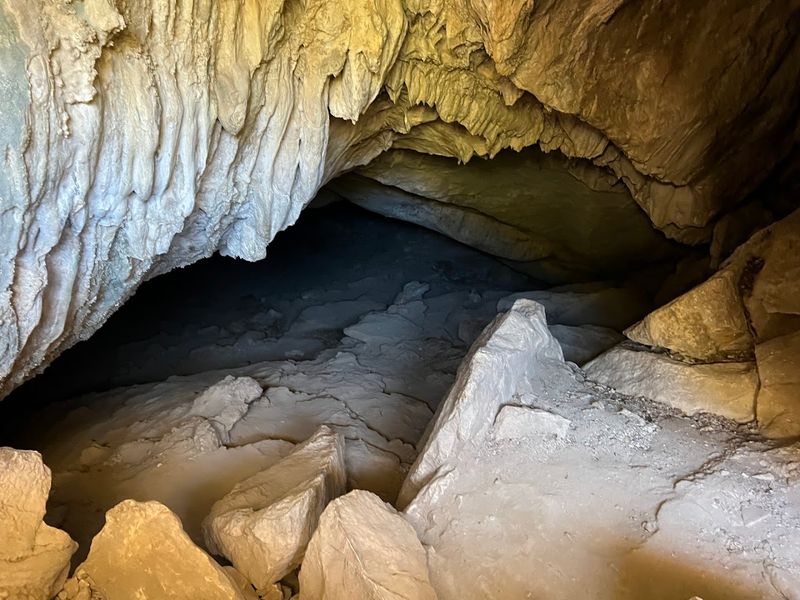
A short but steep trail inside Coronado National Memorial near Hereford, Arizona, leads to one of the state’s most overlooked underground experiences. Coronado Cave is a wild, undeveloped cave, meaning no paved paths, no installed lighting, and no tour guides waiting at the entrance.
What you get instead is a raw limestone chamber roughly 600 feet long, filled with formations shaped over thousands of years without any human interference.
The trail to the cave entrance climbs 500 feet in just half a mile, so the approach gets your heart rate up before you even duck inside. The National Park Service currently states that permits are not required for cave access, which makes this one of the more accessible wild cave experiences in the Southwest.
Bring at least two reliable light sources per person and wear sturdy shoes with good grip. The cave stays around 60 degrees Fahrenheit inside, so a light jacket is worth tossing in your pack before you make the climb up to this quietly remarkable spot.
12. Blue Mesa Trail, Petrified Forest National Park
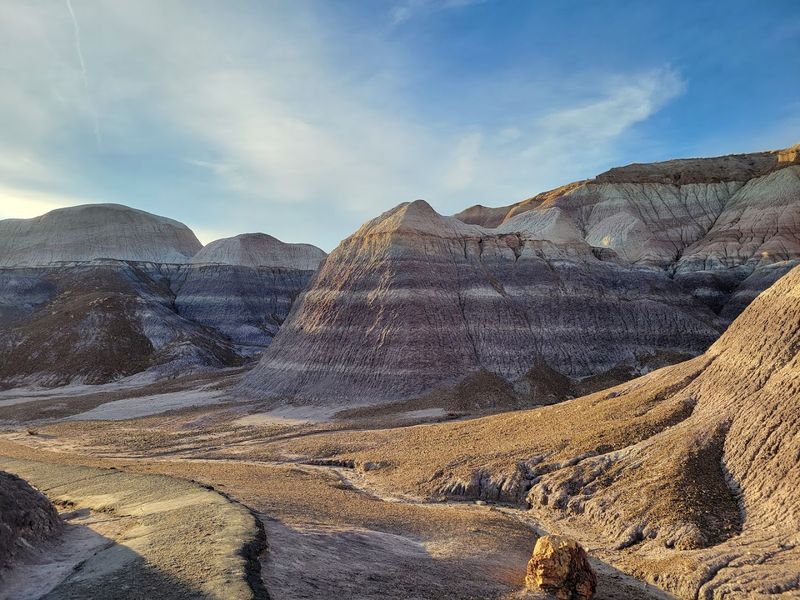
Nothing in Arizona quite prepares you for the moment Blue Mesa Trail opens up in front of you inside Petrified Forest National Park. The landscape shifts from ordinary high-desert scrub into a surreal world of blue, purple, and gray badlands hills that look like they belong on another planet.
These mounded formations are made of bentonite clay, which swells when wet and cracks dramatically when dry, creating constantly shifting terrain that discourages off-trail wandering.
The loop trail runs about one mile and descends into the heart of the badlands, putting you right among the striped hills and scattered chunks of ancient petrified wood.
The colors are most vivid on overcast days, when diffused light brings out the blues and purples without harsh shadows washing them out. The National Park Service notes that monsoon season runs from June 15 through September 30, so early morning visits with a weather check are strongly advised during that period.
Blue Mesa Trail is a short walk with a genuinely long-lasting impression that sticks with you well after you have driven back out of the park.