
This Michigan Mining Town Holds A Pumping Engine So Massive It Redefined What Machines Could Do
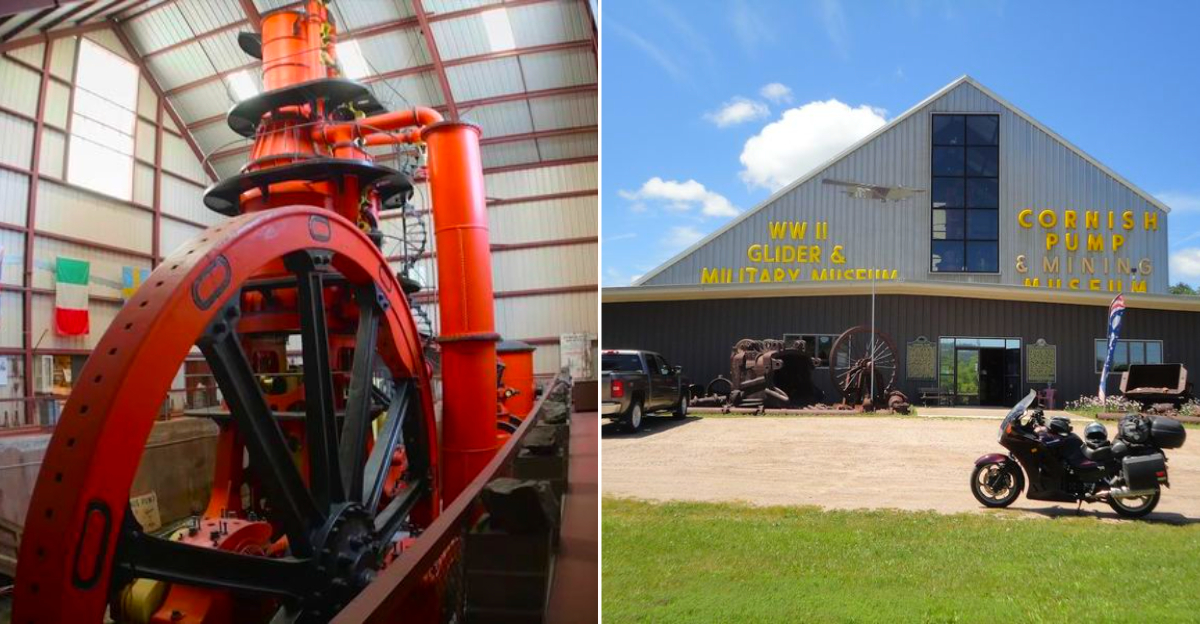
Approaching something that weighs over a thousand tons changes your sense of scale. The pumping engine here fills an entire building, its pistons and cylinders arranged with an industrial elegance that photographs cannot convey.
You have to walk the perimeter to take in the full footprint, craning your neck at crossheads and valve gear that once moved millions of gallons of water out of iron mines below the surface.
The volunteer guides can tell you exactly how many strokes per minute this machine ran at, plus they will point out the signature of the engineer who designed it on a brass plate you might otherwise miss.
The sheer size makes every other machine you have seen feel like a toy. A pumping engine too big to imagine brings mining history alive in Michigan, plus the sheer weight of it makes you stand still for a moment before speaking.
Start With The Sheer Scale
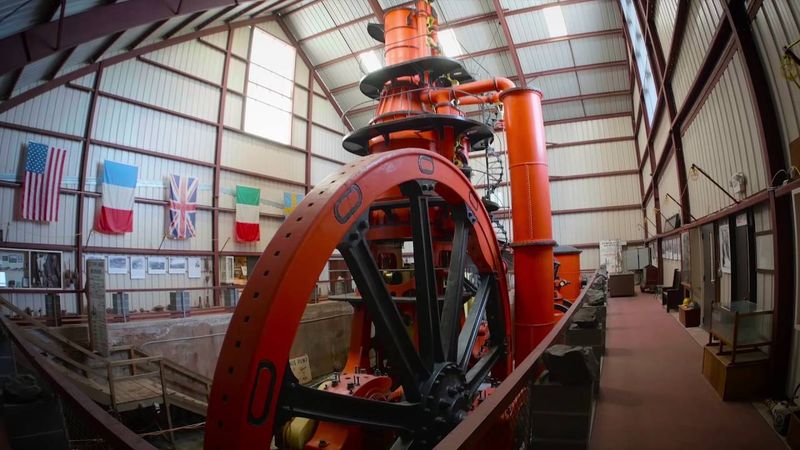
The first useful tip is simple: pause before reading a single sign. The Cornish Pumping Engine is recognized as the largest standing steam-driven pumping engine built in the United States, and that fact lands better when you let your eyes travel upward first.
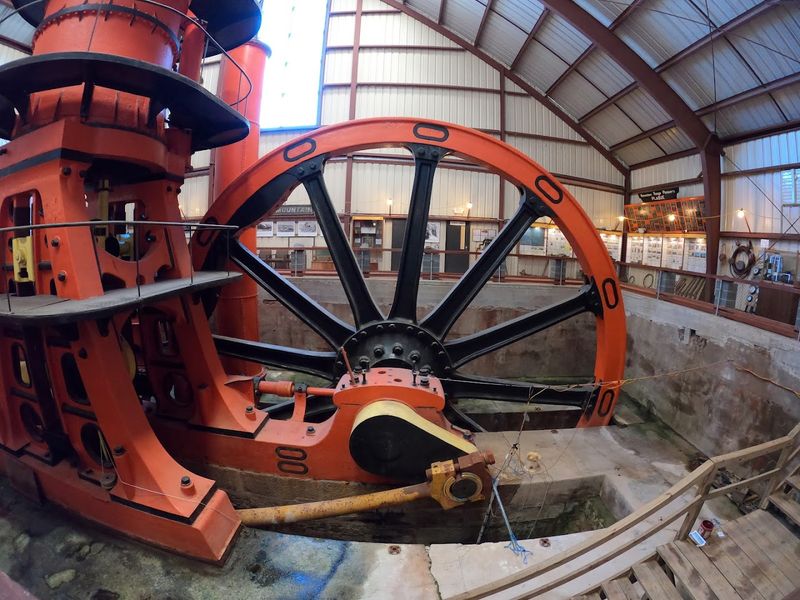
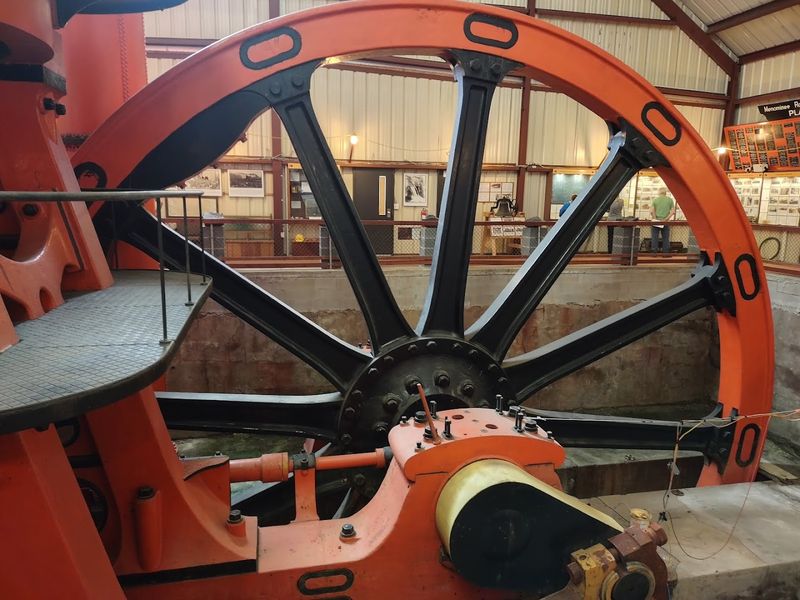
It rises 54 feet above the engine room floor, with a 40 foot flywheel that gives the whole room its strange, cathedral-like geometry.
Only after that visual shock should you move into the history. Built to dewater the Chapin Mine, the engine solved a brutally practical problem in one of the wettest mining operations ever worked.
You will understand the museum much better if you begin with awe, then let the numbers explain why that awe is justified.
Kent Street Is Where The Giant Engine Hides
The Cornish Pumping Engine and Mining Museum sits at 300 Kent Street in Iron Mountain, Michigan. From US-2 or US-141, head into Iron Mountain and work toward the downtown street grid instead of following US-41 out of town.
Once you reach Kent Street, the destination feels more like a local museum stop than a huge industrial landmark from the outside. Keep an eye on the smaller city streets around Kimberly Avenue, because the massive machine is housed inside rather than standing along the highway.
Park near the museum entrance and head inside to find the Cornish Pumping Engine. The road trip ends quietly, but the thing waiting inside is anything but small.
Notice How Cornish Ideas Reached Michigan
The word Cornish can sound decorative until you see how practical the connection really was. This engine drew inspiration from pumping systems used in Cornwall, England, where miners had long experience with wet shafts and stubborn groundwater.
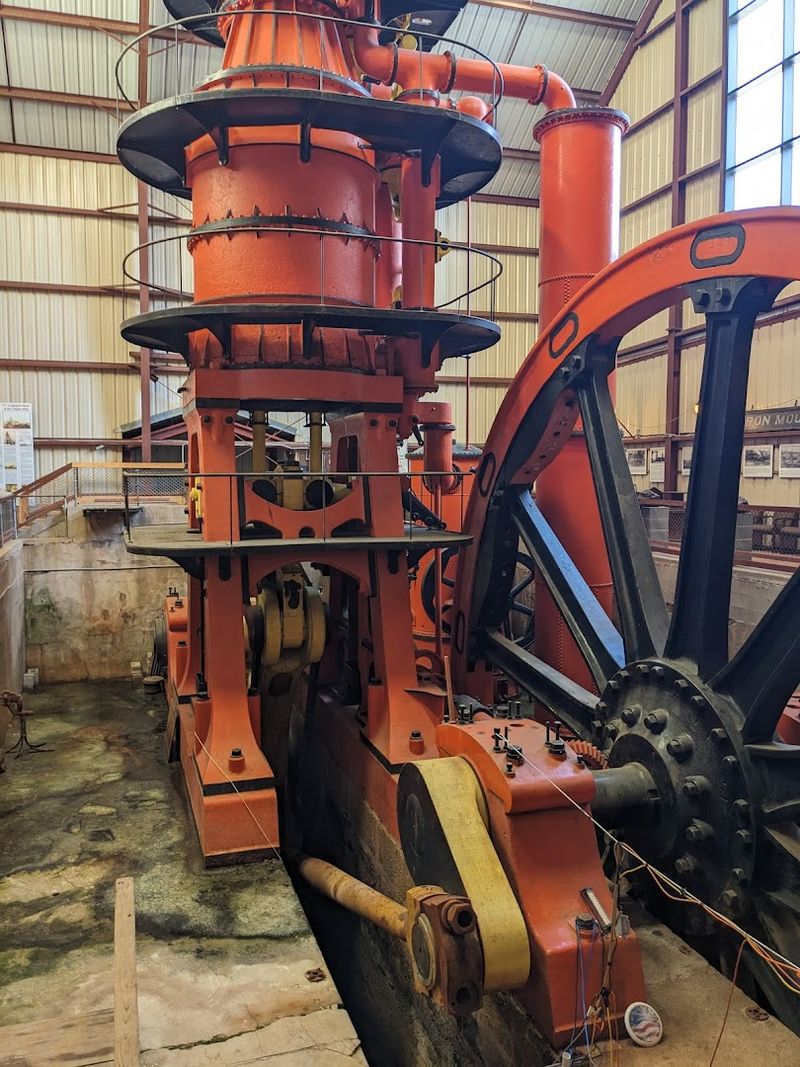
In Iron Mountain, those ideas were adapted into a steeple compound condensing engine designed by Edwin Reynolds of the E.P. Allis Company.
I liked tracing that transatlantic line of influence because it gives the machine a wider horizon than local history alone. The high-pressure cylinder measured 50 inches across, the low-pressure cylinder 100 inches, and both had a 10 foot stroke.
Those specifics are not trivia here; they show how imported mining knowledge became a Michigan solution on a breathtaking scale.
Use The Working Model Before The Big Machine
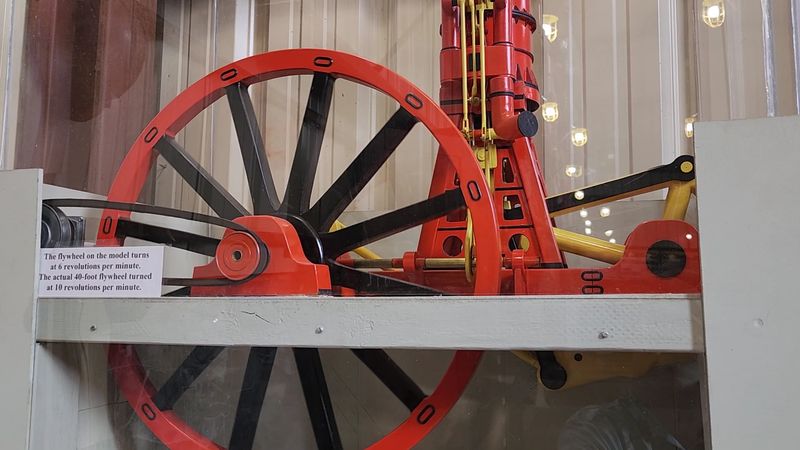
One of the smartest ways to approach the museum is slightly backwards. Before you try to decode the huge engine, spend time with the working scale model that demonstrates the flywheel and pumping action.
It turns a mass of rods, cylinders, and motion into something your brain can organize, which makes the full-size machine less intimidating and much more impressive.
Afterward, the giant engine reads almost like enlarged logic. The real system used reciprocating motion and a line of steel rods descending into the mine, linked to a series of pumps that forced water upward step by step.
If mechanical history sometimes loses you, this model is the bridge between admiration and actual understanding.
Read The Relocation Story Carefully
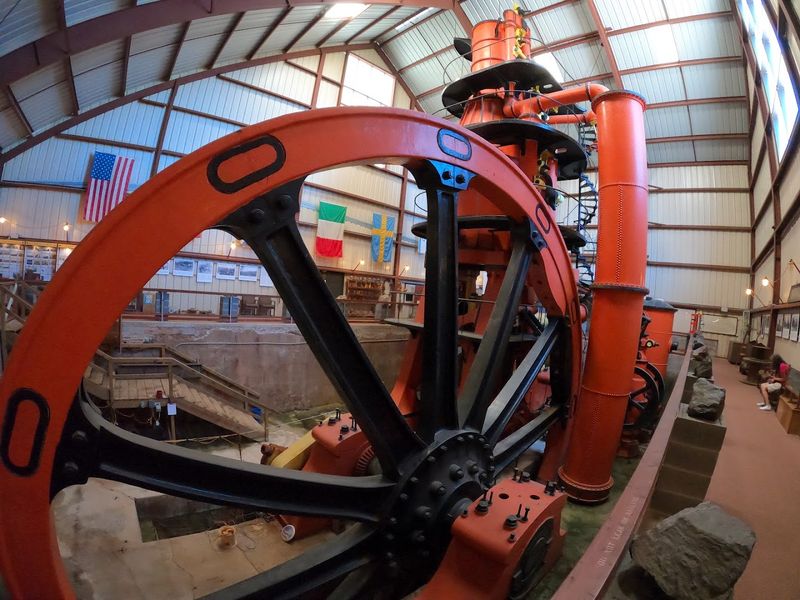
At first glance, the engine seems planted exactly where history left it, but the story is more complicated. It began operation on January 3, 1893, at the Chapin Mine’s D shaft, originally pumping from 600 feet.
After an underground shift in 1896 misaligned the structure, the machine was dismantled in 1899, then reassembled and moved in 1907 near the C Ludington shaft.
That relocation matters because it reveals how dynamic mining landscapes really were. The engine did not merely sit in place while years passed around it; it was adapted to changing underground realities.
When you read those dates closely, the museum becomes less a static memorial and more a record of industrial improvisation under pressure.
Give The Preservation Building Some Credit
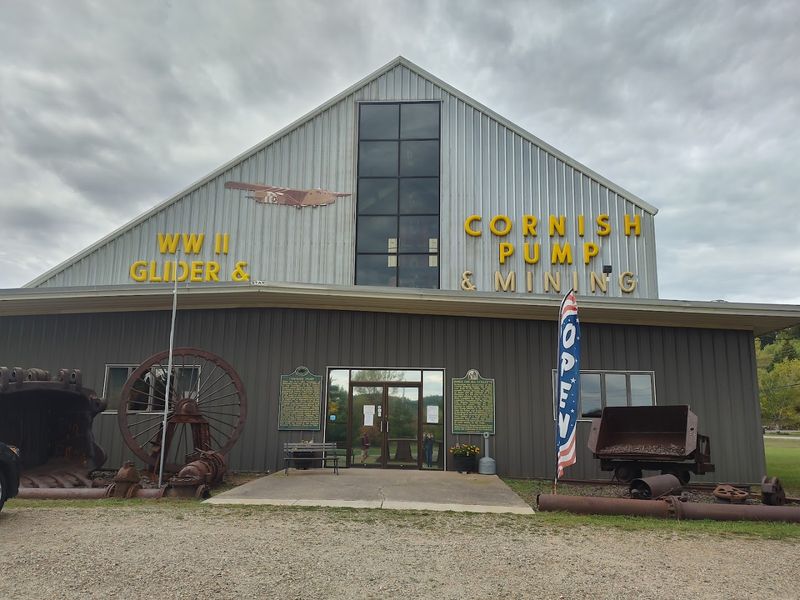
The metal building around the engine is easy to overlook because the machine steals the attention instantly. Still, preservation is part of the visit’s meaning.
After the Oliver Iron Mining Company offered the pump to Dickinson County in 1934 as a relic for sightseers, it stood outdoors for years, and the original engine house was razed in 1935.
That could have been the beginning of a slow disappearance. Instead, the Menominee Range Historical Foundation took ownership in 1978, and the protective structure was built in 1982 and 1983 before the museum opened on June 25, 1983.
You are not just seeing mining history here; you are seeing a successful local decision to keep an enormous artifact from weathering into legend alone.
Do Not Skip The Mining Equipment Hall
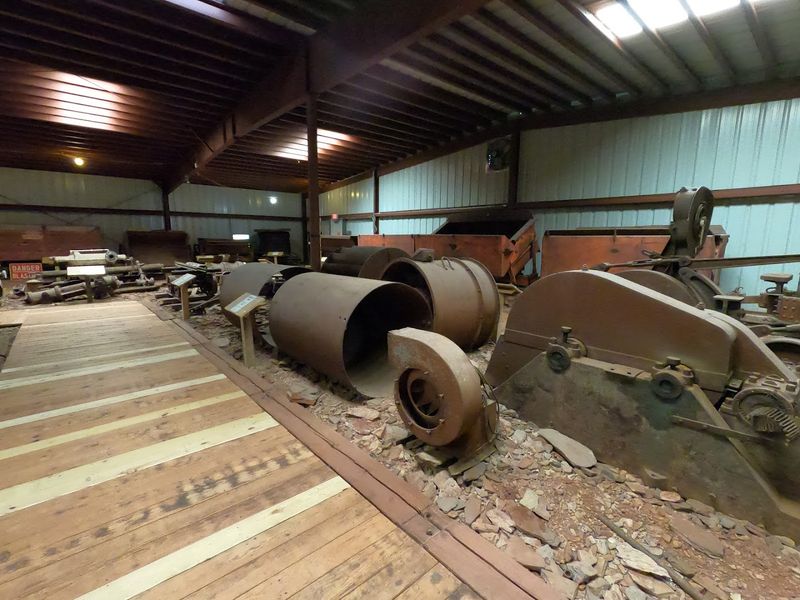
It would be easy to treat the rest of the museum as supporting material for the headline machine, but that would shortchange the visit.
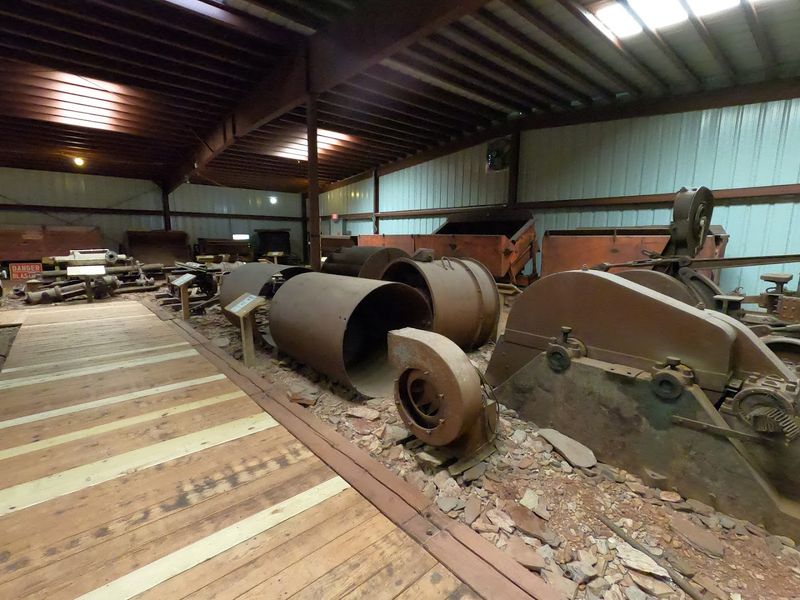
The adjacent exhibits hold underground mining equipment that gives the engine its human and operational context: ore cars, drilling equipment, pumps, tuggers, scrapers, skips, man cars, and a head sheave among them.
Suddenly the giant pump is not a lone marvel but one piece inside a full extraction system.
I found that shift in perspective especially useful. Massive technology can feel abstract when isolated, yet tools and transport gear bring labor, noise, and daily routine back into the picture.
Give yourself enough time here, and the museum starts reading like an ecosystem rather than a single object.
Time Your Visit With The Season In Mind
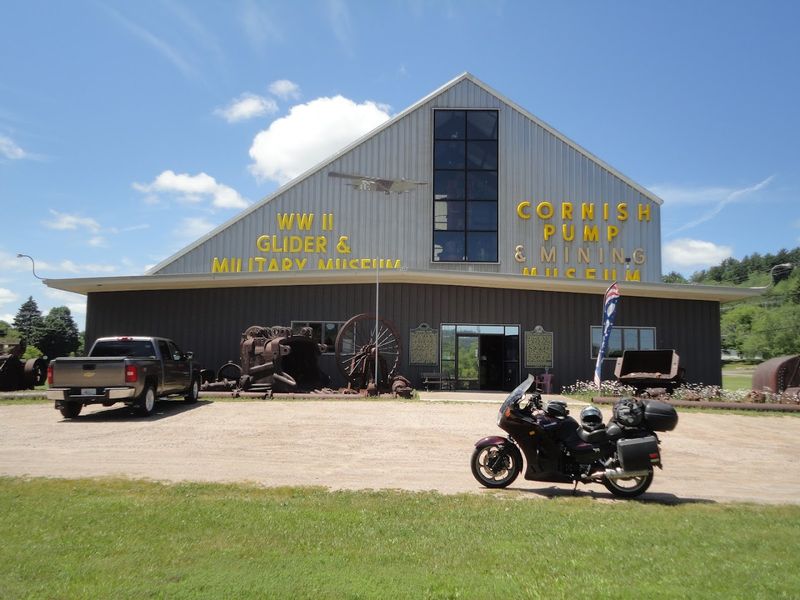
Practical timing helps more here than at flashier attractions. Current listed hours are Tuesday through Saturday from 10 AM to 4 PM, with the museum closed on Sunday and Monday, and the phone number is 906-774-1086 if you want to confirm details.
The website for the managing organization is menomineemuseum.com, which is worth checking before you go.
The museum’s older seasonal pattern and appointment options show that schedules have changed over time, so a quick check is not overcautious. This stop feels best when you arrive unhurried and ready to read.
Since the engine is the sort of thing you need a moment to absorb, avoiding a rushed final hour makes the whole experience more satisfying.
Look For The Numbers That Make It Astonishing
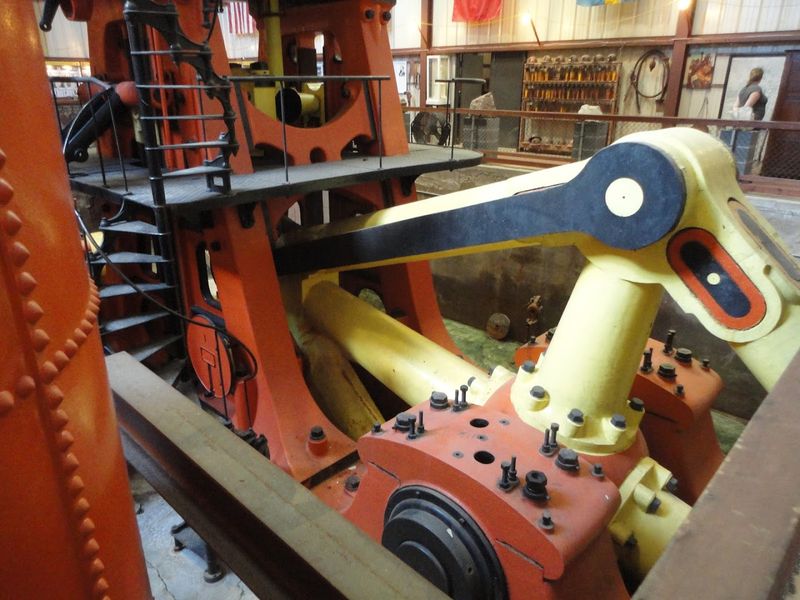
Some museums drown you in measurements, but here the numbers sharpen the wonder. The engine weighed about 725 tons, stretched roughly 75 feet from the end of the pump bob to the back of the flywheel, and consumed an estimated 11,000 short tons of coal each year when operating.
Those figures reveal a machine designed with almost unapologetic bigness, because the job demanded it.
There is also something oddly elegant about the slow pace. At around 10 revolutions per minute, this powerhouse was not racing; it was enduring, lifting millions of gallons daily through patient repetition.
When you pay attention to scale, speed, and fuel together, the engine stops being merely large and starts feeling profoundly consequential.
Treat It As A Story About Iron Mountain
The museum works best when you resist seeing it as an isolated mechanical oddity. This engine belonged to the Chapin Mine, discovered in 1879 and eventually one of the largest iron ore producers on the Menominee Iron Range.
Between 1880 and the mine’s closure on August 1, 1932, more than 27 million tons of ore came out of the ground, which gives the pump’s role proper civic weight.
That broader history changes the feeling of the visit. Iron Mountain starts to make sense not only as a town name but as an industrial reality built through extraction, labor, and infrastructure.
If you keep the community scale in view, the museum becomes local history with muscle, not simply engineering preserved under a roof.
Savor The Designations But Trust Your Eyes
By the end of the visit, the long list of official recognitions feels fully earned. The site was designated a Michigan Historic Site in 1958, a National Historic Site in 1981, a Michigan Historic Civil Engineering Landmark in 1984, and a National Historic Mechanical Engineering Landmark in 1987.
Those titles matter because they place the engine within several overlapping histories: local, industrial, and national.
Still, what stays with you is not the plaques but the encounter itself. Standing beneath that flywheel, you do not need much persuasion to grasp its significance.
My best final tip is to give yourself a quiet minute before leaving, because this is one of those rare museums where the scale of the object does part of the interpretation for you.