
This California Desert Art Museum Turns Scrap Metal Into A Walkable Outdoor Dream
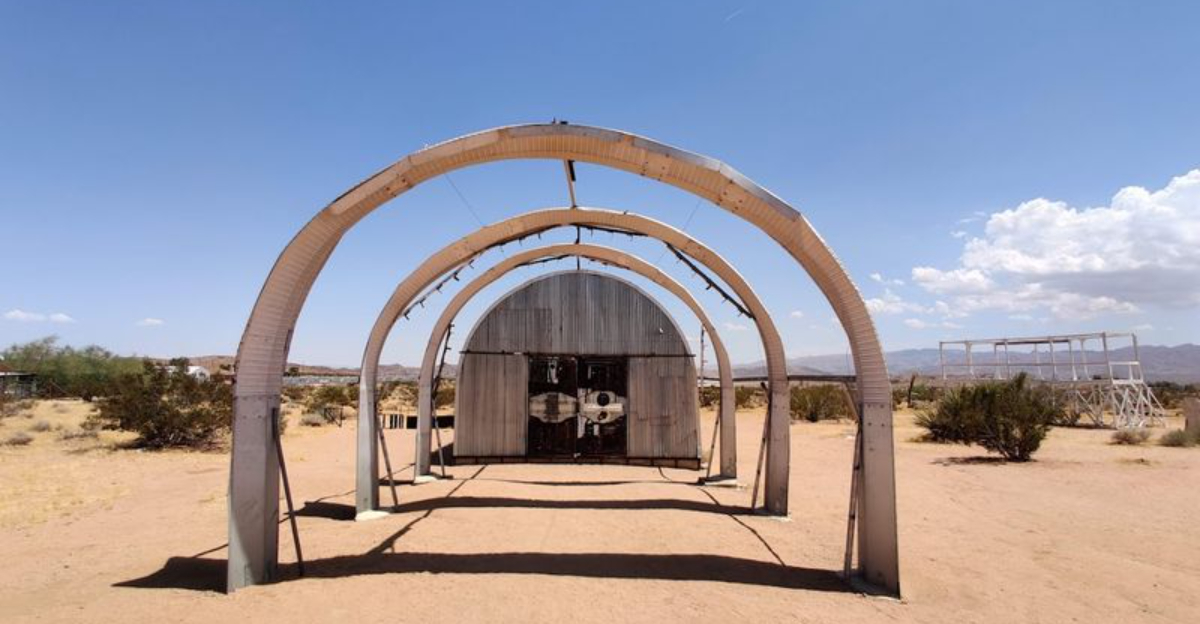
Old tires, broken TVs, twisted metal, and discarded scraps aren’t usually the ingredients for a must-see attraction.
But that’s exactly what makes this California desert landmark so unforgettable.
At this desert museum, everyday junk is transformed into massive outdoor sculptures that blur the line between art, imagination, and the surrounding landscape.
Is it an art gallery? A sculpture park?
Or something entirely its own? The answer is all three. As you wander through the desert, each installation tells a different story, proving that creativity doesn’t need marble or bronze to leave a lasting impression.
Surrounded by endless sky and rugged scenery, this walkable outdoor museum turns forgotten objects into something extraordinary, and makes you see beauty where you least expect it.
A Free Museum That Costs You Nothing But Blows Your Mind
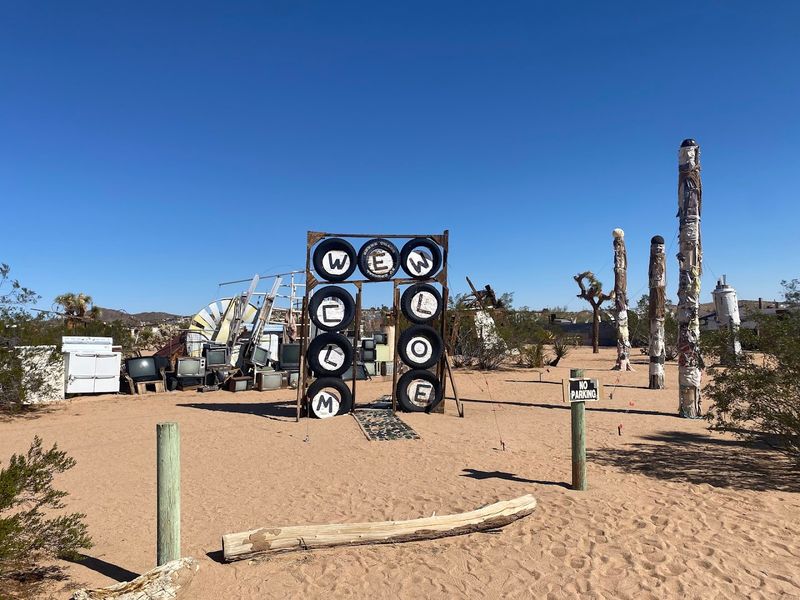
Free admission and a jaw-dropping art experience are not two things you usually find in the same sentence. Yet here at the Noah Purifoy Desert Art Museum, that is exactly the deal.
Open every single day from sunrise to sunset, this ten-acre outdoor gallery welcomes everyone without charging a single dollar at the gate.
A welcome kiosk near the entrance holds self-guided tour brochures so you can navigate at your own pace. There are no roped-off sections or hushed gallery rules.
You simply walk in, pick up a brochure, and start exploring over 100 large-scale sculptures spread across sandy, open terrain.
Donations to the Noah Purifoy Foundation are warmly encouraged, since they help preserve and maintain this remarkable site.
The foundation was established in 1999 specifically to protect the museum and Purifoy’s artistic legacy for future generations. Tossing a few dollars into the donation box is a small gesture that keeps something genuinely extraordinary alive.
The fact that this place exists at all feels like a gift. No ticket lines, no membership fees, no gift shop pressure.
Just open desert air, wild creativity, and sculptures that make you question everything you thought you knew about art and value.
Where To Find This Desert Art Wonder
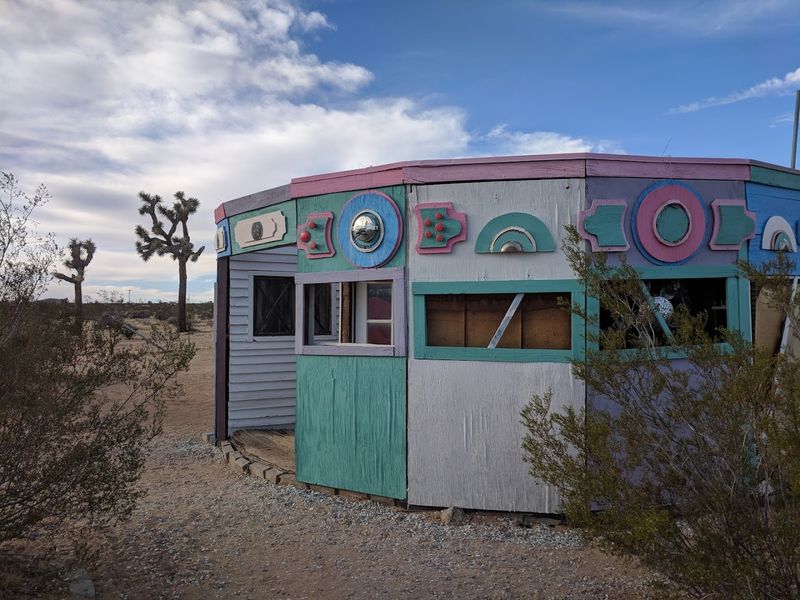
Getting to a place this special is part of the whole adventure. The Noah Purifoy Desert Art Museum sits at 63030 Blair Lane, Joshua Tree, California, tucked into the vast Mojave Desert just a short drive from Joshua Tree National Park.
The final stretch along Blair Lane is a graded dirt road, which honestly just adds to the cinematic desert arrival vibe.
Signage along the route helps guide you in, so getting lost is unlikely. Parking is available right along the roadside, clearly marked so you know exactly where to leave your car before wandering into this open-air wonderland.
The surrounding landscape of creosote bushes and sprawling desert flats sets the mood perfectly before you even spot the first sculpture.
Timing your visit thoughtfully makes a real difference here. Early mornings offer cooler temperatures and softer golden light that makes every rusted surface glow.
Late afternoons bring dramatic skies that turn the whole scene into something truly cinematic.
Midday summer heat can be intense, so packing water and wearing a wide-brimmed hat is genuinely practical advice rather than just a suggestion.
The journey to this place feels intentional, like the desert itself is asking you to slow down before you arrive. That quiet drive through the Mojave is the perfect mental warm-up for what awaits.
The Visionary Artist Behind The Junk Utopia
Some origin stories hit differently. Noah Purifoy was born in Alabama in 1917 and spent years as a social worker, art teacher, and U.S.
Navy veteran before art fully claimed him.
He was the first Black student to enroll full-time in the BFA program at Chouinard Art Institute, the school that eventually became CalArts.
His artistic direction shifted dramatically after the 1965 Watts Riots in Los Angeles. He collected debris from the aftermath and collaborated with other artists to create an exhibition called “66 Signs of Neon.”
That project cemented his belief that discarded materials could carry enormous emotional and social power.
Purifoy went on to become a founding director of the Watts Towers Art Center. Then, at 72 years old, he made perhaps his boldest move yet.
He relocated to the Mojave Desert and spent his remaining fifteen years building what would become this extraordinary outdoor museum entirely from found objects and scrap materials.
His commitment to assemblage art was never just an aesthetic choice. It was a statement about society, consumption, and the stories objects carry long after people discard them.
Walking through his desert museum feels like reading a biography written entirely in rust, rubber, and reclaimed wood. His vision reshaped what outdoor art could be.
What Assemblage Art Actually Means And Why It Matters
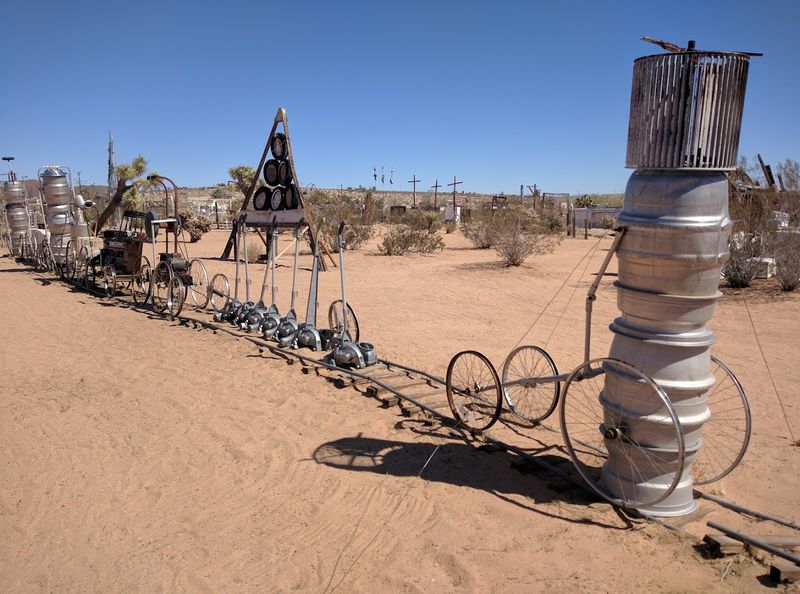
Assemblage art is exactly what it sounds like, and also so much more than that. It is a three-dimensional art form built from found objects, everyday discarded items that most people would haul straight to the curb without a second thought.
Purifoy called it “junk art,” and he meant that with full pride and zero apology.
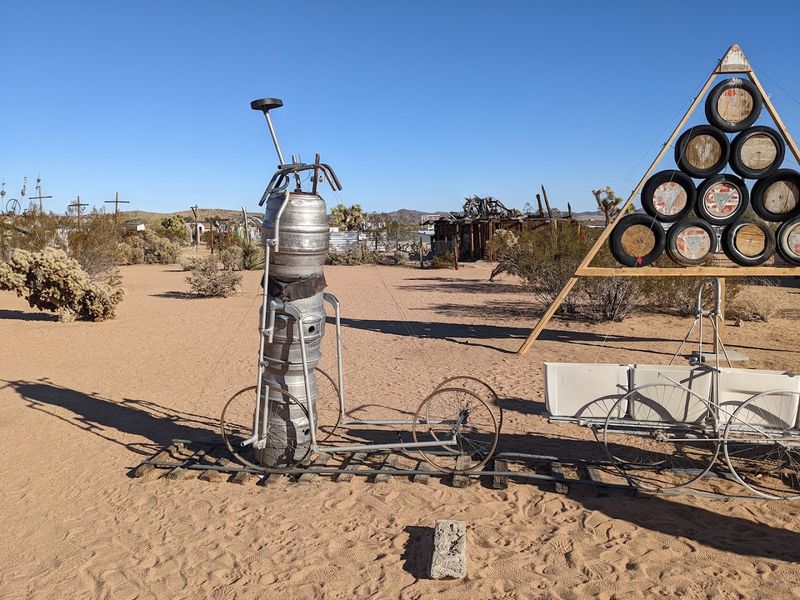
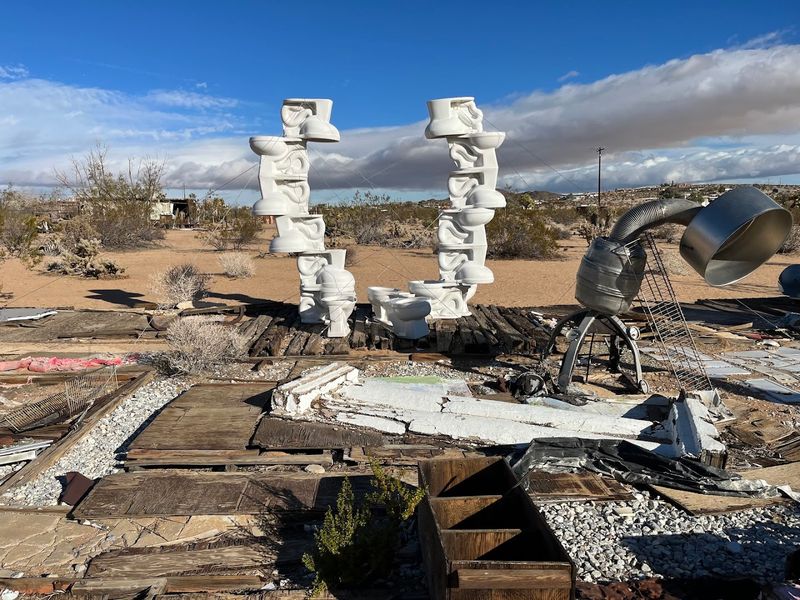
The materials used across this ten-acre museum read like the world’s most creative salvage yard inventory. Bowling balls, old tires, folding chairs, televisions, computers, corrugated metal, bed frames, ladders, aluminum cafeteria trays, toilets, sinks, bicycle parts, and home appliances all find new life here.
Even bones, rocks, artificial grass, and foam rubber show up in unexpected places.
What makes assemblage so powerful is the tension between recognition and transformation. You see a toilet and your brain says “toilet.”
Then you look again and realize it is part of a towering sculpture commenting on labor, systems, and human cycles. That double-take moment is exactly what Purifoy was after.
The art form democratizes creativity in a way that feels genuinely radical.
No expensive materials, no exclusive studio access, just sharp eyes, strong ideas, and the courage to see potential in what the world throws away. Assemblage art is proof that meaning can be built from almost anything.
The Desert Itself Is Part Of The Artwork
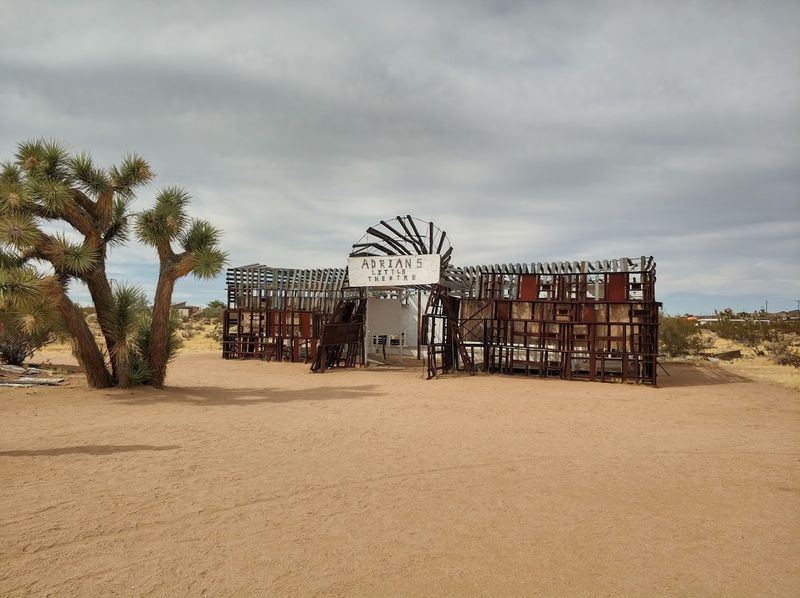
Most museums fight against time and environment to keep their collections pristine. Purifoy did the opposite.
He intentionally placed his sculptures in the Mojave Desert so that sun, wind, rust, and decay could become active collaborators in the ongoing creation of each piece. The desert was never just a backdrop here.
Over the decades, desert plants have grown up through installations, weaving themselves into the structures in ways no artist could plan or replicate.
Local wildlife, including desert tortoises, have reportedly made homes within certain sculptures. The boundary between art and nature here is beautifully blurred.
Rust changes colors across seasons. Sun bleaches wood and plastic into new shades.
Wind shifts the arrangement of lighter elements.
Every visit to this museum is technically a visit to a slightly different version of it than the last person experienced. That built-in impermanence is a core part of the artistic message.
Purifoy held deep respect for the desert ecosystem and its rhythms. He understood that the Mojave was not empty space waiting to be filled.
It was an active, living environment that would respond to his work in real time. The result is a museum that breathes, ages, and evolves in ways that no climate-controlled gallery ever could.
Nature and art here are genuinely inseparable.
The Sculptures That Will Stop You In Your Tracks
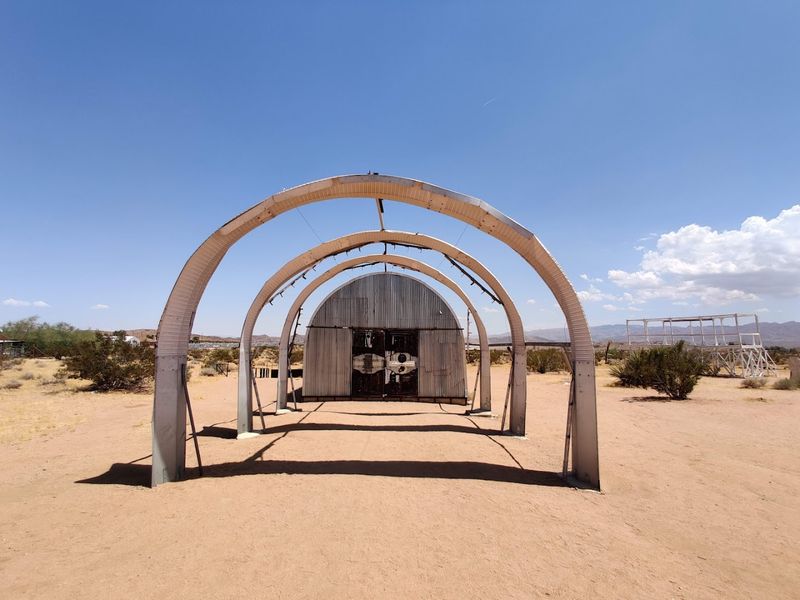
Walking through this museum without stopping to gape at something every thirty seconds is basically impossible.
The site holds over 100 sculptures, many of them massive environmental installations that you can actually walk into or through. That level of immersion is rare in any art setting, let alone one sitting freely in the open desert.
Pieces like “The Library of Congress” and “White/Colored” tackle race and social commentary with striking directness. “Carousel” explores themes of labor, life cycles, and the machinery of societal systems. These are not decorative objects.
They are arguments built from scrap, and they land with surprising force.
Other works lean playful and surreal, stacking everyday objects into towering arrangements that feel simultaneously absurd and profound.
The sheer scale of some installations makes you feel small in the best possible way. Standing inside a structure made entirely from corrugated metal and old ladders while desert wind moves through it is genuinely unforgettable.
Because there are no explanatory signs next to individual works, every visitor brings their own interpretation to each piece.
That openness is intentional. Purifoy trusted viewers to meet his art on their own terms.
Some sculptures will confuse you, some will move you, and a few will make you laugh out loud before making you think deeply. That range is the whole point.
How To Prepare For Your Visit Like A Desert Pro
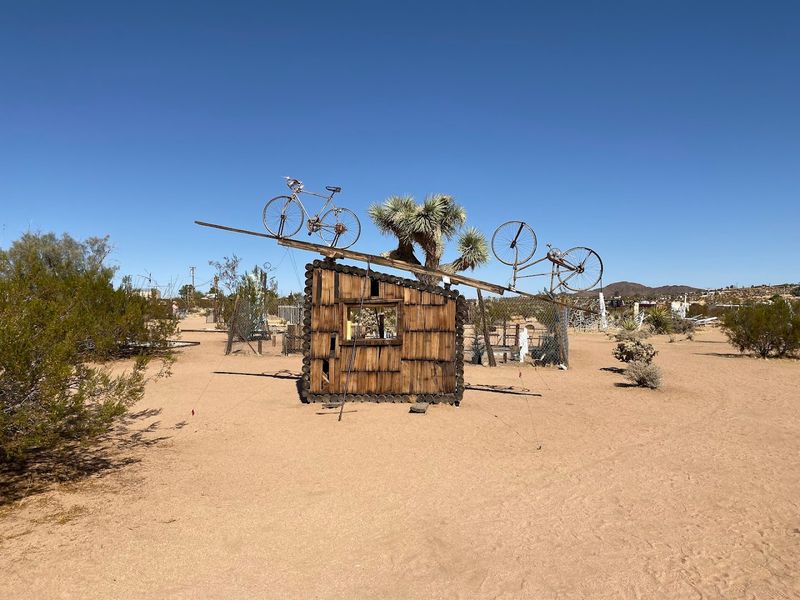
The Mojave Desert does not mess around, and neither should your preparation for this visit. The terrain across the museum grounds is sandy and unpaved, which means closed-toe shoes are genuinely the right call here.
Flip-flops and sandals will have you shuffling awkwardly through loose sand before you even reach the second sculpture.
Bring more water than you think you need. Desert heat has a way of sneaking up on you, especially when you are distracted by a towering sculpture made from old televisions and bicycle parts.
A wide-brimmed hat and sunscreen are not optional accessories here.
They are part of your visit toolkit.
The museum is open every day from sunrise to sunset, which gives you serious scheduling flexibility. Early morning visits offer cooler air and beautiful low-angle light that photographers genuinely love.
Late afternoon arrivals get those dramatic desert skies that make every photo look like a movie still. Midday in summer is the one window worth avoiding if you can help it.
Self-guided tour brochures are available at the welcome kiosk near the entrance. Grab one before you start wandering because the site covers ten full acres.
Having a loose map helps you make sure you catch everything rather than circling the same three sculptures and missing the back half of the grounds entirely.
This Place Deserves A Spot On Every California Road Trip
There is a specific kind of travel magic that happens when you stumble onto something completely outside the ordinary.
The Noah Purifoy Desert Art Museum delivers that feeling reliably and without asking anything in return except your curiosity and a little sunscreen. It is the kind of place that makes a California road trip feel genuinely worth the drive.
Positioned just a short distance from Joshua Tree National Park, it fits naturally into any desert itinerary. You can spend a morning hiking through the park and an afternoon wandering through ten acres of assembled genius without breaking a sweat logistically.
The two experiences complement each other in a way that feels almost designed.
The museum has this rare quality of rewarding every type of visitor differently. Art enthusiasts find layers of social commentary and historical context.
Photographers find endlessly compelling compositions around every corner. Casual explorers find something genuinely weird and wonderful that they will talk about for years.
There is no wrong way to experience this place.
What Purifoy built here is a reminder that creativity has no budget requirement and beauty has no expiration date.
A ten-acre field of salvaged materials in the California desert became one of the most thought-provoking art experiences in the entire state. If that does not belong on your road trip list, what does?