
This Texas Mammoth Site Makes Waco Feel Like A Prehistoric Surprise
When you think of Texas, you probably picture barbecue, cowboy boots, and wide-open landscapes, not a prehistoric discovery hiding just minutes from a modern city.
But what if we told you that one of the Lone Star State’s most fascinating adventures begins with creatures that disappeared thousands of years ago? That’s right.
While Waco may be known for its charm and culture, it’s also home to a place where visitors can come face-to-face with the remains of Ice Age mammoths. It feels a little like Jurassic Park, minus the running, screaming, and dinosaurs trying to escape.
Instead, you get a rare glimpse into a world frozen in time, where science, history, and a little prehistoric mystery come together.
This remarkable Texas destination proves that the biggest surprises aren’t always found in big cities. They’re sometimes buried beneath your feet.
The Accidental Discovery That Started It All
Nobody sets out to rewrite prehistoric history on a casual afternoon walk, yet that is exactly what happened in 1978.
Two men named Paul Barron and Eddie Bufkin were out near the Bosque River searching for arrowheads and fossils when they stumbled across something enormous.
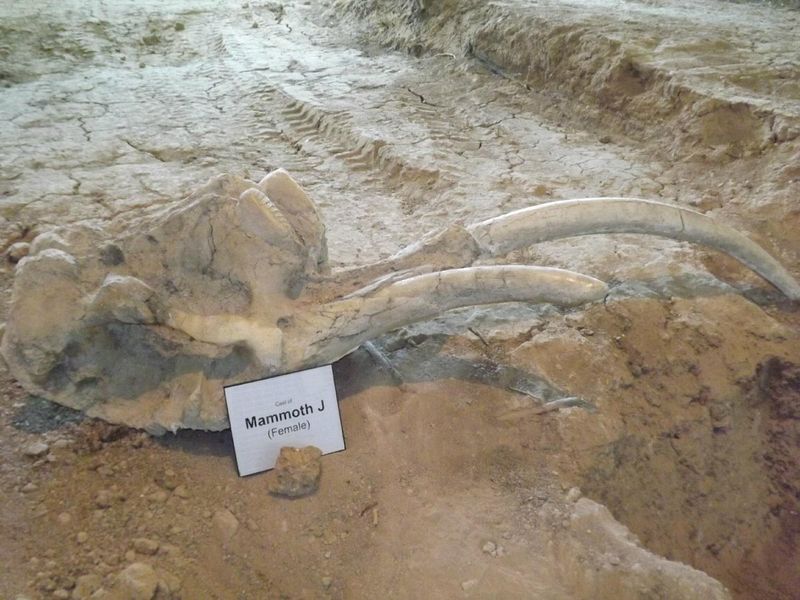
It turned out to be a Columbian mammoth femur, one of the largest bones you can imagine pulling out of the Texas soil.
They brought their find to Baylor University’s Strecker Museum, now known as the Mayborn Museum Complex, which confirmed the bone’s identity.
That moment kicked off a series of excavations that would span nearly two decades, from 1978 all the way through 1997. To protect the site from potential poachers, the exact location was kept under wraps for years.
What began as a weekend fossil hunt quietly became one of the most significant paleontological discoveries in American history.
The site eventually opened to the public in December 2009 after years of planning.
Then in July 2015, President Barack Obama officially designated it a National Monument, cementing its place in the scientific and cultural legacy of the United States. Sometimes the biggest surprises come from the most ordinary afternoons.
Where Exactly You Are Standing When You Visit
Knowing where you are going makes the whole trip feel more intentional, and this destination is worth every mile.
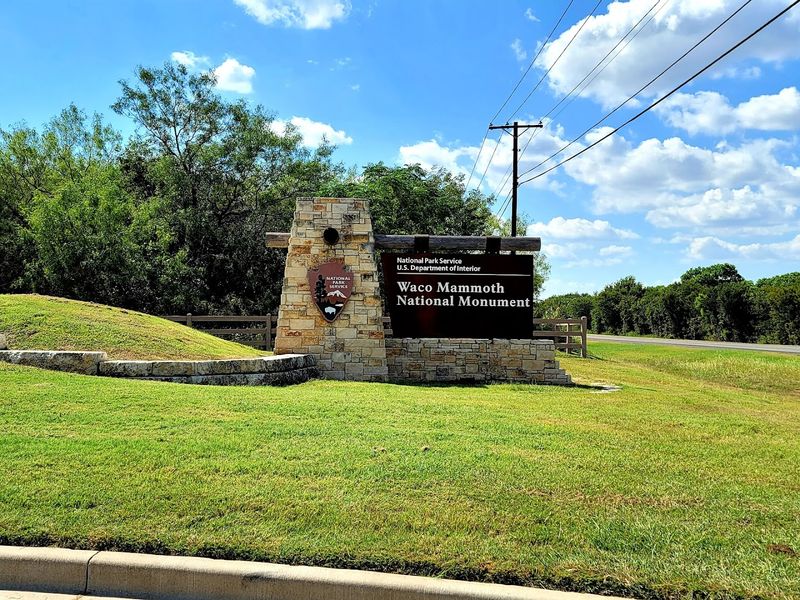
The Waco Mammoth National Monument sits at 6220 Steinbeck Bend Drive, Waco, Texas 76708, nestled within more than 100 acres of scenic, wooded parkland along the Bosque River. The setting alone feels like a reward before you even reach the fossils.
The monument operates through a genuinely unique three-way partnership between the National Park Service, the City of Waco, and Baylor University.
That collaboration means the site benefits from federal protection, local investment, and academic expertise all at once. It is open Tuesday through Sunday from 9 AM to 5 PM, and you can reach them at 254-750-7946 if you want to plan ahead.
Parking is free, which is a lovely bonus for any national site. The guided tours of the Dig Shelter run daily without advance reservations and typically last between 45 minutes and an hour.
There is a small admission fee for the shelter tour, but the surrounding trails and natural areas are accessible without cost. Sitting between a river and ancient mammoth bones, this location genuinely earns its national monument status.
The Nursery Herd That Has No Equal Anywhere In America
Here is a fact that stops people mid-sentence: this is the only place in the entire United States where a nursery herd of Columbian mammoths has ever been discovered. Not just rare.
Singular. Unique on a national scale.
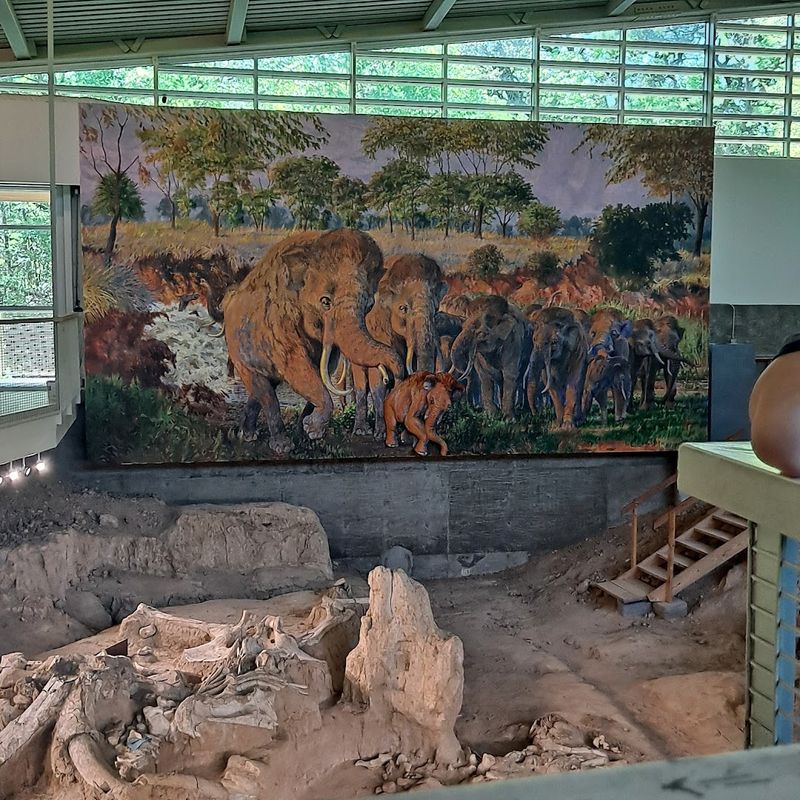
The initial excavations revealed at least 19 mammoths, mostly adult females and their young, gathered together in what scientists now recognize as a nursery group.
Columbian mammoths were not the shaggy, compact creatures you might picture from cartoons. These animals stood up to 14 feet tall at the shoulder and weighed as much as 10 tons.
They were colossal, warm-weather relatives of the woolly mammoth, perfectly suited to the ancient grasslands of central Texas. Over two dozen individual mammoths have been uncovered at the site in total.
Later excavations also revealed a large bull mammoth, adding a whole new chapter to the story of who was living in this ancient landscape.
The sheer concentration of animals in one location continues to fascinate researchers. Finding a nursery herd suggests these creatures were social, protective, and deeply connected as a group.
That realization makes standing above their fossils feel less like a science lesson and more like a quiet moment of connection across time.
Ice Age Neighbors Beyond The Mammoths
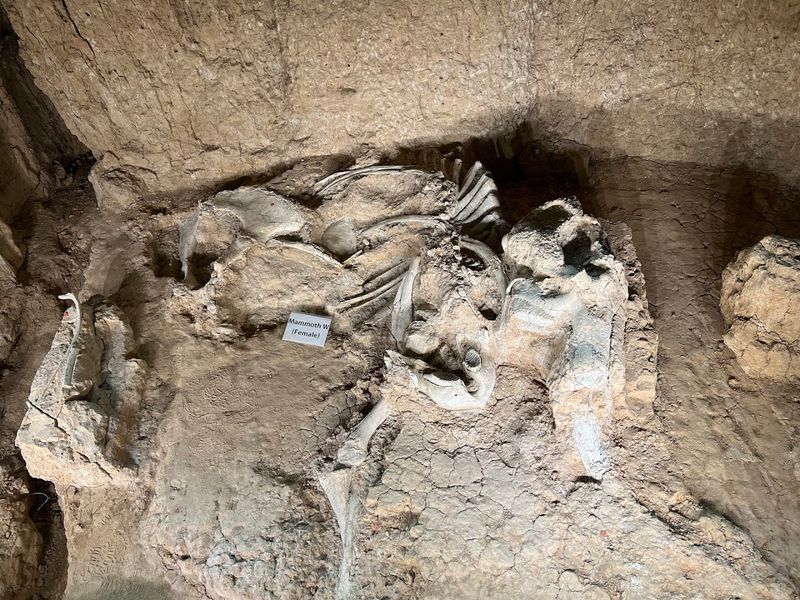
Mammoths get all the glory, but they were not exactly living alone out there in prehistoric Texas. The excavations at this site have turned up a fascinating cast of Ice Age characters that most people never expect to find in the Lone Star State.
A Western camel, for instance, was discovered alongside the nursery herd, proving that the ancient landscape here was far more diverse than anyone imagined.
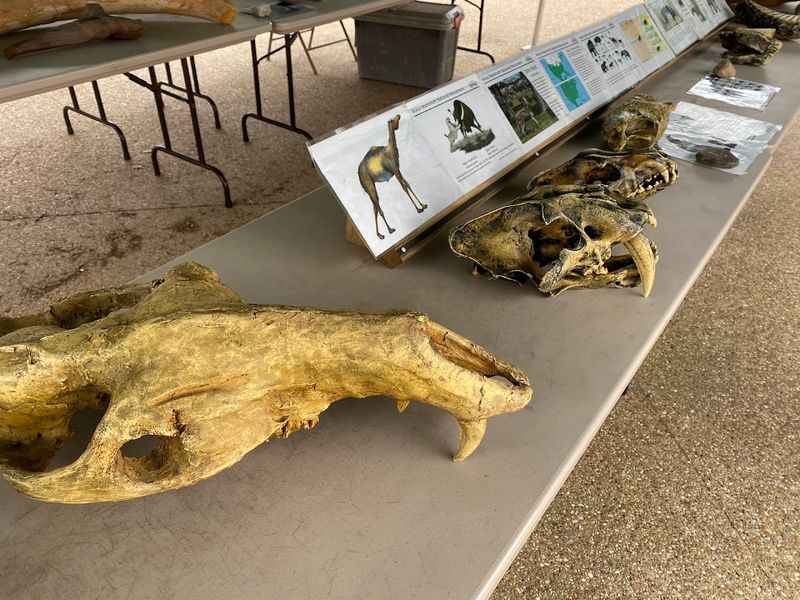
Researchers also found a tooth belonging to a juvenile saber-toothed cat, which is the kind of detail that makes your brain do a full double-take.
Beyond that, the site has yielded evidence of dwarf antelope, an American alligator, and a giant tortoise. Each of these finds paints a richer, stranger picture of what central Texas looked like tens of thousands of years ago.
The presence of so many different species in one location suggests a complex, thriving ecosystem existed along the ancient Bosque River.
These were not isolated animals wandering a barren landscape. They were part of a living, breathing world full of competition, survival, and natural drama.
Walking through the Dig Shelter knowing a saber-toothed cat once roamed these grounds adds a whole new layer of prehistoric electricity to the experience.
The Flood Theory And What Science Says Now
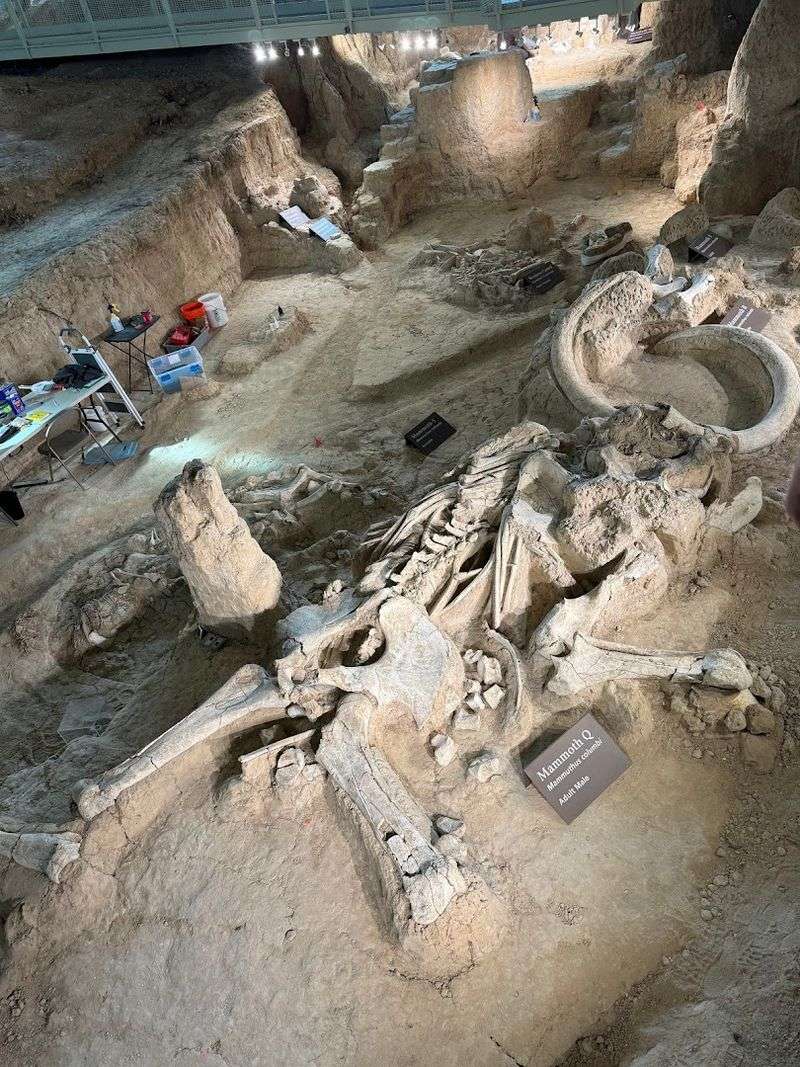
For years, the leading explanation for how so many mammoths ended up buried together was thrillingly dramatic.
Scientists believed a single catastrophic flash flood from the Bosque River swept through around 65,000 years ago, trapping and burying the entire nursery herd in one terrible moment. It was a clean, cinematic story, and people loved it.
Then newer geological research complicated things in the best possible way. Evidence now suggests the animals did not all perish in one event.
Instead, the fossils represent at least three separate burial events spread across many years, all happening within the same general area. The first major event, roughly 65,000 years ago, likely claimed the nursery herd and the camel during a rapid flood surge.
Later events buried additional animals, including the bull mammoth and other individuals found at the site.
Science rarely stays still, and the Waco site is a perfect example of how new questions keep emerging from old bones. Every visit might come with a slightly updated answer, and that ongoing discovery process is part of what makes this monument so alive.
The Dig Shelter Experience That Will Genuinely Blow Your Mind
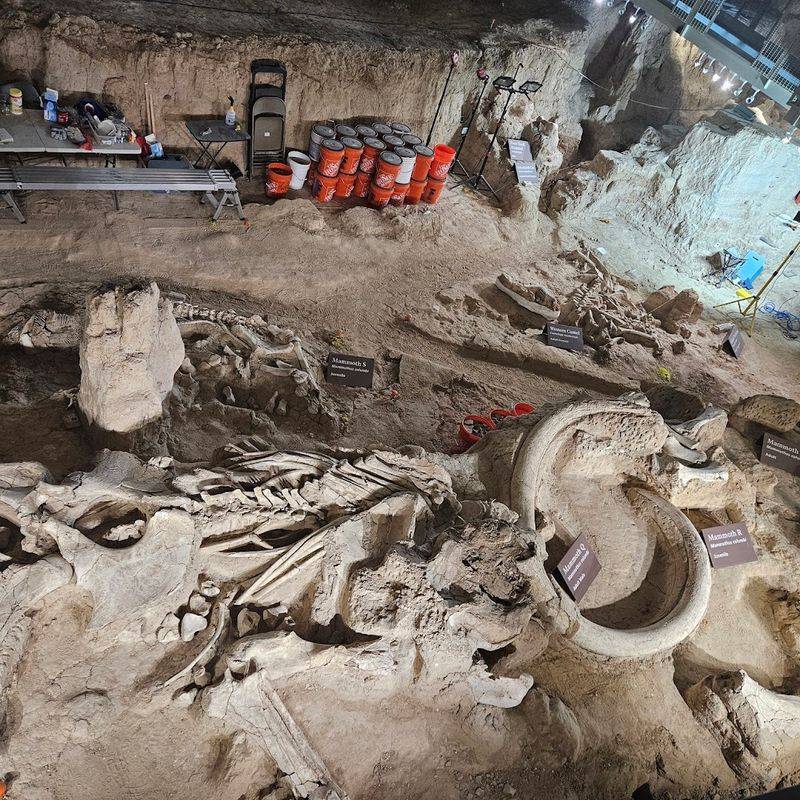
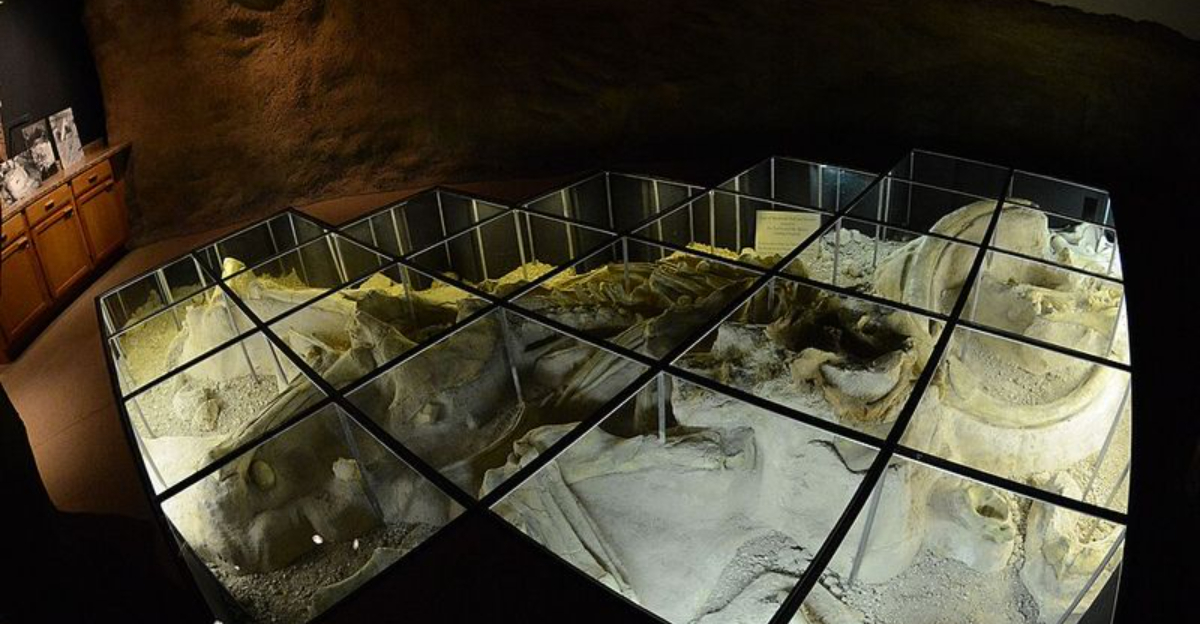
There is something almost sacred about the Dig Shelter at this monument. You walk into a climate-controlled building and suddenly you are standing above actual mammoth bones, right where they were found, exactly as they were left by the earth.
No replicas. No artistic recreations.
The real deal, preserved in their original positions for tens of thousands of years.
This type of display is called in situ, meaning the fossils have never been moved from where they were first uncovered. The Waco site is one of only eight places in the entire United States where visitors can see fossils displayed this way.
An elevated walkway winds through the shelter, giving you stunning overhead views of the mammoth remains below. The scale of what you are seeing takes a moment to fully register.
Guided tours run daily and typically last between 45 minutes and an hour. The rangers who lead these tours bring genuine enthusiasm and deep knowledge to every presentation.
Hearing the story told out loud, while you are physically standing above the fossils, creates a sensory experience that no textbook can replicate. The shelter also keeps the fossils protected from the Texas heat and humidity, ensuring they remain intact for future generations to study and appreciate.
Trails, Picnics, And The Natural Beauty Surrounding The Site
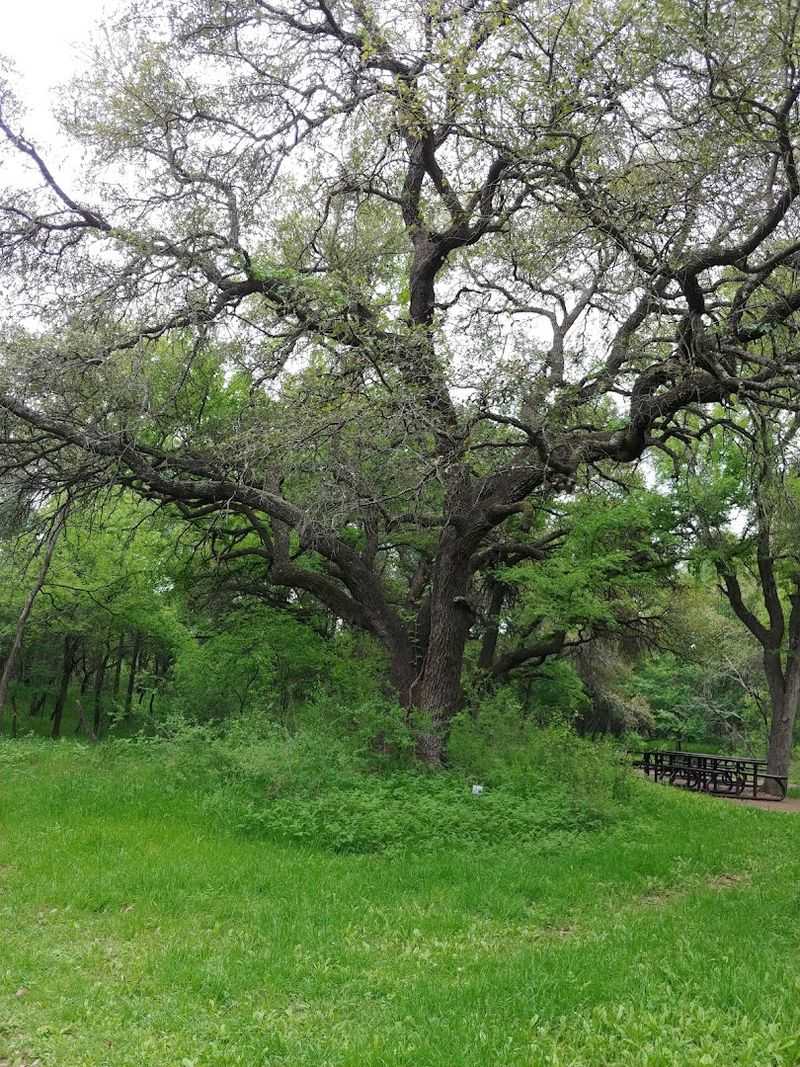
Not every great experience at this monument happens underground or under a shelter roof. The surrounding 100-plus acres of wooded parkland along the Bosque River offer a genuinely lovely natural escape that pairs beautifully with the prehistoric discoveries inside.
The landscape itself feels like a reward for making the trip.
Scenic trailways wind through the trees, giving visitors a chance to slow down and enjoy the quiet beauty of central Texas.
The Eagle Scout Trail is a popular short hike that takes you through flat, shaded terrain and back out in under a mile. It is the kind of walk that clears your head and reminds you that nature has been doing impressive things long before any of us showed up.
Shaded picnic areas are scattered throughout the grounds, making this an ideal spot to pack a lunch and spend a full morning or afternoon.
There is also a gift shop near the welcome center where you can pick up something to remember the visit. The combination of ancient fossils, river scenery, and peaceful trails gives the monument a layered quality that appeals to a wide range of visitors.
You come for the mammoths and stay for the whole atmosphere.
Learning Programs That Make The Past Feel Urgent And Exciting
The Waco Mammoth National Monument is not just a place to look at old bones. It is a full-on educational ecosystem designed to spark curiosity in visitors of every age.
The Junior Ranger Program is a fan favorite, offering younger explorers a structured way to engage with the science and history of the site through activities and hands-on challenges.
On-site field trips bring school groups directly to the monument, where they can interact with the landscape and fossils in a way that no classroom presentation can match.
Distance learning programs also connect park rangers with students remotely, bringing Ice Age science into schools far beyond Waco. Educators can access lesson plans and activity worksheets aligned with Texas educational standards through the monument’s resources.
The Mayborn Museum Complex at Baylor University complements the monument experience with additional mammoth exhibits and casts, creating a fuller picture of Ice Age central Texas for those who want to keep exploring.
The monument encourages visitors to think about ancient climate, geological change, and the animals that once roamed this land.
That kind of thinking does not stop when you leave the parking lot. If you have ever wanted to feel genuinely connected to deep time, this is the place that makes it happen.