
These 9 Hidden Wonders In West Virginia Deserve A Spot On Every Travel Bucket List
Most travelers think they know what West Virginia has to offer. Mountain views, winding roads, and plenty of outdoor adventures.
But what if the state’s biggest surprises are hiding far away from the usual stops? Beyond the famous landmarks and popular trails, there are forgotten corners, unusual attractions, and breathtaking places that feel like they were waiting to be discovered.
Some are carved by nature, some are shaped by history, and others are the kind of spots locals proudly keep as hidden gems. The best part?
Finding them feels like uncovering a secret that not everyone knows about yet. From peaceful landscapes to fascinating destinations with incredible stories, these hidden wonders reveal a side of West Virginia that deserves much more attention.
Your next unforgettable road trip might be closer than you think.
1. Lost World Caverns
Picture stepping underground and suddenly finding yourself inside a chamber so enormous it could swallow an entire city block.
That is the magic of Lost World Caverns, and it hits differently the moment you cross the threshold into its cool, ancient air. Sitting beneath the quiet town of Lewisburg at 907 Lost World Rd, this cavern system was discovered in 1942 and later earned National Natural Landmark status in 1973.
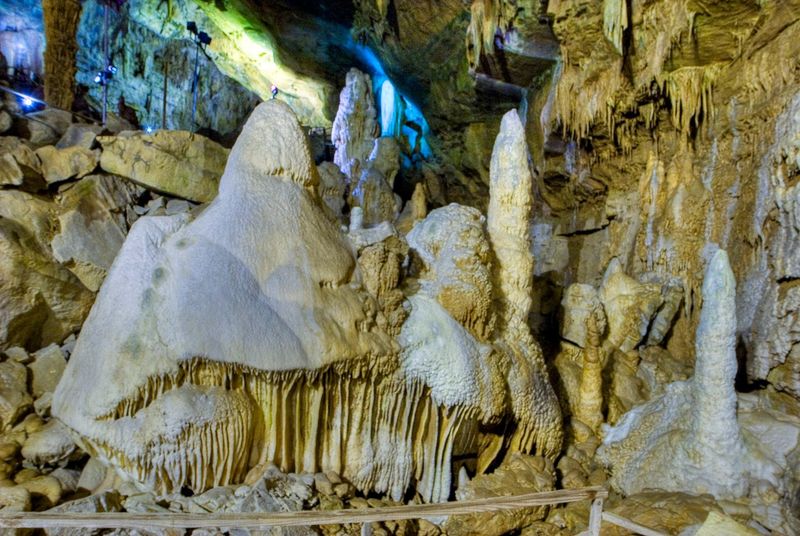
The main chamber alone stretches 1,000 feet long, 300 feet wide, and soars 120 feet high. Over a mile of interconnected passages winds through the earth, plunging 245 feet below the surface.
A steady 52 degrees Fahrenheit keeps things refreshingly cool year-round, so a light jacket is your best travel companion here.
The formations inside are nothing short of spectacular. The Snowy Chandelier is a 30-ton stalactite that commands the room like a natural chandelier.
The towering War Club stalagmite stands 28 feet tall and has its own legendary backstory. Fossils of a prehistoric cave bear were unearthed here in 1967, adding a paleontological punch to the adventure.
A natural history museum and gemstone mining experience round out the visit perfectly. Lost World Caverns is the kind of place that genuinely earns its dramatic name.
2. Prabhupada’s Palace Of Gold
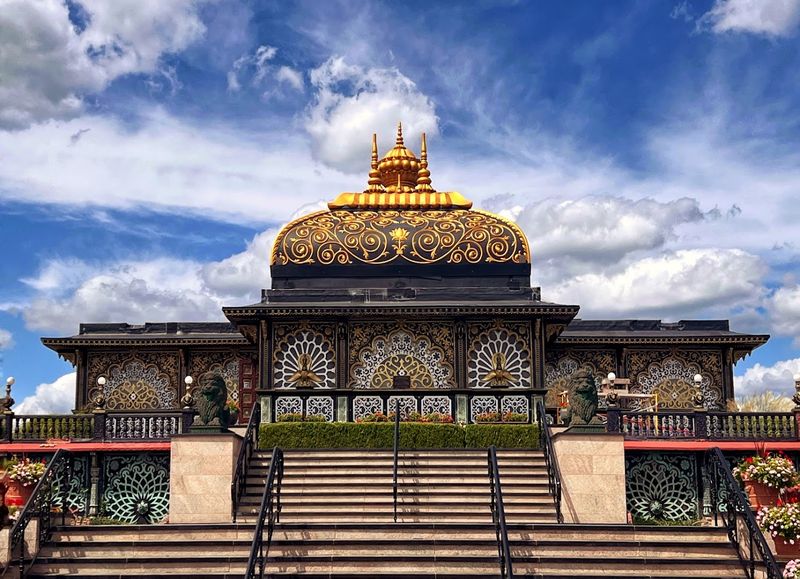
Nobody expects to round a bend in rural West Virginia and suddenly face a glittering golden palace. Yet there it stands, shimmering against the Appalachian sky like something straight out of a Bollywood dream sequence.
Prabhupada’s Palace of Gold, located at 3759 McCrearys Ridge Rd, Moundsville, was built entirely by volunteers between 1973 and 1980, without traditional blueprints, which makes it even more astonishing.
Over 8,000 square feet of 22-karat gold leaf covers the exterior, catching sunlight in a way that makes your jaw drop on instinct. Inside, the craftsmanship reaches another level entirely.
Marble and onyx floors feature intricate inlaid designs using more than 50 varieties of stone imported from Europe, Asia, and Africa.
Crystal chandeliers, mirrored ceilings, and ceiling murals depicting classic Indian narratives fill every corner with beauty and meaning.
Often called America’s Taj Mahal, it was originally envisioned as a residence for the movement’s founder and became a stunning memorial after his passing in 1977.
The surrounding grounds include an award-winning rose garden with over 100 varieties, a peaceful lotus pond, and a cow sanctuary.
Peacocks and swans wander freely, completing the surreal scene. This place is proof that extraordinary beauty can bloom absolutely anywhere.
3. Mystery Hole
Gravity called. It said it is taking a personal day at the Mystery Hole.
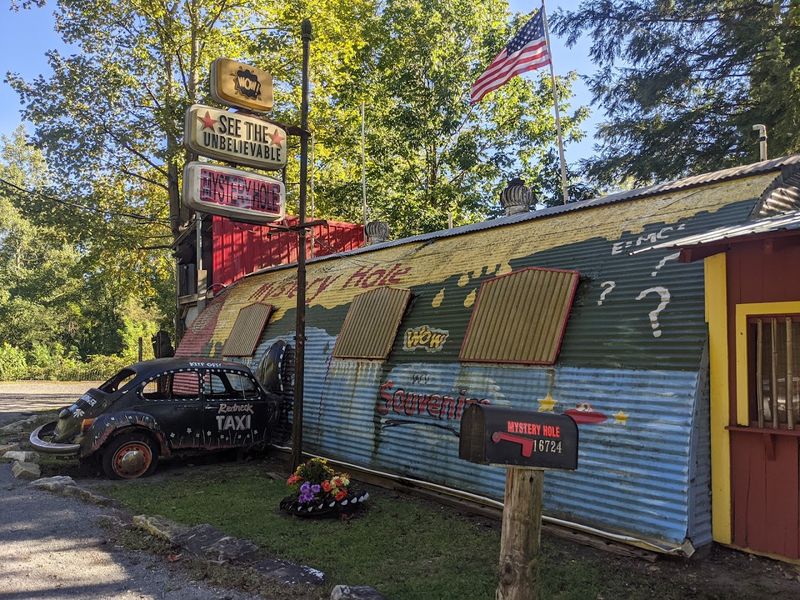
This wonderfully weird roadside attraction in Ansted has been confusing and delighting travelers since 1973, and it wears that vintage charm like a badge of honor.
Found at 16724 Midland Trail, the Mystery Hole is exactly the kind of place you stumble upon and immediately know you have found something special.
Before you even step inside, the exterior sets the tone brilliantly. A sawed-off Volkswagen Beetle appears to crash headfirst into the building, while a towering gorilla statue guards the entrance with theatrical flair.
It is campy, it is bold, and it is completely intentional.
Inside, the real fun begins. Cleverly constructed rooms built at strategic angles create optical illusions that make people appear to stand at impossible angles.
Balls and water roll uphill with casual confidence, as if the laws of physics simply do not apply here. Cameras and phones are not permitted inside, which forces you to actually experience the moment rather than document it.
That rule alone makes this place feel refreshingly different from anywhere else. The Mystery Hole is a love letter to classic American roadside culture, and honestly, the world needs more places exactly like this one.
4. Smoke Hole Caverns
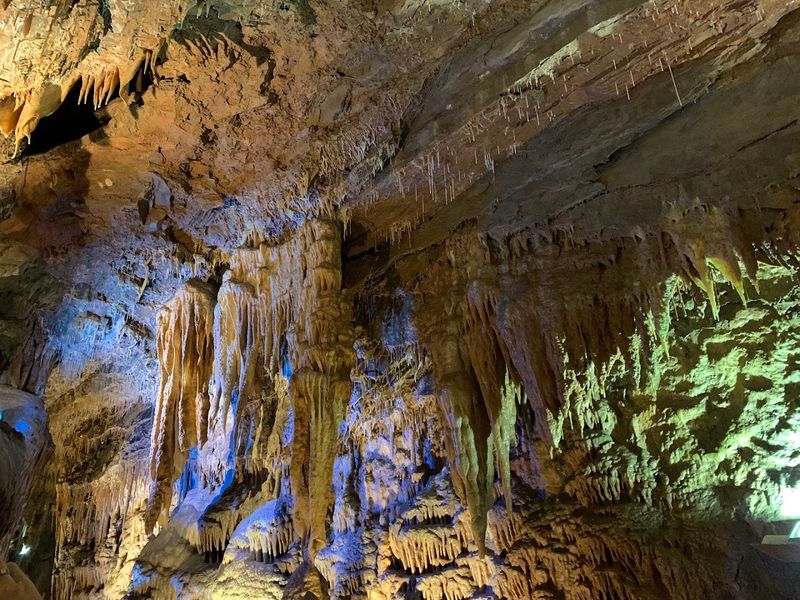
Two hundred million years ago, an underground stream began carving out something extraordinary beneath West Virginia, and today you can walk right through it.
Smoke Hole Caverns, nestled in Cabins at 8290 N Fork Hwy, carries a name with a genuinely fascinating backstory. Seneca Indians once used the cave’s front sections to smoke wild game, sending clouds drifting through the valley and giving the area its evocative name.
The geological highlights here are record-breaking in the best possible way. The world’s largest ribbon stalactite lives inside these walls, measuring 16 feet long, 13 feet wide, and weighing an estimated 2.5 tons.
That single formation alone is worth the trip.
You will also encounter rare crystal cave coral pools, a feature found in only one other cavern on the entire planet.
The ceiling clearances rank among the highest in the eastern United States, creating a sense of underground grandeur that feels almost theatrical.
Temperatures hover between 50 and 56 degrees Fahrenheit, making it a genuinely refreshing escape during warmer months. Smoke Hole Caverns is one of only four commercial caves in West Virginia, which makes it part of an exclusive underground club.
Bring a jacket, bring your wonder, and prepare to be genuinely amazed by what 200 million years of patience can create.
5. Organ Cave
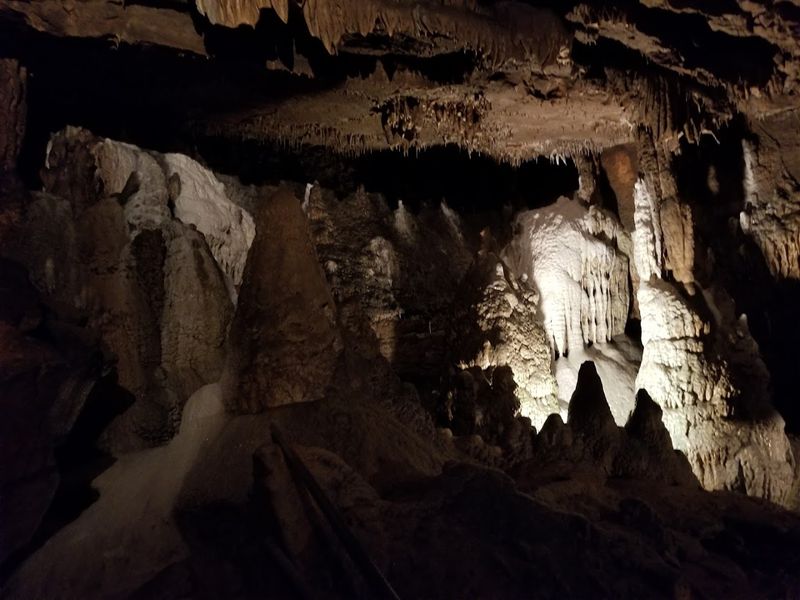
Some places carry history so deep it practically echoes off the walls. Organ Cave is one of those places.
Named for a dripstone formation near its entrance that strikingly resembles a pipe organ, this underground marvel has been welcoming visitors since at least 1822.
Located at 242 Organ Cave Dr, it holds dual designations as both a National Natural Landmark and a site on the National Register of Historic Places.
With over 38 miles of surveyed passages, Organ Cave ranks as the third-longest cave in West Virginia and was once considered the longest cave in the world.
The paleontological discoveries here read like a prehistoric greatest hits album. Fossils of giant ground sloths, ancient grizzly bears, and sabre-tooth cats have all been found within its passages.
Thomas Jefferson himself reportedly described the discovery of a three-toed sloth from this very cave.
The human history runs just as deep as the geological wonders.
Organ Cave played a meaningful role during both the War of 1812 and the American Civil War. It now houses the nation’s largest collection of Civil War-era saltpeter hoppers, which were essential for producing gunpowder during that era.
Standing among those hoppers, surrounded by millions of years of stone, creates a layered experience that is impossible to replicate anywhere else. Organ Cave is genuinely in a category of its own.
6. Beckley Exhibition Coal Mine
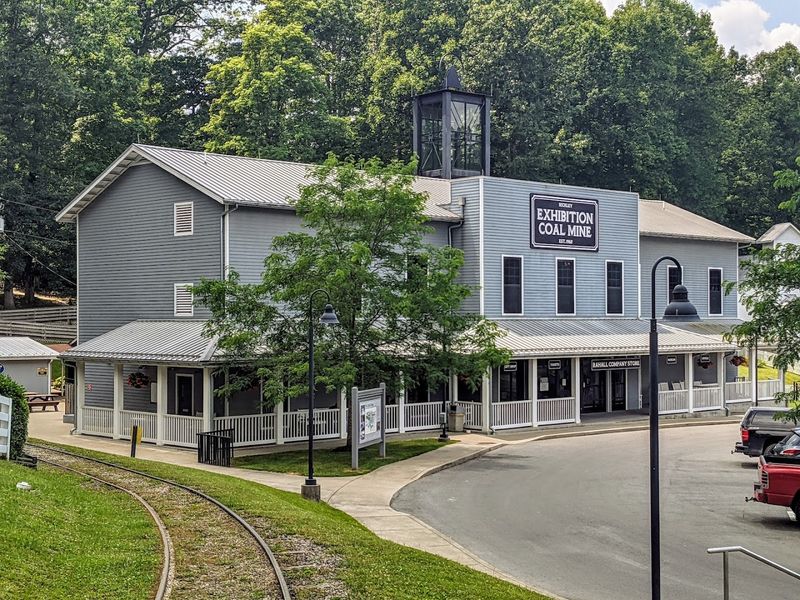
There is something profoundly humbling about descending into an actual coal mine and understanding, on a gut level, what built this state.
The Beckley Exhibition Coal Mine delivers exactly that experience, and it does so with remarkable authenticity. Located at 513 Ewart Ave, Beckley, this site began as the Phillips-Sprague Mine in 1906 and actively produced coal until 1953 before transforming into a living museum.
The underground tour takes visitors into the mine aboard vintage mine cars, which immediately sets the tone for something genuinely immersive.
Veteran miners share insights and personal accounts that bring the history to vivid life. The constant underground temperature of 58 degrees Fahrenheit adds a sensory layer that no exhibit can replicate.
Above ground, the experience continues through a meticulously recreated coal camp. Restored buildings include a coal company house, a superintendent’s home, a church, and a school, each offering a realistic window into early 20th-century mining family life.
The Miners’ Museum adds another dimension with compelling exhibits, while a 20-foot Peace Totem in the surrounding New River Park provides an unexpected artistic flourish.
Listed on the National Register of Historic Places, the Beckley Exhibition Coal Mine is more than a museum. It is a tribute to the generations of people whose work shaped an entire region’s identity, and that weight is felt with every step underground.
7. Beartown State Park
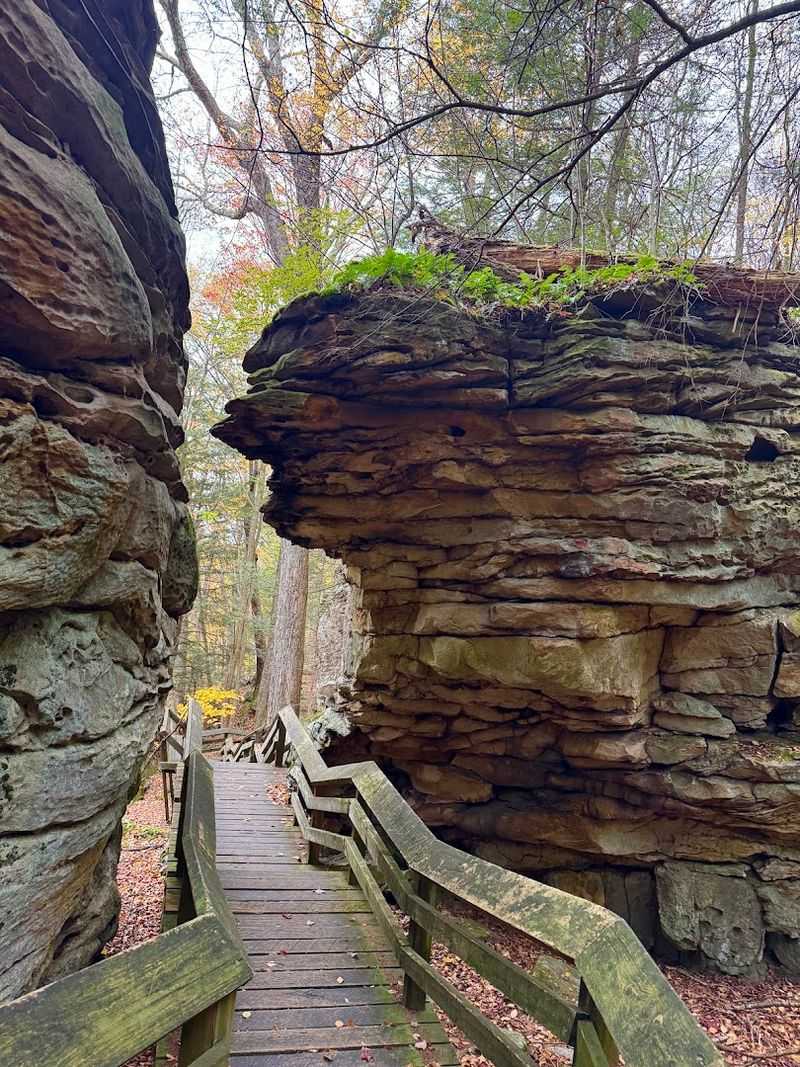
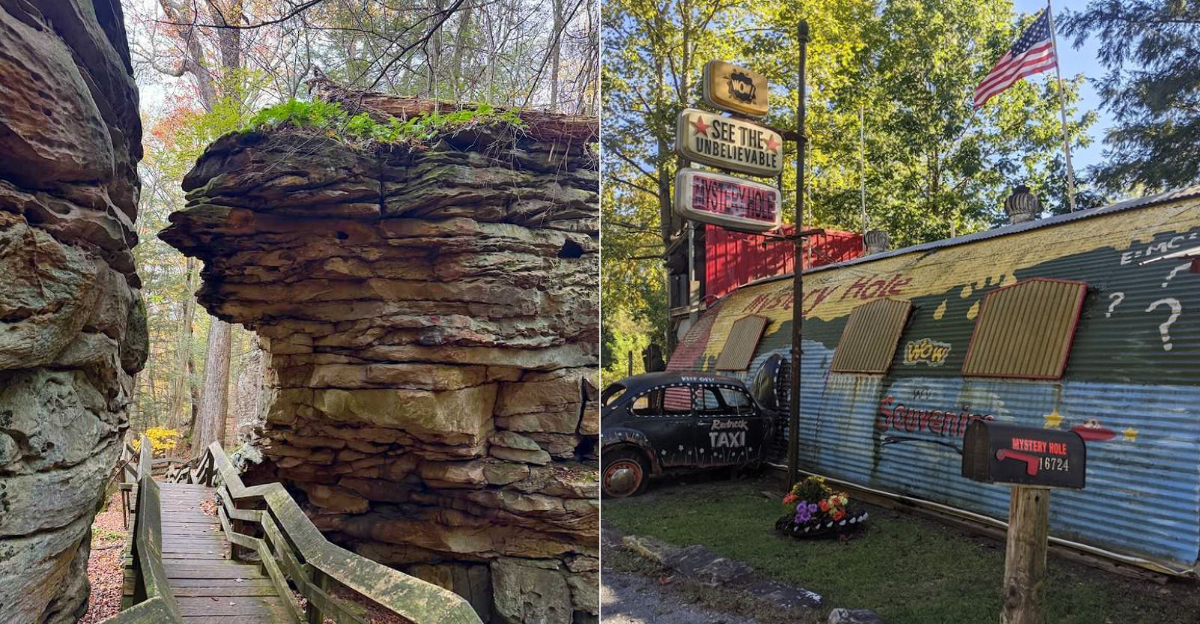
If a forest and a forgotten city had a geological love child, it would look exactly like Beartown State Park. This 110-acre natural wonder in Renick, West Virginia, is unlike anything else in the state, and that is saying something in a place already packed with surprises.
Located along Beartown Rd, Renick, the park is famous for its extraordinary Pottsville Sandstone formations shaped during the Pennsylvanian Age.
Natural faulting and millions of years of erosion have created a labyrinth of massive boulders, dramatic overhanging cliffs, and deep crevices that locals call sunken streets.
From above, the crisscross pattern of those crevices genuinely resembles the layout of a small town, which is exactly how the name Beartown was born.
The other origin story involves black bears using the cave-like openings as winter dens, which honestly makes the name even better.
A beautifully constructed half-mile boardwalk winds through the formations, making the terrain accessible while preserving its wild character.
Here is a genuinely cool quirk: ice and snow can linger deep inside the crevices well into mid-summer, creating pockets of unexpected chill on warm days.
Beartown State Park is free to visit, easy to reach, and completely impossible to forget. Sometimes the most extraordinary places are the ones hiding in plain sight, waiting patiently for someone curious enough to find them.
8. Cathedral State Park
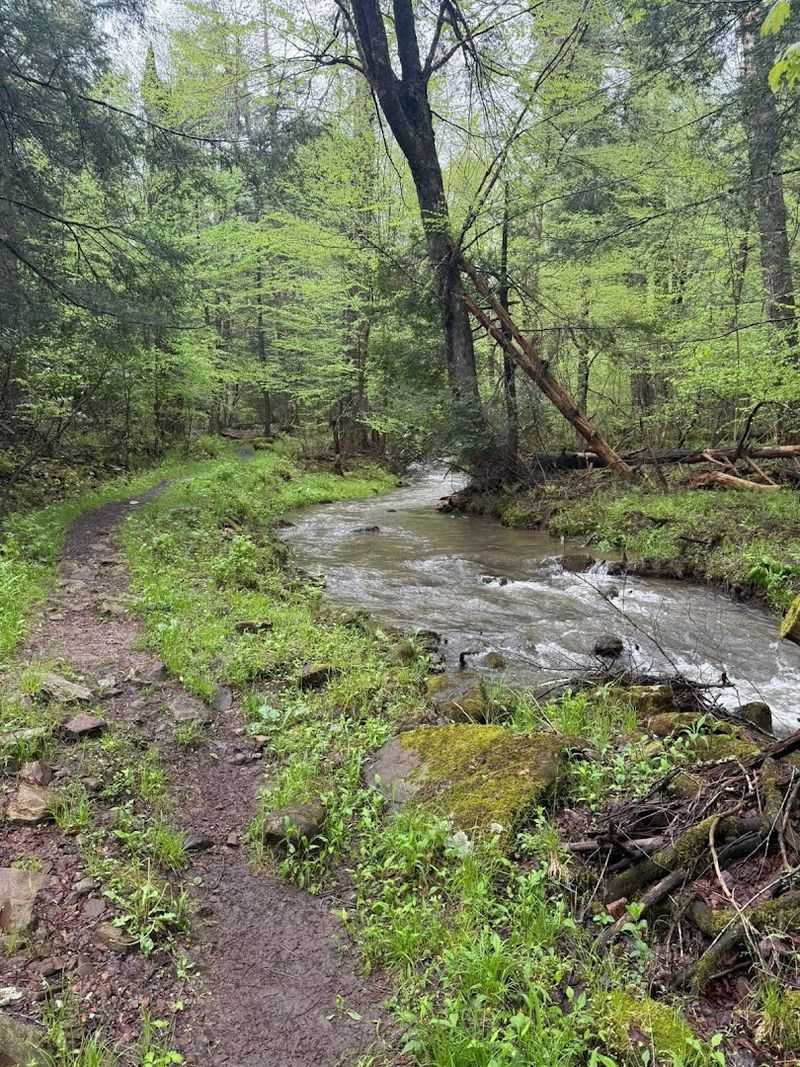
Walking into Cathedral State Park feels like stepping into a natural sanctuary that has been quietly standing guard for centuries.
The name is not poetic exaggeration. The towering old-growth hemlocks here genuinely inspire the kind of reverent silence you might feel inside a great cathedral.
Located at 12 Cathedral Park Dr, Aurora, this 133-acre park protects the largest virgin timber tract remaining in West Virginia.
Its ecological significance earned it National Natural Landmark designation in the mid-1960s, and one look at the trees explains why instantly.
These ancient hemlocks reach heights of up to 90 feet and boast circumferences of 16 feet, making them among the most impressive living things you will ever stand beside.
The forest floor is equally rich, hosting over 170 species of vascular flora including ferns, club mosses, and seasonal wildflowers.
Six miles of hiking trails wind through the park, giving you plenty of time to absorb the atmosphere at your own pace. Rhine Creek meanders through the forest with the kind of gentle persistence that feels almost meditative.
Cathedral State Park is not about adrenaline or dramatic vistas. It is about standing still in a place that has been standing for centuries and letting that perspective quietly rearrange your priorities.
Have you ever felt genuinely small in the most wonderful way possible? This park delivers that feeling every single time.
9. Blennerhassett Island Historical State Park
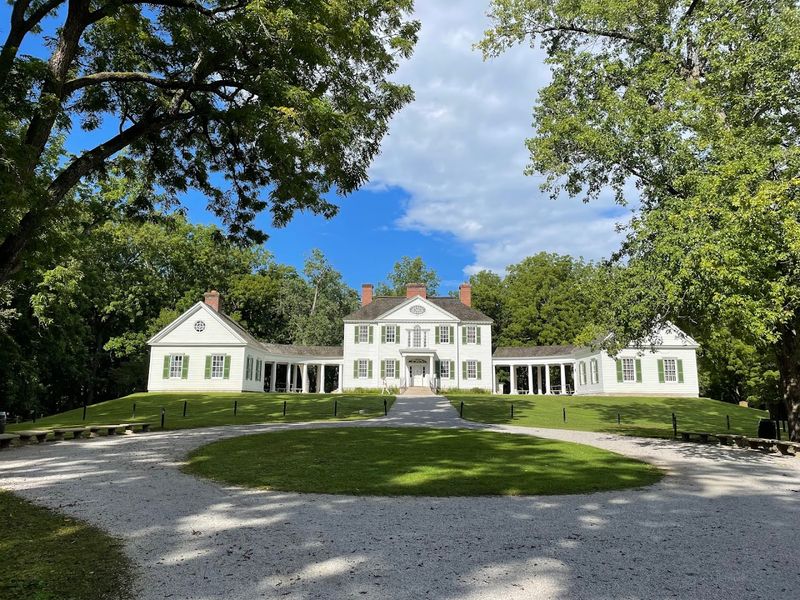
Getting to Blennerhassett Island Historical State Park already feels like an adventure before you even arrive. The only way to reach this Ohio River gem is by boarding a scenic sternwheeler riverboat, which departs from Point Park in Parkersburg.
The island itself sits near Parkersburg, West Virginia, and the museum that sets the stage for your visit is located at 137 Juliana St, Parkersburg, WV.
Once on the island, a stunning replica of a Palladian mansion awaits. The original estate was built in the late 18th century by Irish aristocrats Harman and Margaret Blennerhassett and was celebrated as the most beautiful home west of the Alleghenies.
The replica, constructed on the original foundations in the 1980s and completed in 1991, brings that grandeur back to life with impressive detail.
The island gained national intrigue in 1805 when it became the alleged headquarters for Aaron Burr’s military expedition, adding a layer of political drama to its already rich story.
Horse-drawn carriage rides let you explore the grounds at a leisurely pace, while the restored 1802 Putnam-Houser House offers another historical touchstone.
The island is also a significant Native American archaeological site, with artifacts pointing to human activity stretching back 13,000 years.
Blennerhassett Island is a place where history, beauty, and genuine mystery converge on a single stretch of river, and that combination is simply irresistible.