
This California Road Leads To One Of The Most Unexpected Places In America
Some roads lead to famous cities. Others end at breathtaking beaches.
But one lonely stretch of pavement in California takes you somewhere with a name so strange it sounds like someone fell asleep on the keyboard.
Welcome to the journey toward one of America’s most unexpected destinations.
Surrounded by the stark beauty of the desert, this hidden spot feels equal parts science experiment, movie set, and forgotten oasis. It’s the kind of place that makes you wonder, “How did this end up out here?”
Blink, and you might miss the turn. Follow the road, though, and you’ll discover that the real adventure isn’t just where you’re going.
It’s realizing that some of the country’s most fascinating places are found where almost nobody thinks to look.
The Name That Stops You Cold
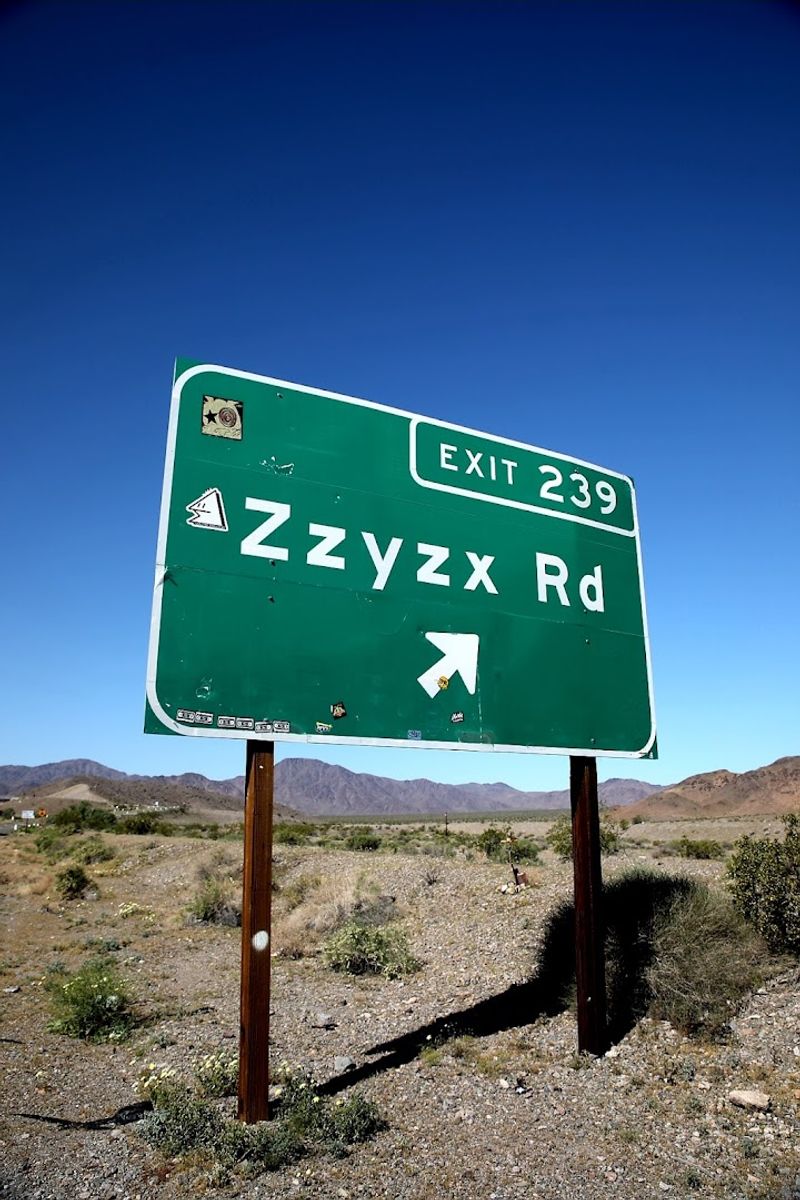
Somewhere between a typo and a stroke of genius, the name Zzyzx was born. Curtis Howe Springer coined it with a very specific goal in mind: he wanted it to be the last word in the English language.
Mission accomplished, because it is now officially recognized as the lexicographically last place name approved by the U.S. Board on Geographic Names.
That is one seriously committed branding move.
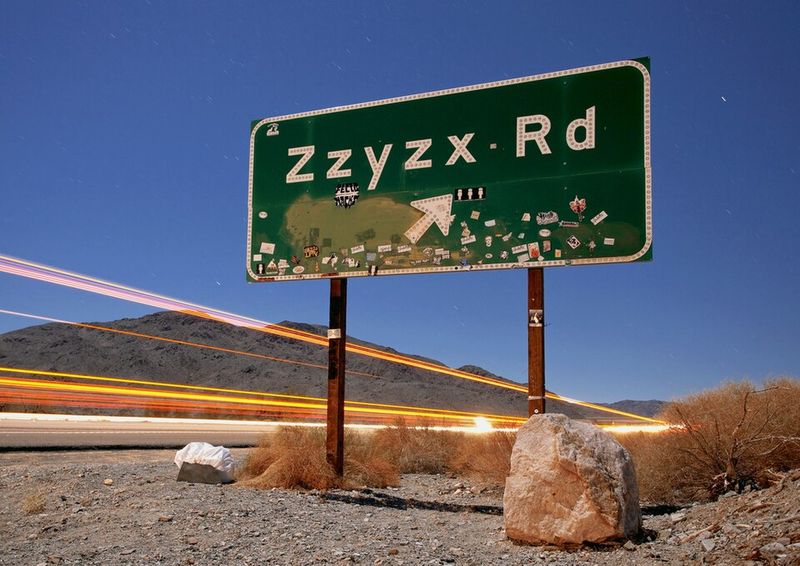
Pronounced “Zy-zix,” the name trips up almost everyone on the first try. The highway signage for Zzyzx Road has become one of the most photographed exit signs in America.
Travelers on I-15 slam their brakes, grab their phones, and snap a photo before they even know what the place actually is. The name alone does all the marketing.
There is something almost poetic about a road that makes you stop and question reality before you even turn off the highway. It sets the tone perfectly for everything that follows.
Zzyzx is not just a destination; it is a conversation starter, a trivia night winner, and proof that sometimes the most unexpected names lead to the most unforgettable places.
A Mirage Made Real
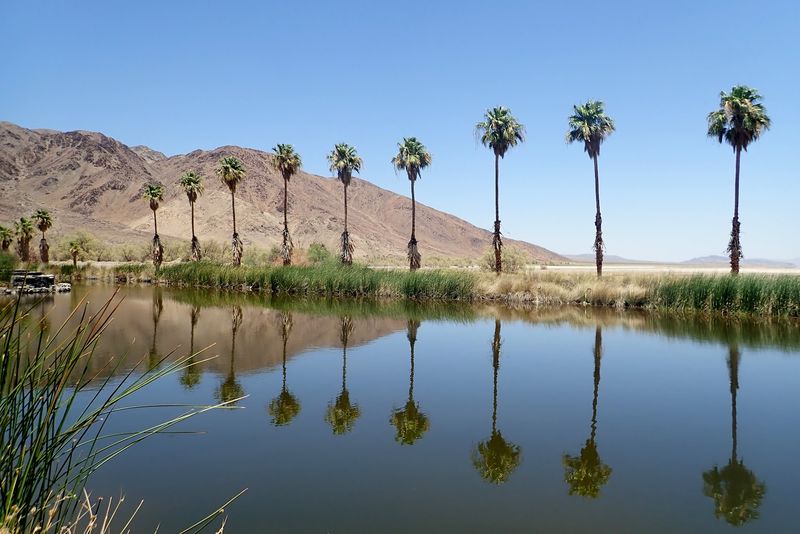
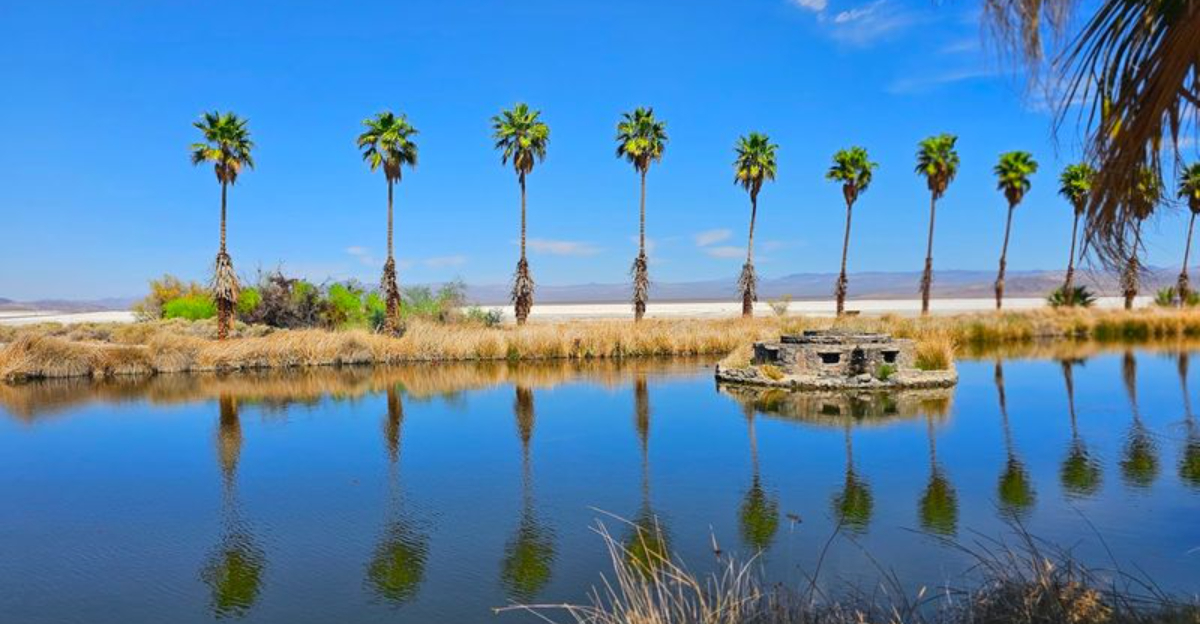
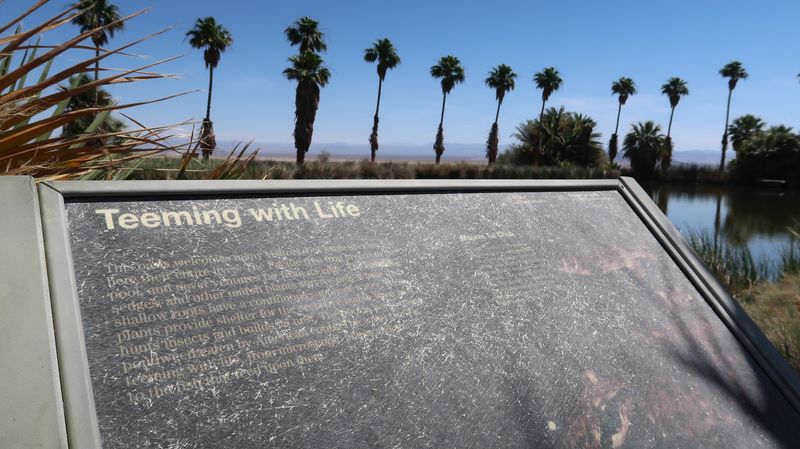
Standing at the edge of a shimmering lake surrounded by palm trees, deep in the Mojave Desert, feels like your GPS glitched and dropped you somewhere tropical. But this is Lake Tuendae at 49441 Zzyzx Rd, Baker, California 92309, and it is entirely, wonderfully real.
The whole oasis was dreamed up by Curtis Howe Springer back in 1944, when he filed mining claims on roughly 12,000 acres of federal land to build his Zzyzx Mineral Springs and Health Resort.
Springer constructed a castle, a dining hall, and even an airstrip out here in the middle of nowhere. He marketed hot springs, though the mineral baths were actually heated by a boiler rather than natural thermal springs.
It was theatrical, ambitious, and honestly kind of brilliant in a deeply chaotic way. The resort operated for three full decades before the Bureau of Land Management shut it down in 1974.
What remains today is a landscape that feels equal parts surreal and serene.
The palm trees still sway, the lake still glitters, and the whole scene still has that “am I really seeing this?” quality that Springer probably intended all along. Some visions are just too stubborn to disappear completely.
The King Of Quacks And His Desert Kingdom
Curtis Howe Springer wore many hats: radio evangelist, self-proclaimed doctor, and full-time showman. The American Medical Association gave him the unofficial title of “King of Quacks,” which, honestly, sounds like a character straight out of a Wild West comic book.
Springer only completed school through the ninth grade, but his talent for persuasion was absolutely graduate-level.
His so-called miracle cures included products with names like “Antediluvian Herb Tea” and “Hollywood Pep Cocktail.”
These were reportedly made from Soda Lake crust and Epsom salts, which is a recipe that no nutritionist anywhere would endorse. He sold these concoctions via his radio broadcasts, building a loyal following of believers who made the trek out to his desert resort.
For thirty years, Springer ran his operation with the energy of a man who genuinely believed every word he said.
Then in 1974, the Bureau of Land Management gave him just 36 hours to pack up and leave for squatting on government land. The curtain dropped fast on his desert performance.
But the stage he built? That stuck around to tell the whole wild story.
The Desert Jewel You Never Expected
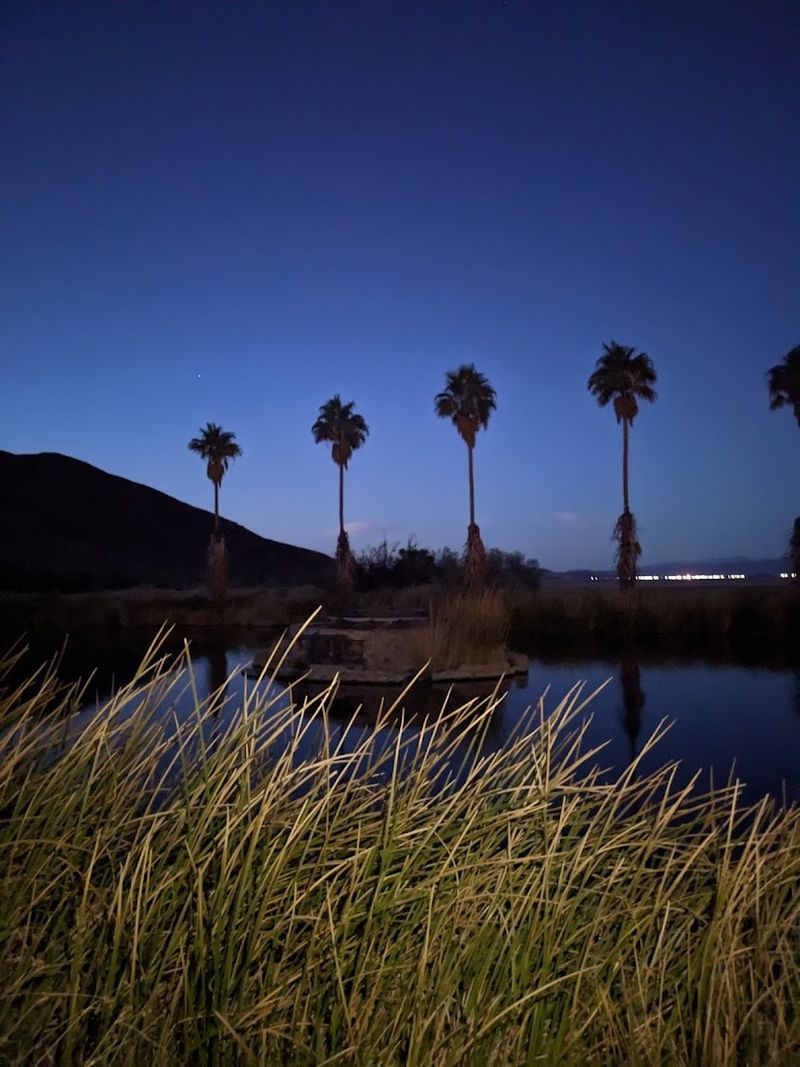
Not every lake earns the word “jewel,” but Lake Tuendae absolutely does. Excavated around 1955 as a centerpiece of Springer’s health resort, this rectangular man-made pond covers 1.4 acres and reaches a maximum depth of just 3.3 feet.
It sounds modest on paper, but standing next to it in the middle of the Mojave Desert? The effect is nothing short of magical.
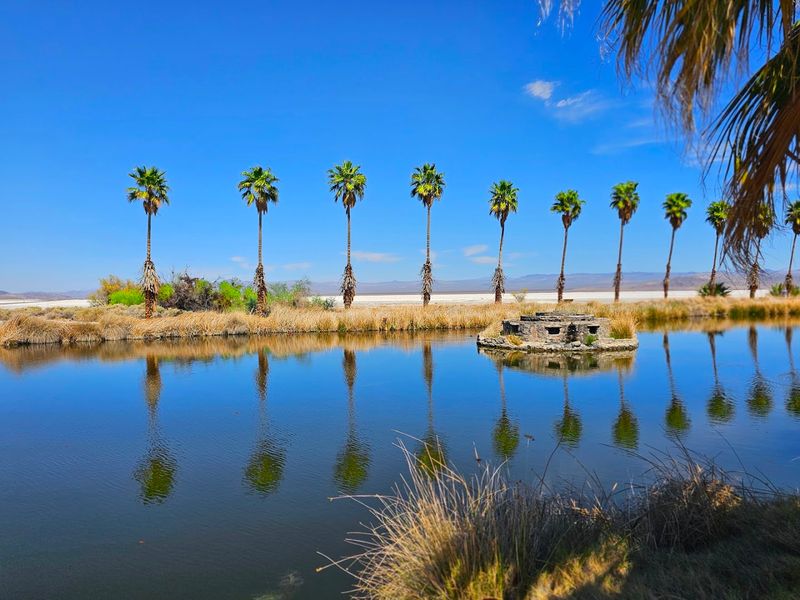
Mexican fan palms line the edges in evenly spaced rows, giving the whole scene a deliberately designed, almost cinematic quality.
A fountain, once called the “Enrico Caruso Fountain” after its designer, still sits in the center of the lake. The water catches the desert light in a way that makes everything around it look softer, greener, and wildly out of place in the best possible sense.
What was once a luxury feature of a questionable health spa has become a genuinely important ecological space.
The lake supports rare wildlife, attracts migratory birds, and offers visitors a quiet place to breathe and take it all in. Lake Tuendae proves that even the most unlikely origins can lead to something truly beautiful and worth protecting.
A Lifeline For The Rarest Fish You Have Never Heard Of
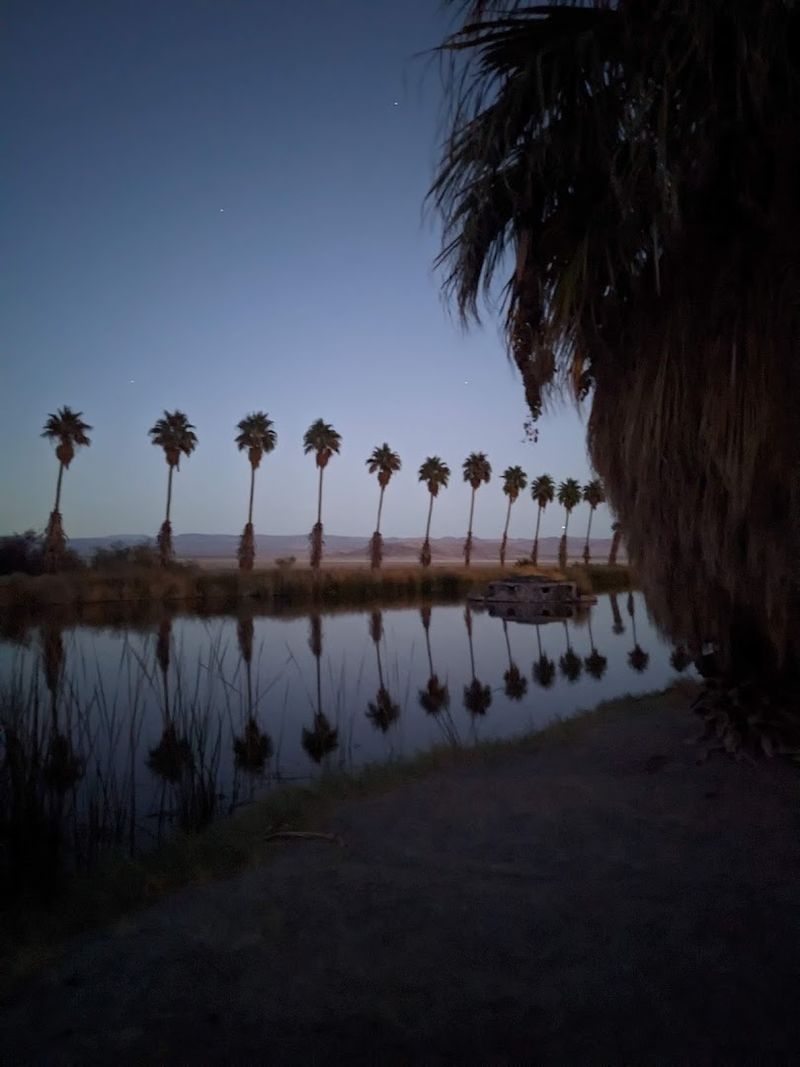
Meet the Mohave tui chub, a small fish with a very big importance. Lake Tuendae is one of only three places on Earth where this endangered species actually lives.
The Mohave tui chub was introduced to the lake from MC Spring around 1955, and it has been calling these shallow, palm-shaded waters home ever since. For a fish that most people have never heard of, it carries an enormous ecological weight.
Beyond the rare fish, the lake and surrounding wetland area support a surprising range of wildlife year-round. American coots make the lake their home, paddling around with a casual confidence that suggests they know this place is special.
The oasis functions as a critical “migrant trap,” offering a much-needed resting point for up to 185 species of migratory birds passing through the desert.
Birdwatchers make dedicated pilgrimages here during spring and fall migration seasons, hoping to spot rare species that would never typically appear in a desert landscape.
The combination of water, shade, and shelter creates a biological hotspot in one of the harshest environments in North America. Zzyzx may look remote, but for wildlife, it is a five-star stopover.
From Health Spa To University Field Station
After Springer was escorted off the property in 1974, the land sat quietly for a couple of years before finding a far more purposeful identity.
In 1976, California State University stepped in and transformed the site into the Desert Studies Center, a dedicated field station for research, education, and environmental exploration. The eccentric health resort had officially graduated to academia.
Today, students and researchers from around the world come to the DSC to study the Mojave Desert’s ecology, geology, climate, biodiversity, and archaeology.
The center offers dormitories, classrooms, and laboratories, making it a fully functional base for serious scientific fieldwork. Field courses and workshops run regularly, turning the desert into one giant outdoor classroom with no walls and infinite lessons.
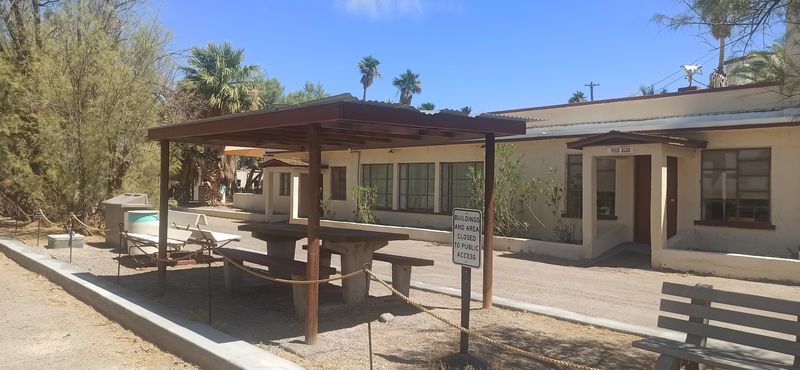
Visitors are welcome to explore Lake Tuendae and the picnic areas, though many of the original resort buildings are now used by the center and remain off-limits to the general public.
The transformation from quackery to credible science is genuinely one of the most satisfying plot twists in California history. Springer wanted Zzyzx to be a place of healing; in a way, he accidentally got it right.
Ancient Waters, Ancient Stories
Long before Springer ever pointed his radio microphone toward the desert, this land already had thousands of years of history soaked into its soil.
The area was originally known as Soda Springs, a natural spring system that served as a vital water source for the Mohave and Chemehuevi peoples for generations. This was not an empty stretch of desert; it was a living, breathing gathering place.
As Western exploration pushed eastward, the springs became a campsite for early explorers and the U.S. Army alike.
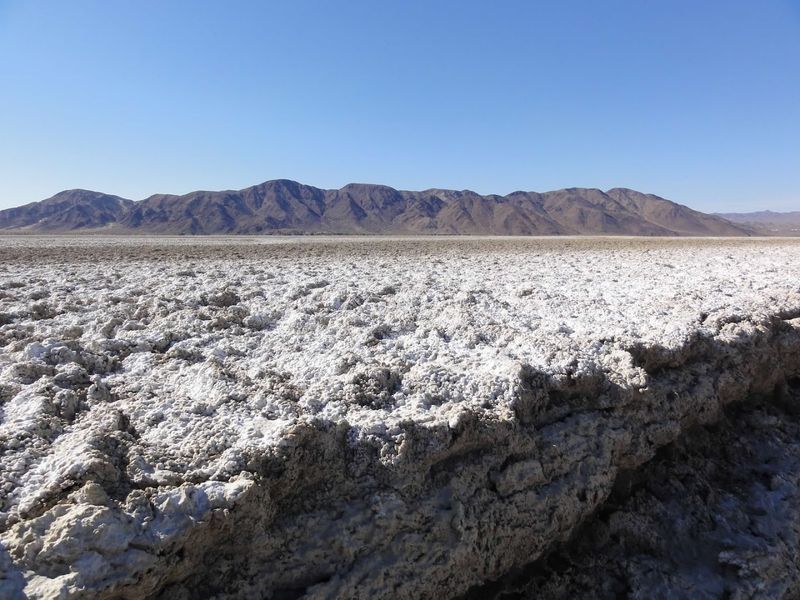
The location made perfect geographic sense: it sits at the edge of Soda Dry Lake, a vast salt flat that stretches for miles across the desert floor.
Soda Lake is the terminal basin for the Mojave River, meaning all that river water eventually finds its way here, soaking into the earth or evaporating under the relentless sun.
Today the area forms part of the Mojave National Preserve, a protected landscape that honors both its natural and cultural significance.
Standing at the edge of that salt flat, with the silence pressing in from every direction, you feel the full weight of everything this place has witnessed. History here is not on a plaque; it is in the ground beneath your feet.
The Crumbling Grandeur That Still Stands
There is something deeply cinematic about a crumbling castle in the middle of the Mojave Desert. The remnants of Springer’s resort still dot the landscape around Zzyzx, offering a ghostly glimpse into what was once a surprisingly ambitious operation.
Parts of the original “Castle,” the old Pool House, and the base of the Caruso Fountain still stand, weathered but stubbornly present.
The palm trees Springer planted decades ago continue to thrive, their fronds rustling in the dry desert breeze like they have not gotten the memo that the party is over.
The old main entryway, once grandly called the “Boulevard of Dreams,” now leads past these faded structures with a quiet, melancholy charm. The desert is slowly, patiently reclaiming what was always its own.
Walking through this space feels like flipping through a history book that someone left out in the sun too long.
The pages are faded, but the story is still completely readable. Interestingly, the site’s relatively preserved condition is partly thanks to Springer’s rapid eviction, which left little time for things to be stripped or sold.
Sometimes a quick exit saves the best details for future explorers.
Why This Desert Detour Deserves A Spot On Your Road Trip List
Most highway exits lead to gas stations and fast food. Zzyzx Road leads to an endangered fish, a man-made desert lake, the ruins of a quack health spa, and one of the most fascinating research centers in the American Southwest.
The math on that trade-off is pretty obvious. Pulling off I-15 here is one of the best spontaneous decisions a road tripper can make.
A gentle quarter-mile stroll around Lake Tuendae is all it takes to feel genuinely refreshed and surprised. Photographers find incredible opportunities around every corner, from the reflections of palm trees in the still water to the dramatic contrast of green oasis against bare desert mountains.
Birdwatchers, especially during spring and fall migration, can tick rare species off their lists without even breaking a sweat.
Zzyzx is a living classroom, a nature sanctuary, and a historical curiosity all wrapped up in one impossibly named package.
It reminds you that the most rewarding experiences on a road trip are rarely the planned ones. So next time that sign appears in your windshield, do yourself a favor and take the exit.
What are you waiting for?