
The 10 Most Underrated Places To Visit In Connecticut
Connecticut rarely steals the travel spotlight. And that’s exactly why it’s full of surprises.
While visitors rush toward bigger-name destinations, some of the state’s most fascinating places quietly fly under the radar.
Where else can you wander through an artist’s inspiring countryside retreat, stand where dinosaurs once roamed, admire a storybook-pink Victorian cottage, and explore a museum dedicated entirely to puppets, all in one state?
It sounds like someone shuffled together four completely different vacations, yet that’s part of Connecticut’s charm.
Around every corner is something delightfully unexpected, proving that the best travel experiences aren’t always the ones plastered across Instagram.
These underrated destinations showcase a side of Connecticut that’s creative, quirky, historic, and well worth discovering before everyone else catches on.
1. Weir Farm National Historical Park
America has exactly one national park dedicated solely to painting, and it is tucked quietly into the Connecticut countryside.
Weir Farm National Historical Park, at 735 Nod Hill Road, Wilton, CT 06897, celebrates the world of American Impressionist painter J. Alden Weir.
He purchased this 153-acre farm back in 1882, and it quickly became a creative sanctuary for some of the biggest artistic names of the era.
Artists like Childe Hassam and John Singer Sargent roamed these very grounds, finding inspiration in the rolling hills and stone walls.
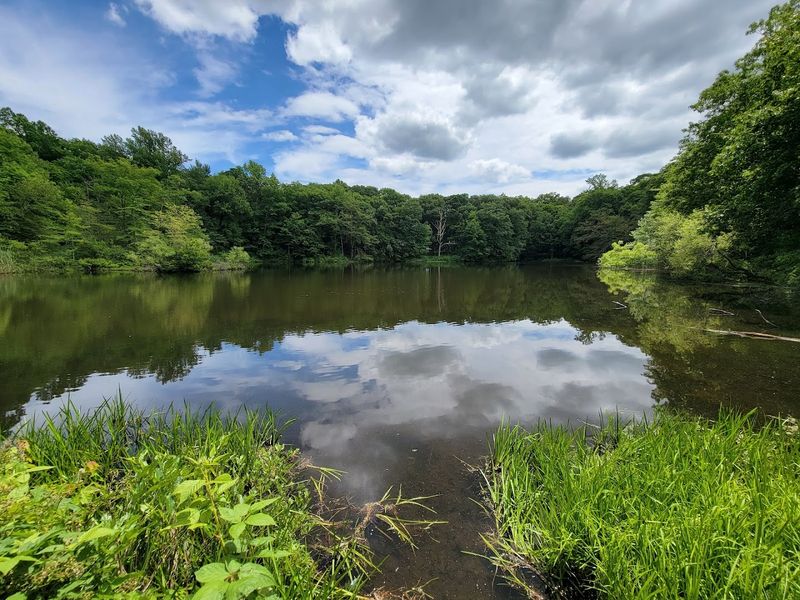
The park preserves the Weir House, two historic studios, barns, gardens, and the gorgeous Weir Pond. One studio has been restored to its circa-1940 appearance, complete with original art supplies still sitting exactly where they were left.
What makes this place truly special is its living, breathing creative energy. The park hosts an ongoing artist-in-residence program, and visitors can join the “Take Part in Art” initiative to create their own masterpieces on site.
Walking these trails feels less like visiting a museum and more like stepping into a painting yourself. Over 120 years of artistic inspiration cannot be wrong.
2. Hopyard State Park
Few place names in Connecticut spark curiosity quite like Hopyard, and the park absolutely delivers on that dramatic promise.
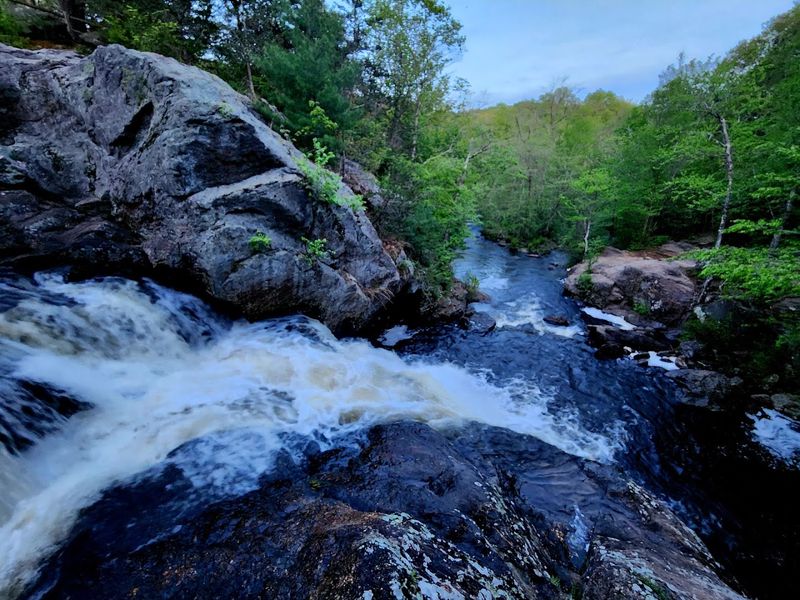
Located at 366 Hopyard Road, East Haddam, CT 06423, this geological wonderland centers around Chapman Falls, where the Eightmile River drops roughly 60 feet over a dramatic series of cascades. It is the kind of waterfall that makes you stop mid-sentence and just stare.
The real conversation starters here are the perfectly cylindrical potholes carved into the bedrock near the base of the falls.
Local legend claims the devil himself burned these holes with his hooves after getting his tail wet. Geologists have a far less dramatic explanation involving swirling stones and erosion, but honestly, the legend is more fun.
Beyond the falls, hiking trails wind through glacially sculpted valleys, exposing fascinating rock types like gneiss and schist along the way. The scenery shifts with every turn, keeping the experience fresh from start to finish.
The “Hopyard” part of the name may trace back to someone who once grew hops in a nearby clearing, adding yet another quirky layer to an already fascinating spot. Come for the falls, stay for the geological storytelling.
3. Old New-Gate Prison And Copper Mine
Somewhere between a history lesson and an adventure story, Old New-Gate Prison And Copper Mine sits in a category entirely its own.
At 115 Newgate Road, East Granby, CT 06026, this site holds two extraordinary distinctions: it was America’s first chartered copper mine in 1707, and later became the nation’s first state prison starting in 1773. That is a lot of firsts for one patch of Connecticut soil.
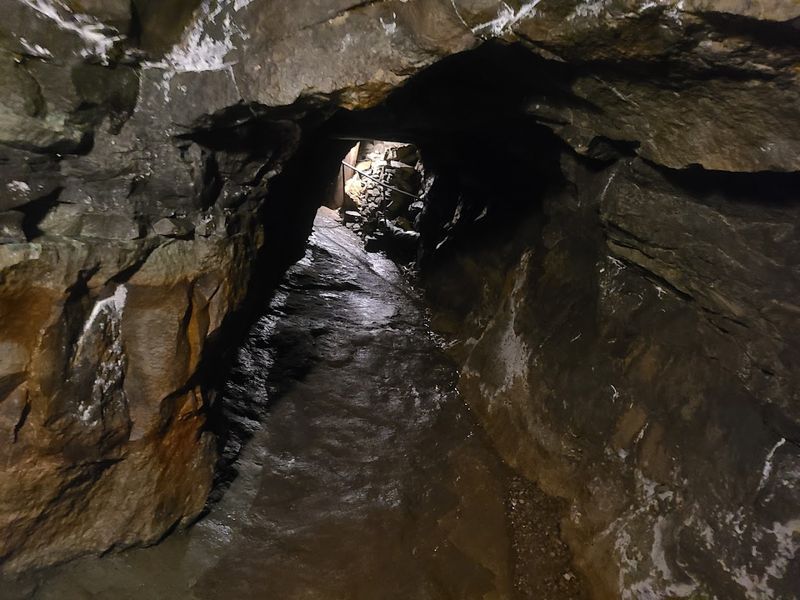
The concept was simple and rather grim. Prisoners were lowered into the abandoned mine shaft, about 35 feet underground, where perpetual darkness and damp conditions made escape seem impossible.
During the American Revolution, the population included Loyalists and British prisoners of war, making it one of the more politically charged lockups in early American history.
A four-story cell block was added in 1824, but overcrowding remained a persistent challenge right up until the prison closed in 1827.
Today, the site operates as a history museum with a visitor center, preserved ruins, and guided tours into the actual mine.
Walking into that shaft is genuinely chilling in the best possible way. History rarely feels this immersive, and this place earns its spot on every curious traveler’s radar.
4. Dinosaur State Park
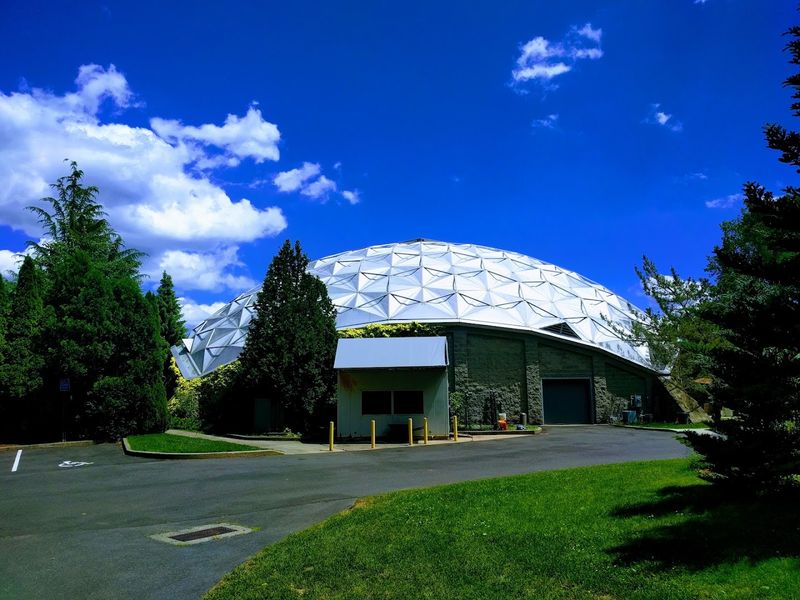
In 1966, a bulldozer operator in Rocky Hill, Connecticut, made one of the most jaw-dropping accidental discoveries in American paleontology.
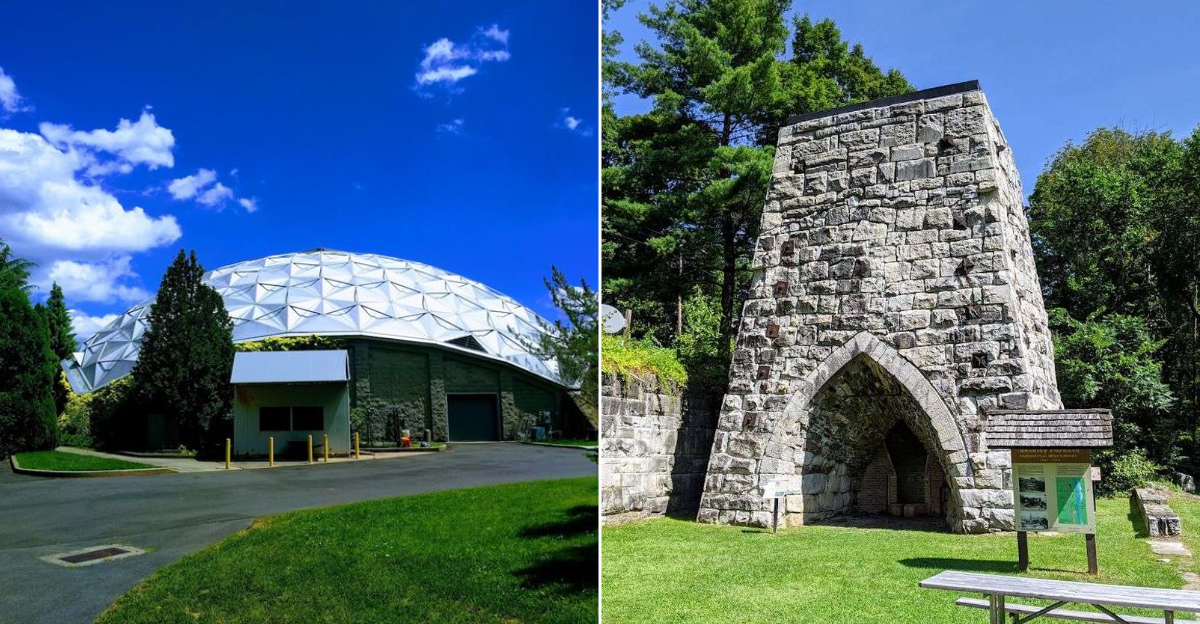
What he uncovered was a massive prehistoric trackway, now protected inside a 55,000-square-foot geodesic dome at Dinosaur State Park, 400 West Street, Rocky Hill, CT 06067.
The park opened in 1968, and its 7-acre trackway became a Registered National Landmark that same year.
Around 500 fossilized footprints are visible inside the dome, identified as Eubrontes tracks, believed to belong to a carnivorous theropod dinosaur similar to a Dilophosaurus.
These creatures roamed Connecticut more than 200 million years ago during the Early Jurassic period. An additional 1,500 tracks remain carefully reburied for future scientific study, which somehow makes the whole thing even more exciting.
Life-sized dioramas inside the dome recreate the lush, strange world of the Mesozoic era with impressive detail. Outside, an arboretum cultivates plant species that actually flourished during that prehistoric period, making the entire grounds feel like a living time capsule.
Nature trails and interactive exhibits round out the experience for visitors of all curiosity levels. Dinosaur State Park is proof that Connecticut’s prehistoric credentials are absolutely unmatched.
5. Florence Griswold Museum
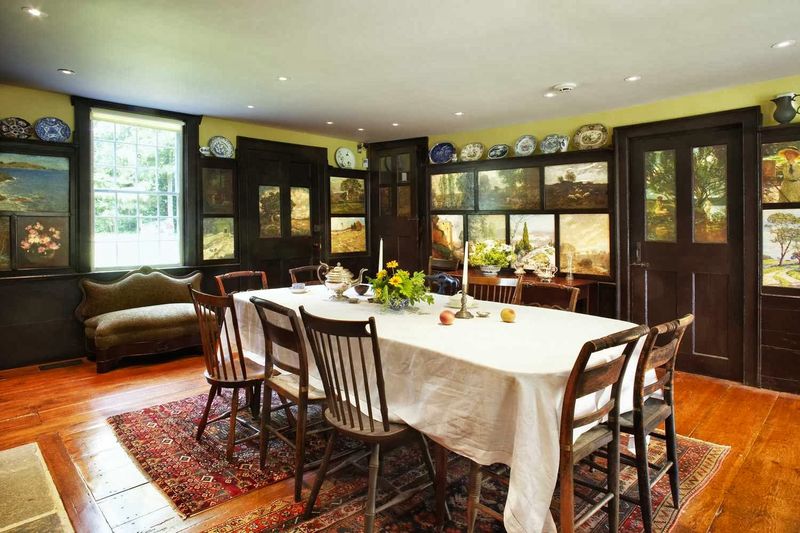
Picture a grand old house where artists paid their room and board by painting directly on the walls. That is not a quirky hypothetical.
That is the very real and wonderful story of the Florence Griswold Museum at 96 Lyme Street, Old Lyme, CT 06371. Florence Griswold welcomed over 135 American artists into her home between 1899 and the 1930s, making it the beating heart of the Old Lyme Art Colony.
Names like Childe Hassam and Willard Metcalf passed through these rooms, leaving behind more than just memories.
Over 43 painted panels still adorn the interior walls and doors, turning the house itself into a living, breathing gallery.
The colony played a pivotal role in shaping American Impressionism as a movement, which is a pretty significant legacy for a house in a small Connecticut town.
The museum’s 12-acre grounds include contemporary galleries, historic buildings, picturesque gardens, and serene walking trails along the Lieutenant River.
A major gift in 2001 added 190 paintings and sculptures to the collection, expanding its scope from the 18th to mid-20th centuries.
The house remains beautifully furnished, creating an atmosphere that feels genuinely intimate rather than institutional. Art history has rarely felt this personal or this quietly extraordinary.
6. Hill-Stead Museum
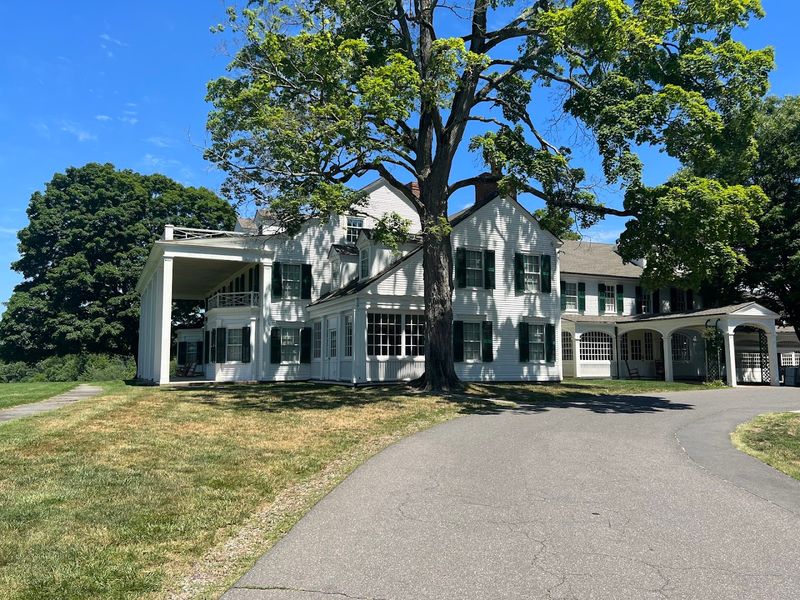
Not many houses can claim to contain genuine Monet paintings hanging in their original rooms, exactly where they were first placed over a century ago.
Hill-Stead Museum at 35 Mountain Road, Farmington, CT 06032 is that rare and remarkable exception.
This stunning 152-acre Colonial Revival estate was designed between 1898 and 1901 by Theodate Pope Riddle, one of America’s pioneering female architects, in collaboration with the celebrated firm of McKim, Mead and White.
The French Impressionist collection inside is genuinely extraordinary. Works by Manet, Monet, and Degas are displayed in an intimate domestic setting that feels nothing like a traditional museum.
Seeing a Degas pastel above a fireplace in a lived-in parlor is an experience that no conventional gallery can replicate.
Outside, Beatrix Farrand designed the exquisite Sunken Garden, which has been lovingly restored to its original splendor.
Blooms in shades of blue, pink, salmon, and white mirror the palette of the Impressionist paintings inside the house, creating a beautiful visual conversation between art and nature.
Miles of stone walls, open meadows, a tranquil pond, and winding trails complete the estate. Designated a National Historic Landmark in 1991, Hill-Stead rewards every visitor who makes the trip.
7. Roseland Cottage
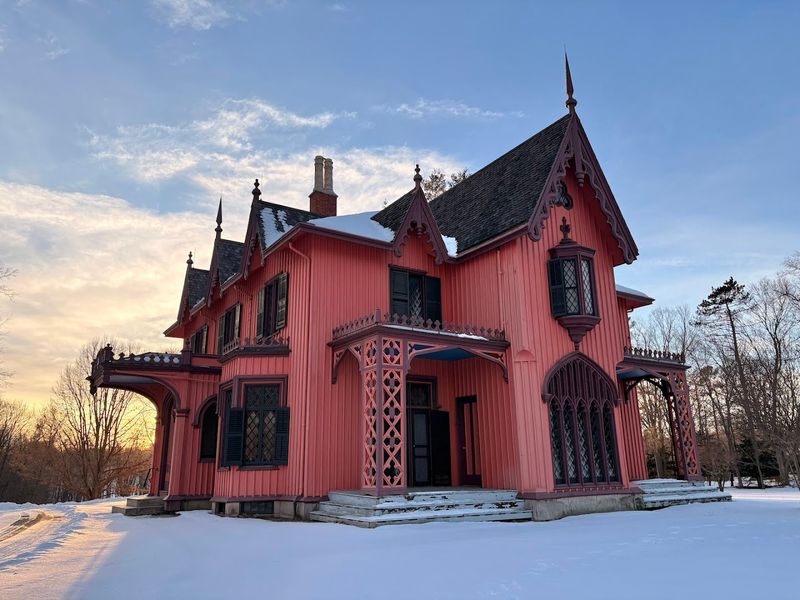
Coral pink is not a color you expect to encounter on a historic New England estate, which is precisely why Roseland Cottage stops people in their tracks.
Built in 1846 at 556 Route 169, Woodstock, CT 06281, this Gothic Revival gem served as the summer retreat for Henry Chandler Bowen and his family. Its vivid exterior earned it the affectionate local nickname “The Pink House,” and honestly, the name fits perfectly.
Considered one of the nation’s best-preserved examples of domestic Gothic Revival architecture, the interior is equally impressive.
Elaborate wall coverings, intricately patterned carpets, and exquisite stained glass have all survived virtually intact from the Victorian era, creating an atmosphere of remarkable authenticity.
Walking through these rooms feels like stepping directly into a 19th-century summer afternoon.
The grounds hold a few genuine surprises.
A stunning boxwood parterre garden features over 4,000 annuals arranged in their original 1850 patterns, maintained with meticulous care.
An outbuilding on the property houses the nation’s oldest surviving indoor bowling alley, which is a fact that never gets old.
Henry Bowen famously hosted Fourth of July celebrations here, entertaining four U.S. presidents along the way. Cared for today by Historic New England, Roseland Cottage is a true architectural treasure hiding in plain sight.
8. Beckley Furnace Industrial Monument
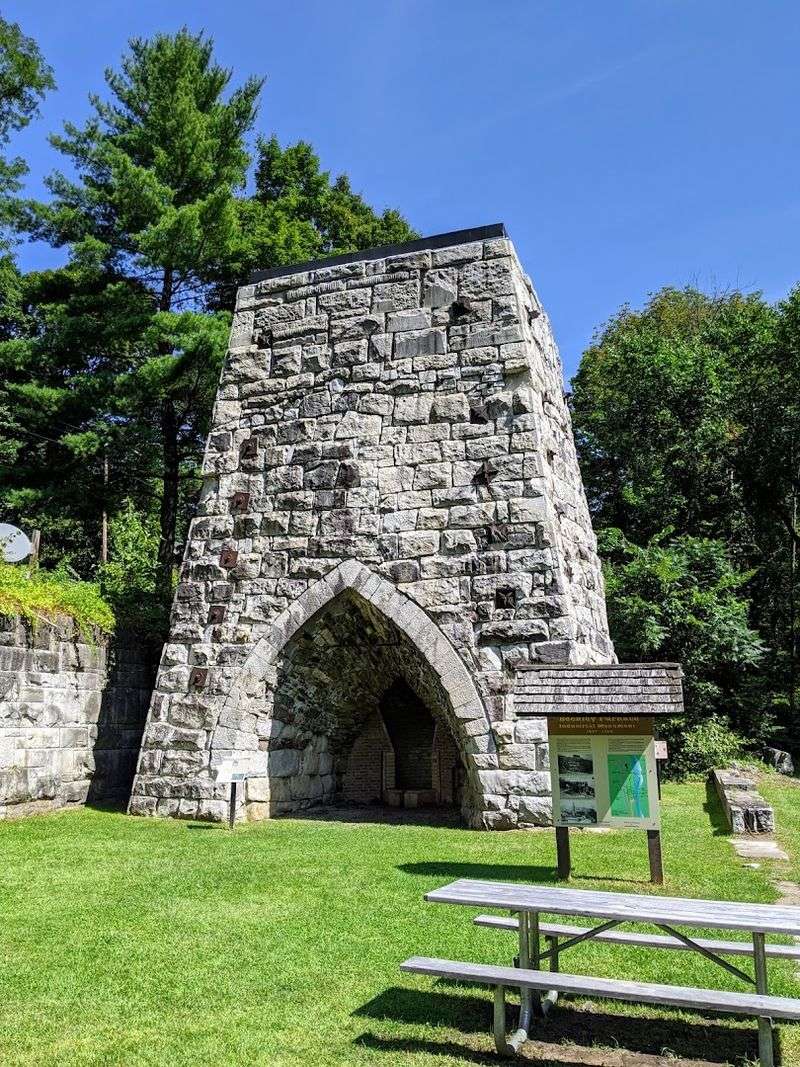
Connecticut’s industrial history is often overlooked in favor of its colonial past, but Beckley Furnace Industrial Monument makes a compelling case for a second look.
Sitting at 140 Lower Road, East Canaan, CT 06024, this imposing stone structure holds the distinction of being the last blast furnace to stop operating in all of New England, running continuously from 1847 until the winter of 1918 to 1919.
For over seven decades, it produced pig iron, a raw form of iron later refined into steel and wrought iron. Built from locally quarried marble, the furnace originally stood 32 feet high before being expanded to an impressive 40 feet.
Its iron output, particularly for railroad car wheels, earned a worldwide reputation for exceptional durability that extended far beyond New England’s borders.
In 1946, it was designated Connecticut’s only industrial state monument, and it was added to the National Register of Historic Places in 1978.
Today the site sits within a peaceful park along the Blackberry River, offering spots for picnicking, hiking, and fishing alongside informative signs that bring the iron industry’s story to life.
It is the kind of place where industrial history feels genuinely fascinating rather than dry. Beckley Furnace is a monument that absolutely earns its title.
9. New England Air Museum
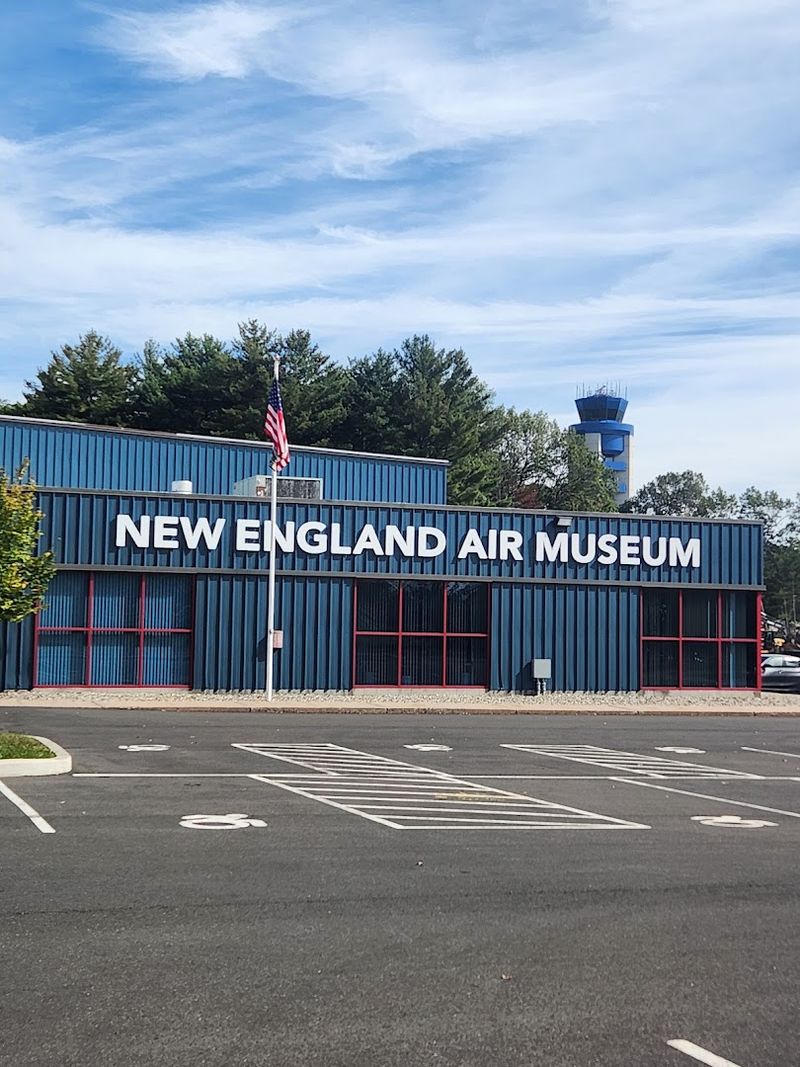
Over 100 aircraft under one roof sounds like a dream, and the New England Air Museum at 36 Perimeter Road, Windsor Locks, CT 06096 makes that dream very real.
The largest aerospace museum in all of New England, this place houses an extraordinary collection of planes, engines, instruments, and aviation artifacts spread across three expansive display hangars with additional outdoor exhibition space.
The collection spans the full arc of human flight, from early experimental machines to supersonic jets.
Among the standout pieces are the Silas Brooks balloon basket, recognized as the oldest surviving American-built aircraft, and the one-of-a-kind Sikorsky VS-44A flying boat.
A meticulously restored Goodyear blimp control car rounds out some of the more unexpected highlights on display.
Exhibits explore the history of Sikorsky Aircraft, early French aviation pioneers, the inspiring legacy of the Tuskegee Airmen, and the contributions of New England women in aviation.
Computer-based flight simulators offer a hands-on experience for those who want to feel what it is like behind the controls.
A substantial library filled with aviation books, periodicals, and historic photographs supports deeper exploration for the genuinely curious.
The New England Air Museum is a full-day experience that consistently delivers more than visitors expect.
10. Ballard Institute And Museum Of Puppetry

Puppets have a way of making adults feel like kids again, and the Ballard Institute And Museum Of Puppetry at 1 Royce Circle, Suite 101B, Storrs, CT 06268 leans into that magic with remarkable depth and creativity.
Operated by the University of Connecticut, this museum houses one of the three largest puppetry collections in the entire United States.
Over 3,500 puppets from across the globe call this place home.
The range is genuinely breathtaking. Intricate marionettes hang alongside expressive glove puppets, sophisticated rod puppets, ethereal shadow puppets, and dynamic body puppets representing traditions from dozens of countries.
The institute also holds the Puppeteers of America’s Audio-Visual Collection, the largest media archive dedicated to puppetry anywhere in the country. That is a staggering amount of puppet-related knowledge concentrated in one building.
Named for Frank W. Ballard, who founded UConn’s Puppet Arts Program, the very first college-level puppetry program in the nation, this museum carries a genuine sense of pioneering purpose.
Puppetry festivals, dramatic performances, special exhibits, and hands-on puppet-making workshops keep the calendar lively year-round. The Kay Janney Library and Archives offer over 2,500 books, scripts, and posters for those wanting to go even deeper.
Have you ever considered that puppetry might be Connecticut’s most surprisingly rich art form?