
This Quirky Washington Town Once Printed Money On Wood And That Is Only The Beginning
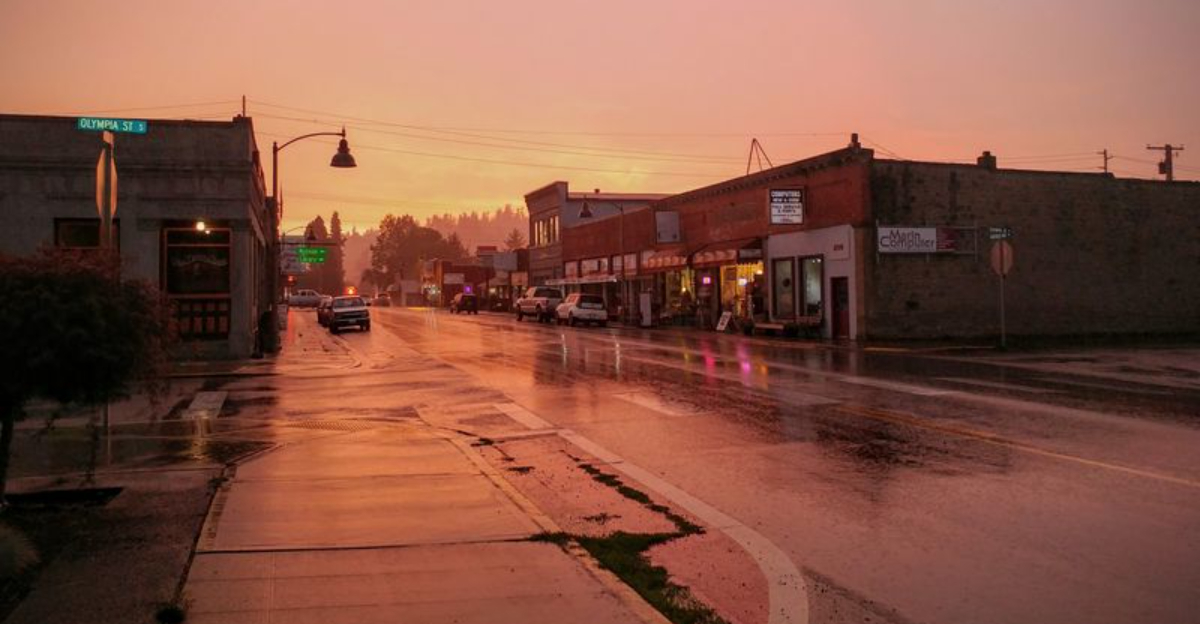
You know I’ll drive hours out of my way just to see a weird roadside attraction or hear a tall tale. Recently, I found myself wandering through a quiet corner of Washington, only to discover a town that marches to the beat of its own drum.
Imagine a place where, decades ago, the locals got tired of a coin shortage and decided to start using local timber as legal tender.
I couldn’t help but laugh as I held a “wooden nickel” in my hands, marveling at the audacity of it all. But honestly? The wooden money is just the beginning.
Stick with me as we peel back the layers of this fascinating, slightly off-kilter community that refuses to be boring. I visited expecting a quiet pit stop and left completely charmed by how much personality this town packs into just a few square miles.
The Remarkable Story
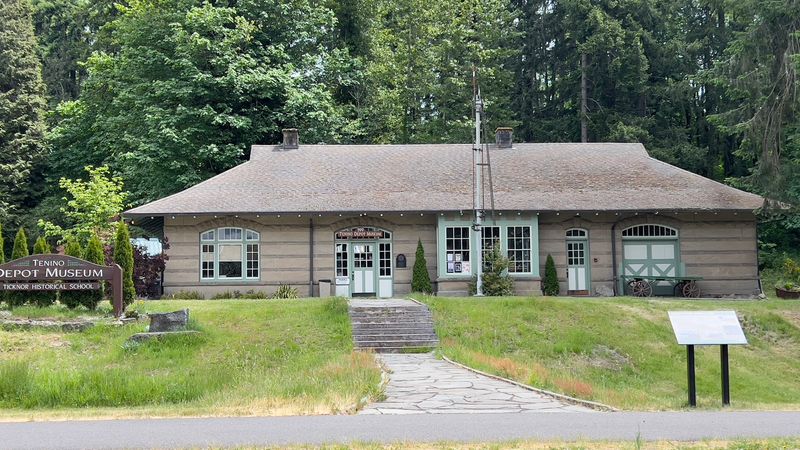
Back in December 1931, the Citizens Bank of Tenino closed its doors, leaving local residents suddenly cut off from their savings.
Rather than watch the community spiral, a resourceful man named Don Major, Secretary of the Chamber of Commerce and publisher of the Tenino Independent newspaper, proposed something nobody had tried before: printing local emergency currency on thin slices of spruce and cedar wood.
The Tenino Chamber of Commerce, backed by Major and two local doctors, issued somewhere between $10,308 and $11,000 worth of this wooden scrip between 1932 and 1933. The story captured attention globally and even landed in the Congressional Record.
Remarkably, only about $40 worth was ever redeemed, with most pieces becoming collector’s treasures.
The tradition got a modern revival in 2020 when then-Mayor Wayne Fournier used the same 1890 printing press to issue $25 wooden notes during the COVID-19 pandemic to support low-income residents.
Those contemporary notes are now featured at the Smithsonian’s National Museum of American History.
Downtown Sandstone Buildings
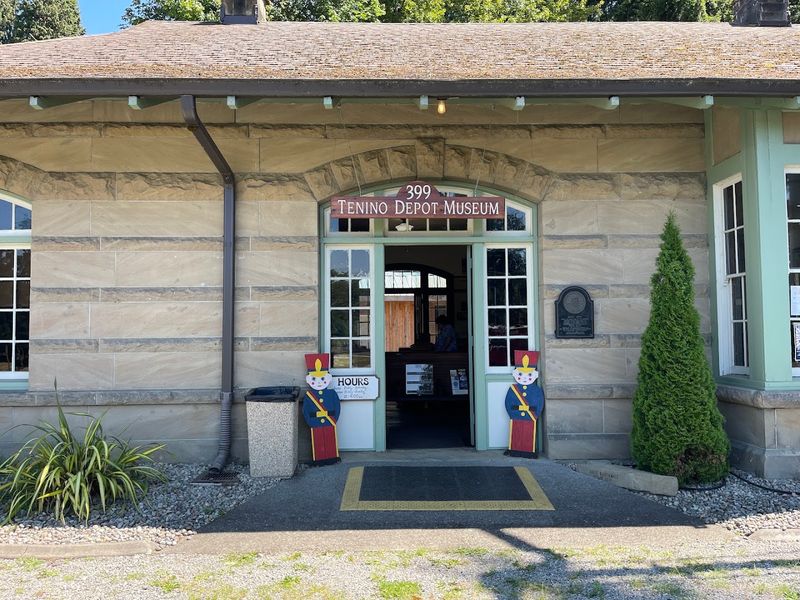
There is something deeply satisfying about walking down a street and realizing the buildings around you were carved right out of the earth beneath your feet.
Tenino’s downtown district is constructed almost entirely from locally quarried sandstone, and the entire area is listed on the National Register of Historic Places.
The warm, honey-colored stone gives every block a grounded, timeless quality that feels genuinely different from any other small town I have visited in Washington.
The self-guided Tenino Sandstone Walking Tour lets you move at your own pace through the historic district, reading about the craftsmen and quarry workers who shaped this place. You do not need a guide or a reservation, just comfortable shoes and a curious mind.
From the late 1800s through the early 1900s, Tenino’s quarries supplied stone for major construction projects across the Pacific Northwest, including rebuilding efforts in Seattle and San Francisco after their devastating fires.
Walking these streets, you feel the weight of that legacy in every block and corner.
The Tenino Depot Museum
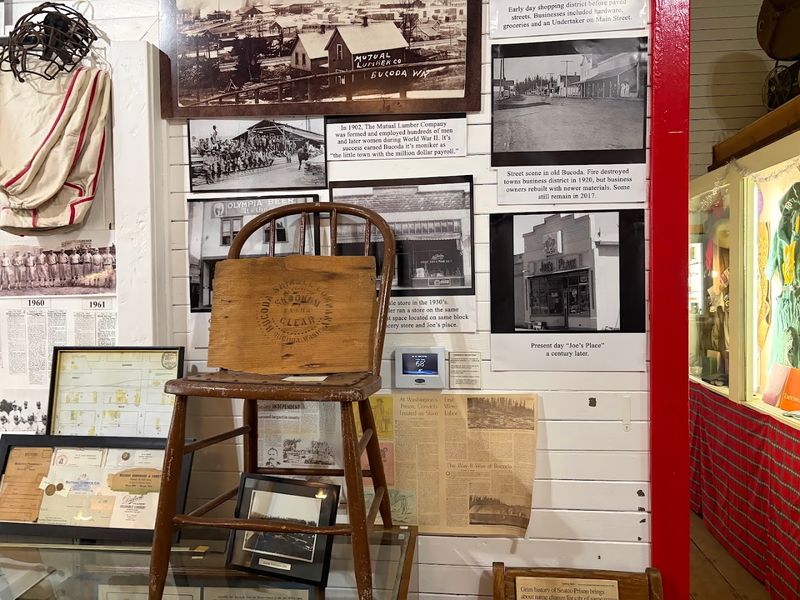
Housed inside a beautifully preserved 1914 sandstone train depot at 399 W. Park Ave, Tenino, WA 98589, the Tenino Depot Museum is the kind of place where history feels close enough to touch.
The collection inside spans quarrying tools, logging-era artifacts, railroad memorabilia, and photographs that trace the town’s evolution from a rough-and-tumble industrial hub to the welcoming community it is today.
The star of the show, at least for me, was seeing the original printing press used to produce the famous wooden money. Standing in front of a machine that once helped an entire community survive a financial crisis carries a quiet power that no textbook can replicate.
The staff are knowledgeable and enthusiastic, and the building itself is a living piece of the town’s sandstone legacy.
Whether you have ten minutes or two hours, the museum rewards every type of visitor. It sits inside Tenino City Park, so you can easily combine your visit with a walk along the park’s trails or a picnic on the grounds.
Tenino Quarry Pool
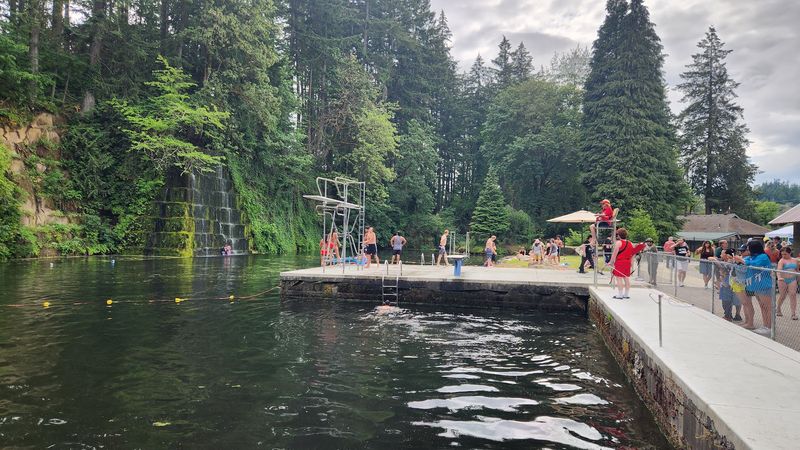
When quarry workers struck a natural spring inside an abandoned sandstone pit decades ago, they probably did not imagine they were creating one of the most distinctive swimming spots in the entire Pacific Northwest.
The Tenino Quarry Pool is exactly what it sounds like: a genuine swimming hole carved into the earth by years of stone extraction, now filled with clear, cool spring water that stays refreshingly brisk even on the hottest summer afternoons.
The pool has been a beloved gathering spot for families and locals for generations. Its rocky walls, unusual depth, and unexpected origins make it feel more like a secret than a public amenity.
It is currently closed for refurbishment, so check with the city of Tenino for updated reopening information before planning your visit around a swim.
Even if the pool is not yet open when you arrive, the site itself is worth seeing. The sheer scale of the old quarry gives you an immediate sense of just how much stone was extracted from this town, and how creatively that legacy has been repurposed for community enjoyment.
Monarch Sculpture Park
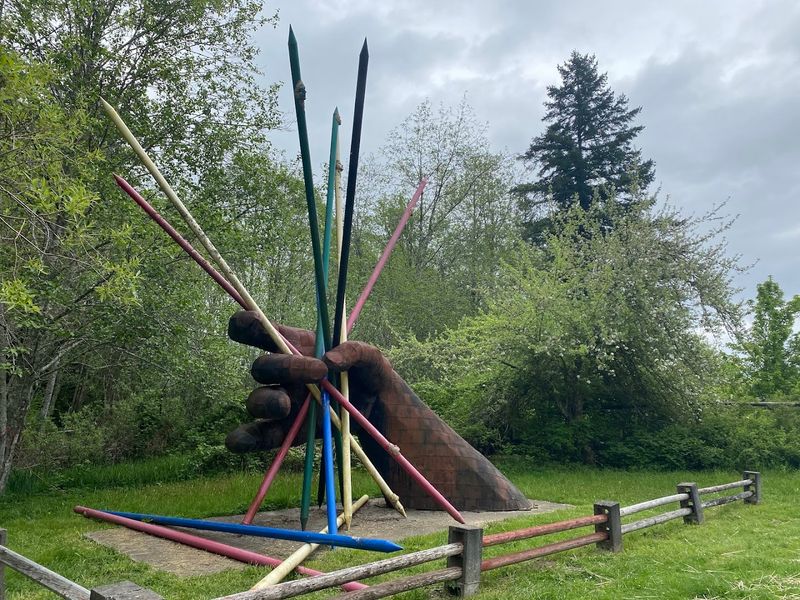
Stumbling across a five-acre sculpture park in a town of roughly 1,800 people is the kind of pleasant surprise that makes road trips worth taking.
The Monarch Sculpture Park in Tenino is a non-profit outdoor gallery featuring more than 100 contemporary sculptures created by artists from a wide range of backgrounds. The pieces vary wildly in scale, material, and mood, from playful abstract forms to commanding large-scale installations that make you stop mid-stride.
The park sits conveniently along the Chehalis Western Trail, a 36-mile multi-use path that connects Tenino with several surrounding communities. That means you can combine a sculpture stroll with a longer bike ride or hike without doubling back.
A butterfly maze is also part of the property, though it is currently undergoing restoration.
Admission is free, and the park welcomes visitors of all ages. There is no pressure to understand art history or carry a guidebook. You simply walk among the works, let your eyes wander, and discover something new around every corner.
Wolf Haven International

Not many towns can claim a nationally recognized wolf sanctuary as a neighbor, but Tenino is not most towns. Wolf Haven International is a non-profit refuge dedicated to providing permanent care for captive-born and displaced wolves.
The sanctuary has been operating for decades, and its mission centers on education, conservation, and giving wolves a safe place to live out their lives with dignity.
Guided tours take visitors through the property, where you can observe wolves in naturalistic habitat enclosures while knowledgeable staff share information about wolf behavior, ecology, and the ongoing challenges facing wild wolf populations across North America.
The experience is calm and educational rather than loud or sensationalized, which I appreciated deeply. Wolf Haven also hosts special events throughout the year, including howl-ins and educational programs designed for school groups and families.
If you are traveling with children who have a passion for wildlife, this stop has the power to spark a lifelong interest in conservation. It is the kind of place that lingers in your memory long after you leave Tenino behind.
Local Culture, Dining, And The Tenino Creative District
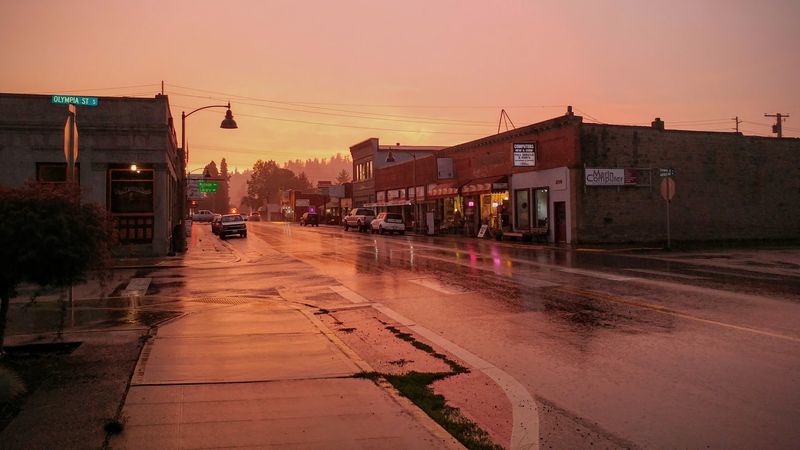
Certified as a Creative District in 2020, Tenino has put real energy into nurturing its local arts and entrepreneurial identity. The designation is not just a label.
It reflects a genuine community commitment to supporting independent businesses, public art installations, and artisan markets that give the town a lively, welcoming personality beyond its historical attractions.
For food, Don Juan’s Mexican Kitchen and Sandstone Cafe are both popular local spots that offer satisfying meals without the chain-restaurant predictability.
After eating, browsing Iron Works Boutique or wandering through the Tenino Antiques Mall makes for a relaxed and rewarding afternoon. Each shop has its own character, and the owners tend to be genuinely happy to chat about the town’s history.
The annual Oregon Trail Days festival brings the community together each year with events that celebrate Tenino’s pioneer roots in an energetic, family-friendly way.
If you enjoy lakeside retreats, Offut Lake Resort sits nearby and offers camping, cabins, fishing, swimming, and boat rentals year-round. Tenino rewards slow travelers who take time to notice the details.
A Community Celebration
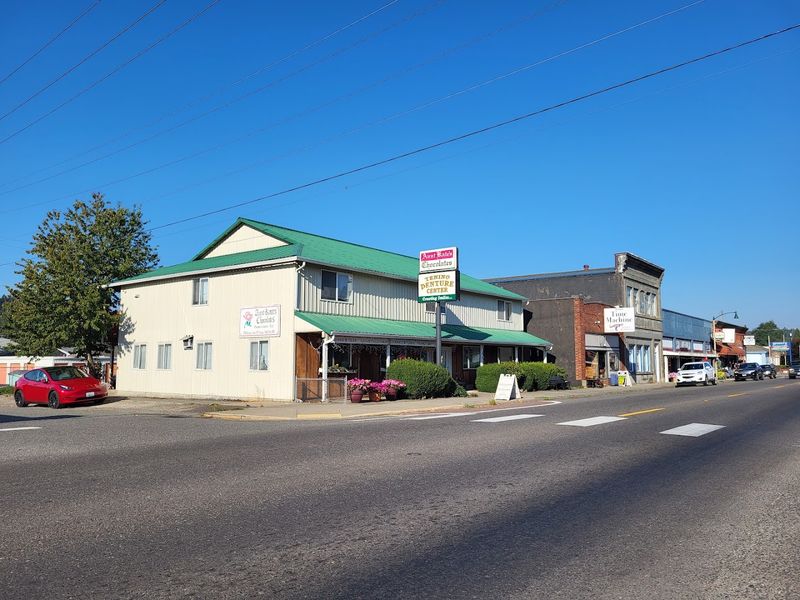
Every summer, Tenino throws on its best boots and celebrates Pioneer Days, a beloved community festival honoring the hardworking spirit that built this small town into something truly special.
Carnival rides, live music, and local food vendors fill the streets with laughter and the smell of something delicious cooking nearby.
What makes Pioneer Days stand out is how genuinely local it feels. Longtime residents mingle with curious visitors, sharing stories passed down through generations. It is the kind of event where you leave knowing the names of people you just met an hour ago.
Plan your visit for late July to catch all the fun. Families spread out across the festival grounds while children race from one attraction to the next.
Local traditions take center stage, giving visitors a closer look at the stories and skills that shaped Tenino. The celebration also gives small businesses and community groups a chance to meet people from across the region.
Even quieter moments carry a strong sense of hometown pride. By the end of the weekend, the festival feels less like a scheduled event and more like a townwide reunion.
Pioneer Days offers an easy reason to slow down, stay awhile, and experience Tenino at its most spirited.