
12 Hidden Gems In California That Don’t Feel Like They’re In America
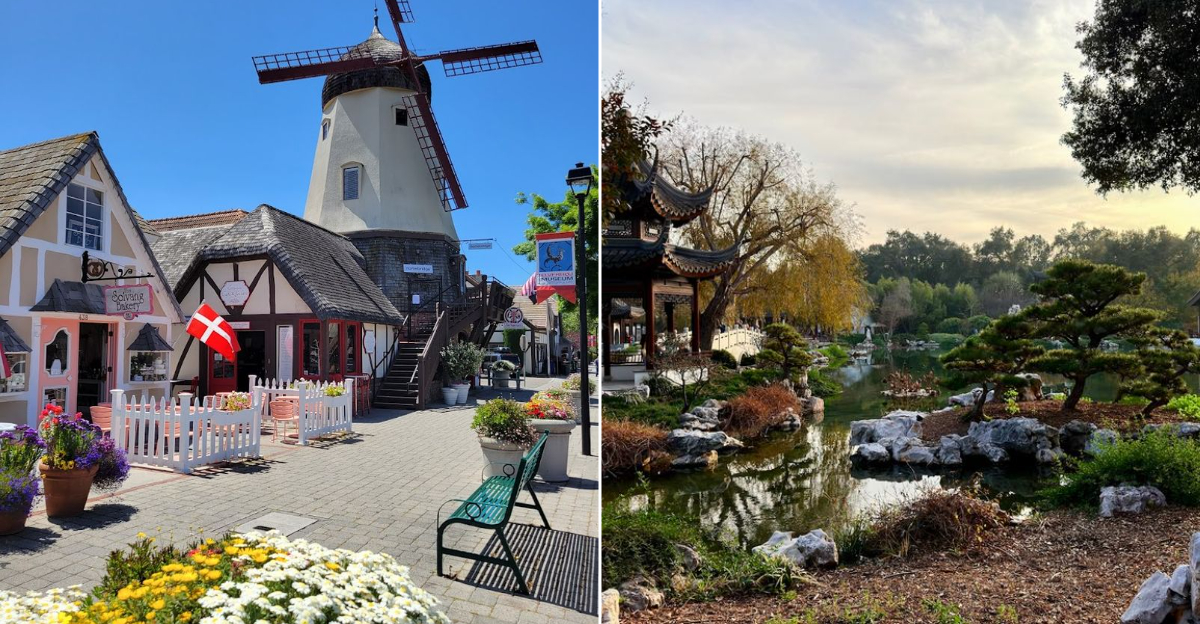
California is known for beaches, Hollywood, and palm trees… but what if we told you it also has a little Denmark, a touch of Korea, a slice of ancient Rome, and a peaceful corner inspired by Japan? Sounds like a travel glitch, right?
Somewhere between the famous highways and crowded attractions, California hides places that make you forget which country you’re actually standing in.
One moment you can be wandering through a European-style village with windmills and charming streets, and the next you’re surrounded by architecture, gardens, and traditions from thousands of miles away.
So, why buy a plane ticket when you can take a world tour without leaving the Golden State? These hidden gems prove that California isn’t just one destination.
It’s a collection of unexpected worlds waiting to be explored.
1. Filoli Historic House And Garden
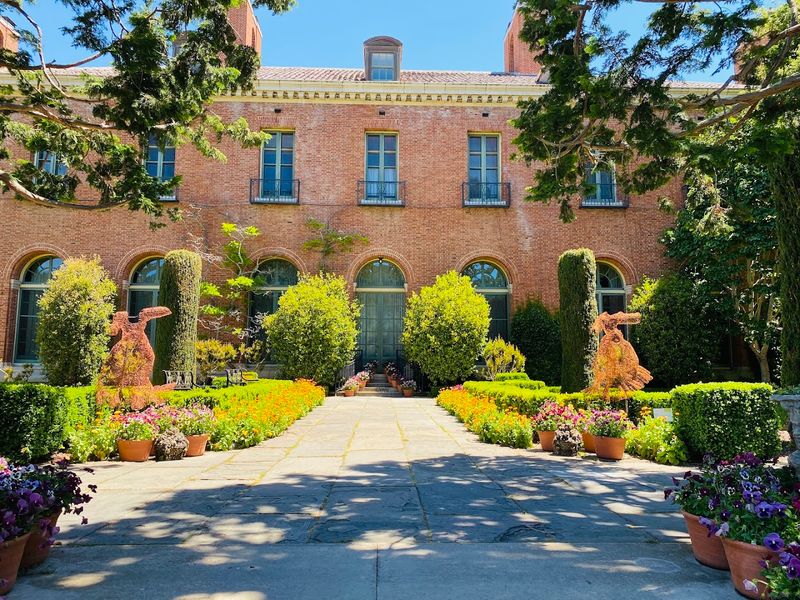
Filoli is the kind of place where you expect someone in period costume to appear around every corner and invite you to a garden party.
Built between 1915 and 1917 for William Bowers Bourn II, this Georgian Revival mansion at 86 Canada Rd, Woodside, CA 94062 is a genuine architectural treasure hiding in the Bay Area hills.
The Flemish bond brick exterior, French windows, and arched double chimneys make the house look like it was airlifted from the English countryside.
Inside, carved moldings, marble fireplaces, and murals depicting Irish landscapes create an interior that feels warm, grand, and completely removed from California reality.
Outside, 16 acres of formal English Renaissance gardens unfold in carefully orchestrated beauty. Irish yews transplanted from the Bourn family property in Ireland still grow here today, which is a surprisingly moving detail.
Filoli has appeared in film and television, but no screen can fully capture the experience of walking those garden paths in person.
The sheer scale and beauty of the place has a way of making you forget, at least temporarily, that the 280 freeway is just minutes away.
2. Hakone Estate And Gardens
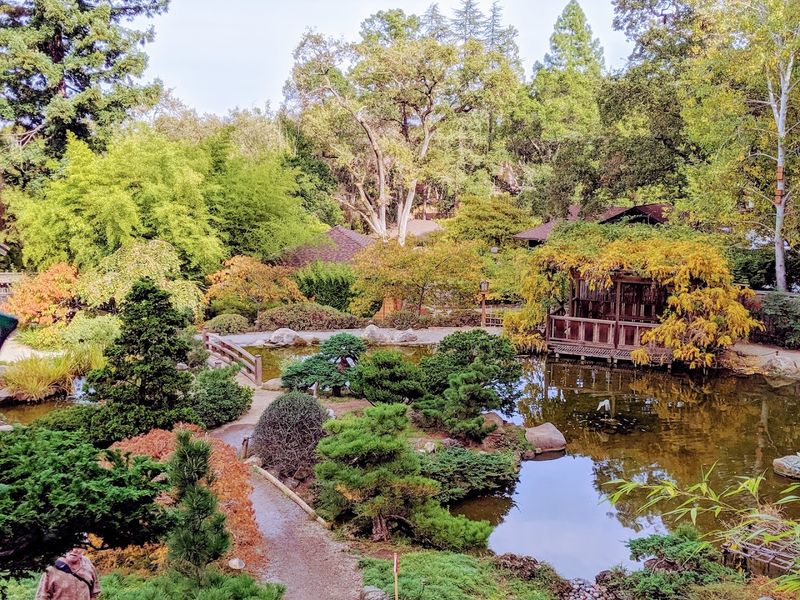
There is a moment when you walk through the gate at Hakone and the noise of modern life just vanishes. Established in 1915, this estate is the oldest Japanese-style country villa in the entire Western Hemisphere, which is a title that deserves far more fanfare than it gets.
Nestled at 21000 Big Basin Way, Saratoga, CA 95070, Hakone feels like a page torn from a travel magazine about Kyoto.
Japanese imperial gardeners designed the landscape using authentic materials and centuries-old techniques. Koi ponds shimmer beneath stone lanterns.
Multi-tiered waterfalls cascade through manicured greenery. Strolling paths wind through four distinct garden areas, each with its own personality and quiet magic.
What makes Hakone genuinely special is the sense of intention behind every single element. Nothing here is accidental.
Every rock, every plant, every carefully placed lantern serves a purpose rooted in Japanese garden philosophy. If you have ever wanted to experience Japan without the fourteen-hour flight, Saratoga has been quietly holding that experience for over a century.
3. Liu Fang Yuan Chinese Garden
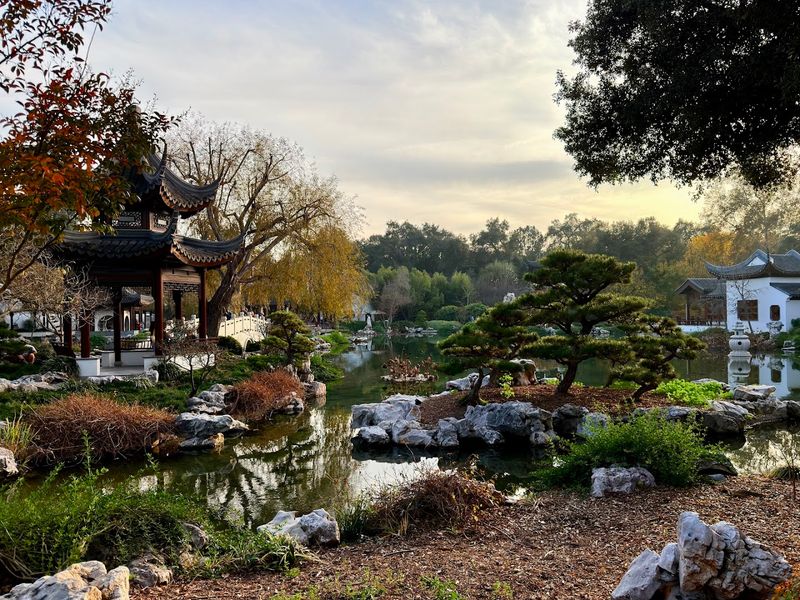
Calling Liu Fang Yuan a garden feels like calling the Louvre a storage room. This 15-acre masterpiece at the Huntington was designed to replicate the scholar gardens of Ming Dynasty Suzhou, China, and the attention to detail is absolutely staggering.
Found at 1151 Oxford Rd, San Marino, CA 91108, it was conceived as a moving painting, a place where every angle reveals a new composition.
Over 800 tons of Taihu rocks were imported from the Suzhou region to create the dramatic, otherworldly rock formations throughout the garden. Chinese artisans constructed the pavilions, bridges, and ornate walkways using ancient building techniques.
The result is something that feels genuinely transported, not replicated.
Walking through Liu Fang Yuan, you pass moon gates, lotus ponds, and carved wooden screens that filter light in the most beautiful way.
It is considered one of the largest Chinese gardens outside of China, and that scale is something you feel in your bones. Every corner reveals something new, and the garden rewards slow, unhurried exploration more than almost anywhere else on this list.
4. Solvang Village
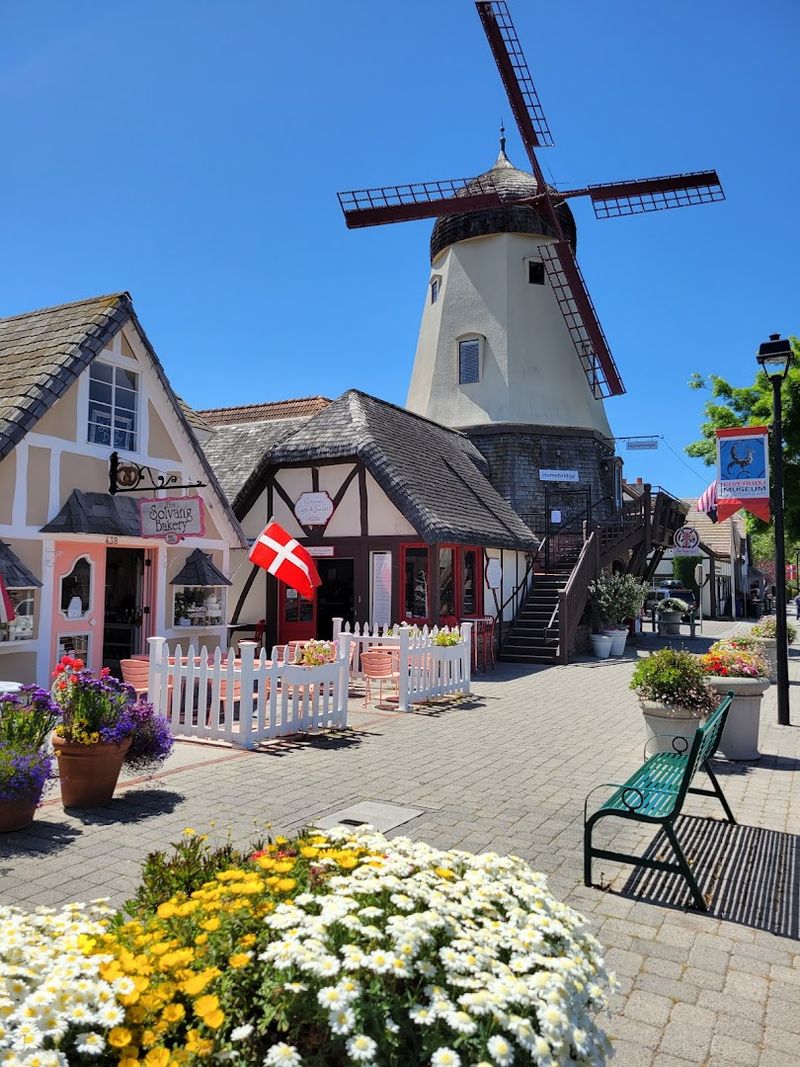
Somewhere between Santa Barbara and San Luis Obispo, a Danish village materialized in the California hills, and it has been confusing and delighting visitors ever since.
Solvang was founded in 1911 by Danish-American educators who wanted to preserve their heritage, and honestly, they absolutely nailed it.
Located at 1637 Copenhagen Dr, Solvang, CA 93463, this town is so authentically Scandinavian that you half expect a Viking to stroll past holding a pastry.
The architecture features thatched roofs, traditional windmills, and half-timbered facades straight out of a Hans Christian Andersen storybook.
Danish bakeries line the streets, filling the air with the warm, buttery scent of aebleskivers and fresh bread. Every building feels intentional, like the whole town agreed to commit to the bit, and it paid off spectacularly.
Known as the Danish Capital of America, Solvang is one of those places that genuinely stops you mid-step. You will be snapping photos of windmills while eating a Danish pastry, wondering how a corner of Copenhagen ended up in sunny California.
5. Forestiere Underground Gardens
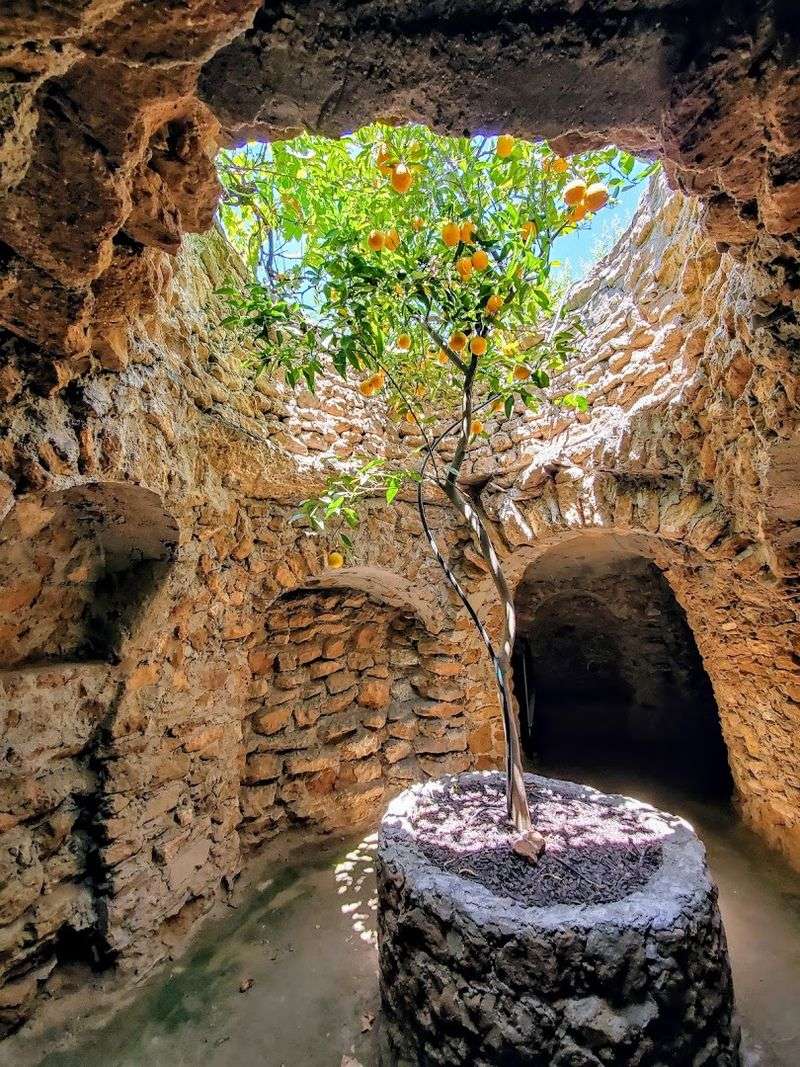
Baldassare Forestiere arrived from Sicily with a vision, a shovel, and an extraordinary amount of patience. Over forty years, from 1906 until his passing, he hand-carved an entire underground world beneath the San Joaquin Valley using only basic hand tools.
The Forestiere Underground Gardens at 5021 W Shaw Ave, Fresno, CA 93722 is one of the most genuinely singular places in the entire United States, full stop.
Inspired by the ancient catacombs of Sicily and Roman architecture, Forestiere created tunnels, chambers, grottos, and even an underground chapel entirely by hand.
The genius move was the skylights, strategically positioned openings that allow fruit trees, grapevines, and citrus to grow underground, producing actual fruit in a subterranean environment.
There is an underground fishing pond down there too, which somehow feels both absurd and completely logical once you see how the whole system works.
Walking through these tunnels, you get the overwhelming sense that you are inside one person’s extraordinary, decades-long dream made real. Forestiere did not just build a garden.
He built a world, and it has been waiting underground for you to find it.
6. Hsi Lai Temple
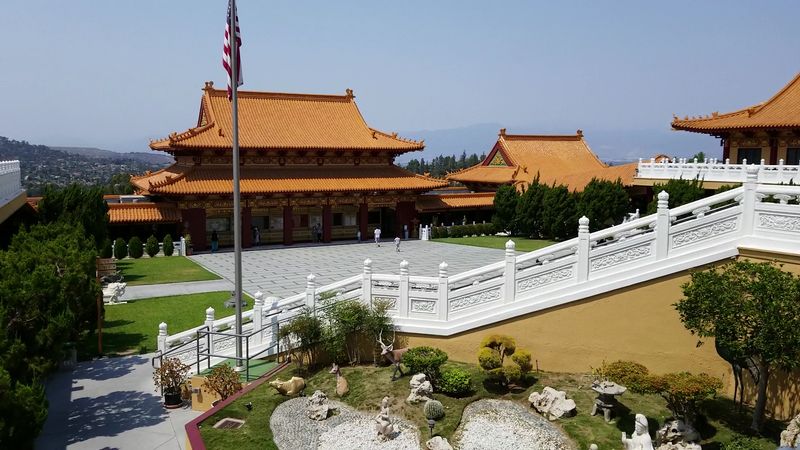
Pulling into the parking lot at Hsi Lai Temple, the scale of the place genuinely stops you. This is not a modest spiritual retreat.
Established in 1988 as part of the Fo Guang Shan Buddhist Order from Taiwan, the temple at 3456 Glenmark Dr, Hacienda Heights, CA 91745 is recognized as one of the largest Buddhist monasteries in North America, and it shows in the most breathtaking way possible.
The architecture draws from Ming and Qing Dynasty traditions, featuring sweeping eaves, ornate woodwork, and marble staircases that feel like they belong in the Forbidden City.
The signature maroon red and gold color palette creates a visual warmth that hits you the moment you arrive. The name Hsi Lai translates to Coming to the West, which adds a poetic layer to the whole experience.
Walking through the courtyards and temple halls, surrounded by intricate carvings and the gentle scent of incense, the Los Angeles suburbs feel impossibly far away.
Hsi Lai is a place of genuine peace and architectural magnificence, and it remains one of Southern California’s most underrated cultural destinations by a significant margin.
7. Korean Friendship Bell
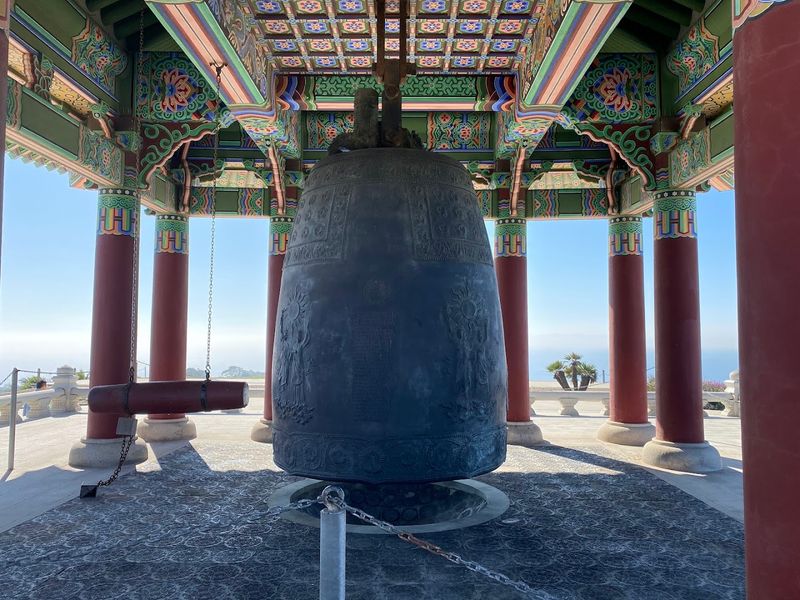
Perched above the Pacific at Angels Gate Park, the Korean Friendship Bell is one of those discoveries that makes you wonder how you have never heard of it before.
The Republic of Korea gifted this extraordinary bell to the United States in 1976 to commemorate the American bicentennial, and the gesture was extraordinary in every sense.
Located at 3601 S Gaffey St, San Pedro, CA 90731, the bell is modeled after the Divine Bell of King Seongdeok, a historic Korean bell originally cast in 771 AD.
Made from seventeen tons of copper and tin, the Friendship Bell is among the largest bells in the world. Intricate reliefs of Korean spirit figures cover its surface with remarkable artistry.
The traditional pagoda-style pavilion housing the bell was constructed by Korean craftsmen over ten months, using techniques and materials rooted in centuries of Korean craftsmanship.
The ocean backdrop adds a cinematic quality to the whole scene. Standing in front of this bell, you feel the weight of the cultural exchange it represents, the careful craftsmanship, the historical significance, and the simple, generous act of one nation honoring another.
San Pedro does not always make the travel lists, but it absolutely should.
8. Spanish Village Art Center
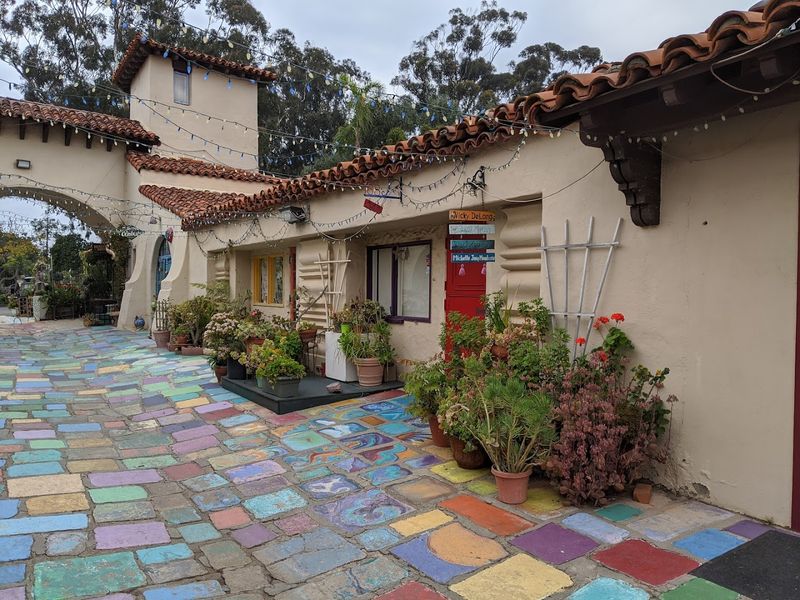
Designed by architect Richard Requa in 1935 for the California Pacific International Exposition, the Spanish Village Art Center was built to evoke the feeling of a centuries-old Spanish town, and it succeeds with remarkable charm.
Tucked into Balboa Park at 1770 Village Pl, San Diego, CA 92101, this cluster of colorful stucco buildings with tiled roofs feels like a Mediterranean village that somehow teleported to Southern California.
After the exposition ended, artists rallied together to save the village from demolition, which is exactly the kind of origin story a place this special deserves.
Today, it is home to over 200 working artists whose studios open directly onto intimate courtyards. You can watch glassblowers, painters, jewelers, and ceramicists at work, which turns a simple stroll into something genuinely immersive.
The courtyards are filled with flowering plants, mosaic tiles, and the kind of unhurried creative energy that makes you want to slow down and actually look at things. Spanish Village is not just a place to buy art.
It is a living, breathing creative community that has been quietly thriving in the heart of San Diego for nearly ninety years.
9. Japanese Friendship Garden And Museum
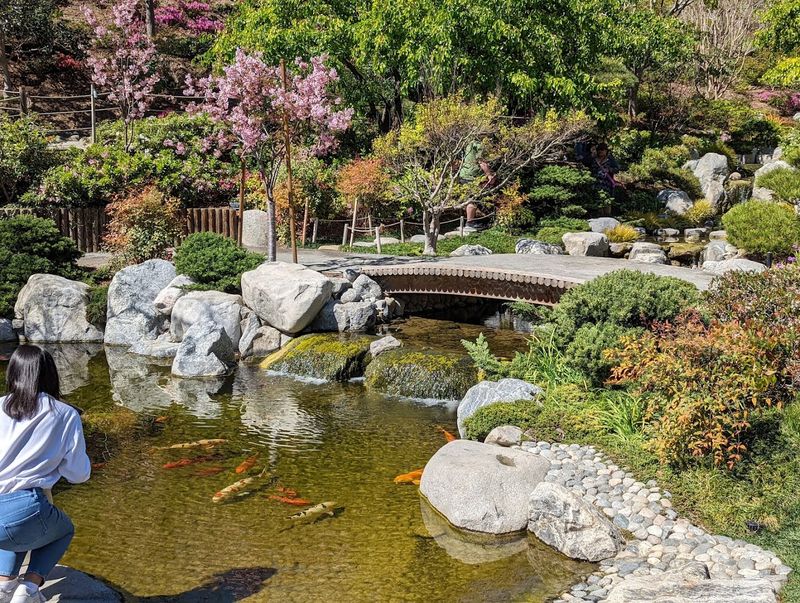
Right in the heart of Balboa Park, the Japanese Friendship Garden is one of those places that earns its name completely.
Rooted in the friendship between San Diego and Yokohama, Japan, with origins tracing back to the 1915 Panama-California Exposition, this garden at 2215 Pan American Rd E, San Diego, CA 92101 has grown into something truly extraordinary over the decades.
The design philosophy here is elegant simplicity, which sounds easy until you realize how much skill it takes to create beauty that feels effortless.
Cherry blossom trees frame koi ponds that shimmer with color. Waterfalls, stone lanterns, and bamboo fences create a layered sensory experience.
A dedicated bonsai exhibit showcases miniature trees shaped over years of patient cultivation.
The garden is considered a living work of art, and that description is spot on. Every season changes the experience entirely.
The whole space is inspired by centuries of Japanese garden design, and the result is a place where time genuinely seems to slow down. For a city known for beaches and burritos, this garden is a quietly magnificent surprise that San Diego has been keeping to itself.
10. Murer House And Gardens
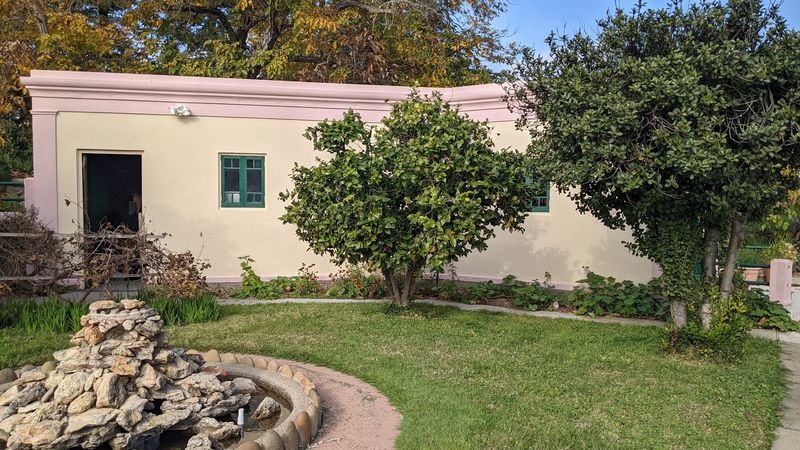
Giuseppe Murer left Italy and brought Italy with him. In 1927, this Sicilian immigrant built a home in Folsom that so faithfully reflects Italian Renaissance architecture that it feels like a piece of the old country dropped gently into the California foothills.
The Murer House And Gardens at 1125 Joe Murer Ct, Folsom, CA 95630 is a tribute to heritage, craftsmanship, and the very human desire to carry your roots wherever you go.
The house features stucco walls, tall narrow chimneys, an elevated square tower, and a red tile roof that catches the California light beautifully.
Inside, arched woodwork and built-in hutches reflect the careful detail Murer brought to every element of the construction. Outside, the gardens include fruit trees, nut trees, and grapevines growing alongside terraces built from river cobbles gathered locally.
The Murer House is a Folsom landmark that most people outside the area have never heard of, which makes discovering it feel genuinely special.
It is a story told in architecture, about identity, belonging, and the remarkable things people build when they love where they came from. Folsom is not just about the famous prison, it turns out.
11. Getty Villa Museum
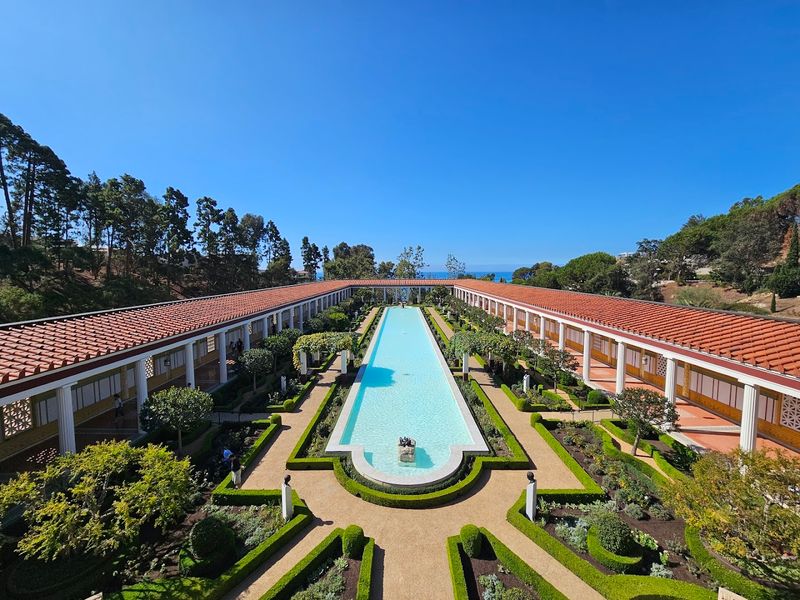
Driving along Pacific Coast Highway and suddenly seeing an ancient Roman villa rise up from the Malibu hillside is the kind of experience that makes you question everything you thought you knew about California.
The Getty Villa Museum at 17985 Pacific Coast Hwy, Pacific Palisades, CA 90272 is a meticulous reconstruction of the Villa dei Papiri, a Roman country villa that was buried in Herculaneum during the eruption of Vesuvius in 79 AD.
Oil magnate J. Paul Getty opened this museum to the public in 1974, and the commitment to historical accuracy is genuinely staggering.
A 300-foot-long peristyle courtyard anchors the outdoor spaces, flanked by bronze statues and reflecting pools.
Mediterranean plants fill the gardens with the same species that would have grown in ancient Rome. The whole property feels like a functioning time machine.
Inside, the museum houses an extraordinary collection of Greek, Roman, and Etruscan art spanning thousands of years.
The Getty Villa proves that California’s cultural ambition has no ceiling, or in this case, no roof, because the best parts of this place are wide open to the sky and absolutely stunning.
12. Queen Califia’s Magical Circle
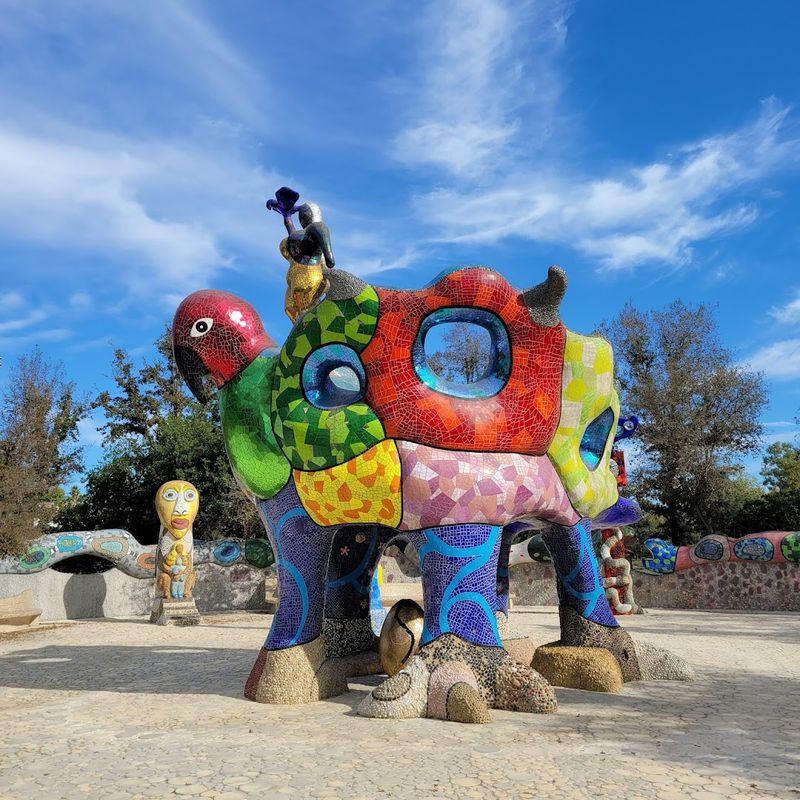
Queen Califia’s Magical Circle is what happens when a visionary artist decides to build a legend into the landscape and refuses to hold back.
Created by French-American artist Niki de Saint Phalle, this sculpture garden at 3333 Bear Valley Pkwy, Escondido, CA 92025 was her last major international project and the only sculpture garden she created in the United States.
The garden draws inspiration from the mythical warrior queen Califia, the legendary figure from whom California takes its name. Nine large-scale sculptures rise from the ground in a riot of mosaic color and imagination.
A circular snake wall surrounds the space, and a mosaic maze entryway sets the tone before you even step inside. At the center, a towering mosaic of Queen Califia herself rides a five-legged eagle in magnificent, unapologetic style.
The artwork weaves together Native American and Mexican artistic traditions with a surrealist sensibility that feels entirely its own. Everything here is designed to be touched, explored, and experienced with genuine joy.
Queen Califia’s Magical Circle is proof that California’s most magical places are sometimes the ones hiding in plain sight, waiting for the right curious traveler to find them. Have you been missing out on California’s secret world this whole time?