
10 Strange And Amazing Places In Texas You Won’t Believe Actually Exist
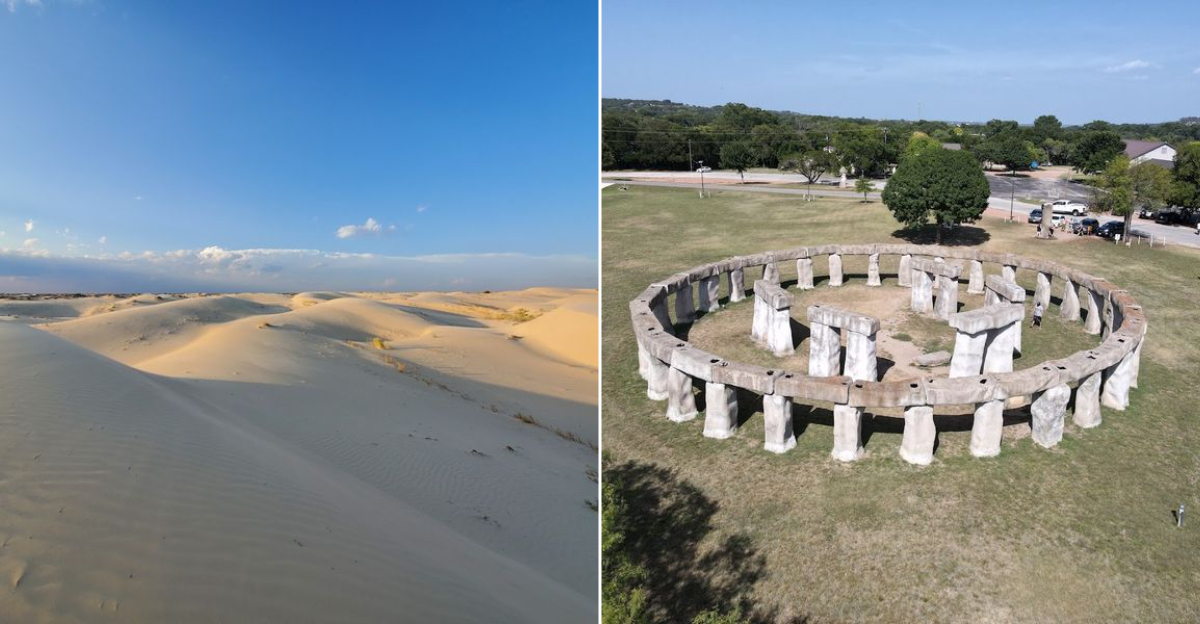
Think you know Texas? Think again.
Beyond the cowboy boots, barbecue joints, and endless highways, the Lone Star State is hiding places that look like they were pulled straight from a movie script. Some are wonderfully weird. Some are surprisingly beautiful.
And a few might make you wonder if someone accidentally opened a portal to another planet. From bizarre landscapes to unexpected roadside wonders, these spots prove Texas has plenty of secrets waiting to be discovered.
Forget the usual tourist stops. These are the places that make you say, “Wait… this is actually in Texas?” And trust us, you’ll want to see what made the list.
1. Cadillac Ranch
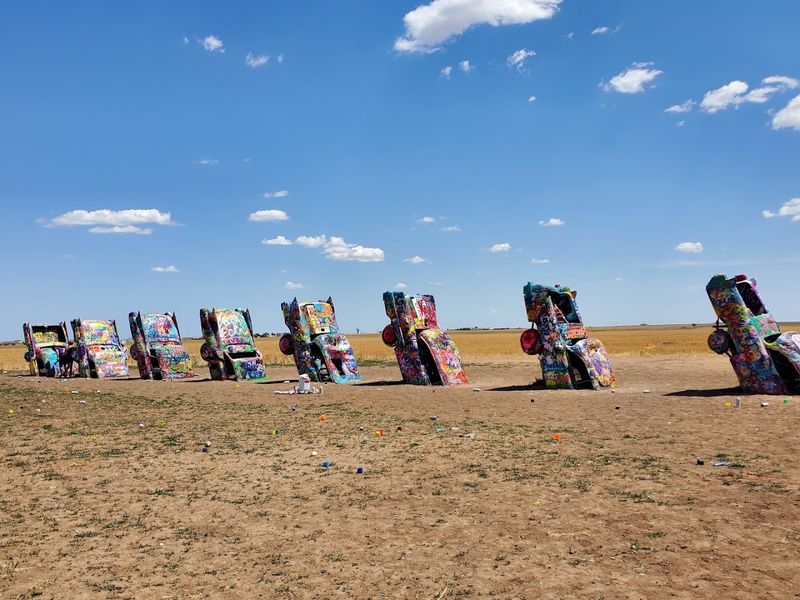
Picture ten vintage Cadillacs planted nose-first into the earth like some kind of automotive crop that nobody ever expected to harvest. That is exactly what you get at Cadillac Ranch, one of the most iconic and joyfully bizarre roadside attractions in the entire country.
Located at 13651 I-40 Frontage Road in Amarillo, this art installation has been turning heads since 1974, when the artist group Ant Farm buried ten classic Cadillacs ranging from 1949 to 1963 models into a flat Texas field.
The cars are tilted at the same angle as the Great Pyramid of Giza, which sounds like a fun fact someone made up, but it is completely true.
What makes this place truly special is that it never looks the same twice. Visitors are encouraged to bring spray paint and add their own layer to the ever-evolving canvas.
Every color, tag, and swirl tells a different story left behind by someone who made the trip.
Originally placed on a wheat farm, the installation was later moved two miles west to its current location. Over a million people visit annually, making it one of the most photographed spots in Texas.
Art, culture, and a little bit of chaos all in one field.
2. Prada Marfa
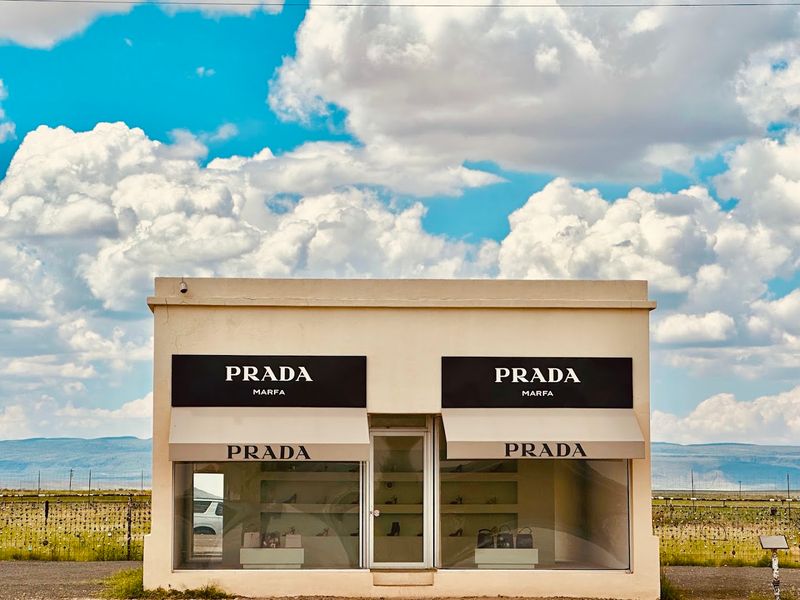
Somewhere between nowhere and absolutely nowhere, a Prada store appeared in the West Texas desert and never left.
Prada Marfa sits at 14880 US-90 in Valentine, Texas, and it is every bit as surreal as it sounds. Created by Berlin-based artistic duo Elmgreen and Dragset, this permanent installation opened on October 1, 2005, and was built to look exactly like a real luxury boutique, right down to the signage.
Here is the twist: you cannot go inside. The door does not open, and nothing is for sale.
The windows display actual Prada shoes and handbags from the Fall/Winter 2005 collection, personally selected by Miuccia Prada herself.
The building was originally made from biodegradable materials, designed to slowly fade back into the landscape over time.
After it was vandalized shortly after opening, it was restored and reinforced, because apparently even the desert wants this thing to stick around.
The commentary on consumerism and the absurdity of luxury in isolation hits differently when you are standing on a remote highway with tumbleweeds drifting by. There are no other buildings for miles.
No context. Just Prada, the desert, and a very long pause to think about it all.
3. Cathedral Of Junk
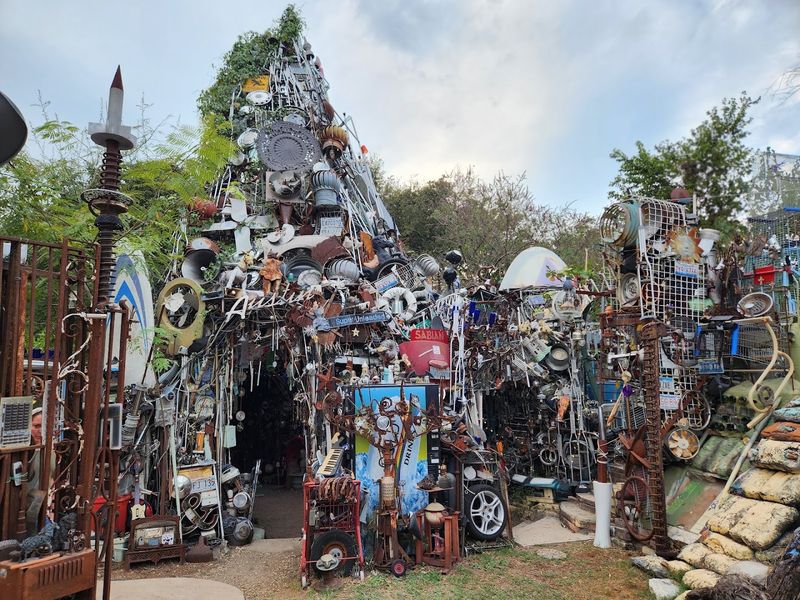
Forget everything you think you know about backyard projects, because the Cathedral of Junk in Austin redefines what a person can accomplish with creativity and a serious resistance to throwing things away.
Tucked behind a house at 4422 Lareina Drive in Austin, this towering folk art masterpiece stands three stories tall and weighs an estimated 60 tons.
Builder Vince Hannemann started welding it together in 1988 and has not really stopped since.
The structure is a labyrinth of discarded objects: bicycles, lawnmower parts, CDs, bottles, kitchen utensils, and thousands of other items that most people would have sent straight to the curb.
Wandering through it feels like exploring a cathedral built by a very imaginative magpie.
There are vaulted ceilings, hidden chambers, and even a room known as the Throne Room, which is exactly as dramatic as it sounds.
Visiting requires scheduling ahead since it is located on private property, but that small effort is absolutely worth it. The Cathedral of Junk has become one of Austin’s most beloved and unusual landmarks, proving that art does not need a gallery or a budget to be extraordinary.
Sometimes all it needs is a vision and a really large pile of stuff nobody else wanted.
4. Stonehenge II
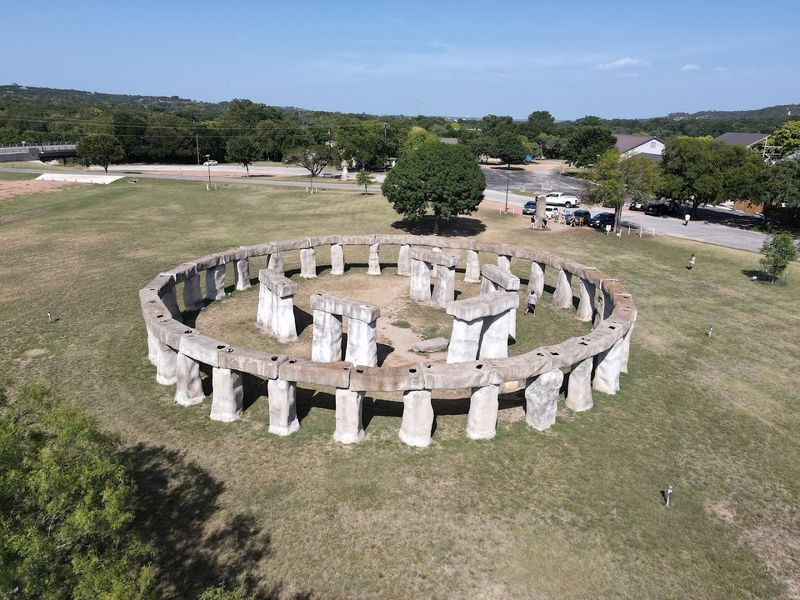
Who needs a plane ticket to England when Texas has its own version of Stonehenge waiting in the Hill Country?
Stonehenge II sits at 120 Point Theatre Road in Ingram, on the campus of the Hill Country Arts Foundation, and it is one of those places that makes you stop the car and stare for a solid minute before your brain catches up.
The replica was conceived by Al Shepperd and built with the help of his neighbor Doug Hill, starting in 1989.
This version stands at roughly 60 percent the height and 90 percent the width of the original Stonehenge in England, making it impressively close to the real thing without being an exact copy.
The stones are crafted from plaster over a wire mesh frame, which means they weigh considerably less than the ancient originals but look remarkably convincing from a distance.
What gives this place its extra layer of charm is the company it keeps.
Two 13-foot Easter Island moai statues stand nearby, turning the site into a kind of greatest hits collection of ancient wonders, all in one Texas field.
Admission is free, and the site is open daily from dawn to dusk. It is quirky, unexpected, and genuinely fun, which is a combination Texas seems to pull off better than anywhere else.
5. Paris Texas Eiffel Tower
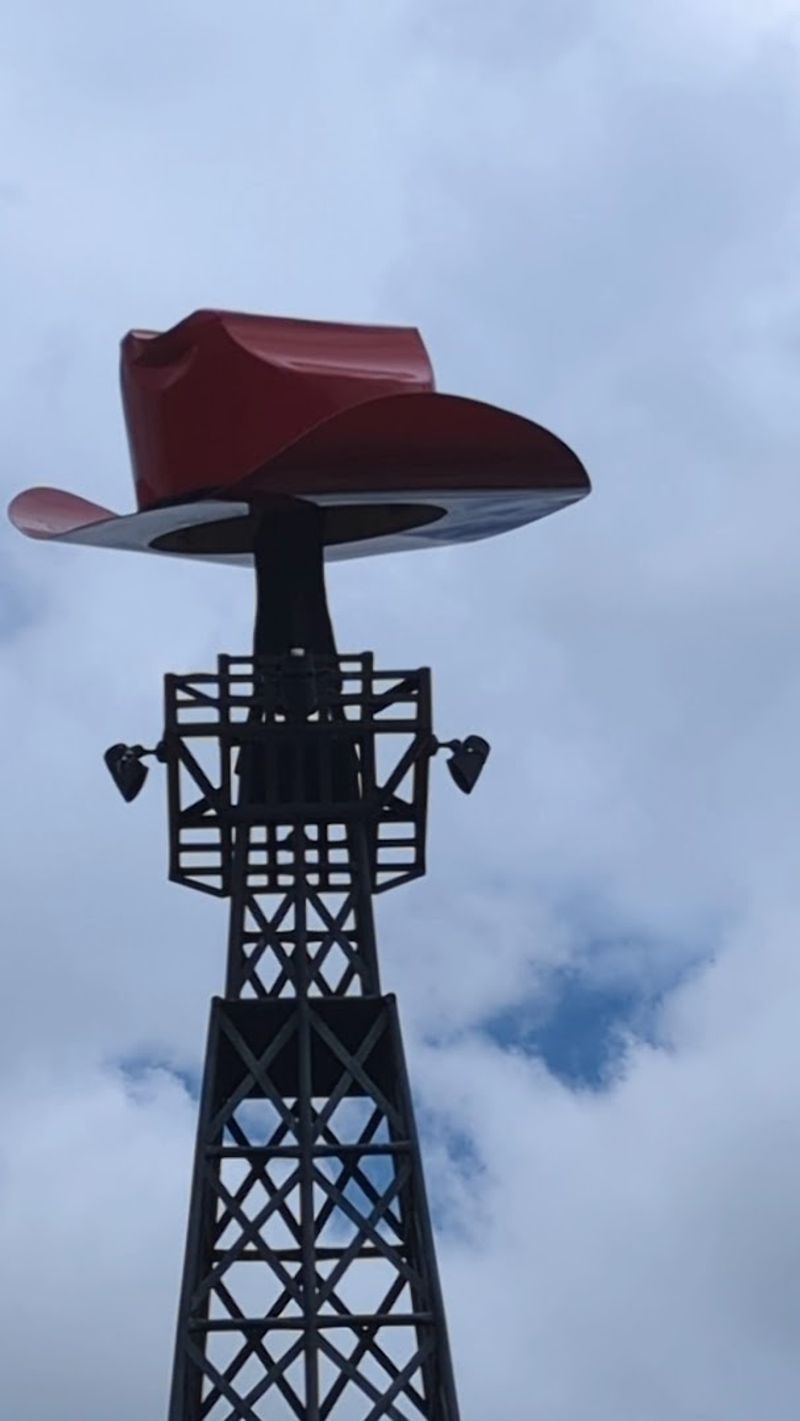
Bonjour, y’all. The city of Paris, Texas, did not let the fact that it is not in France stop it from building its very own Eiffel Tower, and honestly, that energy is something to be celebrated.
Standing at 2025 South Collegiate Drive in Paris, this steel replica rises 65 feet into the Texas sky, which is roughly one-sixteenth the height of the original in France, but what it lacks in height it more than makes up for in personality.
The tower was erected in 1993 by local welders who clearly had both the skills and the spirit for a challenge. Then in 1998, someone had the brilliant idea to add a giant red cowboy hat to the top of the spire.
The reason?
A friendly rivalry with a similar Eiffel Tower replica in Paris, Tennessee, which had been bragging about being taller. Texas responded the only way Texas knows how.
Today the tower is adorned with 27 LED lights that shift colors depending on the season, and it has even been used for gender reveal celebrations.
It is charming, funny, and completely committed to its own bit. The Paris Texas Eiffel Tower proves that sometimes the best landmarks are the ones that refuse to take themselves too seriously.
6. Natural Bridge Caverns
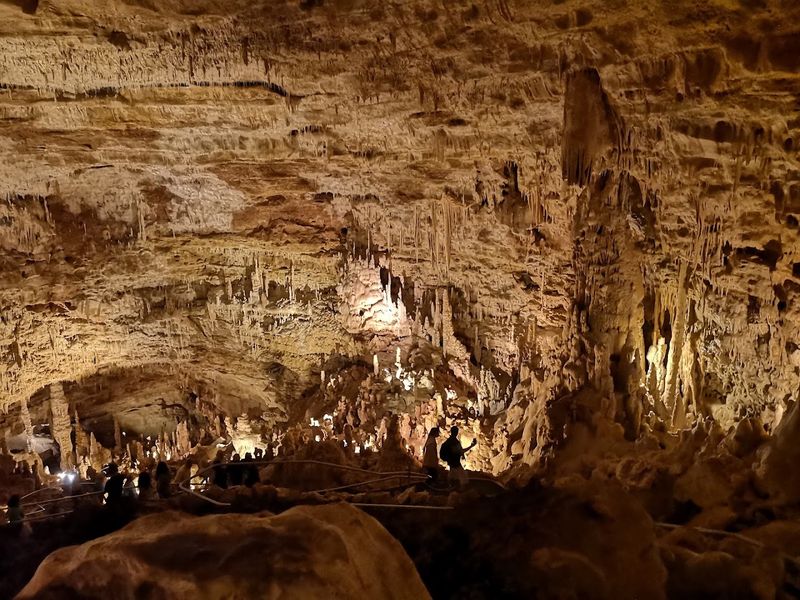
Not everything extraordinary in Texas is above ground. Natural Bridge Caverns, located at 26495 Natural Bridge Caverns Road just north of San Antonio, is the largest commercial cave system in the entire state, and stepping inside feels like entering a completely different world.
The caverns take their name from a massive 60-foot natural limestone bridge that spans the entrance, formed when a sinkhole below it collapsed long ago.
Four college students discovered the caverns in 1960, and what they found inside was nothing short of stunning.
Ancient formations like stalactites, stalagmites, flowstones, and delicate cave popcorn fill the chambers, all shaped over millions of years dating back to the early Cretaceous Period.
The temperature inside holds steady at a constant 70 degrees Fahrenheit year-round, which makes it a genuinely refreshing escape from the Texas heat outside.
Guided tours take visitors through vast chambers with names like the Hall of the Mountain Kings, giving each section of the cave its own sense of drama.
The humidity stays near 99 percent, which keeps the formations alive and growing, slowly, at just one cubic inch every 100 years. Natural Bridge Caverns is not just a tourist stop.
It is a reminder that some of the most breathtaking art on earth was made without any human hands at all.
7. Sinkhole State Natural Area
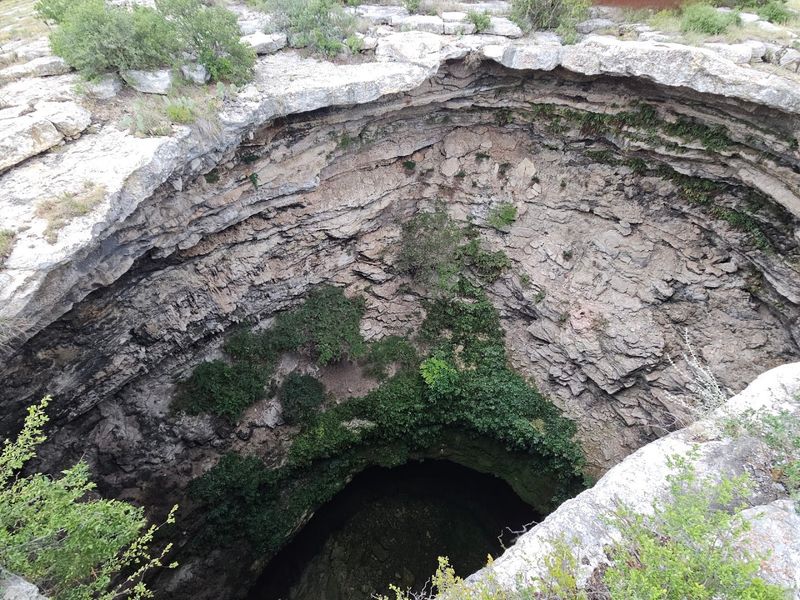
There are sunsets, and then there is watching millions of bats spiral out of a giant hole in the ground like a living, breathing tornado.
The Sinkhole State Natural Area, with its visitor center at 101 North Sweeten Street in Rocksprings, is one of the most jaw-dropping natural spectacles in all of Texas.
The sinkhole itself is a massive 50-foot-wide shaft that plunges 140 feet straight down before opening into a cavern that reaches depths of 350 feet.
From late spring through early fall, the sinkhole transforms into a seasonal home for a colony of millions of Mexican free-tailed bats.
Each evening as the sun dips low, they emerge in what scientists call a bat column, a swirling, smoke-like mass that rises from the earth in one of nature’s most theatrical exits.
Researchers estimate the colony consumes up to 30 tons of insects every single night, which is both mind-bending and deeply impressive.
Access to the sinkhole is only possible through a guided tour, which helps protect this sensitive and remarkable natural landmark.
Booking ahead is essential, especially during peak bat season. Standing at the edge of the sinkhole as the bats pour out overhead is the kind of experience that rewires your sense of what nature is actually capable of doing.
8. Monahans Sandhills State Park
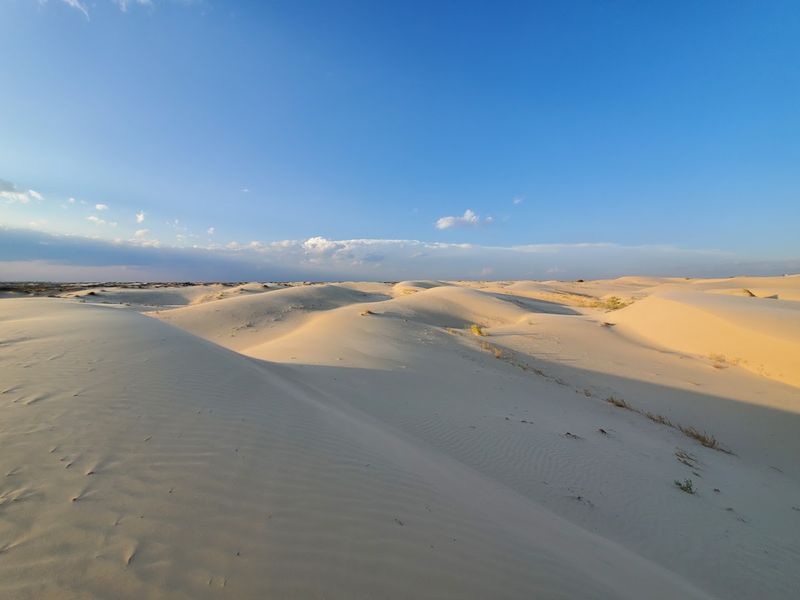
Standing at the top of a 70-foot sand dune in West Texas and looking out over an ocean of rolling quartz hills is the kind of moment that makes you forget you are still in the continental United States.
Monahans Sandhills State Park, found along Park Road 41 in Monahans, stretches across thousands of acres of Ward and Winkler Counties, creating a landscape so otherworldly it feels borrowed from another planet entirely.
The sand here is pure quartz, constantly reshaped by the wind into peaks and valleys that shift from one season to the next.
Despite the dramatic dunes, this is technically a semi-arid ecosystem, not a true desert, and the park supports a surprising variety of wildlife beneath and around the sand.
Harvard Oak trees, some with trunks no bigger than a thumb above ground, spread root systems up to 90 feet wide just below the surface.
The real draw for many visitors is the park’s rentable sand sleds and discs, which turn those towering dunes into a natural playground that requires zero lift tickets.
Hiking, camping, and horseback riding round out the options for those who want to explore at a slower pace. Monahans Sandhills is proof that Texas can be endlessly surprising, even when it is just sand as far as the eye can see.
9. Dinosaur Valley State Park
Some places feel old. Dinosaur Valley State Park in Glen Rose feels ancient in a way that stops you mid-step and makes you genuinely reconsider your place in time.
Located at 1629 Park Road 59, this state park is world-famous for something you can literally walk up to and touch: real, 113-million-year-old dinosaur footprints preserved in the bed of the Paluxy River.
When water levels drop, the tracks emerge like a message from the Cretaceous Period.
The footprints belong primarily to massive sauropods and fast-moving theropods, and some of the impressions are so clear you can make out individual toe shapes and claw marks.
The park is a designated National Natural Landmark, which means these tracks are protected and studied as an irreplaceable piece of prehistoric history.
Walking alongside them feels less like a field trip and more like a genuine encounter with deep time.
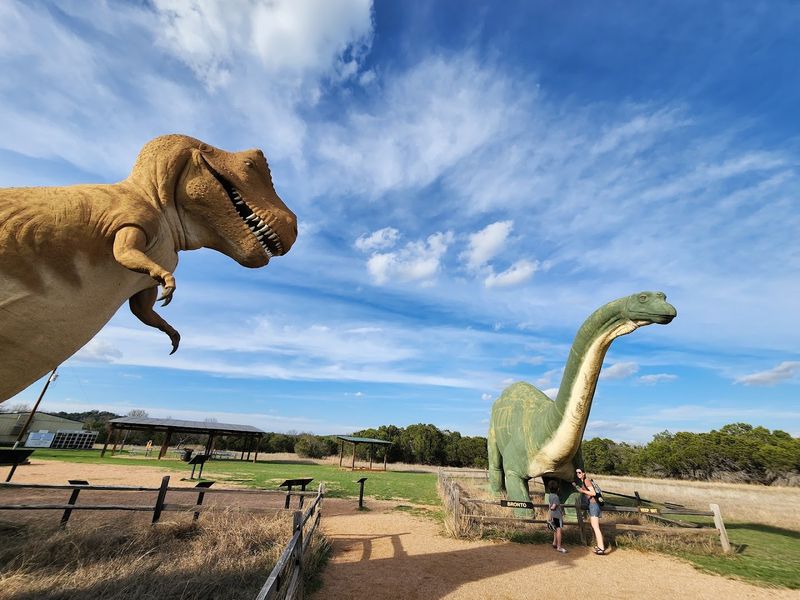
Beyond the riverbed, the park also displays two enormous life-sized dinosaur models, a Tyrannosaurus Rex and a Brontosaurus, originally built for the 1964 New York World’s Fair.
Hiking trails, swimming areas, and camping sites round out the experience for those who want to stay longer. Dinosaur Valley is the rare kind of place where the main attraction is not built, invented, or curated.
It was simply left behind, waiting to be found.
10. Longhorn Cavern State Park
Most caves are carved slowly by dripping water over millions of years. Longhorn Cavern in Burnet had a different plan entirely.
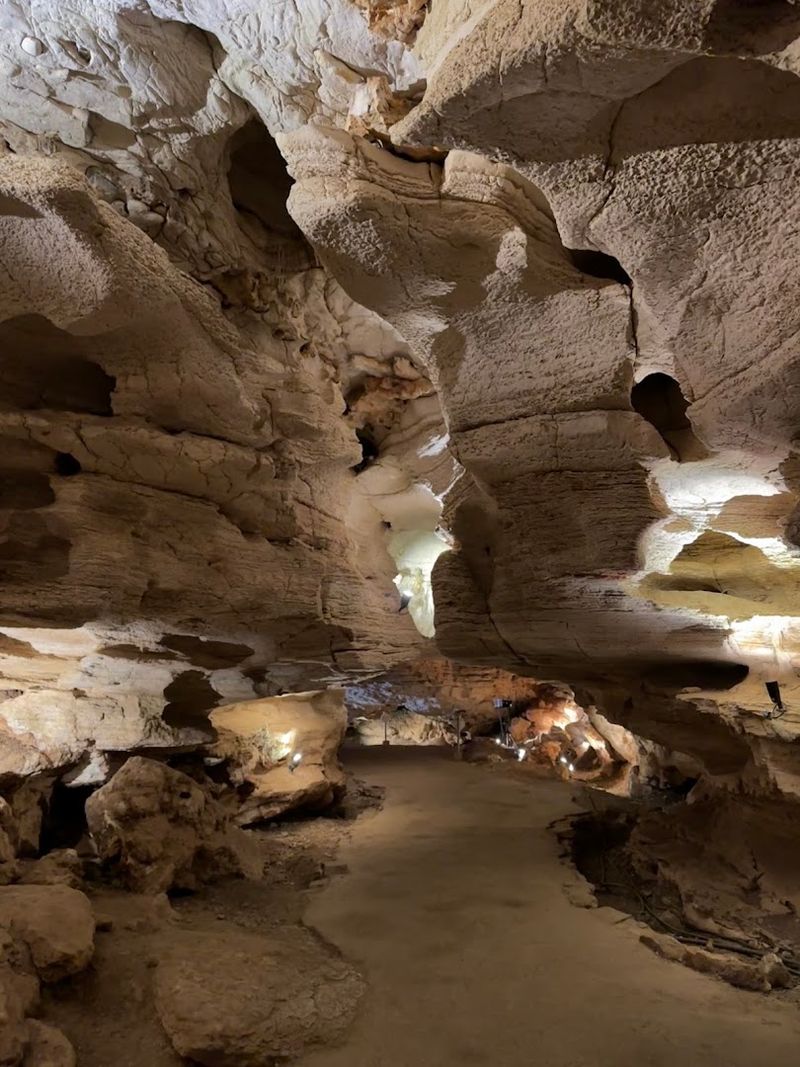
Found at 6211 Park Road 4 South, this National Natural Landmark was hollowed out by a powerful underground river, which is why its walls are smooth and sculpted rather than spiked with the typical formations you might expect.
The result is a cave that feels less like a geology exhibit and more like a natural palace built by the earth itself.
The cavern maintains a steady 68 degrees Fahrenheit year-round, making it a genuinely comfortable place to explore no matter what season you visit. The Hall of Marble is one of its most stunning chambers, with walls so polished they almost seem intentional.
But the history inside goes far beyond geology. Prehistoric Texans once used the cave as a trap for hunting.
Confederate soldiers later sheltered within its walls. And by the 1920s, it had been transformed into an underground dance hall.
That layered past gives Longhorn Cavern a depth that goes beyond its physical dimensions. Guided tours bring the stories to life in a way that makes each chamber feel like a chapter in a very long and fascinating book.
So which of these impossibly real Texas places is going on your road trip list first?