
10 Famous Music Landmarks In Tennessee That Changed American Culture
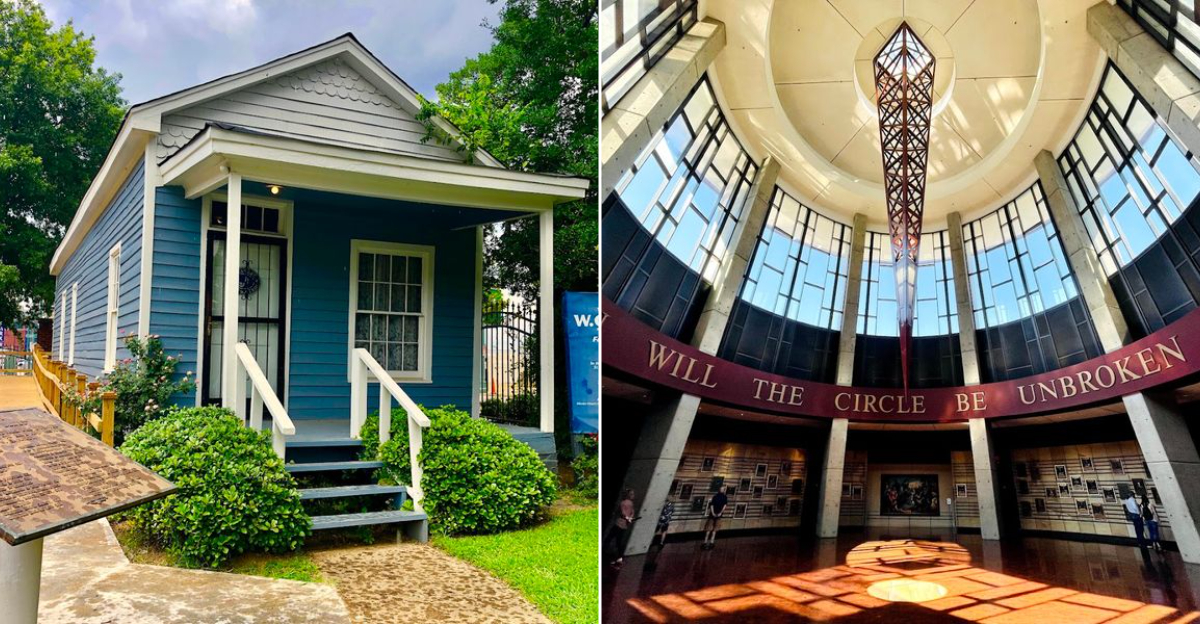
Before Nashville became “Music City” and before Memphis became a pilgrimage site for generations of fans, Tennessee was already changing the way America heard itself.
In hidden studios, smoky clubs, and legendary venues, a musical earthquake was taking place. The one that would eventually shake the world.
This is the land where Elvis Presley helped ignite the rock ’n’ roll explosion, where Johnny Cash gave a voice to rebels and dreamers, and where blues, soul, country, and rock collided to create the DNA of modern pop culture.
The same sounds born in these Tennessee landmarks would later echo through stadium tours, Hollywood soundtracks, and the playlists of millions. These places are not just historic buildings.
They are cultural time capsules. They hold the stories of artists who broke rules, challenged expectations, and turned personal struggles into songs that became part of America’s identity.
From Memphis streets to Nashville stages, these are music landmarks that didn’t just witness history. They helped write the soundtrack of it.
1. Graceland
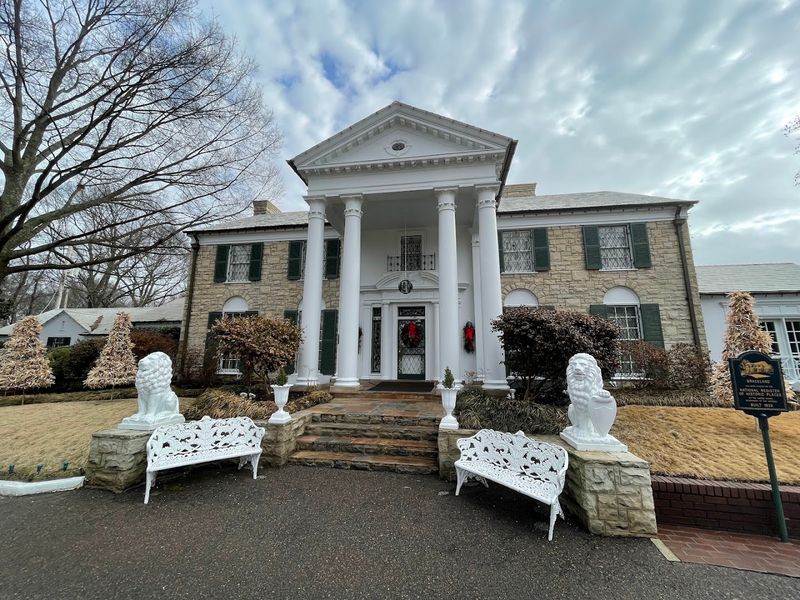
Some places carry so much history that just standing outside gives you chills. Graceland, located at 3764 Elvis Presley Boulevard in Memphis, TN 38116, is exactly that kind of place.
It was the personal home of Elvis Presley, the man who fused country, rhythm and blues, and raw charisma into something the world had never heard before.
Elvis did not just make music here. He lived, breathed, and shaped an entire cultural movement from within these walls.
The estate is now the second-most-visited home in the United States, trailing only the White House. That statistic alone tells you everything about the gravitational pull this place holds.
Opened to the public in 1982, Graceland became an instant pilgrimage destination for fans across the globe. The U.S.
Interior Department awarded it National Historic Landmark status in 2006, officially recognizing that American culture was forever altered because of Elvis.
Walking through the rooms feels like stepping into a living time capsule, full of postwar American style and personality. Graceland is not just a house.
It is proof that one person with a guitar and a dream can genuinely change the world.
2. Sun Studio
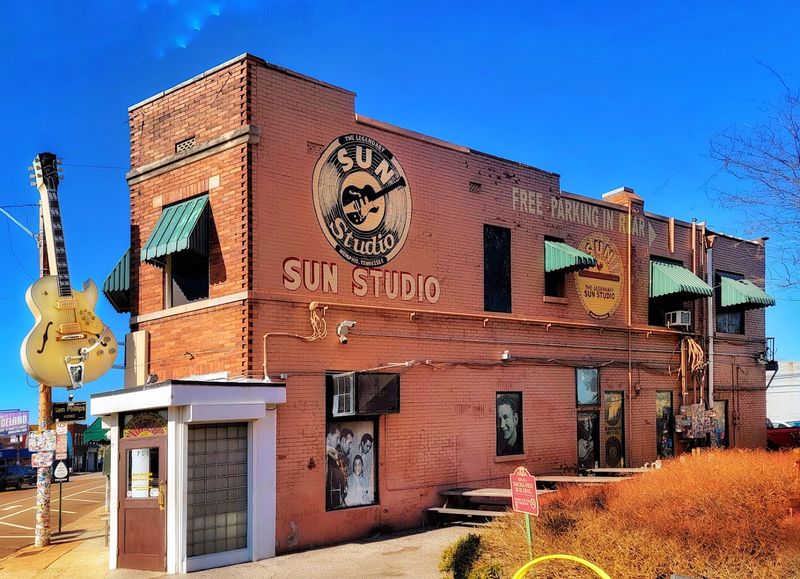
Calling Sun Studio just a recording studio is like calling the moon just a rock. This legendary space at 706 Union Avenue in Memphis, TN 38103 is widely celebrated as the birthplace of rock and roll, and honestly, that title is completely earned.
Radio DJ Sam Phillips opened the facility in 1950 and launched Sun Records in the same building two years later.
Phillips had a vision: bring blues music to a broader audience, no matter what barriers stood in the way. That vision paid off in ways nobody could have predicted.
In 1951, Ike Turner’s band recorded “Rocket 88” here, a track many music historians point to as the very first rock and roll song. Elvis Presley cut his debut recording in this room.
Johnny Cash, Carl Perkins, Jerry Lee Lewis, and Roy Orbison all made their marks here too.
Sun Studio earned National Historic Landmark status in 2003, and it reopened as both a working recording studio and tourist attraction in 1987.
Modern artists like U2 have recorded within these same walls. The studio brilliantly bridged racial and generational divides at a time when such unity was genuinely revolutionary.
Sun Studio did not just record music. It recorded history.
3. Stax Museum Of American Soul Music
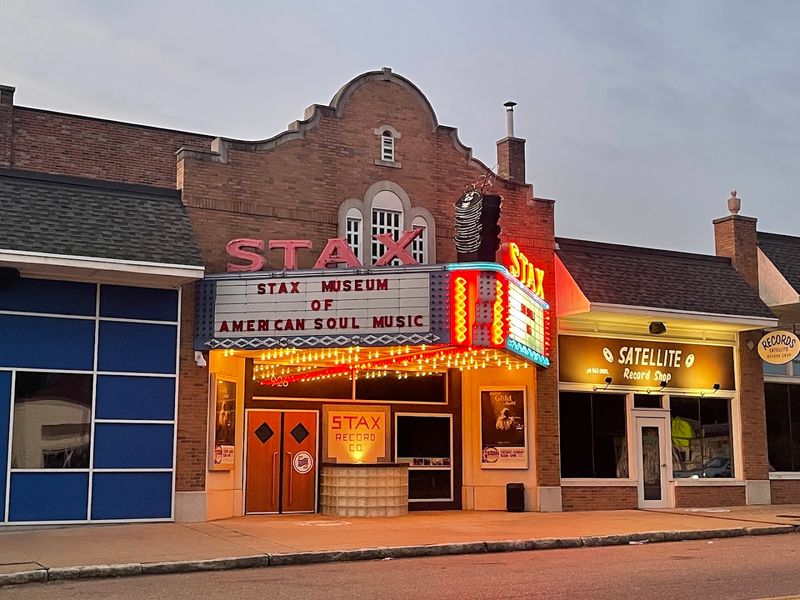
Soul music has a headquarters, and it sits at 926 East McLemore Avenue in Memphis, TN 38106. The Stax Museum of American Soul Music stands on the original site of Stax Records, the powerhouse label that defined the Memphis sound of the 1960s and 70s.
This was not just a hit factory. It was a cultural movement wrapped in a building.
Stax launched careers that became legends. Otis Redding, Isaac Hayes, the Staple Singers, Booker T. and the M.G.’s, Sam and Dave, and Albert King all recorded here.
What made Stax truly extraordinary was its commitment to integration at a time when segregation was the painful norm. Artists and collaborators of all backgrounds worked side by side to create music that moved people across every divide imaginable.
The museum opened in 2003 and now houses over 2,000 exhibits that celebrate this rich musical and social legacy. In 2022, it was added to the United States Civil Rights Trail, a recognition that feels long overdue and deeply deserved.
Stax Records was one of the first establishments to integrate its workplace and actively invest in African American businesses. The music made here did not just fill dancefloors.
It helped push a nation toward something better.
4. Overton Park Shell
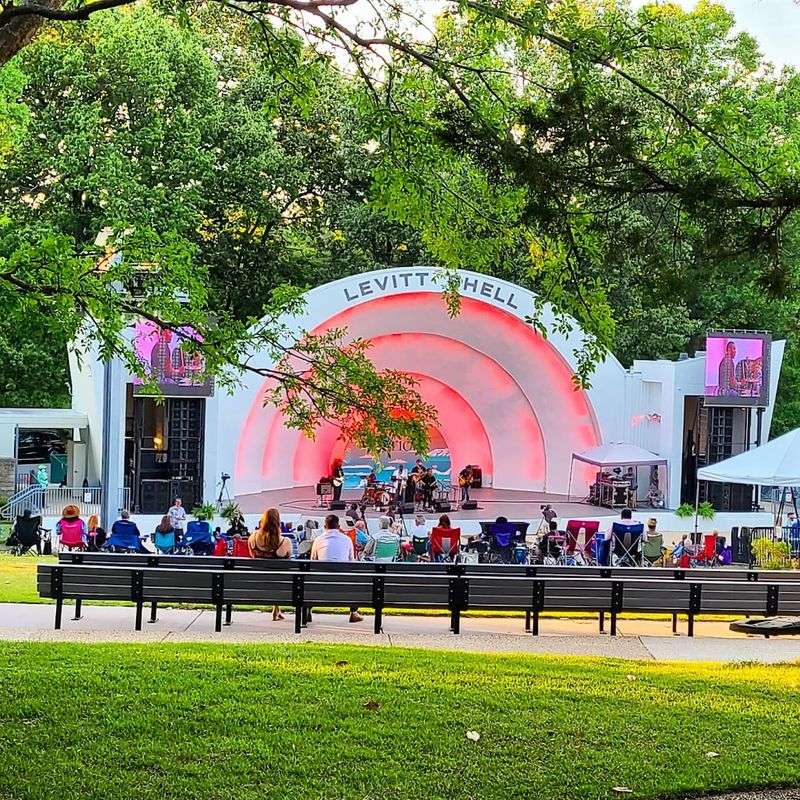
Picture an outdoor stage where rock and roll literally began its public life. The Overton Park Shell at 1928 Poplar Avenue in Memphis, TN 38104 is that exact stage.
Built in 1936 by the federal Works Progress Administration and the city of Memphis, this open-air amphitheater is one of the few WPA-era bandshells still actively hosting performances today.
In 1954, a young Elvis Presley delivered his first professional Memphis concert right here. Many music historians point to that performance as the very first rock and roll show ever staged.
The Shell also hosted the Memphis Country Blues Festival from 1966 to 1970, bringing blues masters like Mississippi Fred McDowell and Furry Lewis to audiences who might never have heard them otherwise.
The venue carries civil rights significance too.
Protests held here in 1960 ultimately led to the court-ordered desegregation of all public facilities in Memphis.
Over the decades, the Overton Park Shell has welcomed everyone from Booker T and the MGs to the Allman Brothers and Bonnie Raitt.
The Memphis community fought hard to save this landmark from demolition multiple times, and that passionate defense says everything about what this place means. Some stages are just stages.
This one is sacred ground.
5. W. C. Handy Home And Museum
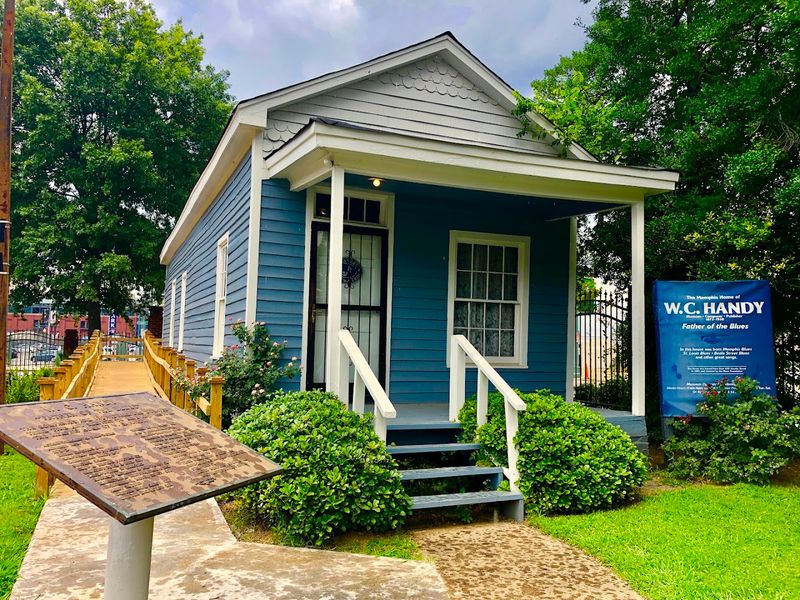
Before the blues had a recording industry, it had W. C. Handy. The W. C. Handy Home and Museum at 352 Beale Street in Memphis, TN 38103 honors the man known worldwide as the Father of the Blues, and that title is absolutely no exaggeration.
Handy popularized the blues through innovative sheet music and vaudeville performances long before recording technology made the genre widely accessible.
His compositions changed everything. “The Memphis Blues” in 1912 and “The St. Louis Blues” in 1914 became iconic touchstones that influenced not just singing styles but entirely new forms of social dancing, including the foxtrot.
Handy’s work represented a genuine cultural liberation, transforming personal hardship into universal artistic expression that resonated across communities and generations.
His publishing company, started right here in Memphis and later moved to New York, is still operated by his grandson today.
That kind of lasting legacy is extraordinarily rare. The museum itself is housed in Handy’s preserved cabin, giving visitors a tangible, almost intimate connection to the man behind the music.
Walking through this space feels less like a museum visit and more like a quiet conversation with American music history itself. Handy did not just write songs.
He gave the blues its first real vocabulary.
6. Ryman Auditorium
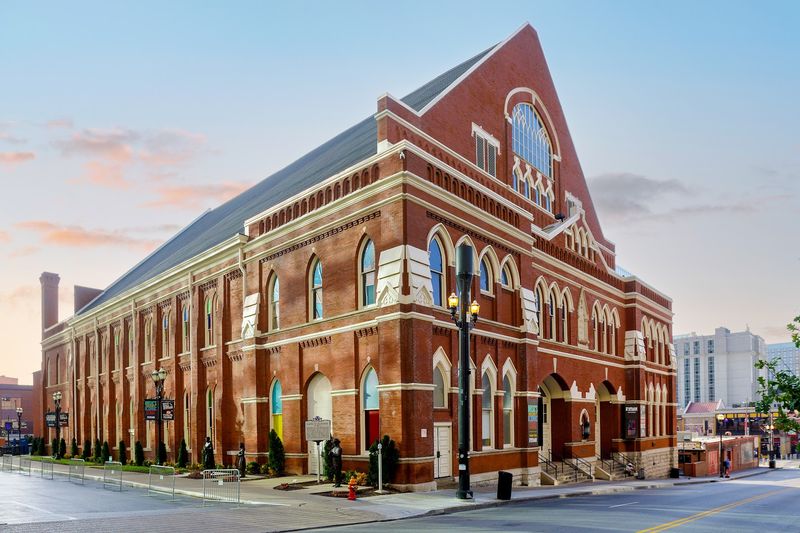
There is a reason people call the Ryman Auditorium the Mother Church of Country Music, and walking through its doors makes that reason immediately obvious.
Located at 116 Rep. John Lewis Way North in Nashville, TN 37219, this venue originally opened as the Union Gospel Tabernacle in 1892 and has been shaping American musical culture ever since.
From 1943 to 1974, the Ryman served as the beloved home of the Grand Ole Opry, a period that launched the careers of Hank Williams, Patsy Cline, Johnny Cash, and Dolly Parton. Perhaps most remarkably, the Ryman stage is recognized as the birthplace of bluegrass music.
In 1945, Bill Monroe and his Blue Grass Boys debuted the genre right here, giving the world an entirely new sound rooted in Appalachian tradition.
The Ryman’s legendary acoustics have attracted artists far beyond country music. Elvis Presley, Bob Dylan, Harry Styles, and Lizzo have all performed here, proving the building’s universal appeal.
It was designated a National Historic Landmark in 2001 and earned a Rock and Roll Hall of Fame Landmark recognition in 2022.
The Ryman also holds civil rights significance, having hosted important cultural figures during a pivotal era. This building has witnessed more American history than most textbooks bother to mention.
7. Grand Ole Opry House
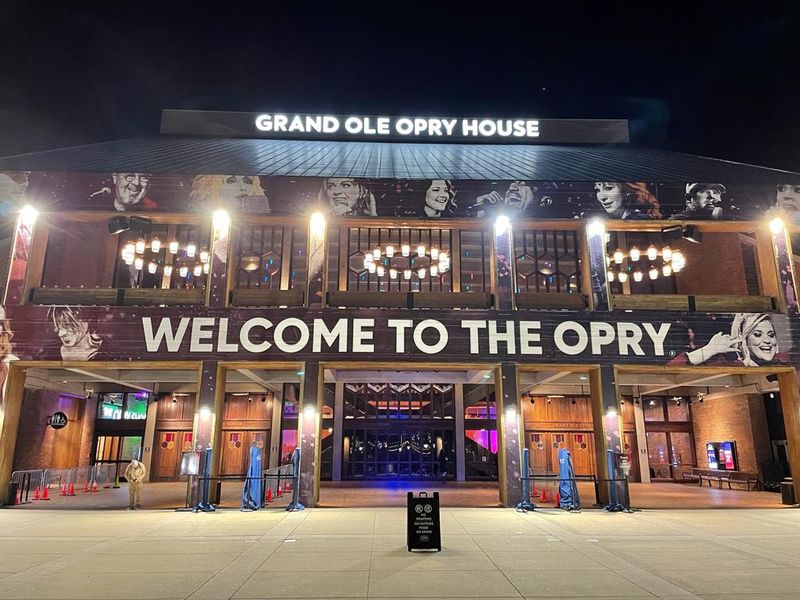
Country music has a home address, and it reads 600 Opry Mills Drive in Nashville, TN 37214. The Grand Ole Opry House has been the proud home of the Grand Ole Opry show since 1974, continuing a tradition that stretches back to 1925 when the program first aired as the WSM Barn Dance on radio.
That makes it the longest-running live radio program in the entire nation.
Throughout the 1930s and 1940s, Opry broadcasts carried the warmth and authenticity of traditional country music into living rooms across America.
The show became synonymous with real storytelling, honest emotion, and extraordinary talent. It gave a platform to a genre deeply woven into the fabric of everyday American life, celebrating the triumphs and struggles that ordinary people actually understood.
The Opry House continues to launch careers and honor legends with equal enthusiasm. Hank Williams, Patsy Cline, and Johnny Cash all found their footing on stages connected to this tradition.
Today the venue embraces honky-tonk, bluegrass, and rockabilly alongside contemporary country sounds, proving the genre is anything but stuck in one era.
The Grand Ole Opry is not just a show. It is a living, breathing institution that keeps country music’s heart beating strong every single week.
8. Historic RCA Studio B
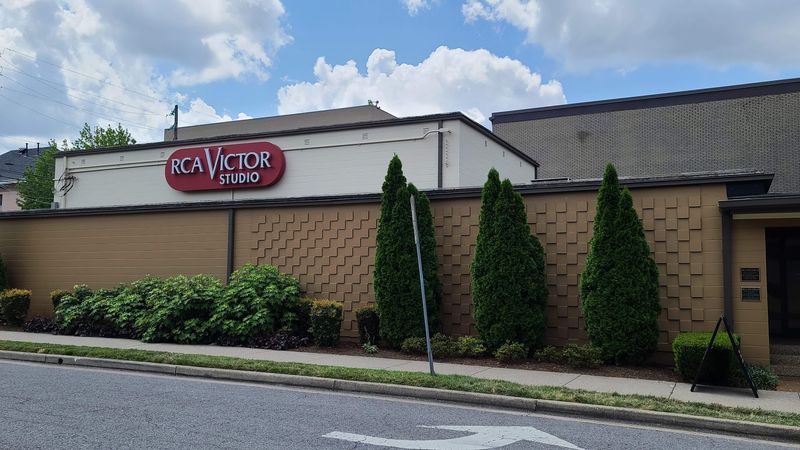
Walk into Historic RCA Studio B and you immediately feel the weight of what happened here. Situated at 1611 Roy Acuff Place in Nashville, TN 37203, this facility earned the nickname Nashville’s Historic Temple of Sound, and also carries the unforgettable title Home of 1,000 Hits.
Built in 1957, it quickly became the birthplace of the Nashville Sound.
That distinctive style, characterized by smooth instrumentation, lush string sections, and polished background vocals, transformed Nashville from a regional country hub into an internationally recognized recording capital.
Between 1957 and 1977, Studio B hosted over 35,000 recording sessions, producing more than 1,000 hit records spanning country, pop, and rock genres.
Elvis Presley recorded over 240 songs within these walls. Dolly Parton created her heartfelt classic “I Will Always Love You” right here.
Legends like Chet Atkins, Waylon Jennings, Willie Nelson, Roy Orbison, and the Everly Brothers also shaped their most important work in this room.
Studio B was also instrumental in developing the Nashville number system, a shorthand chord notation that made recording sessions faster and more creative for musicians. This studio did not just produce hits.
It quietly revolutionized how American music gets made, one session at a time.
9. Country Music Hall Of Fame And Museum
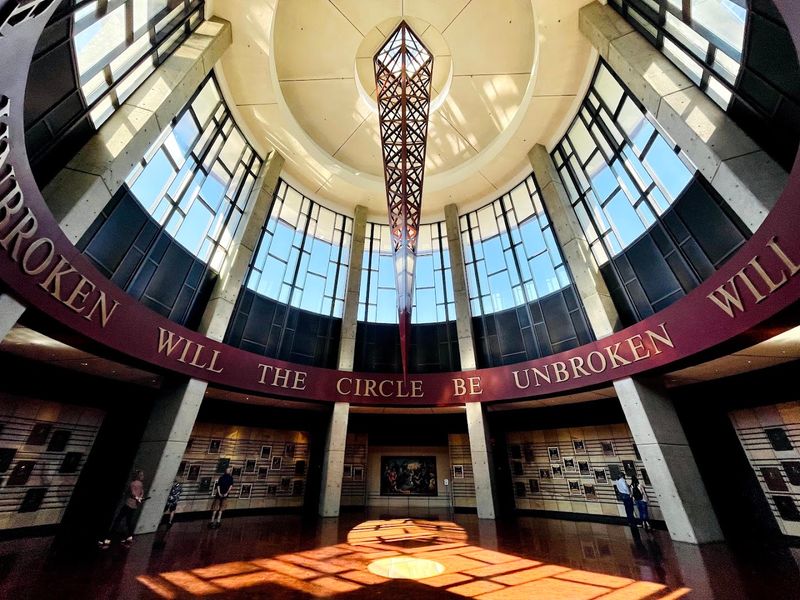
Calling the Country Music Hall of Fame and Museum just a museum is a serious understatement. Found at 222 Rep.
John Lewis Way South in Nashville, TN 37203, this institution is frequently called the Smithsonian of country music, and it genuinely earns that comparison.
Chartered by the state of Tennessee in 1964, its mission is to collect, preserve, and interpret the evolving history of country music for the entire world.
The museum honors the giants of the genre while actively inspiring future generations to pick up instruments and write their own chapters.
Its educational programs are genuinely impressive, including initiatives that pair professional songwriters with students to explore language arts through the craft of songwriting.
There is even a Taylor Swift Education Center dedicated to young visitors and families, which feels both perfectly on-brand and genuinely wonderful.
In 2024, the museum received the National Medal of Arts, the highest award the U.S. government grants to arts institutions. That recognition reflects decades of serious, passionate work in preserving musical heritage and honoring the legends who built it.
Country music tells the story of America in a way few other art forms can match.
This museum makes sure that story never gets forgotten, and that might be its greatest contribution of all.
10. National Museum Of African American Music
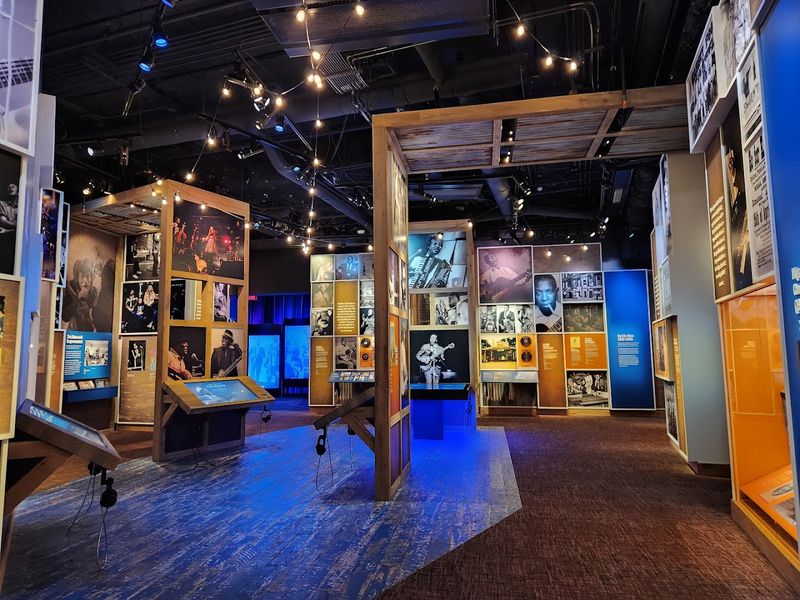
At 510 Broadway in Nashville, TN 37203 sits a museum unlike any other on the planet. The National Museum of African American Music, known as NMAAM, is the only institution in the world exclusively dedicated to preserving and celebrating African American music traditions.
That distinction alone makes it extraordinary, but the depth of what it offers makes it genuinely transformative.
The museum tells a 400-year story of African American music, tracing its journey from 17th-century gospel all the way through to the global dominance of hip-hop today.
NMAAM illuminates how African Americans shaped over 50 genres and subgenres, including Blues, Jazz, R&B, and countless others that now define popular music worldwide.
Artifacts like one of Ella Fitzgerald’s Grammy Awards and a guitar owned by B.B. King give the exhibits a powerful, tangible energy.
In 2023, NMAAM became part of the African American Civil Rights Network, recognizing its role in preserving both musical and social history.
The museum’s immersive Rivers of Rhythm pathways connect American history with the evolution of these vital traditions in a way that feels deeply personal. This is not a passive experience.
Visiting NMAAM leaves you genuinely rethinking how American music was built, and who deserves credit for building it. Which landmark on this list is calling your name first?