
This Michigan Walk Through The Woods With The Dinosaurs Still Draws Families After 90 Years
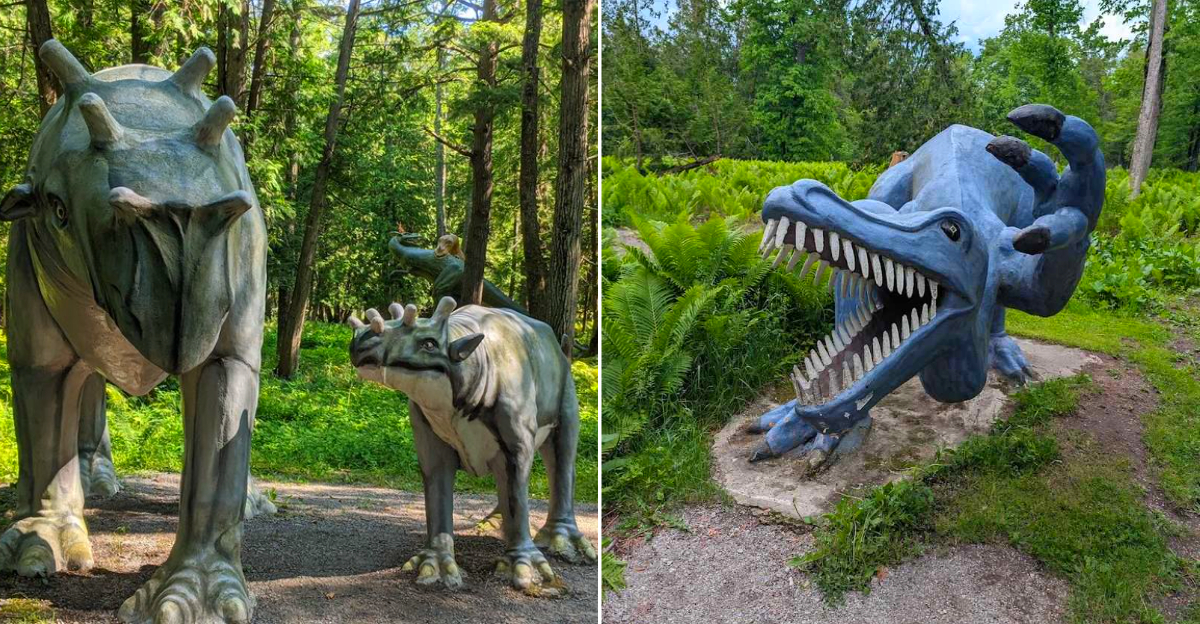
Roadside attractions from the 1930s have a way of either disappearing or becoming something stranger than any new park could replicate.
A dinosaur trail near Alpena opened in 1935 plus has been drawing families down a half-mile wooded path ever since, past life-sized concrete reptiles arranged in chronological order from the Permian through the Cretaceous.
The statues were built by hand using a material called cement plastics, painted in colors that have faded plus been touched up across nine decades, plus a few of them let you climb inside.
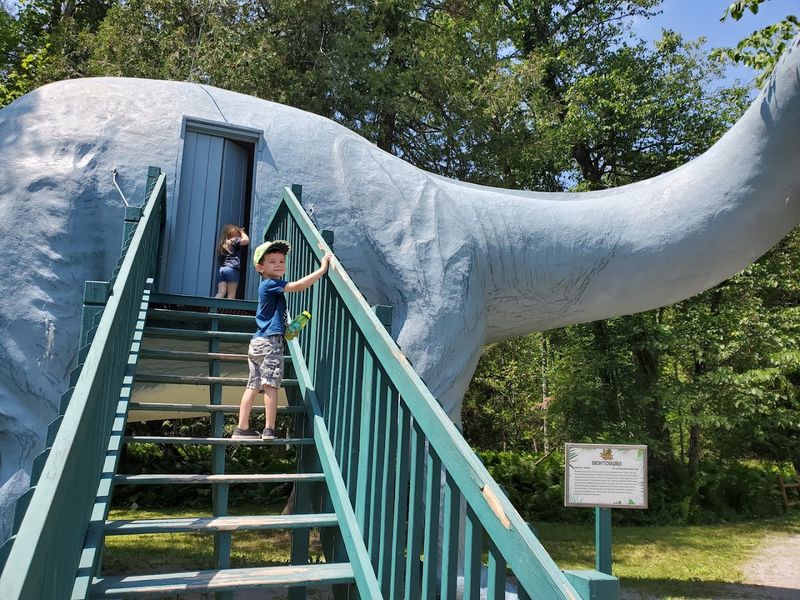
The Brontosaurus contains a painted portrait beside the dinosaur heart, a detail that makes more sense when you learn the founder believed Christ was the master planner of all creation including the dinosaurs.
The gift shop sells fossils plus minerals, the trail winds through genuine Michigan wetland, plus surviving for nearly a century earns every bit of its quirky reputation.
Start By Seeing It As Folk Art
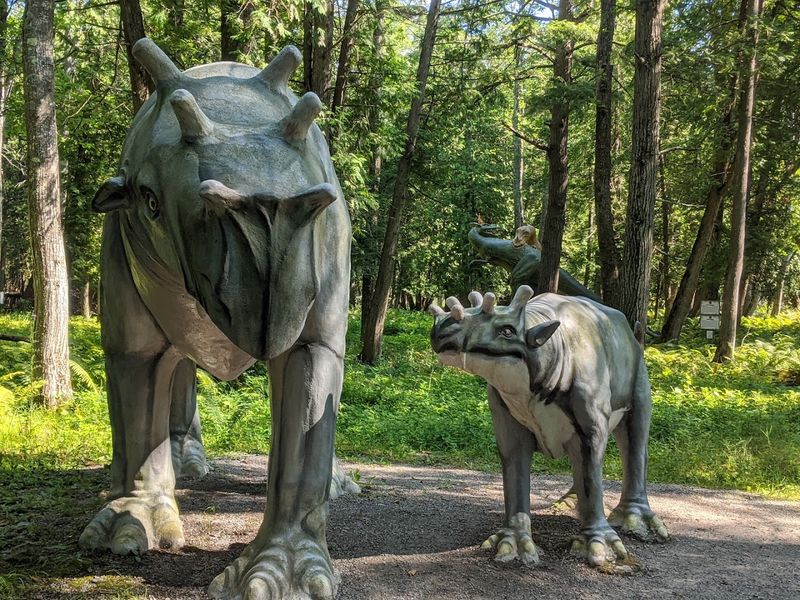
A roadside dinosaur park makes much more sense when you stop expecting modern museum realism and start reading the whole place as handmade folk art. Paul Domke began building Dinosaur Gardens in 1935, and the figures still carry the personality of that long, stubborn creative project.
They are large, colorful, sometimes scientifically outdated, and full of details that feel more personal than polished. That is exactly why they work.
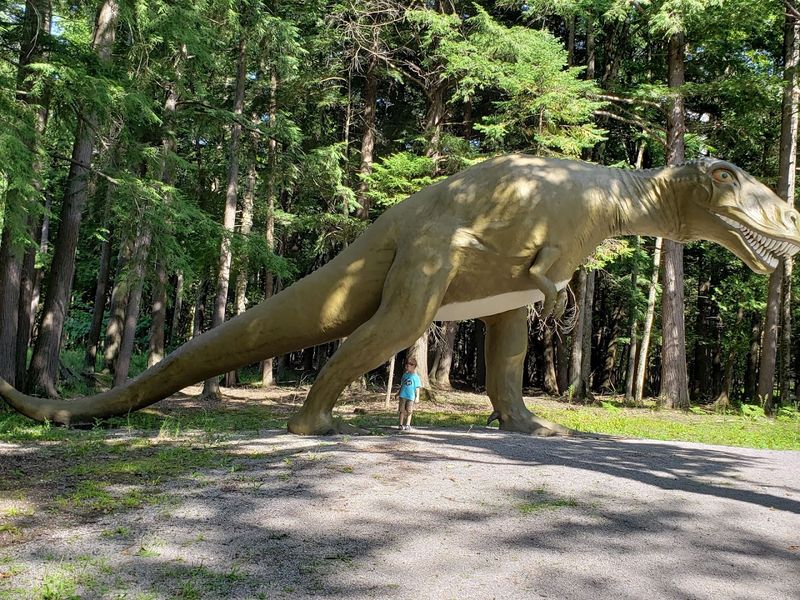
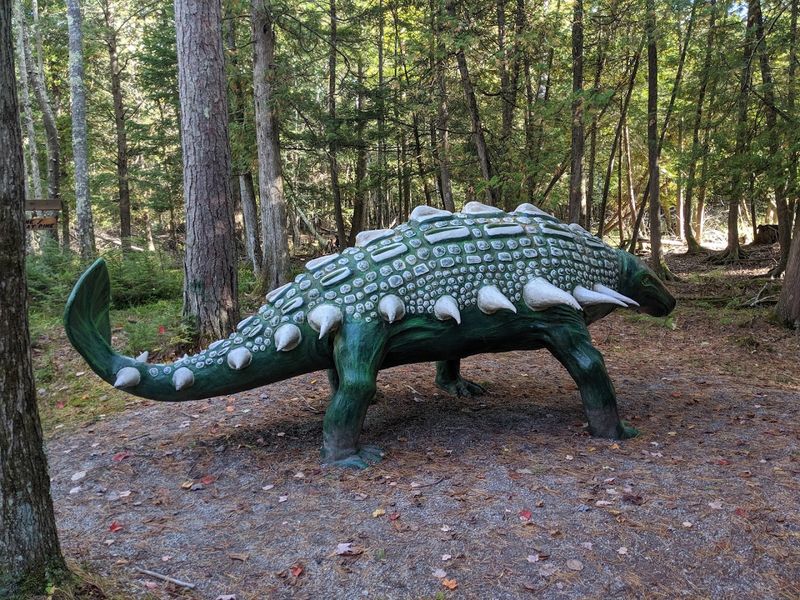
More than 25 life-sized prehistoric creatures line a half-mile trail through roughly 40 acres of wooded Michigan landscape. Some look dramatic, some look strange, and some feel almost dreamlike in the way old roadside attractions often do.
Instead of flattening the experience, that handmade quality gives it texture.
The best approach is to let the sculptures belong to their own era. These dinosaurs were made by someone studying, imagining, sculpting, revising, and trying to bring prehistoric life into the woods with the tools and beliefs available to him.
Once you accept that frame, the trail becomes more than a family photo stop. It becomes a walk through one person’s private vision, preserved long enough to become public memory.
US-23 Runs Straight Into Prehistory
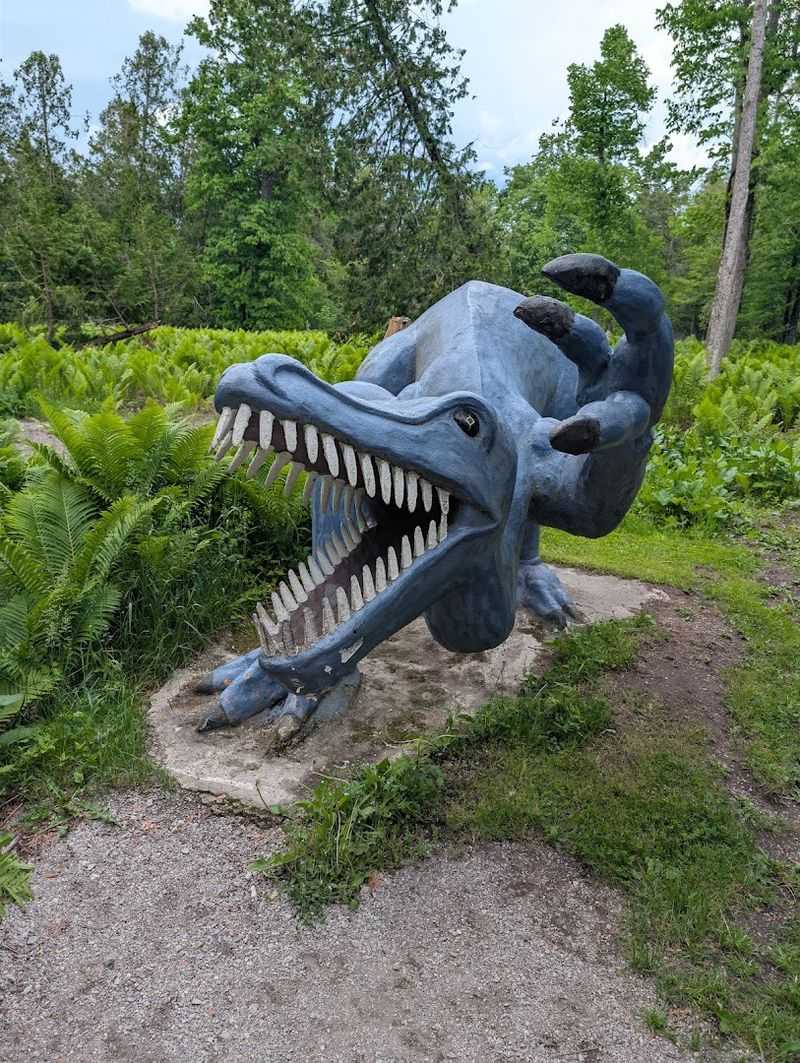
The drive prepares you for the attraction better than a parking garage ever could. Dinosaur Gardens is located at 11160 U.S. Highway 23 South in Ossineke, Michigan, about 10 miles south of Alpena, which makes the route part of the experience.
US-23 runs along Lake Huron’s side of the state, passing through a mix of wooded stretches, small communities, roadside businesses, and open northern Michigan air before the dinosaur-themed entrance appears.
That setting matters because Dinosaur Gardens belongs to the old language of highway travel. You are not entering a big theme park through lanes of traffic and corporate signage.
You are pulling off a coastal road into a wooded property where giant handmade creatures wait beyond the gift shop. From Alpena, the approach is simple: head south on US-23, watch for the signed entrance, and slow down early because traffic can move quickly on that stretch.
The visitor parking area sits near the main building, so the transition from car to trail is easy. After admission, the walk begins almost immediately.
Read The Place Through Its Founder
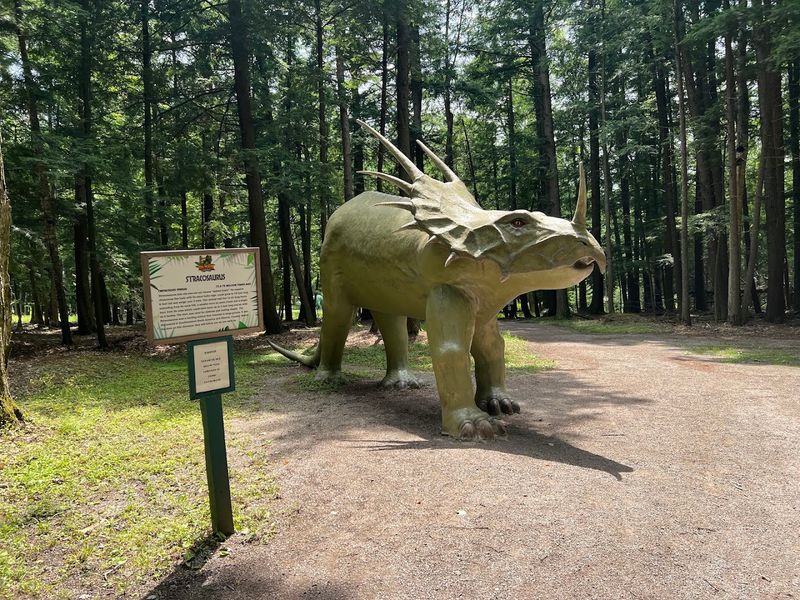
The trail becomes much more interesting once you understand the person behind it. Paul Domke was an unemployed church decorator during the Great Depression when he bought land in the area and began shaping what would become Dinosaur Gardens.
He studied dinosaur skeletons at major institutions like the Smithsonian and Chicago’s Field Museum, then translated what he learned into his own giant outdoor sculptures.
That biography explains the attraction’s unusual mix of ambition, craft, devotion, and eccentricity. Domke was not simply placing fiberglass animals beside a road to catch passing traffic.
He was using the skills of a decorator, modeler, and deeply imaginative maker to create a prehistoric environment that visitors could walk through. The result feels personal because it was personal.
His work continued for decades, which is why the park feels less like a quick novelty and more like a life project. Each creature suggests time, effort, experimentation, and a desire to make wonder visible. Knowing that changes the way you see the trail.
Notice The Material As Much As The Creatures
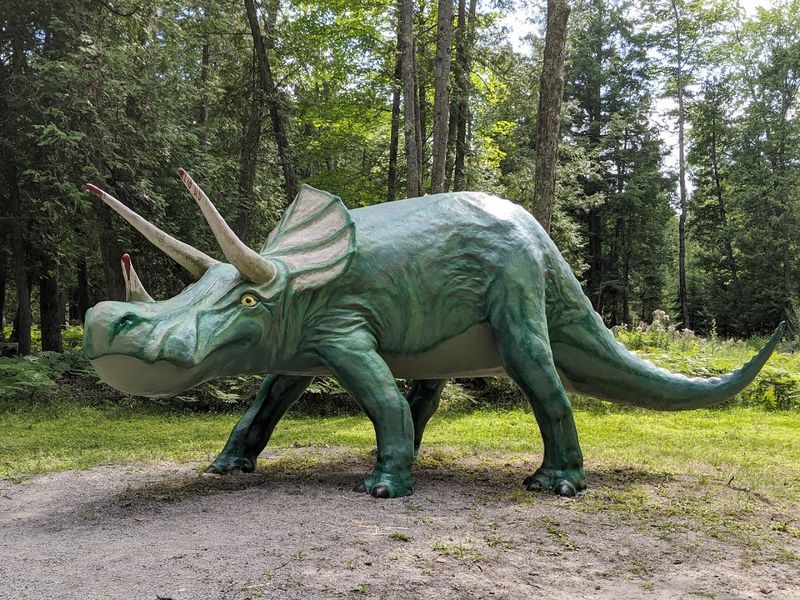
The surfaces tell a story before the plaques do. Domke built the dinosaurs using a material the attraction describes as cement plastics, a hand-applied medium that helped him shape large, durable figures long before modern roadside attractions leaned on lighter prefab materials.
That construction method gives the sculptures their weight, texture, and slightly rough individuality. They do not look machine-made because they were not.
Up close, the dinosaurs reveal their history in layers. Paint has faded, been refreshed, weathered again, and been restored over time.
Michigan winters, summer humidity, rain, sun, and tree cover have all left their marks. Instead of making the figures less appealing, that visible aging adds to the atmosphere.
These are not pristine replicas sealed off from the world; they are outdoor sculptures that have lived in the woods for decades.
Pay attention to the thickness of the bodies, the shape of the feet, the repaired surfaces, and the way color sits against concrete texture. The material gives the creatures a presence that slicker models might lack.
Expect An Unusual Blend Of Science And Faith
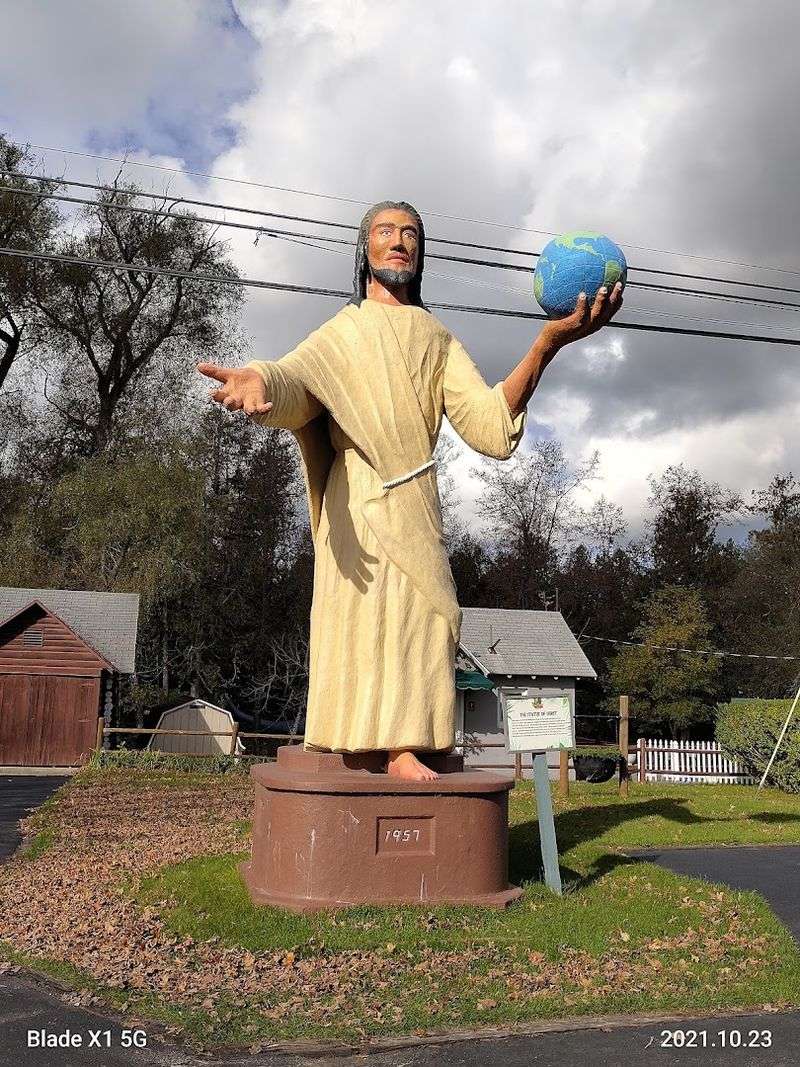
The attraction refuses to fit neatly into one category, which is part of why people remember it. Dinosaur Gardens uses prehistoric creatures, museum-style sequencing, and educational plaques, but it also includes openly religious elements tied to Domke’s Christian worldview.
Near the entrance, a large statue of Jesus holding a globe sets a tone that is unusual for a dinosaur trail, and inside the giant Brontosaurus, visitors encounter a display connected to the idea of Christ as master planner of creation.
That combination can surprise people who arrive expecting only a quirky roadside dinosaur walk. It is better to understand the mixture as part of the site’s original personality.
Domke’s imagination did not separate dinosaurs, nature, faith, and instruction into clean boxes. He built an attraction where all of those ideas shared the same wooded path.
For modern visitors, that makes the experience layered. Families can enjoy the dinosaurs, children can climb and pose where allowed, and adults can notice how mid-century roadside culture often blended education, spectacle, and belief in ways that feel unusual now.
You do not have to share the founder’s worldview to find the place fascinating.
Plan For A Self Guided Pace
The trail works best when nobody is rushing you toward the next stop.
Dinosaur Gardens is a self-guided experience, which means visitors can move through the half-mile route at their own speed, pausing for signs, photos, details, and whatever dinosaur happens to capture a child’s attention for longer than expected.
That flexibility is one of the attraction’s strengths. A half-mile may sound short, but the walk stretches naturally if you let it. The wooded setting, plaques, sculptures, and occasional oddities encourage stopping rather than marching through.
Some families will move quickly from dinosaur to dinosaur, while others will read every sign, compare sizes, take pictures, and circle back to a favorite creature. Both approaches fit the place.
Use The Extra Activities Strategically
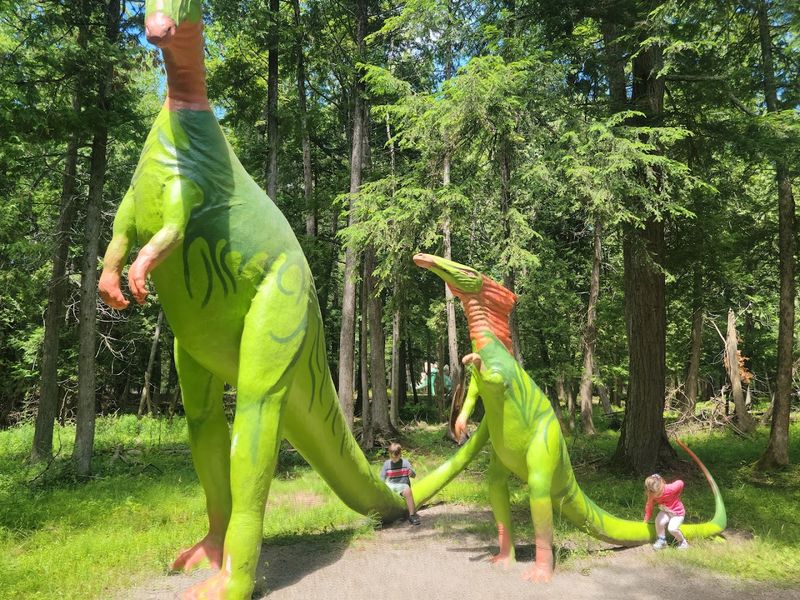
The dinosaur trail is the heart of the visit, but the extras matter if you are traveling with children. Dinosaur Gardens also offers an 18-hole miniature golf course, a Miner’s Sluice for gems and fossils, and a Fossil Dig where kids can uncover and keep finds.
Those options can turn a brief walk into a fuller afternoon. What works best is deciding in advance how much energy you want to spend here. Some families will be happy with the trail alone, while others will want a package or combination of activities.
Picnic tables on site make it easy to pause between them, which helps the day feel pleasant instead of overstuffed.
Appreciate The Restoration Work
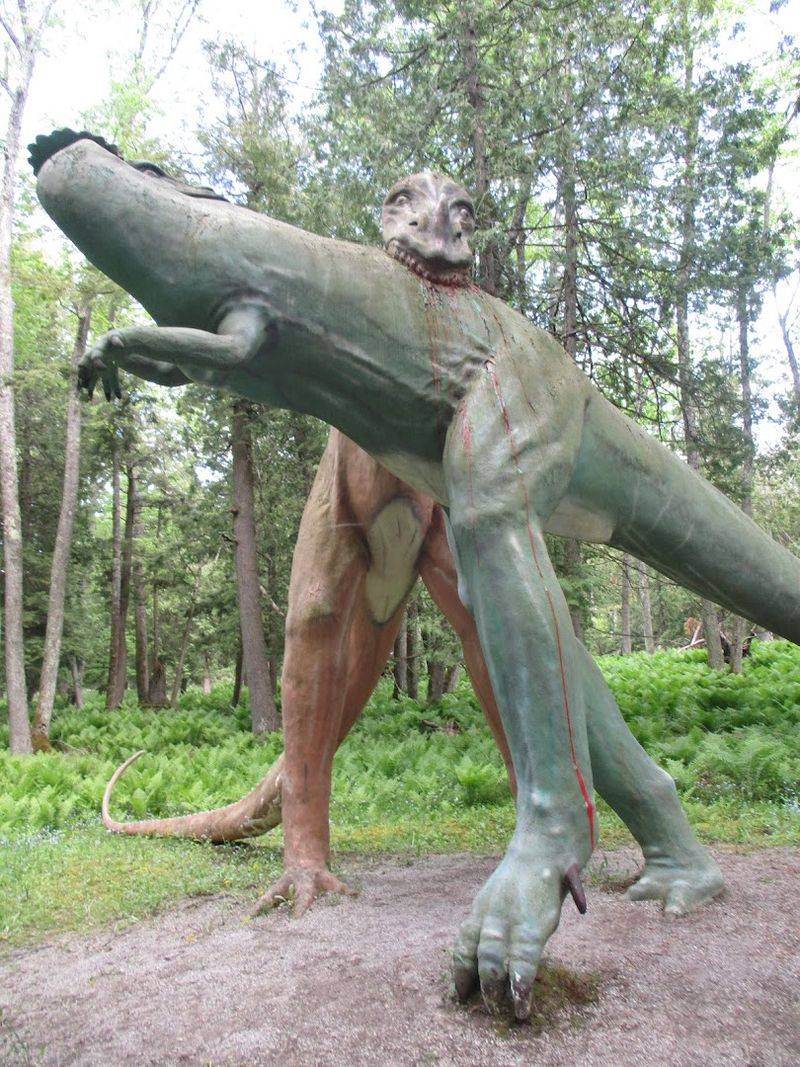
Preservation is not an abstract idea here. Gary and Connie Stephens, who acquired Dinosaur Gardens in 2013, have been restoring Domke’s sculptures with unusual care, reportedly stripping away old paint layers to reveal his original craftsmanship before refinishing the figures.
That approach respects the object beneath the color. You can feel the difference on site because the dinosaurs look maintained without seeming remade into something slicker or newer than they are. For a roadside attraction exposed to decades of Michigan weather, that restraint matters.
It keeps the place recognizable as historic Americana instead of polishing away the very quirks that make it worth visiting.
Treat It As A Seasonal Stop
Timing matters more here than at year-round indoor attractions. Dinosaur Gardens operates seasonally, typically from late May through mid-October, and current listed daily hours show 9 AM to 5 PM, though checking ahead is still wise before a long drive.
Seasonal rhythm is part of the experience. Northern Michigan weather, school breaks, and family travel patterns all shape who is on the trail with you. In peak summer, the woods feel lush and busy; on a quieter day, the same path can feel surprisingly reflective.
Because the place is outdoors and shade-heavy, a morning or early afternoon visit usually gives you the easiest, most comfortable walk.
Bring The Dog But Respect The Rules
One practical detail that sets Dinosaur Gardens apart is how welcoming it can be for travelers with dogs. Pets are allowed on the trails, which is genuinely useful on a road trip, though they are not permitted inside the gift shop.
That policy makes the attraction easier to fit into a full day. The wooded path, moderate length, and shaded conditions suit many dogs well, provided you come prepared and clean up after them. Because this is still a family attraction with narrow points and lots to look at, a calm leash routine helps everyone.
If your trip tends to revolve around pet-friendly stops, this one earns serious consideration.
Let The Strangeness Be The Souvenir
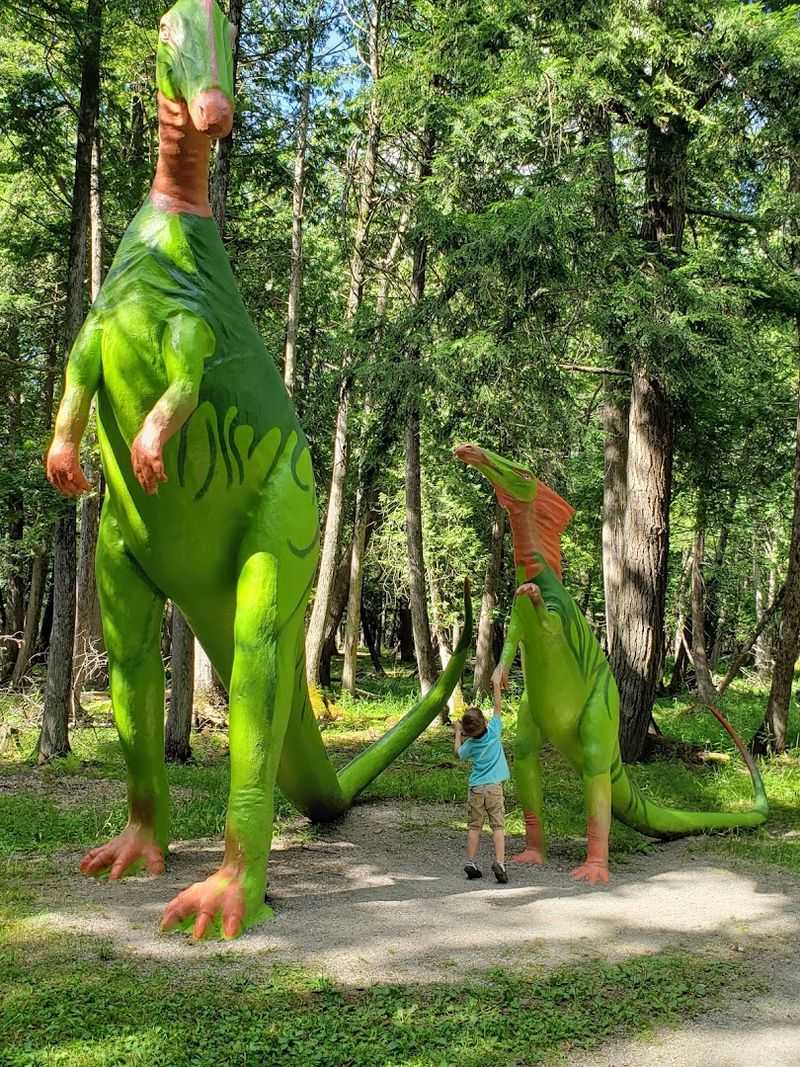
The best reason to stop at Dinosaur Gardens is not novelty alone. It is the rare chance to walk through a place that still carries the personality of its maker, from the oversized creatures in the woods to the unexpectedly devotional turns in the experience.
Very little feels generic here. That distinctiveness explains why families keep returning after nearly ninety years. The attraction is factual, local, handmade, and just strange enough to stay in your head long after the drive continues down US-23.
I left thinking less about dinosaurs as pop culture and more about how a singular vision, carefully preserved, can outlast trends and keep delighting new generations.