
This Forgotten New Jersey Town Is One Of America’s Most Mysterious Hidden Places
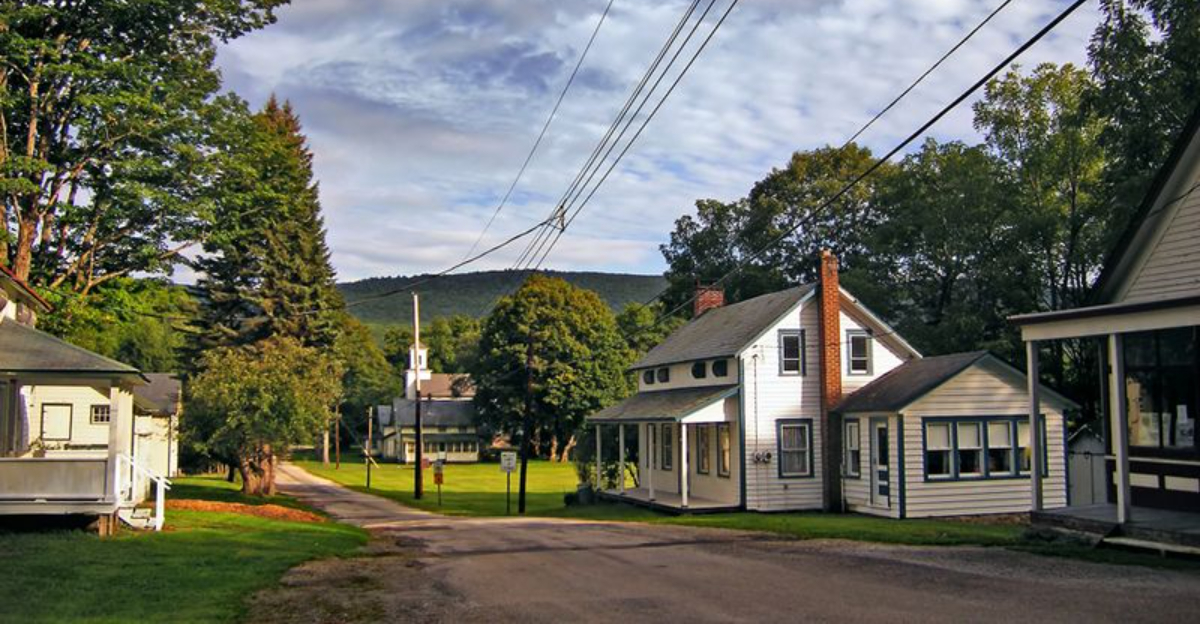
Deep in the forests of New Jersey sits a place that feels like it slipped through a crack in time. There are old buildings, empty roads, and a strange silence that makes visitors wonder what happened here.
This isn’t a movie set or a forgotten town from a history book.
It’s a real place with a story involving ambitious plans, unexpected twists, and a future that never quite arrived.
Once connected to a small community and a way of life that has nearly vanished, this mysterious corner of New Jersey now draws curious explorers looking for something far beyond the usual tourist stops.
So how did a once-living town become one of America’s most intriguing hidden places?
The Enduring Grandeur Of The Walpack Methodist Episcopal Church
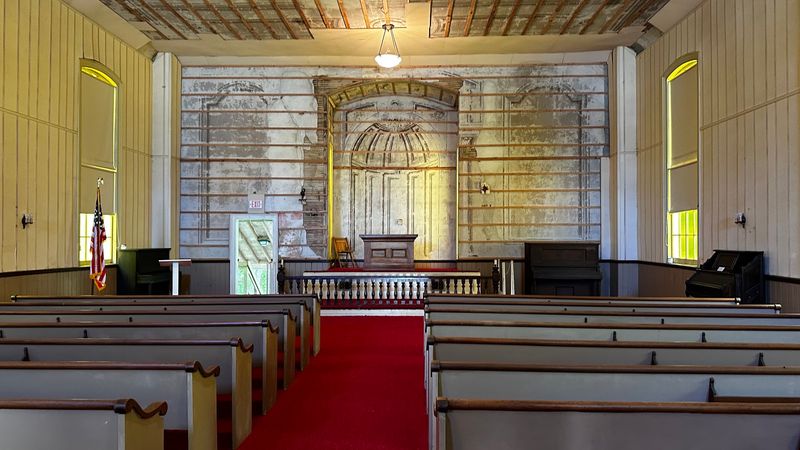
Some buildings carry stories in their walls, and this one practically whispers them out loud. The Walpack Methodist Episcopal Church, completed in 1871, is a striking white clapboard structure with green trim that anchors the heart of Walpack Center.
Its Italianate architecture, featuring flatly arched windows and ornate decorative molding, radiates a quiet elegance that feels out of place in the best possible way.
The church’s original steeple soared 30 feet above the roofline, though nature had opinions about that. Lightning struck the steeple multiple times over the years, and one strike in the early 1910s even sparked a fire.
Yet the building survived every challenge thrown at it, standing firm as a symbol of resilience and community pride.
Step inside and prepare to be genuinely surprised. A stunning “trompe l’oeil” painting behind the altar creates the illusion of a grand classical apse, tricking the eye into seeing far more depth than actually exists.
Natural light streaming through the side windows makes the effect even more dramatic. Regular services ended in 1978, but the National Park Service now owns the building, and the Walpack Historical Society hosts special events here during warmer months.
This church is proof that beauty and history make excellent roommates.
Walpack Center General Store And Post Office
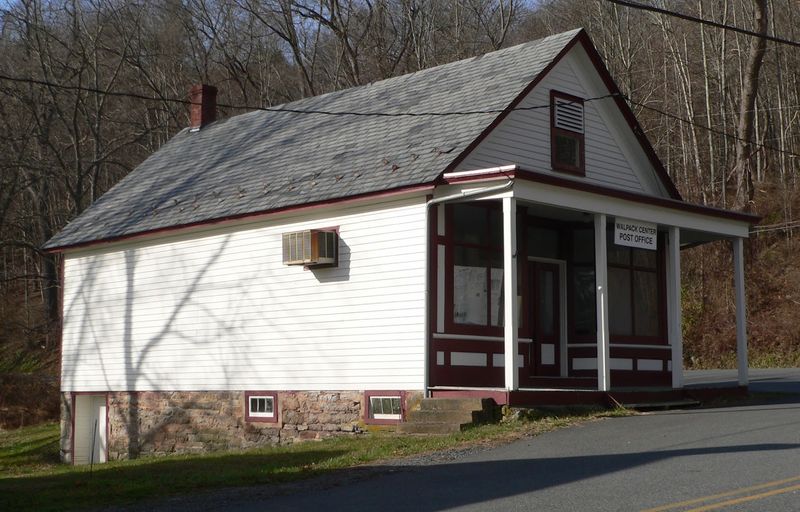
Every small town has that one spot where everything happens, and in Walpack Center, New Jersey, that spot was the General Store and Post Office.
Dating back to the mid-1800s, this building was the beating heart of the community, stocking basic goods transported from Newton and Blairstown for farmers who had no easy way to travel far.
Local produce moved through here too, creating a lively little economy in a remote valley.
Then, on an early February morning in 1915, the original two-story structure burned completely to the ground. What happened next is genuinely impressive.
The community rebuilt and reopened the store as the one-and-a-half-story structure visible today, all within just 30 days. That kind of determination deserves serious respect.
The post office operating inside the building had been running since 1854, finally closing its doors in 1988 after more than a century of service.
Today, the weathered clapboard exterior and its charming hand-painted sign make it one of the most photographed spots in the village.
The Walpack Historical Society occasionally opens it for visitors, offering a rare peek into a world where your general store was also your news source, your post office, and your community center all rolled into one.
The Echoes Of Learning At The Walpack Schoolhouse
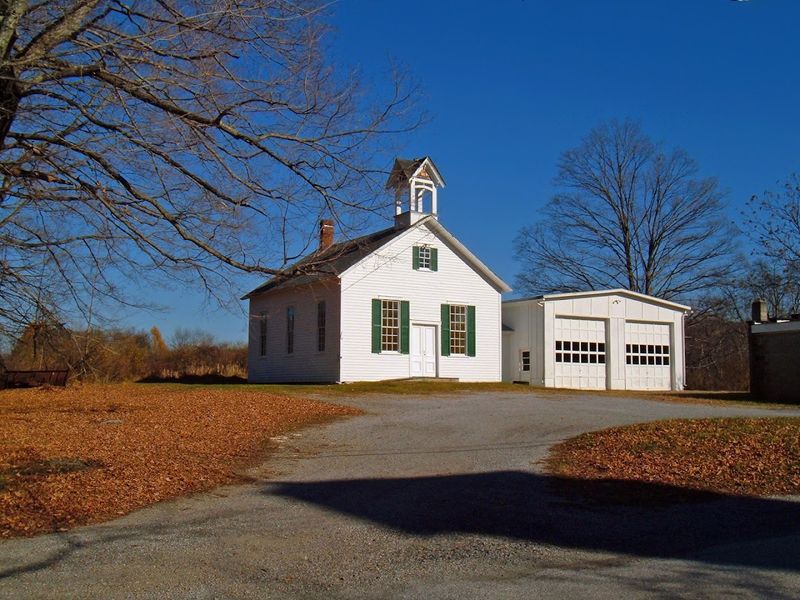
Walking past the Walpack Schoolhouse feels like catching a memory mid-flight. Built in 1893, this one-room building served as the third schoolhouse in the village, educating children from Walpack Center and the surrounding farms until 1951.
For nearly six decades, generations of young students learned reading, arithmetic, and everything in between within these modest walls.
The history of education here actually stretches back even further. The very first school in the area was an octagonal log building constructed around 1800, located just outside the town center.
A frame building followed in 1830 and was eventually moved into the village itself.
Each version represented a community that genuinely valued learning, even in the most remote of settings.
Inside the 1893 building, a combination wood and coal stove kept students warm through brutal New Jersey winters.
Two outhouses stood discreetly behind the structure, a small but telling detail about daily life in that era. The schoolhouse remains remarkably intact today, though it is generally closed to visitors.
Just standing beside it and imagining rows of students bent over slate boards creates a surprisingly powerful connection to the past. Some places teach you something simply by existing, and this is absolutely one of them.
The Storied Walls Of The Rosenkrans House And Museum
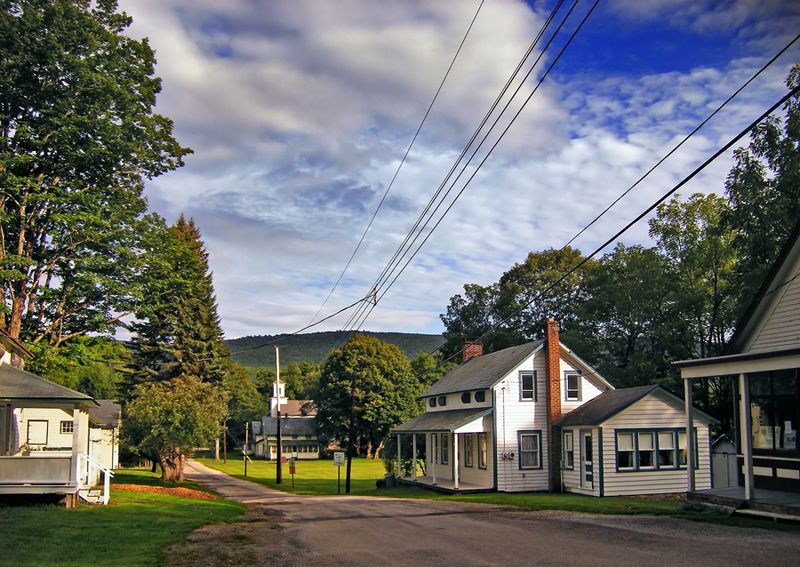
Here is a building that has seen it all and somehow lived to tell every single story. The Rosenkrans House, built in 1850 by Jasper Rundle, showcases the distinctive Delaware Valley architectural style that was popular throughout the region during the mid-19th century.
Keep your eyes up when approaching because the charming “eyebrow” windows near the roofline are one of its most endearing and unique features.
Originally serving as the residence for the storekeeper working next door, the house offered an impressively short commute across the yard.
When the 1915 fire devastated the neighboring general store, the Rosenkrans House narrowly escaped the flames, surviving to become one of Walpack Center’s most treasured historic structures. That lucky break for history lovers everywhere is hard to overstate.
Today the building functions as a small but fascinating museum and serves as the local headquarters for the Walpack Historical Society. Visitors are welcomed inside on select Sundays from May through October, making those open days feel genuinely special.
Original features like the hearth and chair rails remain beautifully intact, offering an intimate window into 19th-century domestic life. The artifacts inside tell stories that no textbook ever quite captures.
Walpack’s history feels most personal right here, within these carefully preserved walls.
A Glimpse Into The Past
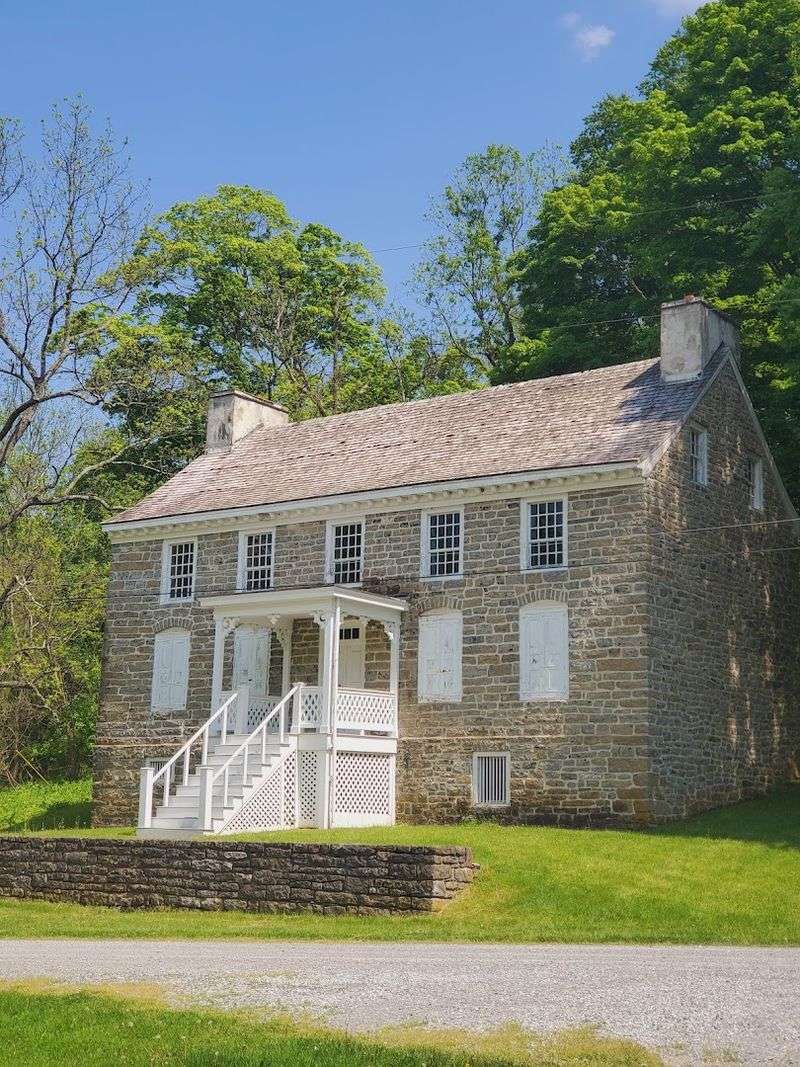
Just a few miles northwest of Walpack Center, tucked along the historic Old Mine Road, sits a building that has been standing since before the United States was even a country.
The Van Campen Inn, constructed in the early 1740s, holds the remarkable distinction of being one of the oldest surviving structures in the entire Delaware Water Gap region. Its stone walls have weathered nearly three centuries of history without flinching.
Originally built as a farmhouse, it soon evolved into a “Yaugh house,” which meant it was legally required to provide shelter and food to traveling soldiers and frontier settlers.
During the French and Indian War, this inn served as a crucial rest stop along a rugged and often dangerous route. Colonial-era Dutch architecture defines its look, and every stone feels intentional and enduring.
Reaching the Van Campen Inn is part of the adventure.
A short, scenic trail called the Military Road Trail connects it directly to Walpack Center, making for a rewarding walk through layered history. The Walpack Historical Society offers public tours during specific events, bringing the colonial story back to vivid life.
Standing inside those thick stone walls, it becomes easy to imagine the footsteps of soldiers and settlers echoing right alongside yours.
Tracing History On The Old Mine Road
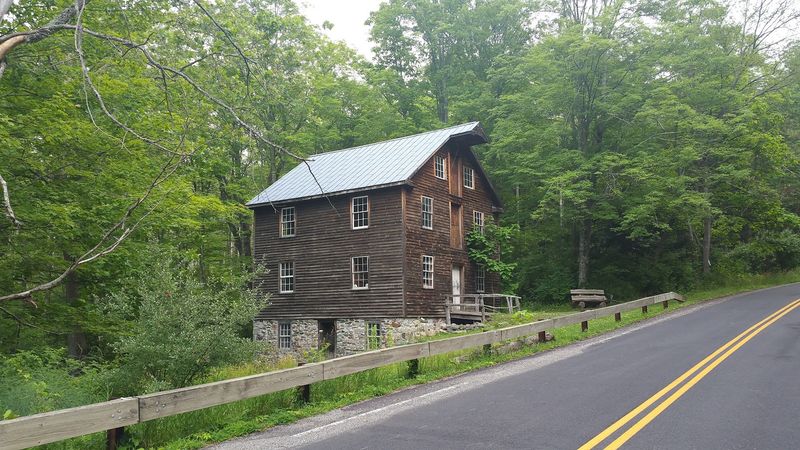
Not many roads in America can claim a history stretching back before 1664, but the Old Mine Road is not most roads.
Believed to have been constructed by Dutch miners in the mid-1600s, its original purpose was to haul valuable copper ore from the Pahaquarry area all the way north to Kingston, New York, then called Esopus.
At its peak relevance, this route was considered one of the longest commercial roads of significance in the entire American colonies.
The road winds its way through Walpack Township, threading through forest and farmland with a quiet confidence that only comes from centuries of use. Some sections remain unpaved, which honestly adds to the charm rather than detracting from it.
Driving or walking along it feels less like a commute and more like a time machine set to a very specific and fascinating era.
What makes Old Mine Road so compelling is how it layers history without overwhelming you. Each mile reveals something new about the earliest European settlers and their ambitious push into the frontier.
It connects directly to Walpack Center’s story, serving as the artery through which goods, people, and ideas once flowed.
This road did not just carry copper ore, it carried the foundations of an entire region’s identity. Few roads anywhere carry that kind of weight so gracefully.
Buttermilk Falls And Tillman Ravine
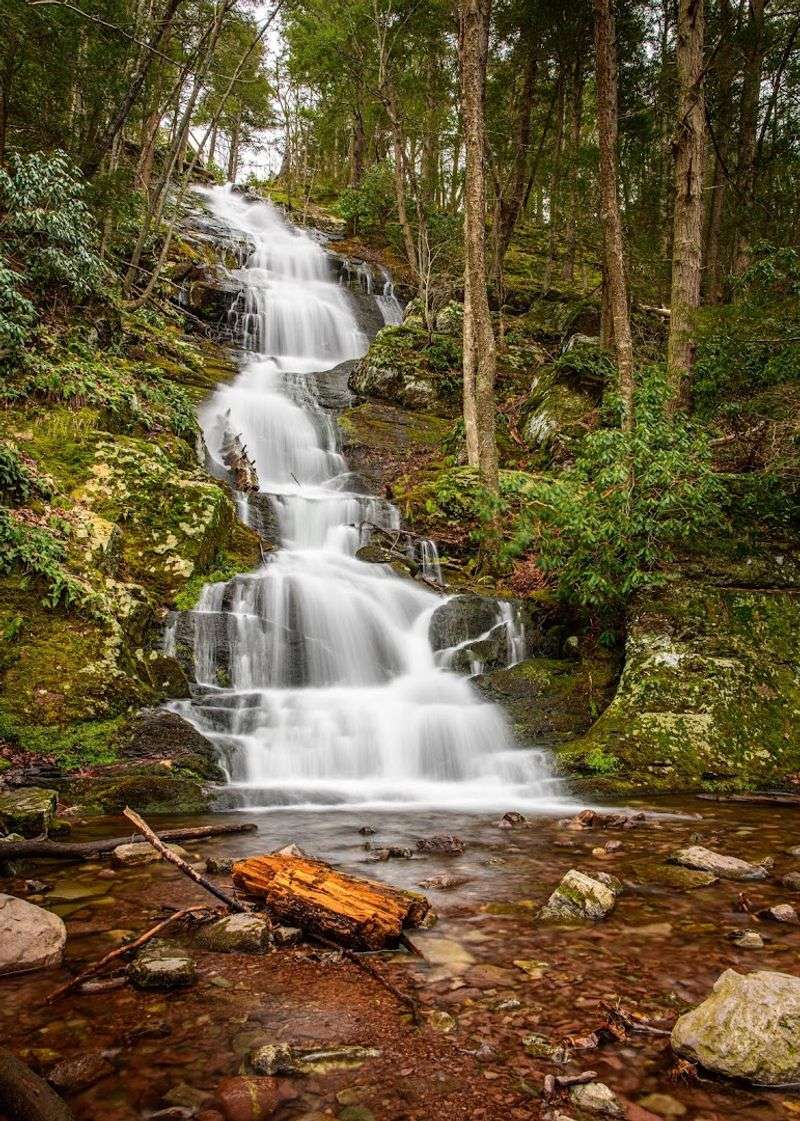
Walpack Center does not stop impressing you once you have explored its historic buildings. The surrounding natural landscape is equally jaw-dropping and plays a huge role in understanding why this valley felt so isolated and so special for so long.
Majestic mountains and dense forests cradle the village on all sides, creating a setting that feels almost deliberately cinematic.
Buttermilk Falls, located just a short journey from the center, proudly holds the title of New Jersey’s highest waterfall. At 75 feet tall, the cascade is genuinely spectacular, sending mist into the air and filling the surrounding forest with a constant, soothing roar.
The hike up to the summit rewards every step with increasingly stunning views and a growing appreciation for the raw power of moving water.
Nearby Tillman Ravine offers a completely different but equally captivating experience. Its hemlock-lined gorge and rushing stream create a serene, almost otherworldly atmosphere that feels miles away from anything modern.
Together, these two natural wonders complement Walpack Center’s human history perfectly, reminding visitors that the land itself has always been a central character in this story.
Whether you come for the history or the scenery, Walpack Center delivers both with quiet, unhurried generosity. Have you added it to your weekend plans yet?