
11 Under-The-Radar Things To Do In Arkansas That Many Locals Still Don’t Know About
The best road trips begin with a place you almost skipped. Arkansas is full of those stops, including quiet historic sites and overlooked museums that reveal more than expected once you slow down.
Many are easy to miss because they sit beyond the busiest routes or receive little attention outside their region. That does not make them less memorable.
In fact, the lack of crowds can make the experience feel more personal. You can stand near ancient earthworks or walk through the remains of a mining community that time nearly erased.
Each fascinating, memorable destination adds a different chapter to the journey without demanding days of planning. A free afternoon may be enough.
This list gathers eleven places that truly deserve a much closer look, especially when the usual weekend options feel repetitive. Keep your road map open and ready, because several of these stops could inspire your next drive.
1. Louisiana Purchase State Park, Holly Grove
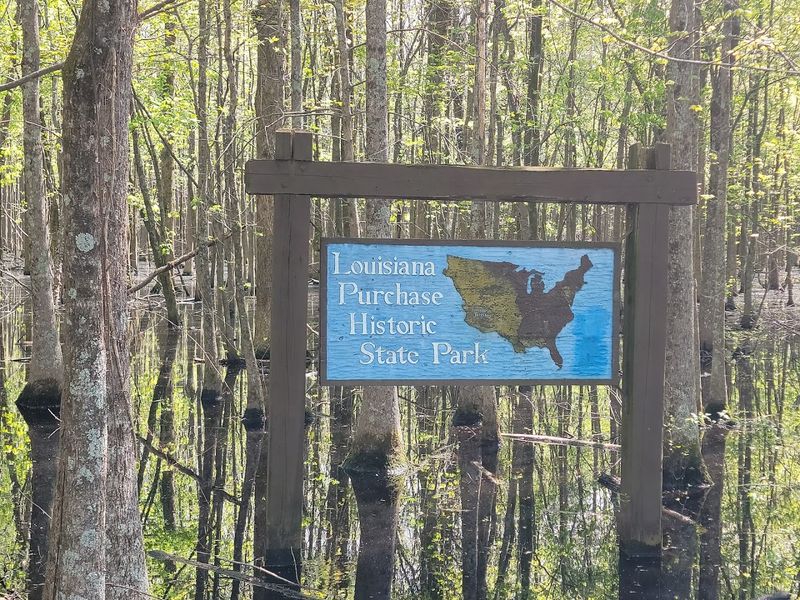
A granite marker standing knee-deep in swamp water might not sound like a tourist draw, but this one changed the map of an entire nation.
Louisiana Purchase State Park sits off AR-362 in Holly Grove, AR 72069, marking the exact point where surveyors began measuring out the vast Louisiana Purchase territory back in 1815.
The elevated boardwalk that winds through this headwater swamp is unlike anything else in Arkansas, threading quietly above dark, still water framed by cypress and tupelo trees.
You are not just looking at a wetland; you are standing at the geographic origin point of millions of acres of American land.
The park is peaceful in a way that feels deliberate, as if the wilderness itself is holding its breath around such a historically loaded spot.
Birdwatchers will find the habitat surprisingly rich, with wading birds and woodland species moving through the canopy above the boardwalk.
There are no crowds, no gift shops, and no long lines here, just you, a swamp, and one of the most quietly significant monuments in the country.
Visiting early in the morning, when mist sits low over the water, makes the whole experience feel like stepping into a living history painting you never knew existed.
2. Arkansas Museum of Natural Resources, Smackover
Few people outside of southern Arkansas know that a sleepy town called Smackover was once one of the wildest boomtowns on the continent.
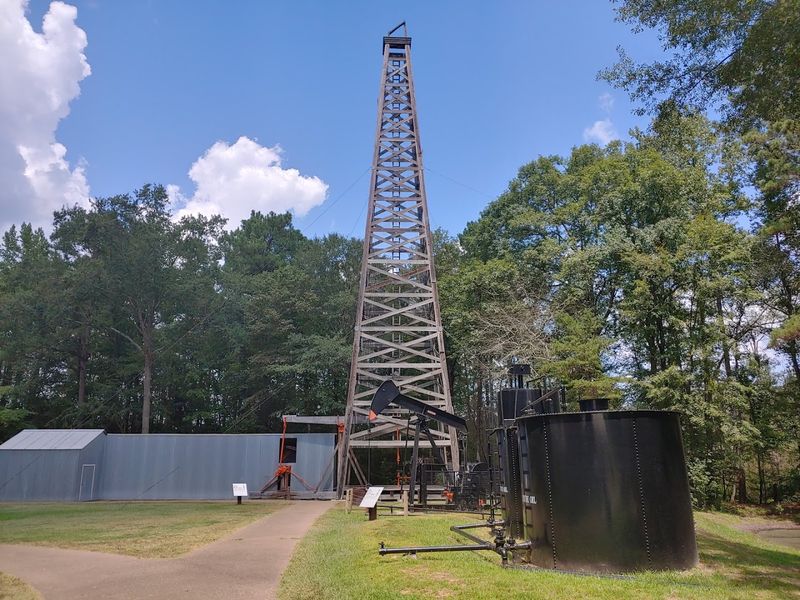
The Arkansas Museum of Natural Resources at 4087 Smackover Highway, Smackover, AR 71762 tells that story with remarkable honesty and detail.
Walk outside and you are surrounded by working oil field equipment, including a towering replica derrick that commands your attention the moment you step out of your car.
Inside, a recreated boomtown street scene pulls you straight into the 1920s, with vintage trucks, old gas pumps, and a period-accurate cafe that makes you feel like you just wandered onto a film set.
The “Center of the Earth” exhibit is a standout, using a high-tech elevator experience to walk visitors through geological time and explain how petroleum actually forms underground.
What makes this museum special is how it connects industrial history to real human lives, showing what happened to ordinary families when oil money flooded into a tiny community almost overnight.
The museum sits within the historic Smackover Oil Field, so the landscape surrounding you reinforces everything you are learning inside.
History lovers, science fans, and curious road-trippers all tend to leave here with the same reaction: genuine surprise that this place exists and nobody told them sooner.
3. Hampson Archeological Museum State Park, Wilson
Long before European explorers arrived, a sophisticated civilization was thriving along the banks of the Mississippi River in what is now northeastern Arkansas.
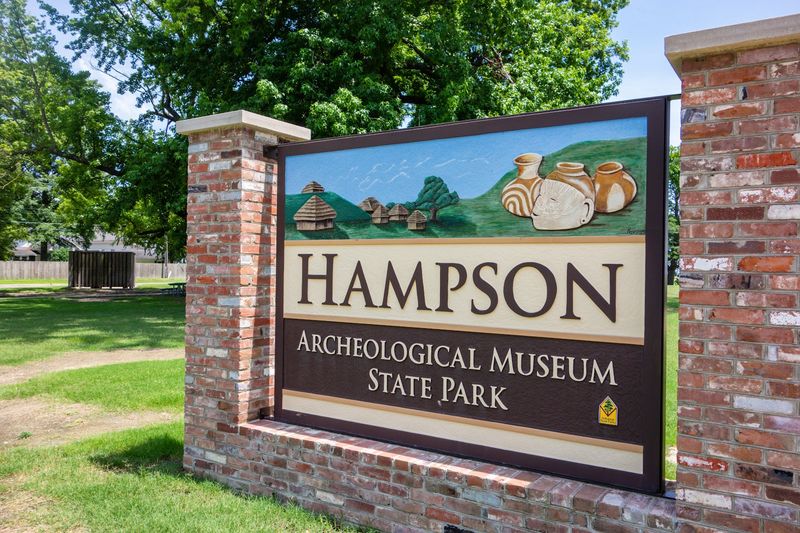
Hampson Archeological Museum State Park at 33 Park Avenue, Wilson, AR 72395 preserves one of the most complete collections of Nodena culture artifacts in the entire country.
The Nodena site was a palisaded village covering roughly fifteen acres, home to farming communities that maintained complex trade networks, religious practices, and political structures between roughly 1400 and 1650.
Dr. James K. Hampson spent years carefully recovering items from this site, including intricate effigy vessels, ceremonial bowls, and stone tools that speak volumes about daily life in this ancient community.
A major renovation transformed the museum into a genuinely impressive facility, with hands-on displays and thoughtfully designed exhibits that feel welcoming to visitors of all ages.
What sets this place apart is the sheer density of the collection, because few museums outside major cities can offer this level of depth on Mississippian culture.
The town of Wilson itself has a quiet, unhurried charm that makes the visit feel like a proper small-town Arkansas day trip rather than a rushed museum stop.
You will leave with a much richer sense of the deep human history embedded in this region long before it had a name on any map.
4. Lower White River Museum State Park, Des Arc
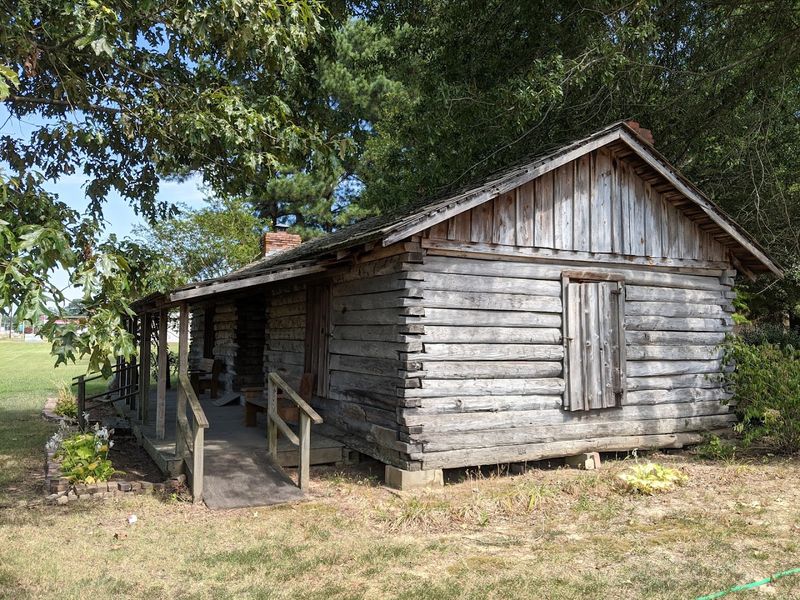
Rivers shaped the early American South more than almost any other force, and the White River was one of the most powerful shapers of all.
Lower White River Museum State Park at 2009 Main Street, Des Arc, AR 72040 captures a full century of river life along one of Arkansas’s most vital waterways.
The exhibits cover the years between 1831 and 1931, walking visitors through the rise of steamboat commerce, the rhythm of logging camps, and the agricultural cycles that defined communities up and down the river corridor.
Life-sized figures of a steamboat captain, a schoolteacher, and a land surveyor each share their stories through audio recordings, giving the museum a storytelling quality that feels more like theater than a typical history display.
A replica dogtrot cabin from the late 1800s anchors one section of the museum, offering a tangible and surprisingly moving look at frontier domestic life.
Des Arc itself sits right on the White River, so stepping outside after your visit and watching the water move past town adds a satisfying layer of context to everything you just learned.
The museum is compact enough to explore thoroughly in a couple of hours, making it a perfect stop on a longer road trip through central Arkansas.
Few places connect river culture and everyday human resilience as naturally and warmly as this one does.
5. South Arkansas Arboretum, El Dorado
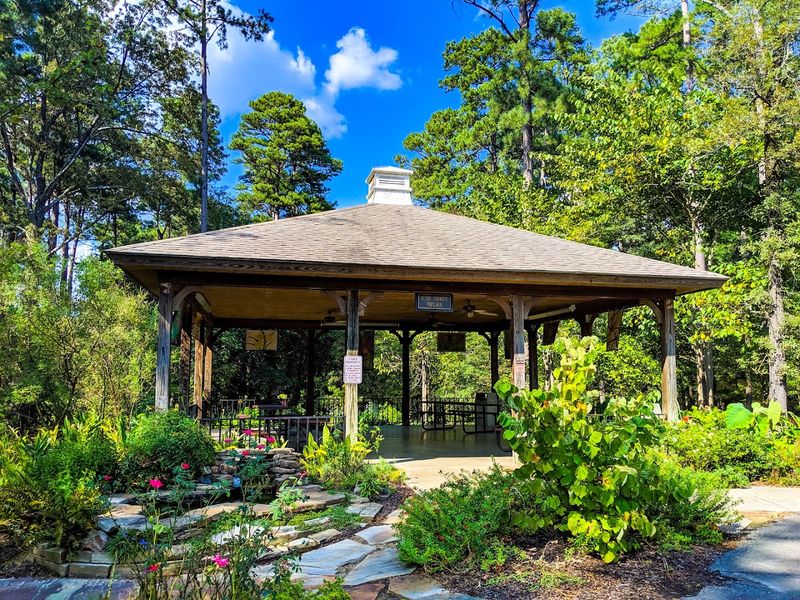
Inside the city limits of El Dorado, a green sanctuary waits just beyond the routes most visitors follow.
The South Arkansas Arboretum at 1506 Mount Holly Road, El Dorado, AR 71730 holds the distinction of being Arkansas’s only natural state park located within a city, which makes it an unusual place to explore.
The arboretum preserves the native flora of the West Gulf Coastal Plain, a natural division that stretches across much of southern Arkansas and is known for hardwoods alongside wetland plants.
More than two miles of paved trails loop through the grounds, passing beneath a canopy of mature trees and alongside seasonal displays of azaleas and camellias that put on a serious show each spring.
Birdwatchers have quietly claimed this spot as one of the better urban birding locations in the region, and a slow walk with binoculars here rarely disappoints.
The arboretum has a contemplative quality that is hard to find in city parks, partly because the tree cover is so dense that you quickly lose any sense of being inside an urban area.
Families and photographers looking for a reset from a busy schedule tend to find exactly what they were seeking here.
Spring visits offer especially colorful scenery, but the arboretum holds its quiet appeal throughout the year.
6. Rush Historic District, Yellville
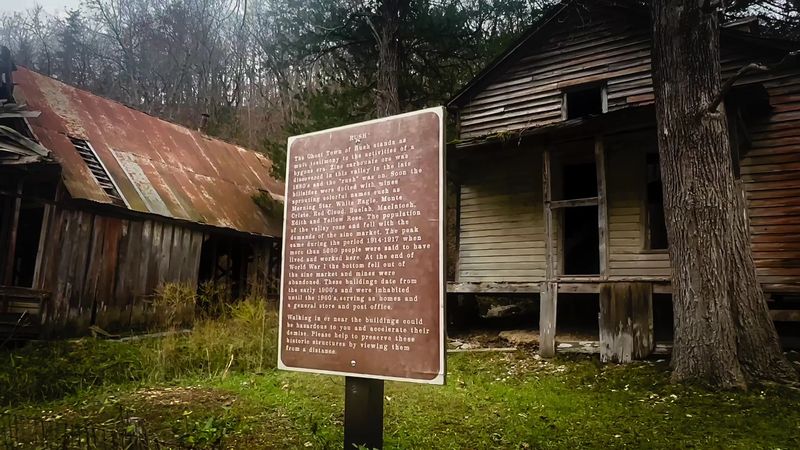
Ghost towns tend to exist mainly in the American West, so finding a genuinely well-preserved one tucked into an Ozark valley in Arkansas catches most people completely off guard.
The Rush Historic District along Rush Road near Yellville, AR 72687 is now part of the Buffalo National River corridor, and it preserves the physical remains of a once-booming zinc mining community from the late 1800s and early 1900s.
Unlike many abandoned sites where only foundations remain, Rush still has standing structures, including remnants of residential buildings, a mercantile, and various mining operations that give the whole district a haunted, time-capsule quality.
During the peak of World War I, the mines here were producing zinc at a furious pace, and the community swelled with workers, merchants, and families chasing the economic surge.
Trails wind through the valley and let you explore the ruins at your own pace, passing weathered timber frames and stone walls that have been slowly reclaimed by the surrounding forest.
The setting inside the Buffalo National River area means the scenery alone is worth the drive, with limestone bluffs, clear creek water, and old-growth trees framing every view.
Plan for a few hours here rather than a quick stop, because the more slowly you walk, the more details you notice hiding in the undergrowth.
Rush rewards the patient visitor with a rare, unfiltered look at industrial-era Arkansas.
7. Plum Bayou Mounds Archeological State Park, Scott
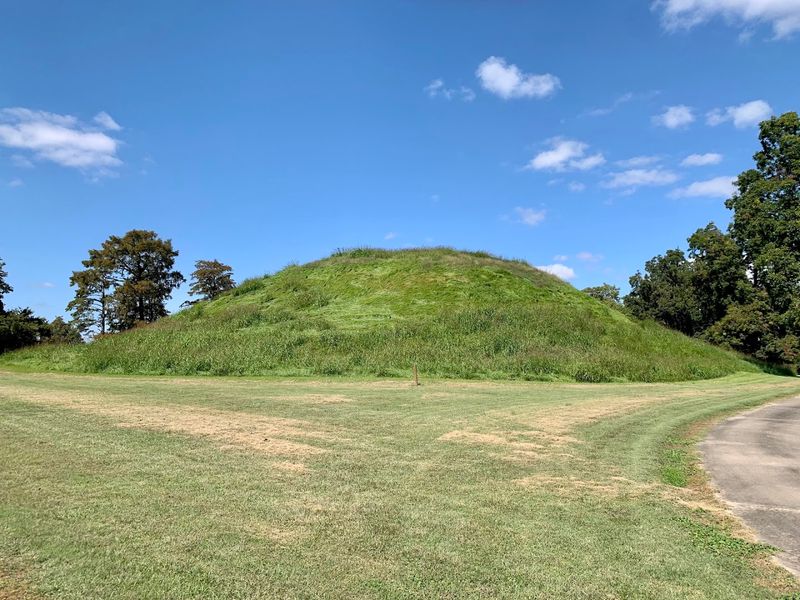
Most people drive past Scott, Arkansas without a second thought, completely unaware that one of the most impressive pre-European archaeological sites in the entire country sits just off the highway.
Plum Bayou Mounds Archeological State Park at 490 Toltec Mounds Road, Scott, AR 72142 preserves a ceremonial landscape built by the Plum Bayou culture between roughly 650 and 1050 A.D.
The earthen mounds here are genuinely massive, with some rising close to fifty feet above the surrounding flatlands, all constructed entirely by hand without any mechanical assistance.
These structures served religious, political, and cosmological purposes, functioning as the ceremonial heart of a complex society that traded goods and ideas across a wide region.
One of the most compelling aspects of visiting is the opportunity to observe active archaeological research, with scientists sometimes working on site and sharing findings that continue to reshape our understanding of this culture.
The park’s interpretive center does an excellent job of contextualizing what you are seeing outside, connecting the physical mounds to the human lives and belief systems that shaped them.
Walking the grounds on a clear morning, with the mounds rising dramatically against a wide Arkansas sky, produces a sense of scale and time that is genuinely difficult to put into words.
This is the kind of place that stays with you long after you have driven home and unpacked your bag.
8. Arkansas Post National Memorial, Gillett
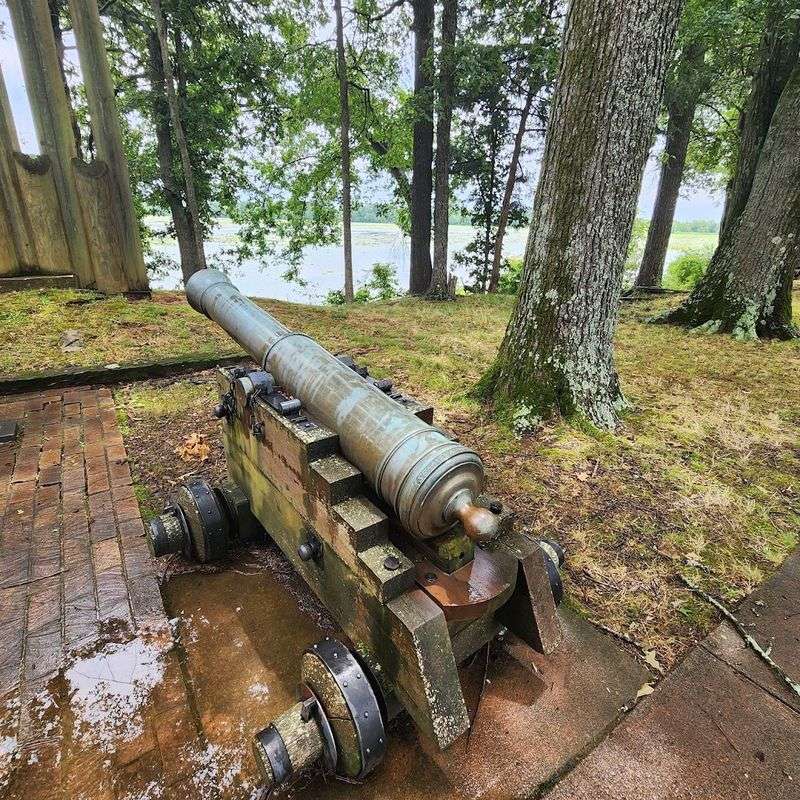
A bend in the Arkansas River near the tiny town of Gillett holds more layers of history than most places ten times its size.
Arkansas Post National Memorial at 1741 Old Post Road, Gillett, AR 72055 commemorates the first semi-permanent French settlement in the lower Mississippi River Valley, established in 1686 by Henri de Tonti.
Over the following centuries, this small outpost became a contested prize fought over by France and Spain as England sought greater control of the waterways and trade routes of the continent’s interior.
The site also witnessed the only Revolutionary War military action in present-day Arkansas, known as the Colbert Raid, and later saw significant Civil War fighting, making its historical record remarkably dense for such a quiet location.
The visitor center houses well-curated exhibits and a film that efficiently untangles these overlapping historical periods without overwhelming you with dates and names.
Trails wind through the memorial grounds and past remnants of Civil War earthworks, giving the landscape itself a role in telling the story.
The surrounding wetland environment is hauntingly beautiful in a flat, wide-open way that feels completely different from much of the state.
Spending an afternoon here feels less like a museum visit and more like standing inside a long and complicated American story.
9. Chaffee Barbershop and Military Museum, Fort Smith
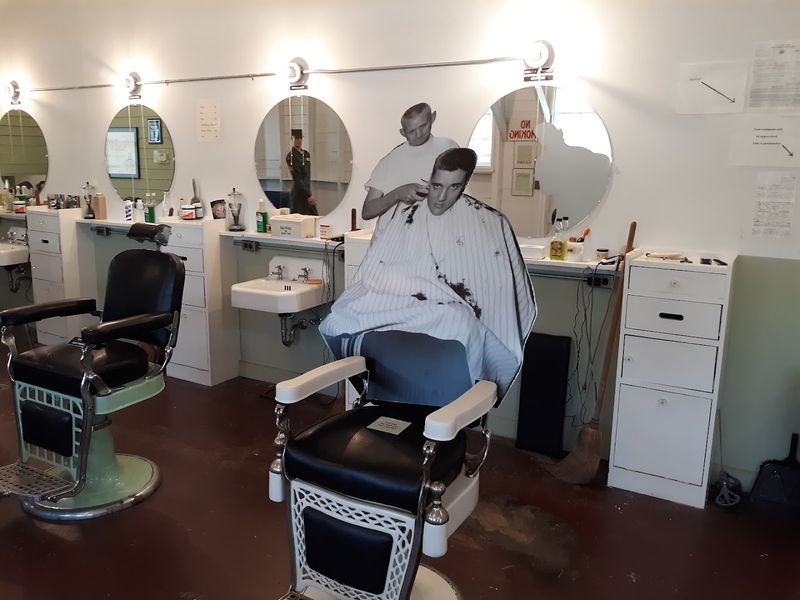
On March 25, 1958, a young man sat down in a barber’s chair at Fort Chaffee and came out looking completely different, and the whole world took notice.
The Chaffee Barbershop and Military Museum at 7313 Terry Street, Building 803, Fort Smith, AR 72916 is where Elvis Presley received his famous Army induction haircut, a moment that became one of the most photographed events of his entire career.
The barbershop has been lovingly restored to its 1950s appearance, with period chairs, original photographs, and news footage that recreate the charged atmosphere of that singular afternoon.
Beyond the Elvis connection, the museum covers Fort Chaffee’s broad military history, including its role across multiple conflicts, its use as a German prisoner of war camp, and its later service as a refugee resettlement center.
The combination of pop culture legend and serious military history makes this one of the most genuinely layered museums in Arkansas, appealing to visitors who might not typically seek out military exhibits.
Admission is free, which makes the decision to stop here an extremely easy one to make.
The building itself, part of the historic Fort Chaffee complex, adds architectural context that reinforces the military atmosphere throughout.
You might arrive for Elvis and stay for the history, or arrive for the history and leave humming a tune you cannot quite shake.
10. Fouke Monster Mart, Fouke
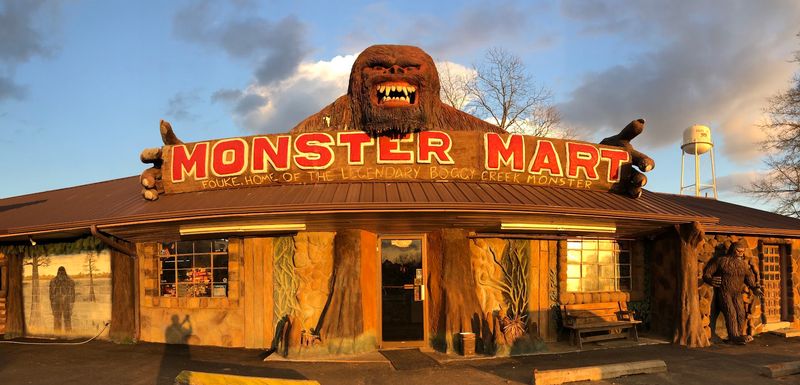
Every state has its legends, but Arkansas has a monster with its own gift shop, and honestly, that feels like exactly the right move.
The Fouke Monster Mart at 104 US-71, Fouke, AR 71837 is a roadside stop dedicated to the Boggy Creek Monster, a large, hairy creature said to roam the swamplands of southwest Arkansas and inspire genuine unease among locals who claim to have encountered it.
Part convenience store, part museum, and entirely committed to the bit, the Monster Mart stocks shelves with Fouke Monster souvenirs ranging from car decals and plush toys to cookie cutters shaped like the creature’s enormous footprint.
Vintage newspaper clippings, track casts, and photographs related to reported sightings line the walls, giving the whole experience a surprisingly earnest quality beneath the campy surface.
Life-size monster statues positioned around the property make for the kind of photo opportunity that your friends will absolutely not believe you skipped.
The 1972 film “The Legend of Boggy Creek” turned this local legend into a regional sensation, and the Monster Mart keeps that cultural moment very much alive.
Kids love this place with unbridled enthusiasm, and adults who arrive skeptically tend to leave grinning wider than they expected.
Fouke is the kind of stop that makes a road trip feel like a real adventure rather than just a drive between two points.
11. Blue Spring Heritage Center, Eureka Springs
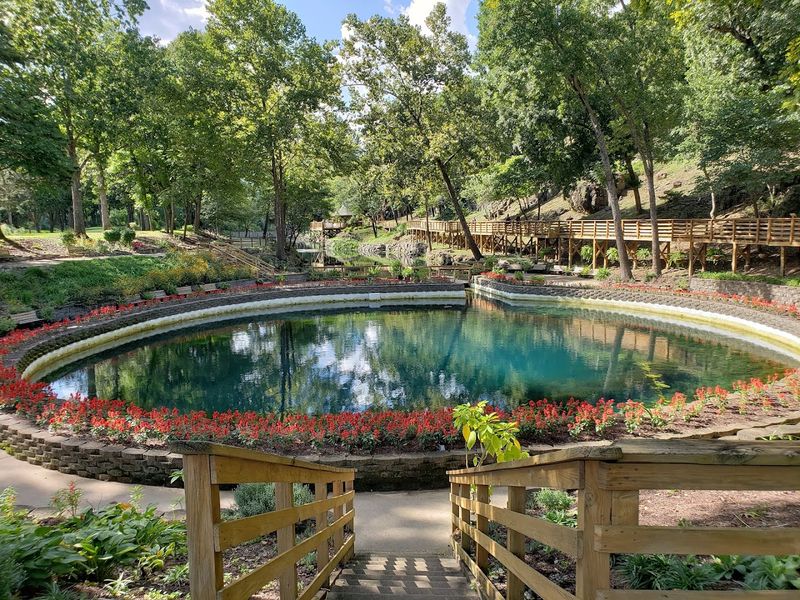
Some places carry so many stories from so many different eras that standing in them feels less like sightseeing and more like reading a very long, very beautiful book.
Blue Spring Heritage Center at 1537 County Road 210, Eureka Springs, AR 72632 is one of those rare spots where natural spectacle and deep human history occupy the same thirty-three acres simultaneously.
The spring itself is one of the most visually striking in the state, pouring millions of gallons of brilliantly clear water daily into a trout-filled lagoon that glows an almost unreal shade of blue-green depending on the light.
Long before European settlers arrived, American Indian tribes recognized this place as sacred, and the site later served as a stopping point along the tragic Trail of Tears, adding a solemn weight to its beauty.
A bluff shelter on the property shows evidence of human habitation stretching back roughly ten thousand years, which puts your afternoon stroll through the gardens into a rather humbling perspective.
Landscaped pathways wind through woodlands, meadows, and hillsides planted with native species, making the grounds feel like a curated celebration of the Ozark landscape.
Interpretive signs throughout the center connect the natural features to the layers of history surrounding them, so you are never just looking at a pretty view without understanding its context.
Blue Spring Heritage Center is one of those places that quietly earns a spot on your permanent favorites list.