
12 South Dakota Stops That Are Better Than Mount Rushmore
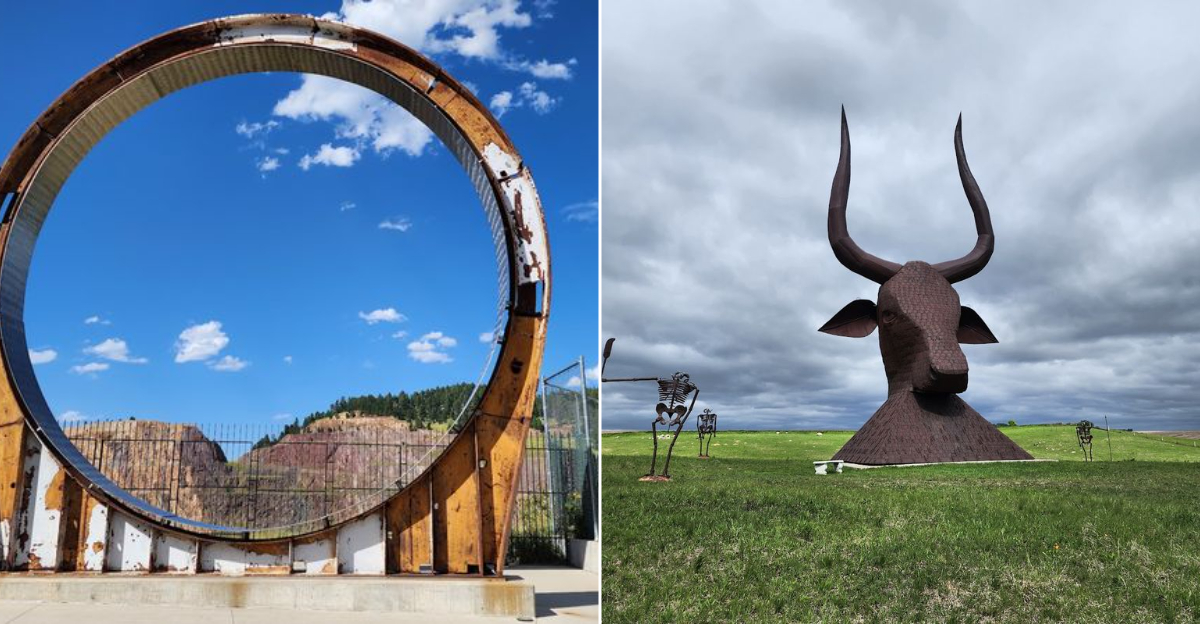
Everyone knows the face carved into the mountain. But South Dakota has a funny little secret.
The places you remember most might not be the ones everyone talks about. Beyond the crowds and the cameras, there are landscapes that look unreal, history hiding underground, and roadside stops that make you pull over even when you weren’t planning to.
A giant monument can grab your attention for a few minutes. But a strange little corner of the state can stay in your memory for years.
From wild landscapes to unexpected attractions, these stops show a different side of South Dakota. One filled with stories, surprises, and places that deserve way more attention.
Because sometimes the best part of a trip isn’t the famous stop. It’s the one you didn’t see coming.
1. Badlands National Park
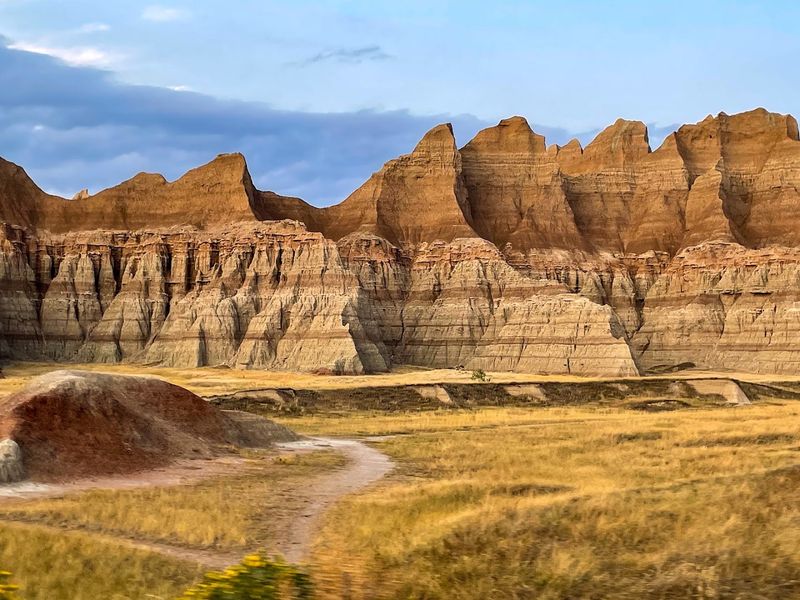
Imagine stepping onto a planet that looks like it was designed by a sci-fi movie set director who had zero budget restrictions.
That is basically what walking into Badlands National Park feels like. Sitting at 25216 Ben Reifel Rd, Interior, SD 57750, this 244,000-acre landscape of jagged buttes, towering pinnacles, and striped rock layers erodes about an inch every single year.
Beneath all that dramatic scenery lies one of the richest fossil beds on Earth, packed with ancient three-toed horses, prehistoric camels, and saber-toothed cat ancestors from 23 to 35 million years ago.
The Fossil Exhibit Trail makes these discoveries accessible to everyone, with replica fossils displayed along a fully wheelchair-accessible boardwalk. Bison, bighorn sheep, and pronghorn antelope roam freely across the prairie like they own the place.
Sunrises and sunsets here hit differently, painting those layered rock formations in shades of orange, purple, and gold that no filter can replicate.
The Badlands Loop Road is your golden ticket to catching it all without breaking a sweat.
2. Custer State Park
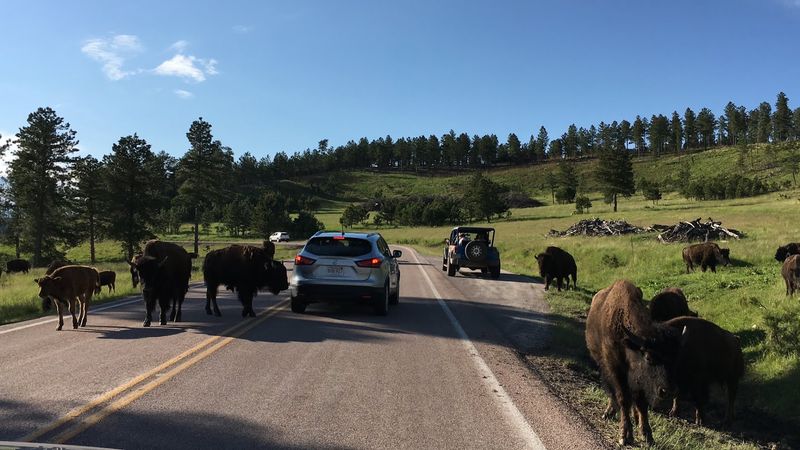
Picture nearly 1,300 bison wandering across 71,000 acres of rolling grassland like they have absolutely nowhere to be and zero apologies about it. That is the everyday reality at Custer State Park, located along US Hwy 16A and Wildlife Loop Rd, Custer, SD 57730.
This place is not just a park; it is a full-on wildlife spectacle.
The 18-mile Wildlife Loop Road winds through open meadows where pronghorn antelope, elk, and a famously cheeky band of burros roam freely.
Needles Highway offers a completely different vibe, threading through towering granite spires and narrow rock tunnels that make every turn feel cinematic. Iron Mountain Road frames distant views through tunnels so perfectly it feels intentional, because it absolutely was.
Black Elk Peak, the highest point in South Dakota east of the Rockies, rewards hikers with views that stretch across four states on a clear day.
Sylvan Lake sparkles like something out of a fairy tale, making it the perfect spot to exhale and just take it all in.
3. Crazy Horse Memorial
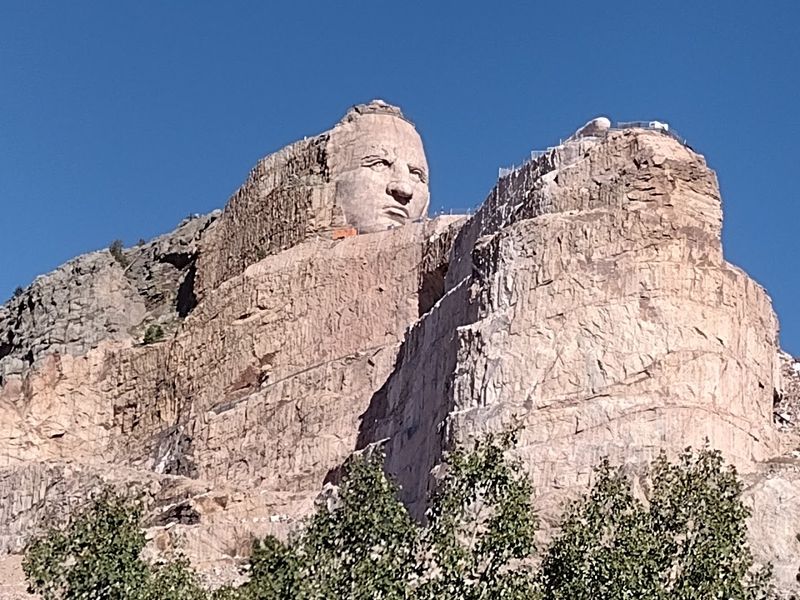
Mount Rushmore gets all the bumper stickers, but Crazy Horse Memorial is quietly becoming the most ambitious mountain carving project in human history.
Located at 12151 Avenue of the Chiefs, Crazy Horse, SD 57730, this monument is being carved into Thunderhead Mountain as a tribute to the Lakota leader and all Native American peoples.
When fully completed, it will stand 563 feet high and 641 feet long, absolutely dwarfing its famous neighbor down the road.
The project started in 1948 at the request of Lakota Chief Henry Standing Bear, who approached sculptor Korczak Ziolkowski with a vision rooted in cultural pride and representation.
Because Crazy Horse never allowed himself to be photographed, his likeness was crafted from descriptions shared by those who knew him personally.
The on-site Indian Museum of North America houses art and artifacts from over 300 Native Nations, making this far more than just a carving.
Seasonal laser light shows called Legends in Light transform the mountain into something otherworldly after dark, and the annual Volksmarch hike lets visitors walk right onto the carved arm itself.
4. The Mammoth Site
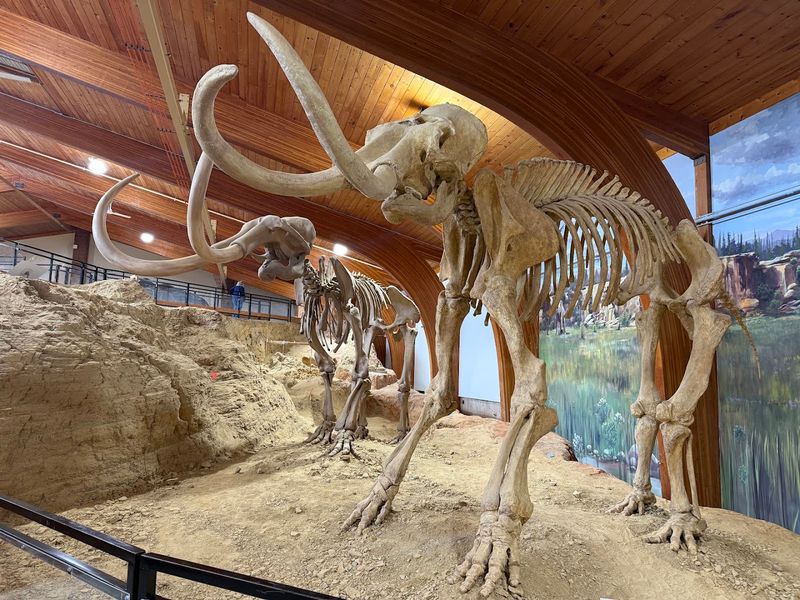
Back in 1974, a construction worker in Hot Springs hit something unusual with his equipment, and what followed was one of the most extraordinary paleontological discoveries in North American history.
The Mammoth Site, found at 1800 US-18 Bypass, Hot Springs, SD 57747, turned out to be a prehistoric sinkhole where warm artesian springs once lured mammoths in and the steep, slippery walls kept them there permanently.
Over 60 mammoths have been uncovered here so far, including both Columbian and woolly species, along with giant short-faced bears, ancient camels, and prehistoric llamas.
What makes this place genuinely unlike any other museum on Earth is that every single fossil remains exactly where it was found, preserved in situ rather than moved and reconstructed elsewhere. Visitors literally peer down at bones that have been untouched for tens of thousands of years.
The climate-controlled indoor facility means this is a year-round destination regardless of South Dakota weather.
Summer visits offer the bonus of watching actual paleontologists at work, and hands-on excavation programs let curious visitors feel what it is like to uncover history themselves.
5. Jewel Cave National Monument
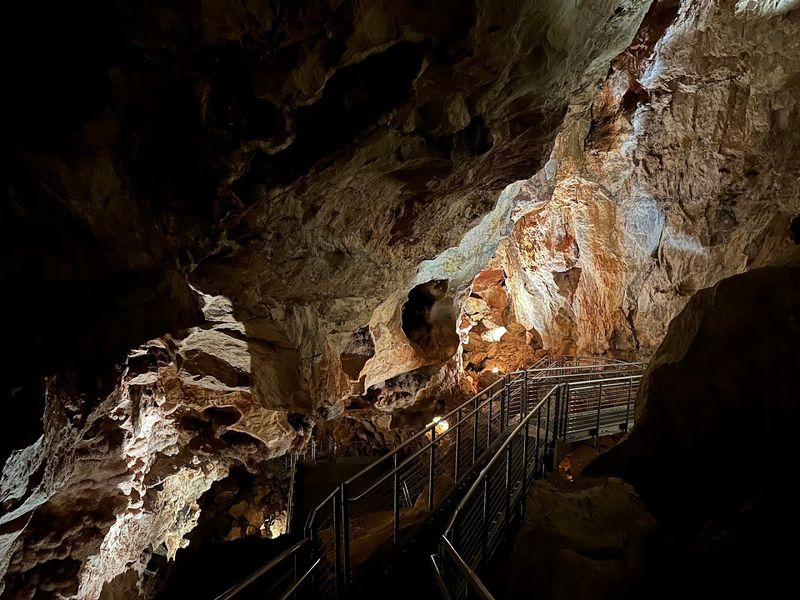
There is a cave in the Black Hills that literally breathes, and no, that is not a metaphor.
Jewel Cave National Monument, located at 11149 US Hwy 16, Building B12, Custer, SD 57730, audibly exhales and inhales as atmospheric pressure shifts outside, making it one of the most atmospheric underground experiences anywhere in the country.
Currently ranking as the fifth longest cave in the world with over 220 mapped miles as of 2025, Jewel Cave earned its name from the glittering calcite crystals that coat its walls like a subterranean jewelry box.
Beyond the namesake jewels, the cave holds an extraordinary collection of formations including boxwork, cave popcorn, delicate soda straws, and translucent draperies nicknamed cave bacon.
The cave formed over millions of years through slow acid-rich groundwater carving through ancient limestone, creating a labyrinthine maze rather than a single dramatic cavern.
Tour options range from a gentle Discovery Tour to the wild adventure of the Wild Caving Tour, which involves crawling through tight passages with a headlamp and zero glamour.
A steady 49 degrees Fahrenheit inside means a jacket is always your best travel companion here.
6. Minuteman Missile National Historic Site
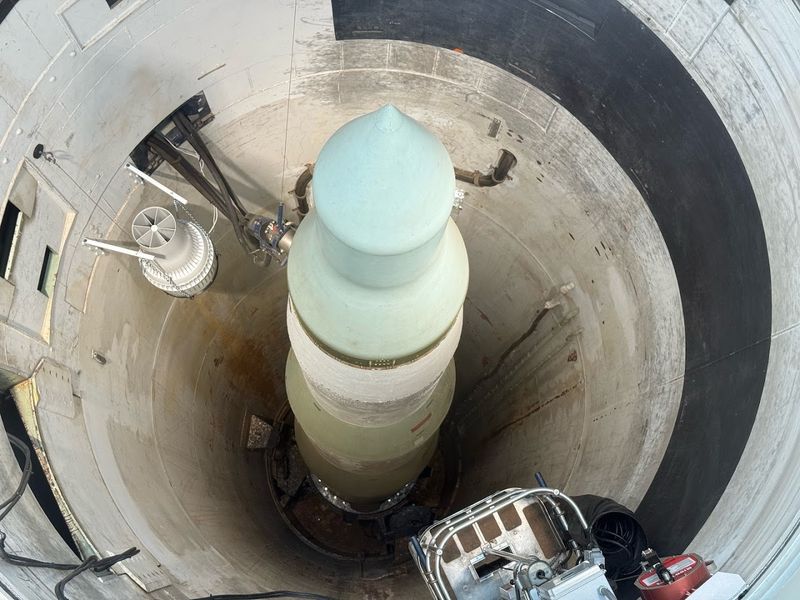
Standing on a quiet South Dakota prairie and knowing there is a nuclear missile directly beneath your feet is an experience that rearranges your perspective in about thirty seconds flat.
Minuteman Missile National Historic Site, at 24545 Cottonwood Rd, Philip, SD 57567, preserves the last intact Minuteman II ICBM system in the United States, and the weight of that history is palpable the moment you arrive.
For three decades, 150 missiles were spread across 13,500 square miles of this peaceful-looking landscape, each capable of delivering a warhead 66 times more powerful than the one used at Hiroshima.
The Delta-09 Missile Silo lets visitors peer through a glass enclosure directly at an unarmed missile still resting in its 80-foot-deep silo.
The Delta-01 Launch Control Facility takes the experience underground, descending 31 feet into the actual command center where missileers once monitored their weapons.
Ranger-guided tours of the Launch Control Facility fill up fast and require advance reservations, so planning ahead is non-negotiable.
Audio tours narrated by former missileers add a remarkably human dimension to what could otherwise feel like a purely technical exhibit.
7. Falls Park
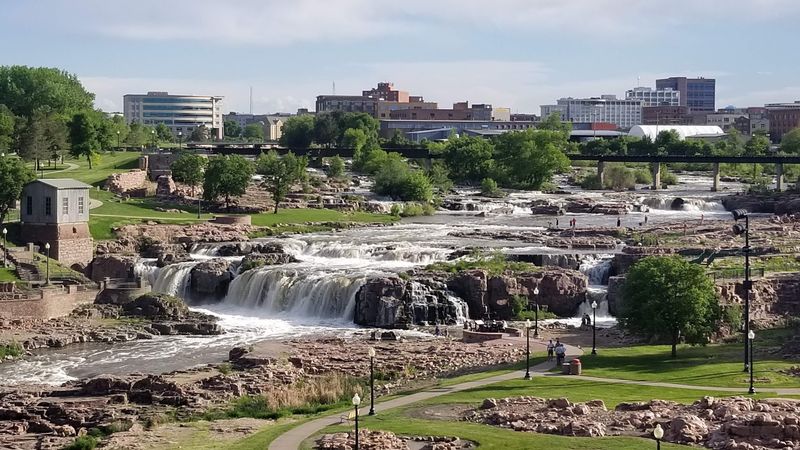
A city named after a waterfall had better deliver on that promise, and Sioux Falls absolutely does.
Falls Park, located at 131 E Falls Park Dr, Sioux Falls, SD 57103, sits at the center of a 123-acre urban oasis where the Big Sioux River sends roughly 7,400 gallons of water per second tumbling over gorgeous reddish quartzite rock formations every single moment of every single day.
The five-story Observation Tower frames panoramic views of the cascades, the river, and the city skyline all at once, and climbing it takes about two minutes of effort for a payoff that feels completely disproportionate.
The ruins of the Queen Bee Mill, a seven-story quartzite structure built in 1881, add a layer of historical drama that turns an already beautiful park into something genuinely cinematic. Native American peoples used this area as a trade landmark long before the city was ever imagined.
During the holiday season, the park transforms into a Winter Wonderland with thousands of twinkling lights that make the whole place feel like a snow globe come to life.
Year-round trails connect the park to miles of city greenway, making it equally rewarding by bike or on foot.
8. Wall Drug Store
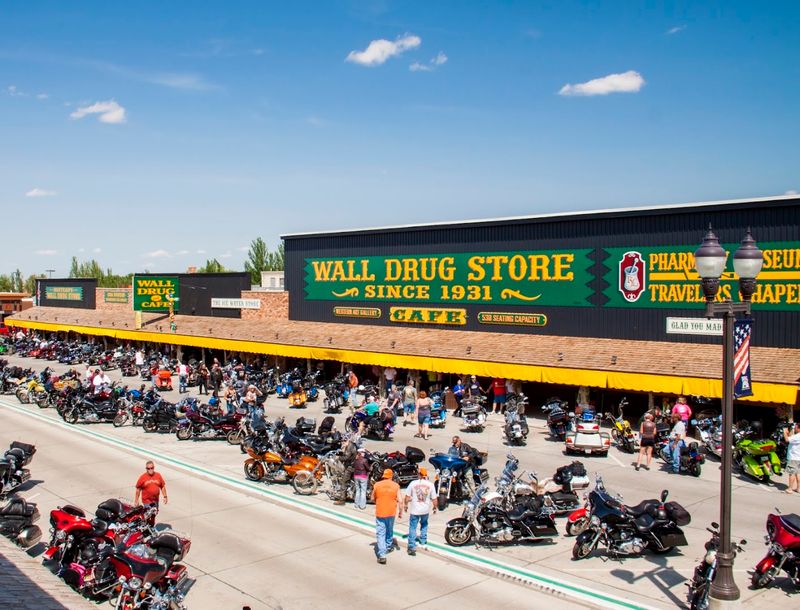
Free ice water changed everything. Back in 1931, a struggling pharmacy in the tiny town of Wall started offering complimentary ice water to road-weary travelers, and that single generous idea snowballed into one of the most legendary roadside attractions in American history.
Wall Drug Store, now sprawling across 510 Main St, Wall, SD 57790, covers 76,000 square feet and draws over two million visitors every year.
The tradition of free ice water and five-cent coffee still holds strong today, and the homemade donuts and buffalo burgers have become pilgrimage-worthy in their own right.
But the real magic is in the wandering. The Western Art Gallery Restaurant displays over 300 original oil paintings from some of the finest Western artists, making it quietly one of the country’s most impressive private collections.
Out back, a life-size animatronic T-Rex roars every 15 to 30 minutes with zero warning and maximum chaos.
A giant Jackalope, a miniature Mount Rushmore, gold panning, a Traveler’s Chapel, and an Apothecary Museum all coexist under one gloriously kitschy roof. Wall Drug is not trying to be anything it is not, and that unapologetic authenticity is exactly why it works so well.
9. Mitchell Corn Palace
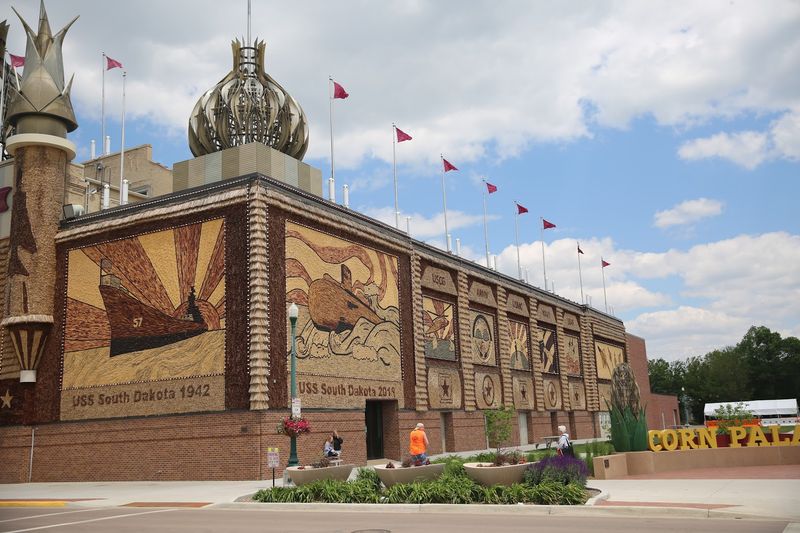
Somewhere in the middle of South Dakota, there is a Moorish Revival palace covered entirely in corn, and that sentence is 100 percent factual.
The Mitchell Corn Palace at 604 N Main St, Mitchell, SD 57301 earns its title as the World’s Only Corn Palace without any real competition, because honestly, who else is even trying.
Every single year, the entire exterior gets stripped and rebuilt using thousands of bushels of native corn in 12 to 13 different colors and shades, along with rye, milo, and native grasses.
A local farmer grows the corn specifically for this purpose, and a dedicated team of artists installs an entirely new mural theme each season, starting in late August.
The 2026 design will celebrate 250 Years of America, which feels appropriately grand for a building that already commits this hard to its concept.
Inside, the Corn Palace functions as a fully active community venue hosting basketball games, concerts, graduations, and industrial exhibits throughout the year.
USA Today once named it one of the top ten places in the country to watch high school basketball, which is a sentence that somehow makes perfect sense once you have been there.
10. Porter Sculpture Park
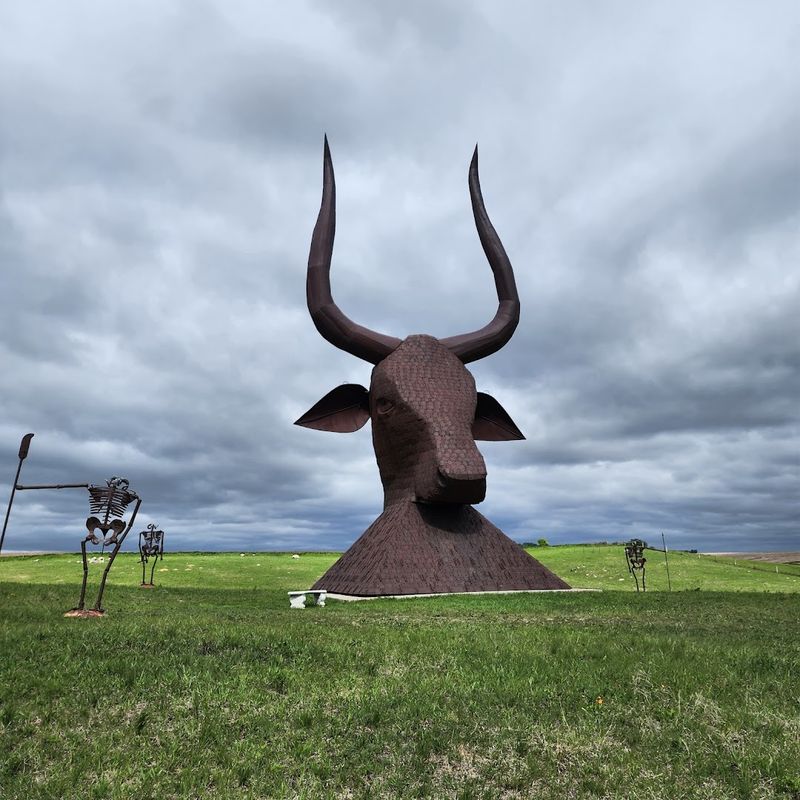
Driving along Interstate 90 in South Dakota, you might suddenly spot a 60-foot-tall metal bull’s head rising from the prairie like it has always been there and you are the one who is out of place.
Welcome to Porter Sculpture Park, located at 45160 257th St, Montrose, SD 57048, where self-taught artist Wayne Porter has turned 10 to 20 acres of tall grass prairie into one of the most surreal outdoor galleries in the country.
Porter learned welding in his father’s blacksmith shop and builds his monumental pieces entirely from instinct, using recycled scrap metal, old farm equipment, and railroad tie plates without a single diagram or blueprint.
Alongside the iconic bull’s head, a 50-foot, 40-ton horse commands the landscape, while dragons, ancient warriors, and a jack-in-the-box round out the eclectic cast of characters. TIME magazine once recognized it as one of the Top 50 American Roadside Attractions, which feels like an understatement.
The park is open seasonally from Memorial Day through mid-October, and visitors are actively encouraged to touch the sculptures and photograph everything.
Porter himself is often on-site, ready to share the stories behind each towering creation with genuine enthusiasm.
11. Akta Lakota Museum And Cultural Center
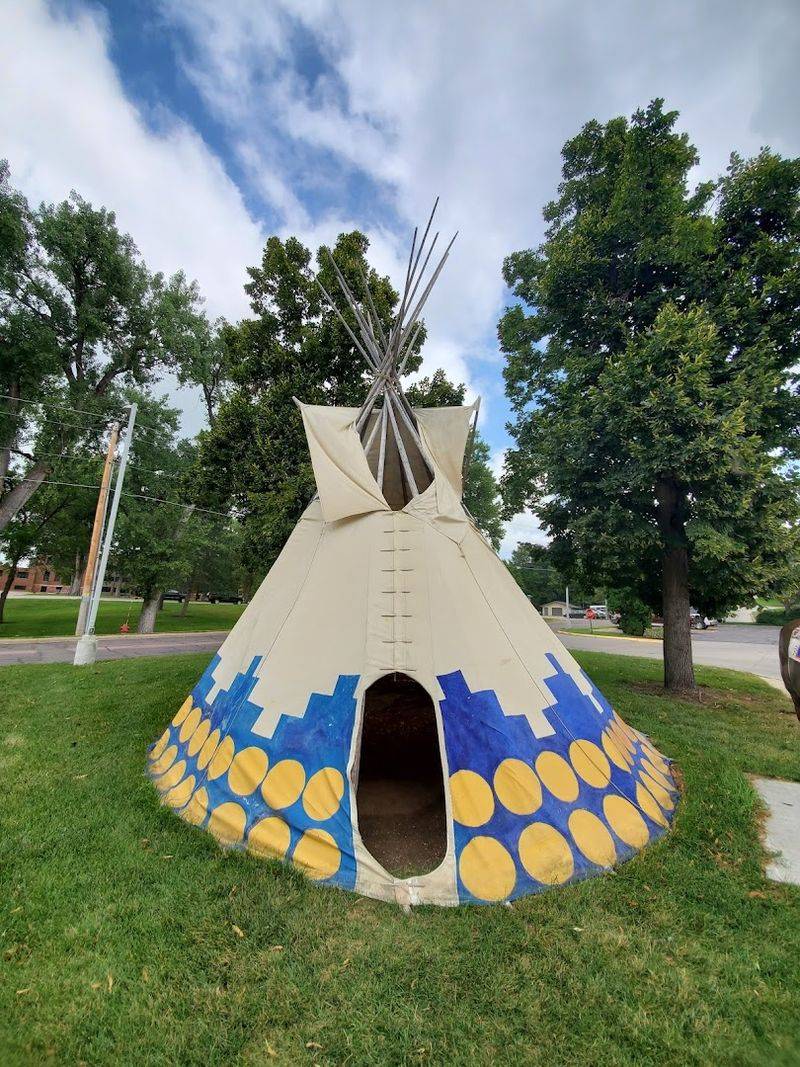
There is a museum in Chamberlain that does not just display history behind glass cases; it honors a living, breathing culture with the depth and care it has always deserved.
The Akta Lakota Museum and Cultural Center, at 1301 N Main St, Chamberlain, SD 57325, takes its name from a Lakota phrase meaning honoring the people, and every square foot of this place lives up to that commitment.
The 14,000-square-foot octagon-shaped building reflects the sacred circle of Lakota culture, and its layout guides visitors through history using the four cardinal directions as a framework.
East represents life before Euro-American contact, South marks the arrival of explorers, West reflects the impact of broken treaties, and North honors the resilience of Native peoples in modern times.
A breathtaking 36-foot diorama titled Lakota Buffalo Days, created by Chickasaw artist Tom Phillips, anchors the permanent collection alongside over 4,000 artifacts spanning centuries.
Admission is free, which makes this one of the most generous and accessible cultural experiences in the entire state.
The outdoor Medicine Wheel Garden, featuring native plants and a peaceful water feature, offers a quiet moment of reflection before heading back to the highway.
12. Sanford Lab Homestake Visitor Center
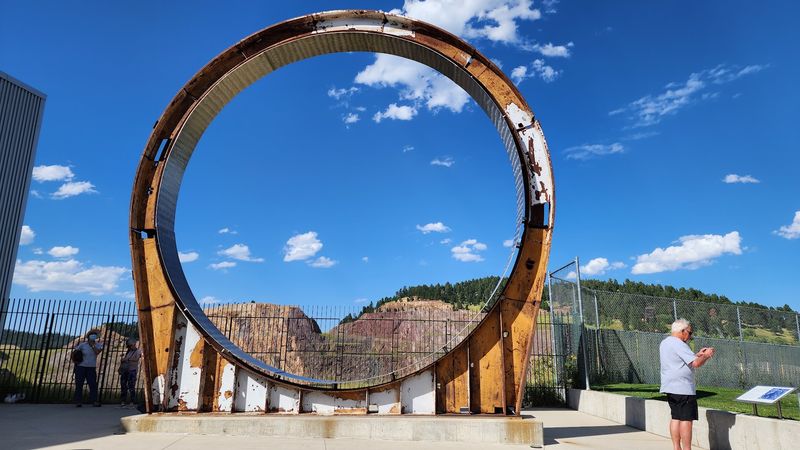
Not many visitor centers sit on the edge of a 1,250-foot-deep hole in the ground while simultaneously housing some of the most cutting-edge physics research happening anywhere on the planet.
The Sanford Lab Homestake Visitor Center, at 160 W Main St, Lead, SD 57754, manages exactly that with remarkable ease. It serves as the public-facing gateway to the Sanford Underground Research Facility, the deepest underground laboratory in the United States.
The Homestake Gold Mine once operated for 125 years and extracted over 40 million ounces of gold, making it the largest and deepest gold mine in the entire Western Hemisphere before closing in 2002.
Today, its deep tunnels host 28 active research projects studying dark matter and neutrino physics, where the surrounding rock shields sensitive experiments from cosmic radiation.
A Nobel Prize connection lives here too, as pioneering neutrino detection experiments conducted in the mine during the 1960s led to Dr. Ray Davis receiving the Nobel Prize in Physics.
Admission to the exhibit hall is completely free, and a virtual cage ride simulation lets visitors experience a descent into the underground lab without the actual elevator.
So, is there any other state that casually hides Nobel Prize-winning science beneath a former gold mine? South Dakota keeps proving there is always another layer to uncover.