
10 Mountain Lakes Near Telluride That Look Almost Too Beautiful To Be Real
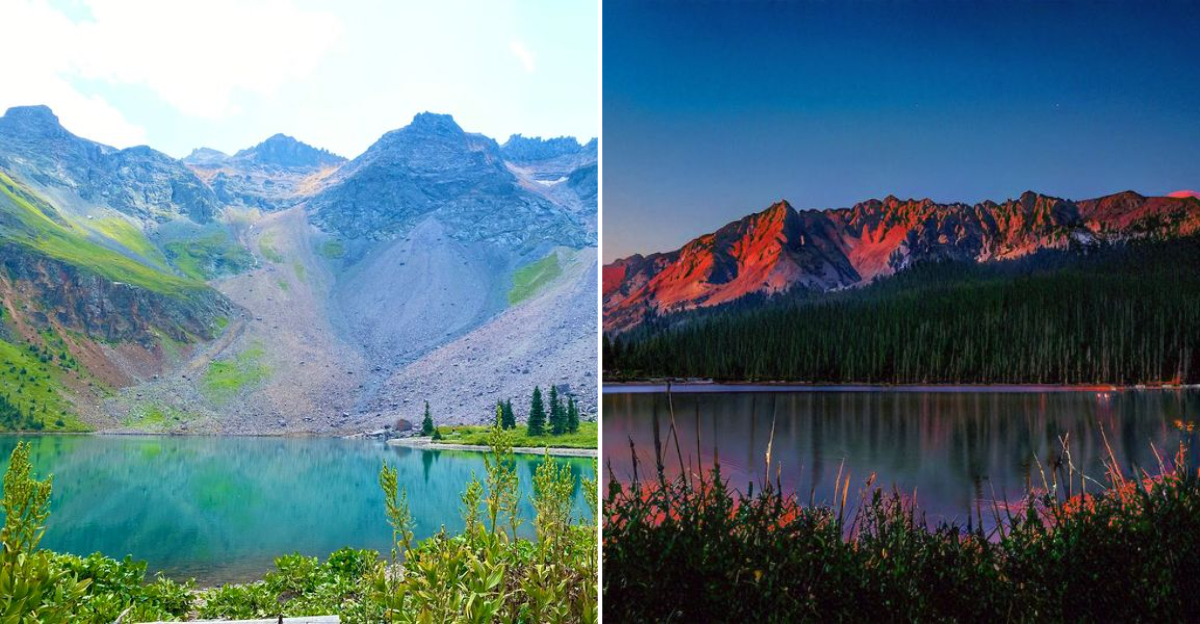
Some landscapes are so dramatic they make a camera feel like an unreliable witness. Around Telluride, Colorado, high-country trails climb toward lakes glowing turquoise beneath sharp peaks, with wildflowers spilling across the meadows like summer refused to choose a favorite color.
Every turn seems designed to interrupt your pace. Runners slow down, families forget how far they have walked, and even determined hikers suddenly become professional rock-sitters.
That is part of the fun. These are not views to rush past while chasing a mileage goal.
They reward lingering, snacking, taking too many photos, and quietly wondering how water can look that bright without a filter. Across Colorado’s southwestern mountains, weather can change quickly, so layers belong in the pack beside extra water and a charged camera.
Clear the calendar, choose a trail, and prepare for the rare Saturday when the scenery becomes the entire plan from breakfast straight through sunset.
1. Alta Lakes
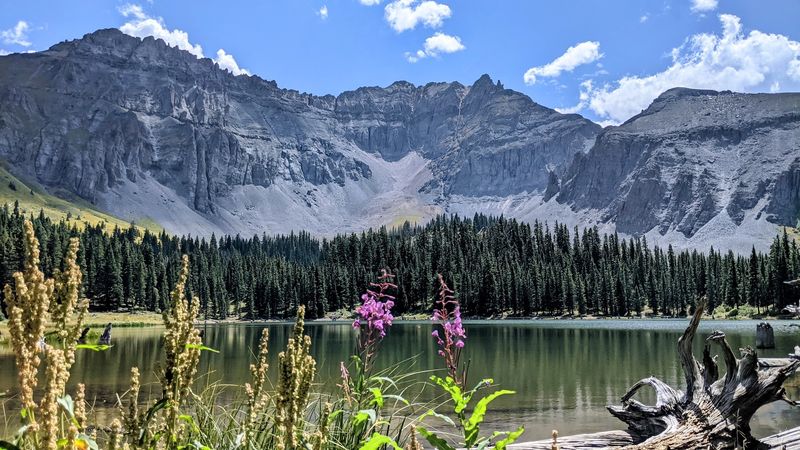
History and high altitude collide at Alta Lakes, a trio of shimmering pools tucked just five miles south of Telluride on Forest Road 632. The remains of the Alta ghost town sit nearby, giving the whole scene a haunted, cinematic quality that you rarely find at a trailhead.
Elk graze at the edges, and the silence up here is the kind that actually startles you at first.
Getting there requires a high-clearance vehicle, and road conditions can be unpredictable, so checking Forest Service updates before you head out is genuinely worth the two minutes it takes. The payoff, though, is access to three separate lakes, each with its own personality and its own perfect angle for a photograph.
Morning light turns the water a deep jade green that no filter can replicate.
Personally, this is the spot I would pick for a slow Sunday with a thermos of strong coffee and zero agenda. The ghost town adds a layer of storytelling that makes the visit feel richer than a typical alpine lake outing.
Coordinates 37.884625, -107.846676 will get you close, but the real reward is wandering between all three lakes and choosing your favorite.
2. Hope Lake
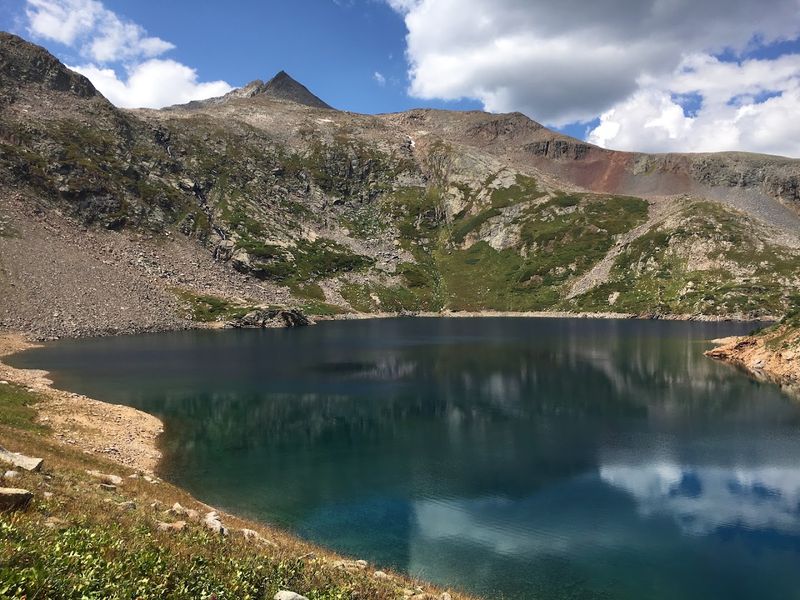
There is a moment on the Hope Lake Trail when the trees thin out and the lake appears below Vermilion Peak like a dropped jewel, and every ounce of climbing effort suddenly makes complete sense. The trail begins at the Hope Lake Trailhead off Forest Road 627, reached from County Road 63A near Trout Lake, and it threads through spruce forest, rocky slides, and meadows that erupt with color in July and August.
At roughly 11,900 feet, the lake itself is brilliantly blue-green, the kind of color that makes you question whether mountain water is supposed to look like that. Wildflowers crowd the shoreline in summer, and the surrounding peaks frame the water so perfectly that every shot looks composed by a professional.
Go on a weekday if crowds bother you.
The final two miles of road benefit from a high-clearance vehicle, so plan accordingly. I find Hope Lake to be one of those rare destinations that rewards both the casual hiker and the serious peak-bagger, because the scenery at the top genuinely justifies the effort regardless of your fitness level.
Ophir and Telluride are both close enough to make a full day loop feel effortless and deeply satisfying.
3. Trout Lake
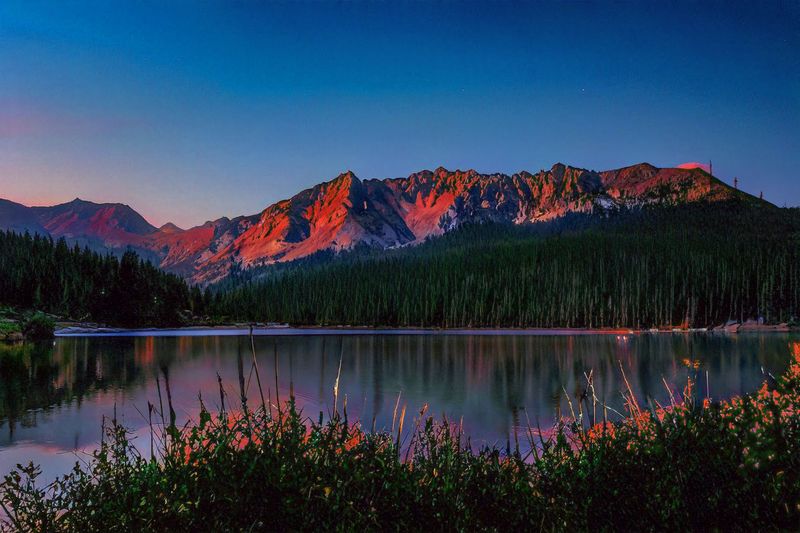
Not every stunning mountain lake requires a grueling hike, and Trout Lake is the glorious proof of that. Sitting about 14 miles south of Telluride off County Road 63A near Ophir, Colorado, this lake is one of the most accessible scenic stops in the entire region.
You can pull over, step out of the car, and immediately feel like you wandered into a landscape painting.
Fishing, paddling, and photography are all popular here, and the lake also appears prominently from the Lizard Head Pass overlook, which means it earns its beauty from multiple vantage points. The surrounding peaks reflect in the water on calm mornings in a way that makes the whole surface look like a mirror someone tilted at a perfect angle.
Autumn is spectacular, with aspens turning the hillsides gold.
For families or couples who want big scenery without big effort, Trout Lake is the answer. Honestly, I have recommended this spot more times than I can count to people who felt intimidated by the more strenuous hikes on this list.
It rewards spontaneity. You do not need a plan, a permit, or a pair of trekking poles.
You just need to show up and let the mountains do the rest.
4. Woods Lake
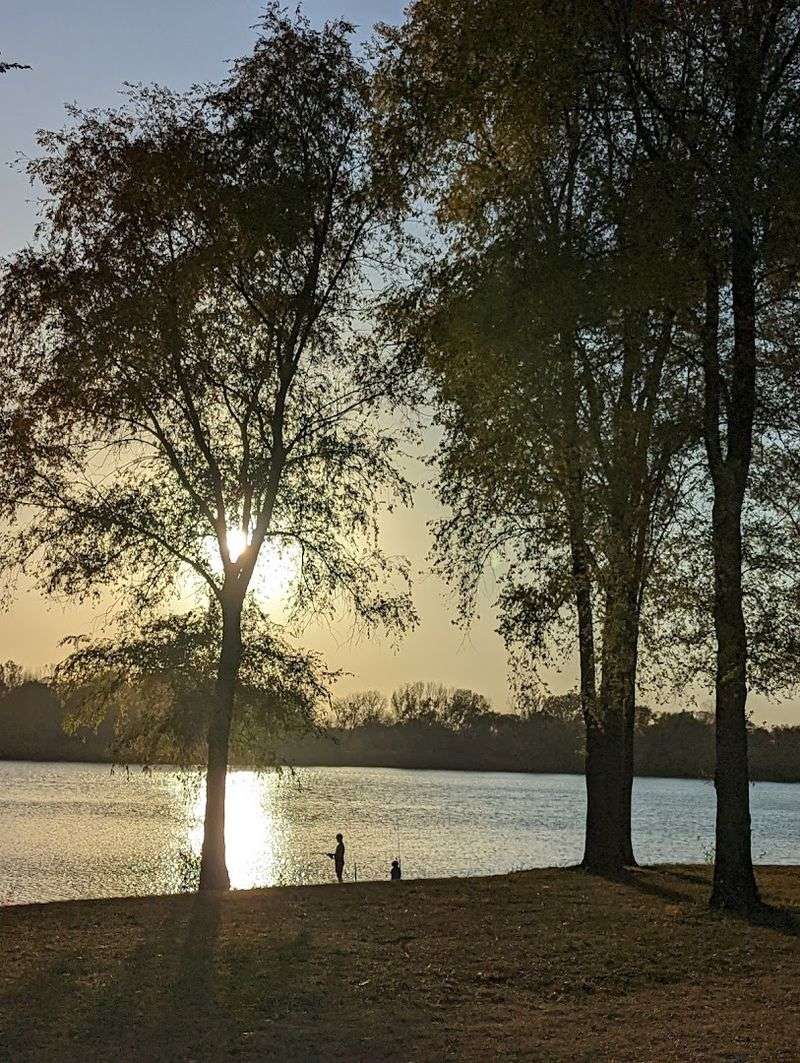
Woods Lake has the quiet confidence of a place that knows exactly how beautiful it is without needing to advertise. Framed by aspen groves and the dramatic summits of the Lizard Head Wilderness, this lake sits near the Woods Lake Campground on Forest Road 621 off Fall Creek Road.
The nearest community is Placerville, Colorado, and the coordinates 37.886103, -108.054830 will guide you straight there.
The campground is officially open for the 2026 season, though potable water is currently unavailable, so bring your own. That minor inconvenience barely registers once you are sitting at the water’s edge watching the peaks shift color as the sun drops.
Autumn visits here feel almost theatrical, with aspens turning the surrounding hillsides into something that belongs on a gallery wall.
What I love most about Woods Lake is the atmosphere of genuine stillness. There are no crowds jostling for the best photo angle, no parking lot chaos, just the sound of wind moving through the trees and the occasional bird making its opinion known.
If you are looking for a lake that rewards lingering over rushing, this is the one. Bring a camp chair, skip the agenda, and let the Lizard Head Wilderness earn its dramatic name.
5. Blue Lake in Bridal Veil Basin
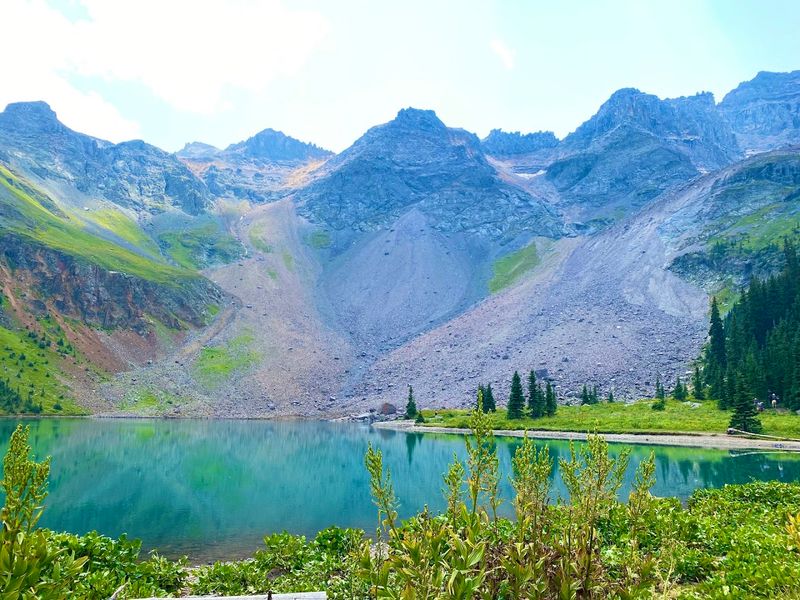
Sitting at roughly 12,220 feet above sea level, Blue Lake in Bridal Veil Basin is the kind of secret that Telluride locals tend to keep close. The trail begins at Forest Road 648, passes the Bridal Veil Powerhouse gate, and follows Bridal Veil Trail 636 before connecting to Blue Lake Trail 637.
Historic mining structures line the route, turning the approach into a history lesson with an extraordinary finish.
One important detail worth knowing: the land immediately around the lake is private, so visitors must stay on the designated trail. This is not the place to wander off-path, and respecting that boundary keeps access open for everyone.
The rocky overlook above the water offers a commanding view that makes the high-elevation breathing entirely worthwhile.
Do not confuse this lake with the Blue Lakes near Mount Sneffels, which appears later on this list. They share a name but not a vibe.
This one carries the weight of Telluride’s mining history in every step of the approach, and that added context makes the destination feel earned in a way that purely scenic hikes sometimes miss. Start early, wear layers, and pack a snack that holds up at altitude.
6. Silver Lake
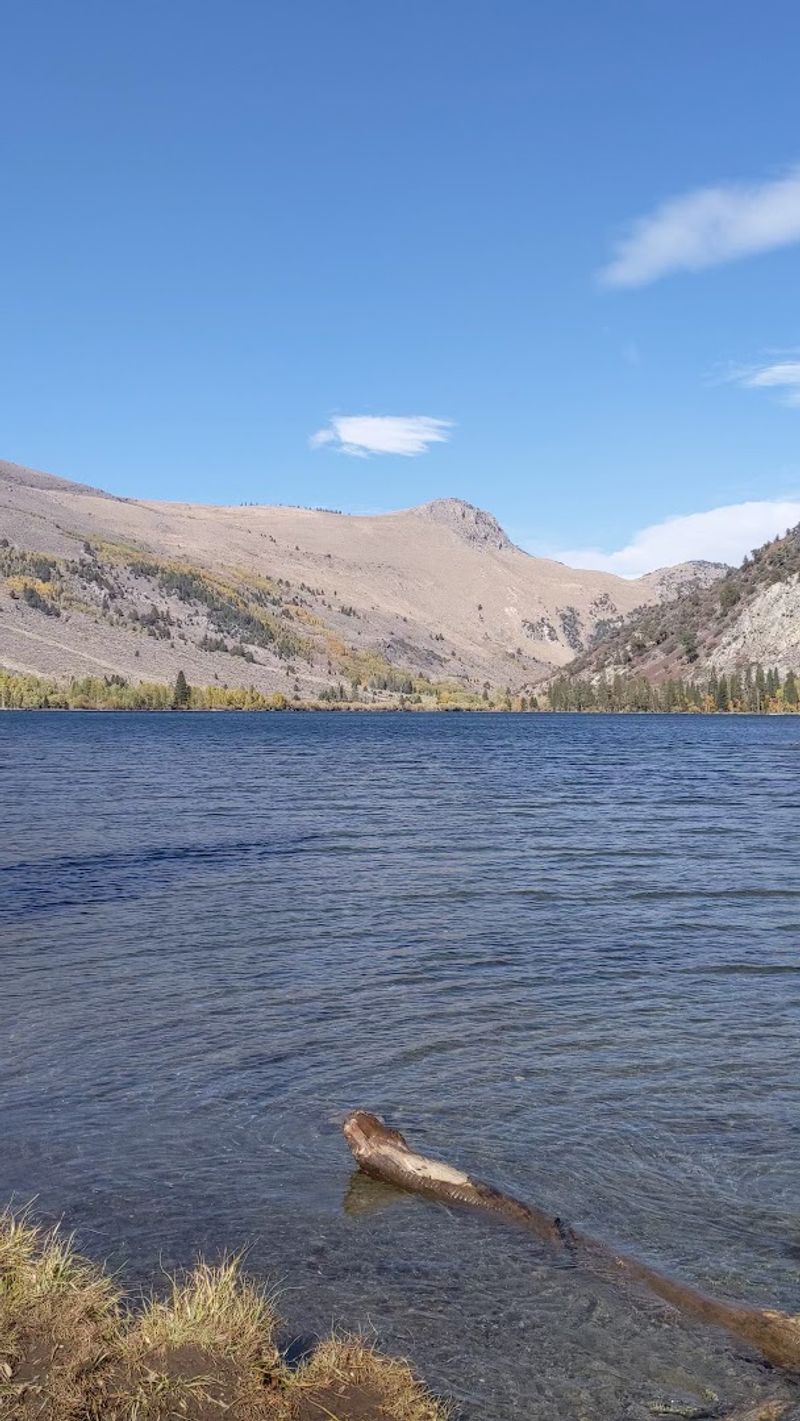
Silver Lake hides above Bridal Veil Falls in the same historic mining basin that leads to Blue Lake, and reaching it feels like uncovering a second chapter in a story you thought you already finished. Access runs through Forest Road 648 to Bridal Veil Trail 636, with high clearance recommended on the road toward the powerhouse.
The trail is open to hikers, horseback riders, and mountain bikes, which gives the route a pleasantly social energy on good-weather weekends.
The basin itself carries a rich, layered history from Telluride’s mining era, and Silver Lake sits at the heart of it. The surrounding terrain is rugged and rocky, with the kind of raw, unpolished beauty that feels more honest than manicured.
Clouds move fast up here, so morning starts are always a smart call.
Combining Silver Lake with Blue Lake in the same outing is absolutely doable and deeply satisfying. I would argue it is one of the best value hikes in the Telluride area, offering two distinct lake experiences plus the historical backdrop of the mining basin, all from a single trailhead.
Pack more water than you think you need, because altitude has a way of making everything take longer than expected, and that is perfectly fine.
7. Blue Lakes in Mount Sneffels Wilderness
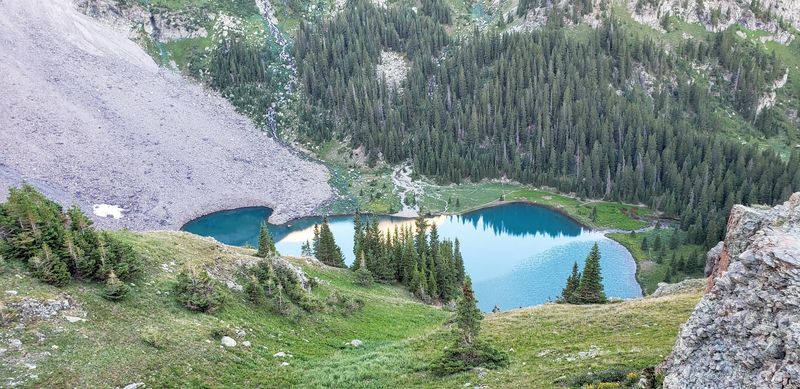
Few hikes in southwestern Colorado deliver the visual payoff of the Blue Lakes trail in the Mount Sneffels Wilderness, and the numbers back that up. The primary trailhead sits at County Road 7 off East Dallas Creek Road near Ridgway, Colorado, and the trail runs approximately 3.2 miles one way to the lakes.
That distance feels short until the altitude reminds you otherwise.
The chain of turquoise alpine lakes below Mount Sneffels is legitimately one of the most photographed landscapes in the entire San Juan range. The water color shifts depending on the light, moving from deep teal in the morning to a blinding aquamarine by midday.
Wildflowers crowd the banks in July, and the reflection of the surrounding peaks in the still water is the kind of thing that makes non-hikers reconsider their life choices.
For 2026, the trail is officially marked open, with new camping and waste-management rules in effect. A limited-entry permit system is not expected until 2027, so this season remains relatively accessible.
Start early to claim a parking spot and to beat afternoon thunderstorms, which roll in with impressive speed and zero apology. This is a bucket-list hike that genuinely earns that label without overpromising.
8. Ice Lake
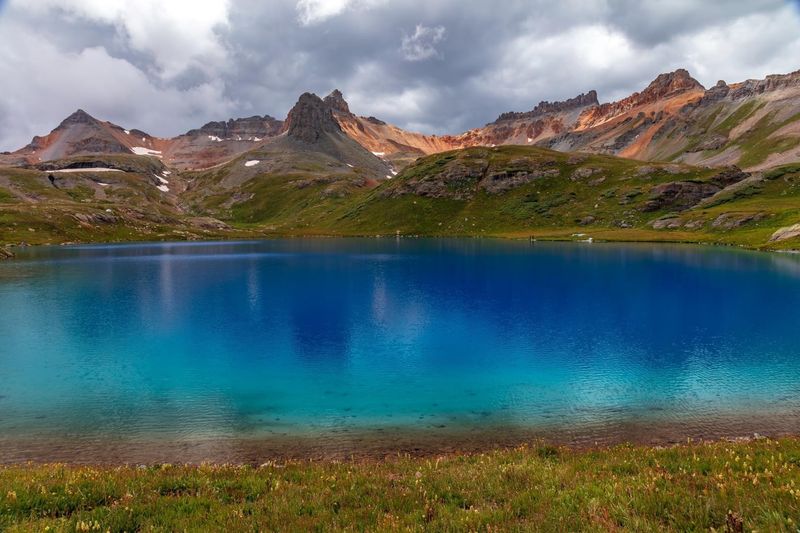
Ice Lake earns its reputation with water so intensely blue it looks digitally enhanced, even when you are standing right next to it. Sitting at approximately 12,260 feet in a basin ringed by colorful volcanic peaks, this lake near Silverton, Colorado is one of the San Juans’ most celebrated destinations.
The trailhead sits beside South Mineral Campground on Forest Road 585, and the hike covers roughly 3.5 miles one way with nearly 3,000 feet of climbing.
That elevation gain is real, and it demands respect. Start before 8 a.m. to avoid afternoon thunderstorms and to secure parking, which fills quickly on summer weekends.
The trail is officially active, though hikers should use caution around lingering hazards from the 2020 Ice Fire, which reshaped parts of the landscape in ways that are both sobering and strangely beautiful.
The volcanic geology surrounding the basin creates an almost surreal color palette, with reds, purples, and oranges layering the peaks above that impossibly blue water. I have hiked a lot of trails in a lot of places, and Ice Lake still stops me cold every single time.
Silverton itself is worth a stop before or after, offering good food and the kind of frontier-town atmosphere that makes the whole day feel like an adventure.
9. Island Lake
Just when you think Ice Lake has given you everything the San Juans have to offer, you push a little further into the upper basin and find Island Lake waiting with a flat-topped rock island sitting in the middle of aqua water like a geological exclamation point. Reached by continuing beyond Ice Lake, this lake shares the same trailhead at Ice Lake Trailhead on South Mineral Road, Forest Road 585, near Silverton, Colorado.
The hike is classified as strenuous and high-altitude, and most visitors combine both lakes into a single out-and-back trip. That approach is the right call, because the extra effort to reach Island Lake transforms a great hike into an unforgettable one.
The rock island itself is the detail that sticks with people long after the trip, showing up in stories told at dinner tables months later.
Colorado’s official tourism site continues to feature Island Lake as an accessible San Juan National Forest destination, which means it gets attention, so timing matters. Weekday visits offer a noticeably quieter experience.
Personally, I think Island Lake is the kind of place that recalibrates your baseline for what counts as beautiful. After seeing it, ordinary scenery requires a longer adjustment period than you might expect.
10. Navajo Lake
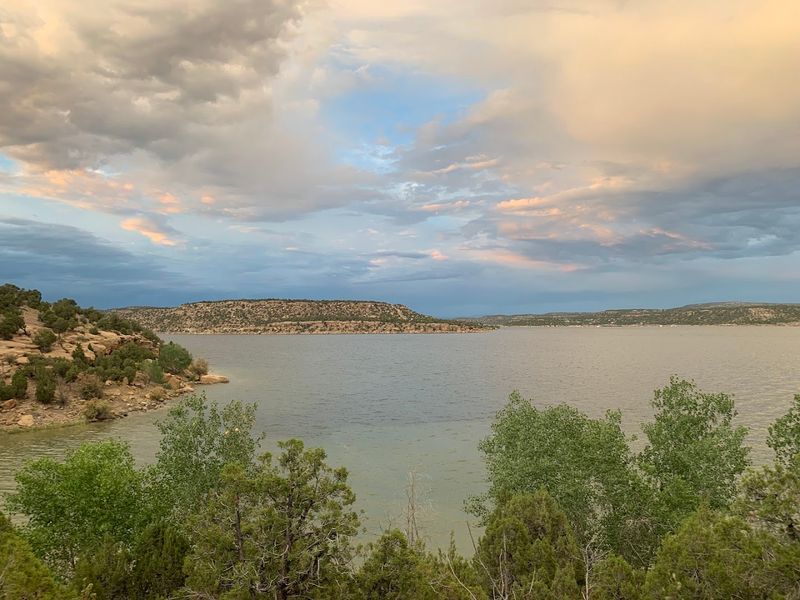
Navajo Lake earns its beauty the hard way, through a steep wilderness route that threads through forests and open meadows beneath the Wilson group of fourteeners in the Lizard Head Wilderness. The trailhead is on Forest Road 535 off Dunton Road, south of Lizard Head Pass, with the nearest community being Rico, Colorado.
This is not a casual afternoon stroll, and the trail makes no apologies for that.
As of June 29, 2026, overnight visitors may camp only in one of nine marked, first-come sites inside Navajo Basin. That limit keeps the area from being overrun, which is exactly why the experience still feels genuinely remote.
Dayhikers are welcome without a permit, making it possible to experience the lake without the logistical planning of a backcountry overnight.
What makes Navajo Lake special beyond the scenery is the sense of earned solitude. You work for this view, and the mountains surrounding the Wilson group remind you at every switchback that you are a guest in serious terrain.
Bring trekking poles, pack extra food, and tell someone your plan before you head out. The reward at the end is a lake that feels completely removed from the ordinary world, which is precisely the point of coming all the way out here.