
This Hidden South Carolina Town Has The Kind Of History You Actually Want To Wander Through
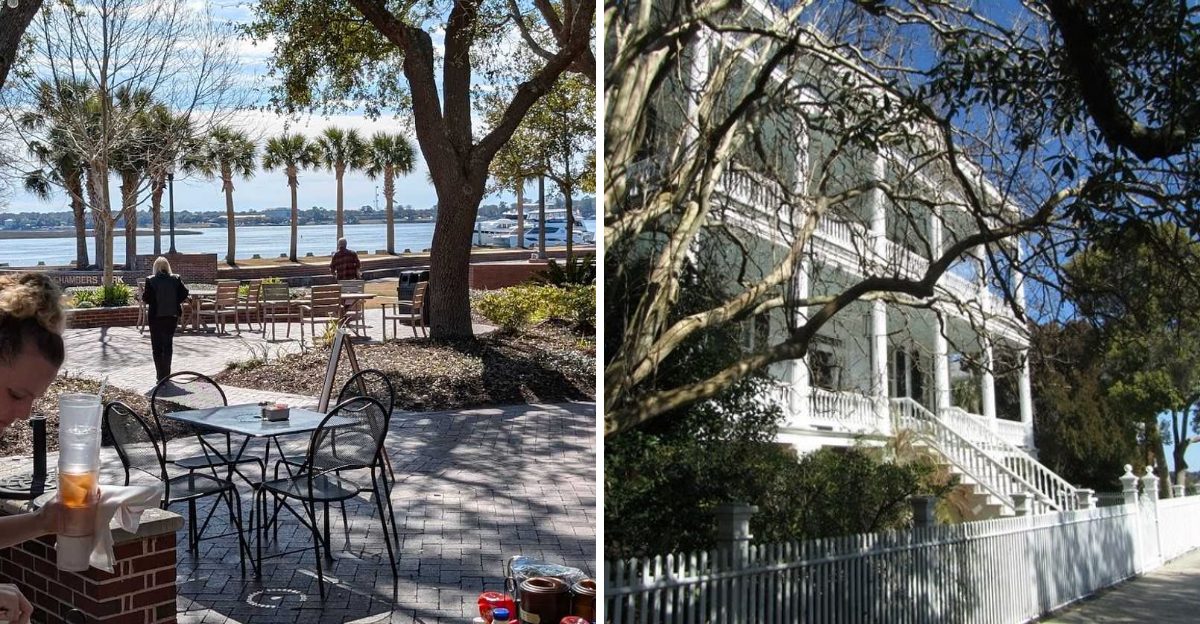
South Carolina has no shortage of beautiful coastal towns.
Few make time feel completely irrelevant.
The moment you arrive in Beaufort, everything seems to move at a different pace. Centuries-old live oaks stretch across quiet streets.
Spanish moss sways gently in the breeze. Fishing boats drift through the waterfront, and historic homes stand exactly where they have for generations, as though they have been patiently waiting for you to discover them.
That is what makes Beaufort so extraordinary.
While many coastal destinations have traded their history for high-rise hotels and crowded boardwalks, Beaufort has held tightly to the character that made it special in the first place. Every walk reveals another hidden garden, another historic church, another waterfront view, and another story that reaches back hundreds of years.
This is not the kind of place you rush through.
It is the kind of destination that encourages you to slow down, linger a little longer, and appreciate the simple beauty of South Carolina’s Lowcountry. Whether you come for the history, the food, the scenery, or the peaceful atmosphere, Beaufort has a way of making you feel less like a visitor and more like you have somehow found your way home.
The Antebellum Mansions Of The Historic District
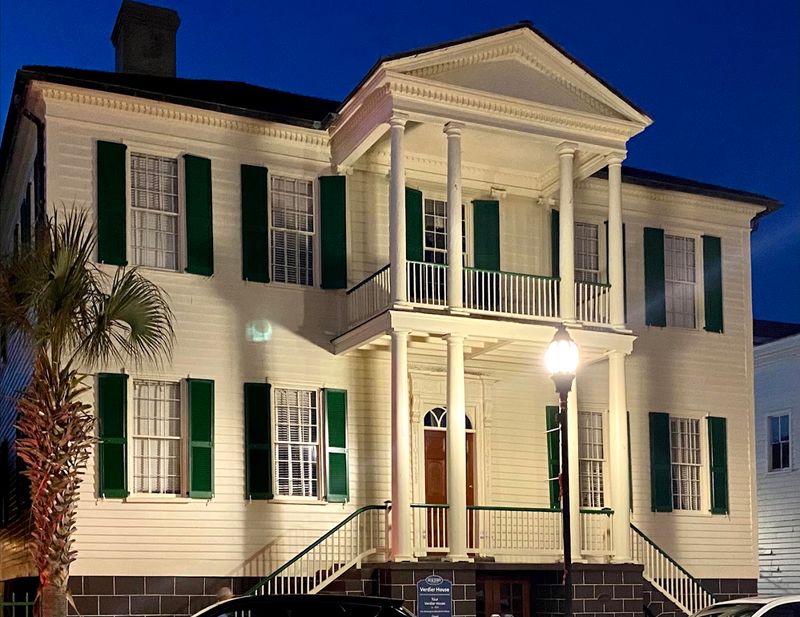
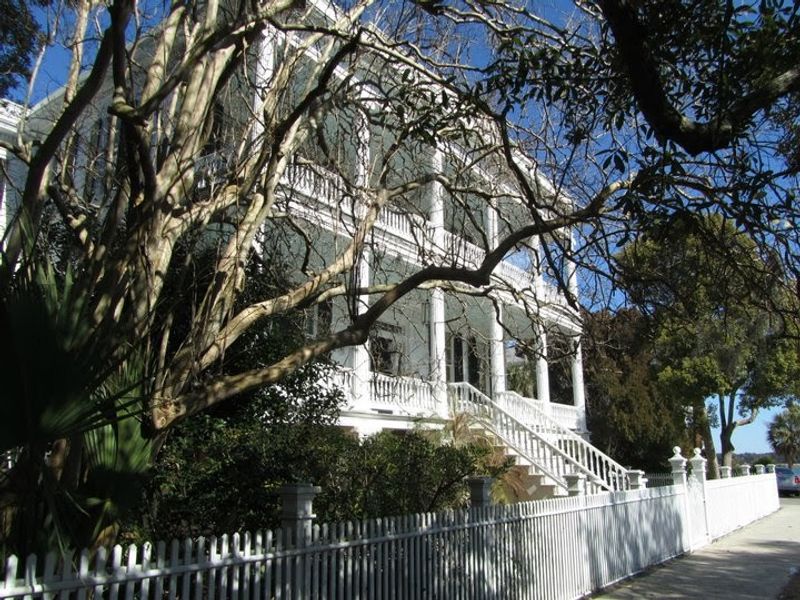
Walking through Beaufort’s downtown historic district feels less like sightseeing and more like stepping onto a movie set where someone forgot to stop filming.
The neighborhood is packed with beautifully preserved antebellum mansions, most of them built before the Civil War by wealthy planters who clearly had strong opinions about grand porches and sweeping staircases.
These homes are not hidden behind fences or museum ropes; many line the streets openly, letting you admire their Federal and Greek Revival architecture up close.
The detail work on these buildings is remarkable, from intricate ironwork railings to towering white columns that seem designed specifically to impress anyone walking by.
Beaufort’s historic district is listed on the National Register of Historic Places, and it is easy to understand why once you spend an afternoon here.
Local preservation efforts have kept these structures in outstanding condition, meaning the neighborhood looks almost exactly as it did generations ago.
Few places in the American South offer this level of architectural storytelling in such a walkable, accessible setting.
The John Mark Verdier House Museum
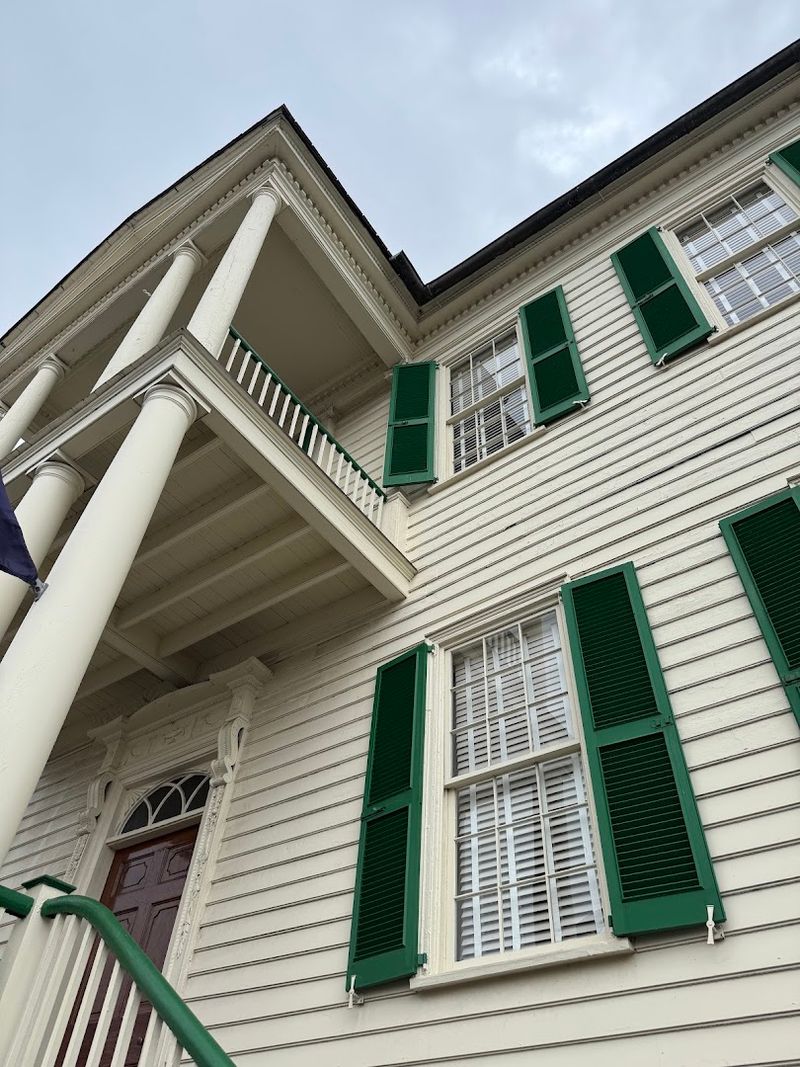
Built around 1804, the John Mark Verdier House is one of the finest examples of Federal-style architecture in the entire state of South Carolina.
John Mark Verdier was a prosperous merchant, and his home reflects the kind of confident wealth that defined coastal South Carolina in the early nineteenth century.
Today the house operates as a museum at 801 Bay Street, Beaufort, SC 29902, where visitors can explore rooms furnished with period pieces that paint a vivid picture of daily life two centuries ago.
The exhibits inside trace not just the Verdier family but also the broader history of the Beaufort region, including its complicated relationship with the Civil War era.
During the Union occupation of Beaufort, this house served as the headquarters for Union officers, adding another fascinating layer to its already rich biography.
Guided tours bring all of these stories to life with the kind of detail that makes history genuinely interesting rather than something you endure on a school field trip.
It is a compact visit that punches well above its size in historical weight.
Henry C. Chambers Waterfront Park
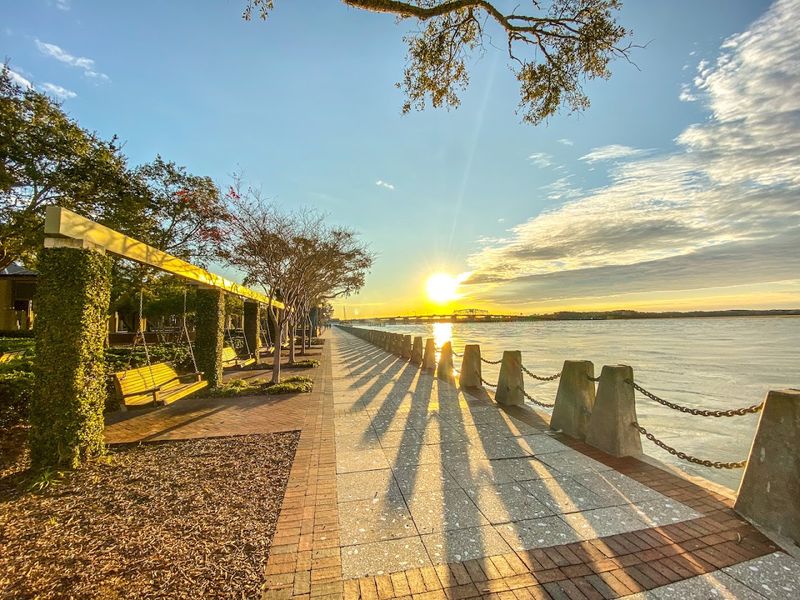
There is something deeply satisfying about a waterfront park that actually earns its place on the map, and Henry C. Chambers Waterfront Park in Beaufort does exactly that.
Stretching along the Beaufort River, this beautifully maintained green space gives visitors a front-row seat to one of the most scenic waterfronts on the South Carolina coast.
The park features a wide promenade, swinging benches, a marina, and open lawns that invite you to simply sit and watch the river traffic drift by at its own unhurried pace.
Families, joggers, kayakers, and tourists all share the space comfortably, which says a lot about how well the park is designed for real human use rather than just appearances.
The Woods Memorial Bridge frames the view beautifully from the park, adding an architectural anchor to the already photogenic riverscape.
On weekend evenings, the park often hosts community events, festivals, and outdoor gatherings that give visitors a genuine taste of local Beaufort culture.
Catching a sunset from one of those swinging benches ranks among the most quietly rewarding moments this town can offer.
Beaufort’s Role In The Civil War
Not many American towns can claim they were occupied by Union forces just months after the Civil War began, but Beaufort, South Carolina is one of them.
In November 1861, Union troops seized Port Royal and the surrounding Sea Islands in one of the war’s earliest major naval victories, turning Beaufort into a Union stronghold almost overnight.
White residents largely fled, leaving behind their grand homes and plantations, which were then repurposed by Union officers and, crucially, by formerly enslaved people who began building new lives in the area.
Beaufort became one of the earliest sites of the Port Royal Experiment, a landmark effort to support freed Black Americans through education, land ownership, and self-governance during the war years.
This history is woven into the fabric of the town in ways that are both visible and deeply meaningful, from historic markers to museum exhibits throughout the downtown area.
Understanding Beaufort’s Civil War story makes every walk through its streets feel more layered and more honest.
Few American towns hold this much complexity in such a small geographic footprint.
The Gullah Geechee Culture
Beaufort sits at the heart of Gullah Geechee country, and that cultural identity is one of the most important and fascinating aspects of everything this region has to offer.
The Gullah Geechee people are descendants of enslaved Africans who were brought to work the Sea Island plantations, and their culture represents one of the most intact African American cultural traditions anywhere in the United States.
Their language, a distinctive Creole blend of English and West African languages, is still spoken in parts of the region and recognized as a living piece of American linguistic heritage.
Gullah Geechee traditions include sweetgrass basket weaving, distinctive cuisine, spiritual practices, and oral storytelling, all of which have roots stretching directly back to West and Central Africa.
Visitors to Beaufort can engage with this culture through local tours, cultural centers, and community events that prioritize authentic representation over tourist spectacle.
The Gullah Geechee Cultural Heritage Corridor, which runs through the area, offers additional context and resources for anyone wanting to understand this heritage more deeply.
Learning about Gullah Geechee culture transforms a Beaufort visit from a pretty trip into a genuinely meaningful one.
The Spanish Moss and Live Oak Canopy
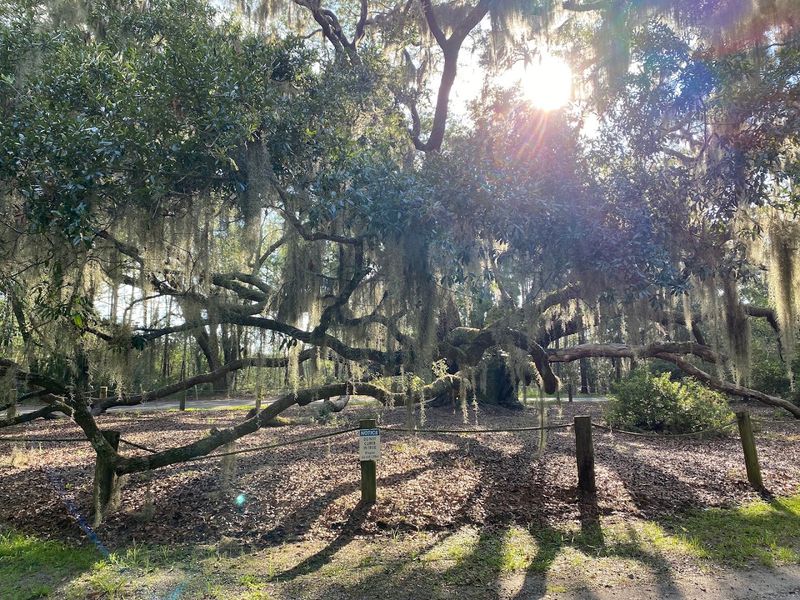
Spanish moss hanging from ancient live oak trees is practically the official visual signature of Beaufort, and honestly, it earns that title every single day.
The tree canopy along streets like Craven and New Street creates a natural tunnel effect that feels almost theatrical, as though the town itself is staging a welcome for every visitor who arrives on foot.
These live oaks are genuinely old, some of them centuries in age, their massive limbs spreading wide and low in that unhurried way that only very old trees seem to manage.
The Spanish moss adds a silvery, dreamlike quality to the light filtering through the branches, making even a simple afternoon walk feel like something out of a Southern novel.
Photographers absolutely love this town for exactly this reason, and it is not uncommon to see people stopping mid-stride just to capture a particular angle of light through the leaves.
The combination of historic architecture and this extraordinary tree canopy is what gives Beaufort its unmistakable visual character.
No filter needed, and no exaggeration required.
The Beaufort Arsenal And History Museum
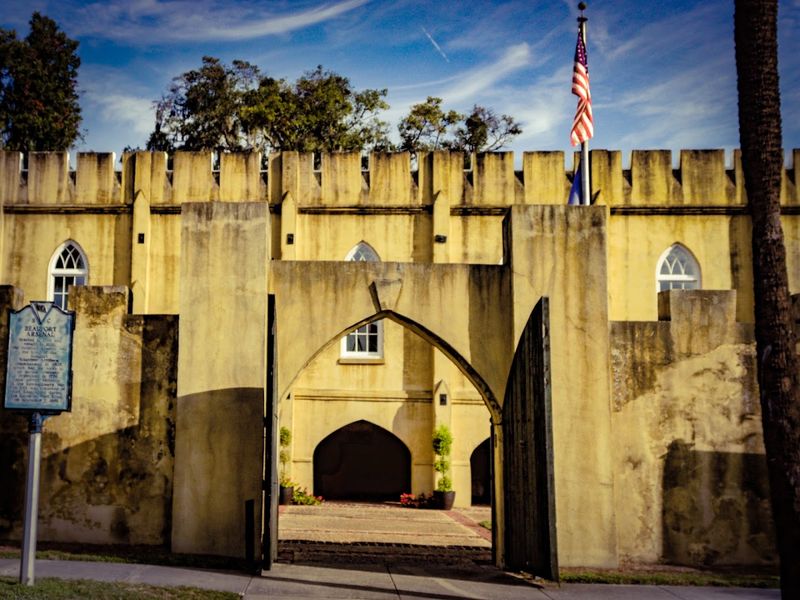
The Beaufort Arsenal is one of those buildings that immediately makes you want to know its backstory, and fortunately, it has a very good one.
Originally constructed in 1798 and rebuilt in 1852, this crenellated Gothic-style structure served as an armory and militia headquarters, and its dramatic stone exterior still commands attention on Craven Street today.
The building now houses the Beaufort History Museum, where exhibits cover the region’s layered past from its earliest Native American inhabitants through the colonial era, the Civil War, and into the twentieth century.
The museum does an excellent job of presenting multiple perspectives on Beaufort’s history, including the stories of enslaved people and the Gullah Geechee community that are often underrepresented in traditional historical accounts.
Admission is affordable, the staff is genuinely knowledgeable, and the exhibits are organized in a way that makes the timeline of this region feel coherent and engaging rather than overwhelming.
Spending an hour here before wandering the historic district gives you a much richer framework for understanding what you are looking at as you walk around town.
Consider it the cheat sheet that makes the whole trip click into place.
The Sea Island Landscape And Marshes

Beaufort sits on Port Royal Island, one of the South Carolina Sea Islands, and the surrounding landscape of tidal marshes, creeks, and barrier islands is as striking as anything you will find on the East Coast.
The salt marshes that surround the town shift color throughout the day, moving from deep green in the morning light to burnished gold as the afternoon sun drops toward the horizon.
These marshes are not just pretty backdrops; they are thriving ecosystems full of herons, egrets, dolphins, loggerhead sea turtles, and countless species of fish and shellfish that have supported communities here for thousands of years.
Kayaking or paddleboarding through the waterways around Beaufort is one of the best ways to experience this landscape at a pace that actually lets you notice things.
Several local outfitters offer guided tours of the marshes and nearby islands, many of which are only accessible by water, adding a genuine sense of exploration to the experience.
The Beaufort area has been recognized for its ecological significance, and conservation efforts work hard to protect these wetlands from development pressure.
The marshes are as much a part of Beaufort’s identity as any building on Bay Street.
Beaufort’s Film History
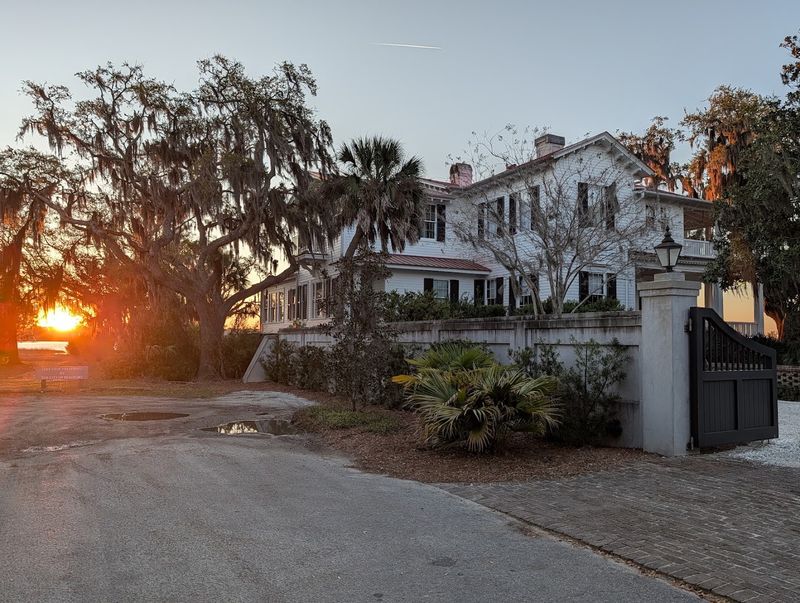
Beaufort has a surprisingly glamorous side that most visitors do not expect: this small coastal town has been the filming location for several major Hollywood productions over the decades.
The 1983 film The Big Chill was shot largely in Beaufort, using the town’s historic homes and atmospheric landscapes to create its iconic backdrop, and the house featured in the film became a local landmark almost immediately after the movie’s release.
Forrest Gump also filmed scenes in the Beaufort area, with the town’s charming streets and waterfront adding to the film’s distinctive Southern feel that audiences around the world responded to so warmly.
The Prince of Tides, based on Pat Conroy’s deeply personal novel about the South Carolina Lowcountry, was filmed here as well, bringing Barbra Streisand and Nick Nolte to these very streets.
Pat Conroy himself lived in Beaufort and wrote extensively about the region, giving the town a literary identity that goes hand in hand with its cinematic one.
Walking through Beaufort knowing all of this adds a slightly starstruck quality to what is already a very photogenic stroll.
Hollywood clearly knew what it was doing when it kept coming back here.
Bay Street And The Local Food Scene
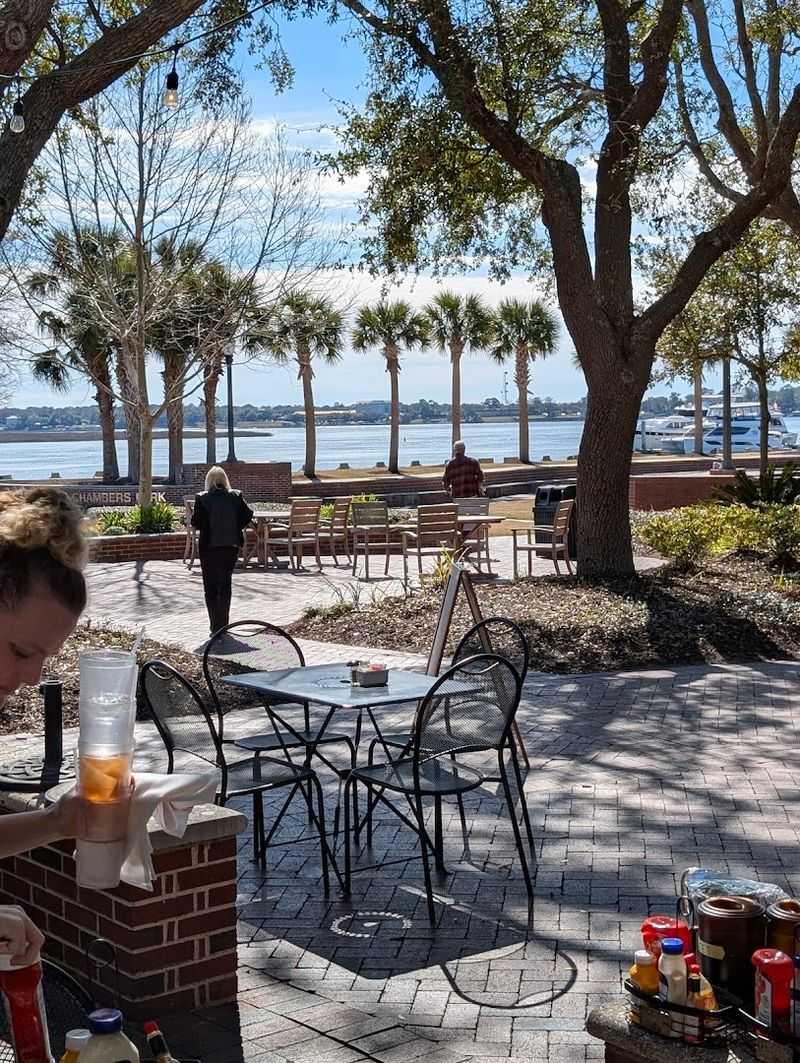
Bay Street is the heartbeat of downtown Beaufort, a lively stretch of locally owned restaurants, boutique shops, and galleries that runs right alongside the waterfront park.
The food scene here leans heavily into the Lowcountry culinary tradition, which means you can expect shrimp and grits, she-crab soup, fresh oysters, and all manner of seafood dishes prepared with the kind of confidence that comes from generations of coastal cooking expertise.
Several restaurants along Bay Street and the surrounding blocks source their ingredients directly from local fishermen and farmers, which gives the food a freshness and specificity that chain restaurants simply cannot replicate.
The atmosphere along the street is relaxed and unhurried, with outdoor seating that lets you eat your meal while watching the river and the park activity at the same time.
Independent bookstores, art galleries featuring Lowcountry landscapes, and gift shops selling sweetgrass baskets fill the spaces between restaurants, making Bay Street a genuinely rewarding place to wander without any particular agenda.
Beaufort’s downtown commercial strip manages the rare trick of feeling both alive and completely unpressured at the same time.
Come hungry, come curious, and plan to stay longer than you originally intended.